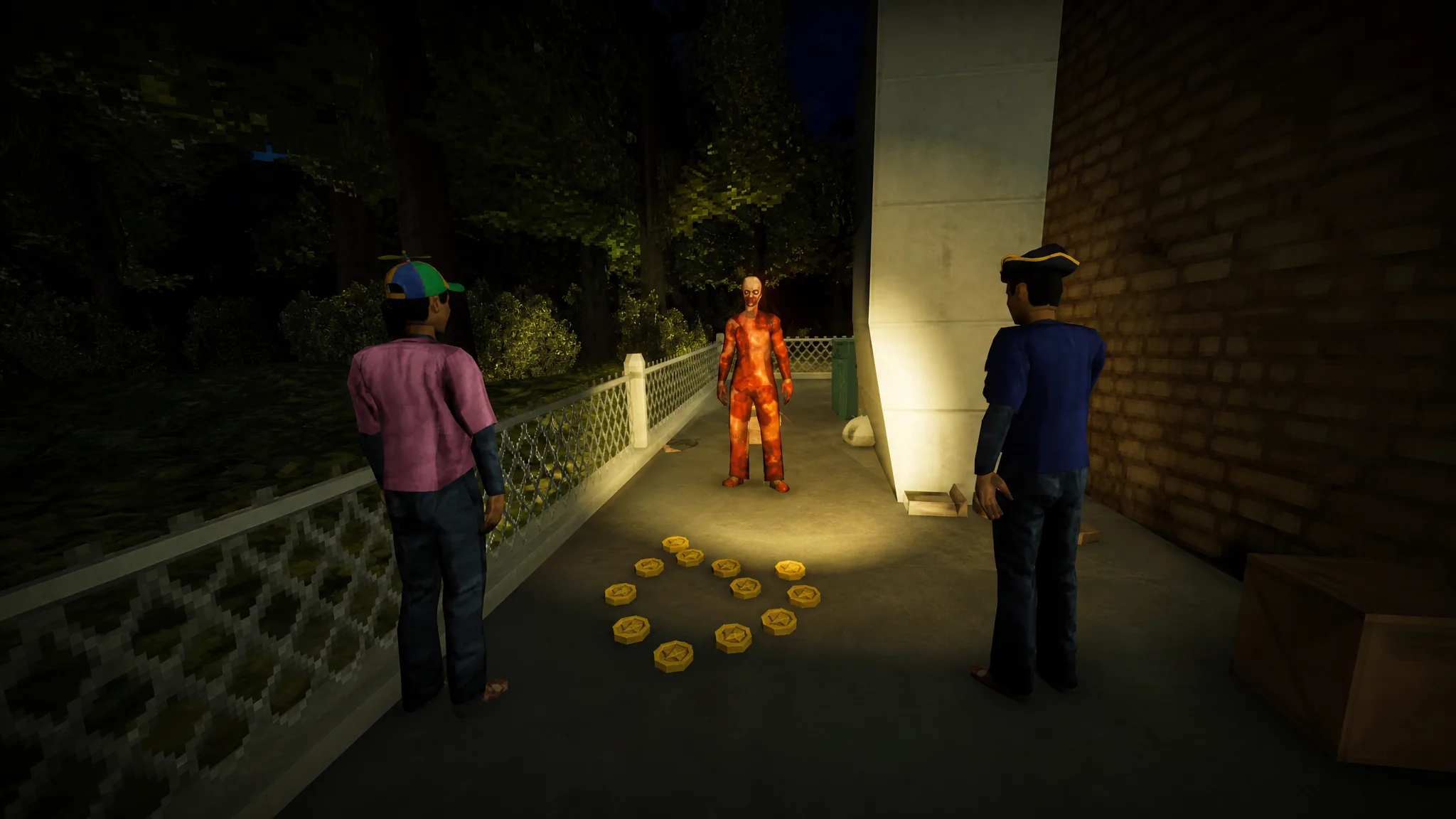
The pet you adopt at the start of Shift at Midnight is the whole reason you take the job at the Midnight Mart. It gets sick, the bills pile up, and whether it lives or dies comes down to how much money you bank in your personal funds by the final night. None of the animals give you a gameplay edge, so the real work is paying three medical bills on time.
Quick answer: Pay the $20 first treatment, the $40 medicine, and the $250 surgery entirely from your personal funds (not store revenue). You need $310 total across the 13 nights. To get the best outcome, do not call Sheriff Clyde and finish with at least $250 saved.
All pet types in Shift at Midnight
You choose your companion during the opening moments, and you can still swap it before you commit on the first night. The lineup covers the usual pets plus one that isn’t. None of them changes medical costs, income, cleaning speed, or the ending, so pick the one you actually want to keep around.
| Pet | Variants |
|---|---|
| Dog | Two sizes, a large dog and a small dog |
| Cat | A single orange cat |
| Goose | One goose, for something off the beaten path |
The pet and the name you give it show up in later story text, so the choice matters for how the tale reads. It just doesn’t hand you a mechanical bonus.
The three medical bills and when they hit
Your pet stays healthy at first, then falls ill and needs treatment in stages. Every payment comes out of your personal funds, and there is no reimbursement for covering them.
| Timing | Cost | What it does |
|---|---|---|
| First shift (tutorial) | $20 | First treatment done, but the pet still needs more care |
| End of night 3 | $40 | Pet recovers and can join you at work; surgery is still required later |
| Final stretch, by night 13 | $250 | The surgery that decides whether the pet survives |
The $40 dose covers the next three days and is the point where your companion starts wandering the store during your shift. After the tenth shift, the vet warns you that the pet needs the final operation, and that $250 target locks in for the last stretch.
How much money you need and where it comes from
Add the bills up and the cure costs $310. Finishing a shift pays a flat $10 into your personal funds, so across all 13 nights you earn $130 from wages alone. That leaves a $180 gap you have to close through the store.
The extra income comes from a 10 percent commission on store sales once you clear the daily quota. To net that missing $180, you need to move roughly $1,800 worth of goods before the surgery deadline. Serving customers is the engine here, so keep the shelves stocked, the checkout clear, and read customers carefully. A wrong call cuts into revenue and drags your commission down.
Paying the $40 dose lets your pet tag along on later shifts, which helps solo players, but don’t overspend on optional care. Every dollar you burn early is a dollar missing from the $250 surgery fund.
Personal funds vs store money
The game runs two separate wallets, and mixing them up is the fastest way to lose your pet. Medicine and surgery only ever draw from your personal funds. The store balance handles everything you buy to survive the night.
| Personal funds | Store balance |
|---|---|
| $20 medicine | Traps |
| $40 medicine | Weapons and ammo |
| $250 surgery | Healing, stock, boards, decorations |
Because they’re separate, buying a shock trap or a firearm does not touch the surgery fund. Skipping essential defense to “save” money is a trap of its own. It just makes a failed shift, lost customers, or a lower payout more likely, and that hurts your personal earnings.
Clearing quota also isn’t the same as being ready to pay a bill. Quota only proves you earned enough store revenue to finish the shift. Always check your personal balance separately against the next medicine payment and the $250 surgery.
What the pet does once it joins you
After the $40 treatment, your pet can appear inside the store and move around the floor while you work. Its name stays visible, and its presence doesn’t cancel the later surgery requirement.
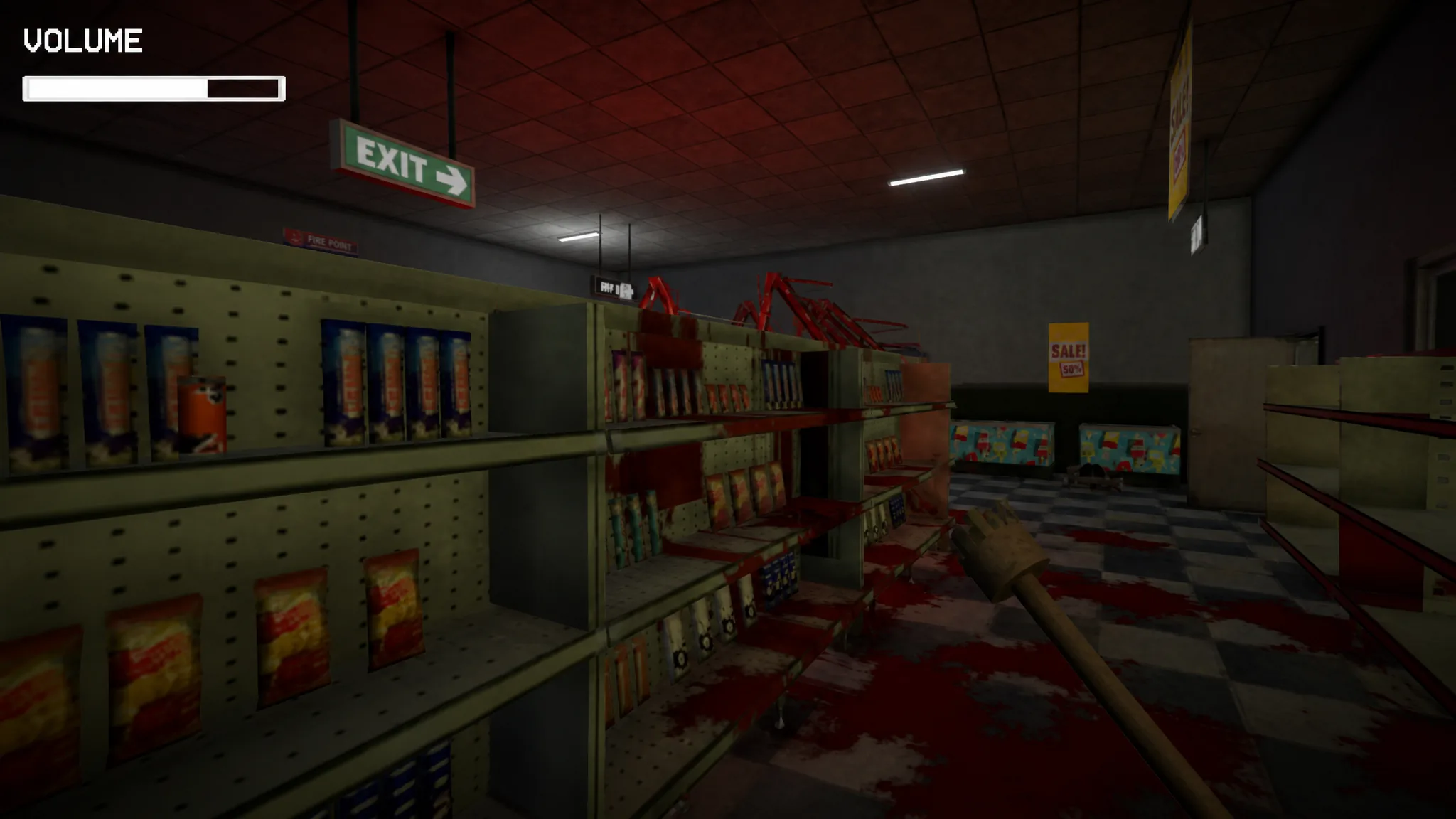
During quiet hours it wanders over to help tidy up, and pets have been seen going after meat left on the floor. Treat that as a bonus, not a replacement for cleaning. Keep trap lanes and retreat paths clear yourself rather than assuming the animal will stay out of danger or scrub every mess.
The Clyde choice and which ending saves your pet
Two things decide the pet’s fate: your final personal balance and whether you call Sheriff Clyde. The call is offered after the twelfth night, and choosing it changes the outcome even if your money is short.
| Ending | What you do | Result |
|---|---|---|
| True Ending | Don’t call Clyde and finish with $250 or more | Pet and Clyde both survive |
| Grave Decision | Call Clyde | Pet survives, but Clyde doesn’t make it |
| Empty Home | Don’t call Clyde and finish below $250 | Clyde survives, the pet dies |
The catch worth remembering is that skipping the call does not guarantee the happy ending on its own. If you refuse to call Clyde but still fall short of $250 after the final shift, the vet can’t operate and you land in Empty Home. You don’t need the full $250 the moment the choice appears, though. The night 13 payout can still close a realistic gap before the vet checks your balance.
Keep the math simple across the run. Bank your wages, keep customers happy for that 10 percent commission, and protect your personal funds from anything that isn’t medicine. Do that, hold the $250 line, and your pet walks out of surgery to join you on future shifts.