The plastic gangers in the Necromunda Skirmish Core Set are some of the sharpest sculpts Games Workshop has released for the underhive, and that makes them tempting fuel for a Warhammer 40k conversion project. The catch is that a Necromunda gang is not a 40k unit, so getting these models onto a 40k table means kitbashing rather than list-legal fielding.
Quick answer: You cannot field a Necromunda Skirmish gang in Warhammer 40k, because these models have no 40k datasheets. You can still use the plastics as conversion parts, and the Goliath gangers map almost one-to-one onto an Adeptus Mechanicus servitor squad once you rebase them.
Why Necromunda gangs have no 40k rules
Necromunda and Warhammer 40k share a setting, but they are separate game systems with separate rules. Unlike Kill Team, which supplies full profiles for use in the main 40k game, Necromunda gangs do not come with 40k datasheets. That means there is no legal way to run the Escher Blades of the Matriarch or the Goliath Forge Smelters as a 40k unit straight out of the box.
What you are left with is the hobby route. The kits are plastic, they are cut from standard sprues, and they slot into the same conversion workflow as any other Citadel box. So the practical question is not whether the rules allow it, but whether the parts line up with a 40k unit you already want to build.
Why Goliath gangers convert cleanly into servitors
The Goliath frame is the strongest candidate for a 40k conversion, and it works because the battlefield roles match up. A Goliath gang and an Adeptus Mechanicus servitor squad both field two heavy weapon carriers, and the Necromunda kit gives you the option to build two gangers with flamers. That overlap makes the swap into a servitor squad feel natural rather than forced.
The models line up well on numbers too, so you can cover the different servitor loadouts without running short of bodies. The bulked-up Goliath physique reads convincingly as lobotomised, machine-grafted labour, which is exactly the look you want for a Dark Mechanicus or Adeptus Mechanicus Battleclade.
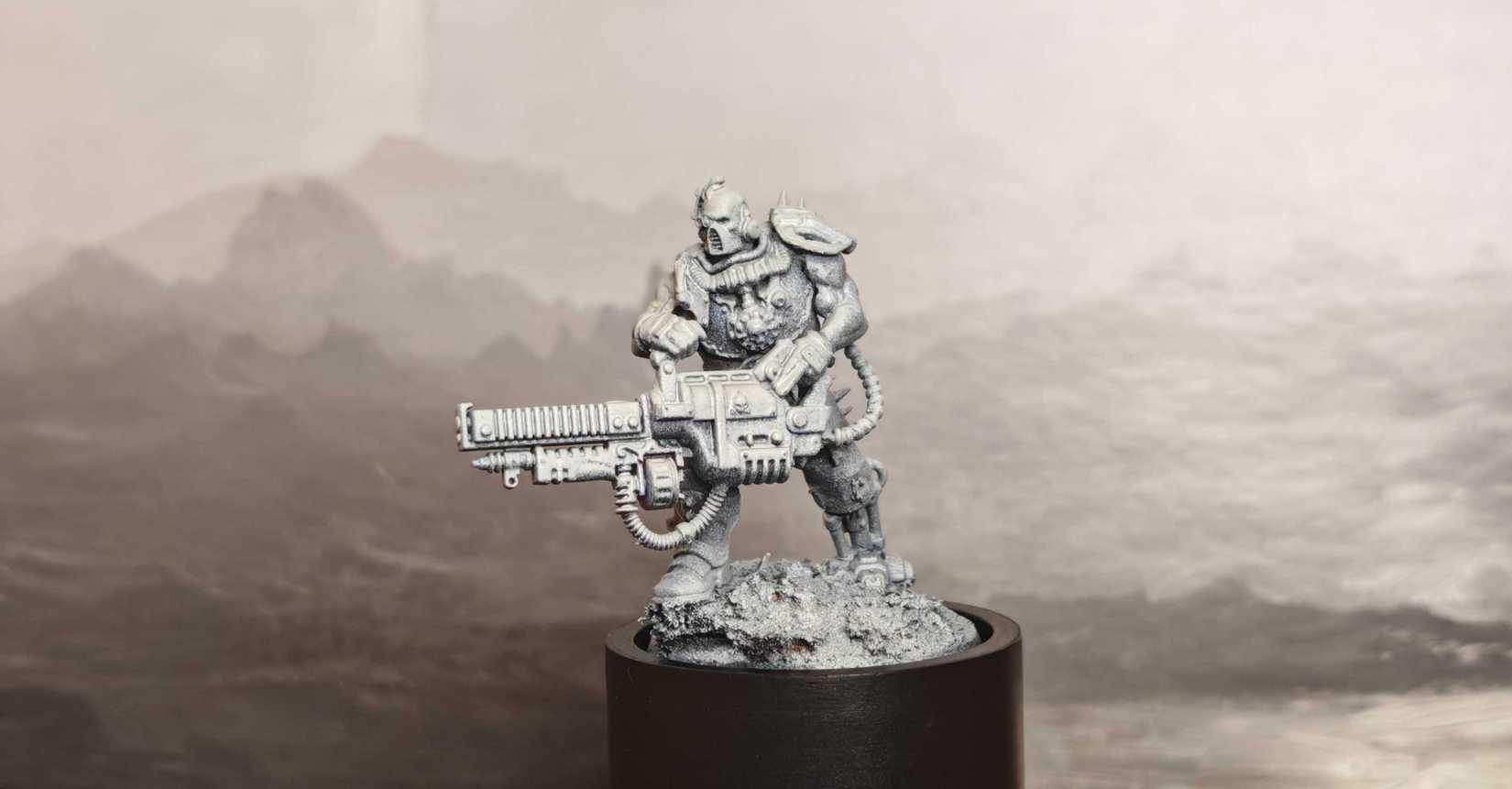
There is one thing to plan around. The Goliath bodies sit a few millimetres taller and thicker than a standard servitor, so the scale is not a perfect match. It is close enough to work once the models are placed alongside the rest of the squad, and swapping to the correct bases keeps the unit reading as a coherent group.
Building a Goliath-to-servitor conversion
You know the conversion has worked when the finished model sits on the correct base and reads as its intended 40k unit at tabletop distance, with the head, plating, and weapon doing the identifying rather than the Goliath body underneath.
Filling gaps and hiding cuts
Grafting new heads, plates and limbs onto a body that was not designed for them leaves seams, and there are two reliable ways to deal with them.
Green Stuff closes the small gaps and lets you sculpt cables and extra detailing where flesh meets machine. For the rougher joins, a textured paste both fills the seam and adds surface detail. Stirland Mud works, and Vallejo’s Dark Earth texture from its Diorama FX range does the same job at lower cost. If you are painting in a grimdark style, the texture doubles as basing material and mistake cover in one pass.
What comes in the Necromunda Skirmish box
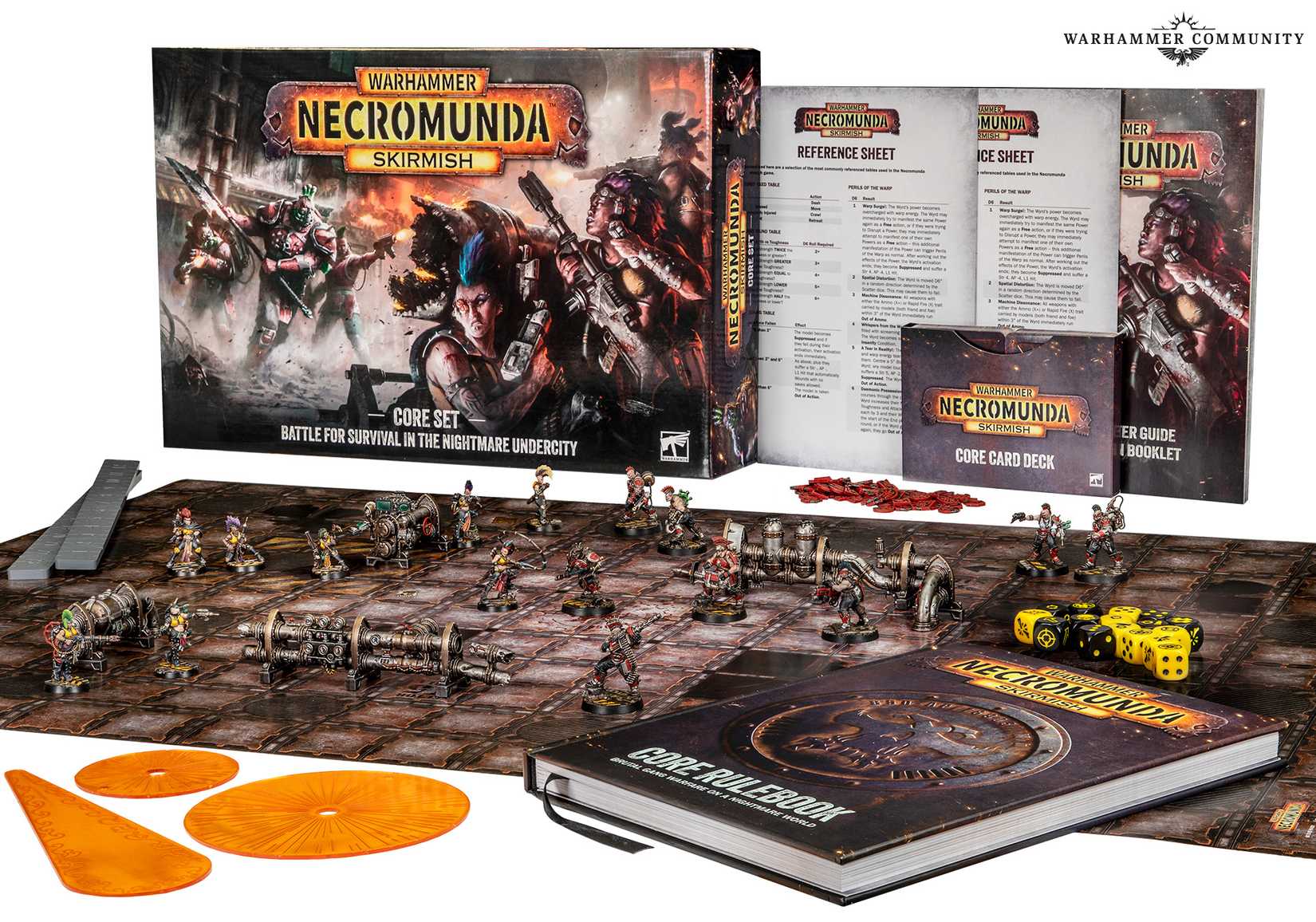
The Core Set is your source for these plastics, so it helps to know exactly which gangers are inside before you plan a conversion. It contains two eight-model gangs, each built from two frames, along with terrain, tokens, a double-sided battle mat, and the campaign cards and rulebook.
| Gang | Ganger archetypes |
|---|---|
| Escher (Blades of the Matriarch) | Blade Maidens, Gun Maidens, Huntress, Chem Wych |
| Goliath (Forge Smelters) | Forge Breakers, Forge Gunners, Forge Haulers, Forge Patchers |
Most builds in these kits are fixed, with only a couple of parts that swap across models, so you follow the construction guide to get coverage across each ganger type. That matters for a conversion plan, because it means the flamer option is one of the few genuine choices you make at the sprue.
The box carries an RRP of £98 and is set to release on August 15. If you want to expand a servitor squad beyond the rank and file, the wider Necromunda range offers characters and specialists worth raiding, and a bits box full of Mechanicum, Kataphron and Skitarii spares will carry a project like this a long way.