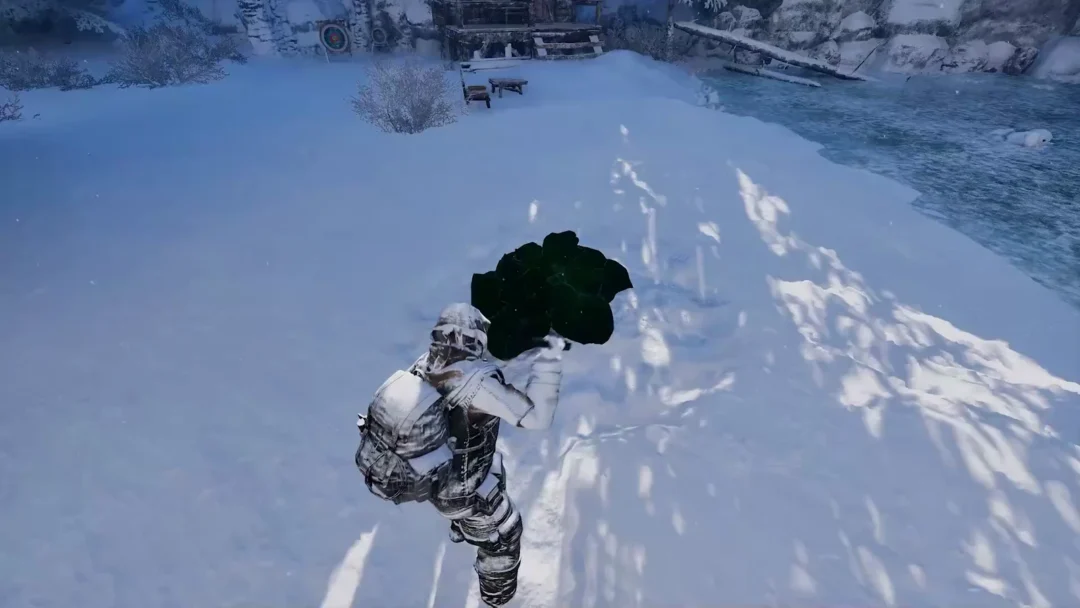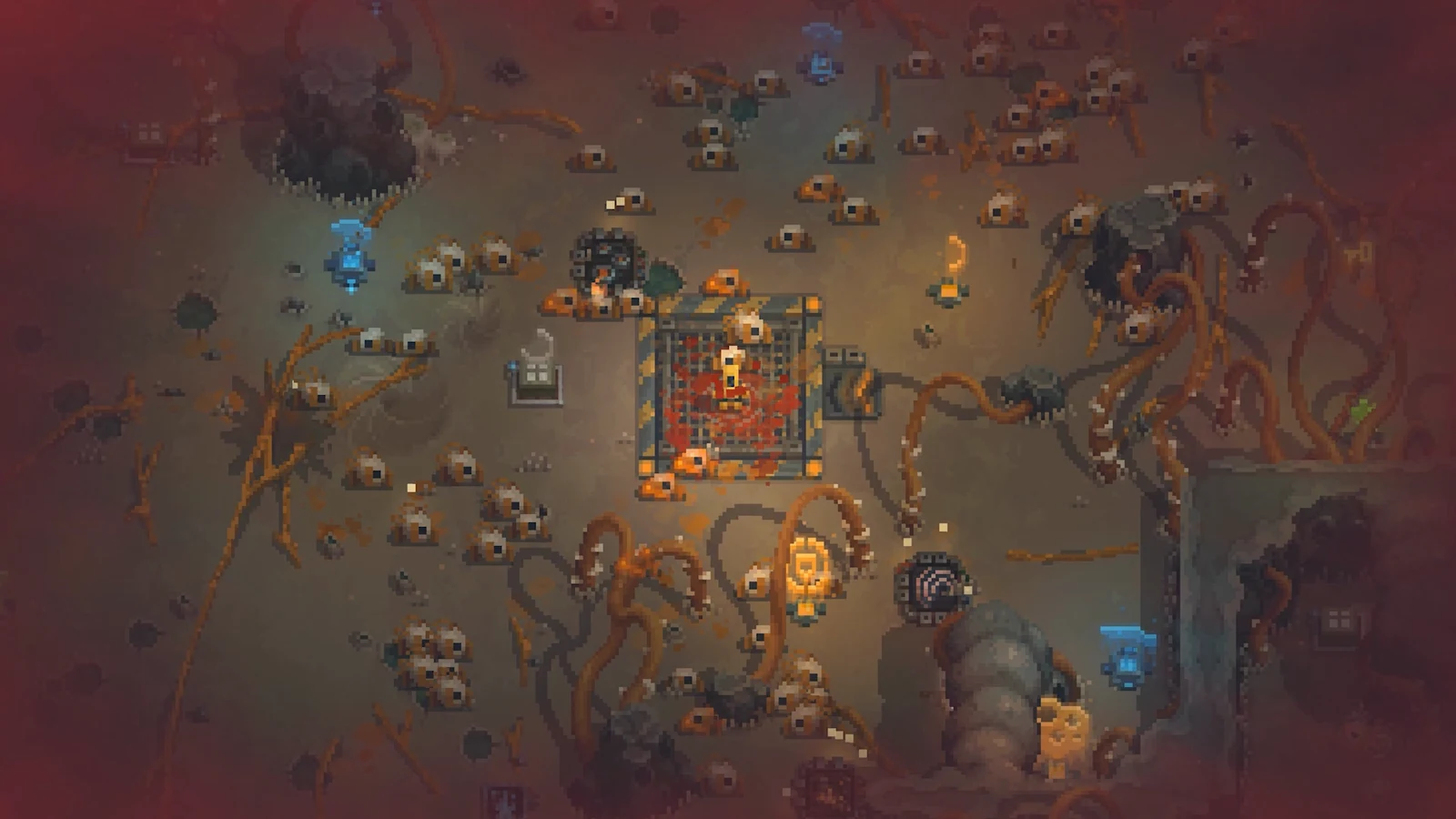
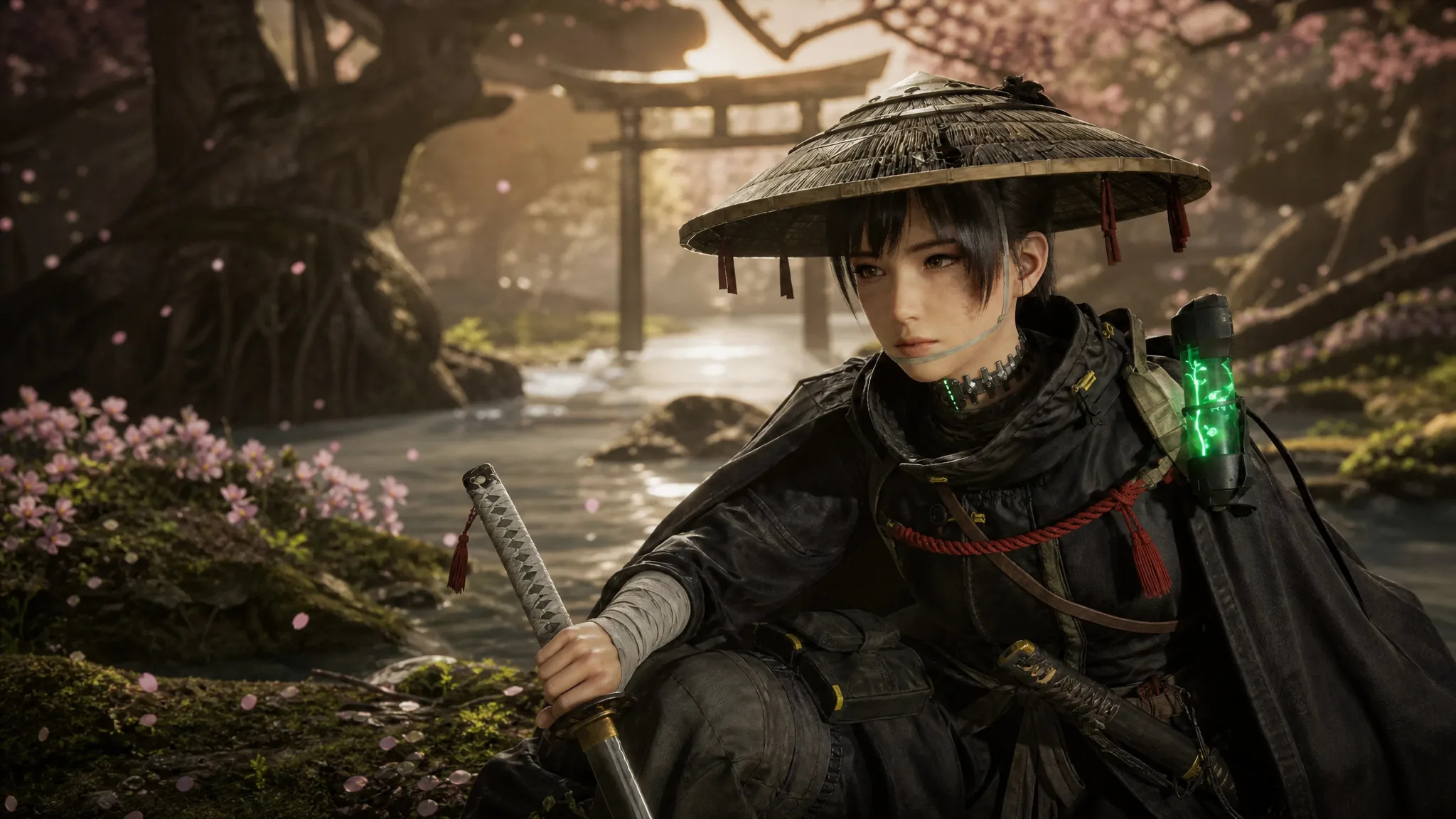
Game Freak, the studio that has spent decades printing Pokémon, has made something that looks nothing like Pokémon. Beast of Reincarnation is a gloomy, blood-and-rust action RPG set in a ruined future Japan, built around a woman named Emma, a dog named Koo, and a parry button you will press more than any other. It starts slow and talks a lot, but the combat and the central duo are strong enough to carry it.
Quick answer: Buy it if you enjoy Sekiro-style parrying and companion-driven combat and don’t mind a long, cutscene-heavy opening. If you subscribe to Xbox Game Pass or PC Game Pass, it’s on the service at launch, so you can try it at no extra cost.
What Beast of Reincarnation is, and where to play it
Beast of Reincarnation is an action RPG developed by Game Freak and published by Fictions, built in Unreal Engine 5. It’s a “one person, one dog” adventure across a post-apocalyptic Japan, mixing real-time swordplay with commands you feed to your animal companion. Depending on how much you explore, a full run lands somewhere between roughly 20 and 40 hours.
| Detail | Info |
|---|---|
| Developer / Publisher | Game Freak / Fictions |
| Platforms | PC, PlayStation 5, Xbox Series X|S |
| Release date | August 4, 2026 (00:00 UTC) |
| Standard Edition price | $59.99 / €54.99 |
| Subscription | Day one on Xbox Game Pass and PC Game Pass |
| Genre | Action RPG, parry-focused combat |
| Campaign length | ~20–40 hours |
Because it’s on Game Pass at launch, subscribers carry zero risk in trying it. If you’re buying outright, the value comes down to how much you like the parry loop and the Emma-and-Koo relationship, since both sit at the center of everything.
The Blight, Emma, and Koo: the setup
The world is drowning in something called the Blight, a corruption that twists living things into grotesque creatures known as Malefacts. The largest and most Blight-soaked of these are the Nushi, and they serve as the game’s main bosses. Humanity survives in isolated colonies, while mechanical humanoids called Golems roam outside, some friendly, some corrupted and hostile.
Emma is the protagonist, a “blight-born” or “stained” woman who can absorb the Blight without being consumed by it. That makes her a Purifier. Her job is to hunt down every Nushi, absorb their power, grow stronger, and eventually face the Beast of Reincarnation itself, a calamity that awakens roughly every 100 years to devastate the world. She’s described early on as soulless and emotionless, and much of the story is about that slowly changing.
She isn’t alone. Koo is a dog-Malefact she nurses back to health, and he becomes both her closest companion and a core combat partner. Violet is a yukata-clad girl who exists only inside Emma’s mind as a blue holographic projection that no one else can see. Kagura is a young girl Emma rescues who cooks meals back at base, and Brad is the gruff old pilot of the group’s walking vehicle, the Cleanse Walker.
The pacing is the honest catch here. The opening hours are slow, the cast is emotionally restrained, and long cutscenes stretch on for minutes at a time. It takes its time explaining why any of it matters. The reward is a story that quietly grows on you, so by the back half the lengthy scenes feel earned rather than something to skip. Not every reviewer walked away satisfied with how vaguely the final answers land, but the journey itself is the strong part.
Combat is built around parrying everything
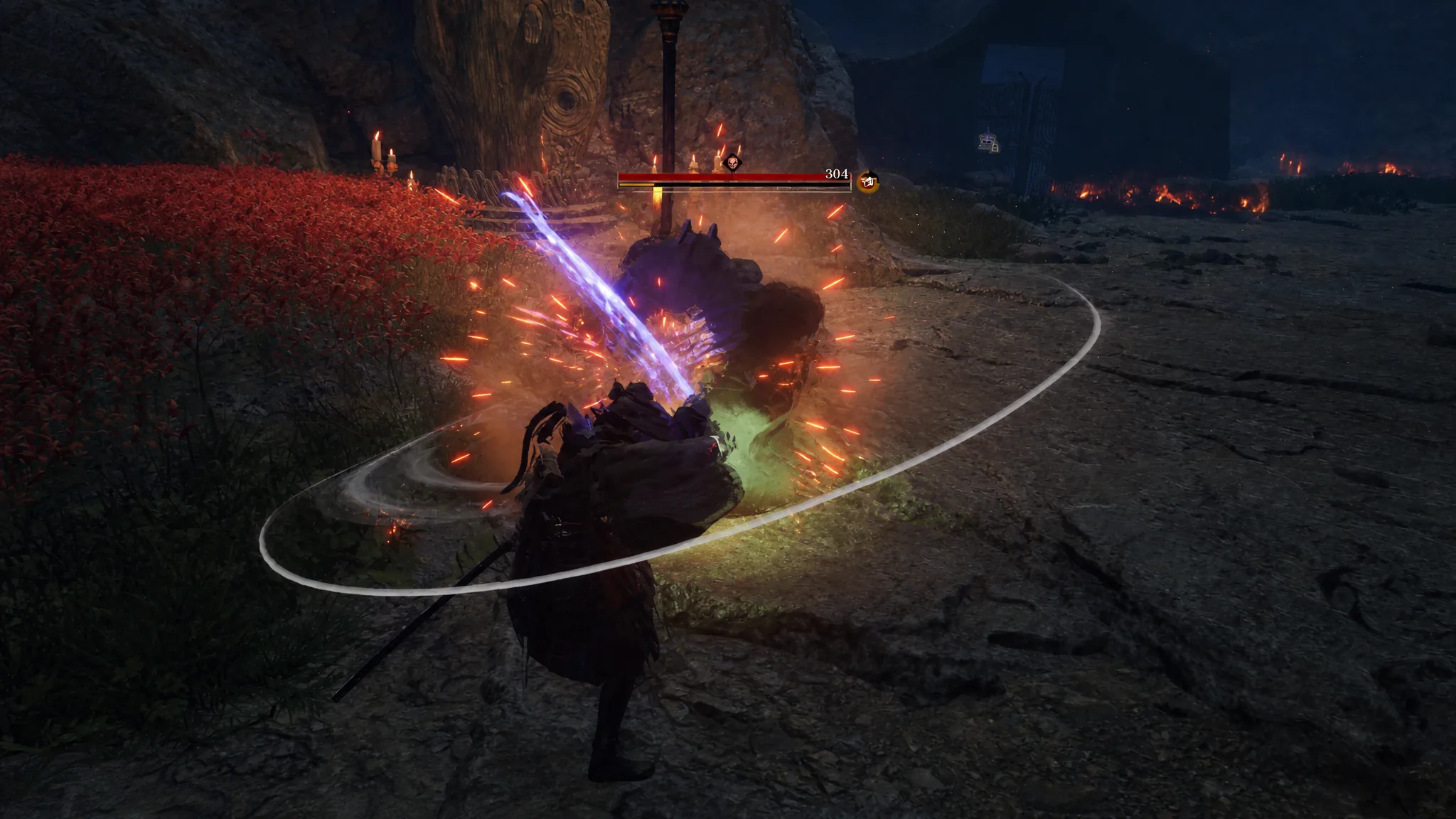
If you take one thing away, it’s this: parry or die. Almost every attack in the game can be parried with the right timing, and the whole system is designed to reward you for doing so. A successful parry builds your Entanglement Overdrive gauge, restores Koo’s energy, and triggers your weapon’s passive effect. The timing window is generous and consistent, so it feels fair rather than punishing.
Emma always uses a katana, but different blades carry their own passives, such as faster stagger buildup, elemental damage, or lifesteal. Her heavier special attacks are called Blade Arts, which hit harder but need proper timing because of their longer animations. Entanglement Overdrive is more than a flashy meter. Filling it lets you chain more Blade Arts together and slows down time while it’s active, opening a window to either go fully aggressive or reposition and heal out of danger.
One fair warning. Combat is forgiving and actually gets easier as you go. Parrying constantly refills Koo’s energy, Koo’s abilities heal Emma, and later skills can auto-kill extra enemies or even revive you. That creates a satisfying power fantasy, but it also means the difficulty curve slides downward once you understand the loop. If you can’t stand parry-centric combat, this is not the game to change your mind.
Koo and Game Freak’s Pokémon DNA
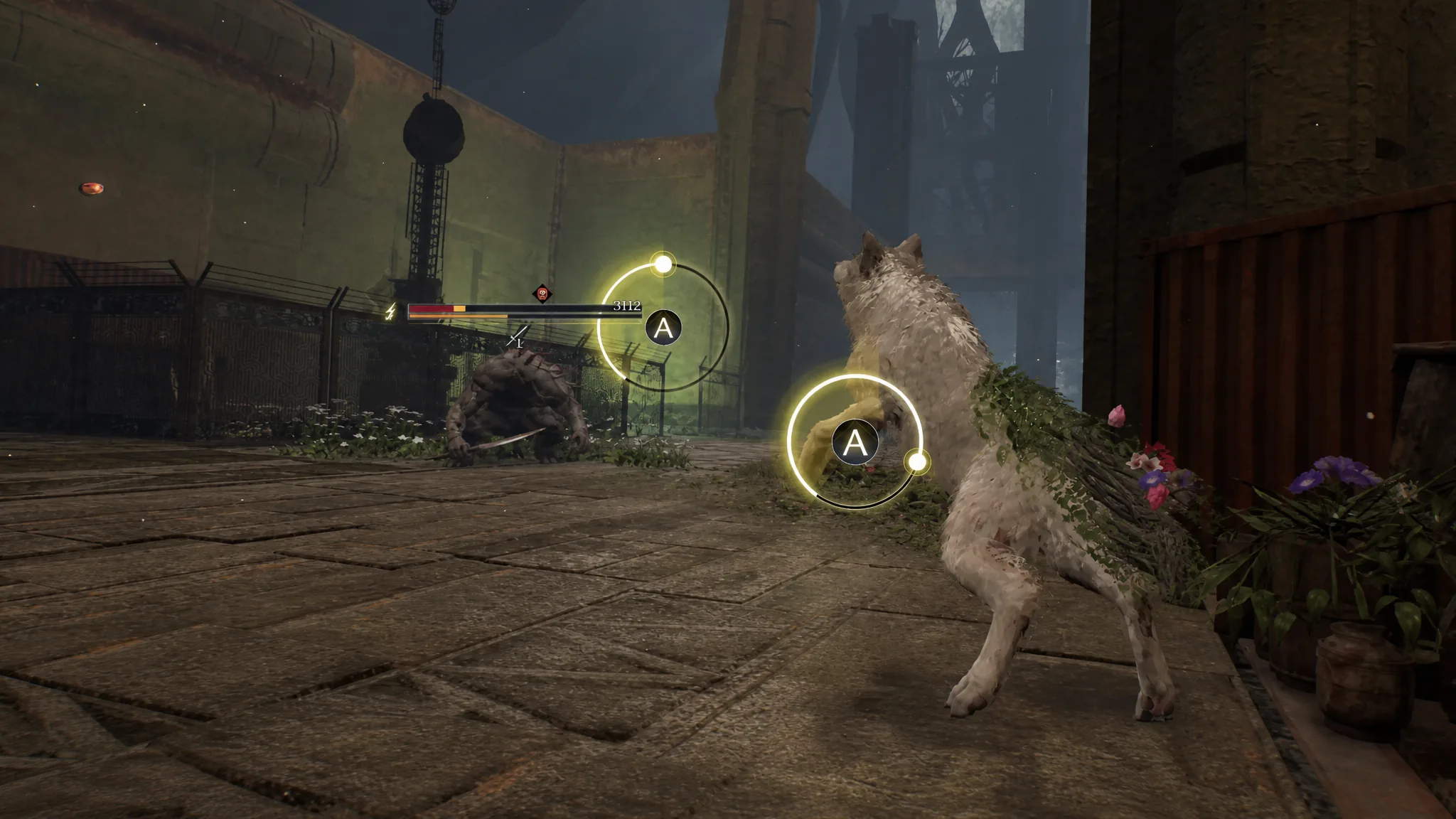
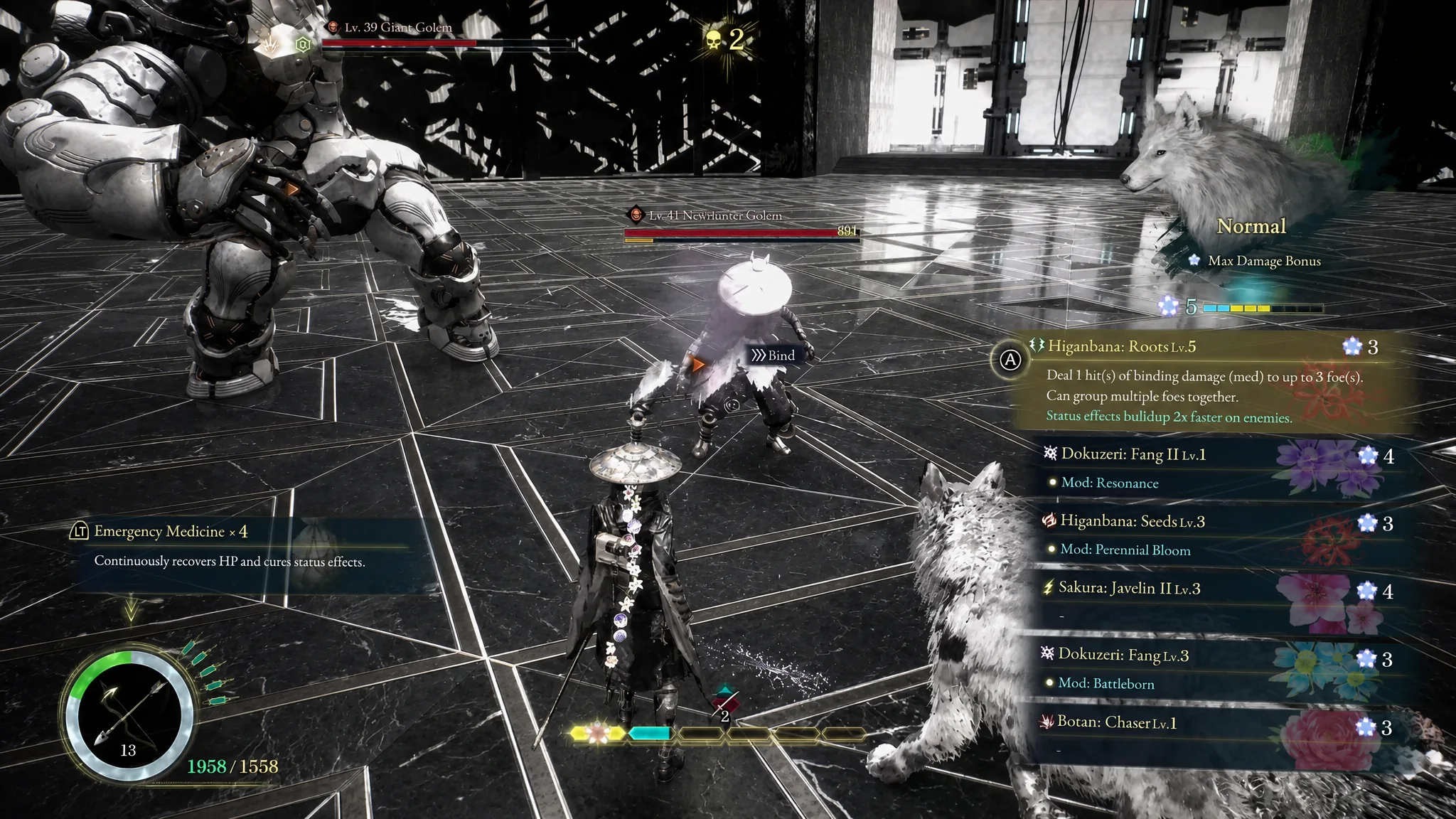
Koo is where the studio’s Pokémon experience quietly shows through. He fights largely on his own, attacking enemies, laying traps, and healing Emma without needing babysitting. But you can also spend his energy to cast specific abilities, each with its own attack type. Choosing the right ability against the right enemy makes a real difference, which mirrors Pokémon’s emphasis on type matchups and move management.
There’s an extra layer to it too. Issuing a command isn’t automatic. Each of Koo’s skills costs energy and comes with a small timing input, and nailing that input boosts the effect. Between his abilities, a deep skill tree, ranged weapons with different ammo types, cooking, and an affinity system built by petting him and eating Kagura’s meals, this is a systems-heavy game. The first few hours can feel overwhelming before everything clicks.
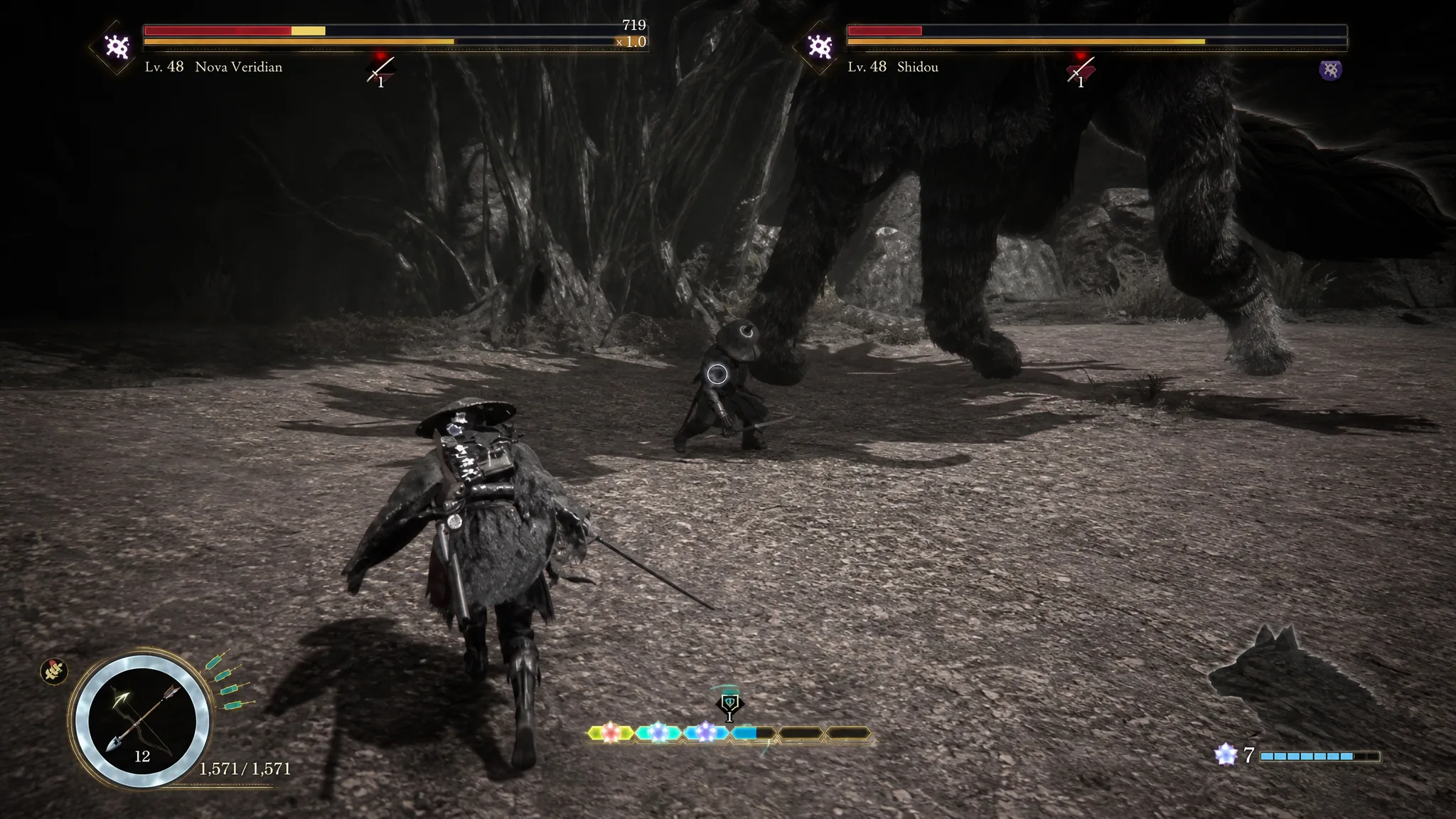
Emma also gets around the world in interesting ways. She can extend her hair into plant bridges to cross gaps, spike upward for long jumps, and grapple toward objects to fling herself around. Stringing those movement options together is one of the most consistently fun parts of the game, even when it occasionally leads to a high ledge with nothing on it.
Where the game drags: bosses and pacing
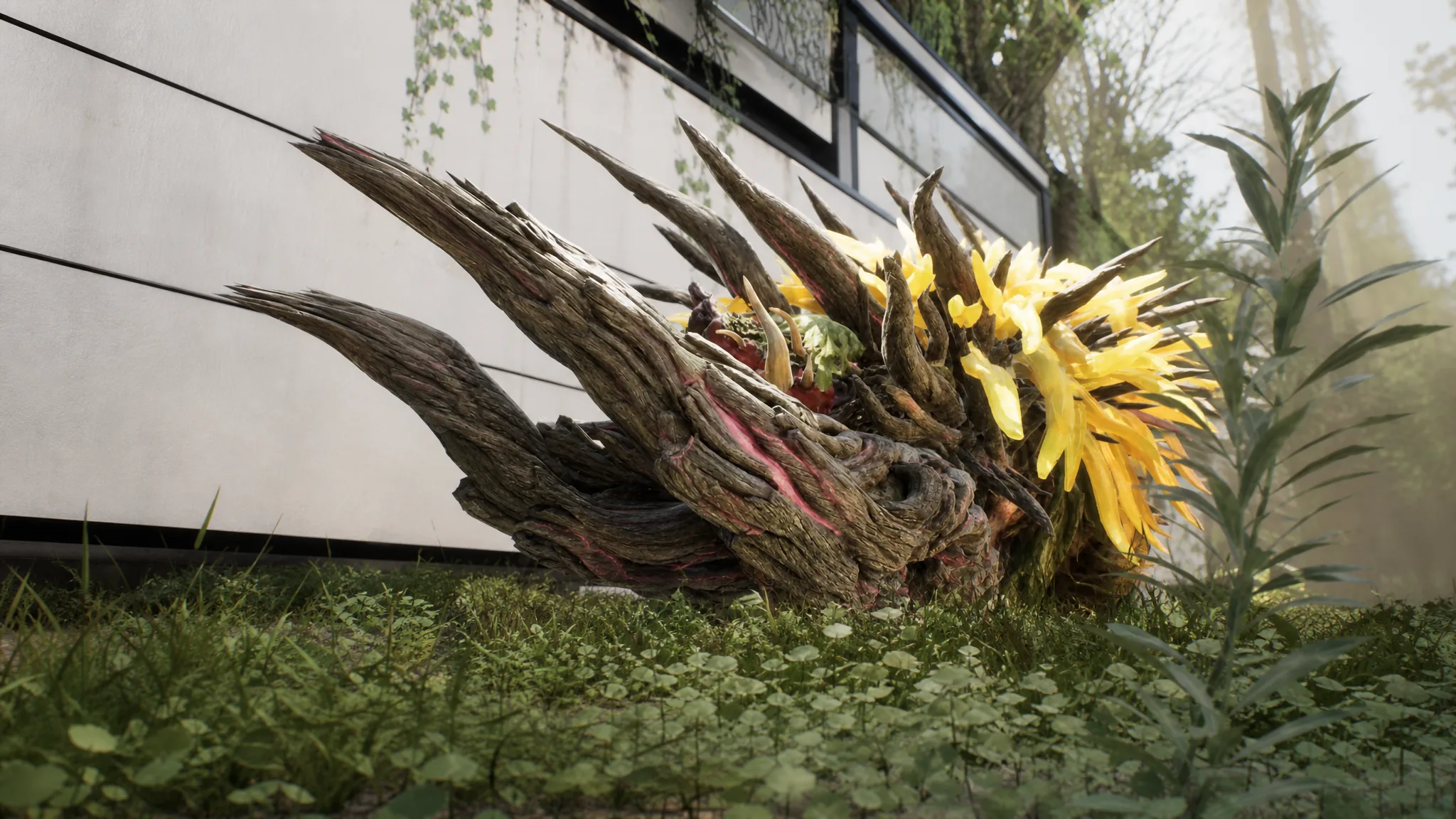
Boss design is the clearest weak spot. The Nushi look great, with corrupted, plant-covered animal designs that flex Game Freak’s monster-making, but they’re not memorable to fight. In many regions you defeat a Nushi only for it to retreat and force a rematch, and you’ll often fight the same boss multiple times across a run, sometimes three or more.
Each showdown also follows a predictable formula. Beat the first form and the creature transforms into a bigger, angrier second phase that plays almost identically, just with more damage. Later chapters bring back earlier Nushi as higher-level variants that hit harder but behave the same. Combined with limited enemy variety, that repetition is the main reason a few reviewers felt the game runs a little long and could have cut an area or two.
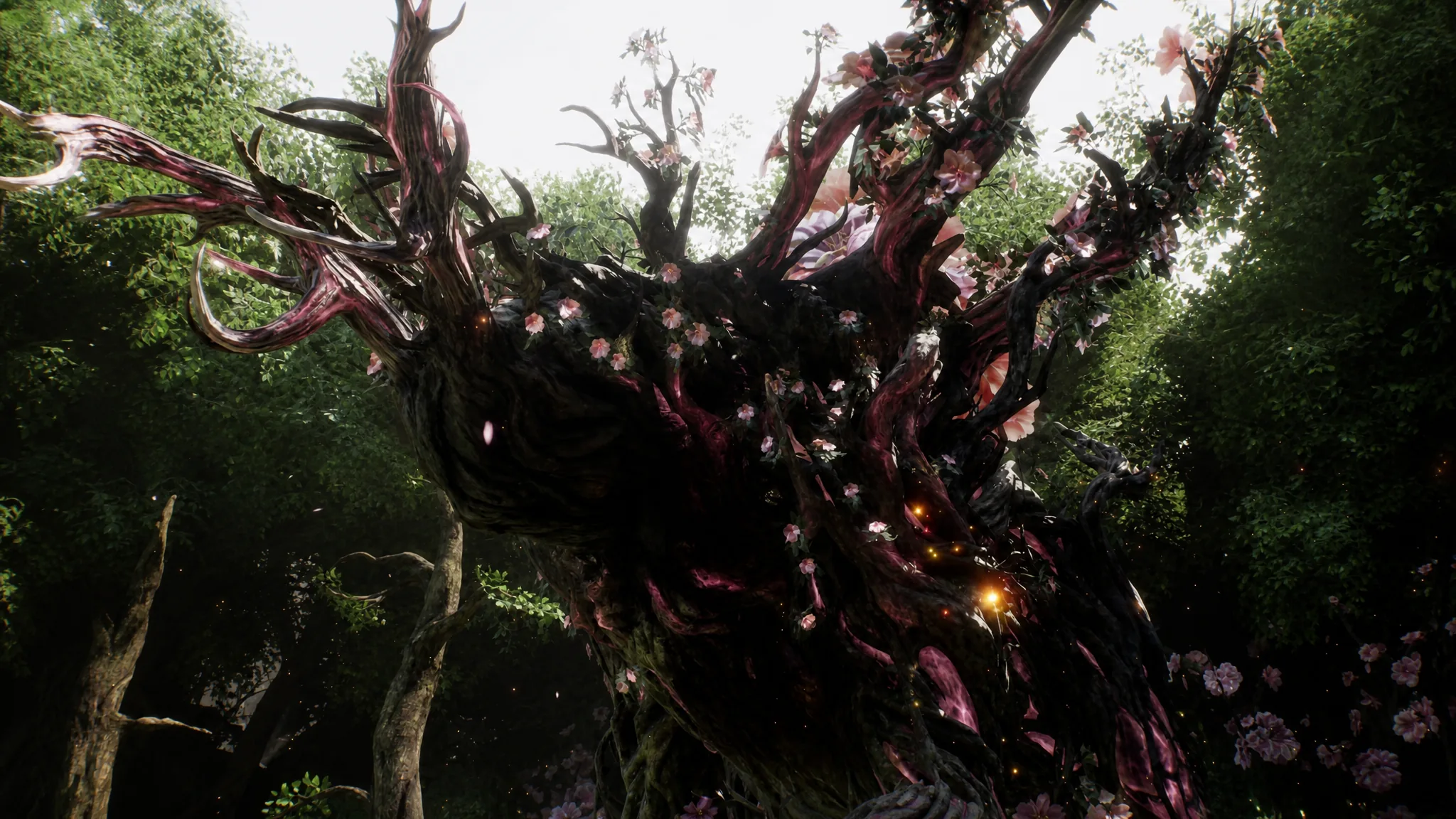
Note: The game’s director, Kota Furushima, has said outright that Beast of Reincarnation is not a Soulslike. It shares the moody tone and timing-based parries, and it uses campsite checkpoints that respawn enemies, but it skips stamina meters, corpse runs, and slow crawling in favor of faster, command-driven action.
Visuals, audio, and performance
Visually, it’s a mixed bag. The art direction is strong, with distinct biomes ranging from overgrown forests to decaying industrial zones, all sharing the same gloomy tone. But the technical presentation feels dated in places. Physical interaction is thin, so Emma’s hand clips through Koo’s fur when she pets him and tall grass barely reacts as you walk through it. Facial animation can look stiff, and indoor lighting sometimes adds a strange sheen.
One specific tip. Turn off Depth of Field in the settings. It frequently leaves Emma looking out of focus during both exploration and combat, and disabling it instantly sharpens the image.
Audio is one of the game’s real strengths. Exploration uses soft, calm music that fades into the background, then shifts smoothly into a battle theme when combat starts. Parries land with a satisfying metallic clash, and the game knows when to stay silent instead of forcing dramatic music onto every fight. Performance is generally smooth, with stable frame rates that matter for timing-based combat. The most common complaints are long loading screens and, at least at launch, some early stutter on Xbox that cleared up quickly.
Is Beast of Reincarnation worth playing?
Reviews landed on the positive side of the fence, generally in the 7-to-8 out of 10 range, with the common thread being fluid combat and a great central duo held back by predictable bosses and a slow start. It doesn’t reinvent the action RPG, and it wears its influences, from Sekiro and NieR to Princess Mononoke, right on its sleeve. What it does well is build a real identity around parrying, the Emma-and-Koo partnership, and worldbuilding that pays off if you stick with it.
If you have Game Pass, downloading it is an easy call since it costs you nothing extra to find out whether the combat clicks. If you’re paying full price, it’s an easy recommendation for anyone who loves stylish action RPGs with deep companion systems and doesn’t mind sitting through a talky, deliberate opening. Give it a few hours to get past the slow burn, and it becomes the kind of adventure that’s hard to put down before the credits.