WARDOGS charges you for every life. Weapons, magazines, armor, medical gear, even the parachute you strap on before jumping out of a helicopter all come out of a bank balance that carries between matches. Because of that, picking a loadout in the early access build is a budgeting exercise first and a combat decision second, and the two systems that punish bad choices hardest are role progression and weight.
Quick answer: Take one of the free assault rifles (KH-2002, A-91, or Bushmaster M17S), two spare magazines at $40 each, the free starter backpack and Resuscitator, and a $100 parachute. That is a complete $180 kit at roughly 3.8 kg, which sits in the Lightest weight class and keeps tactical sprint available. Spend $600 on the T-21 the moment you can afford to lose it.
Every life is a purchase, so price your deaths first
New accounts start with $10,000, and matches are three-team Control Zone fights where the first faction to 100 points wins. You earn cash for kills, assists, revives, heals, spotting, transporting teammates, repairs, building, and time spent on the objective. Anything done inside the smaller moving Hot Zone pays double.
Death costs you whatever you were carrying, so the real question for any loadout is whether a typical life earns back what it cost. A normal infantry kill sits in the region of 250 role XP and roughly $1,750, though distance, headshots, and ongoing balance changes move that number. A $180 kit pays for itself with a single kill. A kit built around a $6,500 rifle does not.
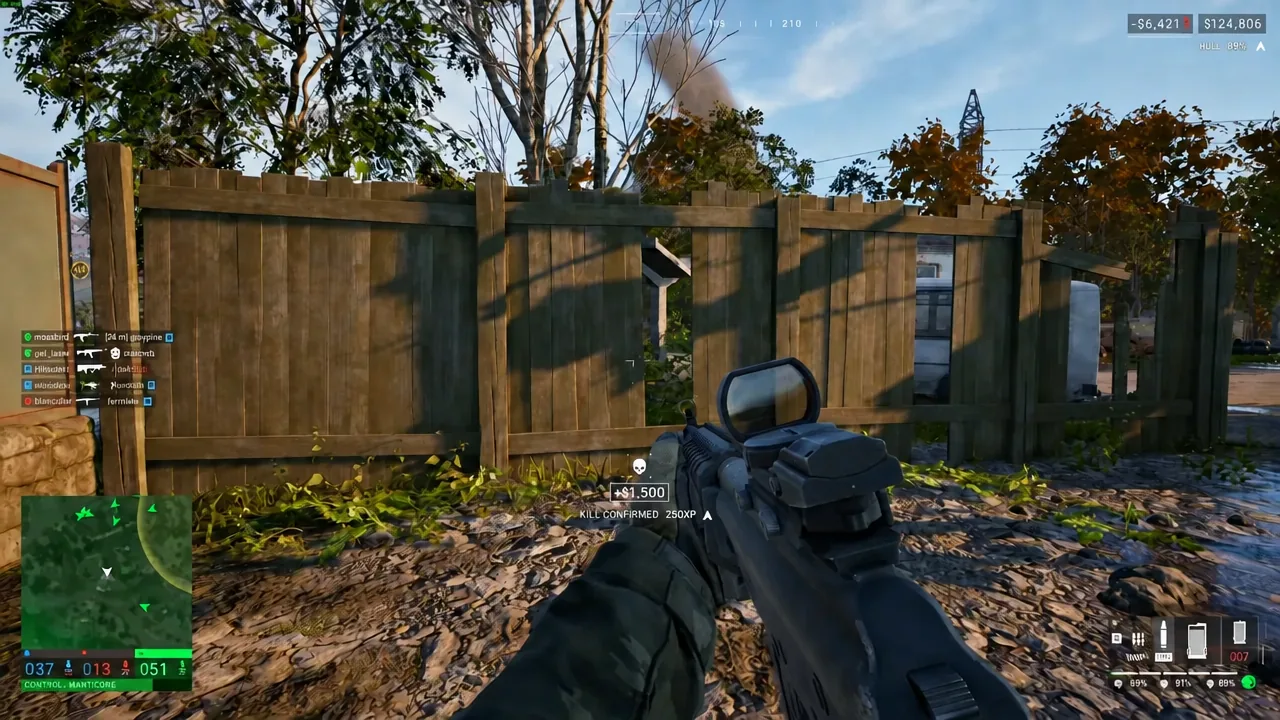
Waiting for a revive instead of redeploying is the cheapest thing you can do. A teammate with a defibrillator saves you an entire rebuy.
Weight thresholds and the penalties each tier applies
Weight is the total kilogram value of everything you carry, and it is split into five thresholds. The inventory screen shows the running total and lets you toggle the weight readout while building a kit. Crossing into a heavier band does not slow you a little, it changes how the character handles across mobility, stamina, and aim.
| Threshold | What it does to you |
|---|---|
| Lightest | No mobility or handling penalties. Full tactical sprint. |
| Light | Minimal penalties. Still fast enough for repositioning and flanks. |
| Medium | Around -3% max speed, -5% jump, -5% max stamina, -5% stamina regen, +5% aim sway and ADS time. |
| Heavy | -10% max speed, jump, and max stamina; +15% aim sway and ADS time; -15% stamina regen. Tactical sprint is disabled entirely. |
| Super Heavy | -20% max speed, jump, and max stamina; +30% aim sway and ADS time; -30% stamina regen; +10% lean time; +10% stamina drain. |
The jump from Medium to Heavy is the one that matters most. Losing tactical sprint on a map with a randomized 2×2 km Control Zone means you arrive late to fights and cannot break contact when a third faction shows up behind you. Treat Heavy and Super Heavy as deliberate choices for a fortified position, not as rewards for unlocking better gear.
What actually pushes your loadout over a threshold
Weight comes from more than the gun. Your primary and secondary, armor plates, helmet, tac-vest, every item stuffed into the backpack, and traversal gear like the parachute all add to the total. Rocket shells, C4 bricks, and stacks of loose ammunition are the usual culprits behind a sudden jump.
Backpacks have their own sizes, from the free starter pouch up through Compact, Field, and larger options. A bigger bag holds more magazines, medical items, C4, and RPG shells, but it costs more and it makes it far easier to overload yourself. The bag is a limit, not a target to fill.
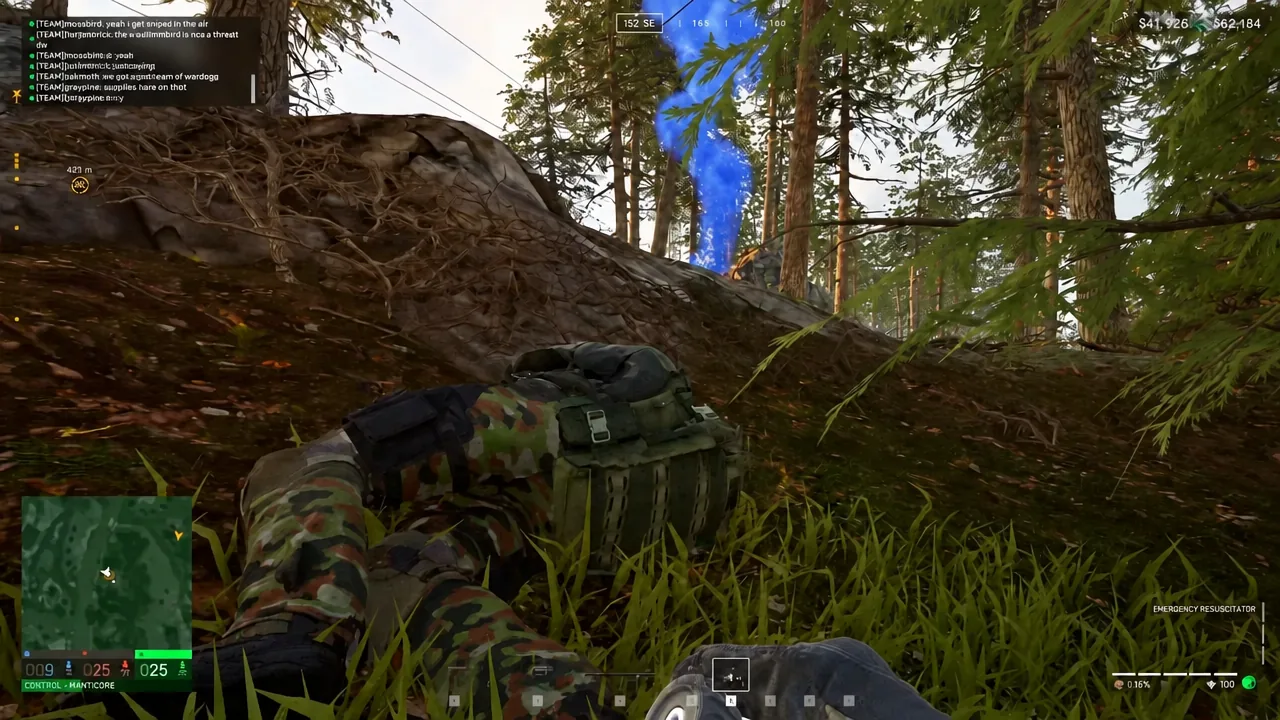
Tip: audit your weight every time you unlock something new. It is easy to buy an upgrade, keep the rest of the kit identical, and quietly drop a tier without noticing until you cannot sprint to the zone.
Which weapons and tools level which role
There is no class select screen. Six progression tracks run in parallel, each capping at level 100, and they all feed an overall Wardog level that goes up to 600. What you carry and what you do during a life decides which bars move.
| Track | What feeds it |
|---|---|
| Assault | Assault rifles, sidearms, and Frag Grenade kills |
| Medic | SMGs, healing, and reviving teammates |
| Recon | Marksman and sniper rifles, spotting and tracking targets |
| Support | LMGs, shotguns, launchers, building and repairing |
| Driver | Ground vehicles |
| Pilot | Helicopters |
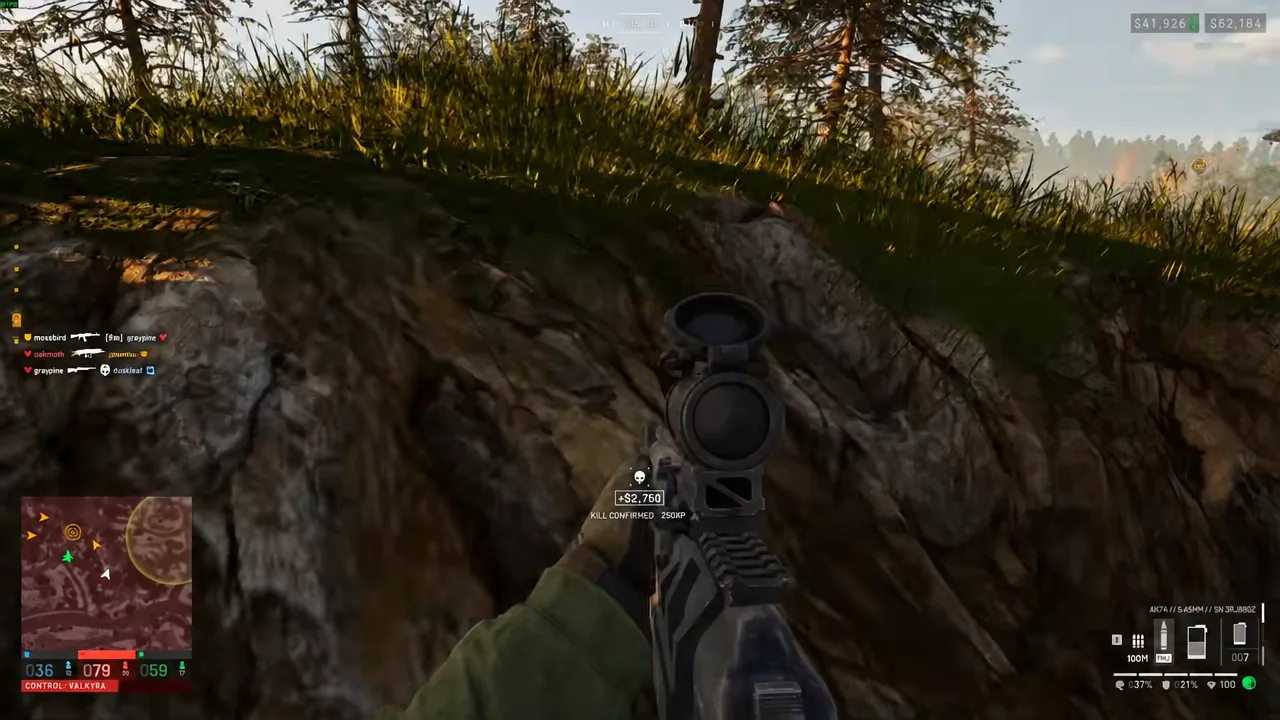
You can double dip. Carrying an SMG while running binoculars feeds Medic and Recon in the same life. A rifle with a defibrillator in the third slot grows Assault and Medic together. That is the fastest way to open unlocks across the board early on.
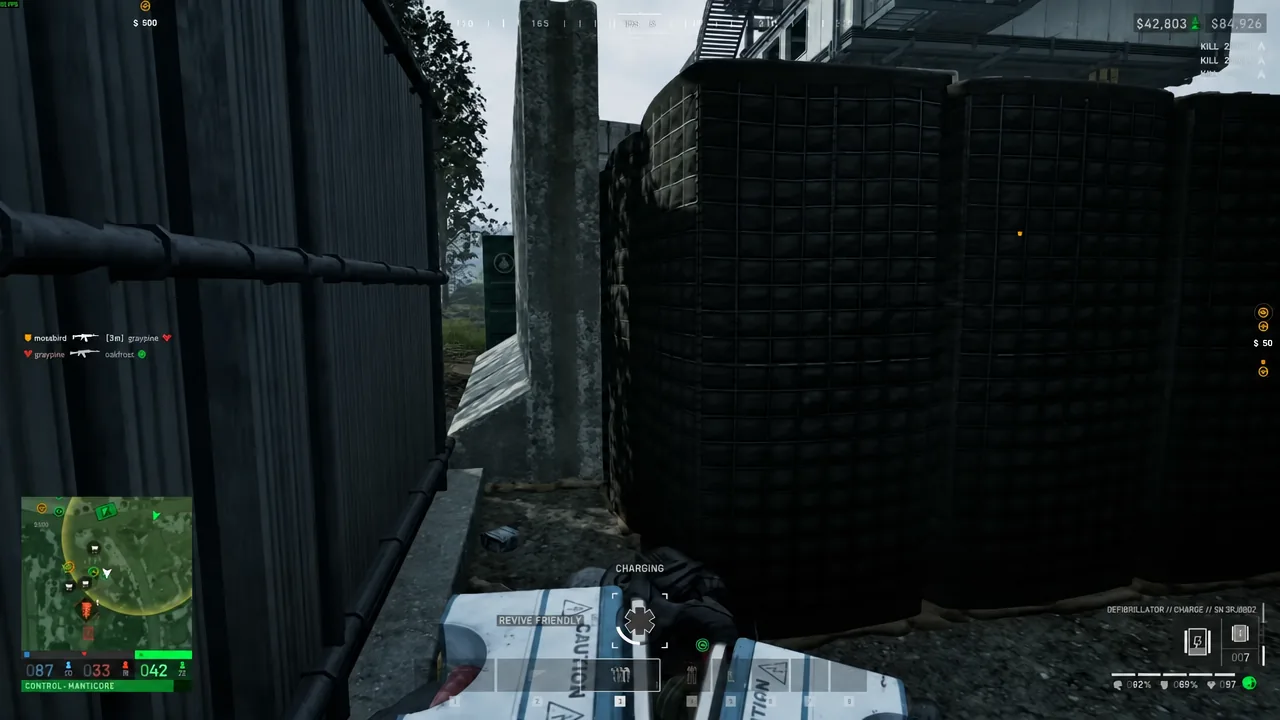
Levels only grant permission. Once a track hits the required rung, you still pay a separate persistent cash fee to unlock the item before it appears in the vendor. The AK74 unlocks at Assault 3 for $10,000, the Galil at Assault 10 for $35,000, and the M4 at Assault 20 for $100,000. Season 1 also slowed the middle of the curve, so levels 10 through 20 take noticeably longer than they did in the beta.
Best starter loadouts by budget
Three kits cover almost every early situation. Build them in the order below as your bank grows.
The $180 free rifle kit
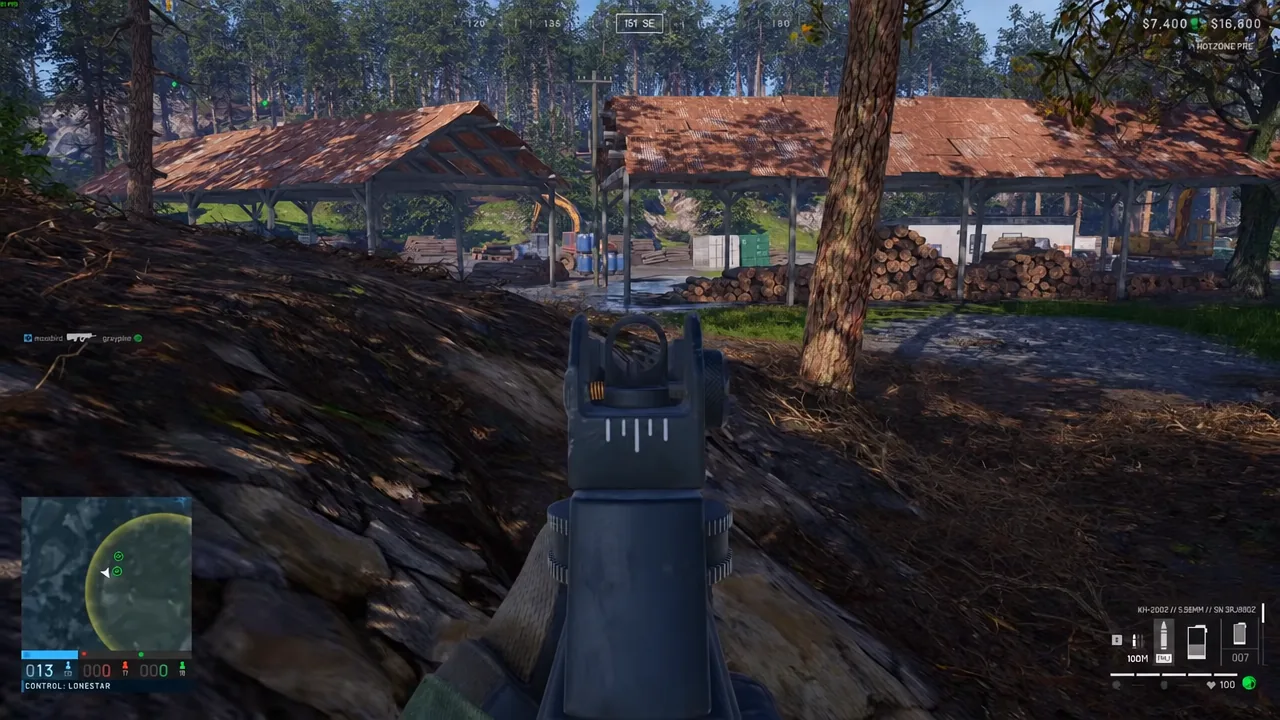
The A-91, Bushmaster M17S, and KH-2002 all cost nothing, fire 5.56x45mm at 28 damage per round, and run at 700 rpm. That 28 damage figure is identical to the M4 at $2,800, because the round decides the damage, not the price tag. Their one real weakness is fire mode, since all three are limited to semi-auto and burst.
Pair one with two spare 20-round magazines at $40 each, the free starter pouch, the free Resuscitator, and a $100 parachute. The whole thing lands at $180 and about 3.8 kg. You arrive at the objective fast, and you replace the rest of your gear by looting the people you kill.
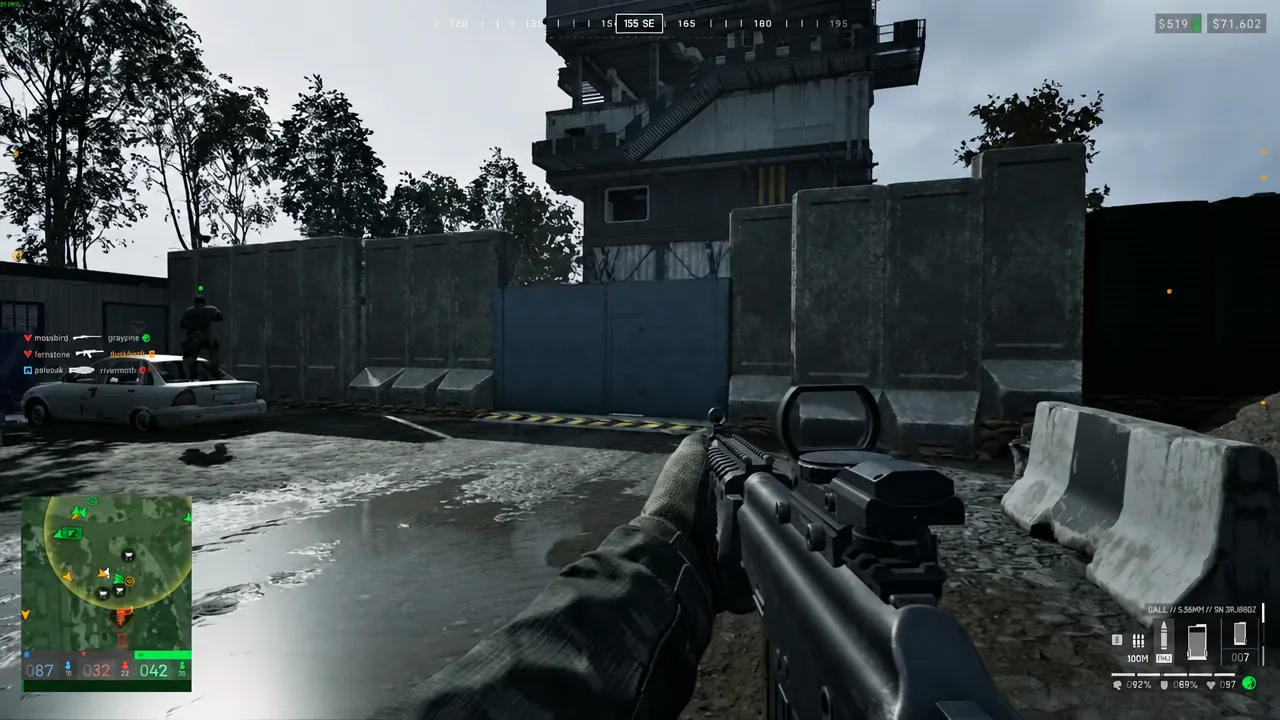
The $600 T-21 upgrade
The T-21 has no Assault level gate and costs $600 per life. It fires the same 5.56 at the same 28 damage, but adds full auto, 750 rpm, 910 m/s muzzle velocity instead of 715, and 0.87 MOA accuracy instead of 1.5. The velocity increase alone changes how much you need to lead moving targets across a Control Zone that size.
Add a sidearm, because primary ammunition runs out fast and reloading in a doorway loses fights. The GGX 17 costs $200, the Judge $250 for a three-shot kill at 35 damage, the M1911 $300, and the GGX 18 $800 for a full-auto 9mm that hits a 200 ms best-case time to kill. A $200 helmet, $400 basic armor, and a $100 tac-vest keep the kit light while adding real survivability.
The $4,845 Recon starter kit
For the Recon track, the Scout Rifle TD with an optic and a Strelix suppressor runs $2,780 as configured. Add a $200 GGX17 with one spare magazine at $47, a $150 Monocular in the spec item slot, $400 basic armor, a $100 tac-vest, 80 loose rifle rounds at $120, five bandages at $1,000, and the free Resuscitator and starter backpack.
The total is $4,845 at 10.6 kg, which keeps you in the Light class. Skip the helmet. The Monocular is the real earner here, because spotting enemy infantry and vehicles pays cash and feeds Recon progression even on lives where you never get a clean shot.
Mid-game upgrades worth the cash
Once your bank can absorb several deaths without turning the next match into a recovery job, the picture changes. The Galil at $2,200 per life gives you 35-round magazines and a higher rate of fire than the AK74. The M4 at $2,800 pushes to 800 rpm. The MP5 at $1,500 is a reasonable SMG for Medic play, though 9mm needs five hits to down an unarmoured target instead of four.
Level 2 armor, a larger backpack, and a defibrillator are the more meaningful upgrades. The defibrillator unlocks at Medic 11 and costs $1,600, and it turns every downed teammate into instant cash and XP instead of a wasted rebuy. Remember to buy batteries for it. The RPG-7 unlocks at Support 5 for $2,000 with rockets at $200 each, and it does not suffer reduced damage against infantry.
A fully kitted medic build with an AK74, helmet, armor, tac-vest, Field Backpack, three spare magazines, five bandages, and four Individual First Aid Kits lands near $9,330 and requires Medic 11. That is a lot of money riding on one life, so only field it when you are confident you can stay near teammates and get revives done.
Early spending mistakes that stall progression
A few purchases look like upgrades and are not, at least at current values.
- The AK74 as a first buy. It deals 26 damage at 650 rpm, which is a slightly slower time to kill than a rifle that costs nothing. You are paying $1,600 per life for accuracy and velocity while taking a damage downgrade.
- Cheap SMGs and snipers early. The Scout Rifle TD chambers 5.56 for 28 damage at 46 rpm, so it needs four hits. Budget 9mm SMGs need five. Neither wins trades against a $600 rifle.
- Overfilling the backpack. Slots are not a shopping list. Every extra rocket, brick of C4, and stack of loose rounds drags you toward Heavy.
- Spending the full $10,000 on one life. Keep a reserve. A single bad death with no buffer forces you back into the free kit anyway.
Armor is usually the better use of a few thousand dollars than a rifle upgrade, because it applies before ammunition type in the damage calculation. The enemy shooting you with a free rifle does exactly as much damage as the one shooting you with an M4, and the vest is the only thing that changes that number.
One last thing worth planning around. At the end of a major update cycle, role levels and cash reset, with leftover money converted automatically into gold bars. Reset windows are announced ahead of time, so there is no reason to sit on a hoard you never spend. Unlock the gear you will actually field this cycle, keep your kits light enough to sprint, and let the tracks fill in around the way you already like to play.