Debt Hunt drops you in a procedurally generated forest with a camper, a debt you did not choose, and a wolf that starts hunting at sunset. It is a survival-escape experience published on Roblox by T0pH4t_Studios, built from an original concept by NZTeam, and it is still labeled Alpha — numbers and screens can shift between updates. The loop itself is simple enough to explain in a paragraph, but the timing is what kills new players.
Quick answer: Scavenge loot during the day, drop everything into the SELL crate at the camper before the day ends, and be inside cover once night falls. Your balance rises on the Day Results screen after each night. Clear the full amount before the day counter reaches zero.
Debt Hunt run structure: balance, days, and the sunset switch
Every run opens on Day 1 Morning with two numbers that matter. The balance shows what you have banked against what you owe, written as something like BALANCE 200 / 1000 $. Alongside it sits a day counter, usually three days to clear the debt. Difficulty changes how much you have to extract, so a first run on Easy is the cheapest way to learn the clock.
| Phase | What you should be doing |
|---|---|
| Day Morning | Open crates, mine ore, forage, and haul loot back to the camper. This is the only safe farming window. |
| Day Night | The wolf hunts. Stop making noise, stay near the camper or hide inside it, and only move if you have a route. |
| Day Results | The screen tallies everything left in the SELL crate, pays you, and updates the balance before the next morning. |
Nothing is paid out mid-day. Items only turn into money when the day ends and the results screen runs the tally, which is why a full backpack at sunset is worth nothing if you never make it back to the crate.
Debt Hunt controls
The control set is short, and the game prints it on screen during the tutorial. Learn N in particular — most interactions in the world are click prompts, and if your cursor is locked to the camera you will stand next to an object mashing keys that do nothing.
| Action | Key |
|---|---|
| Pick up | E |
| Drop | Q |
| Throw | G |
| Sprint | Shift / LShift |
| Toggle Mouse | N |
Tutorial: fuel the generator with gasoline
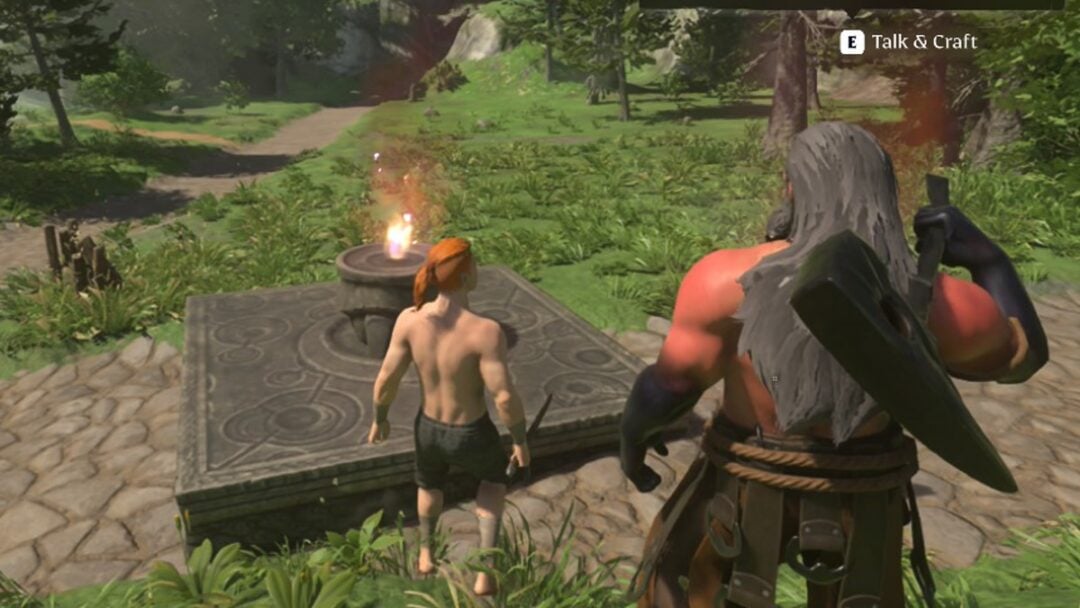
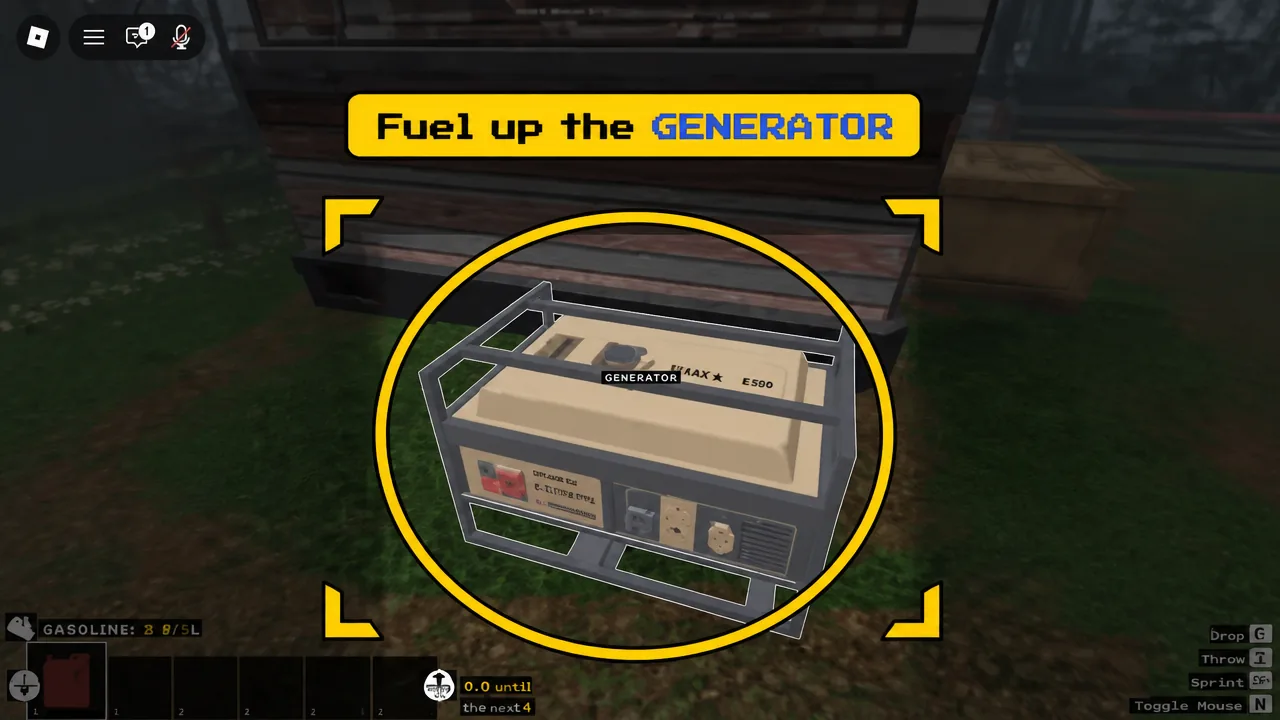
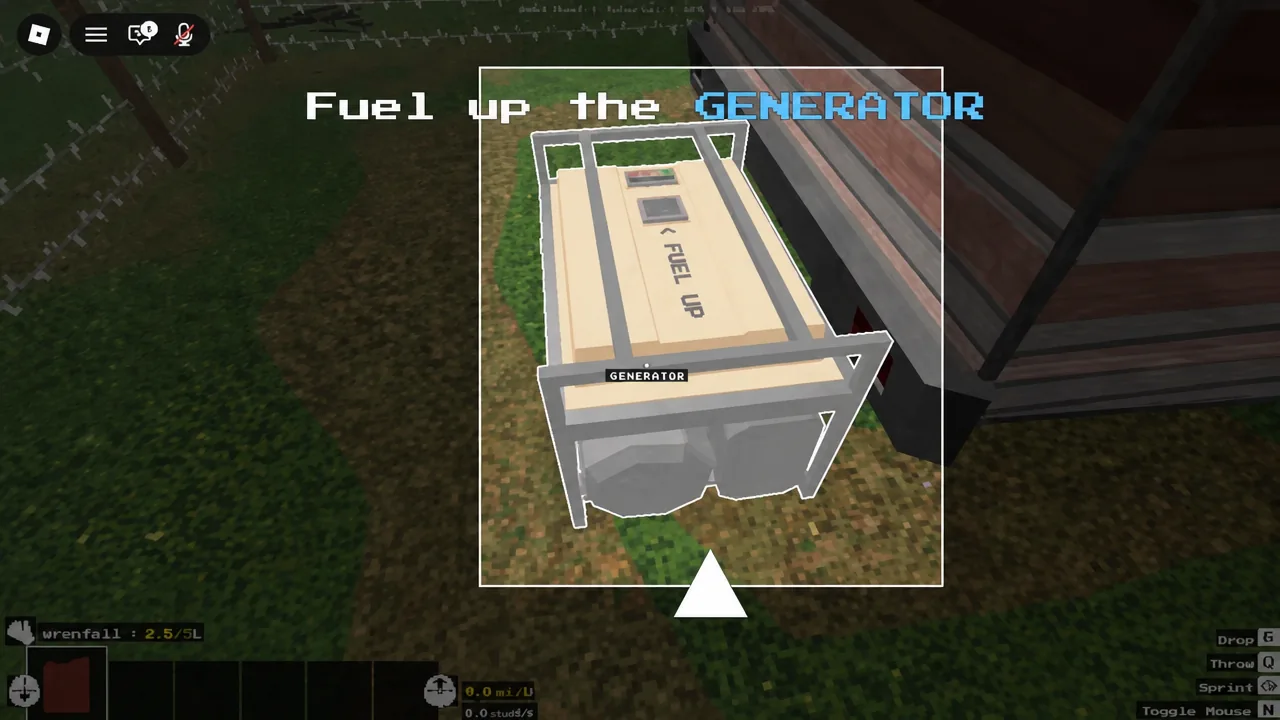
The lobby tutorial added in Update 1 hands you one task, and it is the same task that gates power for the rest of the run. It is also where most first-timers get stuck, because the refuel is a click prompt rather than a keypress.
E to pick it up. The objective text reads Pick up the GASOLINE, and the canister will be highlighted.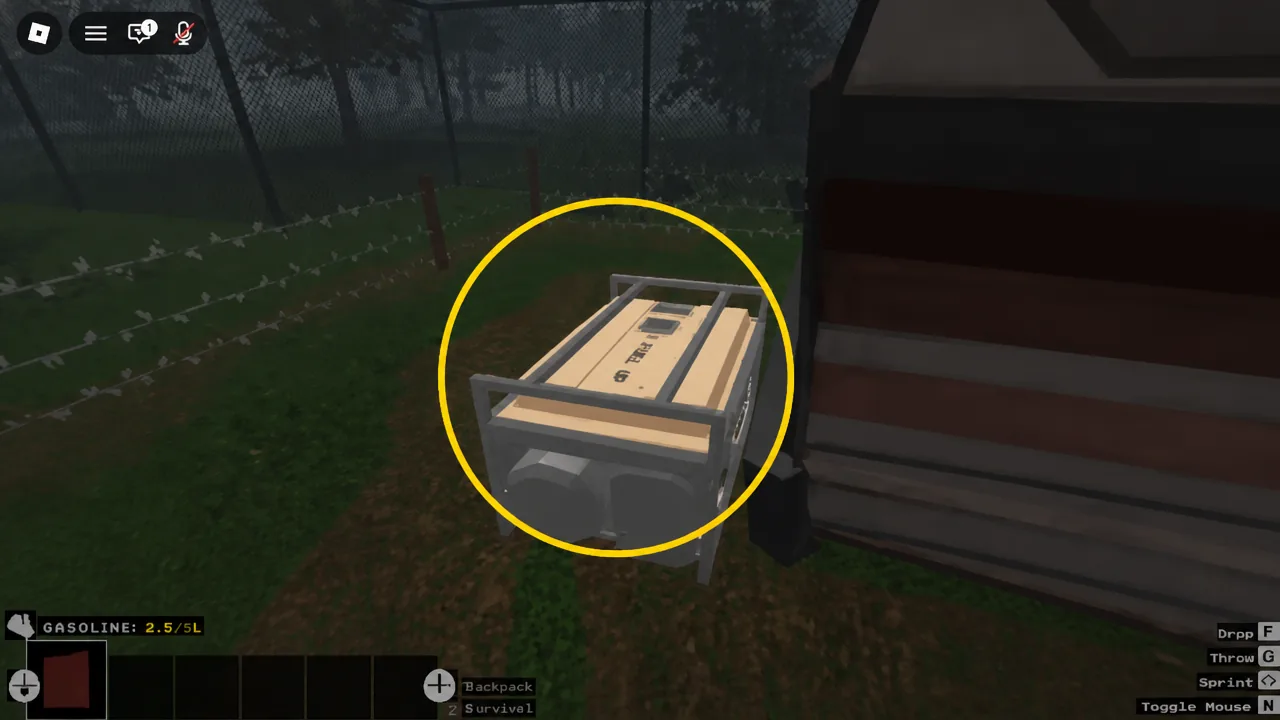
Fuel up the GENERATOR, and a REFUEL WITH GASOLINE option appears on the machine when you are close enough while holding the canister.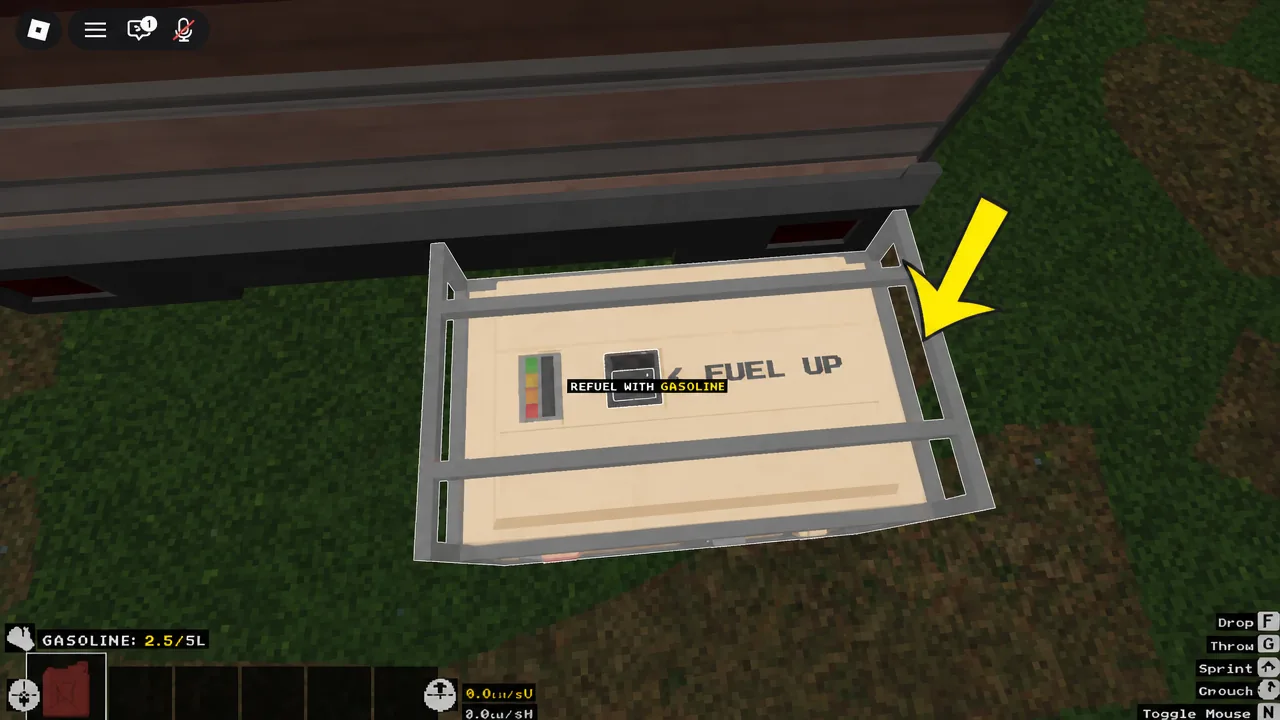
N to toggle the mouse free, then click the option again. The canister has a capacity readout, so a partly used one may not fill the tank completely.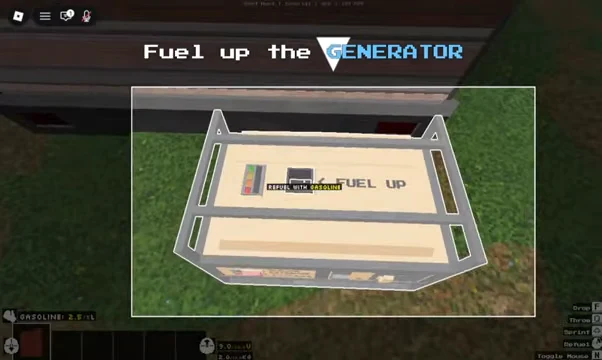
Where the money comes from
Almost everything loose in the forest has a price. The camper is your bank: drop loot into the SELL crate, and the day-end tally converts the pile into cash. Heavy objects like a car battery or a coil of cable slow you to a crawl while carried, so plan those hauls for daylight and short distances.
| Loot type | Examples and where they turn up |
|---|---|
| Forageables | Oyster and bolete mushrooms, berries — forest floor and the edges of campsites |
| Minerals | Common through legendary ore from red, white, and green deposits — rock faces, trenches, and the quarry, broken with a pickaxe |
| Small valuables | Wallets, driver licenses, Polaroids, cell phones, lighters, spray paint — tents, picnic tables, the abandoned cabin |
| Tools | Pickaxe, hammer, wrench, saw, shovel — mostly locked supply crates |
| Heavy scrap | Car battery, cable coil spool, metal scrap, paint buckets, medkits — cabin, ravine, observation tower |
The camera is a second income stream. Equip it, get a clean shot of the monster, and keep shooting until the memory fills. It is the one activity that rewards being near the thing trying to kill you, so treat it as a bonus rather than a plan.
Supply crates and the four-digit lock codes
Locked supply crates sit around the map, including one by the bulletin board near camp, and each uses a combination lock. The four-digit code is written on a paper note hidden somewhere on the map — inside a rocky trench, a tent, or a building. A note might read that the password for the forest supply crate is 0310, and a second crate will use a different number entirely.
Because the world is procedural, do not carry codes between runs. Read every note you pick up, then walk it to the crate the note names. Crates are how you get the pickaxe that unlocks ore income, so opening one early on Day 1 changes the whole economy of your run.
The laptop: Dark Market and Ragblox City News
Once the generator has fuel, the laptop inside camp comes online. It holds two things worth checking. The Dark Market is the store, and it is where a rifle and ammo boxes are bought later in a run. Ragblox City News prints headlines that change the run’s economy — a piece about rare minerals hints at what is worth mining, while an Economic Boom headline raises online store prices by 30 percent.
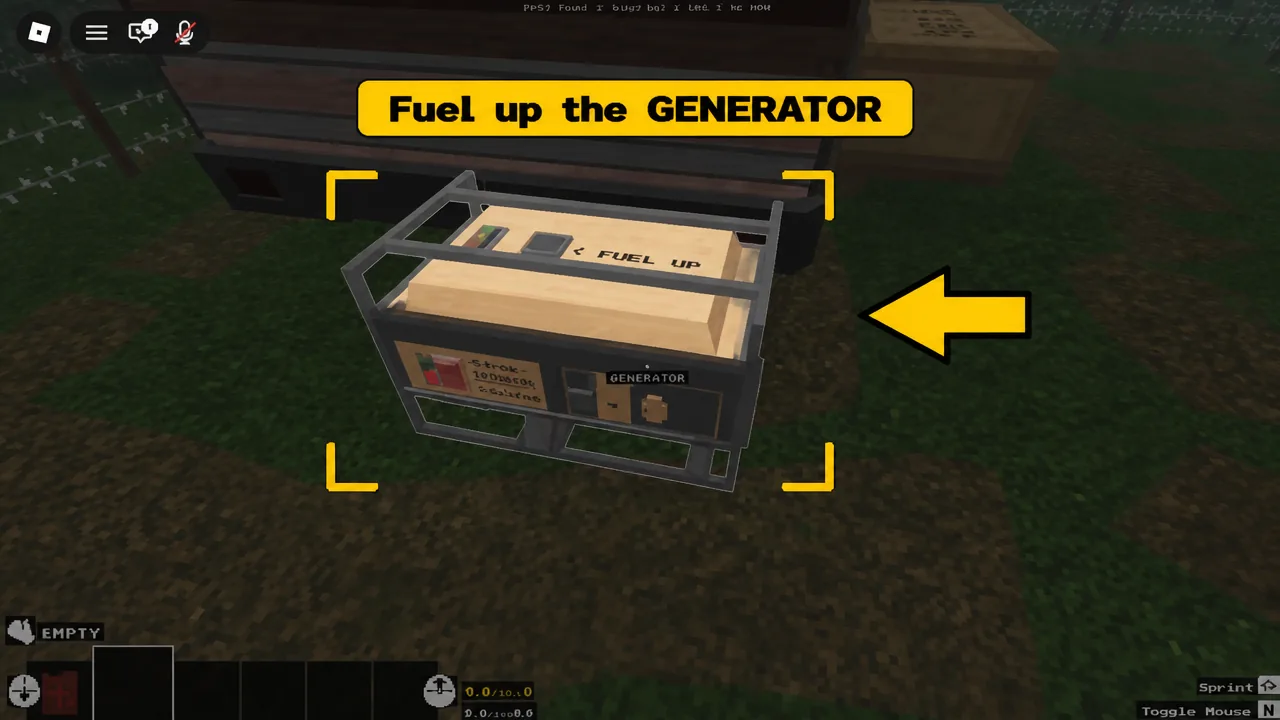
Note: fuel runs out. Spare gasoline canisters can be found out in the world, including down in the ravine and bunker areas, so grab one when you see it rather than making a special trip in the dark.
Surviving the night hunt
The screen fades to black and comes back reading Day 1 Night. From that point the wolf is active, and it roars before it reaches you — that sound is your cue to stop what you are doing and move toward cover. Mining and heavy hauling are loud, slow activities and both are bad ideas after dark.
The camper is the reliable hiding spot. Crouch inside and hold still, and the monster will patrol past the window and even up to the doorway without finding you. It will leave. The mistake is bolting early, because it does not wander far and an open door is an invitation. If you must farm at night, stay close to camp and to lit areas so you always have a short sprint home.
Reading the Day Results screen
Survive to morning and the Day Results screen itemizes everything sold, gives a total, then shows the new balance. It is the only progress check that matters. A weak first day might be 47 dollars against a 1,500-dollar target, while a strong second day with minerals and licenses can post 975 dollars in one go. The jump usually comes from tools: once you have a pickaxe and a route between ore deposits, income scales far faster than foraging does.
If the balance did not move, the loot was not in the SELL crate when the day ended. Items still in your hands, on the picnic table, or scattered on the ground are not counted.
Clearing the debt and the wolf hunt phase
When a results screen pays out enough to cover the full amount, the debt is settled and the leftover cash carries over as your new balance. The run does not end there. A second phase opens on a fresh Day 1 Morning, this time with three days to hunt the wolf instead of three days to pay.
The hunt phase runs on the same economy, and the goal of all that scavenging is a purchase. Fuel the generator, open the Dark Market on the laptop, and buy a rifle plus several ammo boxes. Load it at camp before dark, then take the fight from behind the campsite fence or from inside the camper when it charges the door. Landing the final shot brings up the SUCCESS screen with your cash earned, days survived, and run statistics.
Redeem the RELEASE code for starting cash
One code is currently paying out, and it is worth entering before your first run because 900 dollars is a meaningful chunk of a starting quota.
| Code | Reward |
|---|---|
| RELEASE | 400 XP and $900 |
The rhythm that carries a run is unglamorous. Open a crate early to get a tool, build a short loop between ore, campsites, and the SELL crate, and treat sunset as a hard stop rather than a suggestion. Since the build is still in Alpha, quota amounts, crate contents, and store prices can all change between patches, so check your balance and day counter at the start of each morning rather than assuming last run’s math still holds.