EA FC 27 is built around one clear idea. The game leans away from automatic AI help and asks you to make the key decisions yourself, whether you are stopping an attack, delivering a corner, or threading a pass through the middle. Nearly every core mechanic from FC 26 has been retuned to reward manual inputs, and the football simulator arrives this September on PC, PlayStation 5, Xbox Series X|S, PlayStation 4, and Xbox One.
Quick answer: AI defenders no longer auto-tackle in competitive play, manual defending gets faster jockeys and a wider tackle reach, corners split into two phases with a new Avoidance mechanic, crosses and through passes follow your aim strictly, and several meta PlayStyles now lean on base attributes.
Defending in EA FC 27: AI nerfed, manual play buffed
The single largest shift lands on defending, and it applies to competitive gameplay like Ultimate Team. In FC 26, an AI-controlled defender would automatically stick out a leg when a dribbler drew close. That behavior is gone. Defenders now hold their shape and support the play through positioning, and it is on you to switch to the right man and commit to the tackle.
AI teammates can still win the ball in specific moments. A loose ball that rolls into their path or a dribbler who runs straight into them can be trapped, and you may see a defender extend a leg. That is a reaction to the ball rather than a tackle attempt. EA also shortened the AI’s reach for interceptions, and Teammate Contain now marks the ball carrier from a slightly longer distance, so pressing a dribbler tightly means taking control yourself.
To keep the balance fair, the defender you actually control gets meaningful upgrades. Jockey speed is quicker than FC 26, which helps you keep pace with agile wingers. Stand tackles cover a wider range, and a manually controlled player reaches further for tackles, interceptions, and blocks than any AI teammate can. The message is direct. Switch to the best defender, jockey, time the tackle, and you are far more likely to win the ball.
| Area | What changed in FC 27 |
|---|---|
| AI auto-tackles | Removed in competitive play; defenders hold position instead |
| Loose balls | AI can still trap balls that roll into reach or when a dribbler runs into them |
| Interception reach (AI) | Reduced compared with FC 26 |
| Jockey speed (manual) | Increased over FC 26 |
| Stand tackle range (manual) | Wider than FC 26 |
| Teammate Contain | AI marks from a slightly longer distance |
Note: These defending changes cover competitive gameplay. Authentic gameplay tuning for modes like Career Mode is being detailed separately.
Corner kicks and crossing get a two-phase rework
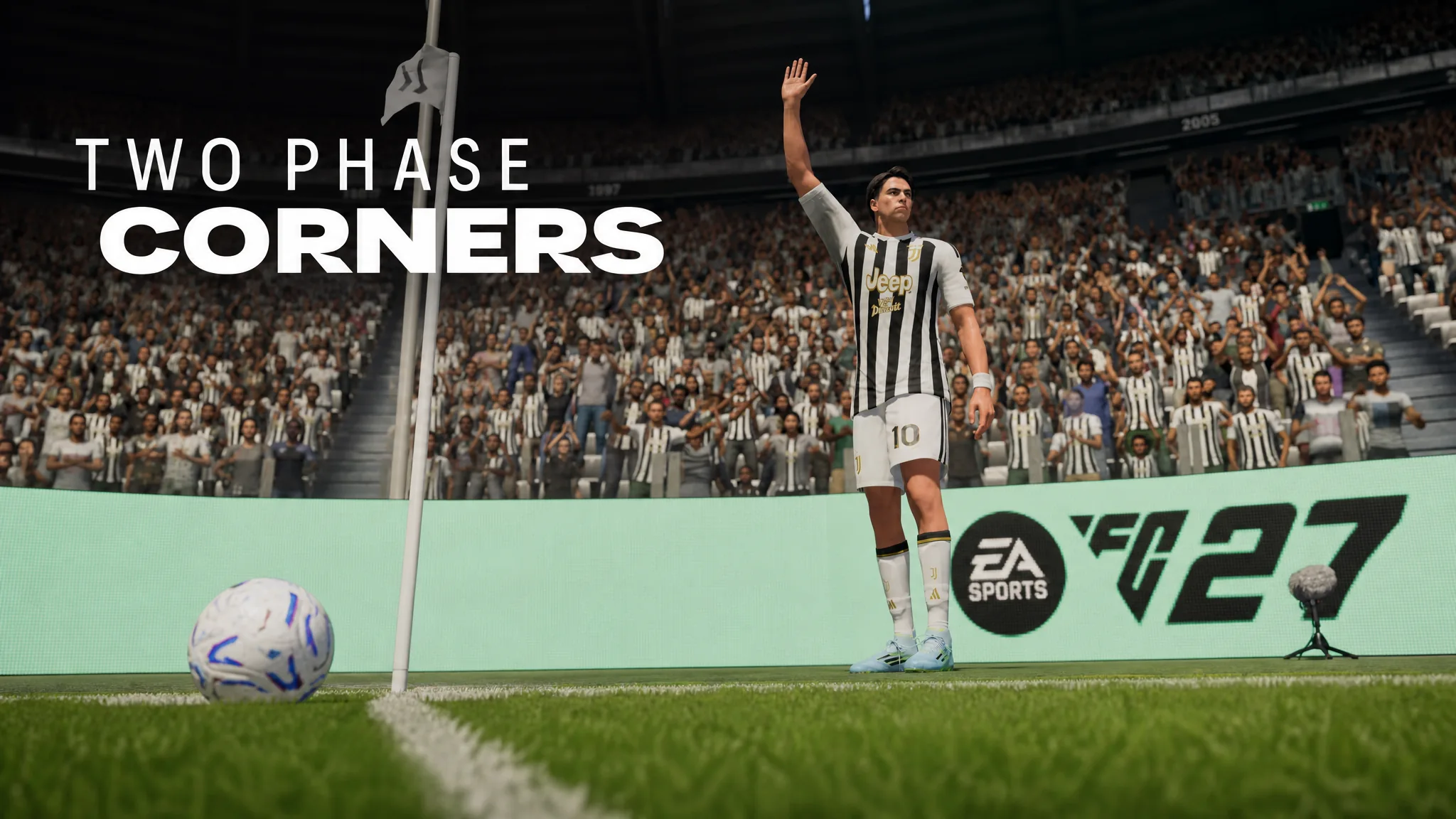
Corners now play out in two stages. After you aim your delivery, the camera shifts toward the box and opens a short window before the ball arrives. In that window you can move players, switch between them, make runs, shield, or use the new Avoidance mechanic to fight for position. This only applies to direct corners. Take a short corner and you return to your normal gameplay camera.
Attackers no longer glide automatically into the ideal spot to meet the ball. You have to time the run, attack the space, and win first contact by hand. Miss it and the delivery can sail past everyone, but a well-timed run produces more varied and satisfying finishes.
Avoidance is the standout new tool. Holding R1 or RB during a corner lets an attacker or defender you control slip through crowded areas without getting blocked by opponents. Pair it with Shielding and your player can create space, then hold position so defenders cannot step in front, which opens up more scoring chances.
Crossing is far less assisted this year. Crosses drop into space more often instead of homing onto a specific player, and your aim and power decide exactly where the ball lands. Whip it in without precision and it can miss everyone. The goal is to reward players who spot space down the wing and play the ball in front of a runner rather than locking onto their current position.
Headers follow the same logic. Clean contact from crosses and corners now demands more precision, so tidy headers are rarer. The trade-off is that when you do connect cleanly, the header is more accurate than in FC 26. Expect to see players stretch, dive, and adjust their runs to attack the ball from new angles.
Smarter attacking runs and new manual triggers
Attacking Spatial Awareness has been upgraded so AI attackers read space and movement more intelligently. In older games, runs could feel stiff, with players charging into crowded zones or reacting too slowly. Now teammates make contextual curved runs, bending around defenders and staying onside while they wait for the pass. A winger can run parallel to the defensive line, then curve into the box once the pass is played because the offside line no longer holds them back.
You also get two new ways to trigger movement yourself. A regular triggered run still sends a player straight forward, but the new curved options bend toward open space instead. Because these runs follow a longer, curved path, they take a little more time to complete.
| Run type | Input | Effect |
|---|---|---|
| Triggered Curved Run | Tap L1 + R1 (LB + RB) | Player curves into open space to get behind the defense |
| Pass & Follow Run | L1 + R1 + X (LB + RB + A) | The passer follows with a curved run to overlap or cut inside |
There is one important catch. Manually triggered runs no longer continue forever. In FC 26 you could start a run, carry the ball far away, and rely on that player to keep sprinting indefinitely. Now runs cover a limited distance before the player stops and returns to their position. If you want the run to keep going, trigger it again while you stay within range of that player. The result is attacking movement that feels more deliberate and less exploitable.
Passing and off-balance dribbling changes
Through passes lose their heavy assistance. Ground and lobbed through balls now strictly follow your directional input instead of steering toward open lanes on their own. That rewards deliberate aim in attack and gives manual defenders a fair shot at reading the play and intercepting.
Dinked passes, both ground and through, move to a fully manual system. Success now depends on your own precision with aim and power, which raises the skill ceiling for these passes and keeps attacking creativity and defensive anticipation more evenly matched.
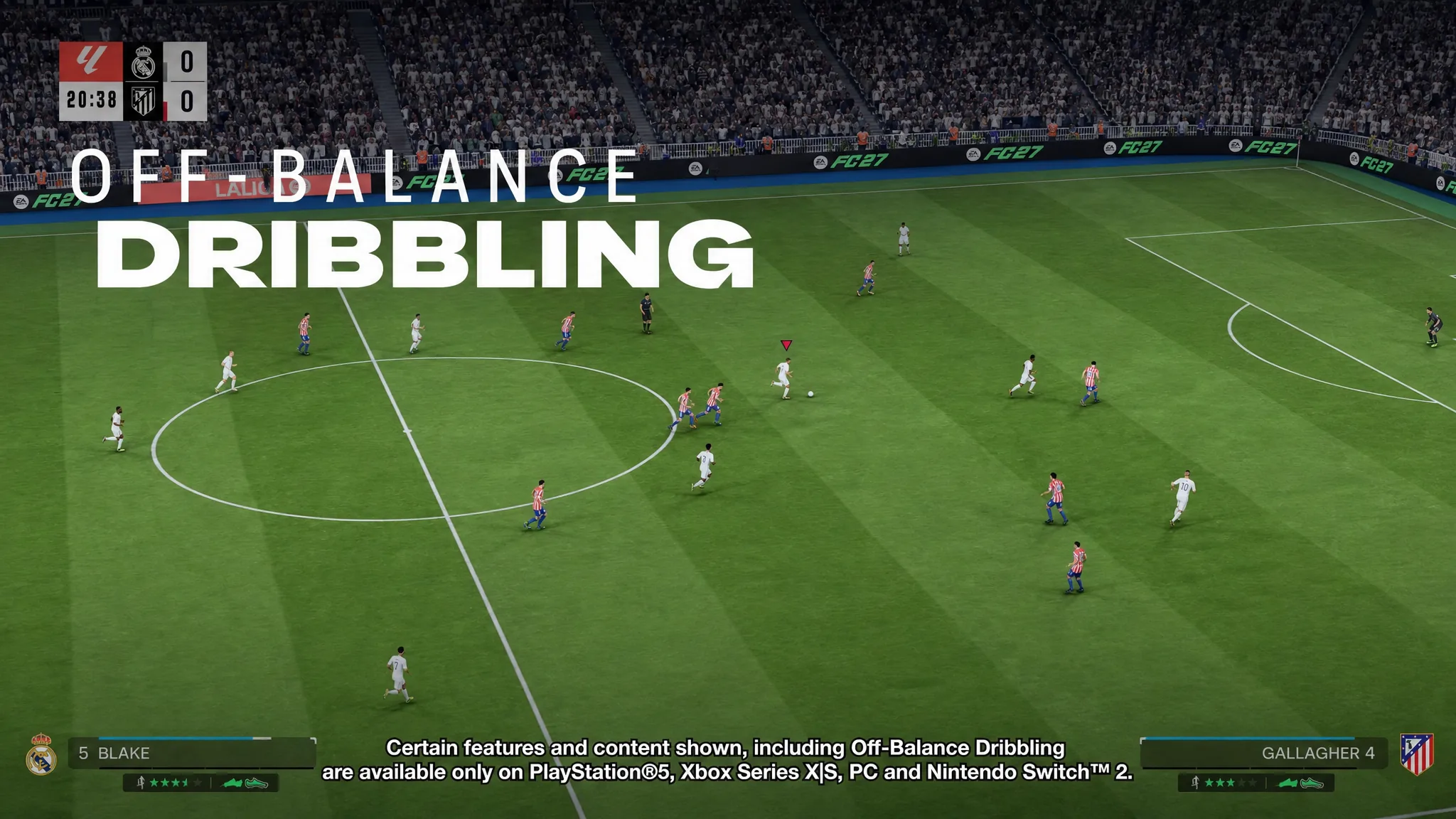
Off-balance dribbling is a brand-new mechanic, available only on PS5, Xbox Series X|S, PC, and Nintendo Switch 2. Driven by a player’s Balance, Agility, and Dribbling, it lets elite dribblers ride challenges instead of losing the ball on contact. When an agile player is bumped or shoulder-charged, they enter a stumble animation, yet you keep full control and can take a touch mid-stumble in any direction to escape. It is a clear boost for smaller, technical players in one-on-one situations.
PlayStyle and attribute rebalancing
In FC 26, the meta often came down to who owned the strongest PlayStyles rather than the best raw stats. FC 27 narrows that gap by pushing core attributes back into the spotlight, so several staple PlayStyles have been reworked or toned down.
| PlayStyle | Change in FC 27 |
|---|---|
| Finesse Shot | Spin and animation speed now scale with the player’s base attributes |
| Technical Dribbler | Smaller gap between the base PlayStyle and PlayStyle+ |
| Intercept | Non-PlayStyle players with high Interception stats get better reach |
| Rapid & Quick Step | Speed boosts reduced so Acceleration matters more |
| Pinged Pass & Tiki Taka | Removed the first-touch trap advantage for the receiver |
| Jockey | Higher sprint acceleration for players without the PlayStyle |
| Low Driven | Shot velocity relies purely on core shooting attributes and input power |
Taken together, these changes point toward a more skill-based match. Manual defending, precise crossing, deliberate passing, and hand-timed runs all carry more weight than they did last year, and the automation that used to smooth over mistakes has been dialed back. Players who put in the practice on switching, jockeying, and aiming will feel the biggest reward once the game reaches the pitch in September.