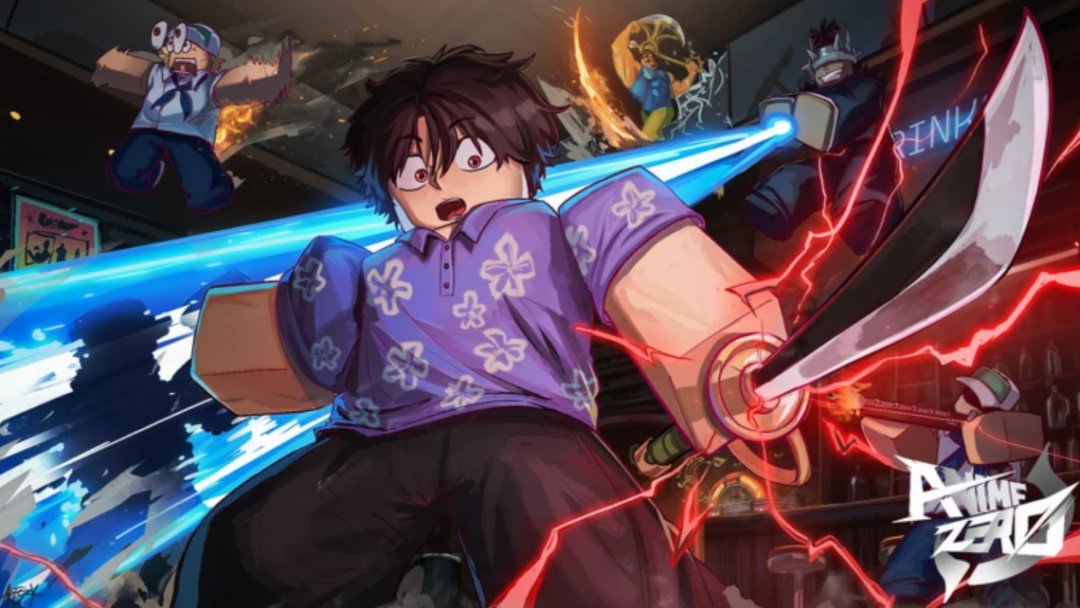
Grand Blue is a One Piece-inspired Roblox game built around quest chains, open-world bosses, and a fruit system that decides most of your damage. The early hours reward players who follow the intended path instead of wandering off, because levels, stat points, and skill slots all come from the same quest and boss loop.
Quick answer: Finish the tutorial to unlock Strong Punch and your first levels, then follow the main quest line and confirm a quest is active in the tracker before you start killing enemies, since kills without an active quest may not count.
Start with the tutorial and your character setup
The tutorial is not skippable content you should rush past. It teaches the basic combat inputs, hands you a few free levels, and unlocks Strong Punch, which is the first attack you will lean on before any scroll or fruit shows up.
Before you leave the starting area, open the character screen and look at your race and traits. Races come in rarities including Legendary, Epic, and Rare, with an extremely rare Celestial variant for Humans at roughly a 0.1% chance. Traits stack on top of that, and some are genuinely useful early: food buffs that are 25% stronger or last 25% longer, a speed burst when your health drops below 30%, or an extra dash.
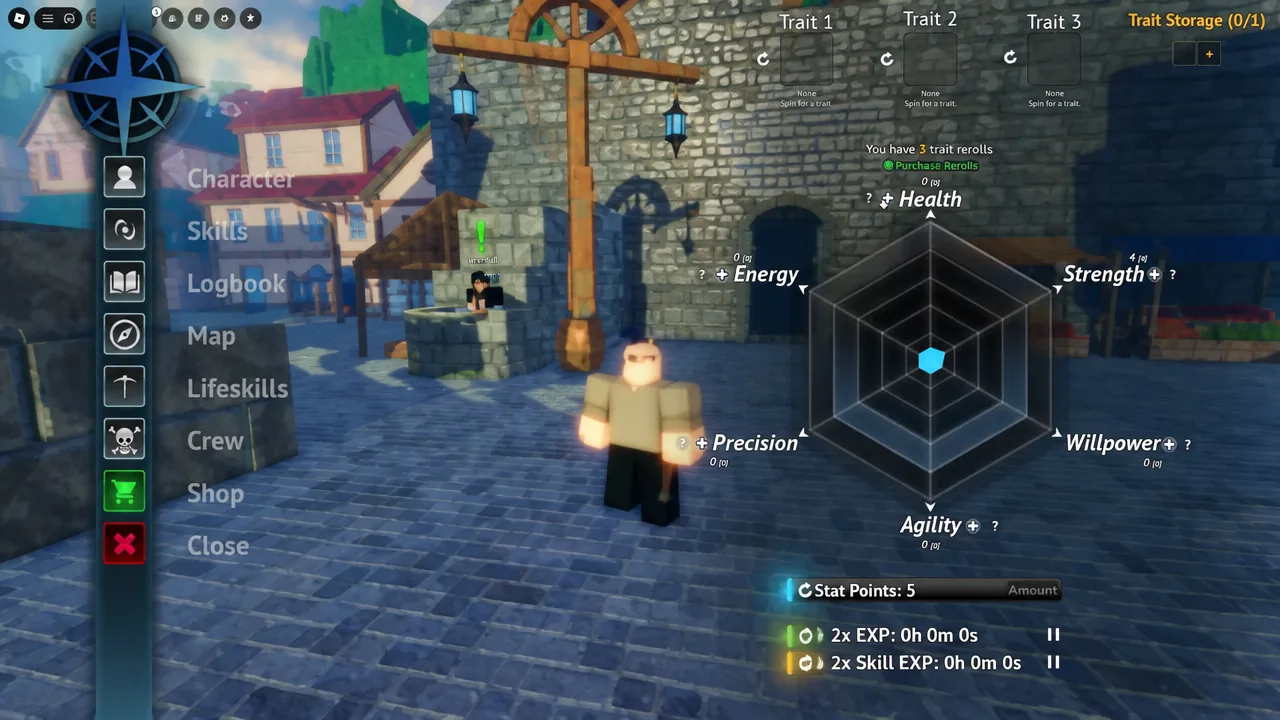
Rerolls can be bought with Robux, where around 100 rerolls costs 5,000 Robux. You do not have to pay, though. Daily activities, quests, and the achievement list in the Logbook all pay out currency you can spend on rerolls and crates, so a free-to-play account can chase the same traits on a slower timer.
How to level up fast in Grand Blue
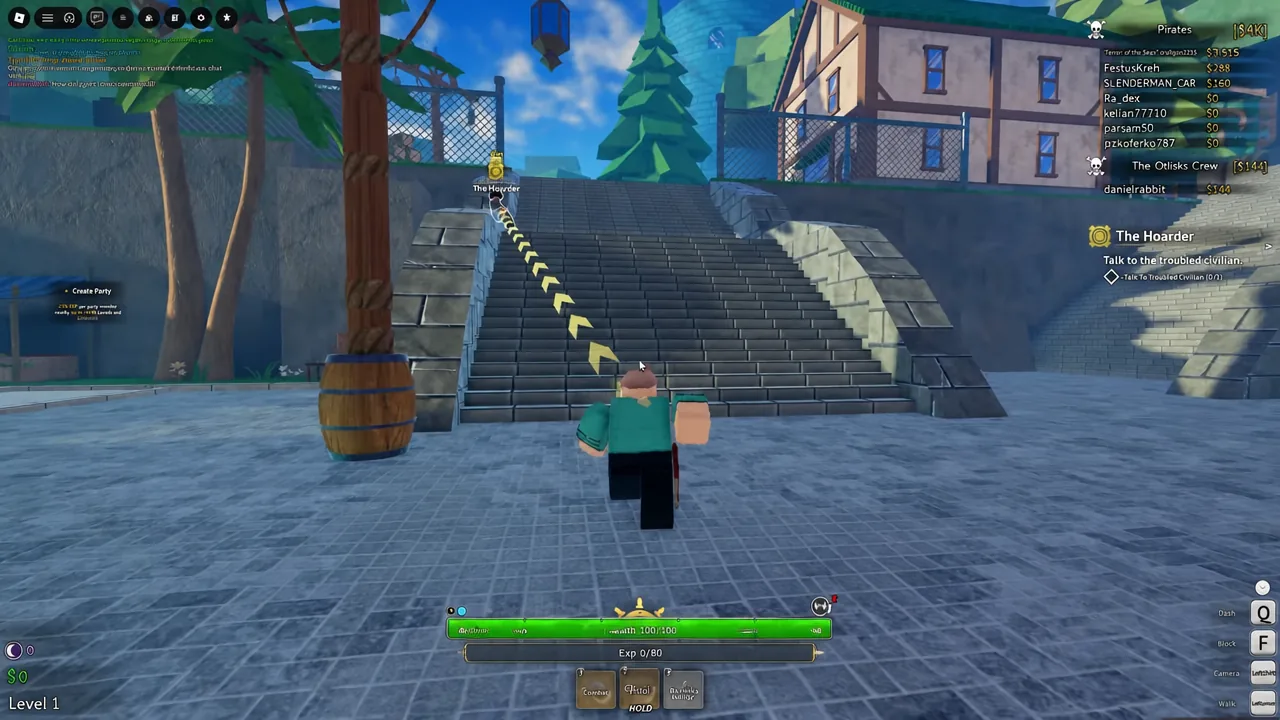
Levels come from the main quest line, and the fastest route is simply not to break the chain. Quests send you to defeat enemies, collect items, complete training objectives, and travel between areas, and each completion pays experience plus stat points.
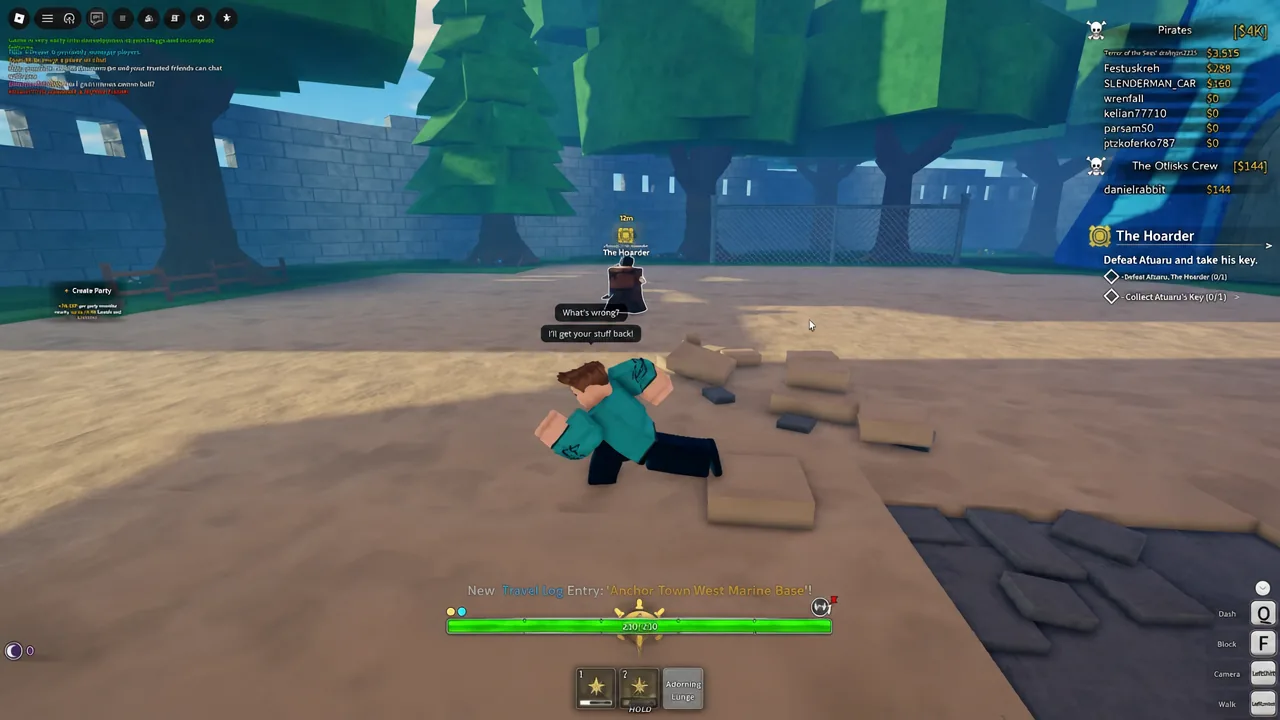
Note: Skills also drop from enemies and unlock through training rather than being bought from a menu, so grinding quest mobs is doing double duty.
Stat points and what each one does
Points are split across six stats. Pick one damage route and support it rather than spreading points evenly, because abilities drain your resource pool quickly in the early game.
| Stat | What it affects |
|---|---|
| Health | Survivability against mobs and boss burst damage |
| Strength | Physical damage output |
| Willpower | Supports your character’s resilience |
| Agility | Movement and repositioning |
| Precision | Accuracy-focused offense |
| Energy | Fuel for skills; drains fast if you spam abilities |
If you find yourself out of resources mid-fight, Energy is the stat to top up. If you are building around sword damage or another single playstyle, push the stat that feeds that damage directly.
Weapons, skill scrolls, and fighting styles
Equipping a Cutlass opens up a sword build, and skill scrolls layer active abilities on top of it. Unlocking Sword Lunge triggers a prompt reading “You unlocked the skill Sword Lunge! Would you like to equip it?” — accept it, because an unequipped scroll does nothing.
Sword training quests push that further. One early requirement is dealing around 200 sword damage, which unlocks Power Slash. Skills can then evolve rather than being replaced, and Power Slash can be upgraded so the slash fires a projectile. Later, abilities you have used enough offer upgrade choices that raise their damage.
You are not locked into melee. A gun is available early as a secondary weapon with its own skill set, so a ranged or hybrid build is viable from the start.
Not every fighting style is a straight purchase. Brawler asks for physical training in the form of push-ups and sit-ups on top of the currency cost, so budget time for it rather than assuming money alone unlocks it.
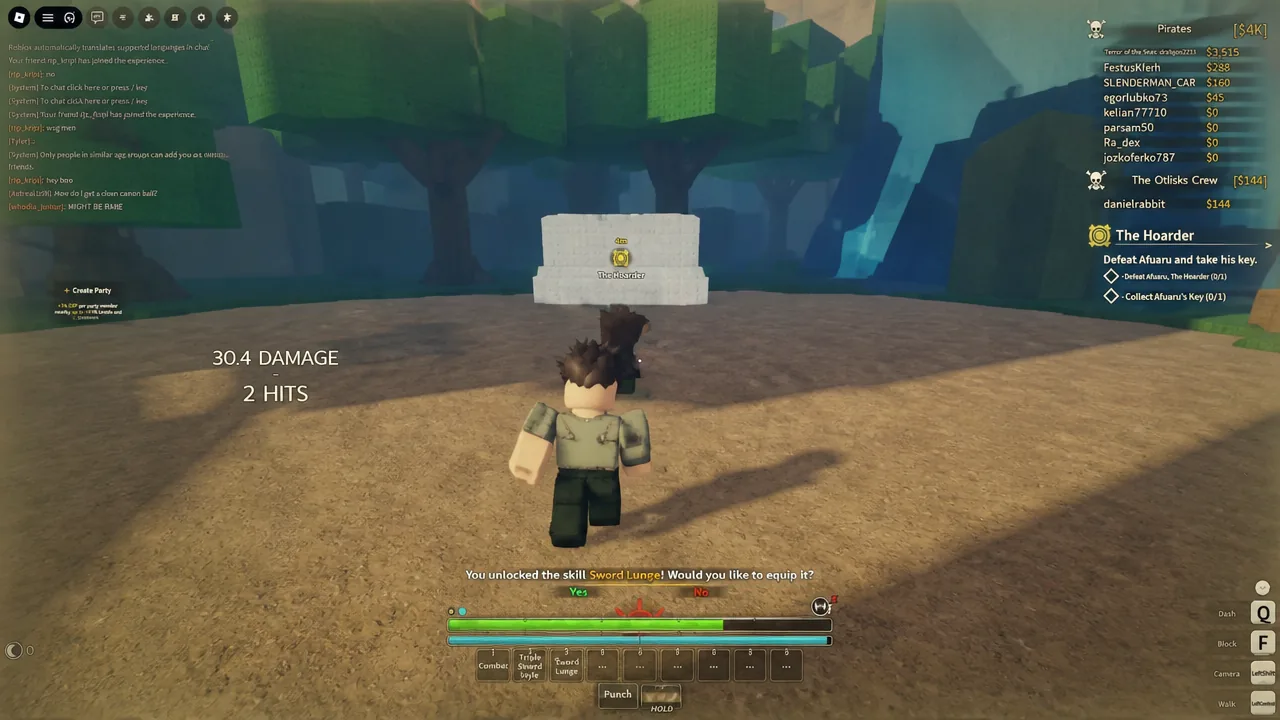
Gear matters more than it looks. Cheap items like the Marine Cap add health, which is often the difference between surviving a boss phase and restarting the fight.
Beating open-world bosses and unlocking skill slots
Bosses in Grand Blue are not stationary punching bags. Axe-Hand Morgan has a full moveset with grabs, spin attacks, ranged attacks, and multiple phases, and he can grab you almost immediately if you stand still. He also has a second phase where his behavior changes and his health can recover.
The approach that works is patient. Learn the attack pattern, block or dodge the big swings instead of trading hits, and punish during the recovery animation after a heavy attack. Do not burn your block early, since running out of it during a phase change is how most attempts end.
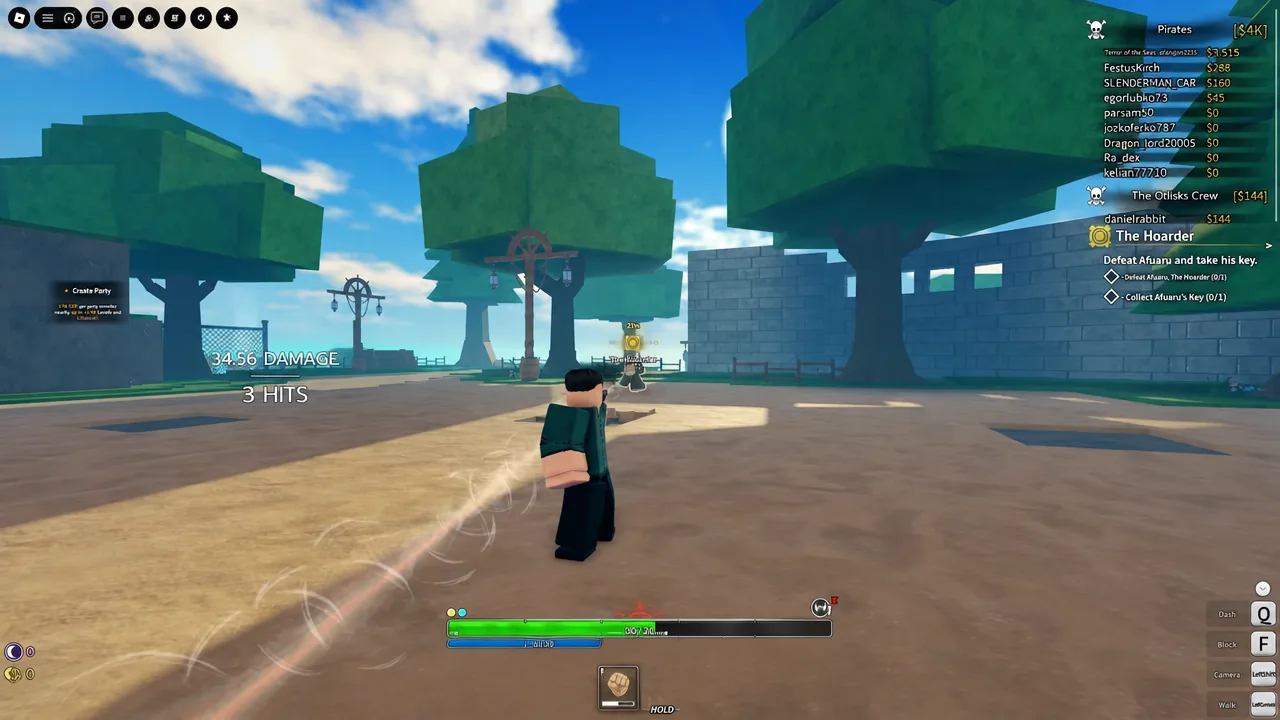
If a boss wipes you, go back to quest mobs, gain a few levels, and return. The payout is worth the retries: a boss kill can hand over several levels, a chunk of stats, and a new skill slot. More slots mean more equipped abilities, which is why bosses stay relevant after their quests are done. Harder encounters are built around groups, so a crew helps.
How to get fruits in Grand Blue
Fruits are the game’s headline power system, and there are several routes to one.
| Method | Details |
|---|---|
| Quest rewards | Certain quests hand you a fruit on completion |
| Fruit crates | Bought with Celestial Coins earned from achievements and activities |
| Robux purchase | Available directly in the shop |
| World finds | Fruits appear in places such as trees and shops |
One rule governs everything else: you can only eat one fruit at a time, and eating a second replaces the first. Fruits can be stored, so a spare find does not have to be wasted.
Do not write off a fruit because the name sounds weak. Drain, a common early quest reward, lets you grab a target and drain their essence while restoring your own HP, which makes it a real sustain option in player-versus-player fights. Fruits also level up and unlock extra skills as you use them, so the fruit you start with can grow into something stronger.
Mining and fishing as side activities
Outside of combat, two activities are worth knowing. Mining requires a pickaxe and gathers crafting materials. Fishing sits alongside it as an alternative way to spend time on the docks when you want a break from quest grinding.
Neither replaces quests as a leveling method, but both give you something to do between boss respawns and cooldowns, and mining feeds directly into crafting.
Access and how to check your progress worked
Grand Blue is in early access, but entry is not restricted to creators or invite holders. Access can be obtained by inviting three accounts, and community giveaways sometimes hand out spots. The game currently runs across around three maps, which matches its early stage.
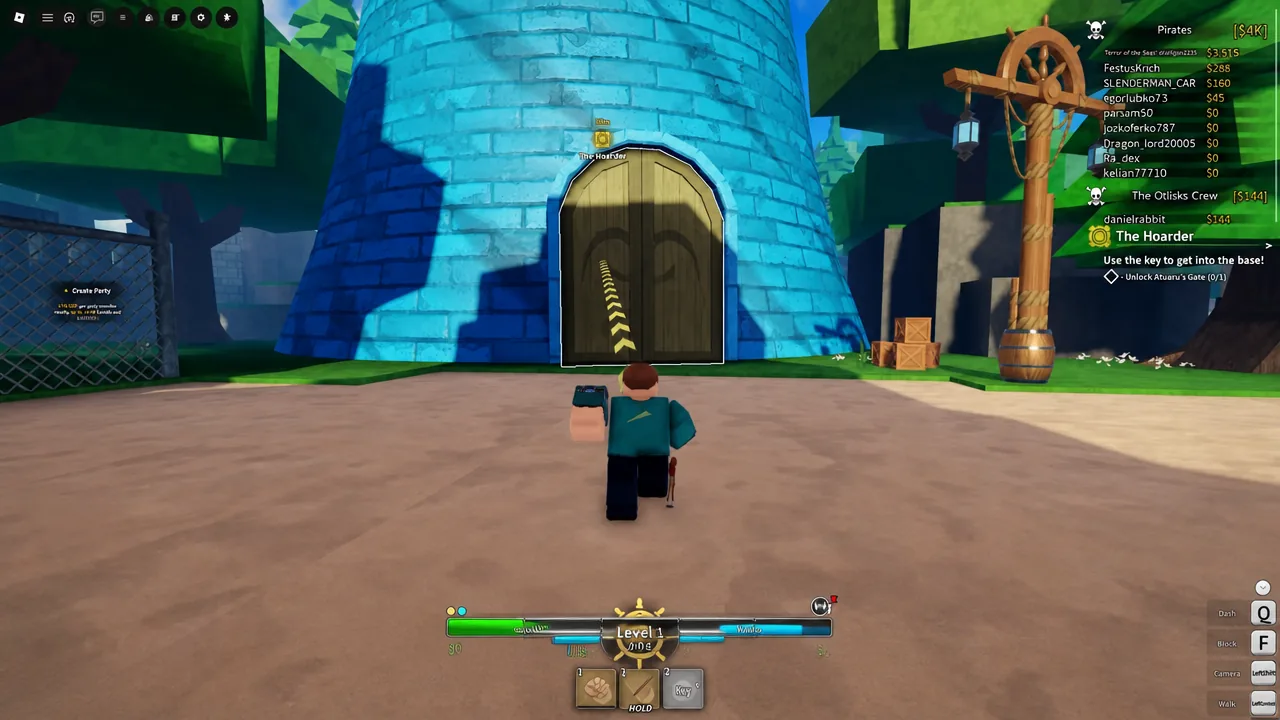
You will know a quest registered when the tracker updates or you see the completion text, an earned currency line such as “Earned 11G”, and the level-up notice with stat points attached. If a kill does not move the counter, the quest was not active — reopen the quest, confirm the objective is selected, and kill the target again.
The route that gets you furthest fastest is unglamorous: tutorial, then main quests with the tracker always active, then bosses once your level and gear can survive them. Skills, fruit levels, and skill slots all accumulate along that path, so the character you end up with is a byproduct of finishing the chain rather than a separate grind.