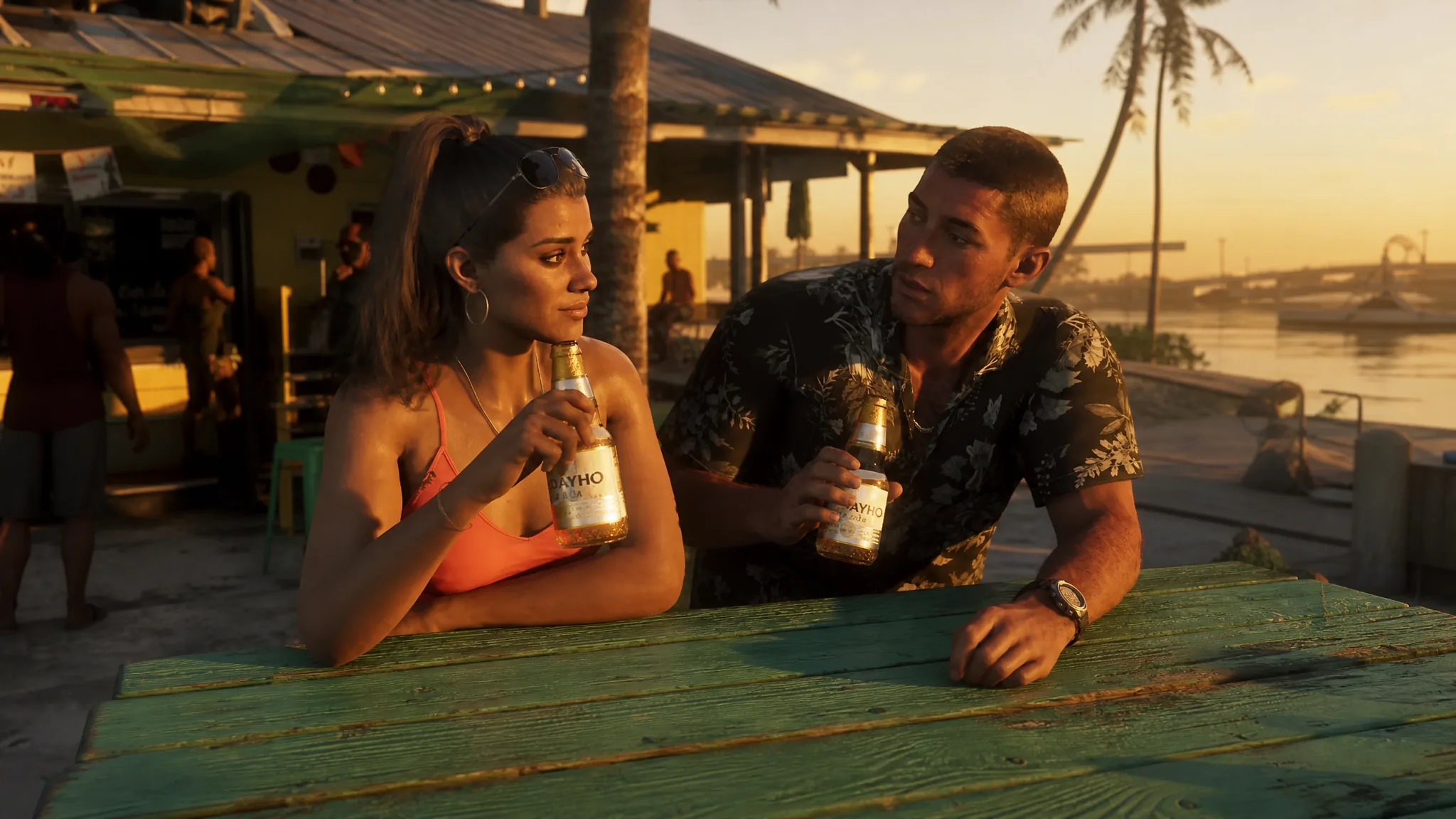
Jason and Lucia are not just two playable characters who happen to be dating. Rockstar has confirmed that their romance is a working game system, described as a “deep relationship” mechanic that reacts to what each of them does and pushes their story in different directions. In plain terms, the couple pays attention to your choices, and those choices leave a mark.
Quick answer: The relationship between Jason and Lucia works like a live trust rating. Cooperating during missions, splitting money fairly, and protecting each other raises it and improves how they fight and talk together. Reckless or hostile behavior lowers it, strains their dialogue, and can lock certain story outcomes, feeding into a wider “honor” system that shapes the ending.

What the “deep relationship” mechanic actually means
Past GTA games treated love interests as background figures who showed up in a mission or two and then faded out. Jason and Lucia are the opposite. Their bond runs through the whole campaign, and the two of them respond to each other’s intentions and actions rather than sitting still while you play.
Rob Nelson, head of development and co-studio head at Rockstar North, framed the pair as characters with agency of their own. “The thing we love about this medium is the way these characters aren’t empty avatars that you can do whatever you want with. Their story becomes a journey you share with them.” That framing is the key to the mechanic. You are steering two people who react, not two blank slates you fill in.
The “Bonnie and Clyde” tag Rockstar keeps using is not marketing shorthand. It is the design blueprint. The relationship carries the highs of shared scores and fast getaways alongside the pressure of police heat, cartel threats, and money problems, and the mechanic tracks how well the two hold together under that strain.

How the trust system rewards and punishes you
The relationship is expressed in-game as a trust rating that rises and falls with your decisions. It is not cosmetic. A high rating makes the couple sharper as a team, while a low one makes them fight each other as much as their enemies.
| Trust level | What happens in play |
|---|---|
| High trust | Jason and Lucia cover each other’s flanks in combat, share ammo without being asked, and gain a reload speed boost when they stand near each other. |
| Low trust | The pair argue while traveling, refuse to hand off equipment, and certain narrative decisions become locked, forcing you to deal with the tension. |
The effect is that you are pushed to treat them as one unit instead of two disposable bodies. Sharing loot evenly, defending each other in shootouts, and sticking to the plan during a heist all build the bond, and the payoff shows up directly in how they perform.
How it connects to the “honor” system
The relationship mechanic plugs into a broader honor-style system reminiscent of Red Dead Redemption 2, where the way you treat the world around you feeds back into how the story treats you. In that earlier game, greeting or antagonizing people changed how they saw the protagonist and even influenced the ending. GTA 6 applies that same idea, but the person keeping score is not a stranger. It is your partner.
Because of that link, what one of the two does alone can ripple back to the couple. If Jason spends time somewhere Lucia would not approve of, gets into too many fights, or lands himself arrested, expect her to react coldly. Independent behavior is not consequence-free. It quietly moves the relationship one way or the other.

Choices, consequences, and multiple endings
The most important thing to understand is that the relationship is tied to the outcome of the story, not just to moment-to-moment gameplay. Your choices in the later chapters shape where Jason and Lucia end up together, which points to more than one possible ending for the duo.
That includes darker possibilities. A run of bad decisions could lead to Jason meeting an unfortunate fate, fitting the tragic edge the “Bonnie and Clyde” comparison implies. Both characters carry that weight. What either one does independently can steer the relationship, and by extension the whole arc, in a positive or negative direction.
The exact number of endings and the specific triggers behind each one have not been detailed. What is confirmed is that the final chapters branch based on how you handle the relationship, so there is no single fixed conclusion.

Why this matters for how you play
Jason and Lucia bring distinct skills to the partnership, and playing to those strengths is one of the cleanest ways to keep the relationship working in your favor. Lucia leans toward stealth and hacking, handling alarms, keypads, and cameras, while Jason is built for combat, with a slow-motion aiming focus and a talent for high-speed escapes.
| Role | Lucia | Jason |
|---|---|---|
| Special ability | Tactical hacking that bypasses alarms, keypads, and cameras | Combat focus with slow-motion aiming and weak-point detection |
| Best suited for | Quiet infiltration and stealth | Shootouts and getaway driving |
Because the two share money and equipment, cooperating is baked into the design. They pull from a joint account for heist payouts and weapon buys, though each can hold separate cash for personal spending. Splitting the take fairly and backing each other up is not just good manners. It is how you keep the trust rating high and the story on the path you want.
The takeaway is simple. In GTA 6, the romance is a system you can win or lose. Treat Jason and Lucia as a real partnership and they become a lethal, coordinated team with a better shot at surviving their own story. Play them carelessly and the game will make you feel it, in combat, in conversation, and in how their journey ends.