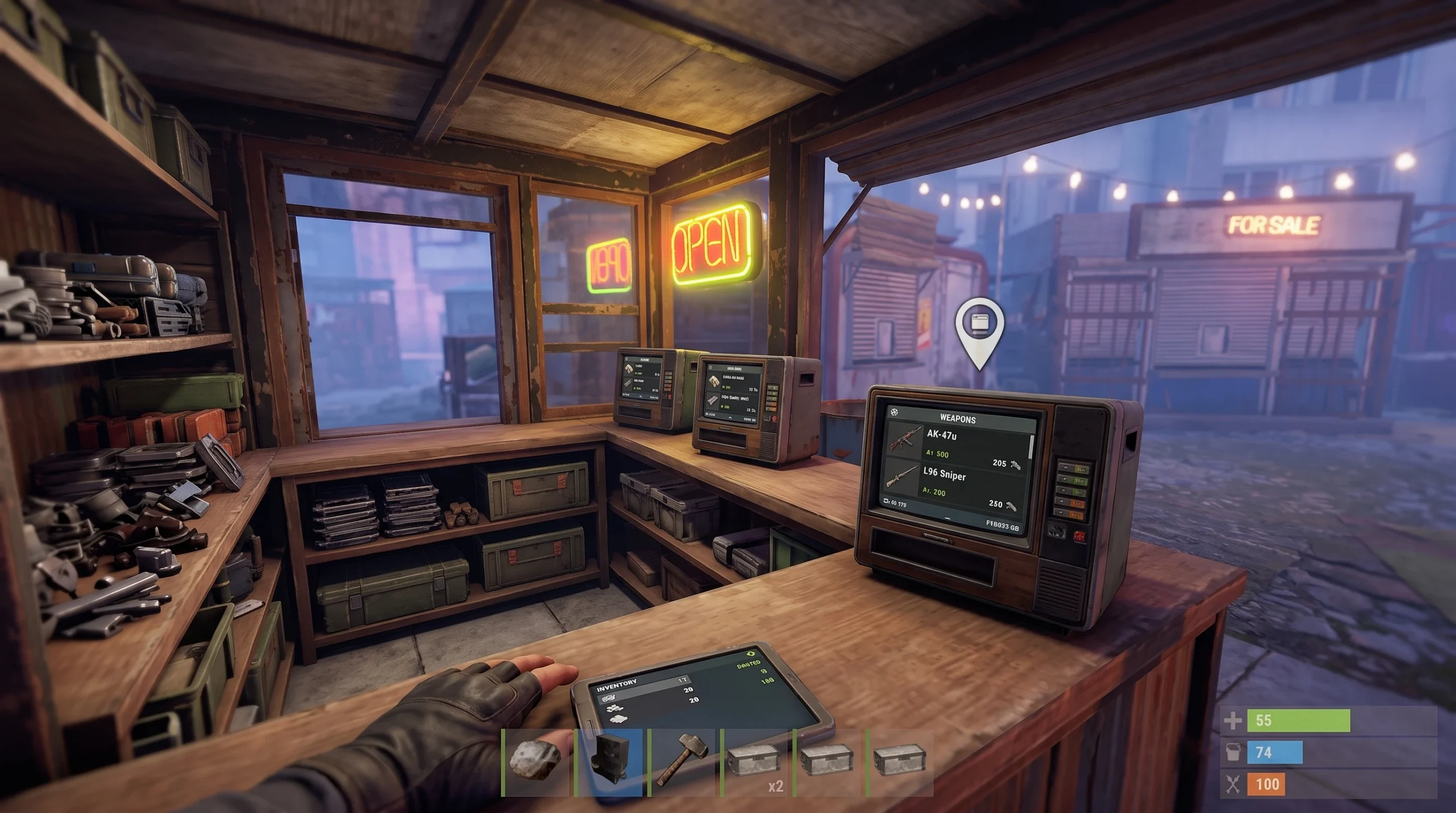
A shop in Rust is a vending machine wired into your base that trades items and resources for you around the clock. It only keeps earning if the structure around it stays standing, which means the real work is maintenance. Two things keep a shop alive: enough materials in the tool cupboard so the walls never decay, and stock that customers actually want at prices they will pay.
Quick answer: Mount the vending machine so its front faces outside and its back sits inside your walls, keep the base’s tool cupboard filled above 75 percent of a full day’s upkeep, and restock the machine with everyday goods priced just under what nearby shops charge.
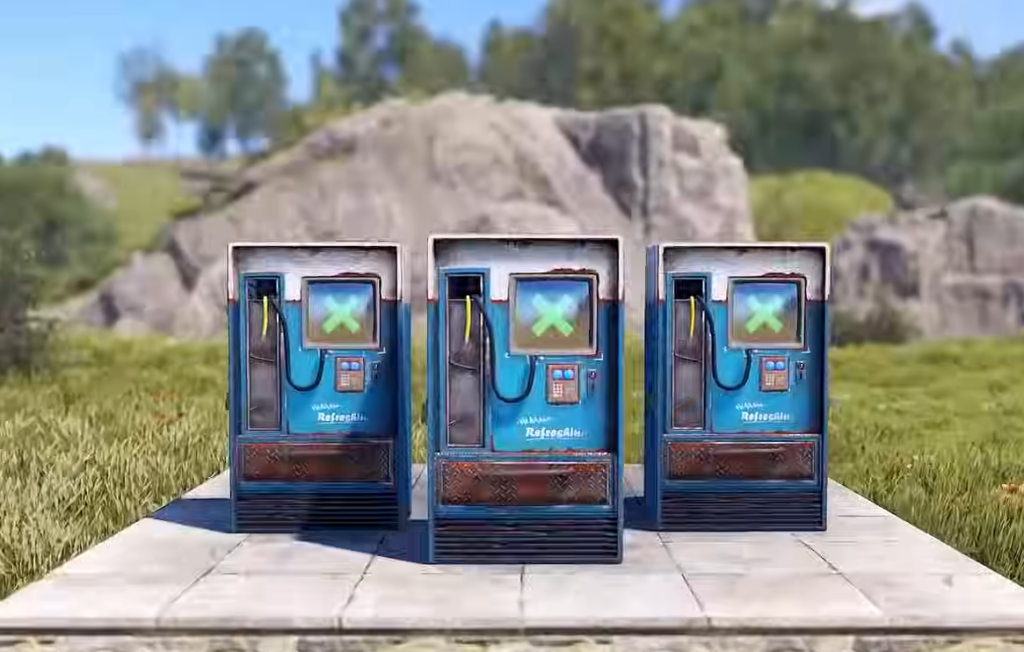
Stop the shop from decaying with tool cupboard upkeep
Every structure attached to a tool cupboard drains materials over time. If the cupboard runs dry, the building starts to fall apart, and your vending machine goes down with it. The moment you place a tool cupboard, you will see a decay warning in the bottom right of the screen until you load it with the right resources.
Upkeep pulls a small percentage of your total build cost every 24 in-game hours, matched to the tier you built with. A wood shop needs wood, a stone shop needs stone, a sheet metal shop needs metal fragments, and an armored shop needs high-quality metal. The cupboard shows exactly how much it needs to survive the next full day, so keep more than that in the slots, and it lasts longer.
| Tier | Upkeep resource | Time to decay if cupboard is empty |
|---|---|---|
| Twig | None (never build a shop in twig) | 1 hour |
| Wood | Wood | 3 hours |
| Stone | Stone | 5 hours |
| Sheet metal | Metal fragments | 8 hours |
| Armored | High quality metal | 12 hours |
The base tax starts at 10 percent of the total build cost per day for small structures. Once you pass 16 building pieces, that rate climbs, and a very large base can be taxed up to 30 percent of its build cost every 24 hours. For a shop, this matters: a small stone box that costs 3,000 stone to build burns only about 300 stone a day, while a sprawling trade hub with extra rooms and honeycomb walls burns far more.
When the cupboard hits zero, decay begins at the pieces furthest from it and works inward. Outer walls take visible damage within about a day and can collapse inside two days, which exposes the machine and anything stored around it.
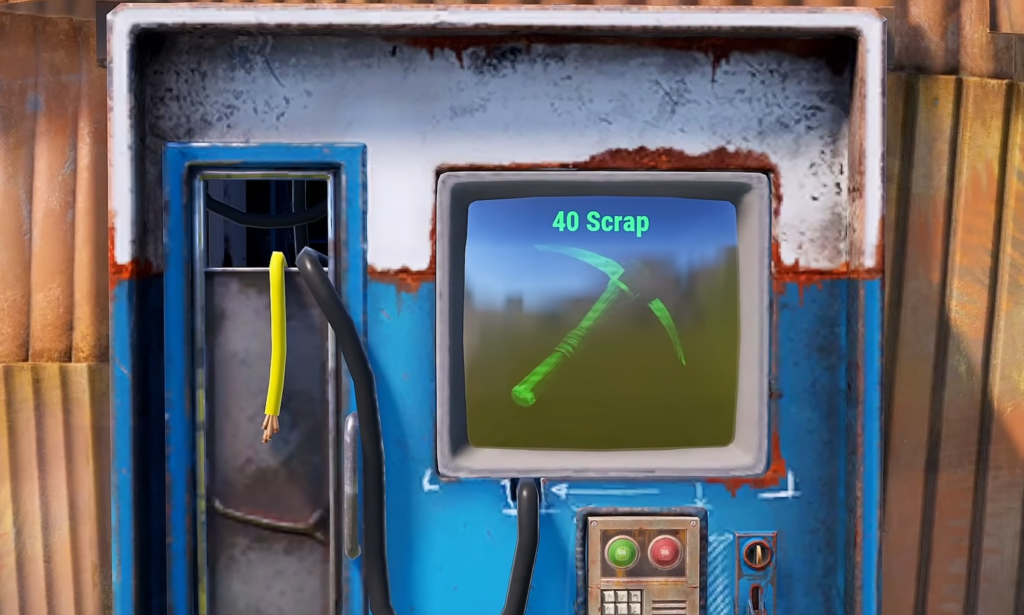
Keep upkeep sustainable so the shop never lapses
Refilling weekly is more efficient than topping up every login, but only if you keep the cupboard at 75 percent or higher at all times. Check it every time you log in and refill before it slips low. The most reliable way to keep a shop alive is to build it small enough that one short farming trip covers the daily drain.
- Build the shop in stone. It is the most cost-effective tier, so upkeep stays low while the walls still resist casual raiders.
- Strip out every wall, door, and ceiling the shop does not need. Extra pieces only raise the daily tax.
- Keep the footprint compact. A small stone shop draining a few hundred stone a day is covered by 15 minutes of mining.
- Store spare resources in the tool cupboard itself. It doubles as a large chest, so surplus wood or stone sits ready for the next refill.
Lock the tool cupboard the moment you place it. An unlocked cupboard lets anyone walk in and take ownership of the base, meaning a raider does not even need to break it to seize your shop.
Place the vending machine where customers can reach it safely
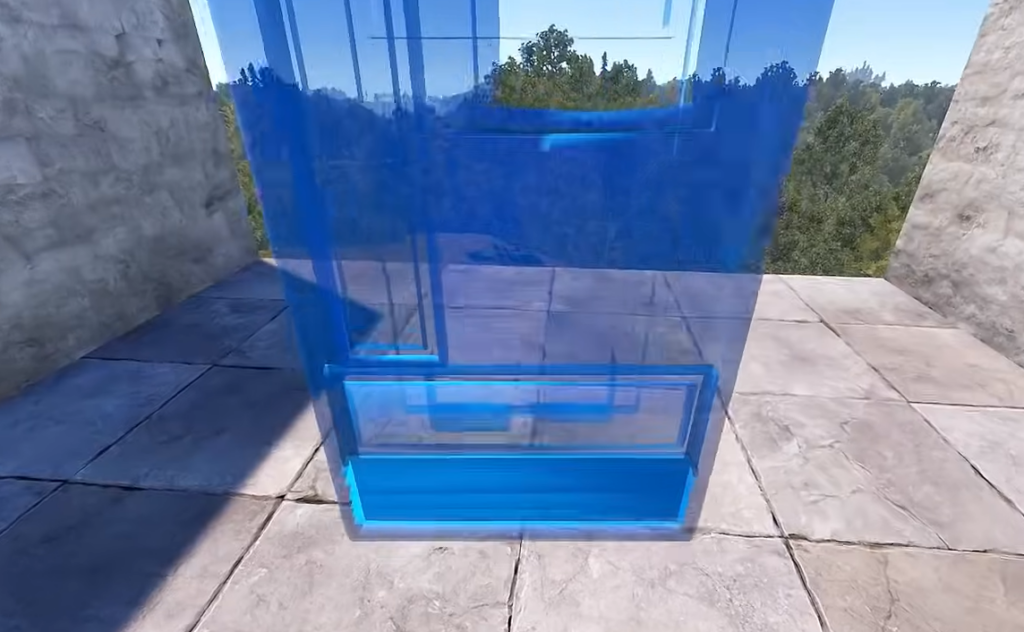
Position the machine so the buying face points outward and the restock side sits inside your walls. Customers trade from the outside without ever entering, and you refill from the safe interior. That single placement decision keeps the shop both accessible and defensible.
Stock and price the shop so it sells while you are offline
The shop only pays for its own upkeep if it moves items. Sell what players are looking for at that point in the wipe, and charge resources most people can farm quickly rather than scrap, which everyone hoards for research.
| Wipe stage | Best sellers | Charge in |
|---|---|---|
| Wipe day | Code locks, bows, metal tools, low-tier guns | Wood |
| Days 2-3 | Ladder hatches, satchels, salvaged tools, ammo, meds | Sulfur or wood |
| Mid to late wipe | Sulfur, explosives, rockets | Sulfur |
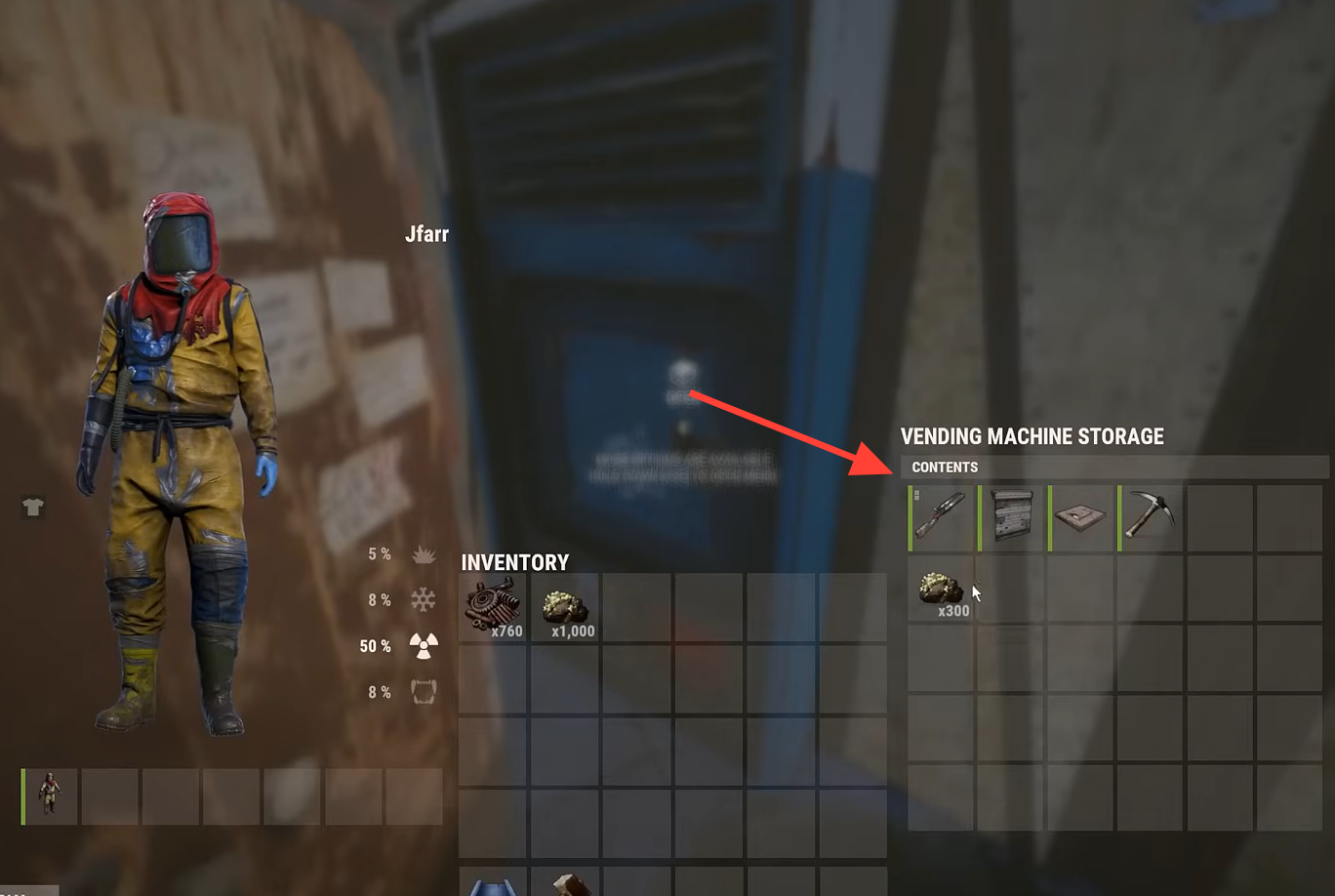
Price low rather than high. A satchel at 2,000 sulfur can sell three times as fast as the same item at 4,000, so total volume beats a fat margin. Watch nearby shops and undercut them slightly to pull the market your way. Everyday consumables sell fastest, so keep fuel, medical supplies, ammo, and low-grade fuel stocked at all times.
Trade for resources, not just scrap. Listing something like a stack of wood in exchange for a specific blueprint item lets players farm their way to a trade in minutes, which keeps traffic flowing.
Protect the shop from raids and grief
A shop draws attention, and some players will raid one purely for the loot inside the machine. Never leave anything in it worth breaking your walls for. If you sell explosives, keep only a small number listed at once, always fewer than it would cost to raid the shop and take them.
- Guard the surrounding area with peacekeeping turrets so customers can trade without being killed on approach.
- Keep raidable value out of the machine. Cheap consumables and resources are not worth the sulfur to break in for.
- Treat the shop as a friendly zone. Repeat customers spend more, and word of a fair seller spreads across the server.
How to confirm the shop is healthy
You know upkeep is handled when the decay warning is gone, and the tool cupboard shows more than a full day’s worth of materials in its slots. If the warning returns or the cupboard shows less than 24 hours remaining, refill immediately. A shop lapses for one of a few clear reasons: the cupboard hit zero, the machine was placed on a piece that decayed first, or the cupboard was left unlocked, and someone claimed the base. Fix the cause, top the cupboard back above 75 percent, and the shop keeps earning while you are away.