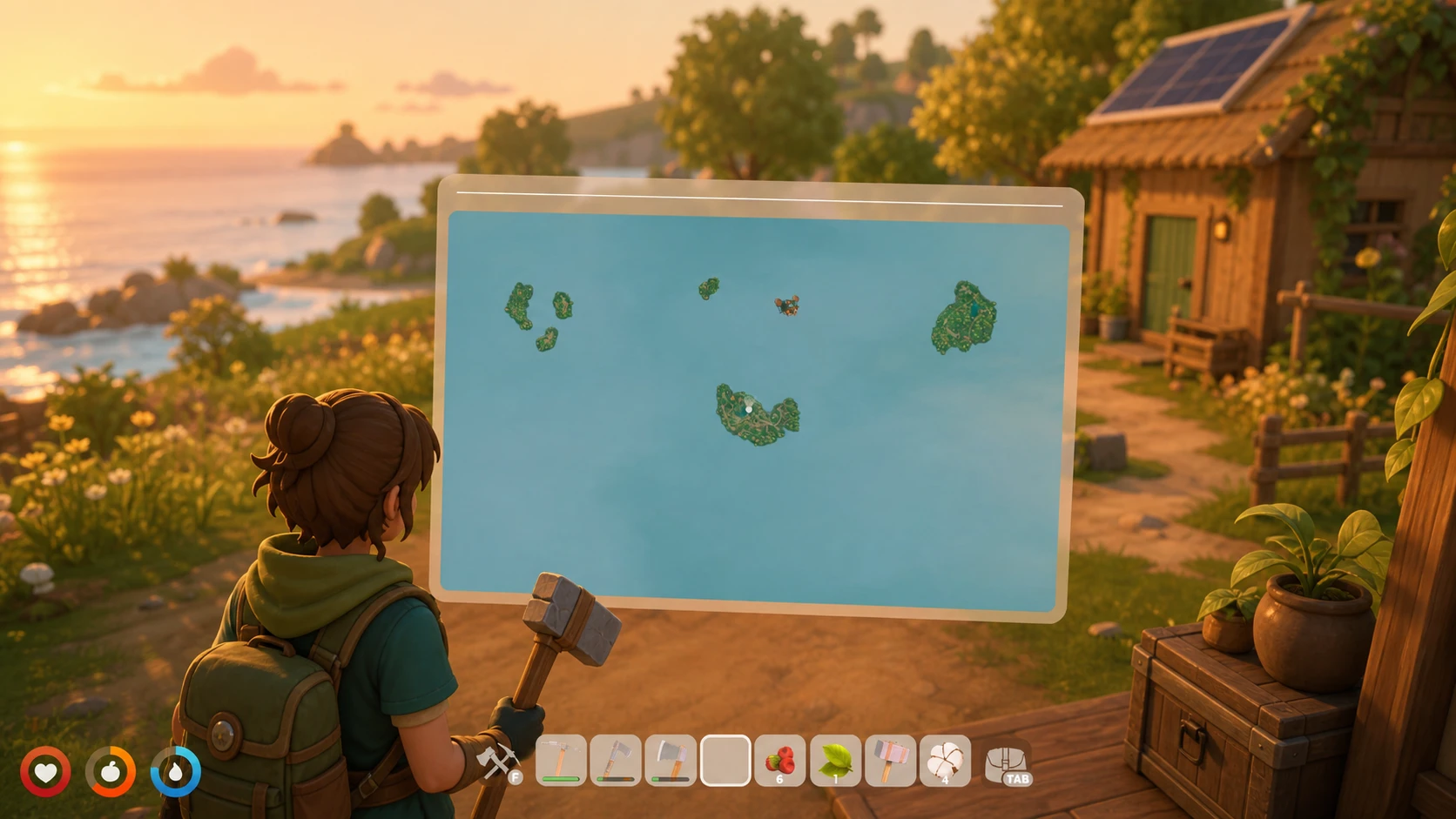
The map in Solarpunk does not appear the moment you spawn. It sits behind the research system, so you have to work through the early tech before you can pull up a proper view of the floating islands around you. Until then, navigation comes down to flying to the edge of your island and eyeballing what is nearby.
Quick answer: Unlock the Map at the Research Table once you reach Tier 2, then craft it using 2x Cloth (made from cotton found on your starting island).
Map unlock requirements in Solarpunk
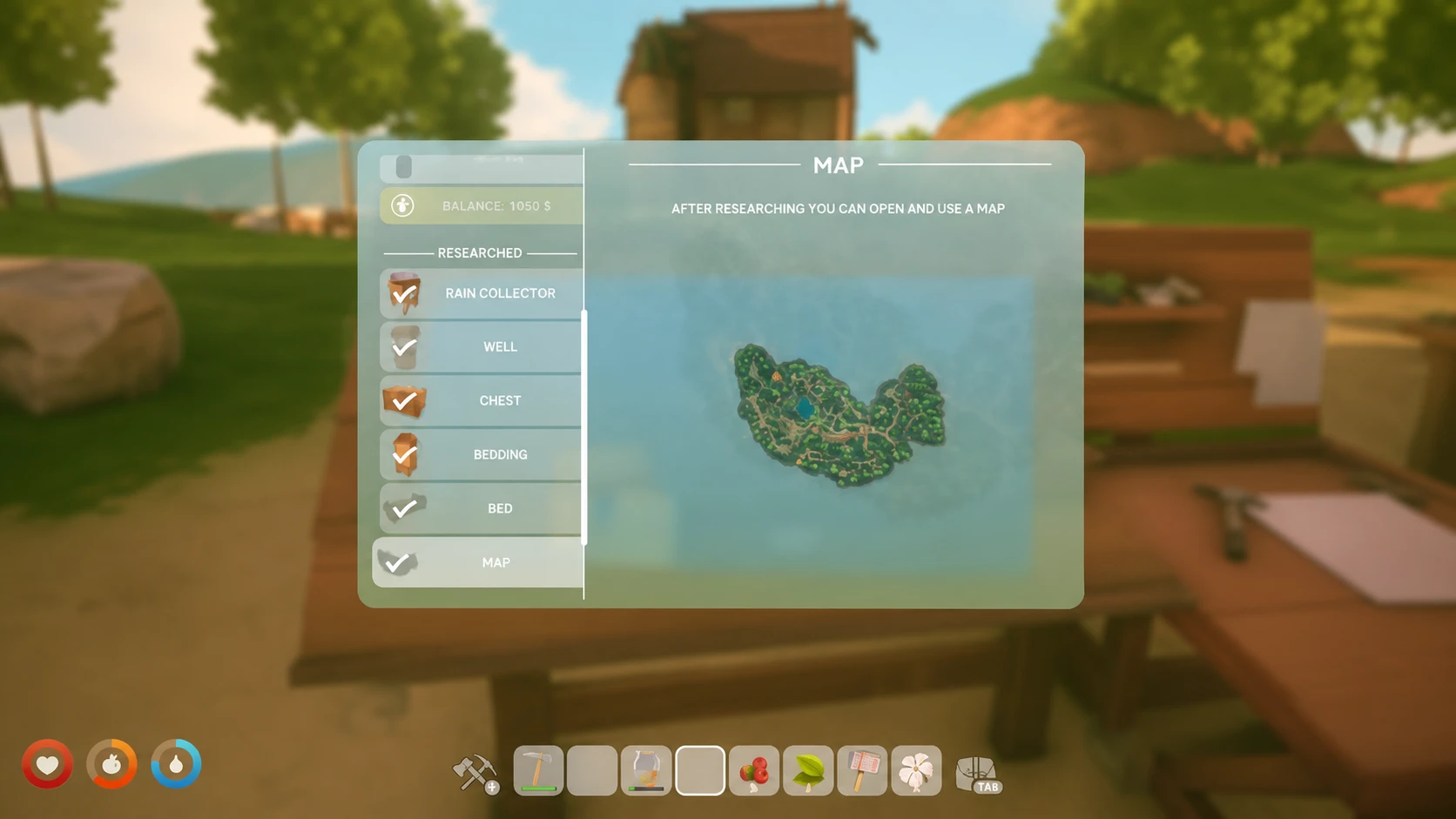
The Map is a Tier 2 Research Table upgrade. You cannot jump straight to it. Every Tier 1 research has to be completed first, and only then does the Tier 2 unlock become available. There is no way around finishing the early research queue.
| Step | What you need |
|---|---|
| Build the Crafting Table | 8x Wood |
| Build the Research Table | Wood (sourced from chopping trees) |
| Complete all Tier 1 research | Rain Collector, Well, Chest, Beehive, Bed |
| Unlock Tier 2 | 1x Build-Hammer, 1x Beeswax |
| Craft the Map | 2x Cloth |
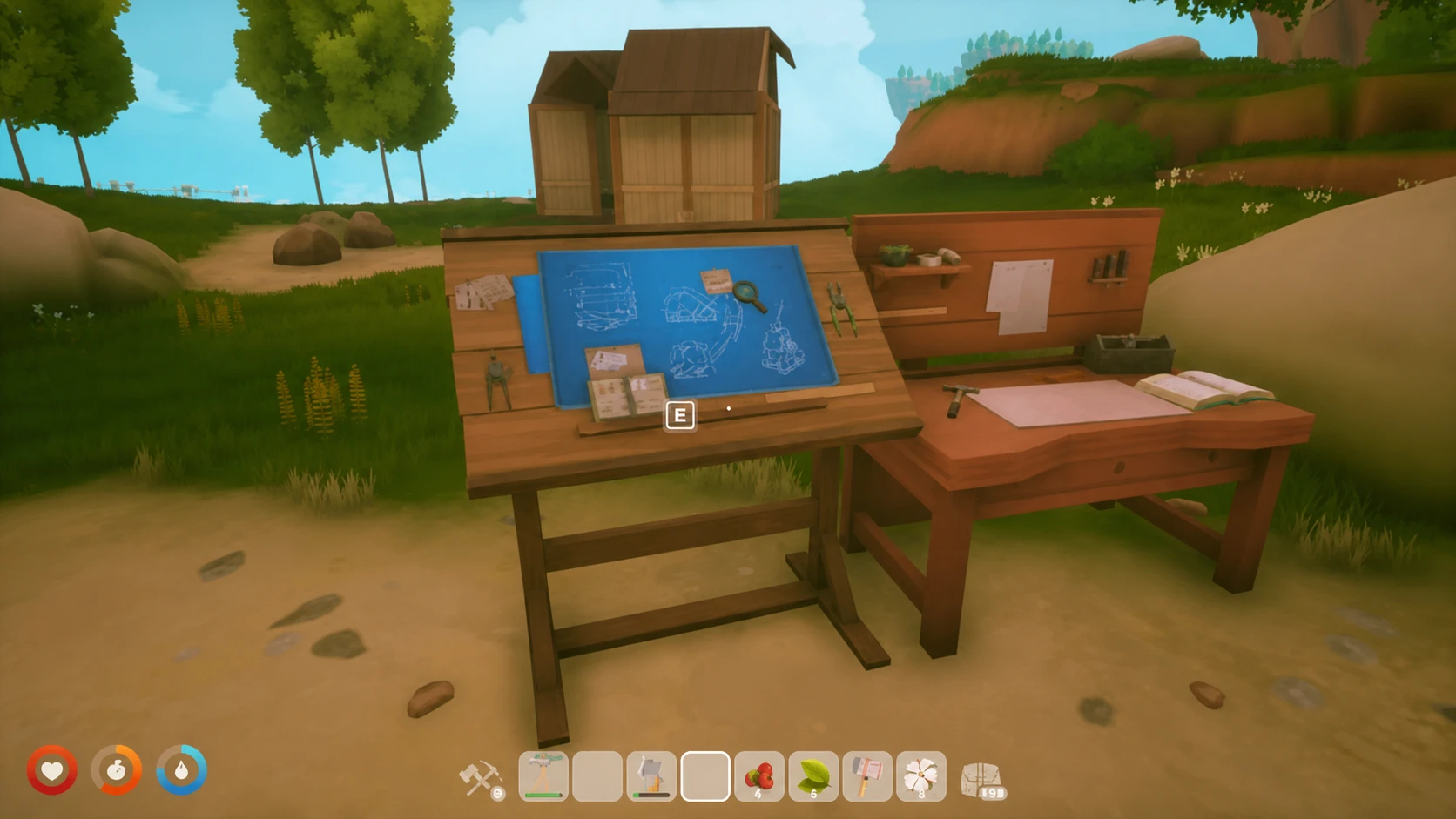
Wood is the easiest material to gather around your spawn. Chop trees with an axe, which you can craft from 2x Stones and 2x Sticks, both lying around the starting area. The Crafting Table only needs 8x Wood, so build that first, then put together the Research Table.
Reach Tier 2 at the Research Table
Craft the Map with cloth and cotton
After the Map research is unlocked, crafting it costs 2x Cloth. Cloth comes from cotton, so the last thing standing between you and the map is a small cotton supply.
Tip: Cotton is much easier to find at night because the plants glow in the dark. If you are struggling to spot it during the day, wait for nightfall and scan the ground while you walk around.
You will know the unlock worked once the Map shows up as a craftable item after reaching Tier 2, and once you build it the world view opens up for marking islands and tracking where you have been. From there, exploring the surrounding skies becomes far less disorienting, and you can start planning trips to nearby islands with a clear sense of direction.