Mojang Studios and Double Eleven are developing Minecraft Dungeons II, the next installment after the 2020 dungeon crawler, with Xbox Game Studios publishing it. Its overhead hack-and-slash action still lets up to four players defeat enemies and collect loot, but movement, gear progression, and world travel have been redesigned. In the Get Ready trailer, studio leads explain the story and features before announcing the release date.
Quick answer: The Get Ready trailer confirms Minecraft Dungeons II launches September 29, 2026 across PC, Xbox, PlayStation 5, and Switch, and introduces jumping, split armor slots, talismans, and a new dimension called the Sift.
Release time: September 29, 2026, 08:00 UTC
What the Get Ready trailer shows
This is a developer overview rather than a cinematic, with Design Director Laura De Llorens, Creative Director Måns Olson, Art Director Ullis Linder, and Chief Creative Officer Jens Bergensten each discussing a separate aspect of the game, from its premise through its mechanics. Combat, loot pickups, and dimension exploration appear first, followed by a closer look at the details.
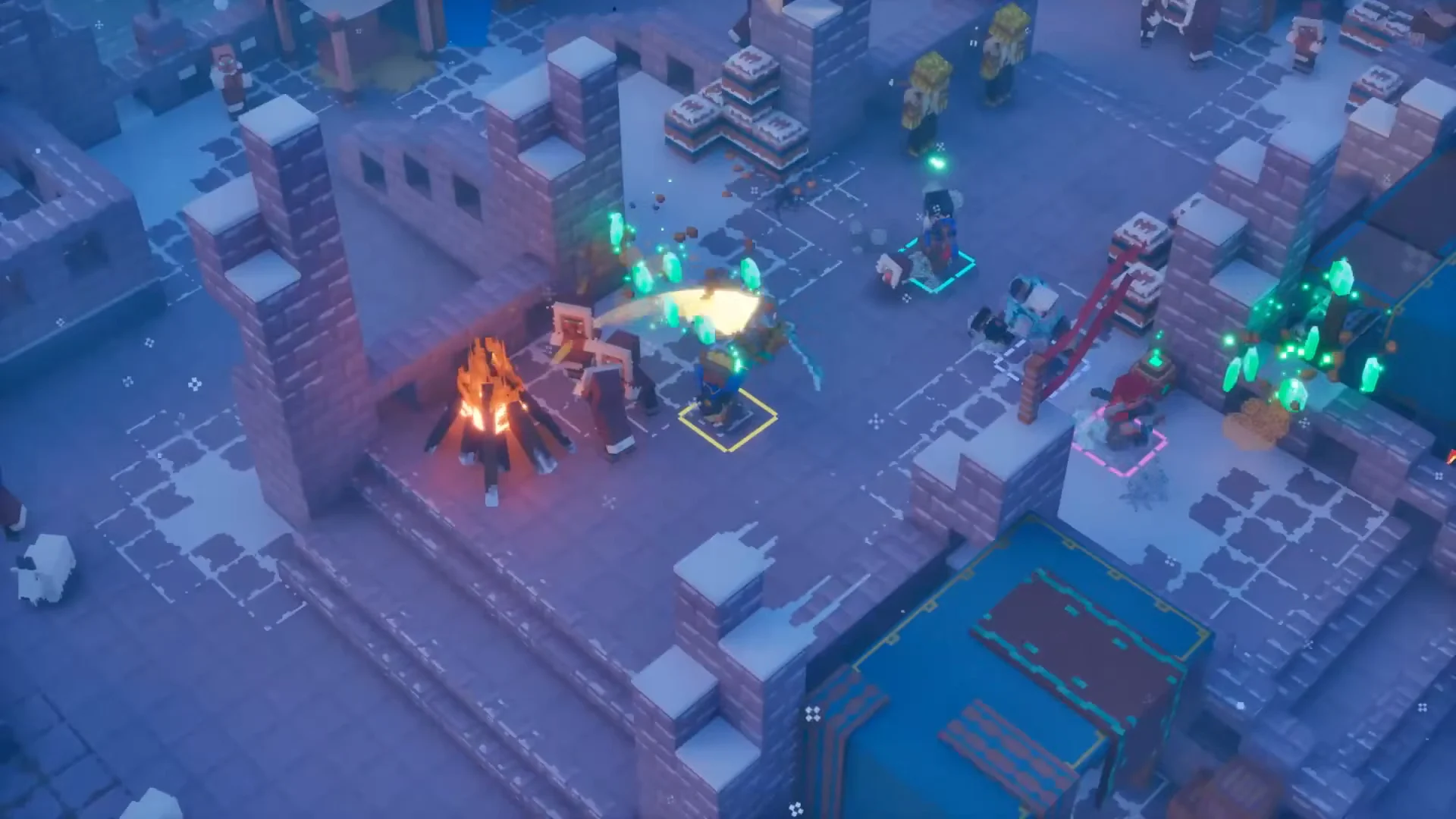
An early notice says that some footage may not be actual gameplay. Treat the more polished sequences as illustrative scenes, not exact in-game recordings.
The story: Brave Haven and the Illager High Council
After the Arch-Illager falls in the first game, Illagers seize the Squid Coast camp. The survivors escape by sailing over the sea and establish a settlement named Brave Haven. The ecosystems across the land are unbalanced, and bringing them back into balance is the main objective.
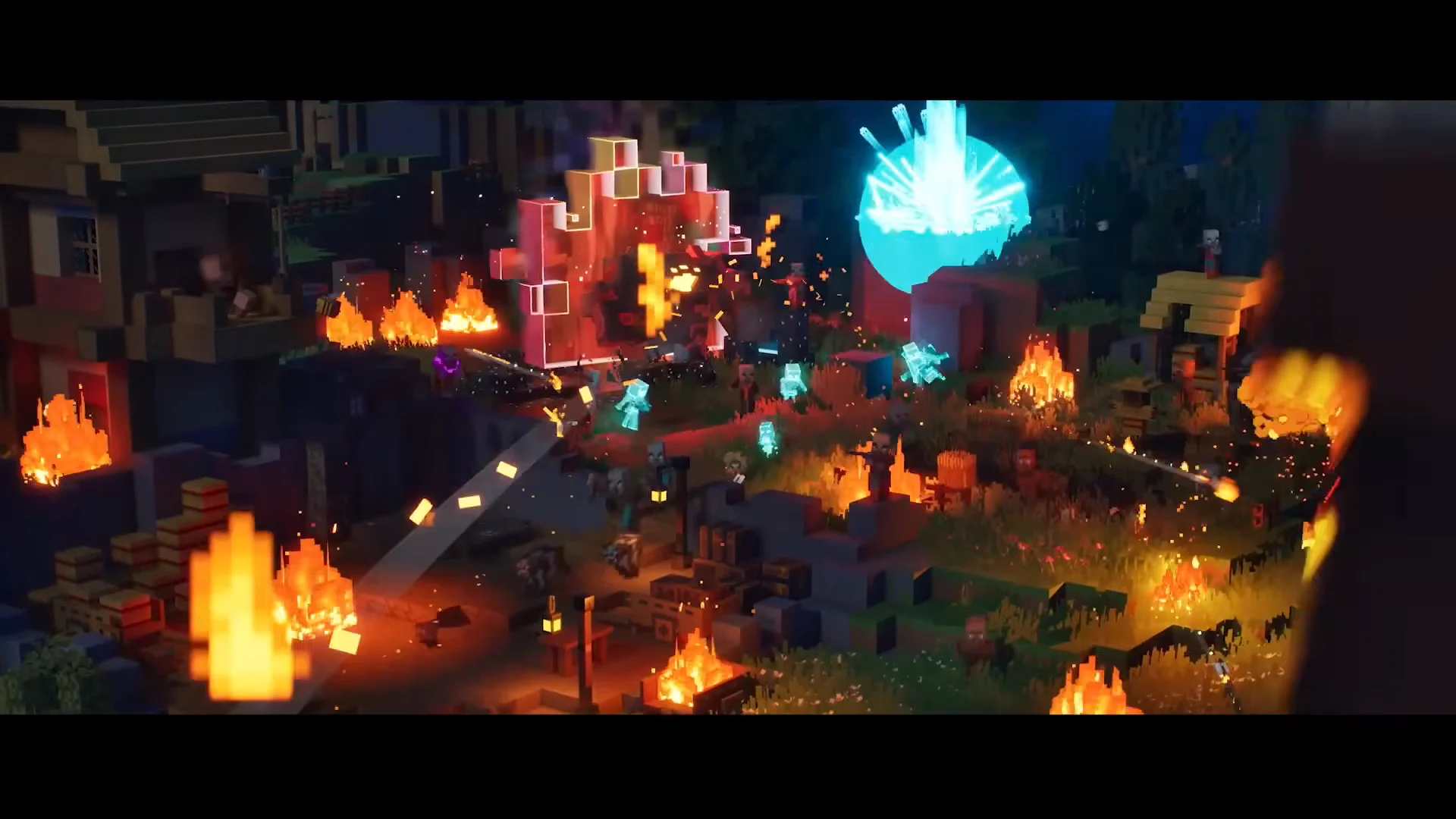
The new threat is soul corruption, a power tied to Minecraft’s Deep Dark and Ancient Cities. It is wielded by the Illager High Council, an alliance of an Evoker, an Enchanter, and an Illusioner. Their glowing blue corruption spreads through the world in skulk pools and warps the creatures caught in it.
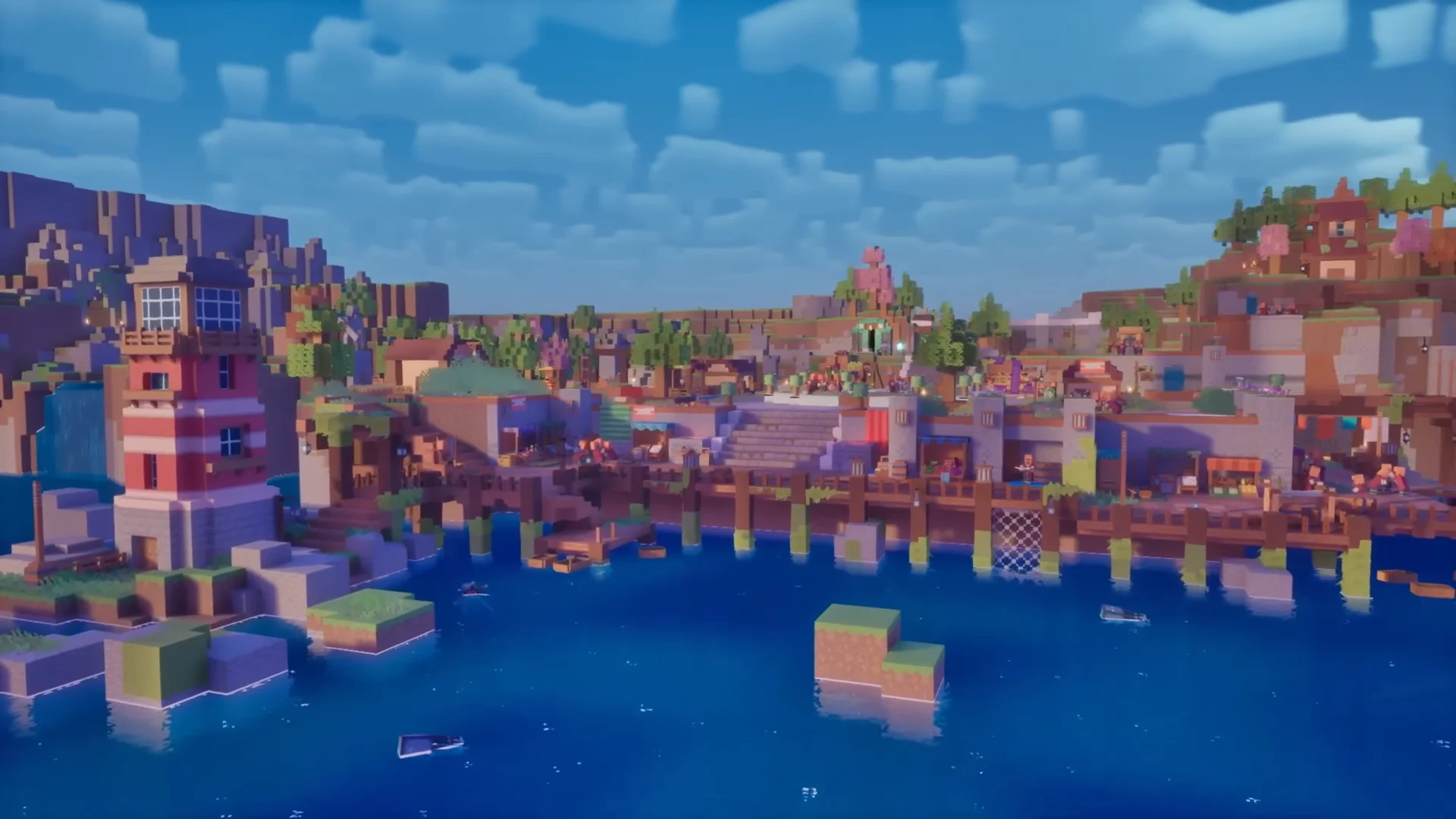
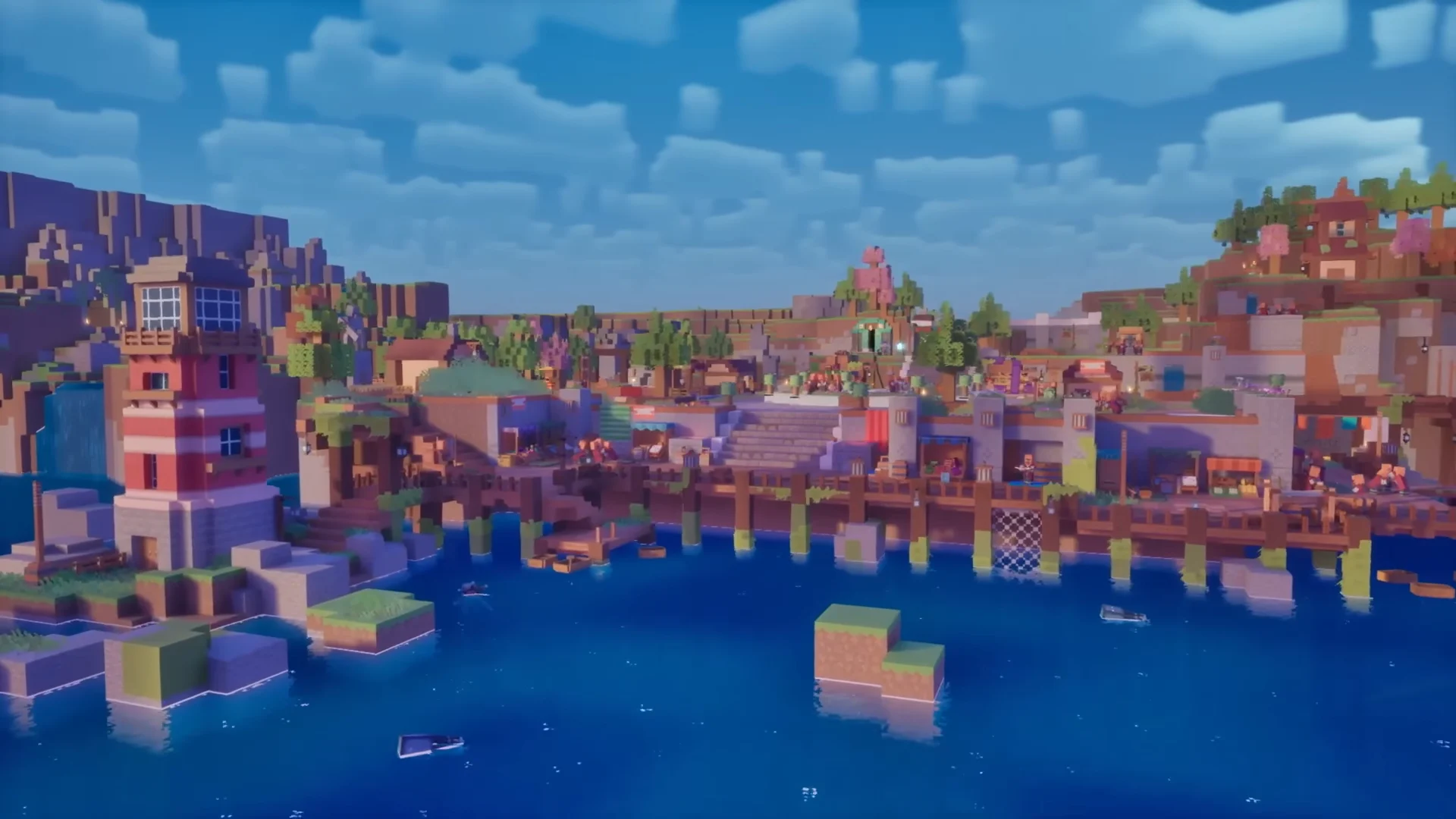
Survivors gather in Brave Haven, the coastal town that serves as the base for pushing back against the council. It sits beside the water, with a working harbor and villagers who need protecting.
An interconnected Overworld instead of linear missions
In the first game, players chose individual, self-contained missions from a table. Now they can roam a connected Overworld, using fast travel to move between regions instead of selecting from a set mission list. Broad areas contain settlements, structures, story events, and points of interest; caves and abandoned ruins may also appear in layouts that vary from one visit to another.
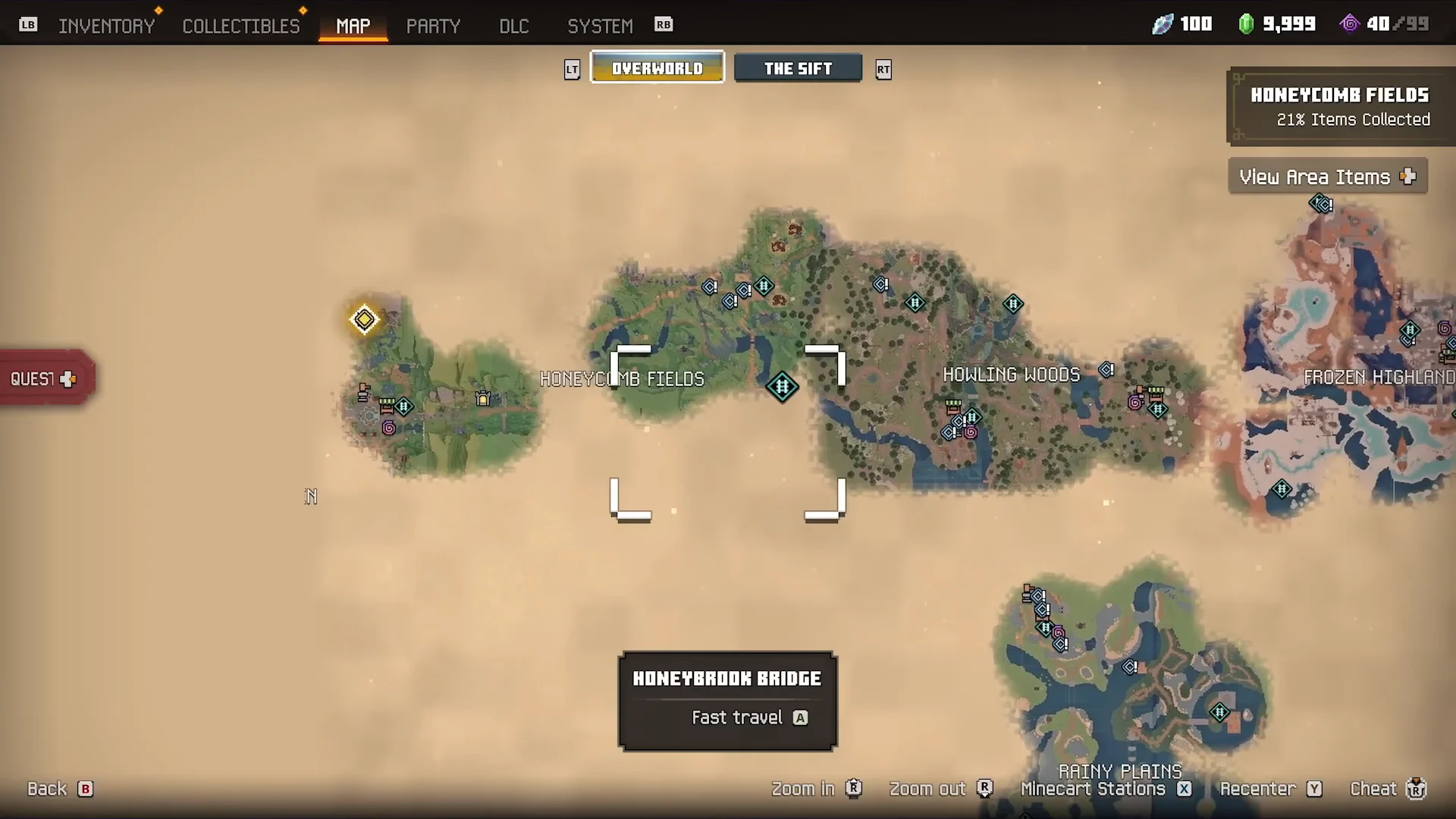
The locations named are Honeycomb Fields, Howling Woods, Frozen Highlands, Rainy Plains, Grim Ruins, and Creaking’s Reach, as well as the Honeybrook Bridge fast-travel point. In multiplayer, a hero can teleport to a nearby party member when the group gets separated.
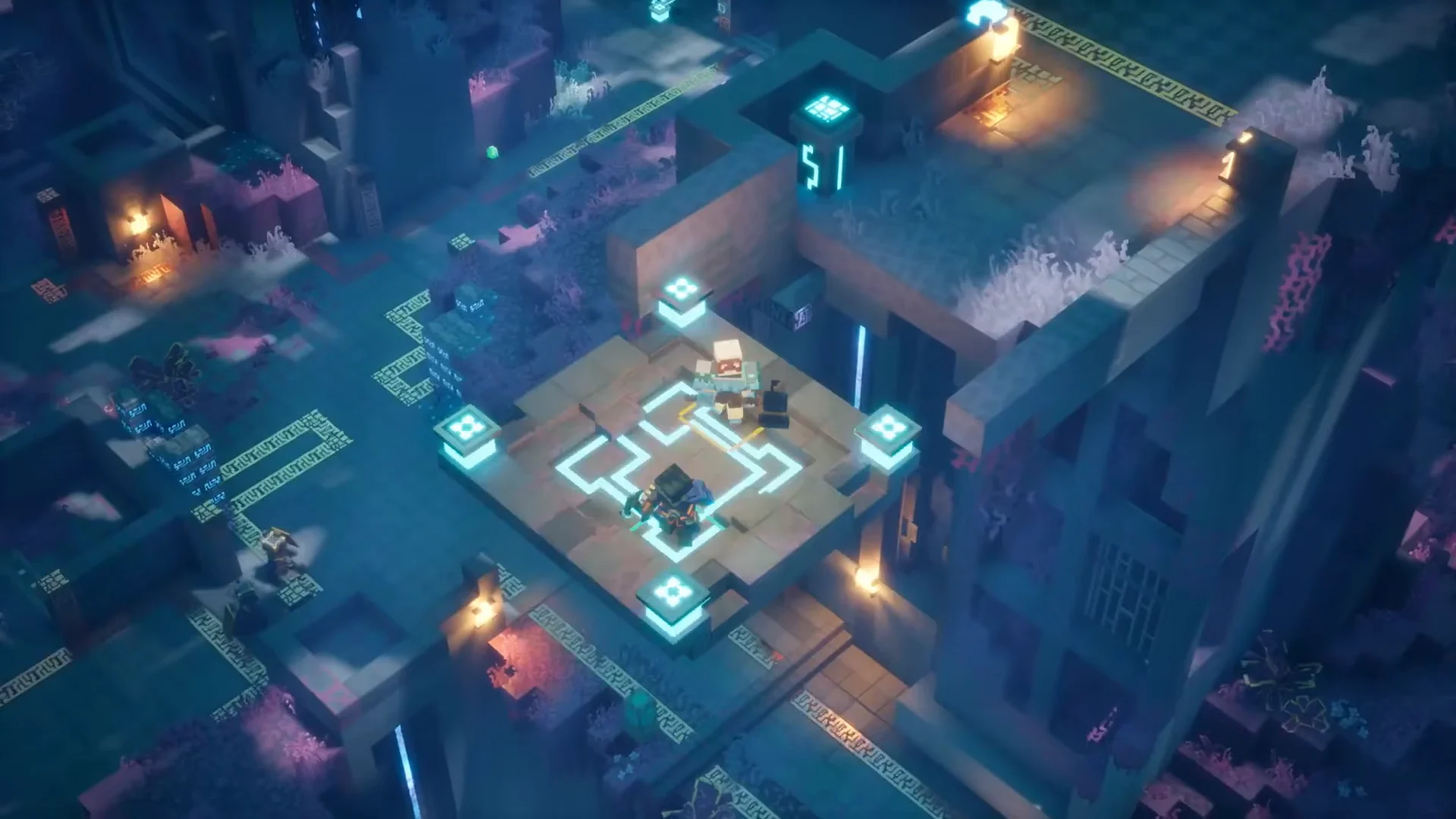
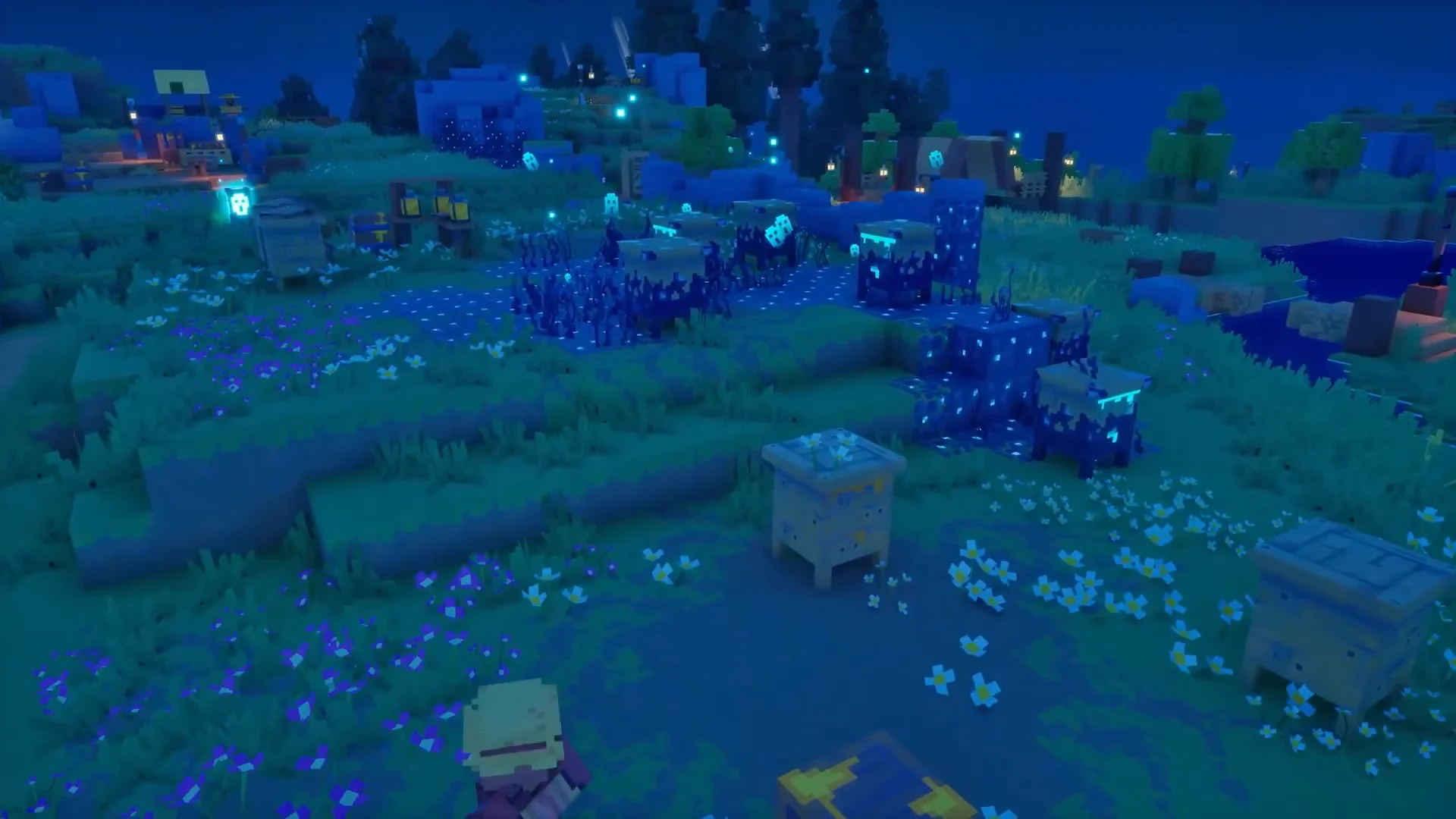
The quest list falls into two categories: main quests move the story through the Overworld, the Sift, and the events between them, while side quests offer shorter tasks connected to encountered characters and creatures. Villagers now play a substantial role, with more dialogue, voiced responses, and personal requests. These include retrieving a beekeeper’s missing bees and pursuing the Twisted Warden. One task helps a villager regain access to a fortress; another tracks down the Cleric’s Apprentice, who left a satchel in a cave filled with soul-corrupted spider eyes.
Jumping, parkour, and reworked combat
Players can now jump, a series first. Use it to get over gaps, access hidden treasure, tackle platforming challenges, or hit foes from above with jump attacks. The dodge roll from the original remains, giving heroes additional ways to reposition during combat and while exploring. With jumping added, both encounters and level designs work differently from those in the original, where heroes stayed on the ground.
Ranged weapons no longer draw from a limited arrow supply. Ammunition is unlimited and refills over time, so there is no need to hunt for arrows mid-mission.
Split armor slots, talismans, and the gear rework
Equipment receives a major redesign as well: heroes have 12 combat slots rather than six, opening space for more focused builds. Armor is divided into four separate slots, letting you combine pieces from different sets. Talismans are a new category that provides passive bonuses, and random effects on equipment mean that identical items can have different behavior.
| Slot type | What it holds |
|---|---|
| Helmet, Chestplate, Leggings, Boots | Four independent armor slots |
| Melee weapon | One equipped melee weapon |
| Ranged weapon | One equipped ranged weapon with unlimited ammo |
| Artifacts | Three active combat abilities |
| Talismans | Three passive-bonus slots |
Named gear glimpsed in the footage includes the unique weapon Creaking’s Reach, plus the Treehugger Chestplate, Realmsearcher Hat, Woodspider Leggings, and Monarch Boots. The talismans shown lean into different playstyles, from loot hauls to economy-based damage.
| Talisman | Passive bonus |
|---|---|
| Twisted Tooth | Increases souls gained by 40% |
| Twig of Dark Oak | Carry 20% more ammo |
| Lucky Clover | 2x chance for additional loot drops |
| Thrifty Pendant | Up to 25% damage from emeralds held, capped at 7,000 |
| The Eye of Experience | Increases experience gained by 4% |
Enchantment Books discovered during exploration add enchantments to a personal library. You can then apply and improve those enchantments at the Enchantsmith, spending currency dropped by Soul Corrupted enemies. At the Blacksmith, a fee lets you upgrade any owned item to your current highest power level and reroll its built-in effect, so you can hold on to a favorite piece. Loadouts are brought together in an improved inventory menu.
The Sift: a new dimension
Rifts that appear around the Overworld provide entrances to the Sift, a dimension infused with souls and Minecraft’s first wholly new dimension in over a decade. Jens Bergensten says its spaces are deliberately designed, rather than created through the more improvised approaches used earlier in development. The dimension holds unexplored areas and dangers beyond those of the original game.
The Sift features two revealed biomes: the green Meadows and the bone-covered Carapace desert. New foes have been confirmed for both worlds, including the Twisted Warden from a quest and the Copper Monstrosity boss. Soul Corrupted enemies are also present, and they drop the currency used by the Enchantsmith.
Release date, platforms, and editions
Minecraft Dungeons II launches on September 29, 2026 and runs on Unreal Engine. Play alone or in online or couch co-op with as many as four players; cross-play, matchmaking, party codes, and combinations of local and online play are supported. The game is available through Game Pass on launch day and supports Xbox Play Anywhere, meaning one Xbox purchase includes the console and PC versions.
- Windows and Steam
- Xbox Series X|S and Xbox Cloud Gaming
- PlayStation 5
- Nintendo Switch and Nintendo Switch 2
The Deluxe Edition adds a Soul cape, the Blub pet, four hero skins, and DLC 1 and 2 as they release. The standard pre-order grants two hero skins along with the Twisted cape and Twisted Chicken pet, and that bonus expires September 28, 2026. More DLC is planned for later in the year.
You can start without having played the original. Returning players who use one Microsoft account for both games can unlock a Hero Cape, available in Dungeons II and in Minecraft’s Java and Bedrock editions. Visit the official Minecraft Dungeons II page for pre-orders and complete information.