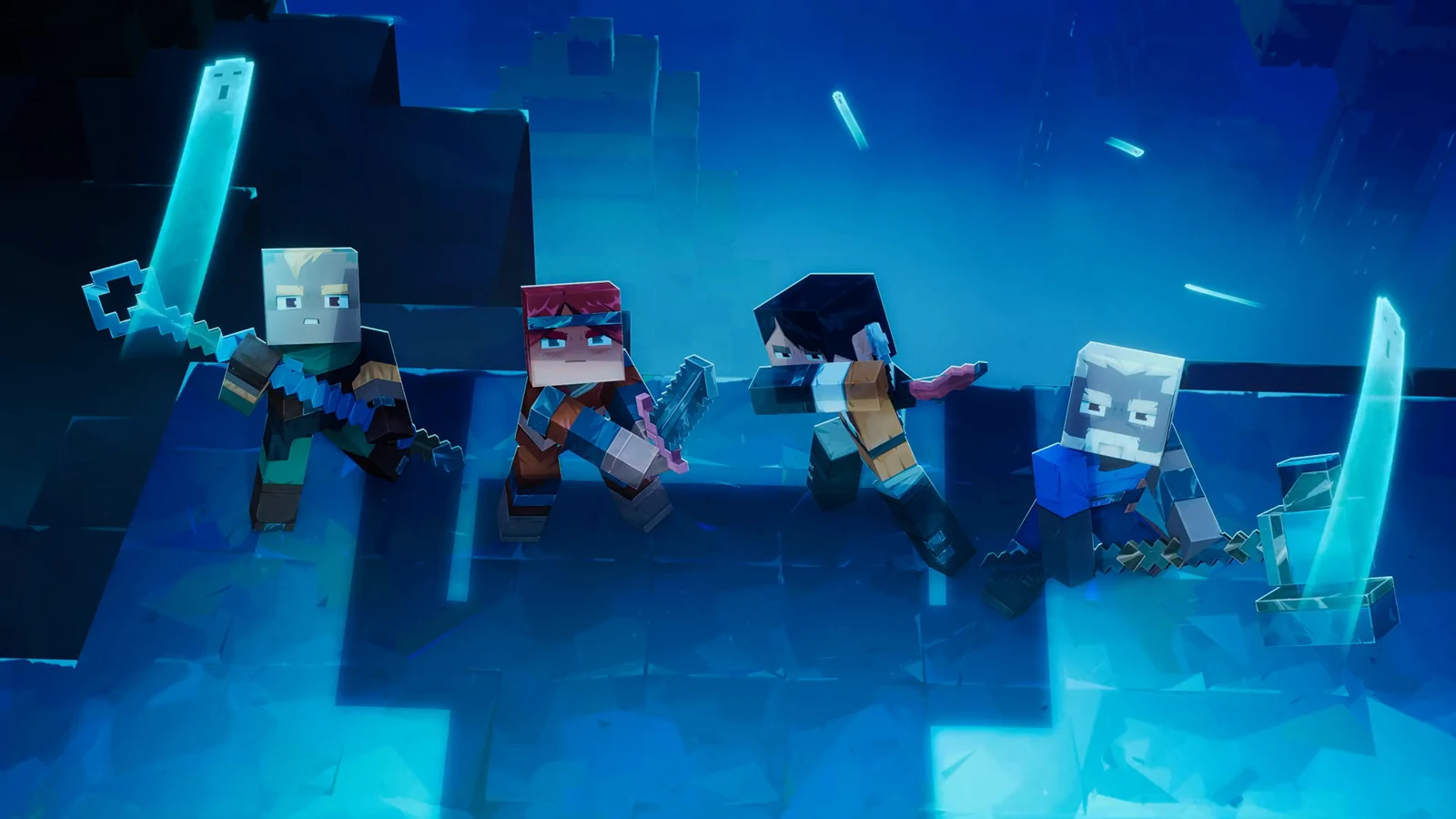
Mojang Studios and Double Eleven have rebuilt almost every system from the first Minecraft Dungeons for the sequel. Classes are gone, armor is no longer one item, enchantments live in a personal library instead of being welded to loot, and the mission select table has been replaced by a world you walk through. Here is what changes, what it costs, and where you can play it.
Quick answer: Minecraft Dungeons II launches September 29, 2026 on PC, Xbox Series X|S, PS5, Switch, and Switch 2, day one on Game Pass. Standard is $29.99, Deluxe is $49.99.
Minecraft Dungeons II price, editions, and platforms
Two editions are on sale. The split is straightforward: the Deluxe Edition bundles the two planned DLC packs and a larger cosmetic set on top of the base game.
| Contents | Standard | Deluxe |
|---|---|---|
| Price | $29.99 | $49.99 |
| Base game | Yes | Yes |
| Post-launch DLC | None | DLC 1 and 2 |
| Hero skins | — | Four |
| Extra cosmetics | — | Soul cape, Blub pet |
Windows PC and Steam are supported. Xbox Series X|S and PlayStation 5 are also supported, as are Nintendo Switch and Switch 2. Xbox Cloud Gaming is available as well. The game enters Game Pass on launch day and includes Xbox Play Anywhere. Crossplay connects every platform, allowing someone on Switch to team up with a PS5 player.
Every pre-order, regardless of edition, comes with two hero skins, the Twisted cape, and the Twisted chicken pet. That bonus offer runs until September 28, 2026, one day before launch.
Playing both Minecraft Dungeons and Minecraft Dungeons II on the same Microsoft account unlocks the Hero Cape in the sequel and in Minecraft: Java & Bedrock Edition. Game Pass playtime counts toward it.
Gear replaces classes: 12 combat slots, four armor pieces, and talismans
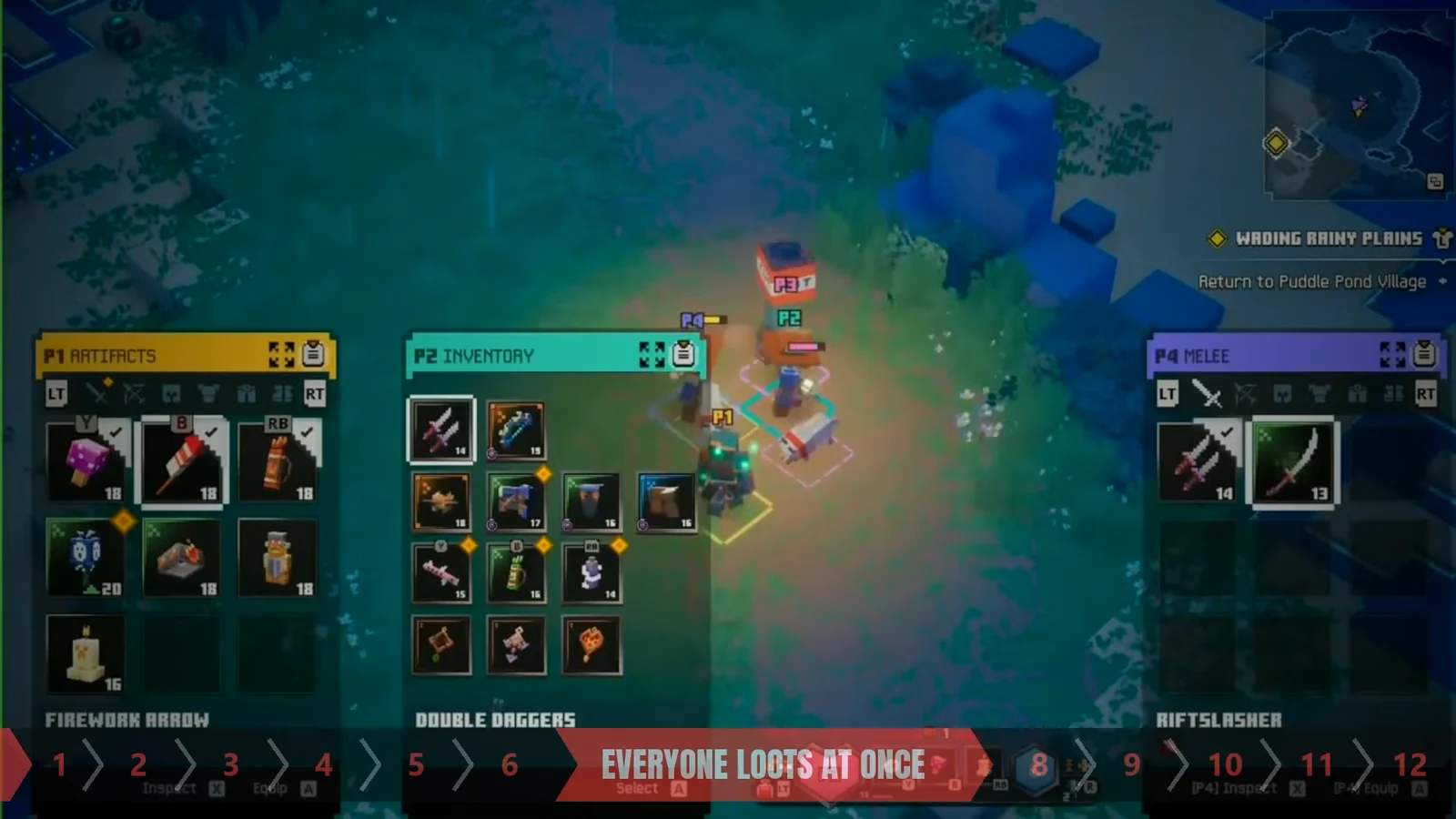
There is still no class select screen. Your health, damage, and playstyle come entirely from what you equip, and the sequel doubles the room you have to work with: combat slots go from 6 to 12. Armor is no longer one catch-all item either. You now equip a helmet, chestplate, leggings, and boots separately, which means stats can be mixed instead of locked to a single set.
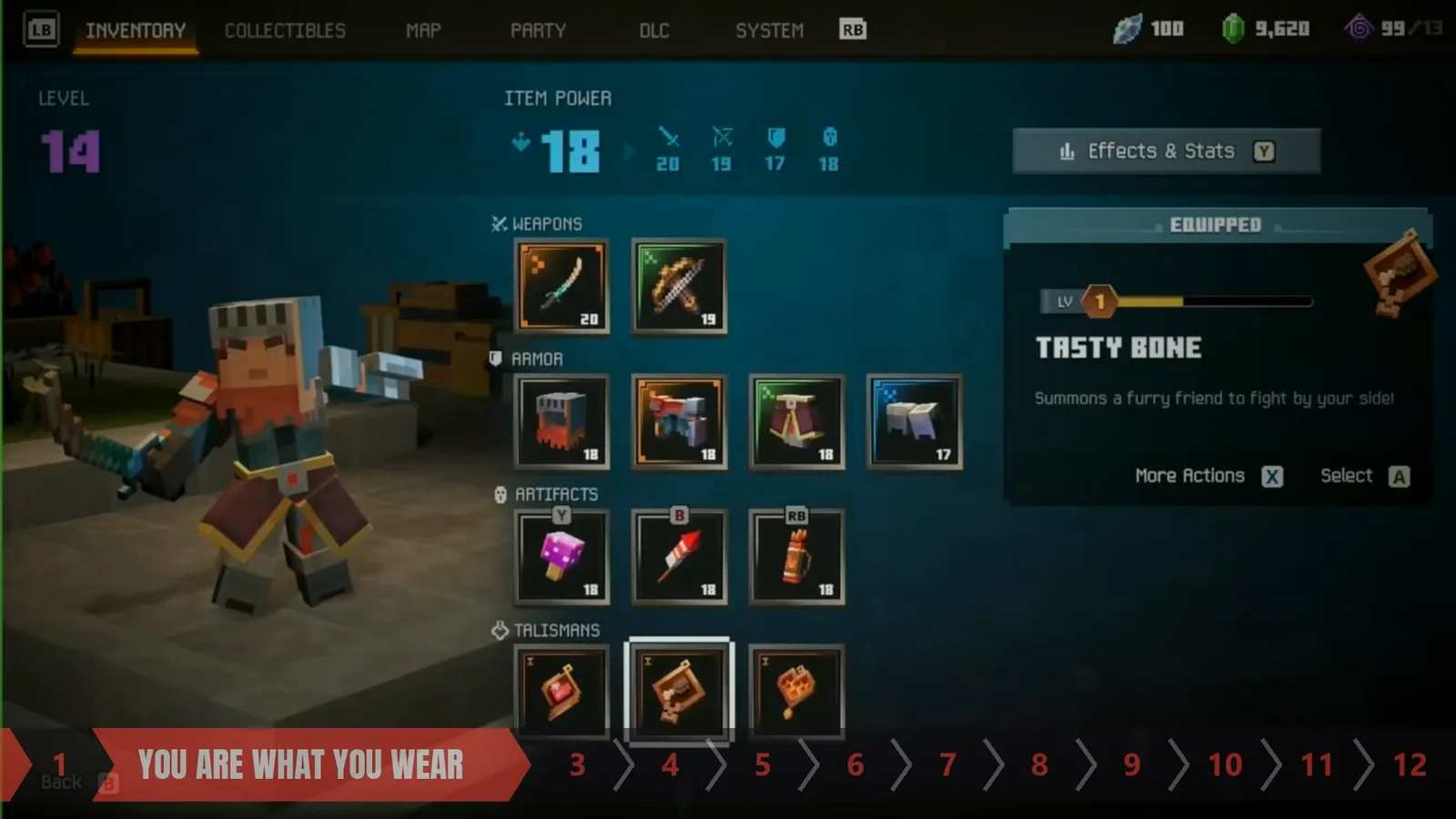
Talismans are the new equipment category. They sit in passive slots and hand out steady bonuses rather than activated abilities, so they act as the numbers layer underneath your weapon and artifact choices. The Healing Heart and the Tasty Bone both appear as Level 1 talismans in the loadout.
Two more loot changes matter. Dropped weapons and armor can roll random bonus effects, so two copies of the same item can behave differently. And projectile weapons no longer eat arrows — ammunition is unlimited and refills on a cooldown, which removes the old scramble for arrow pickups mid-fight.
Enchantment books, the Enchantsmith, and Echo Shards
Enchantments are no longer baked into the item you found them on. You pick up enchantment books out in the world — Fire Aspect, Thundering, Healing Smite, Ender Mines I — and they go into a personal library. At the Enchantsmith you apply them to whichever gear slot you want, and you can move them later. Enchantments also level up over time, so a favorite effect keeps scaling instead of being retired with the weapon it came on.
The Blacksmith handles the other half of buildcrafting. It can upgrade an underpowered item to your current power level, which keeps a sword you like from becoming dead weight, and it can reroll an item’s random effect if you rolled something useless.
Both services cost Echo Shards, the sequel’s crafting currency. You earn them by clearing dungeons and by killing soul corrupted enemies, the mobs the Illager High Council has infused with energy from the Sift.
One connected world, the Sift, and fast travel
The mission select table is gone. Minecraft Dungeons II drops you into large connected regions with settlements, narrative events, structures, and points of interest you find by walking into them. Caves and ruins you stumble across can have different layouts on different visits, and randomly generated dungeons pull from biomes including the Deep Dark and Ancient Cities.
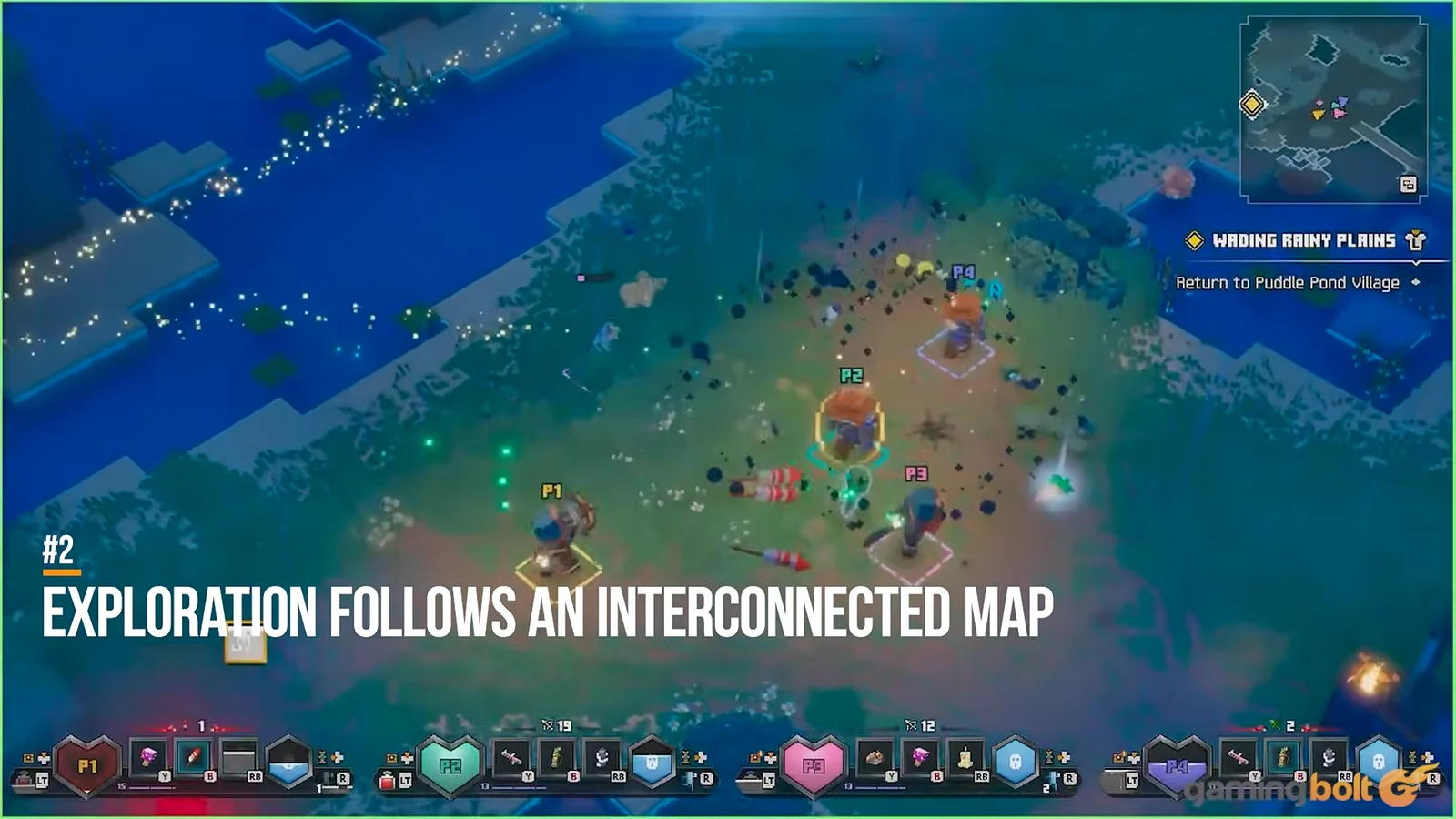
Fast travel runs through minecart stations, and the world map can also teleport you to a nearby friend. Fast travel does not skip the fighting — enemy groups can still be waiting when you arrive. One demo route ran from Brave Haven, the central hub, out to the Rainy Plains; other named stops include Wading Rainy Plains, Howling Woods, and Puddle Pond Village.
The second world is the Sift, a new dimension reached through rifts opening across the Overworld. It looks close to the Overworld at a glance but carries its own mobs and threats, and it is where the Illager High Council — the Prime Enchanter, the Supreme Evoker, and the Grand Illusioner — are launching their attacks from.
Quests split into main and side content. Main quests drive the story across both worlds; side quests range from tracking down a beekeeper’s missing bees to hunting the Twisted Warden, and pay out experience or gear.
New combat moves: jumping, jump attacks, and combos
Heroes can jump now. It sounds small, and Mojang leans into the joke, but it changes both traversal and fighting. Jumping clears obstacles and opens up light platforming, and it feeds a jump attack that strikes from above with extra momentum. The dodge roll is still there alongside it.
Melee also gets multi-swing combo attacks. Both jump attacks and combo finishers can set off whatever enchantment you have applied, so effects like poison clouds or explosions trigger on the landing hit rather than at random.
Weapon variety expands past the sword, bow, crossbow, shovel, and pickaxe. Confirmed additions include the Tornado Blade, Battlestaff, War Hammer, Trickbow, sickles, and dual daggers. The Tornado Blade deals 60 percent of weapon damage per swing but hits secondary targets 30 percent harder, while the War Hammer is built around heavy ground tremors.
Co-op: mixed couch and online play, matchmaking, and party codes
The campaign supports one to four players start to finish. Beyond plain couch co-op and online crossplay, there is mixed co-op: two or more people on the same console or PC can fill the rest of the party with players online. That removes the old split where local groups and online groups were separate paths.
Finding people is handled two ways. Public matchmaking drops you into an open session, and party codes let you connect directly with friends.
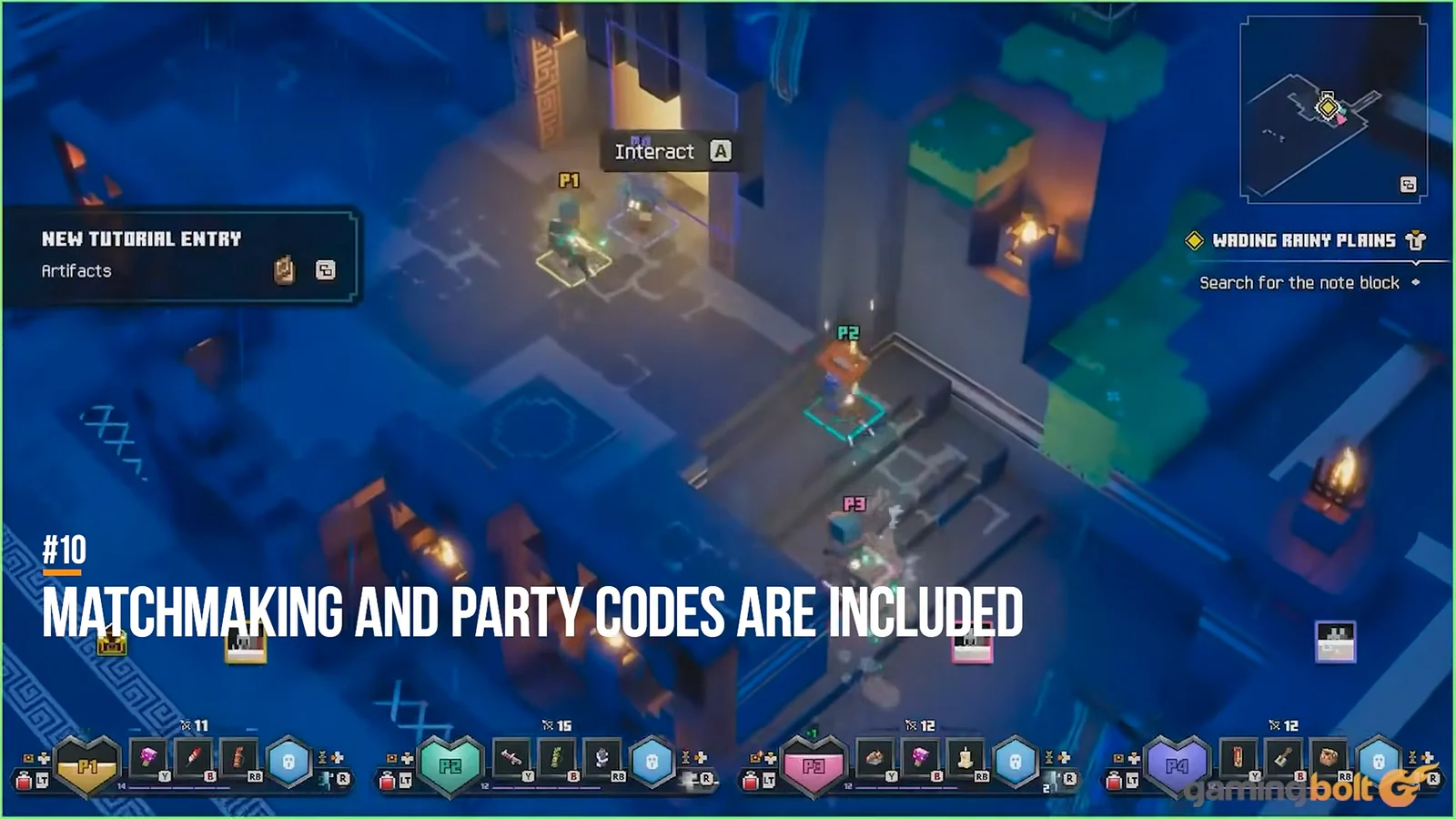
Two quality-of-life fixes address the most annoying parts of the original’s co-op:
- Every player can open a mini-inventory on the D-pad at the same time and swap gear on the fly, so nobody has to wait their turn.
- Loot sharing is automated rather than manual.
- Downed teammates revive faster when more than one player helps, since multiple revives stack on the same meter.
Bosses, companions, and traps
Copper Monstrosity
A story boss fought in an arena, and a straight damage sponge. It throws heavy melee punches, dashes across the arena, and calls down lightning-based area attacks that spread sparks along the ground. Attacks telegraph as red rings before they land. Killing it drops a note block the story needs, and unlocks the Copper Stopper achievement, worth 20 points.
Twisted Warden
The Sift’s headline threat, and yes, it behaves like the Warden you already fear. Expect wide area attacks and sonic boom-style abilities, which makes it the fight your build gets measured against.
Tasty Bone and Creeper Candle
The Tasty Bone summons a wolf companion to fight alongside you. The Creeper Candle is a deployable trap that sits for a short delay and then detonates like a creeper, which is useful for controlling doorways and chokepoints. Artifacts like the Death Cap Mushroom and Firework Arrow return alongside them.
Minecraft Dungeons II PC system requirements
| Component | Minimum | Recommended |
|---|---|---|
| OS | Windows 10 64-bit | Windows 10 64-bit |
| CPU | Intel Core i3-8100 / Ryzen 3 2200G | Intel Core i5-8400 / Ryzen 5 2600 |
| GPU | GTX 1050 / RX 560, 2GB VRAM | GTX 1060 / RX 580, 6GB VRAM |
| Memory | 8GB RAM | 16GB RAM |
Both tiers require a dedicated graphics card, so integrated graphics are not listed as supported.
Do you need to play the first Minecraft Dungeons?
No. The sequel is a standalone adventure with its own villains and its own worlds, and it does not assume you fought the Arch-Illager. Playing the original gives you more context for how much the systems have changed, and it is the only way to qualify for the Hero Cape, but it is not a requirement.
Everything above ships together on September 29, 2026. If you want the Twisted cape and Twisted chicken pet, the pre-order window closes the day before, on September 28.