


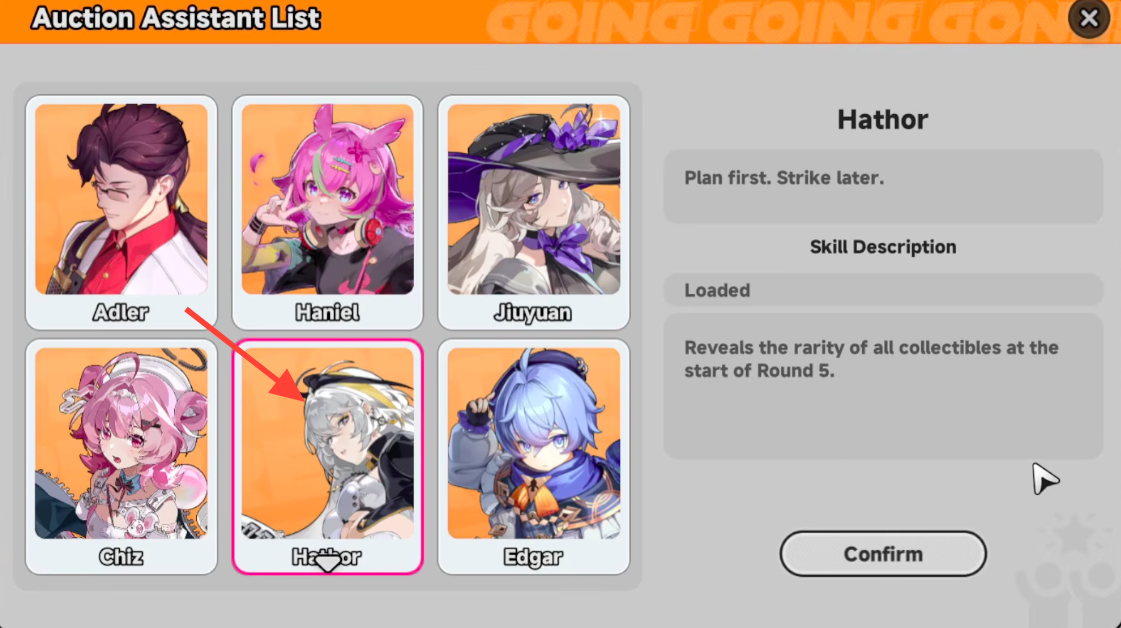
Hathor turns the Going, Going, Gone! auction in Neverness to Everness into a math problem you can solve. Her skill hands you the full rarity layout of every collectible right when the final round begins, so you stop guessing and start bidding for a known profit margin.
Quick answer: Pick Hathor, play Rounds 1 through 4 with small, safe bids to stay in the auction, then in Round 5 use her Loaded skill plus your revealed silhouettes to total the board’s real value and place a buyout bid just under it (add 1 shell to trigger the instant win).

What Hathor’s Loaded skill does
Loaded reveals the rarity of all collectibles at the start of Round 5. Nothing fires before then, which makes Hathor a defensive, late-game specialist rather than an early-information assistant. Where partners like Chiz or Haniel feed you clues in the opening rounds, Hathor stays quiet until the exact moment the auction is decided.
That timing matters because Round 5 is the round where the highest bidder simply wins every lot. Once rarity colors appear on the whole board, you can combine them with the silhouettes you already unlocked and calculate the board’s near-exact value. The result is a bid that clears the win condition while staying below the actual worth of the collectibles.
Round-by-round winning conditions
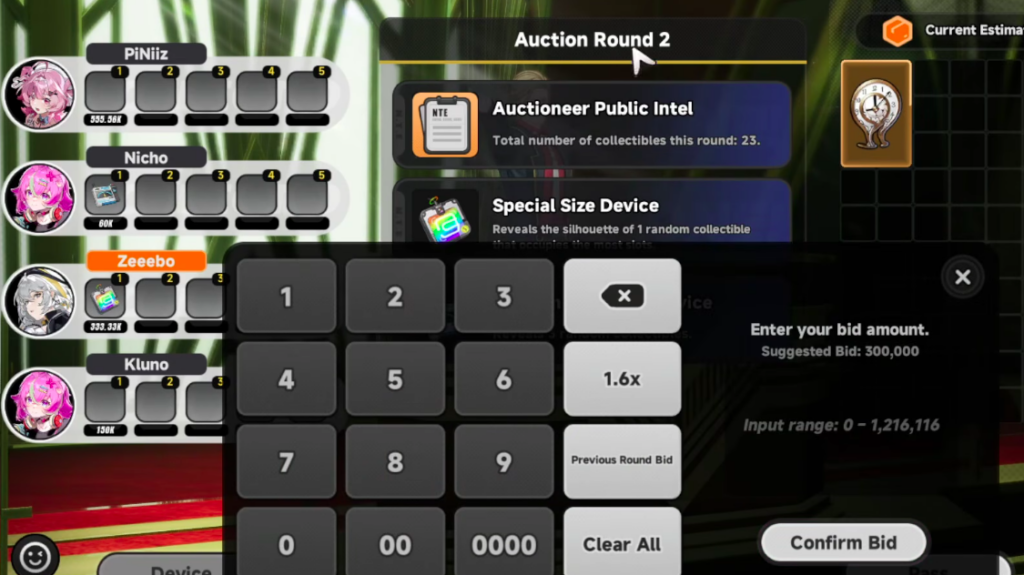
Each round lowers the multiplier needed to end the auction, so the pressure to overspend drops as the game goes on. Hathor rewards patience because her reveal only lands at Round 5, the point where the multiplier disappears entirely.
| Round | Condition to win the lot |
|---|---|
| 1 | Bid at least 2x the second-highest bid |
| 2 | Bid at least 1.6x the second-highest bid |
| 3 | Bid at least 1.3x the second-highest bid |
| 4 | Bid at least 1.1x the second-highest bid |
| 5 | Highest bidder wins all lots |
| 6 | Tie-break; only Round 5’s top bidders join, highest wins all |
Device sets to pair with Hathor
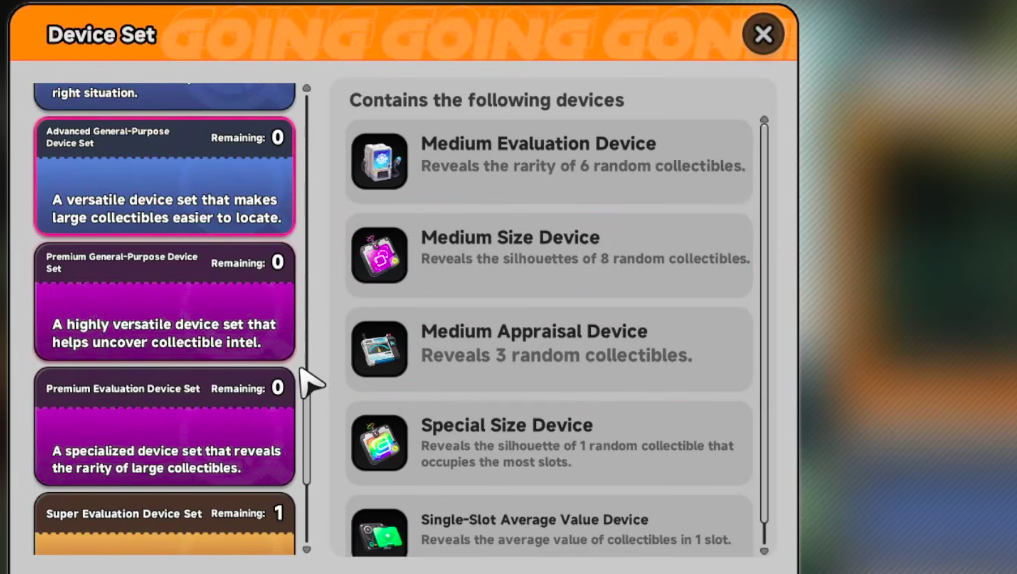
Hathor supplies rarity, but rarity alone does not tell you which item sits in each slot. You still want size, appraisal, and evaluation devices to narrow silhouettes down to specific collectibles like the Flatbread or the Giovanni Statue. The two setups below both work well in Coral Hall.
| Setup | Devices | Best for |
|---|---|---|
| Advanced General-Purpose Device Set (20,000 shells) | Medium Appraisal, Medium Size, Medium Evaluation, Special Size, Single-Slot Average Value | Cost-efficient Coral Hall runs |
| Premium set | Large Appraisal, Large Evaluation, Large Size, Purple-rarity Count, Gold-rarity Average Value | High-value boards where the extra cost is covered by earnings |
You can use only one device per round, and a device is consumed the moment you activate it. Spend early-round devices on size and appraisal so that by Round 5 you already know most silhouettes, letting Hathor’s rarity reveal complete the picture instead of doing all the work alone.
How to play the auction with Hathor
What a profitable Round 5 looks like
Because Hathor lets you total the board before committing, the gap between your bid and the actual value becomes your earnings. Two representative Coral Hall runs show how wide that margin can be.
| Run | Final sale price | Actual value | Earnings |
|---|---|---|---|
| Advanced General-Purpose set | 420,001 | 750,673 | 330,672 |
| Premium set | 888,888 | 1,728,906 | 840,018 |
The winning screen confirms the profit for you. After the auction ends, the difference between your Final Sale Price and the board’s Actual Value shows as Earnings, and the collectibles move into your Warehouse. Display Red-rarity items in your Display Case rather than selling them, since displayed pieces generate Gold Shells over time. Claim those earnings before reorganizing displayed items, because organizing resets any unclaimed income.
Common ways the plan fails
Hathor’s approach only works if you reach Round 5 with money left to spend. The two mistakes that break it are both about the early rounds.
- Overbidding in Rounds 1 to 4 while you still have no rarity data, which empties your balance before Loaded ever activates.
- Chasing a lot when another player pushes an obviously excessive bid. Let them overpay instead, since a winner who takes a loss hands each remaining player 10% of that negative amount.
If your funds fall to 100,000 or below, claim the 100,000 Gold Shell Safety Fund, available up to five times per day, and keep at least 200,000 on hand so you can still compete in the final round. The Going, Going, Gone! event runs until August 19, which leaves plenty of time to bank shells with Hathor’s read on every board.