Jumping into Path of Exile 1 after the sequel feels familiar and strange at the same time. The lore, the loot obsession, and the sprawling passive tree all carry over, but more than a decade of updates means the original game runs on its own set of rules. A lot of the comfort you built up in Path of Exile 2 will not translate, and a few habits will actively hold you back.
Quick answer: Pick a proven starter build, slot a Blink or Dash skill for movement since there is no Sprint, reserve Mana for auras because Spirit does not exist here, grind out Labyrinth Trials for your Ascendancy, lean on Vendor Recipes for early currency, and plan a single focused Atlas Tree around one or two League mechanics.
Start with a starter build guide
Path of Exile 1 hands you far more Skill options than the sequel does. Instead of a small pool of starter Skills, you unlock a wide range across every campaign Act, and some Skills only stay strong up to certain break points before you need to swap them out. That flexibility is exciting, but it also makes it easy to build something that stalls halfway through.
A build guide removes most of that guesswork and saves hours of trial and error. Righteous Fire and Minion builds are two of the easier entry points to learn the game’s flow without micromanaging a dozen decisions at once.
Movement relies on Blink and Dash skills, not Sprint
Path of Exile 2 lets you Sprint through an area you do not want to linger in. The first game has no equivalent, so getting around quickly is on you. Beyond stacking Movement Speed on your gear, you will want a Blink or Dash Skill on your bar.
These Skills teleport you a short distance on a few seconds of cooldown, which is invaluable for escaping a bad pack or repositioning mid-fight. They also ignore verticality, so you can dash up or down a ledge that would otherwise force you to walk the long way around.
Auras reserve Mana because there is no Spirit
Spirit simply does not exist in Path of Exile 1. Auras are far more plentiful here, but every one of them reserves a slice of your Mana instead of drawing from a separate pool. Some reserve a flat value and others reserve a percentage.
To keep several auras running at once, you need Mana Reservation Efficiency. If you want to push aura stacking to the extreme, the Templar is a strong pick, since its Ascendancies focus heavily on Reservation Efficiency and Mana stacking. Managing that Mana budget is the key mental shift coming from the sequel.
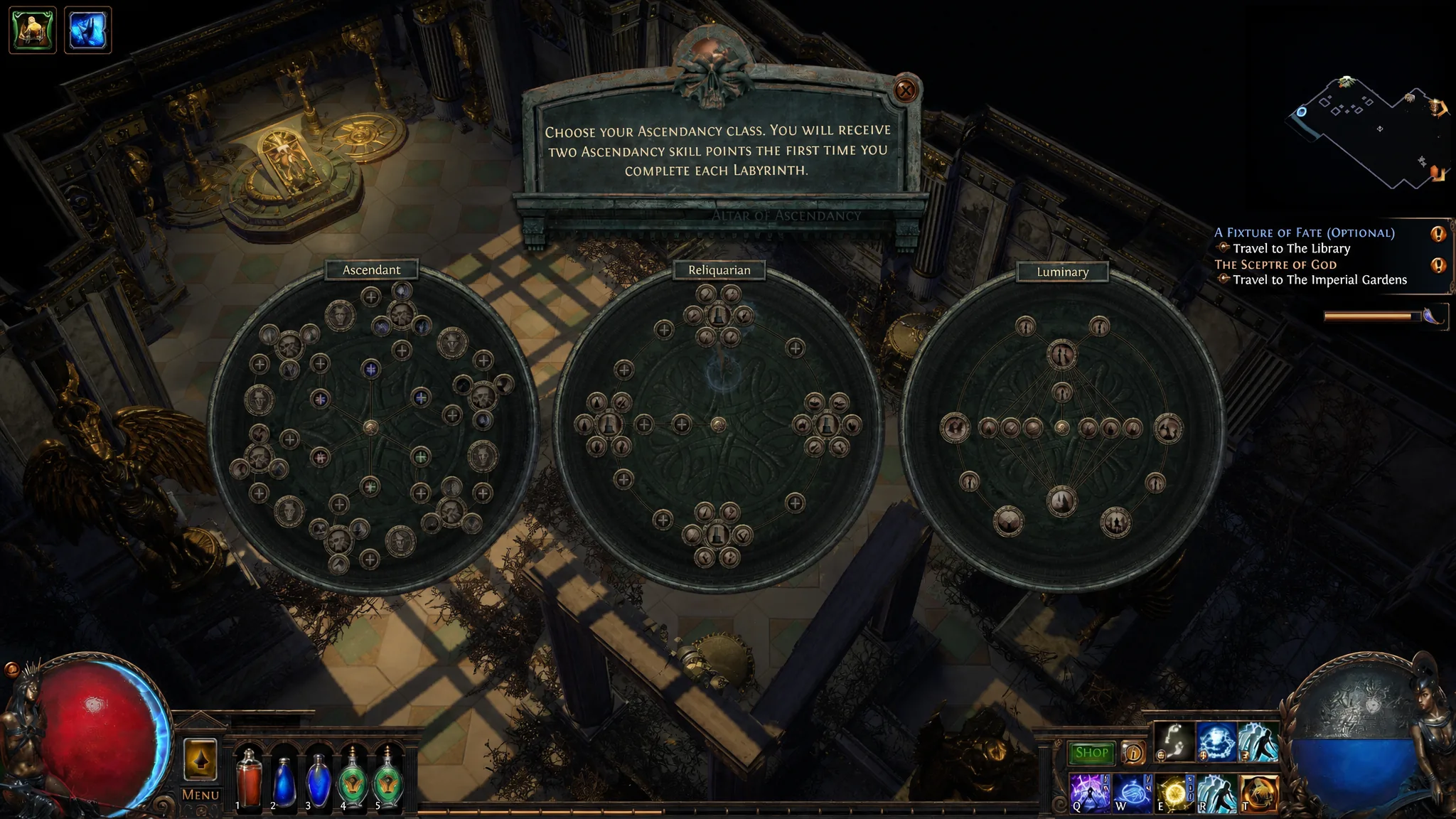
Ascendancy points come from Labyrinth Trials
Earning your Ascendancy takes real effort in the original. You first hunt down a set of Labyrinth Trials scattered across different areas in each Act and clear them. Even when you know where every Trial sits, assembling them and running the Labyrinth eats up time.
At the end, King Izaro tests whether you can deal damage while being swarmed, which is a genuine hurdle for an underpowered character. If a run keeps ending badly, you can invite another player to help you push through it.
Use Vendor Recipes for early currency
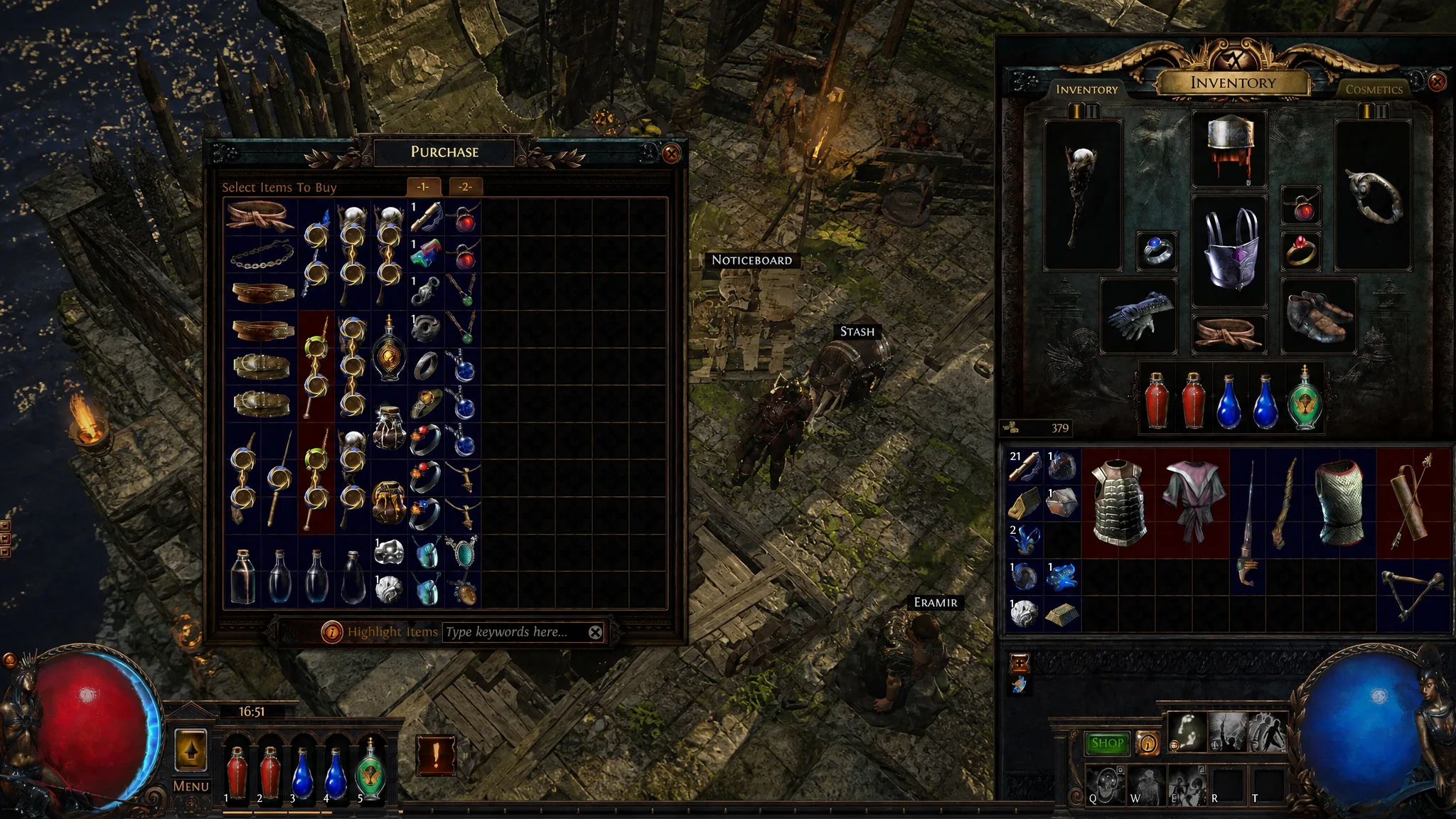
Plenty of currency and equipment in Path of Exile 1 comes from the Vendor Recipe system. You hand a vendor a specific set of items and get a fixed reward in return. Chaos Orbs are pricey to buy, but selling a full set of armor between level 60 and 74 nets you one Chaos Orb, and two if the pieces are unidentified.
| What you sell | Reward |
|---|---|
| Full armor set, item levels 60–74 (identified) | 1 Chaos Orb |
| Full armor set, item levels 60–74 (unidentified) | 2 Chaos Orbs |
Learning these recipes makes solo self-found play far smoother and turns items you would otherwise vendor as trash into steady income.
Plan one focused Atlas Tree
Every League mechanic in the original is boosted through a single Atlas Tree, and you have a limited number of Passives to assign there. That constraint is the opposite of the sequel’s more generous setup, so spreading points thin leaves you constantly hunting for Divines to respec.
Decide which mechanics you actually want to run, locate their nodes on the tree, and chart a direct route to them. A tight, purposeful tree pays off far more than a scattered one.
Commit to one or two League mechanics at a time
This ties directly into your Atlas planning. The campaign introduces tutorials for most League mechanics as you play, so pay attention, pick the one or two you enjoy most, and build your endgame around them. Concentrating your effort improves both your loot and your overall experience.
If a mechanic starts to feel stale, nothing locks you in. You can always shift your Atlas focus to something else once you are ready for a change, which keeps the endgame from getting repetitive. Treat Path of Exile 1 as its own game with its own rhythms, and the transition from the sequel becomes a lot more rewarding.