Haki in RELL Seas is a full class-building layer, not a single power-up you switch on. RELL Games splits it into three branches: Observation, Conqueror, and Armament. Each branch is shaped by collectible cards stored under the [Spiritual] tab of the Poster Storage menu. The Movie 2 showcase revealed the full card lineup, the stat-point triangle that ties the three branches together, and a set of cosmetic controls that change how your Haki looks and where it appears on your character.
Quick answer: RELL Seas has three Haki types (Armament on R, Observation on T, Conqueror on G). Cards add specific perks, and the Spiritual menu shows six poster slots.
How RELL Seas Haki works: Branches, keys, and cards
A default key is assigned to each Haki branch. You can change any binding through the in-game Settings menu.
| Haki type | Default key | Cards shown | Core role |
|---|---|---|---|
| Armament | R | 6 | Physical damage, posture, defense |
| Observation | T | 6 | Dodging, sensing, counters |
| Conqueror | G | 5 | Area stuns, debuffs, shutdowns |
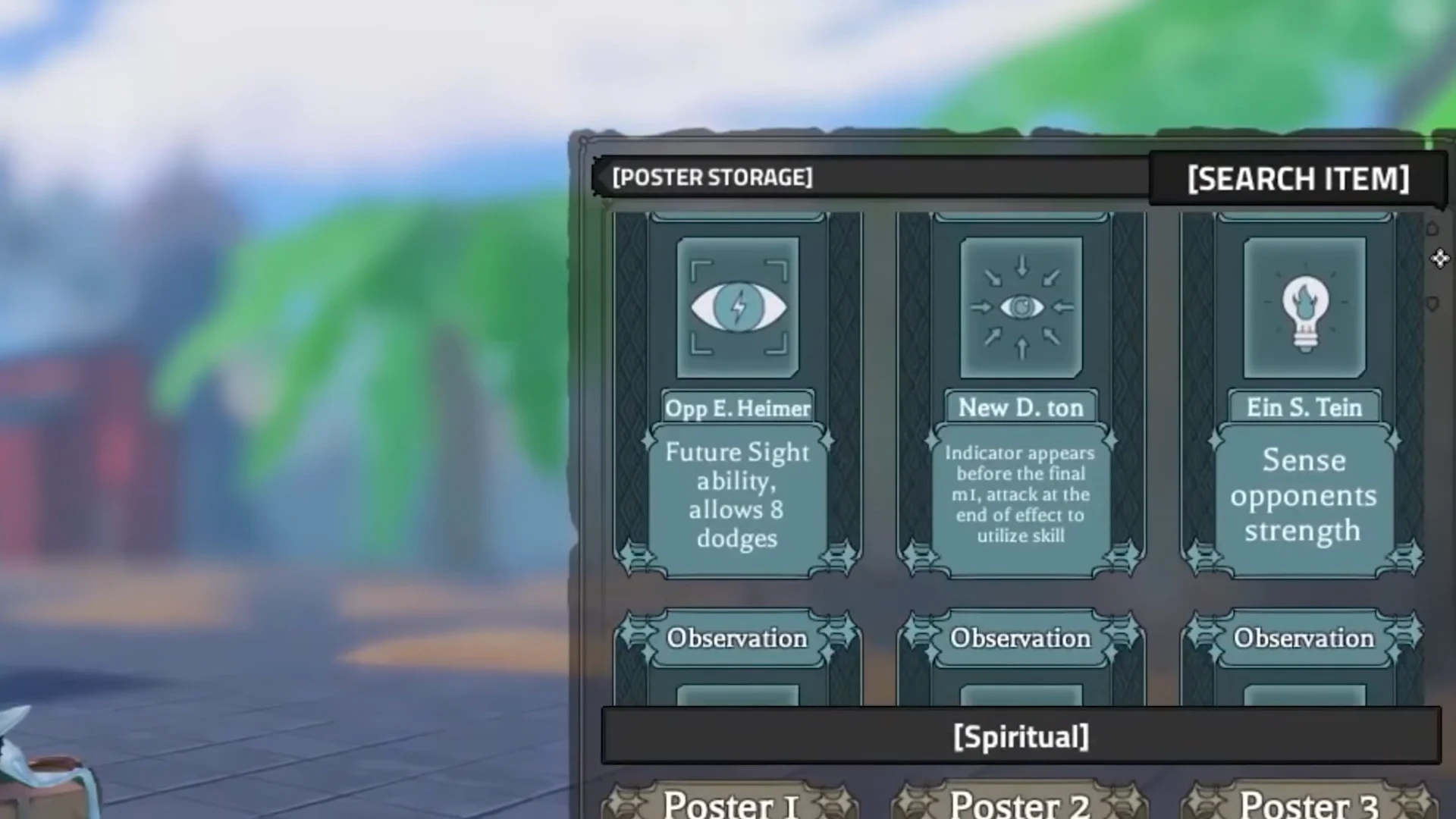
The cards are posters, the same format RELL Seas uses for its movement and combat perks. Haki cards sit under the [Spiritual] category in [POSTER STORAGE], next to a search bar and a [Max-Potential] tab. Each card has a pun name based on a historical or legendary figure, such as Opp E. Heimer, Julius C. Zar, or Sir Lancelot, and a single line describing what it does.
The Spiritual menu displays six slots, labeled Poster 1 through Poster 6. The Agile, Fierce, and Tactic poster categories allow only three to four equipped cards, so Haki has more loadout space than any other poster type.
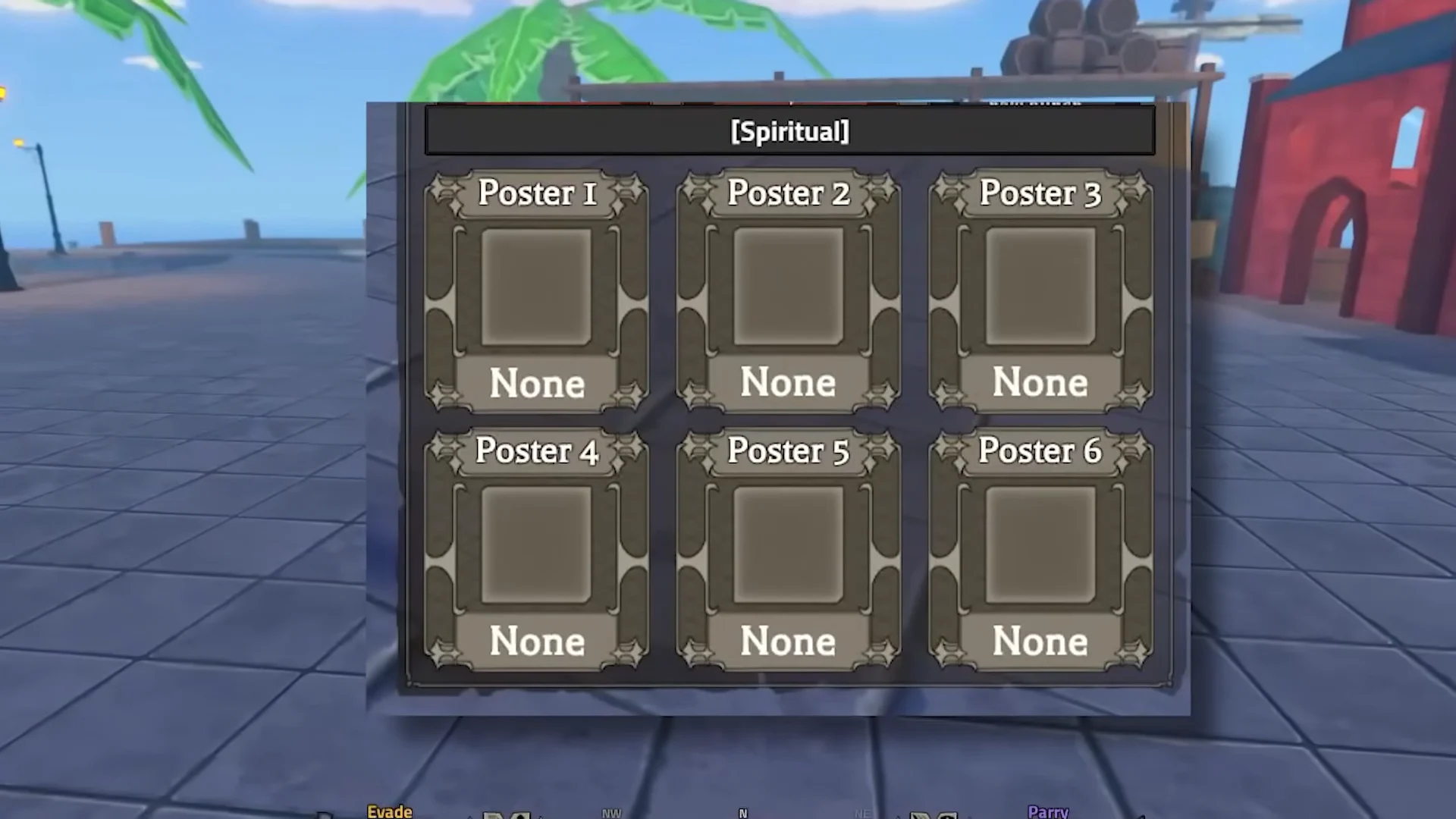
It is not yet settled whether six is a shared cap across all three Haki types or a limit per type. The menu shows one row of six slots, but the cap has also been described as six cards per Haki type.
Observation Haki cards
Observation covers reading the fight before it happens. Its six cards fall into two groups: evasion tools and information tools.
| Card | Effect |
|---|---|
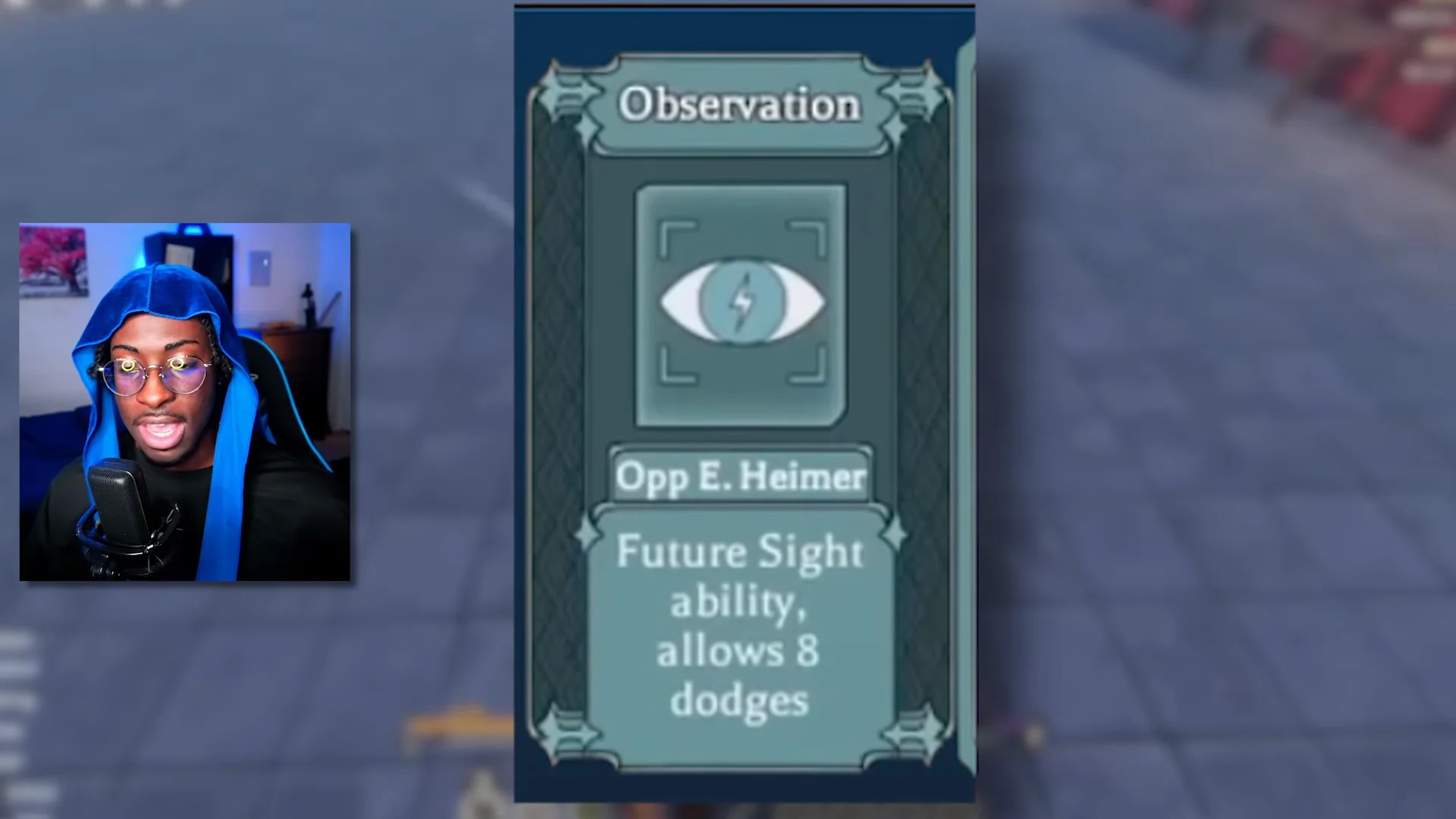
| Opp E. Heimer | Future Sight, 8 dodges |
| New D. ton | Indicator before final M1, attack at end of effect |
| Ein S. Tein | Sense opponent’s strength |
| Dar D. Win | Sense opponent’s presence |
| Sigma Freud | Dash/evade dodge frames +20% |
| Tom E. Dison | Evade becomes a grab counter punch |
Opp E. Heimer is the familiar Future Sight power, capped at a fixed number of automatic dodges instead of lasting forever. Sigma Freud extends the invulnerability window on dashes and evades, and Tom E. Dison turns your evade into an attack that pushes the opponent away.
The two sensing cards serve separate purposes. Dar D. Win pinpoints opponents’ locations, even when walls are between you. Ein S. Tein displays an opponent’s health, parry, evade, and stamina gauges, plus their equipped fruit and fighting style. New D. ton adds a timing cue to the final hit in your M1 chain; use it to prepare the follow-up attack.
Conqueror Haki cards
Conqueror is the smallest branch, with five cards, and has been described as the rarest to obtain. Most of its effects reach beyond your own character and hit everyone nearby.
| Card | Effect |
|---|---|
| Xanda D. Goat | Infuses Conqueror’s will into combat |
| Julius C. Zar | Immobilize nearby enemies, defenses −15% |
| Geng D. Khan | AoE blast when knocked, attackers disabled 10s |
| Nap O. Leon | Speed boost for 10s on weapon equip |
| Go D. Zilla | Stuns all, ends modes, global cooldowns |
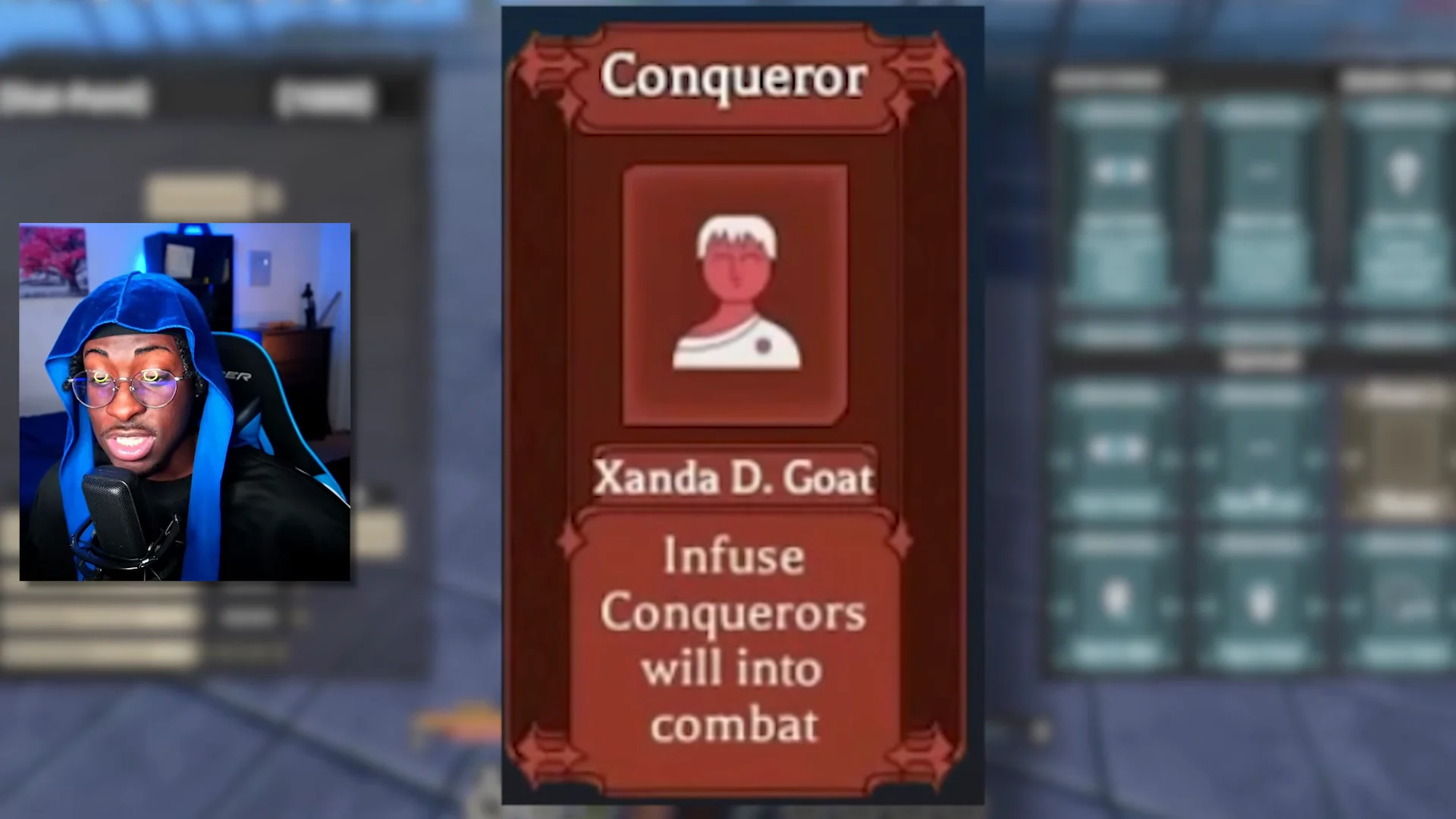
Go D. Zilla has the broadest effect of any card. It stuns everyone in range, turns off active modes such as fruit transformations, and puts every affected player’s keys on a global cooldown. This fits a wider rule in RELL Seas: Haki attacks can knock opponents out of their transformation modes. Geng D. Khan works as a defensive reset. It only fires after you are knocked down, and it disables whoever was attacking you. Note that the 15% defense reduction from Julius C. Zar is worded as applying to “everyone,” not only enemies.
Armament Haki cards
Armament cards are named after knights, and most of them modify a move you already have instead of adding a new one. Armament is described as the most common branch to obtain cards for.
| Card | Effect |
|---|---|
| Sir Galahad | Uptilt becomes Haki punch, not air kick |
| Sir Gawain | Posture durability +20% |
| Sir Lancelot | Bigger downslam AoE, posture damage, lift |
| Sir Lannister | Combat damage +4% |
| Bri O. Tarth | Block break by physical hit pushes attacker back |
| Sie G. fried | Third heavy attack makes a knockback shockwave |
Bri O. Tarth is the sole Armament card activated when an exchange is going against you. If a physical blow would normally break your block, it sends the attacker backward instead. Sir Gawain serves a similar defensive purpose, letting your posture withstand pressure for longer. The other four cards increase the damage or range of your existing moves. Armament lets physical attacks hit Logia users despite their elemental immunity. In RELL Seas, Logia defense already uses a draining bar rather than permanent immunity.
The Haki stat triangle and stat points
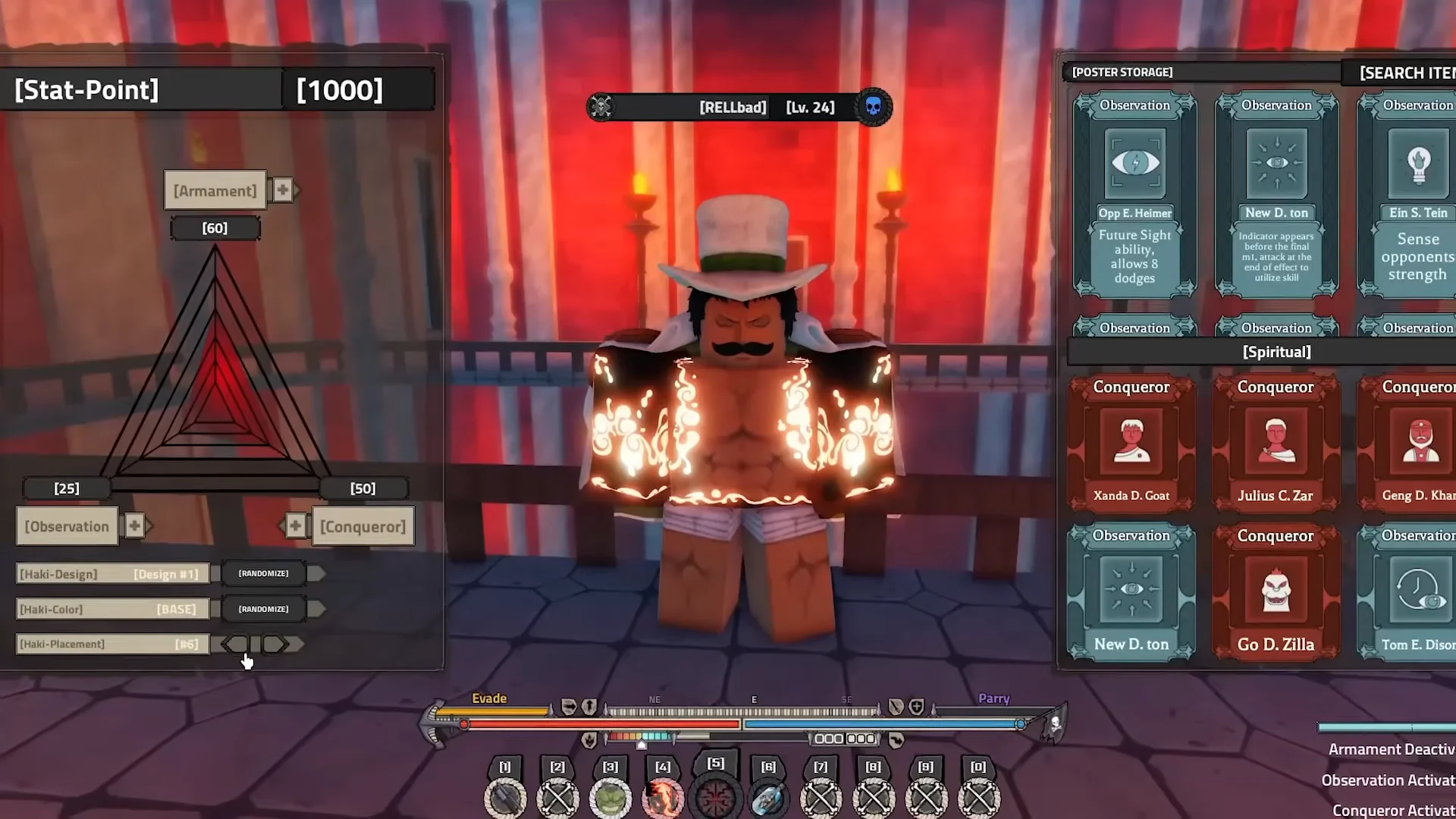
Your three Haki branches are balanced through a triangular stat chart with Armament, Observation, and Conqueror at its three corners. Putting stat points into one corner improves how well that category’s cards perform. A Conqueror-heavy loadout therefore needs Conqueror points behind it to work at full strength.
One demonstration character showed a reserve of 1000 stat points, split as [Armament] [60], [Conqueror] [50], and [Observation] [25]. Those numbers come from a developer character and don’t describe a starting allocation. They do show that the triangle does not have to be balanced evenly.
Unlocking Haki cards and progression
Haki is not available from the start. The Spiritual tab opens after you reach a certain point in character development. Card progression is randomized per player, so two players will not follow the same unlock path. Cards have been described as boss drops. Trainers, exploration, and level-ups have also been suggested as sources, but none of these is confirmed. RELL Games has not published the exact unlock steps.
Haki customization and Spiritual Pressure
Haki appearance has its own controls, separate from the cards and stats. None of these settings change combat performance.
Haki-Designpicks the visual pattern, starting atDesign #1, and includes a randomize button.Haki-Colorsets the aura color from a base option, and can also be randomized.Haki-Placementsets where the Haki appears: arms, legs, individual hands, or the full body.
Coverage is split across four independent components, so you can, for example, coat one fist and both legs while leaving the rest of the body bare.
Spiritual Pressure is a separate visual effect. When a character arrives on an island or activates a mode, an aura spreads outward and visibly affects the area around them. This makes a strong player’s arrival obvious to everyone nearby before any fight begins.
RELL Seas has not confirmed a date for Movie 3. Haki unlock routes, drop rates, and the meaning of the six-slot cap could still change before the game reaches players.