

Cheating During Testing drops you into a classroom with a multiple-choice exam, a teacher who watches the room, and a set of gadgets you are not supposed to have. Score well and you earn credits. Get spotted mid-glance and the run ends. Almost everything that decides which way it goes comes down to three systems working against you at once, and all three are predictable once you know what triggers them.
Quick answer: Mark every question on the answer sheet as “A” before you touch the phone, then photograph the sheet — the phone skips answers that are already correct, so it only has to process the ones you got wrong.
The three things that get you caught
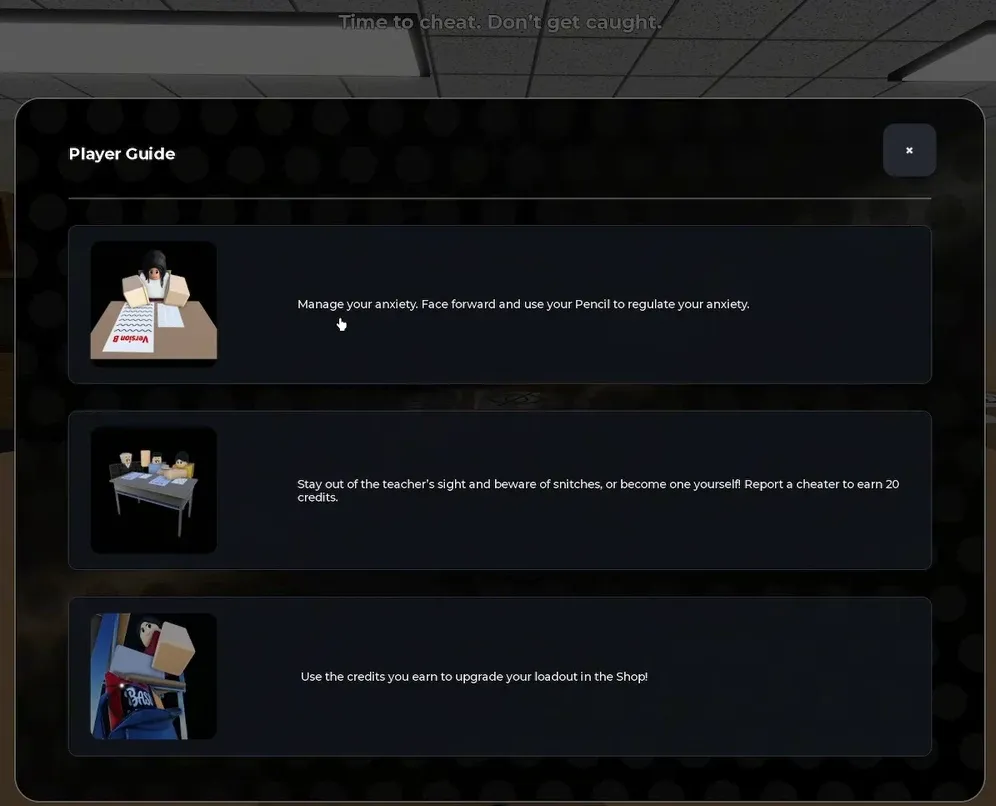
Anxiety is the meter you fight the whole match. Looking around the room pushes it up, and facing forward brings it back down. Using your pencil also regulates it, which makes “write for a few seconds, then peek” the natural rhythm of a run rather than a stall tactic. Let anxiety hit 100 percent and the teacher locks onto you and stares, which removes every safe window you had.
The teacher’s line of sight is the second system. Cheating only works while they are looking somewhere else, so the phone and the answer sheet come out during the moments their attention is turned away and go straight back down when it swings around.
Then there are the other students. Anyone in the room can report you, and reporting pays them 20 credits, so a table of players has a direct incentive to watch you instead of their own test. The Player Guide spells out all of it, including the pencil trick and the fact that you can flip the mechanic around and snitch on someone else.
Seat choice and camera sensitivity before the test starts
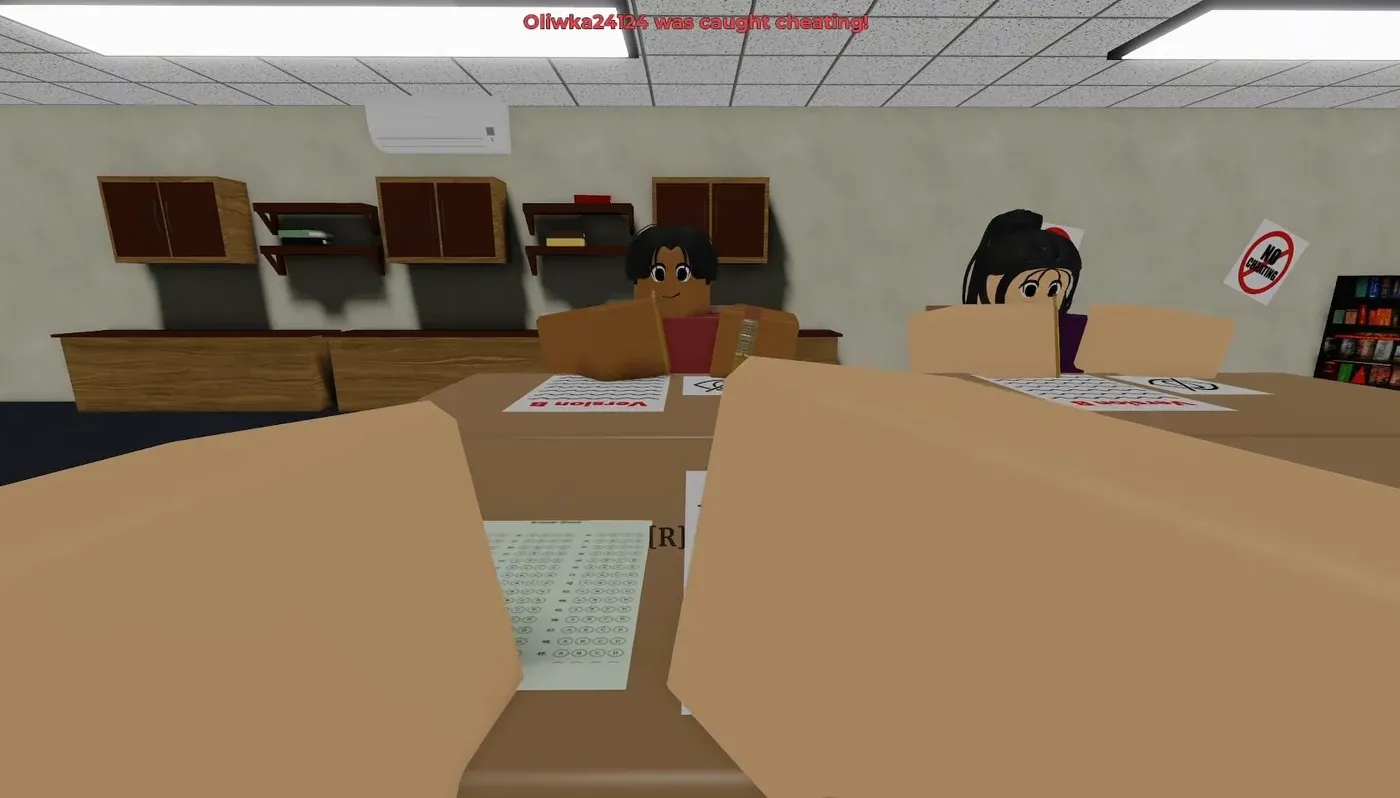
Corner seats are the strongest position in the room. They cut the number of angles the teacher can approach from, which means fewer directions you have to check and fewer surprise sight lines while your phone is out. A back table has the same advantage with a bonus, since you can see where the teacher is standing without turning your head much at all.
Turn camera sensitivity up in your Roblox settings before you join. The whole loop depends on flicking your view across the room and snapping back to your desk in a fraction of a second, and low sensitivity turns that into a slow pan that racks up anxiety for no reason.
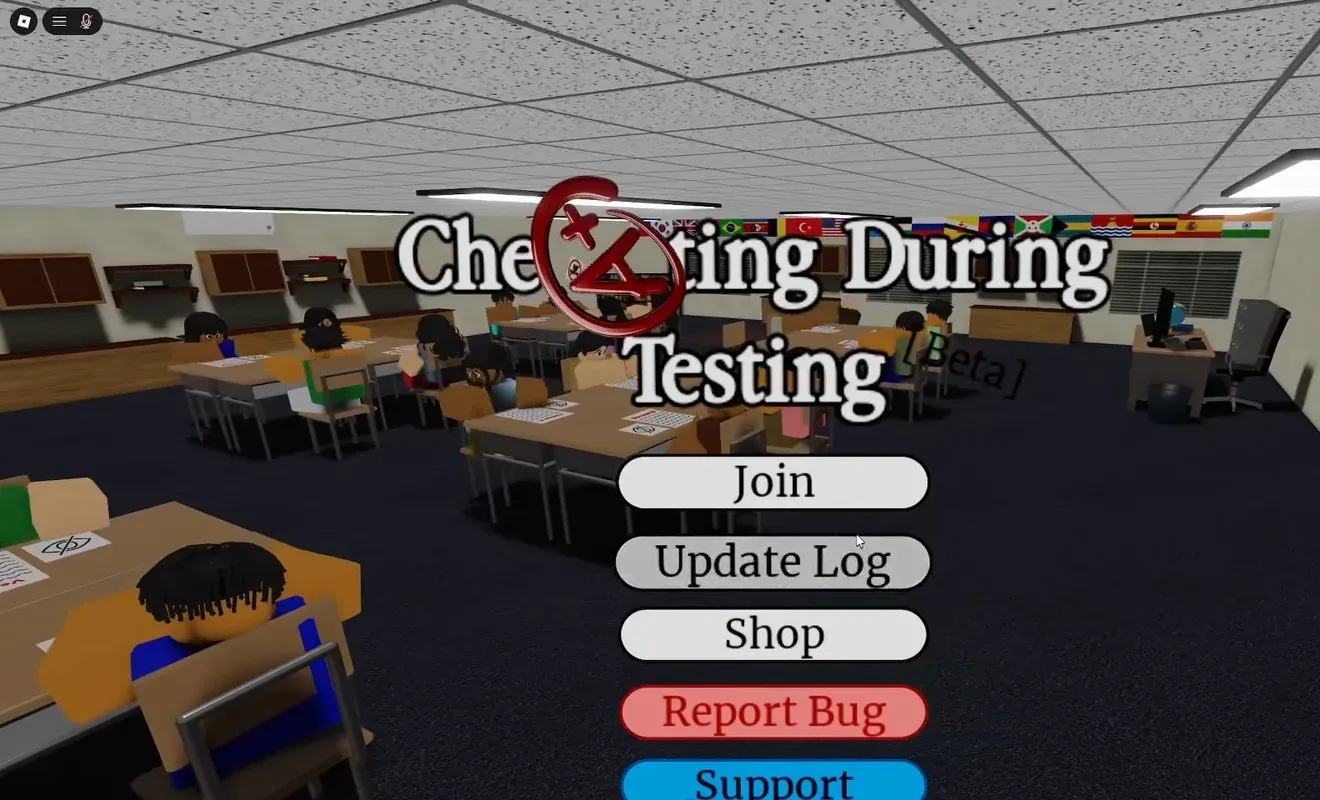
The lobby menu is where the rest of the prep happens. Join, Update Log, Shop, Report Bug, and Support all sit on the same screen, and the Update Log is worth a look if a mechanic behaves differently from what you remember.
The all-A method for faster phone cheating
The phone works by photographing your answer sheet and then feeding you the correct answers, but it has to chew through each question one at a time. The trick is that it ignores anything already marked correctly. Filling the sheet with a single letter first means roughly a quarter of the test is already done before the phone starts, so it has far less to process and you spend far less time with a device in your hands.
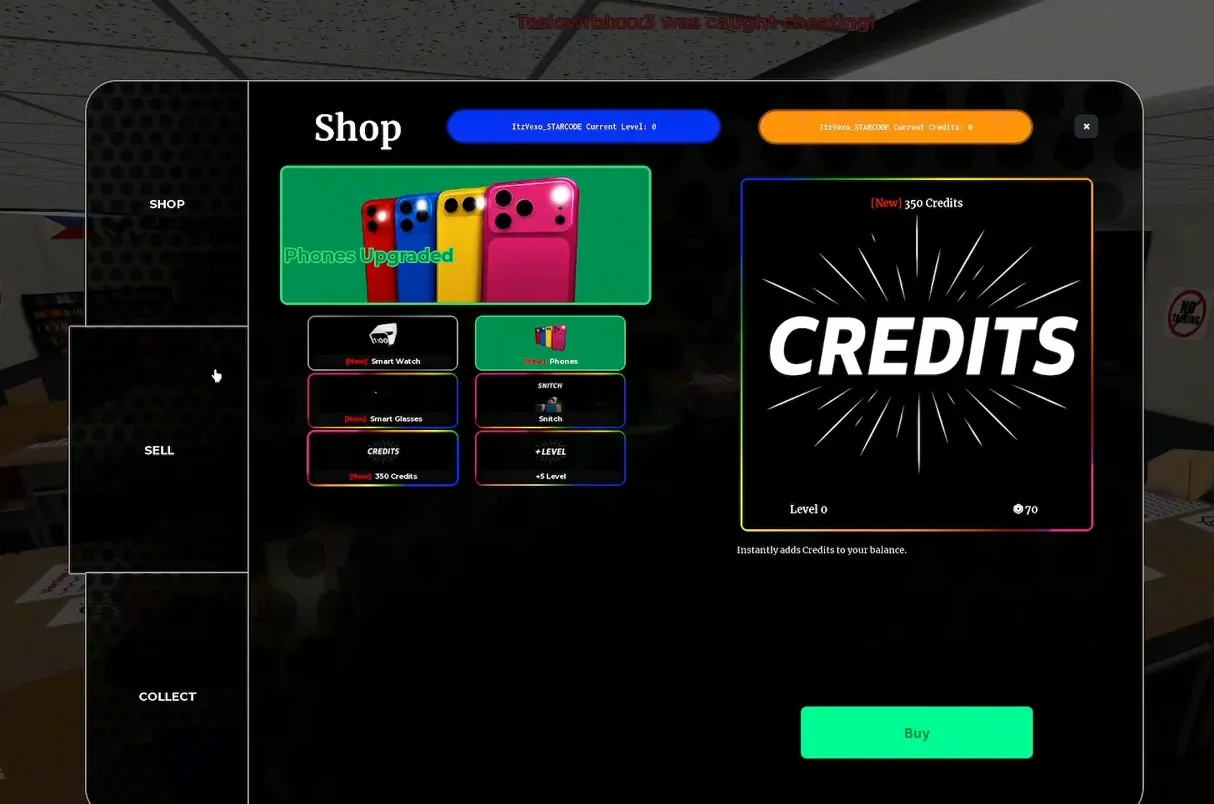
Shop items, prices and level requirements
Credits go into your loadout, and the gadgets are gated behind both a price and a level. The phones are the meaningful upgrade path: a better phone reveals up to five answers at once and processes them faster, which shrinks the window you need to keep it out.
| Item | Cost | Level required |
|---|---|---|
| Smart Watch | 100 Credits | Level 1 |
| Snitch | Robux | Level 1 |
| Smart Glasses | 1,500 Credits | Level 2 |
| Phone (first tier) | 300 Credits | Level 3 |
| Phone (second tier) | 400 Credits | Level 3 |
| Phone (third tier) | 450 Credits | Level 5 |
The Shop also sells credit packs and a +1 Level option outright, which is the shortcut if a gadget you want is locked behind a level you have not reached.
How to earn credits, including snitching
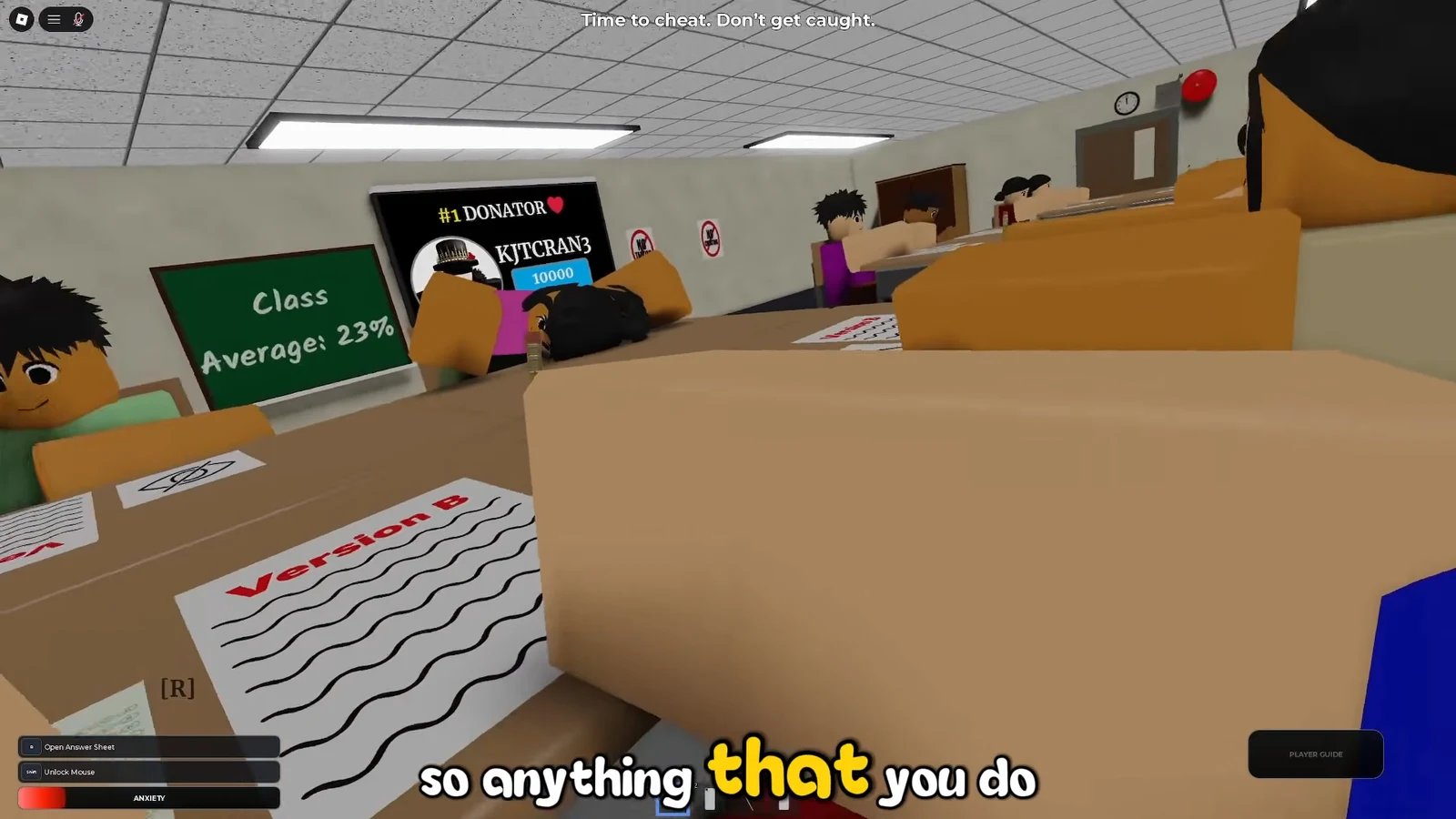
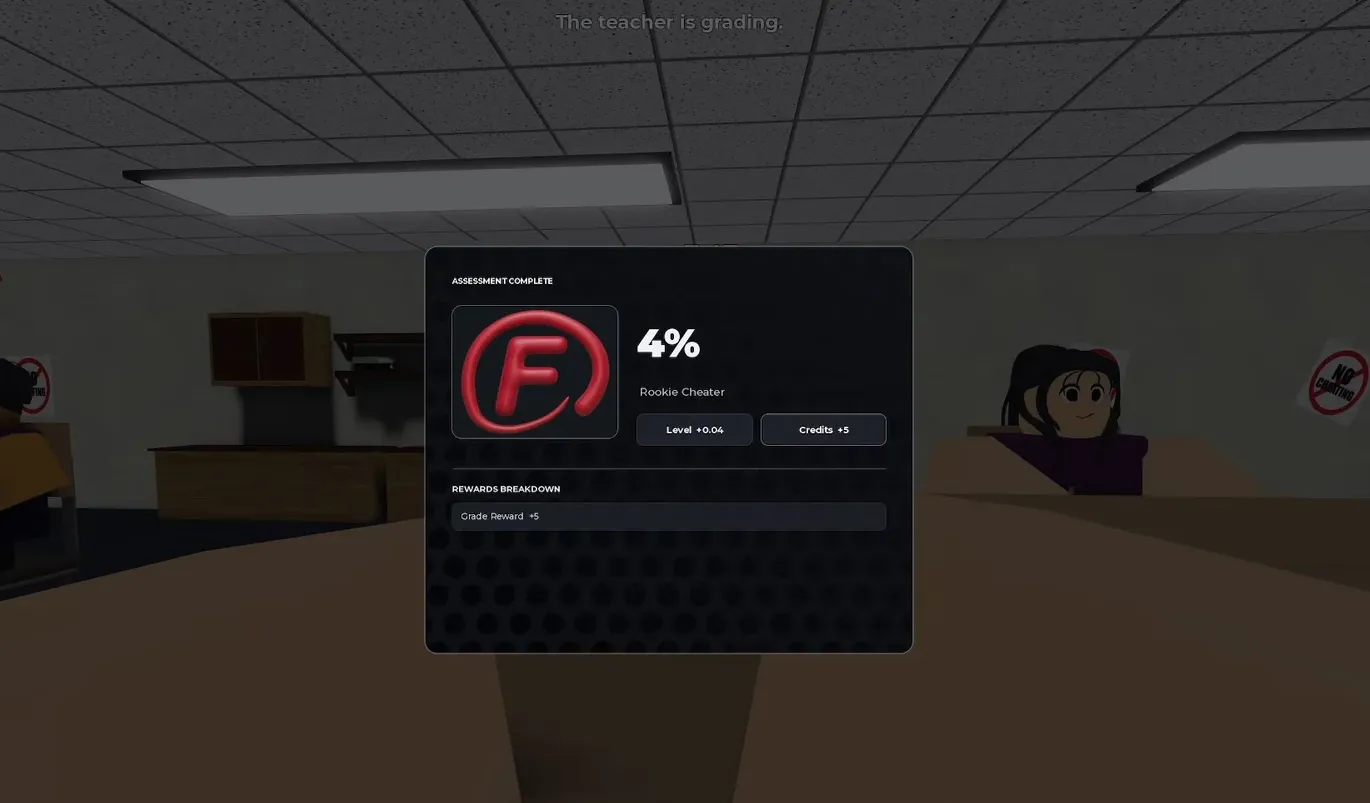
Finishing a test pays out based on how you did, and the results screen breaks it down for you with a grade, a percentage score, and a cheater rating. A 4 percent paper earns an F and a Rookie Cheater tag, which is the game telling you the phone never got going. For reference, the class average sits around 23 percent, so most of the room is not doing much better.
Reporting another player pays 20 credits, and it is the one income stream that does not require you to risk anything. If you are already scanning the room for the teacher, you are watching other students too, and a player who leaves their phone out for too long is free money.
What happens when you get caught
Getting spotted ends the run immediately. A “You got caught cheating” screen appears and asks whether you want to keep your inventory, with a Yes and a No option, and then you are back in the lobby. That prompt is your confirmation that the round is over — there is no recovering the test once it fires.
Almost every failed run traces back to one of the same causes. The teacher was facing you when the phone came out, anxiety climbed to 100 percent and pinned their attention on you, or another student in the room filed a report. Facing forward between glances, taking a corner or back seat, and keeping each cheat window as short as the all-A trick allows removes most of those before they happen.