
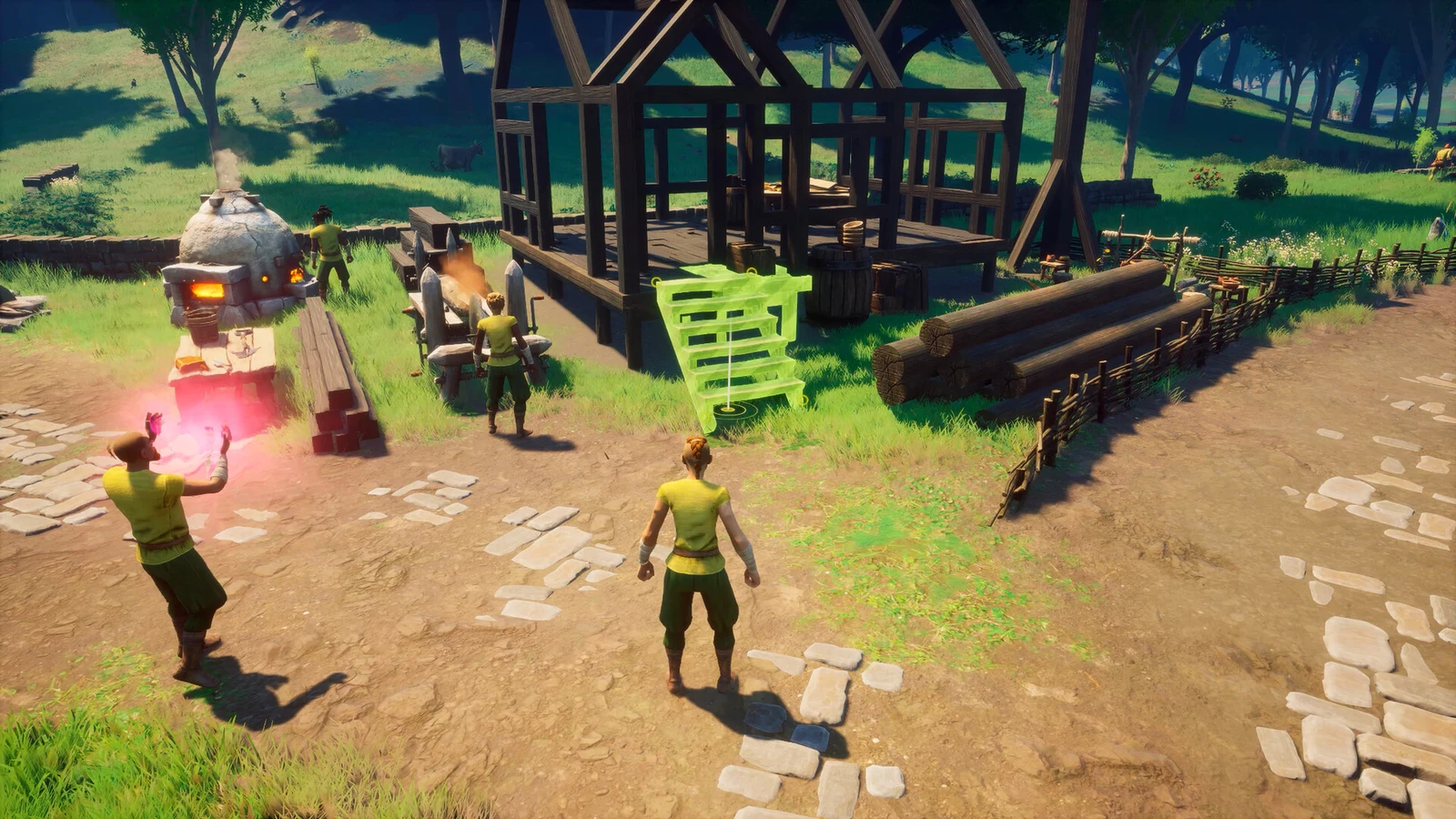
Storage and crafting in RuneScape Dragonwilds run on one rule that changes how you should lay out a base. Mark a chest as Linked and any crafting bench standing close enough can pull the materials straight out of it, so you never carry ingredients between boxes. Around that single mechanic sit two very different kinds of stations, a set of single-purpose storehouses, and a spell that reaches your storage from anywhere in Ashenfall.
Quick answer: Tick the Linked box on a chest, then place your crafting benches within about 12 metres of it. Benches draw ingredients automatically; processing stations still need materials fed in by hand.
Recipe benches versus processing stations
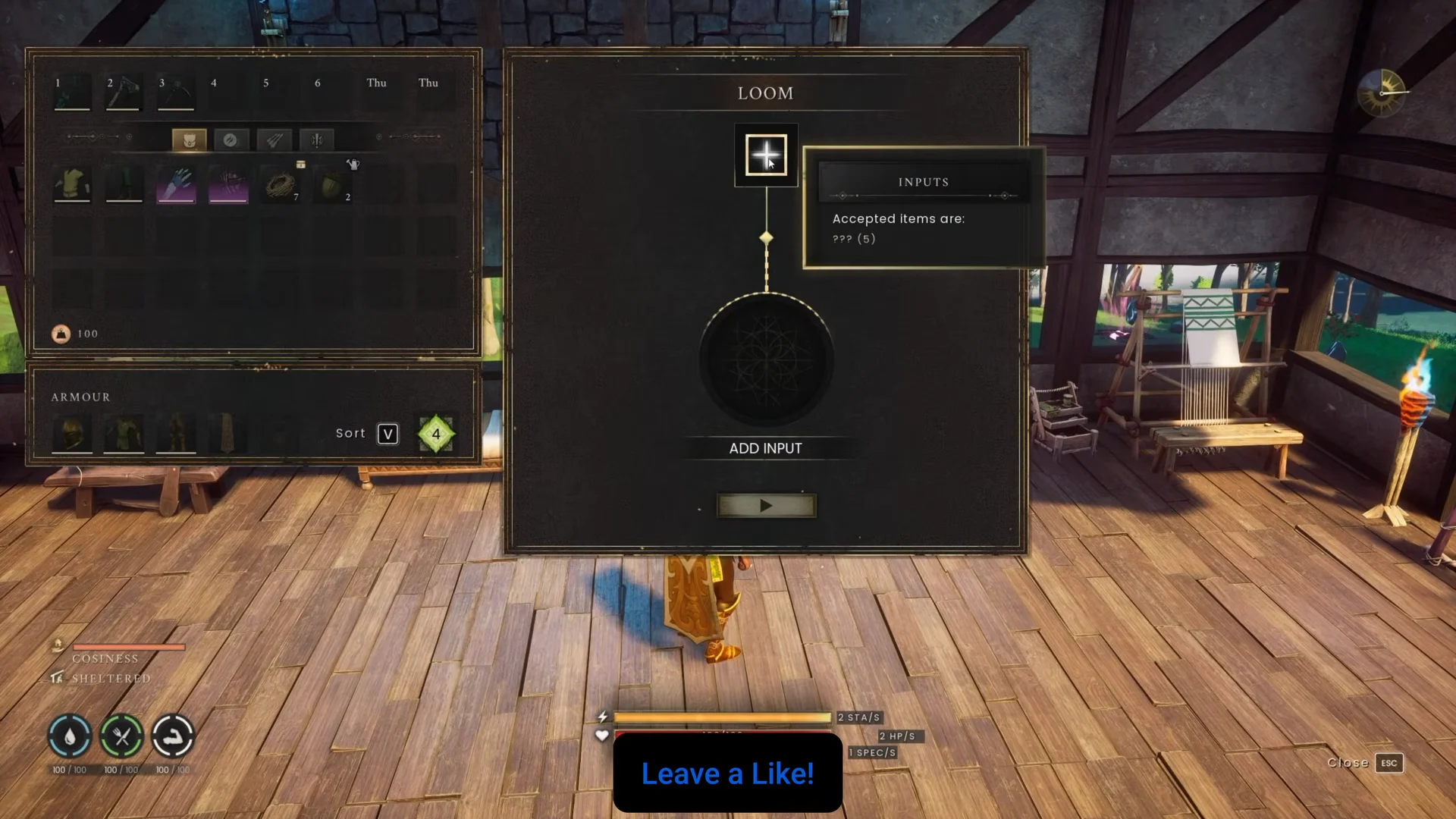
Every workstation falls into one of two groups, and they behave differently. Recipe benches show a full list of everything you have unlocked and craft it directly, taking ingredients from linked chests nearby. Processing stations refine raw goods and require you to drop items into an input slot by hand. Feeding a new material into a processing station is also how you discover its recipes, so progression on those stations is gated behind experimenting with inputs.
| Type | How it works | Examples |
|---|---|---|
| Recipe bench | Lists unlocked recipes; pulls materials from linked chests within range | Blacksmith’s Bench, Armour Bench, Fletching Bench, Mystic Forge, Rune Altar |
| Processing station | Needs raw items placed into an input slot; new inputs unlock new recipes | Furnace, Kiln, Loom, Tannery, Spinning Wheel, Sawmill, Stonecutter, Grindstone |
The practical takeaway is that a recipe bench only needs to sit near your stock, while a processing station needs its raw pile close at hand because you will be opening it and inserting items constantly.
How the linked chest radius works
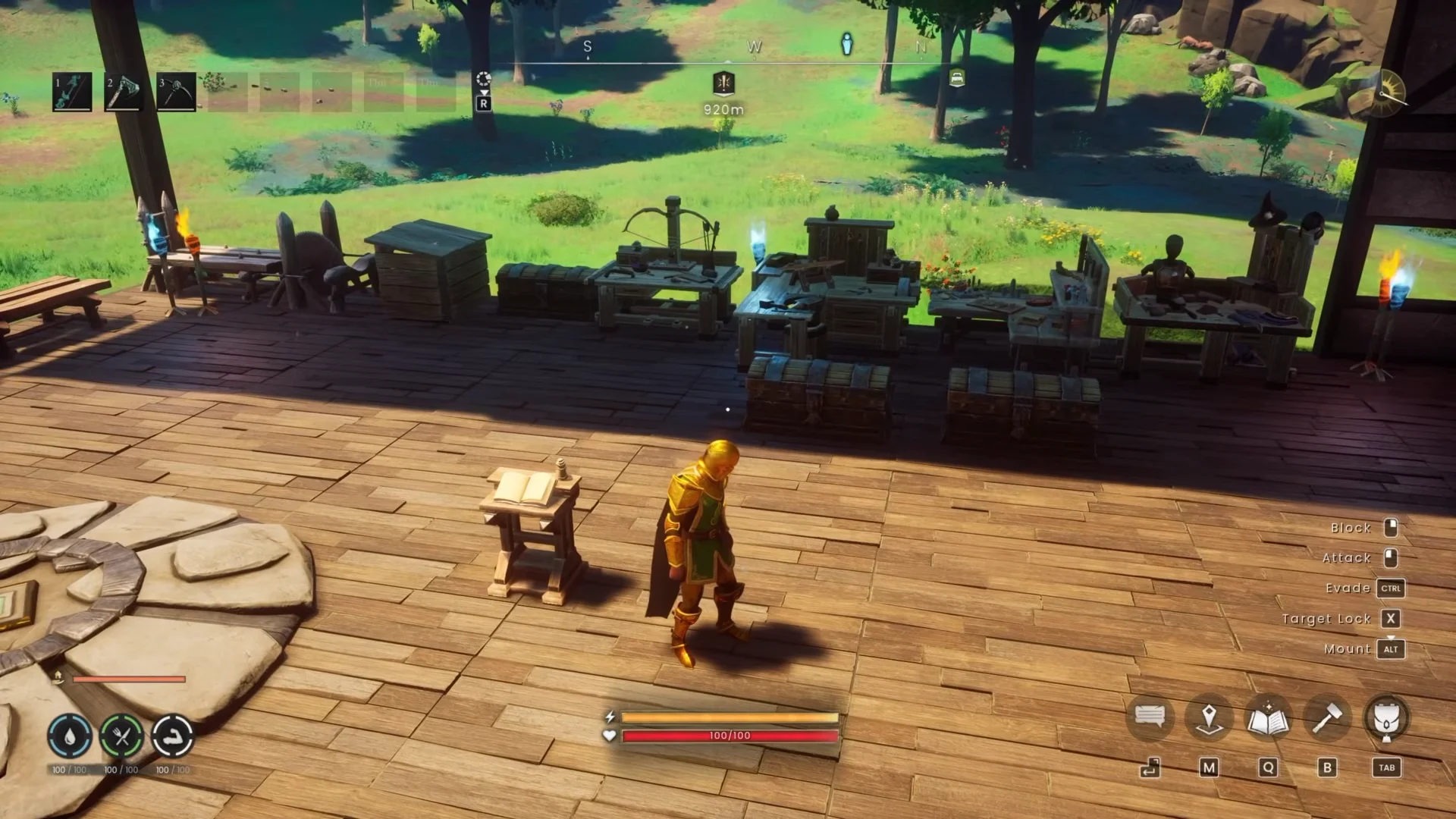
No chest-to-chest pairing is needed. In a chest’s interface, turn on Linked; nearby benches can then use its contents when crafting, even if those materials aren’t in your inventory. The chest’s effective range is about 12 metres—roughly six foundation blocks diagonally, and farther in a straight line. Each chest covers its own radius instead of joining others into a network, so check the bench’s position relative to the chest, not connections between storage boxes.
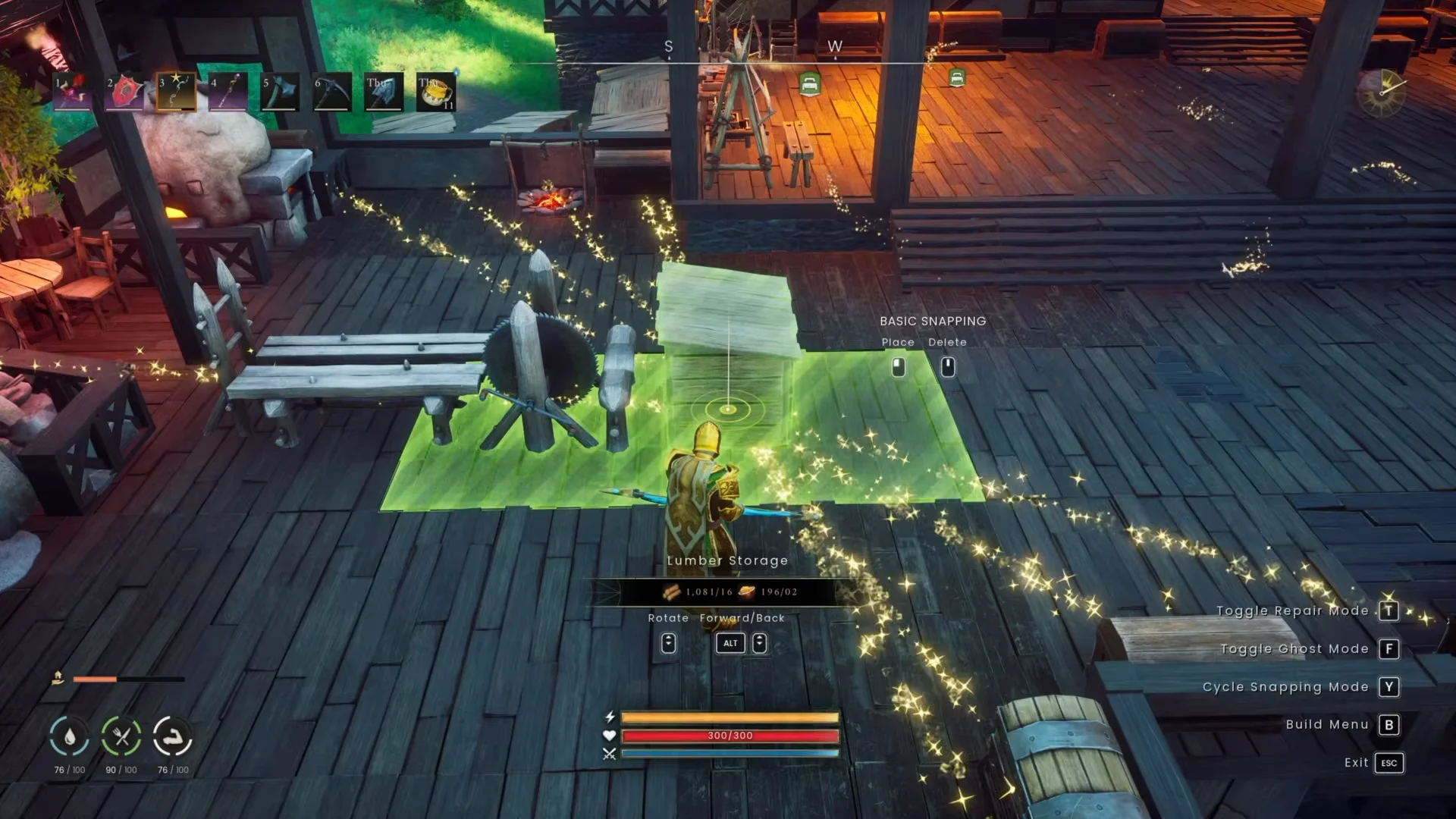
When a station is in range of a linked chest, a sparkling golden particle trail connects the two, so you can confirm the link visually before you rely on it. A compact workshop with benches ringed by chests covers more recipes than a tidy warehouse kept in a separate room.
If a shared base has a chest whose contents nobody else can pull, check the Private box in that chest’s interface. Private locks a chest to its owner and is the usual cause of missing materials in co-op.
Pair a Raw and a Refined chest at every station
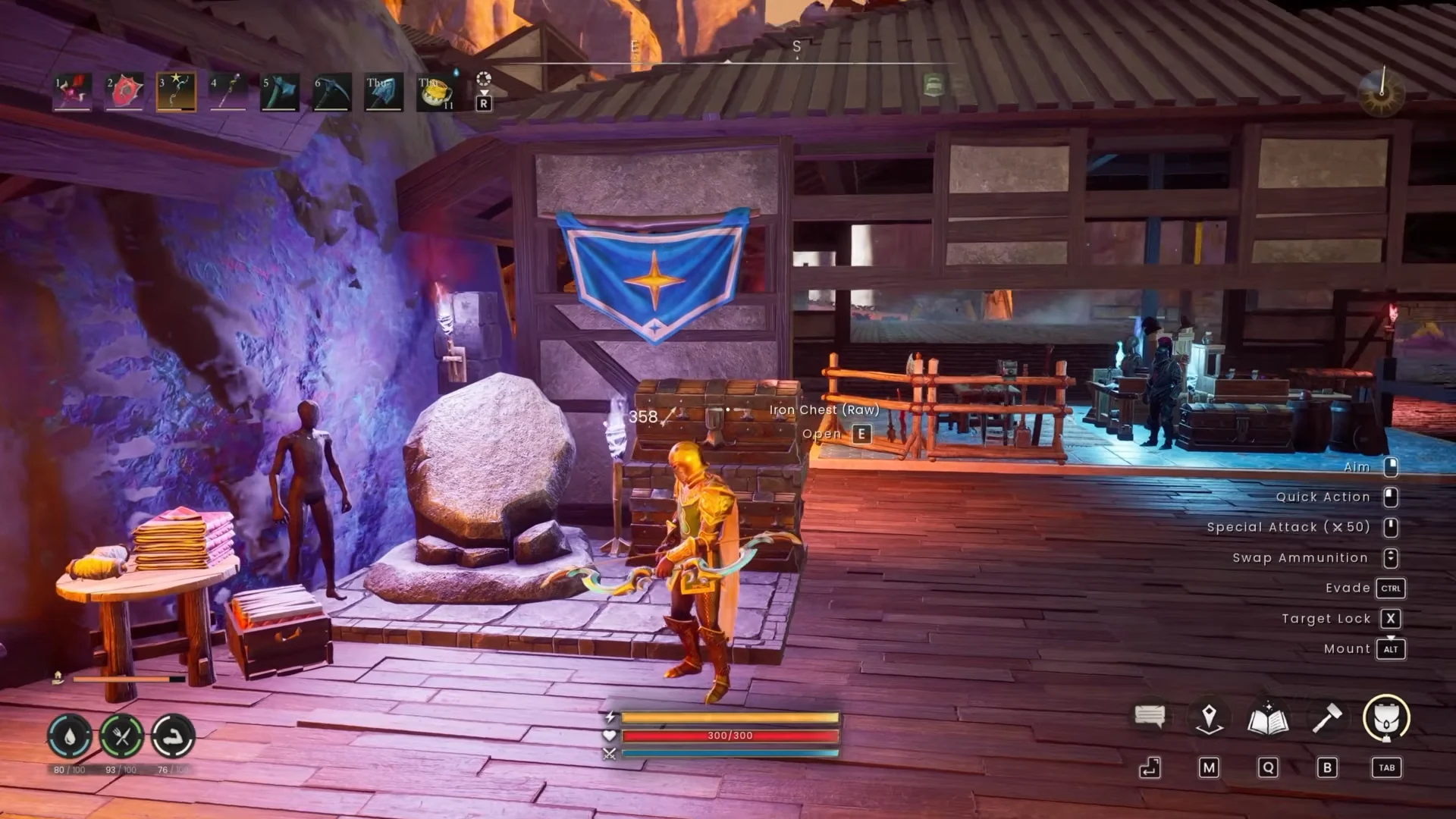
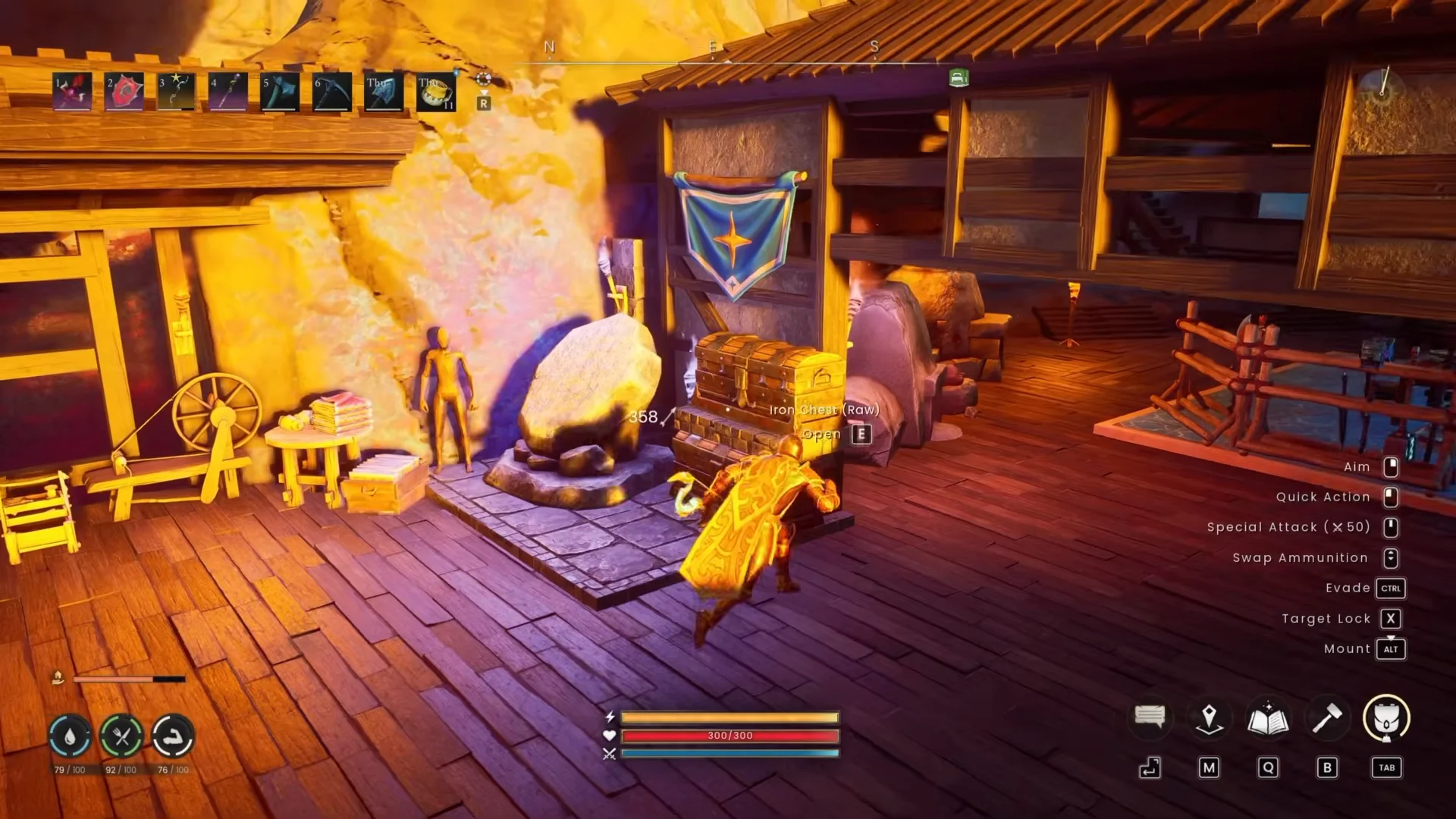
The cleanest layout stacks two chests beside each major processing area and names them by role. The top chest holds raw inputs, and the bottom chest holds the finished output. Naming them keeps a fast-growing base readable and stops raw and refined goods from mixing.
- Label the upper chest Raw; put uncut gems, ore awaiting smelting, raw logs and uncooked food in it.
- Label the lower chest Refined; store cut gems, metal bars, planks and cooked meals there.
- Keep both within the linking radius so nearby benches read the refined stock.
The same idea applies station by station. Beside the Rune Altar, a Raw chest holds Rune Essence while a Refined chest catches finished runes. At the furnace and kiln, one iron chest takes raw ore and stone, the other takes smelted bars and refined materials. By the grindstone, a Stone chest holds raw blocks and a Ground Stone chest holds the pulverised output. In the kitchen, an Ingredients chest and a Cooked Meats chest bracket the cooking range.
Catch station output automatically
The Sawmill and Stonecutter each show a directional arrow that marks where finished goods drop. Place a matching storage container directly at that output point and the processed items pour straight into its inventory instead of falling on the ground.
Storage containers and their capacities
General chests scale up in slots as you progress, while several specialised storehouses accept only one category of item. The single-purpose stores are the part most players underestimate, because unlike a generic survival box they refuse everything outside their type.
| Container | Capacity | Accepts |
|---|---|---|
| Crate | 16 stacks | Any item |
| Ash chest | 32 stacks | Any item |
| Oak chest | 48 stacks | Any item |
| Iron chest | 64 stacks | Any item |
| Personal Chest | 12 stacks | Any item; reached via spell |
| Lumber storage | 48 wood items | Logs and planks only |
| Ore & stone storage | 48 items | Ores, bars and stone only |
| Fishing barrel | 48 fish | Raw fish only |
| Tackle box | 48 slots | Nets, rods and bait |
| Armour mannequin | 5 pieces | Armour and capes |
| Weapon rack | 6 items | Weapons and torches |
Not every container comes from the Construction skill. Lumber Storage unlocks at Woodcutting 40, the Fishing Barrel at Fishing 34 and the Tackle Box at Fishing 39, so bulk storage often arrives through the gathering skill that produces the bulk. Construction is what assembles the box once the recipe exists.
Protect your kit with an unlinked loadout chest
The Storage Ledger bulk-deposits every matching item from your inventory into nearby linked chests in one press. That is convenient after a gathering run, but it will also strip your combat gear, food, potions, water and teleport items if those share a stack with something in storage.
Keep a dedicated loadout chest near your bed with the Linked box unchecked. Because it is not linked, the Ledger leaves it alone, so your exploration supplies stay put while everything else empties into the base.
Use intake chests for new regions
When you start exploring a new biome, reserve a separate intake chest for the materials you bring back from it. Dumping unfamiliar resources into a dedicated box keeps them out of the general Ledger system until you have tested them at your processing stations to unlock the recipes they enable. Once you know what a new material does, it can move into your usual Raw and Refined layout.
Reach storage anywhere with the Personal Chest spell
Construction 40 unlocks the Personal Chest spell, which opens your own 12-slot Personal Chest from anywhere in the world. Each cast costs 20 Law Runes and 15 Astral Runes on a five-second cooldown, so it is a genuine convenience only if you are producing those runes in volume.
Paired with a Lodestone, the spell creates a fast offload loop while you are out. Keep Lodestone materials, spare Rune Essence and essentials in the Personal Chest, then out in the field summon the chest, build a temporary Lodestone, teleport home, empty your loot with the Storage Ledger, teleport back to the temporary Lodestone, deconstruct it, and store it again for next time.
Hide chests in a basement vault
The linking radius works in three dimensions, so chests do not have to sit on the same floor as your benches. Sink a cellar beneath the crafting floor, fill it with linked chests, and your ground-level workshop stays clear while every bench above keeps full access to the stock below. The particle trail still connects through the floor as long as the chest is inside range.
Once the golden trail links a chest to a bench and a recipe can be crafted without the ingredients in your pack, the system is working as intended. From there, layout is about how well you sort what the chests hold rather than how far you have to walk.