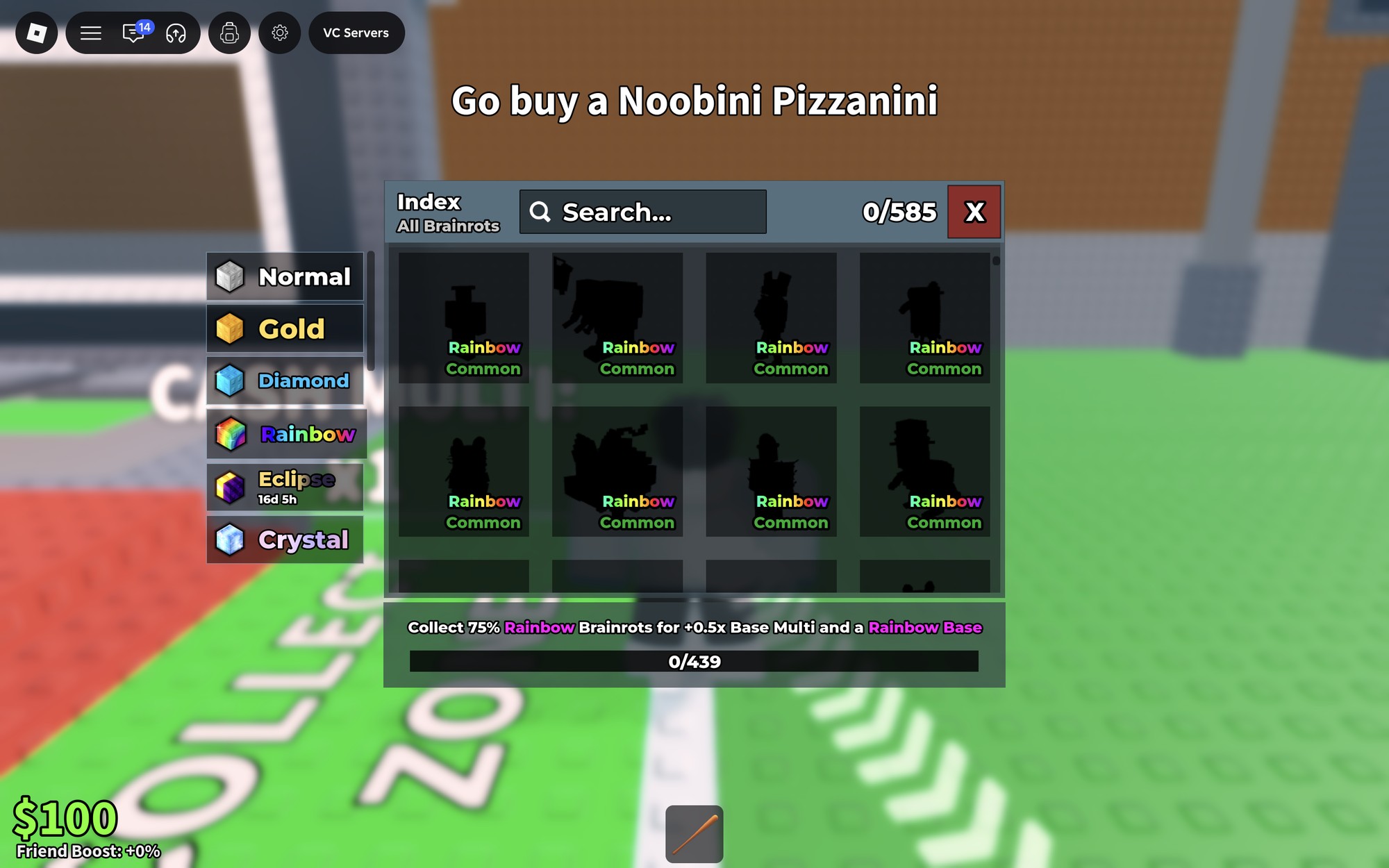
The Index in Steal a Brainrot is a collection log. It also pays out. It is split into six mutation tabs, and each tab prints its own target and reward along the bottom of the panel. Four tabs ask for 75 percent of their list, and two ask for 50 percent.
Quick answer: Normal, Gold, Diamond and Rainbow pay +0.5x Base Multi at 75%, and Gold, Diamond and Rainbow also give a matching Base. Eclipse and Crystal give their own Base at 50%.
Steal a Brainrot Index rewards for every mutation tab
Each tab shows a reward line and a progress bar at the bottom of the panel. The table copies the reward lines exactly as the game prints them, next to the number of brainrots the bar asks for.
| Tab | Reward line | Bar target |
|---|---|---|
| Normal | Collect 75% Normal Brainrots for +0.5x Base Multi | 439 |
| Gold | Collect 75% Gold Brainrots for +0.5x Base Multi and a Gold Base | 439 |
| Diamond | Collect 75% Diamond Brainrots for +0.5x Base Multi and a Diamond Base | 439 |
| Rainbow | Collect 75% Rainbow Brainrots for +0.5x Base Multi and a Rainbow Base | 439 |
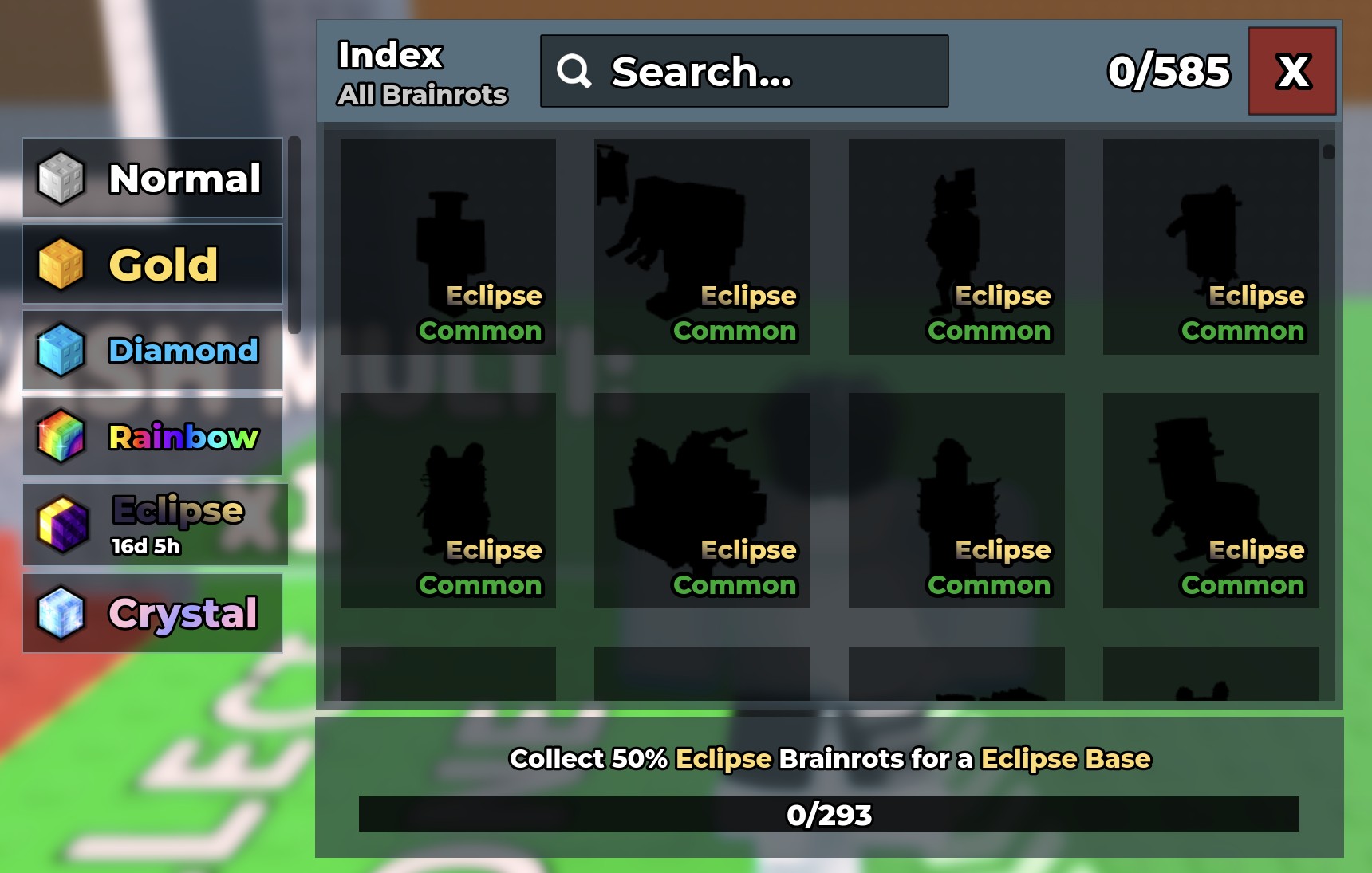
| Eclipse | Collect 50% Eclipse Brainrots for a Eclipse Base | 293 |
| Crystal | Collect 50% Crystal Brainrots for a Crystal Base | 273 |
Normal is the only 75 percent tab that pays the multiplier alone. Gold, Diamond and Rainbow pay the same +0.5x Base Multi and also give a Base named after the mutation. Eclipse and Crystal pay no multiplier. Each gives only its own Base, but at a lower 50 percent threshold.
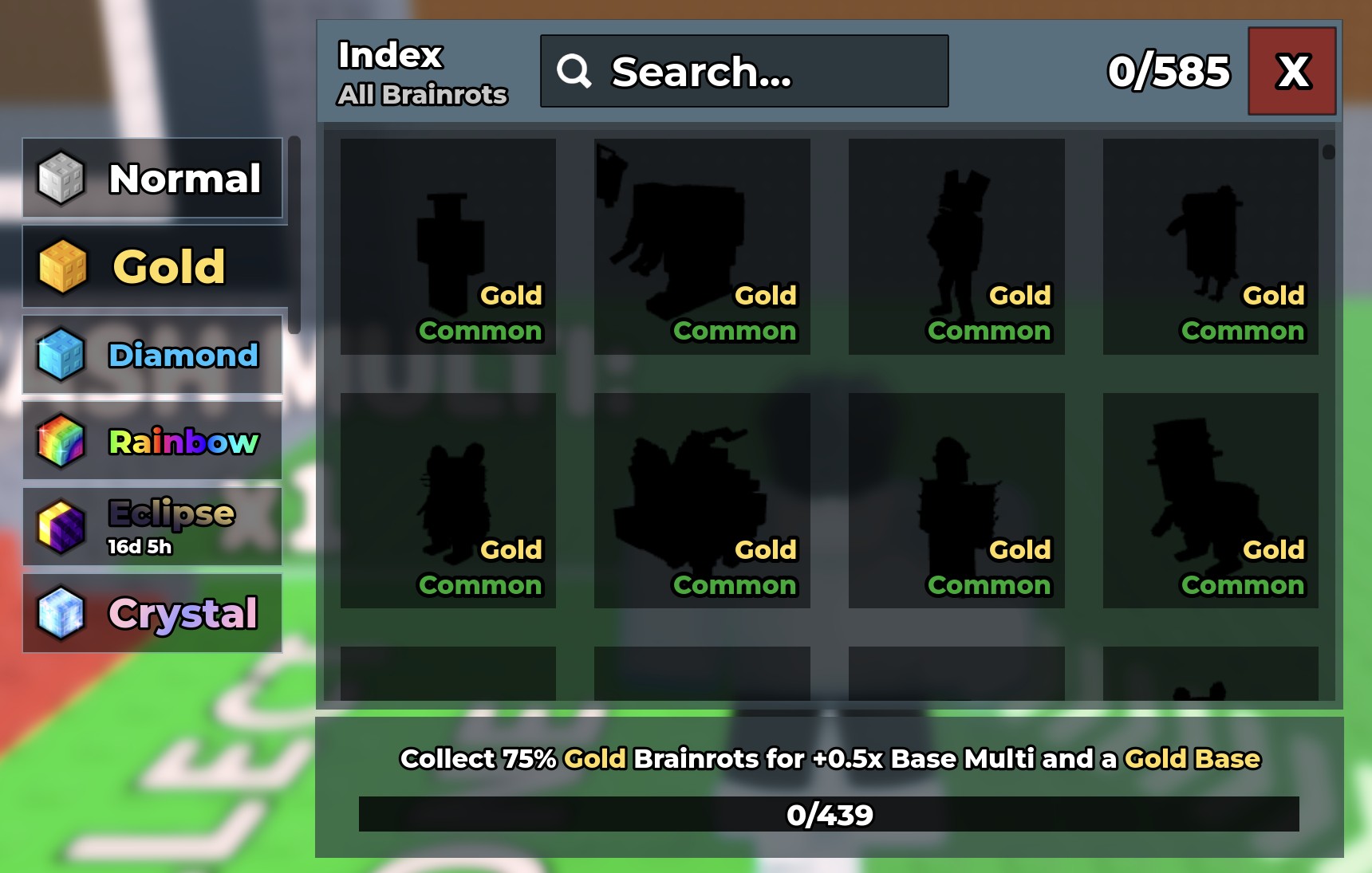
The Eclipse tab has a countdown under its label that reads “16d 5h”. Check that timer whenever you open the Index.
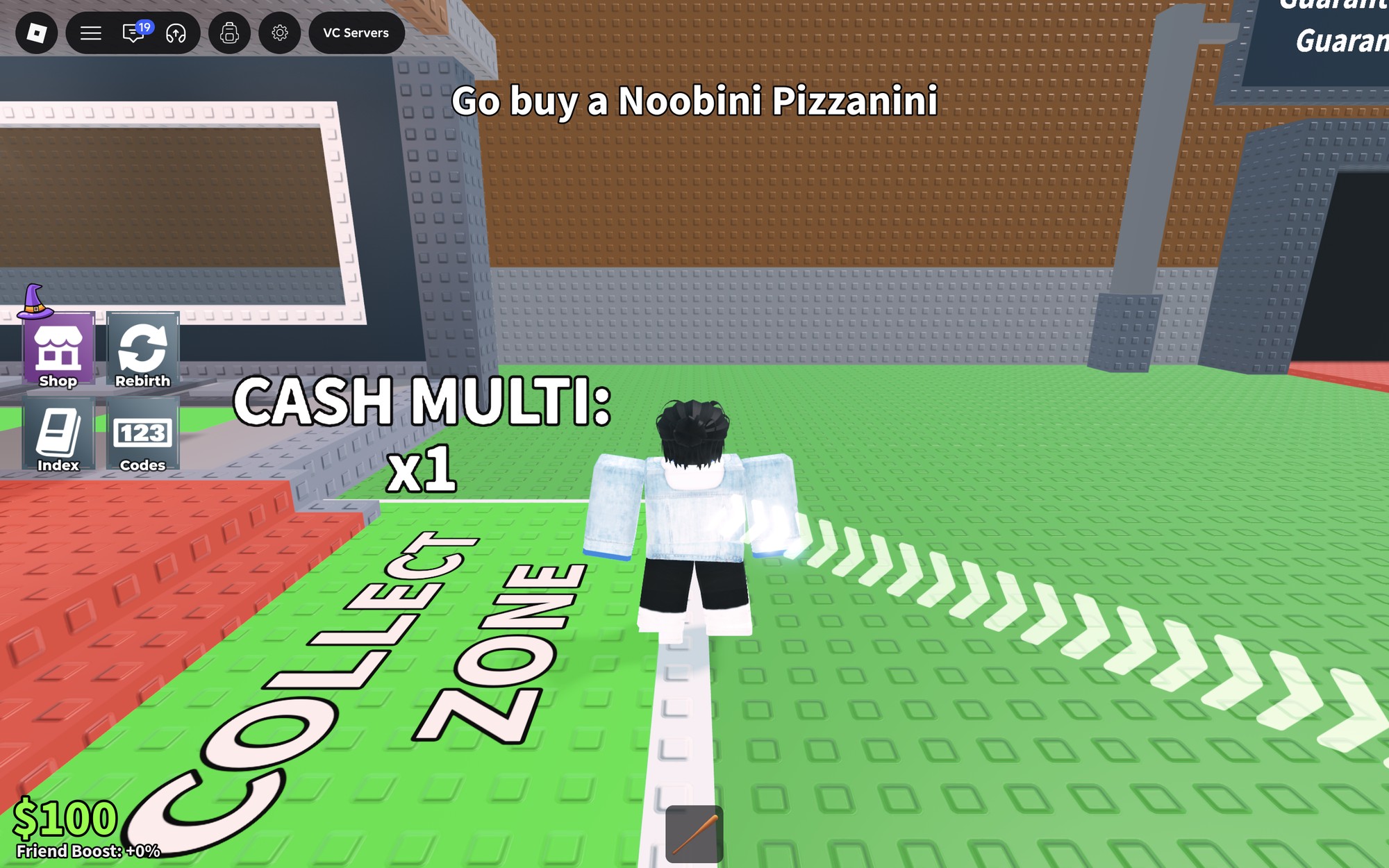
How to open the Index and switch mutation tabs
Reading the Index counter and progress bar
The two numbers on the panel measure different things. The counter in the top-right corner shows how many brainrots you own out of the tab’s full list. The bar at the bottom shows how many you own out of the number the reward asks for.
The list sizes are not the same on every tab. The counter reads out of 585 on Normal, Gold, Diamond, Rainbow and Eclipse. On Crystal it reads out of 546, so Crystal has a shorter list than the other five.
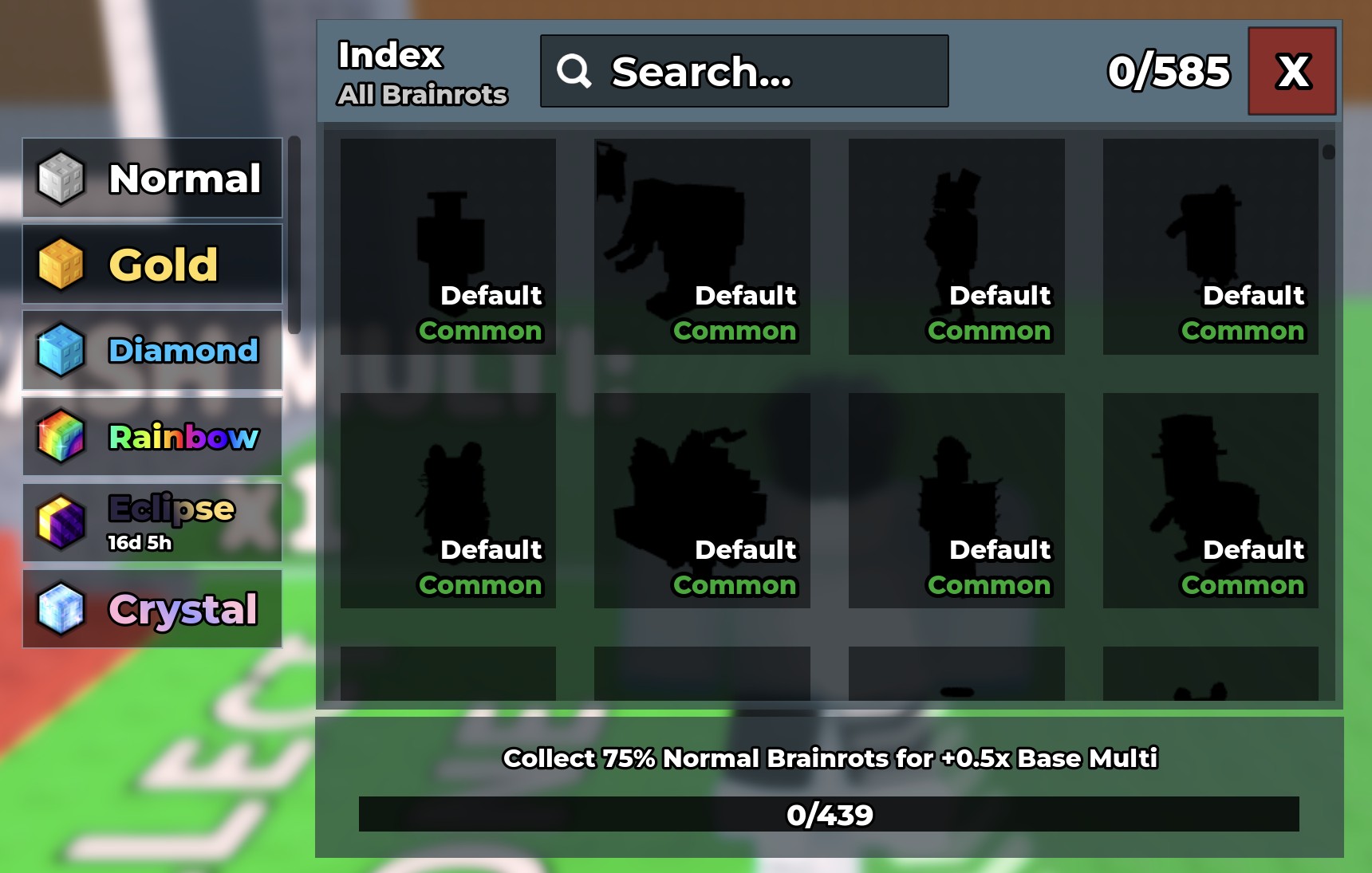
Each bar target is the printed percentage of that tab’s counter total, rounded up to a whole brainrot:
- 75% of 585 is 438.75, so the bar asks for 439.
- 50% of 585 is 292.5, so the Eclipse bar asks for 293.
- 50% of 546 is exactly 273, which is the Crystal bar’s target.
If you own no brainrots, both numbers read zero and every card in the grid is a silhouette. Each card still shows its mutation word above its rarity word: the Normal tab prints “Default” over “Common”, the Gold tab prints “Gold” over “Common”. The bar counts up to the target the reward asks for, so it is the number to watch on each tab. The panel also has a Search… field at the top; we did not type in it, so this guide does not say how it filters.
Which Index tab asks for the fewest brainrots
Sorted smallest first, the bar targets look like this. These are only the numbers the panel prints; we did not measure how long any of them takes to fill on a live account.
- Crystal: 273 brainrots at 50%, out of a 546 list.
- Eclipse: 293 brainrots at 50%, out of the 585 list.
- Normal, Gold, Diamond and Rainbow: 439 each at 75%, out of the same 585 list.
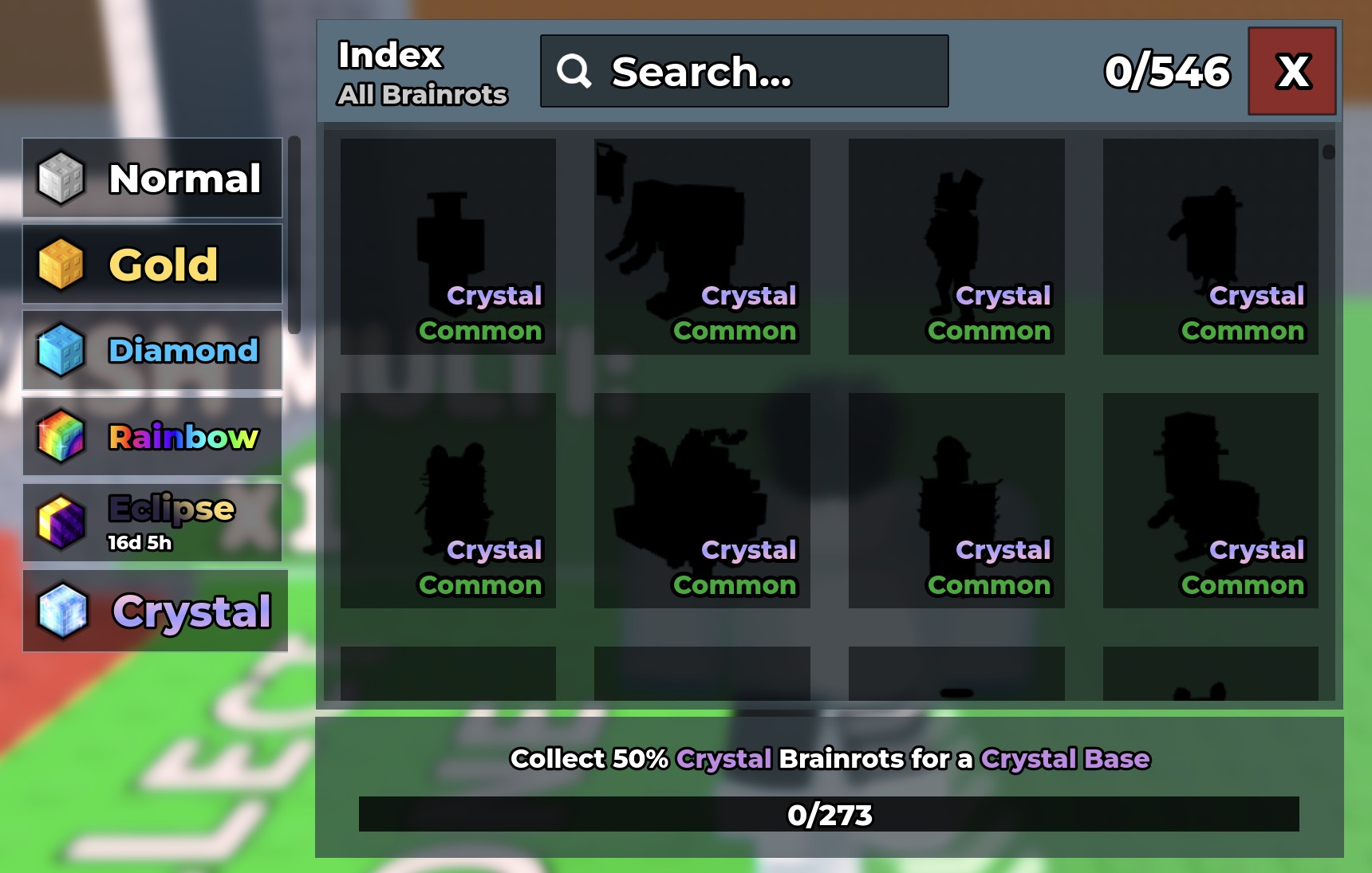
The two tabs that pay a Base without the +0.5x Base Multi also ask for the fewest entries, and the four 75 percent tabs all ask for the same count because they share one list size.
Where the same mutation names show up on the belt
Gold, Diamond, Rainbow, Eclipse and Crystal are also the words that print above the name on the floating belt tags. A tagged brainrot reads, top to bottom, its mutation word, its name, its rarity, its income per second and its price. The Index card for that brainrot carries the same two words at the bottom: the mutation over the rarity.
The tag is where the numbers live, and the card is not a value. Two copies of the same brainrot with the same mutation label have printed different income per second in our own reads, so the mutation word on a card tells you which list a brainrot belongs to, not what it earns.
What the Index panel does not show
- No income per second and no price on the cards. They carry the mutation word and the rarity word only.
- No drop rates, spawn odds or timers for individual brainrots.
- No explanation of how a mutation is applied. Nothing on any tab describes it.
- No filled-in tab. Our account owned nothing, so every card was a silhouette and both counters read zero.
What the panel does give you is the target for each mutation and the reward attached to it, which is enough to pick a tab and work toward it instead of buying whatever the belt serves first.