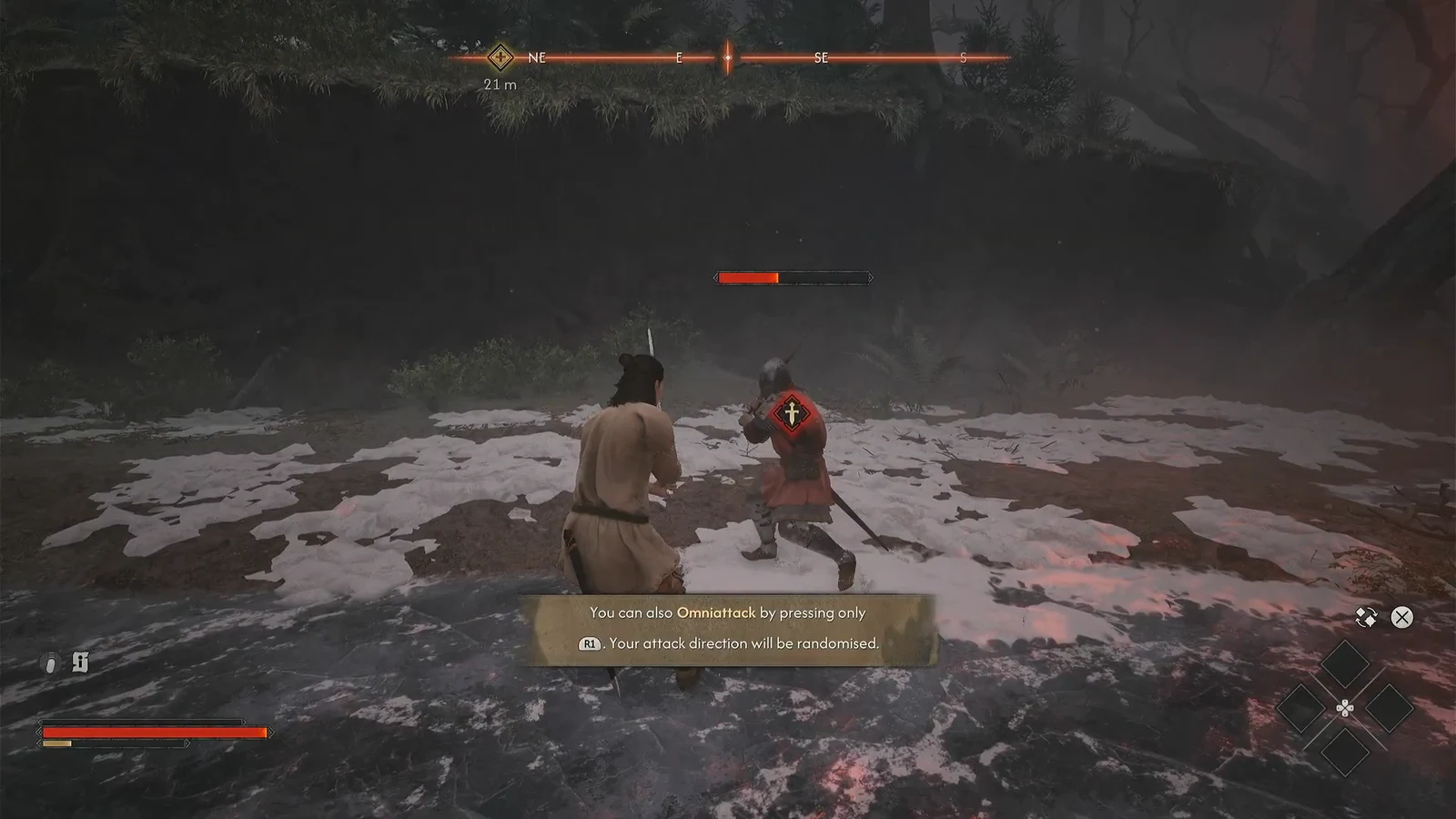
The first real fight in The Blood of Dawnwalker doubles as a lesson. During the early quest All Good Things, Coen is walked through the game’s directional sword system one input at a time: four attack angles, four block angles, a randomized swing for when you don’t want to pick, and a stamina bar that punishes you for holding guard forever.
Quick answer: Hold a direction on the left stick and press attack to strike that way; hold the block button to Omniblock everything at the cost of stamina; or pick the matching block direction just before an enemy’s swing lands to Perfect Block, which costs no stamina and leaves that enemy open to a counterattack.
Four attack directions, plus the randomized Omnistrike
Every sword swing has a direction attached to it. Hold the left stick toward right, left, up, or down and press the attack button, and Coen commits to a strike from that angle. The tutorial makes you land all four before it moves on.
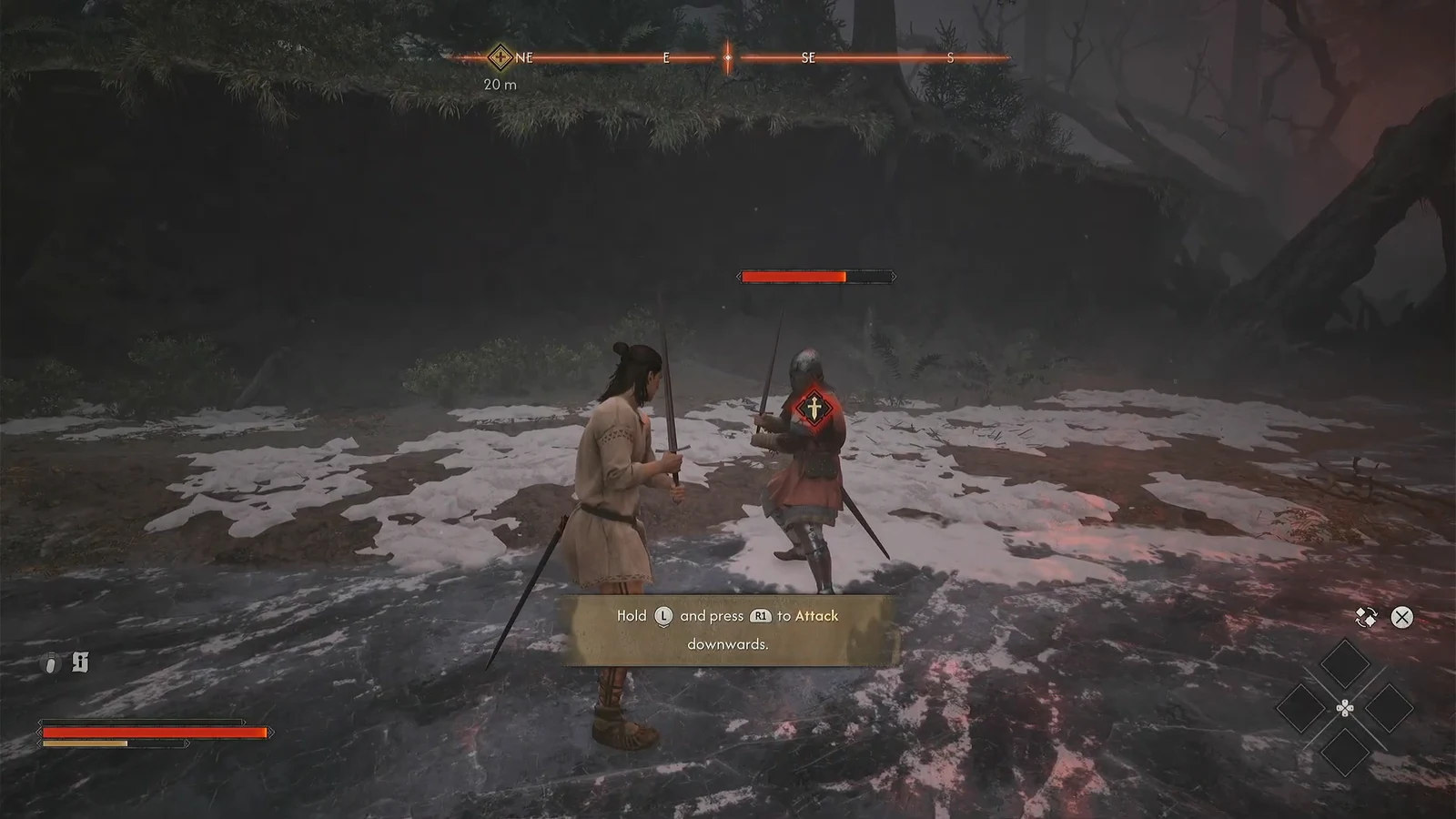
If you don’t hold a direction, the attack button on its own performs an Omnistrike (also labelled Omniattack in the tutorial prompts). It still connects, but the game picks the direction for you at random. That’s the trade: less input, less control.
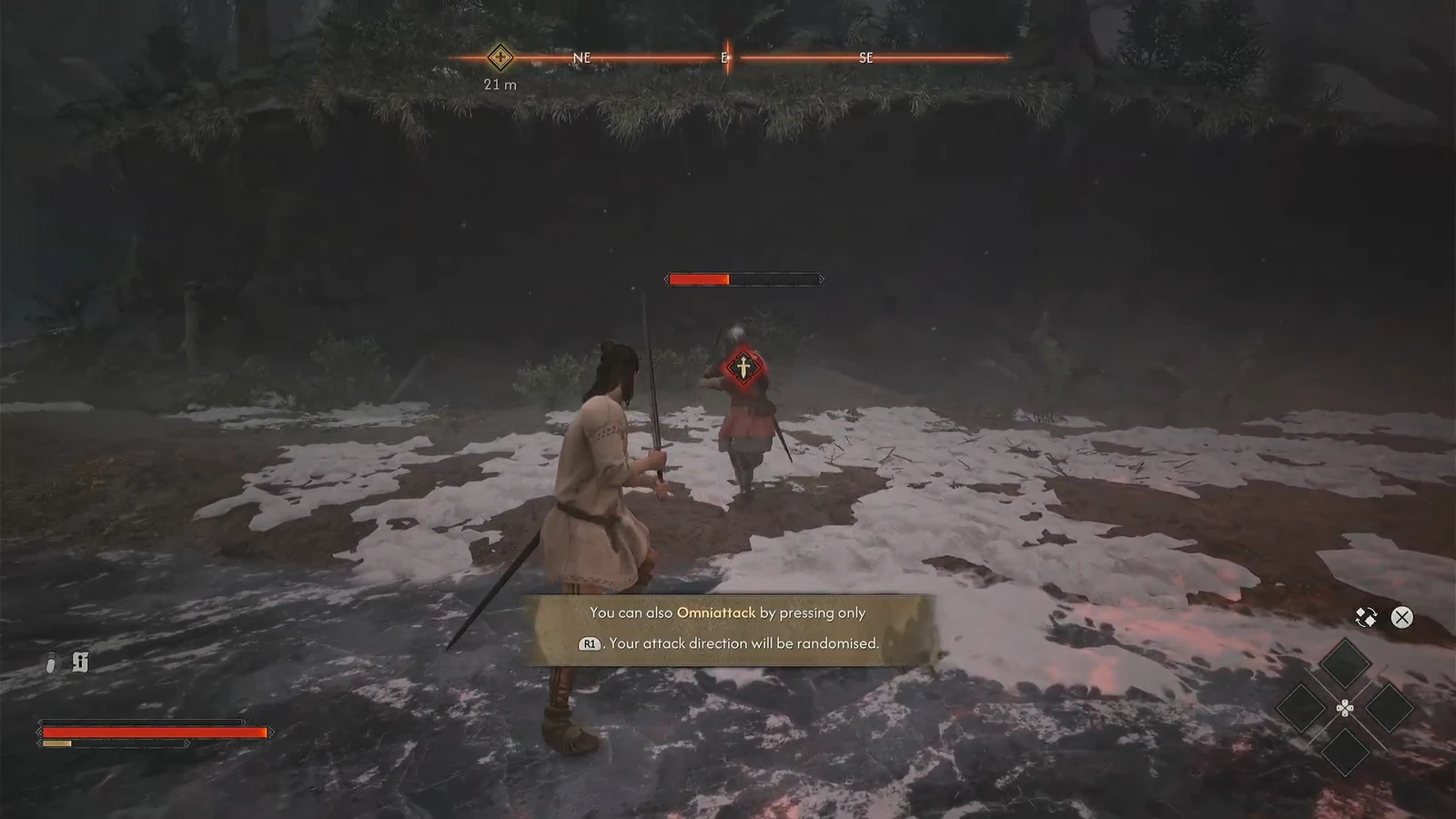
Direction matters because enemies can block you. Each of your attacks has a chance to be stopped, and that chance climbs the more you strike from the same angle over and over. Mixing your angles is the mechanical fix for an opponent who has started reading you.
Omniblock, Directional Block, and Perfect Block
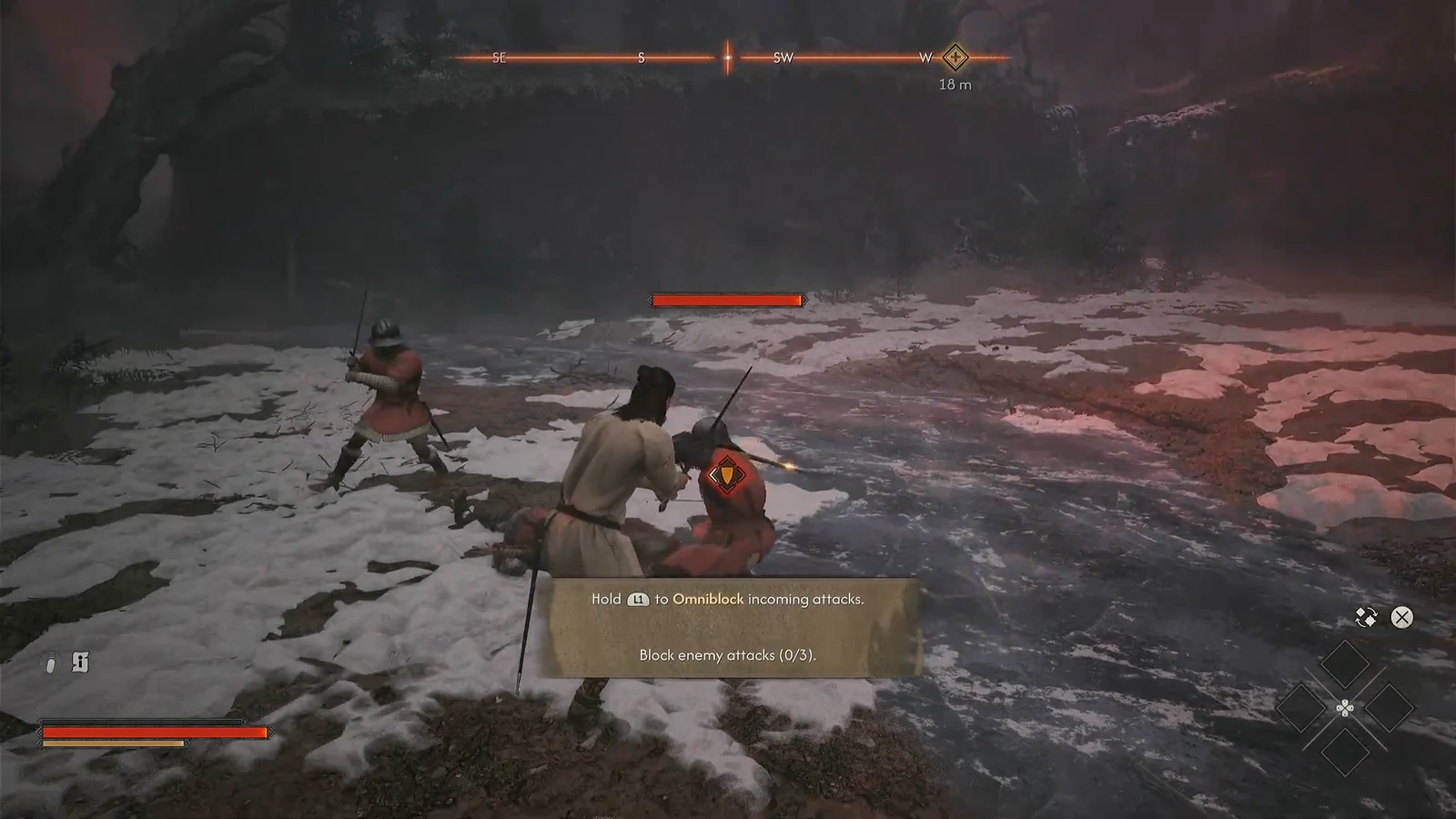
Defense works the same way in reverse. Holding the block button raises a guard against everything coming in, which the tutorial introduces as the Omniblock and asks you to use against three incoming attacks. Matching the attacker’s angle yourself is the Directional Block, and doing it at the last moment is the Perfect Block.
| Block type | Input | Stamina | Result |
|---|---|---|---|
| Omniblock | Hold the block button, no direction needed | Consumes stamina | Covers attacks from any direction |
| Directional Block | Choose the same direction the attack is coming from | Free when successful | Stops the hit without draining your bar |
| Perfect Block | Choose the block direction just before the hit lands | Free when successful | Leaves the enemy open to your attacks |
You know a Perfect Block worked when the enemy is left exposed and you can immediately swing back rather than being pushed into another guard. Successful Directional Blocks are easy to confirm too, since your stamina bar simply doesn’t move.
Stamina costs and the Fatigued state
Three things drain stamina: attacking, sprinting, and holding Omniblock. Run the bar to zero and Coen becomes Fatigued, a state that makes his attacks slower and less effective until he recovers. This is the reason leaning on Omniblock as a permanent shield falls apart in longer fights.
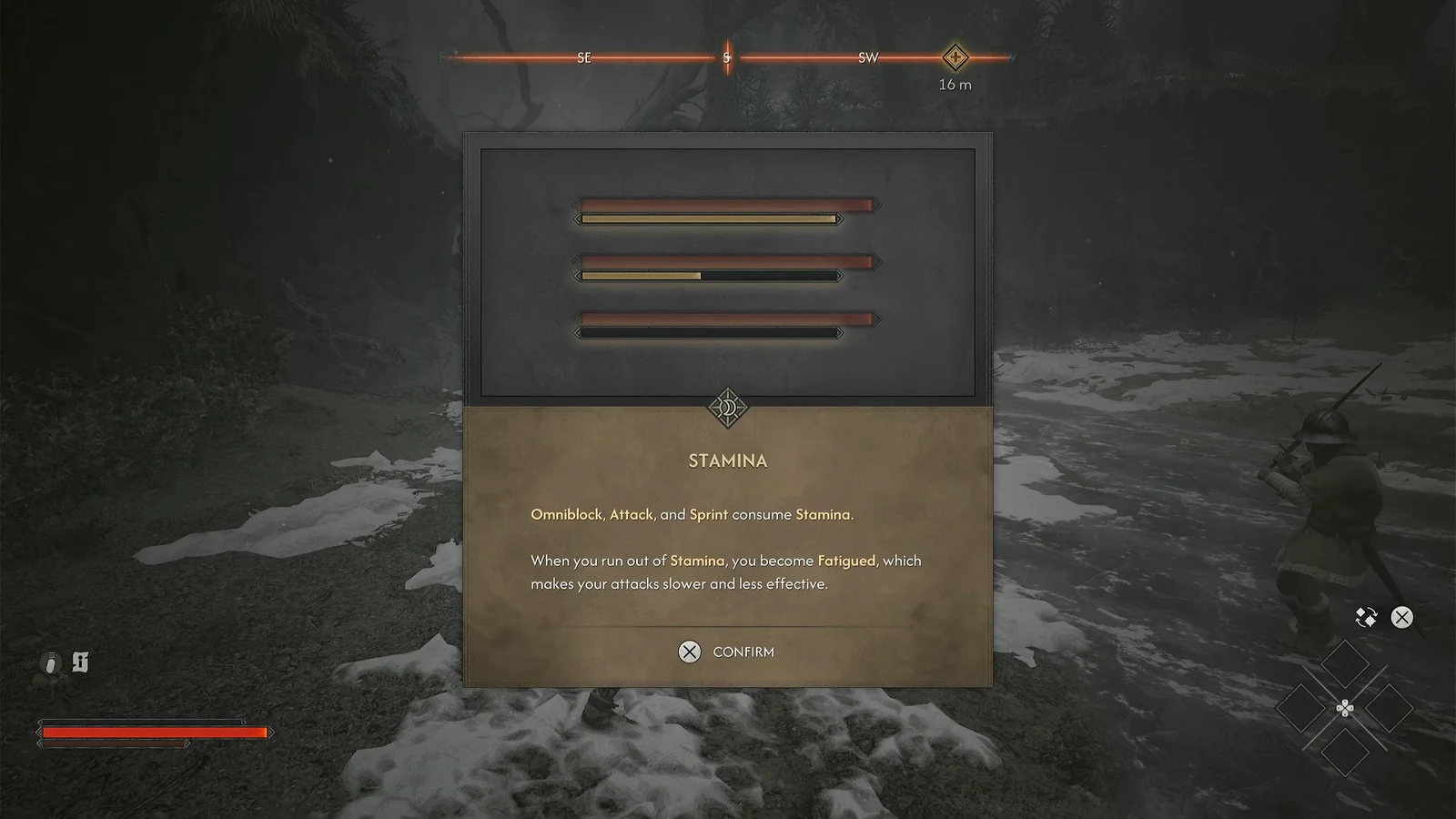
Successful attacks, blocks, and parries also feed activation charges shown above the health bar. Those charges are what you spend on active abilities, so trading blows well isn’t only about damage.
Difficulty settings that show block direction and timing
On the Story, Fair, and Challenging difficulties, the game tells you what to do rather than making you read the animation. A circle around the target shows which direction you should block in, and the correct Perfect Block window is signalled by the indicator changing from green to red. Above those difficulties, you’re reading the enemy yourself.
Note: the same directional icon that flags an incoming attack is also how you spot a parry opportunity, so it’s worth keeping your eyes on the enemy’s centre of the screen rather than your own health bar.
Directional Combat vs the Omniblock and Omniattack preset
You don’t have to play the directional system manually. In the settings you can switch to a mode built around Omniblock and Omniattack, which handles swing and guard directions for you so you can concentrate on spacing and timing. It costs more stamina than picking directions yourself. Directional Combat is the manual option, where you read each enemy’s rhythm and answer it angle for angle.
Set this before your first serious fight rather than mid-encounter. It changes how much of your stamina bar routine defense eats, which affects everything else.
What blocking cannot stop
Unblockable attacks are the one gap in the system. No guard input covers them on either preset, so you have to dodge out of the way manually. Active abilities are the other answer here, either to interrupt the enemy mid-swing or to heal if the hit connects anyway.
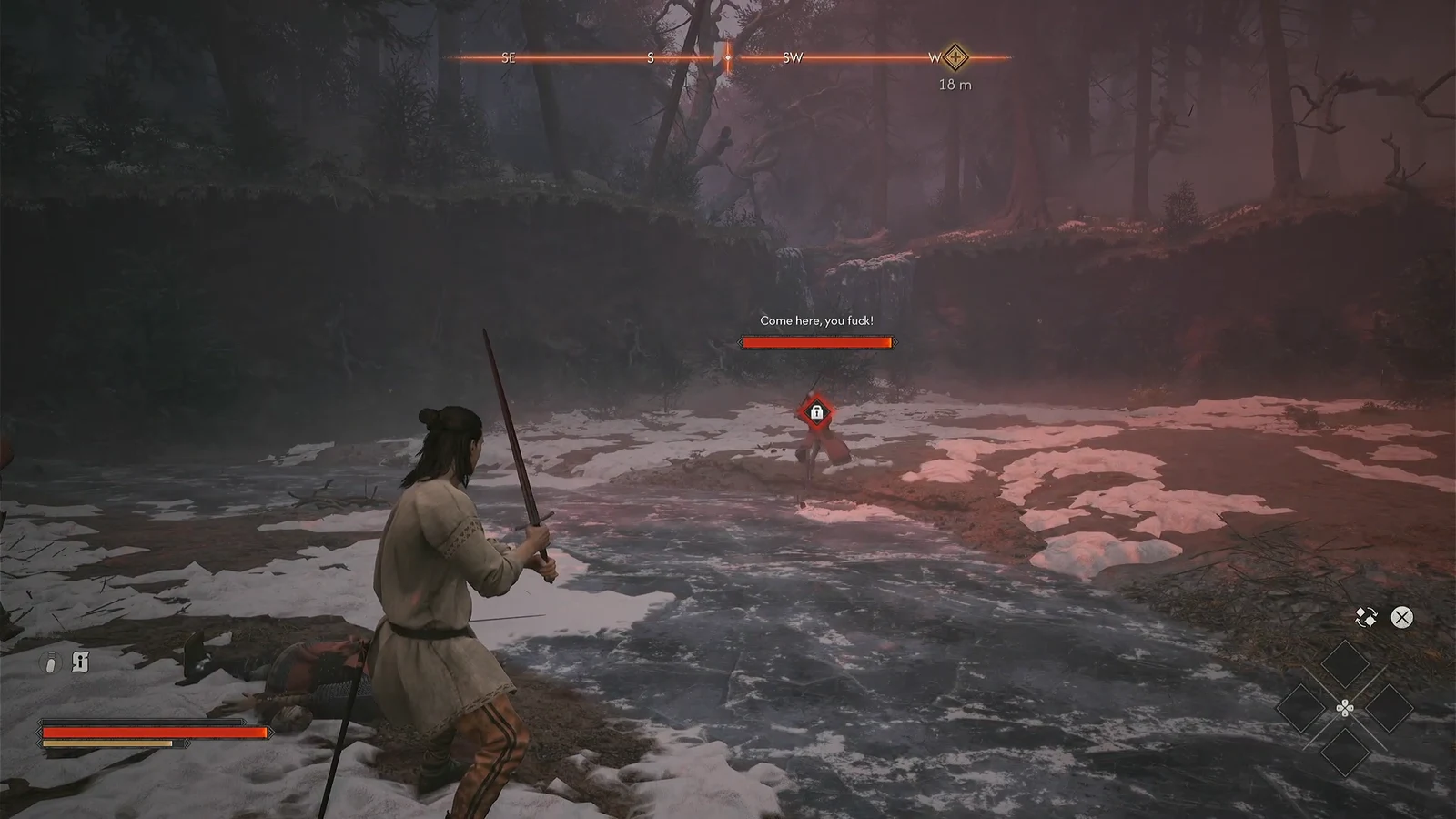
The tutorial’s final beat is a live fight against several armed opponents at once, which is where the camera setting starts to matter. The far camera pulls back far enough to track multiple attackers and reposition; the close camera sits over Coen’s shoulder and makes single-target block directions easier to read. You can assign the two independently for combat and exploration.
None of this gets thrown out after dark. When Coen shifts into his vampire form at night the weapon changes to claws and hexes are sealed off, but attacks are still directional and blocks and parries work the same way. Learning the four angles during that first daytime scuffle is the same skill you’ll be using twelve hours later in the day-night cycle.