Prerelease is your first chance to open and play with cards from Magic: The Gathering | The Hobbit a full week before the set reaches wider shelves. You register at a local game store, get a sealed kit, build a 40-card deck on the spot, and play a few friendly rounds against everyone else doing the same thing. The card pool is new to the whole room, which makes it one of the most level playing fields in the game.
Quick answer: Reserve a seat at a Wizards Play Network store now, show up on or after Friday, August 7, 2026, open the six Play Boosters in your Prerelease Pack, and build a 40-card deck using two colors plus basic lands (roughly 17 lands and 23 spells). Bring sleeves, a few basic lands, dice, and your entry fee.
When and where The Hobbit prerelease happens
Prerelease events can be scheduled starting at 12 p.m. local time on Friday, August 7, 2026, and run through August 13. Most stores hold their main event on that Friday, though it is common to see additional sessions across the week when a shop uses extra Play Boosters to make more kits. The global release follows on August 14, 2026. That makes The Hobbit the first Tolkien-universe Magic set that will be legal in Standard.
You attend at stores in the Wizards Play Network. Use the official Store and Event Locator to find a shop near you and filter for prerelease events, then contact the store to hold a spot. Universes Beyond sets pull in a lot of new and returning players, so popular time slots fill early. Non-WPN stores may run their own events, but those are not supported by Wizards and are unlikely to include the promo card or the same stock.
What’s inside The Hobbit Prerelease Pack
When you register, you receive one Prerelease Pack. It contains everything you need to build a deck except your basic lands.
- 6 The Hobbit Play Boosters
- 1 traditional foil promo card (rare or mythic)
- 1 deck box
- 1 spindown die
The packaging doubles as your deck box and includes punch-out counters and markers you can use in a pinch. Note that the foil promo card is no longer date-stamped. Entry fees usually land around $30 to $35, since Universes Beyond releases run a little pricier than standard sets.
How the Sealed event runs
Prerelease uses the Sealed Deck format at a Casual rules enforcement level. You open your six boosters and assemble a deck of at least 40 cards. Most players stop at 40 because larger decks get inconsistent. You can add as many basic lands as you want to fill out your manabase, but any dual land or nonbasic land has to come out of your packs to be eligible.
From there you play three rounds. Depending on the store, that is either a Swiss-style tournament or a set of pods where everyone plays each other once. You typically earn a prize after each game based on whether you win or lose, plus an extra reward for going 3-0 or winning your pod. Prize payout structure varies, since a store’s promo and booster allocation and the turnout both affect how many rewards are handed out. Between rounds you are free to swap cards or rebuild your deck entirely.
You cannot bring your own cards to a prerelease. The only exception is basic lands, which the store usually supplies (remember to return borrowed ones at the end).
What to bring to the prerelease
Most stores can lend basic equipment if they have spares, but bringing your own keeps the day smooth. The items below cover almost every situation.
| Item | Why you want it |
|---|---|
| Entry fee | The one thing you cannot play without |
| Card sleeves | Protect your deck and make shuffling easier |
| Basic lands (10–15 of each type) | Backup in case the store runs short |
| Playmat | Shields cards and sleeves from uneven or dirty tables |
| Dice and counters | Track life totals, counters, and tokens |
| Pen and paper | A reliable fallback for life tracking |
| MTG Companion app | Some WPN stores use it for sign-in and match tracking |
| Drinks and snacks | Events can run long; not every store sells them |
Downloading the MTG Companion app before you arrive makes registration faster. If you use the same email for Companion and MTG Arena, you’ll also get six packs delivered to Arena, which can take up to two weeks to show up. Prerelease itself does not hand out an Arena code.
Building your 40-card deck
Start by opening all six boosters and sorting cards by color, pulling out multicolor, artifact, and colorless cards on the side. Your deck should stick to two colors, ideally one of the set’s five core color pairs. Look first for your threats, the rares and mythics that swing a game, like a large creature such as Stone-Giant of High Pass or a heavy spell such as Settle the Wreckage. A quick test: if you would hate to face it across the table, it belongs in your deck.
Next, gather removal. These are mostly common and uncommon instants and sorceries that kill creatures or stop spells. White handles big creatures, artifacts, and enchantments with cards like Thorin’s Last Stand and Stone by Sunlight, while blue counters spells before they resolve using effects like Confusticate and Bebother. Once you know your best threats and removal, the color pair with the deepest support usually picks itself.
Then fill out the curve. A balanced Sealed deck runs 17 lands and 23 spells, weighted toward cheap plays so you can affect the board early. A common template lands close to 17 creatures and 6 noncreature spells, ideally removal.
| Mana value | Cards |
|---|---|
| 1 mana | 1–2 |
| 2 mana | 7–8 |
| 3 mana | 5–6 |
| 4 mana | 3–4 |
| 5 mana | 2–3 |
| 6 mana | 0–1 |
| Lands | 17 |
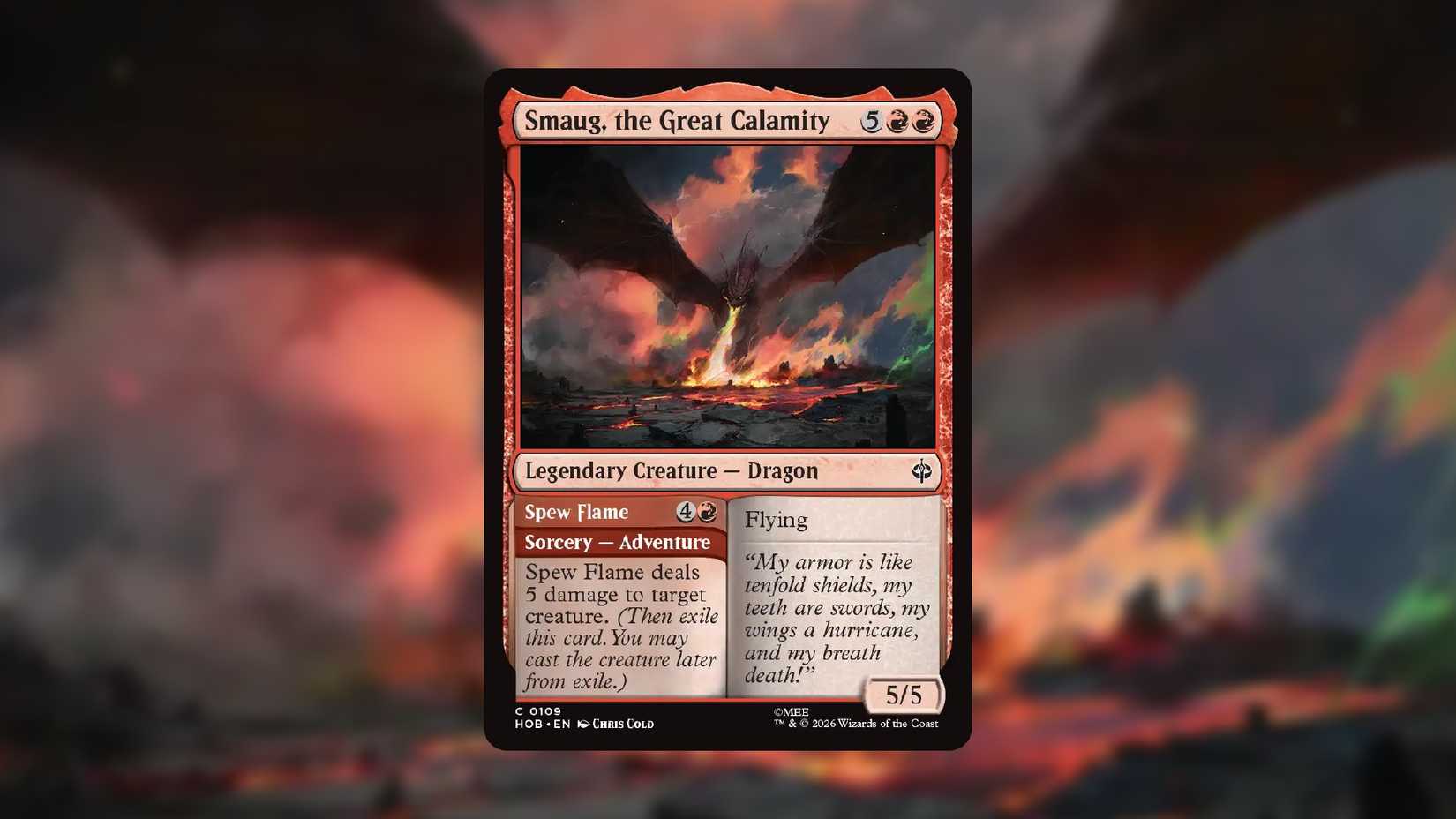
One wrinkle to plan around is Adventure, the returning split-card mechanic. An Adventure card is effectively two spells in one, cast the Adventure half, exile it, then cast the permanent later from exile. When placing these on your curve, generally count them by the cheaper Adventure cost, since that is how you’ll usually play them. A card like Velvetwing Butterflies is a three-mana creature with a two-mana Adventure, so it slots in as a two-drop most of the time. Because they raise your deck’s floor, resist cutting Adventure cards for flashier bombs.
The five draft archetypes
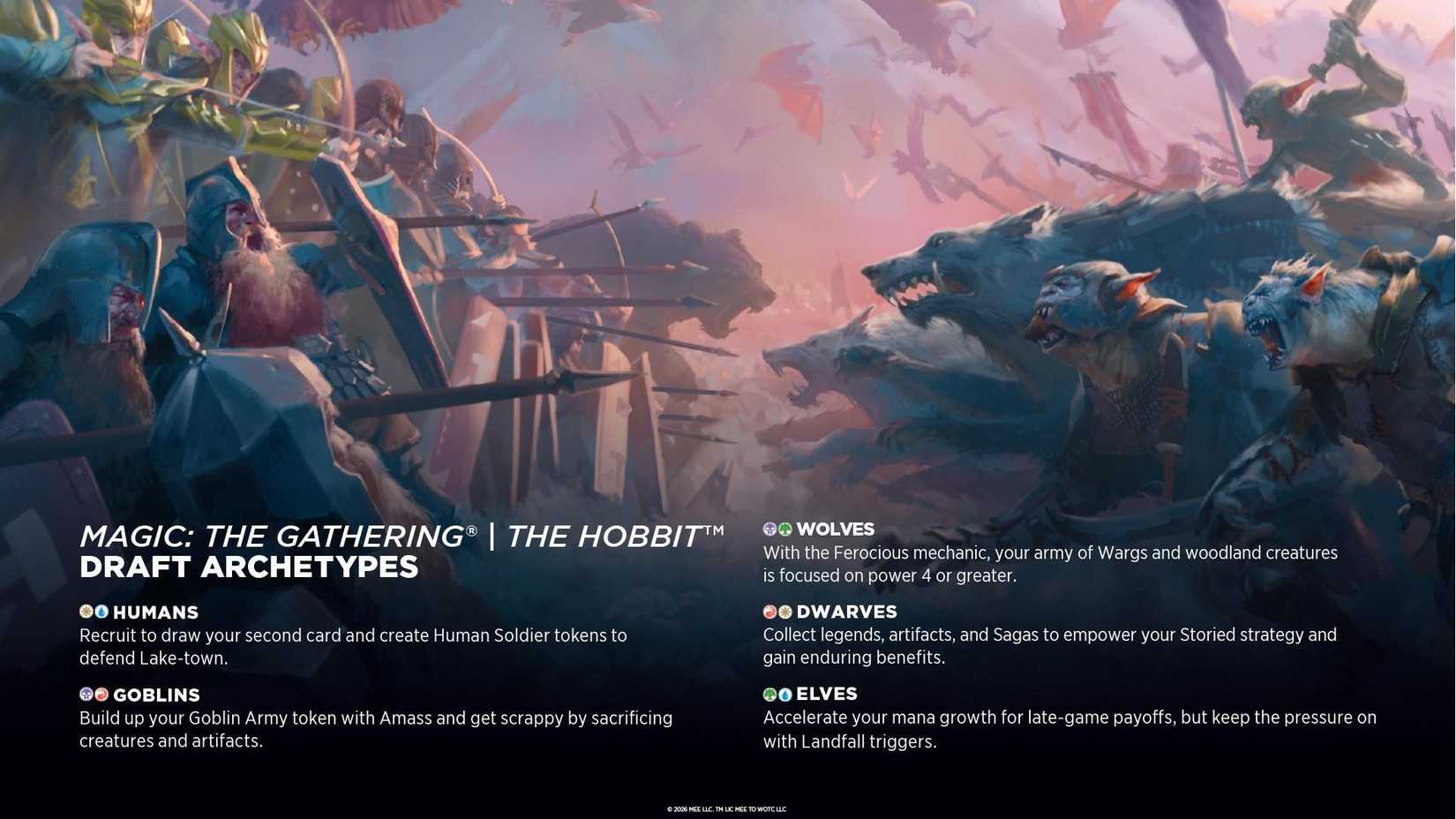
Each two-color pair represents one of the armies from the climax of the story, and its uncommon signpost cards tell you exactly what the deck wants to do. You are never locked into these, but they are the safest starting point for a strong Sealed build.
| Color pair | Theme | What it does |
|---|---|---|
| White-Blue | Humans / recruit | Draw two cards a turn, make tokens, buff with lifelink and +1/+1 counters |
| Black-Red | Goblins / amass | Grow an Army token, sacrifice fodder, and drain aggressively |
| Black-Green | Wolves / ferocious | Trample and power boosts backed by card draw |
| Red-White | Dwarves / storied | Legendaries, artifacts, and sagas |
| Green-Blue | Elves / landfall | Ramp and graveyard value building toward big spells |
Nothing stops you from splicing two strategies together if your pool points that way. Just keep the mana honest, since Sealed rarely supports three colors cleanly. Stick to two colors, add a single splash only when a bomb is worth it, and let the cards you actually opened decide the plan.
Playing your games
Slow down during matches. Reread your cards and your opponent’s, because it is easy to miss an interaction when you rush, and take-your-time play is the single most reliable way to win more rounds. If anything is unclear, call a judge; they are there to help. Everyone at the table is working from a fresh, random pool, so a loss here often comes down to variance rather than skill. Reserve your seat, read up on the cards ahead of time, pack your sleeves and dice, and you’re set for your trip back to Middle-earth.