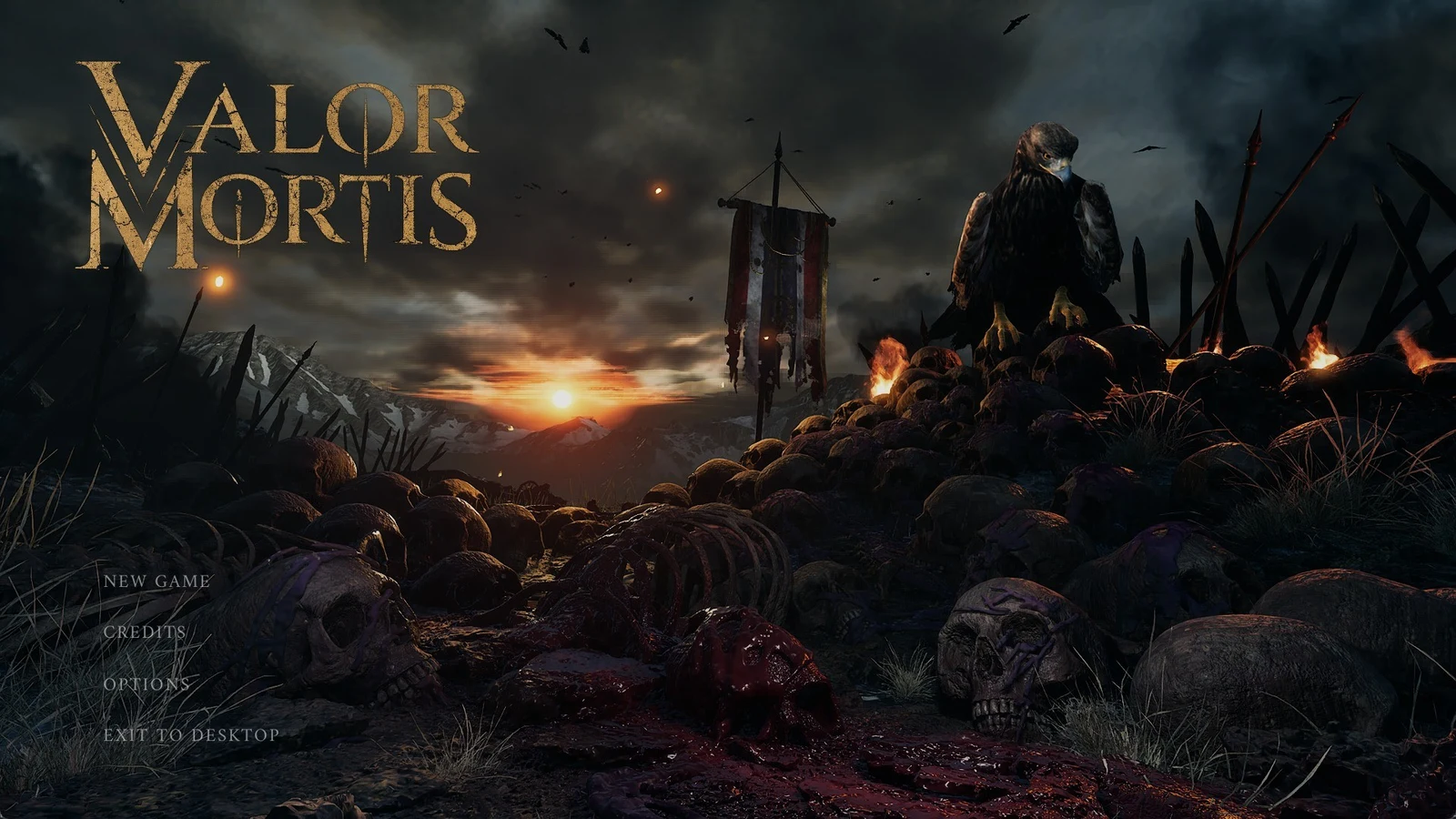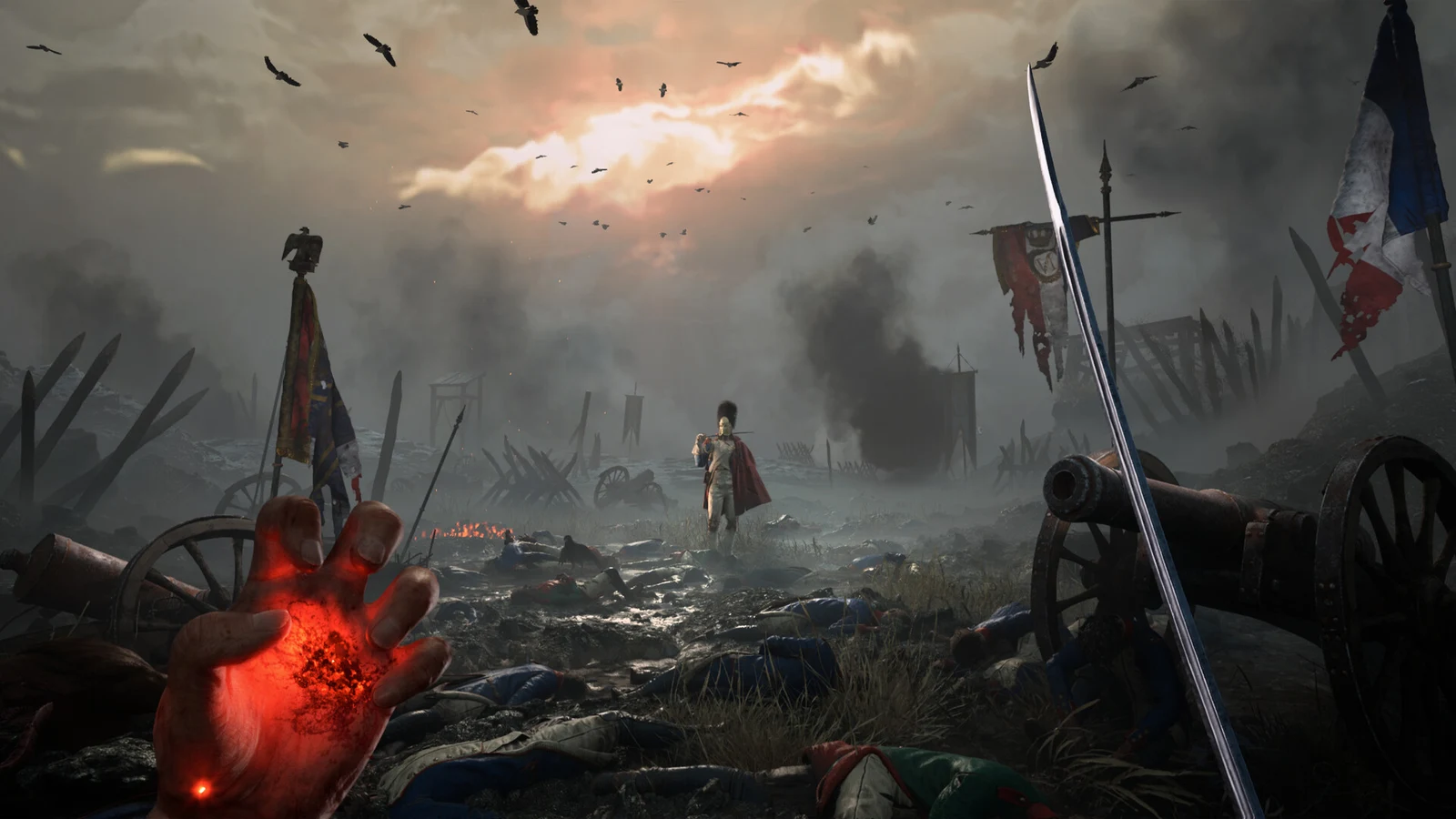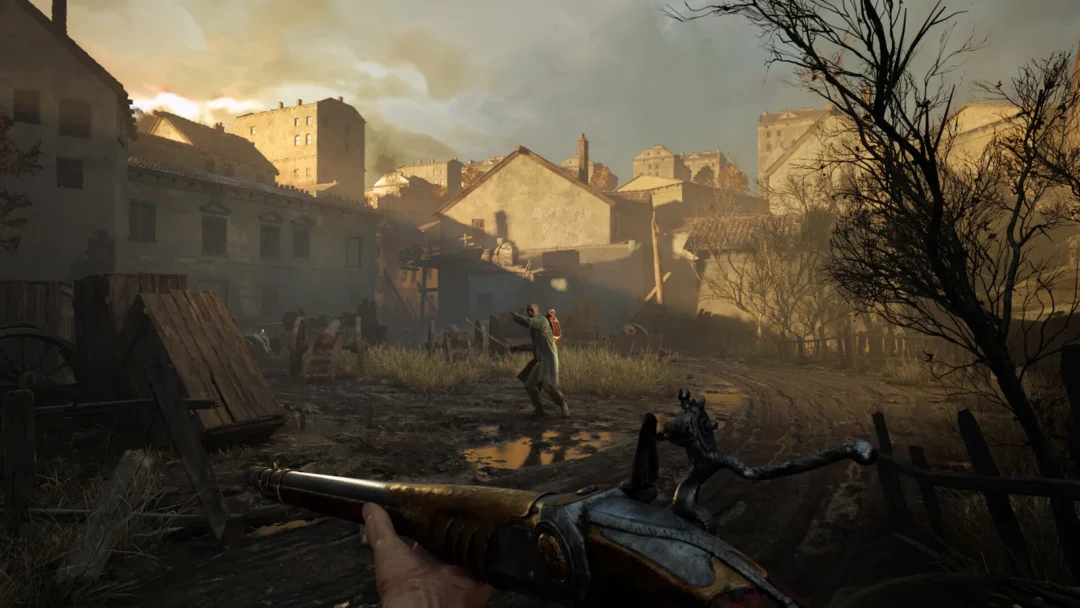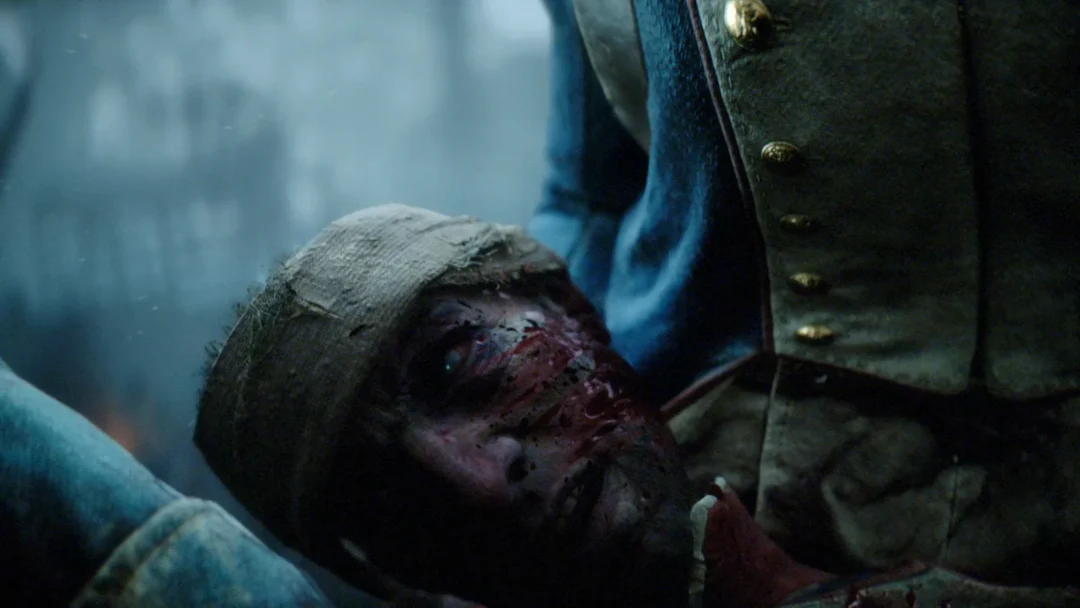
Valor Mortis, made by Ghostrunner studio One More Level, is a first-person soulslike set in an alternate 19th-century Europe. Napoleon controls a continent he has reduced to ash. Its protagonist, William, serves in the Grande Armée; after dying in battle, he rises with the parasitic Crimson Plague coursing through his veins. The cinematics follow one bleak path: he awakens among the dead, brings together a few survivors, then tracks the plague to the Emperor’s experiments buried underground.
Quick answer: William, a resurrected French soldier infected by the Crimson Plague, uncovers Napoleon’s occult experiments on his own troops, is betrayed and spared, then returns underground to end the Emperor’s ambition before Napoleon falls and a monstrous army marches on.
How the story begins: the oath and the plague
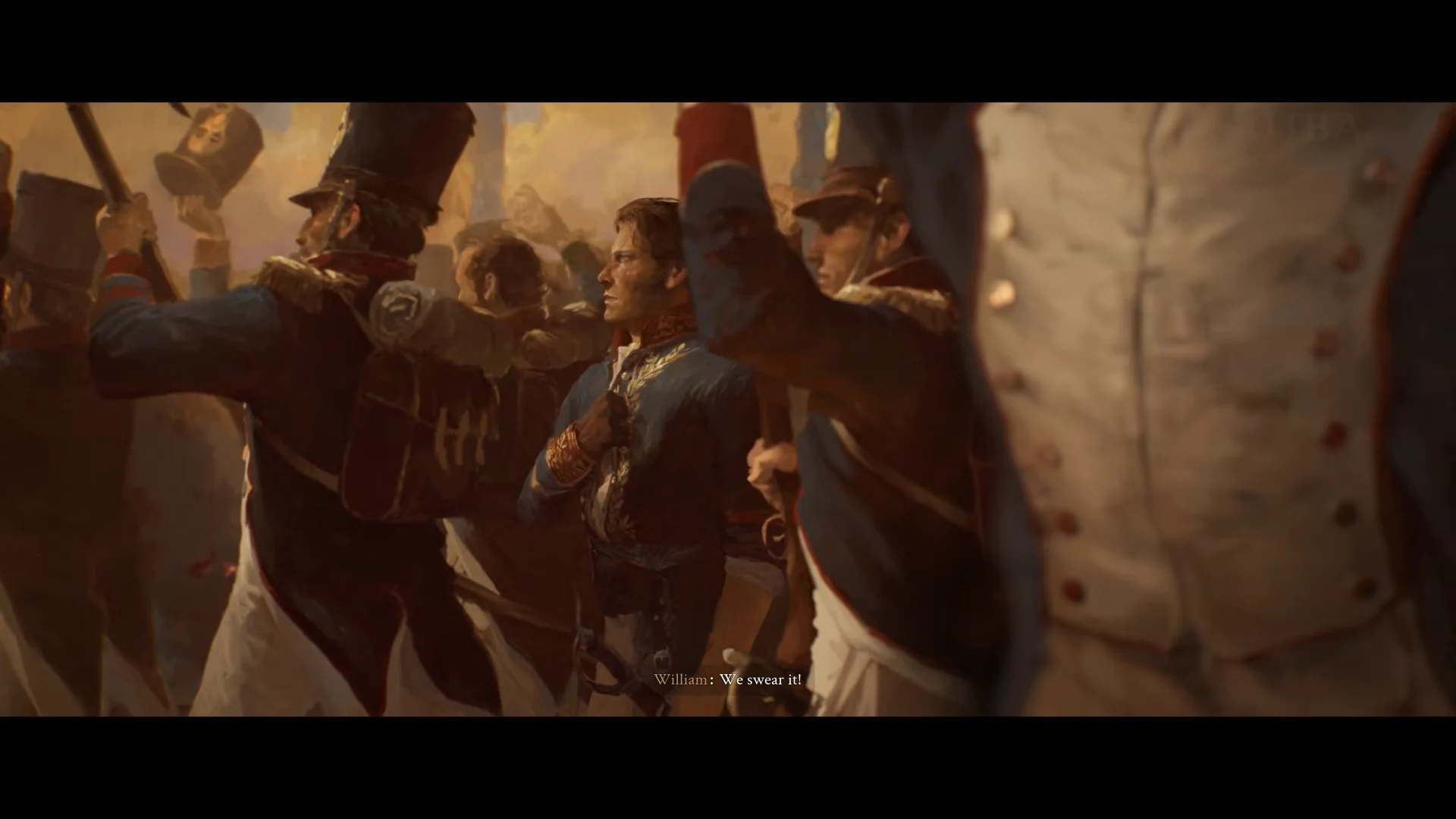
The opening shows the Imperial Guard rallying under the Arc de Triomphe beneath golden eagle standards, swearing to defend them with their lives. William takes the oath with the rest, but his own narration turns bitter almost at once, dismissing sworn words as “leaves on the wind” and insisting a true oath is proven only in deeds. Moments later a wave of purple corruption sweeps the field and leaves him bleeding in the snow.
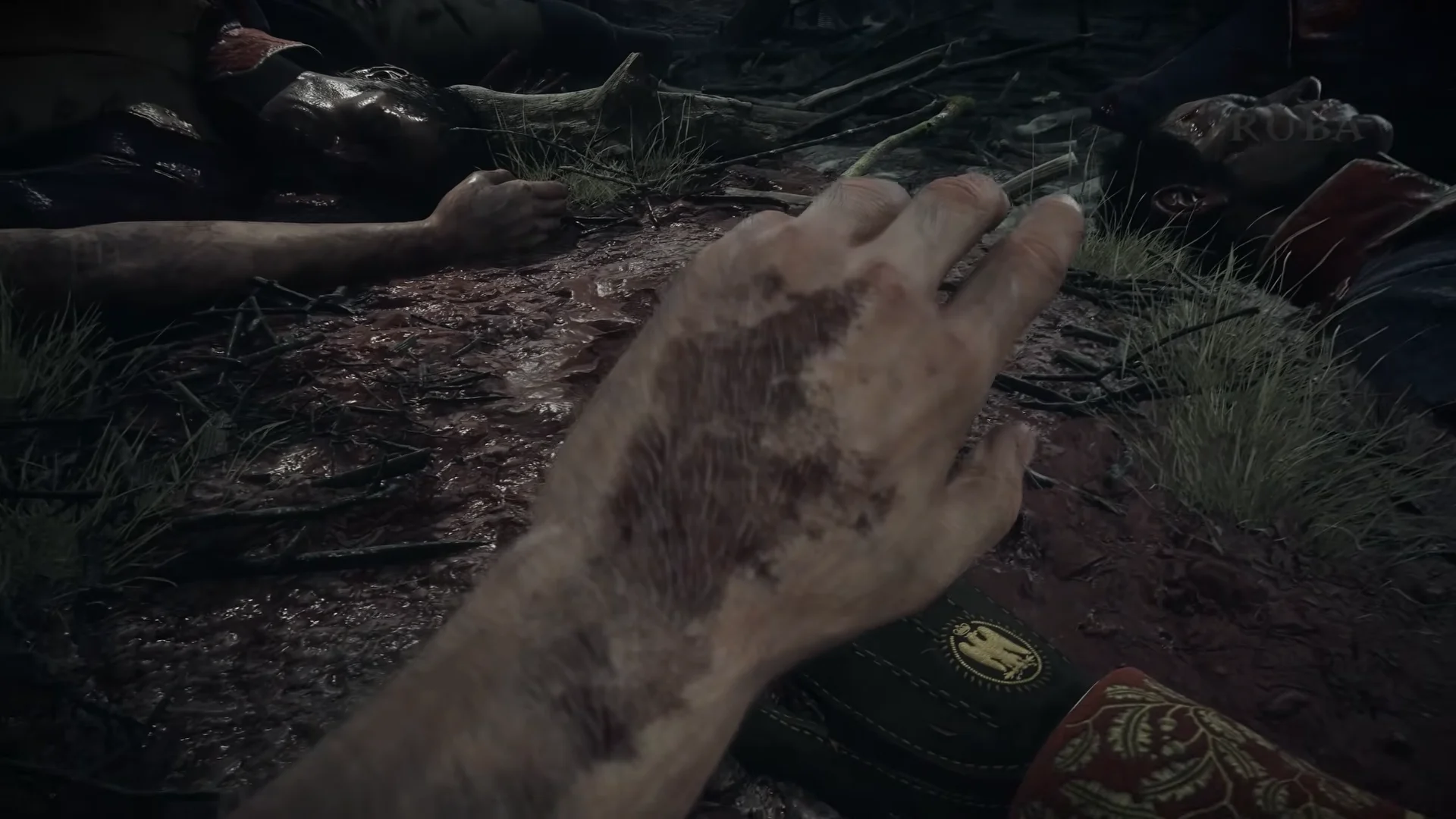
He wakes in the woods to Napoleon’s voice ordering him to rise, surrounded by fallen soldiers. From there the plague’s work is everywhere, from an overrun outpost guarded by a grotesque multi-armed commander to a landscape of blighted villages, flooded valleys, and sinkholes. The infected are called the Nephtis, and the corruption does not simply kill. It animates the dead, stitches bodies together, and in rare cases creates entirely new horrors.
The people around William
Four characters drive the narrative, each tied to a different piece of the mystery.
Lucjan Skawiński
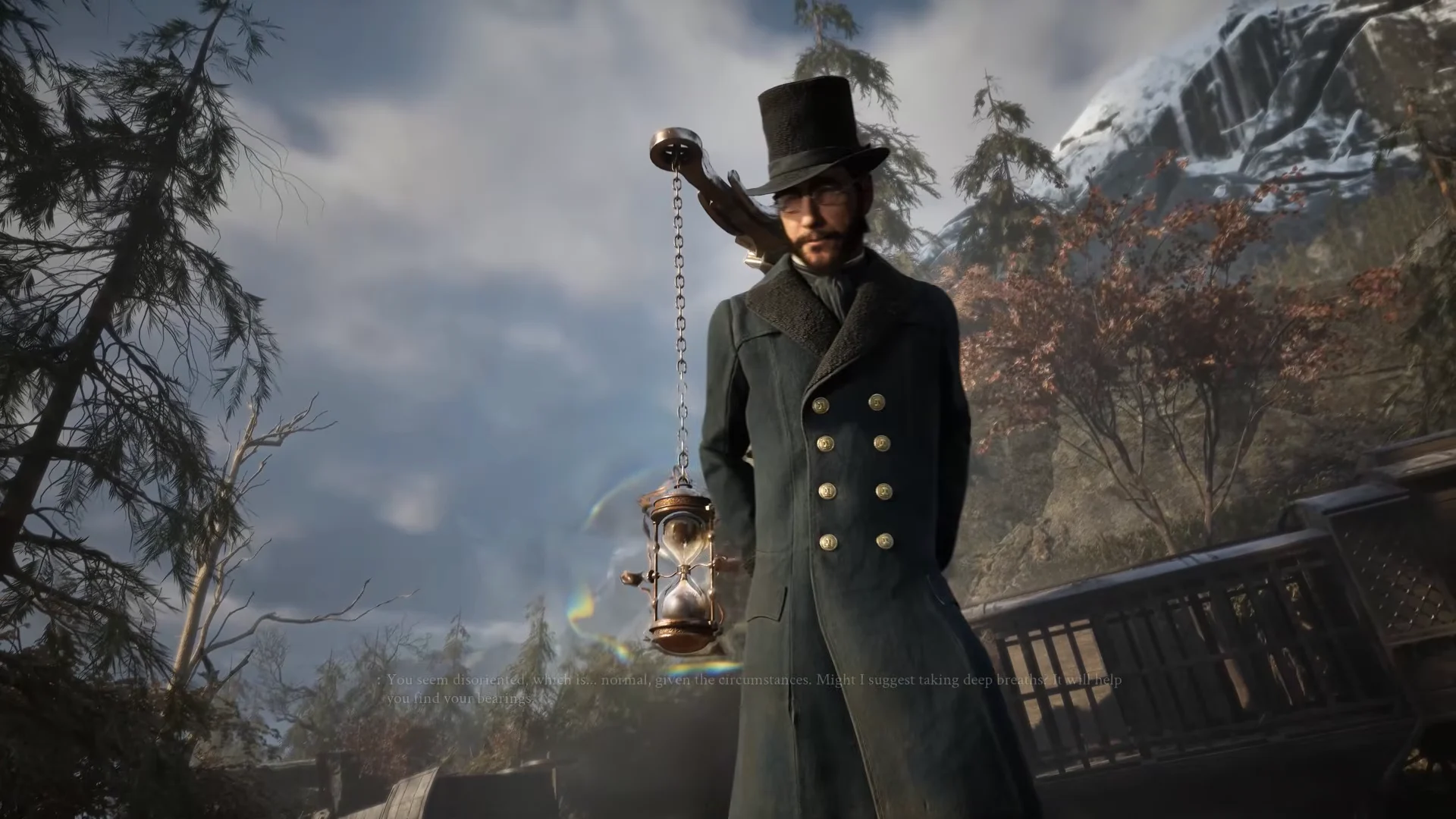
A gentleman in a Victorian top hat and dark overcoat, Lucjan tends the glowing hourglass lanterns that serve as the game’s respawn points. He speaks in philosophical riddles about memory, darkness, and the fleeting nature of respite, and he observes the tragedy without clearly taking a side. He is also the one who first points William toward the surviving French soldiers.
James Stewart
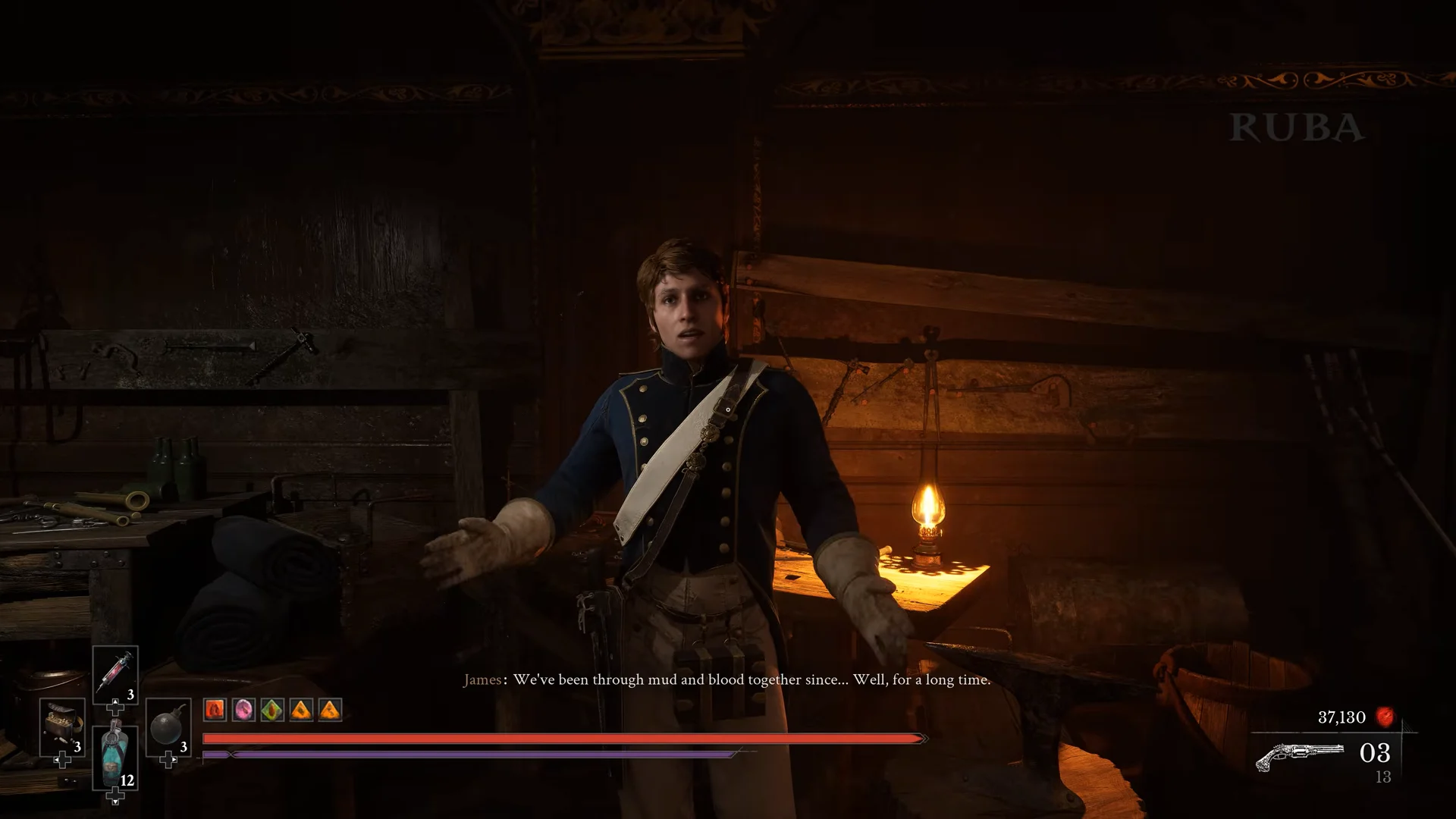
A fellow soldier holed up in an abandoned church that becomes the hideout. James briefs William on the ruined frontline, the spread of the Crimson Plague, and the disappearance of the group’s medic in a nearby village. He later warns William that the city has become a slaughterhouse best crossed through trenches and ruined alleys.
Louis
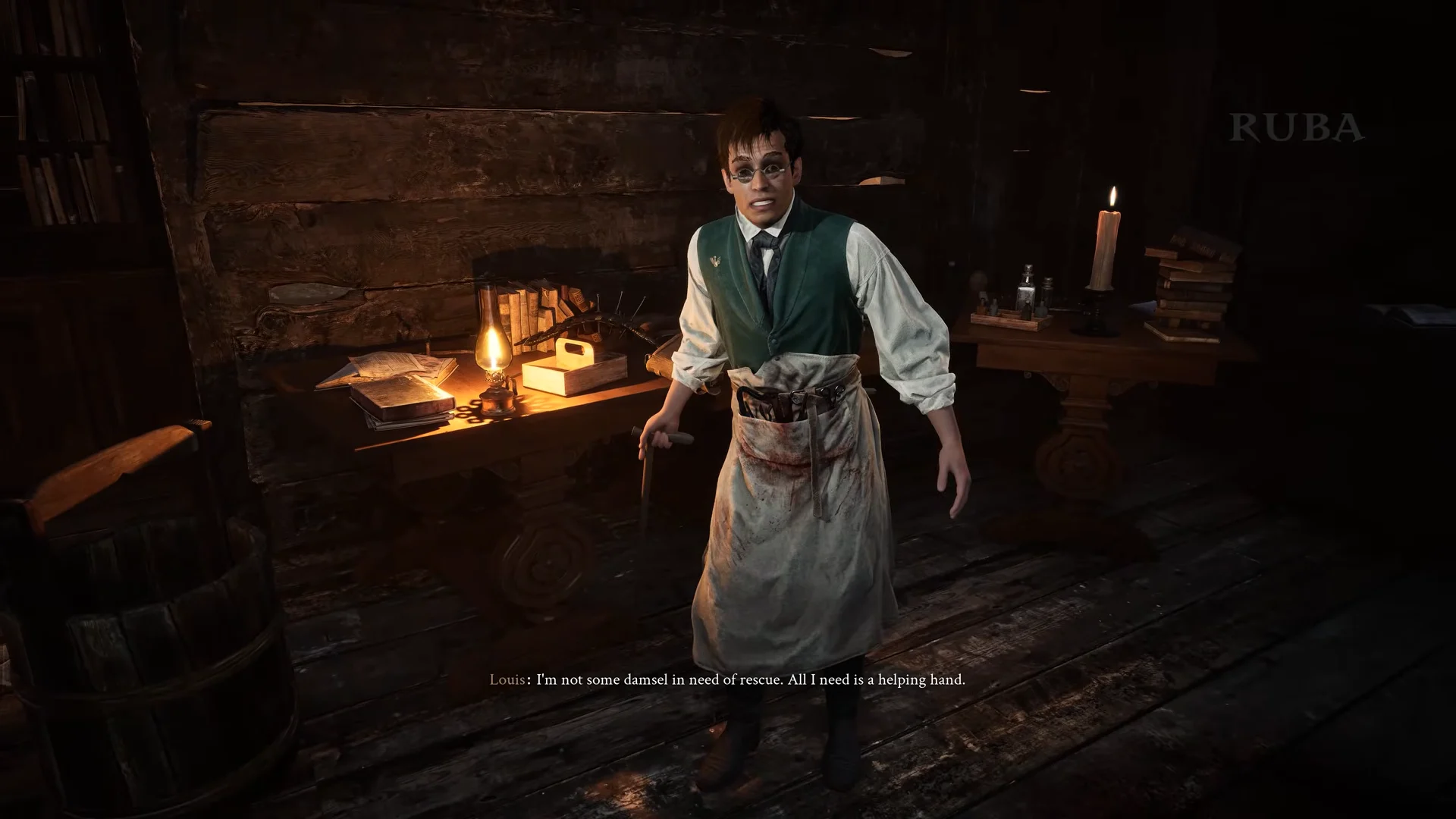
A scholar and medic found setting a roof ablaze as a beacon. Louis studies infected specimens and, later, human subjects in his church laboratory, lecturing on the “cellular metamorphosis of the Nephtis.” He frames the mutation not as a tragedy but as progress sanctioned by Napoleon, and he brushes off William’s outrage when the human experimentation comes to light. His cold rationalism sets up one of the darker turns later on.
The Shrike
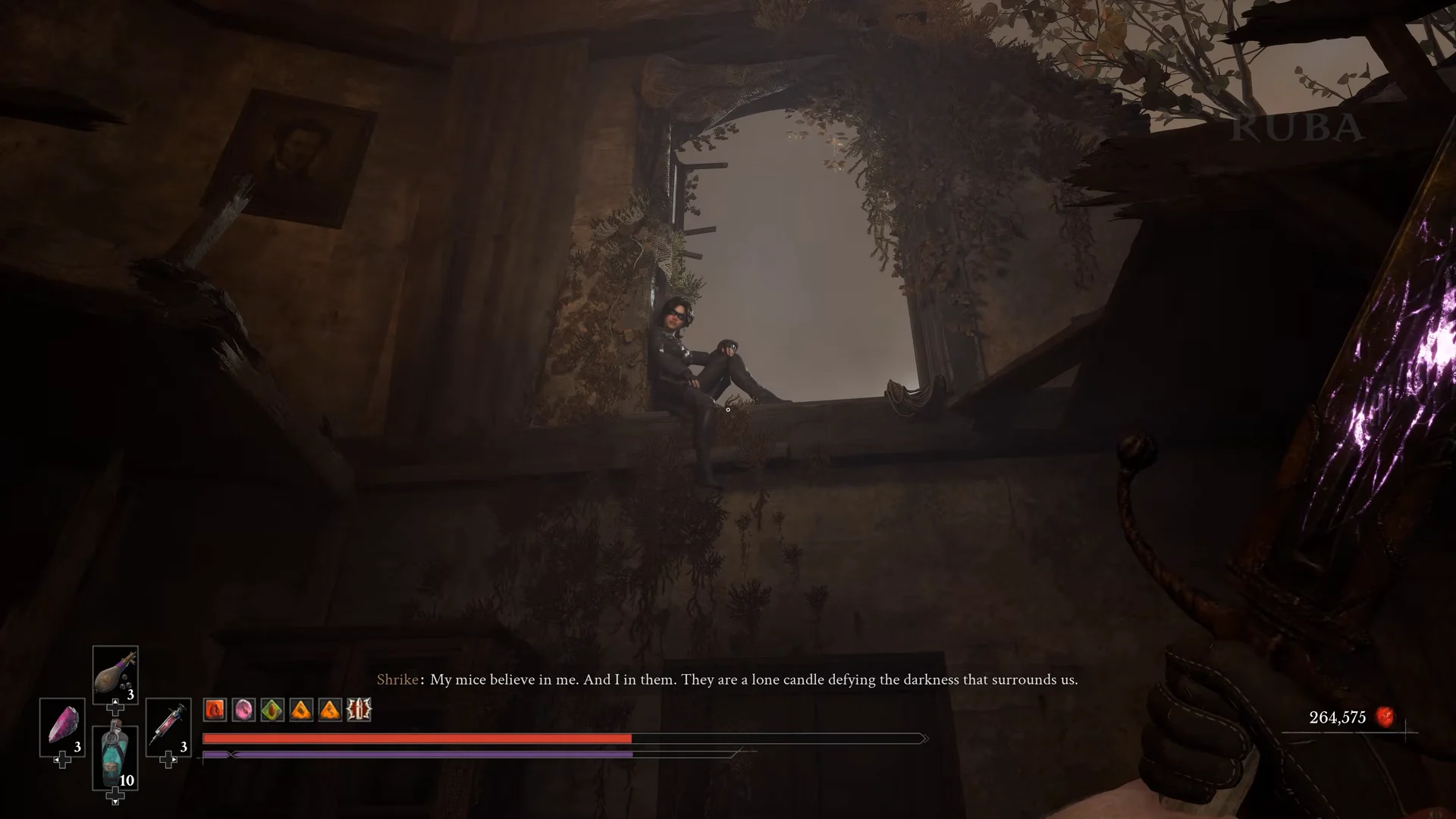
A masked woman in black who saves William from an ambush by dropping a chandelier on an armored officer, then hands him the Laboratory Key to reach Napoleon’s university research. She is later revealed to be Countess Marie Walewska, Napoleon’s mistress, a reveal that reshapes much of what comes after.
The hand mutations William gains
Each major power is drawn out of a suspended infected corpse, and William’s left arm visibly corrupts with glowing veins and crystalline growths as the journey goes on. Four abilities define his traversal and combat.
- A grappling tendril that pulls him across gaps and toward anchor points.
- Temporal stasis leaves foes and moving gears motionless.
- A frost-fungal manifestation that forms stepping platforms across water.
- An armored chitin carapace that hardens his forearm into a shield.
The stasis power doubles as a combat system in its own right. The Stasis Transmutation can stop targets cold, and attacking a frozen enemy deals heavy damage, with upgrades that let heavy attacks shatter stasis early or spread the effect to nearby targets.
The conspiracy, the betrayal, and the ending
William’s exploration leads beneath the salt mines to a buried Egyptian gate and a pulsating red core. Touching it throws him into a desert vision where a gold-masked Sphinx roars and dissolves. The trail of research points to one conclusion: Napoleon’s forces have been systematically experimenting on captured soldiers and civilians beneath the university to harness an ancient Egyptian relic.
William defeats Nephtis Superioris, the gold-masked commander, amid the castle ruins. From a stone ark, he takes a winged idol of gold, but an ambush follows and he is hauled away in chains to Napoleon. William denounces the Emperor’s slaughter; Marie Walewska arrives and begs Napoleon to spare him. The Emperor lets him live, and Marie later unlocks his cell, sending him back to the underground gate to complete the task.
Returning to the church, William finds it deserted but for Lucjan, who reveals that James and Louis have gone their own grim ways. Spectral blue echoes replay their fates: James giving up his fight, and Louis consumed by madness in pursuit of cosmic understanding. The final confrontation takes place in a surreal lake of blood, where a golden entity rises and William tears a radiant crystalline core from its chest to complete the last rite.
The ending cuts between a falling guillotine, Napoleon being carried off by ship in defeat, and a vast, undying army marching through snow-capped mountains. Lucjan closes the story with a reflection on how brief peace is and how evil persists, leaving William’s future unresolved.
The golden figure in the final battle is tied to a fallen ally, and its exact identity is left deliberately ambiguous across the cinematics rather than stated outright.
Every boss in Valor Mortis and its stats
The cutscenes introduce the major bosses, but not the numbers behind them. These are the health totals, phase counts, and regions for the game’s named bosses, useful reference while you work through the fights the story sets up.
| Boss | Health | Phases | Region |
|---|---|---|---|
| General Lothaire, the Eagle-Bearer | 1800 | 2 | The Battlefield |
| The Iron Marshall | 2400 | 1 | Fallen Village |
| Sphinx, Devourer of the Unworthy | 2000 | 2 | Caverns |
| Slaughtermill | 3250 | 3 | Vale of Wrath |
| High Justicar Aurelius, Last of the Faithful | 1500 | 2 | The Outskirts |
| Experiment 83 | 3400 | 1 | The Outskirts |
| Anna, the Bride Drowned in Tears | 2200 | 1 | Cursed Hollow |
| The Orphan | 4000 | 2 | University |
| Captain Raphael of the Nephtis Superioris | 4000 | 2 | Fortress |
The Orphan and Captain Raphael share the highest health pool at 4000, but they reward very differently. The Orphan drops 40,000 catalysts, the largest single boss payout of this group, while Raphael gives 50,000. Several of these bosses also carry heavy resistances worth knowing before you commit to a damage type.
- General Lothaire resists stasis by 50% and ignite by -40%.
- Anna resists ranged damage by 50%.
- The Orphan is immune to infection and resists ignite buildup by 70%.
- Experiment 83 resists stasis by 30% and ignite by -20%.
Beyond the named bosses, the common Risen Soldier is the enemy you meet first and most often, scaling from 100 health at level 1 up to 400 at level 6. Its wide, undisciplined sword arcs are exactly what the opening journal entries describe, and it appears across nearly every region in the game.
Valor Mortis is out now on PC, PlayStation 5, and Xbox Series X|S at $39.99, carrying an M rating. Its cinematics tell a self-contained tragedy about an oath that can only be proven in deeds, and an Emperor whose ambition outlives his defeat. The story leaves the door open on purpose, ending not on William’s victory but on the sight of a plagued army still on the march.