The mace is one of the hardest weapons to build in Minecraft, and it comes with a small pool of enchantments made just for it. Breach is the one that changes how armored fights play out. Instead of hitting harder, it makes your enemy’s protection count for less.
Quick answer: Breach is a mace-only enchantment that ignores 15% of a target’s armor damage reduction per level, up to 60% at Breach IV. It weakens armor and armor toughness only, so it does nothing against unarmored enemies and does not touch Protection enchantments or the Resistance effect.
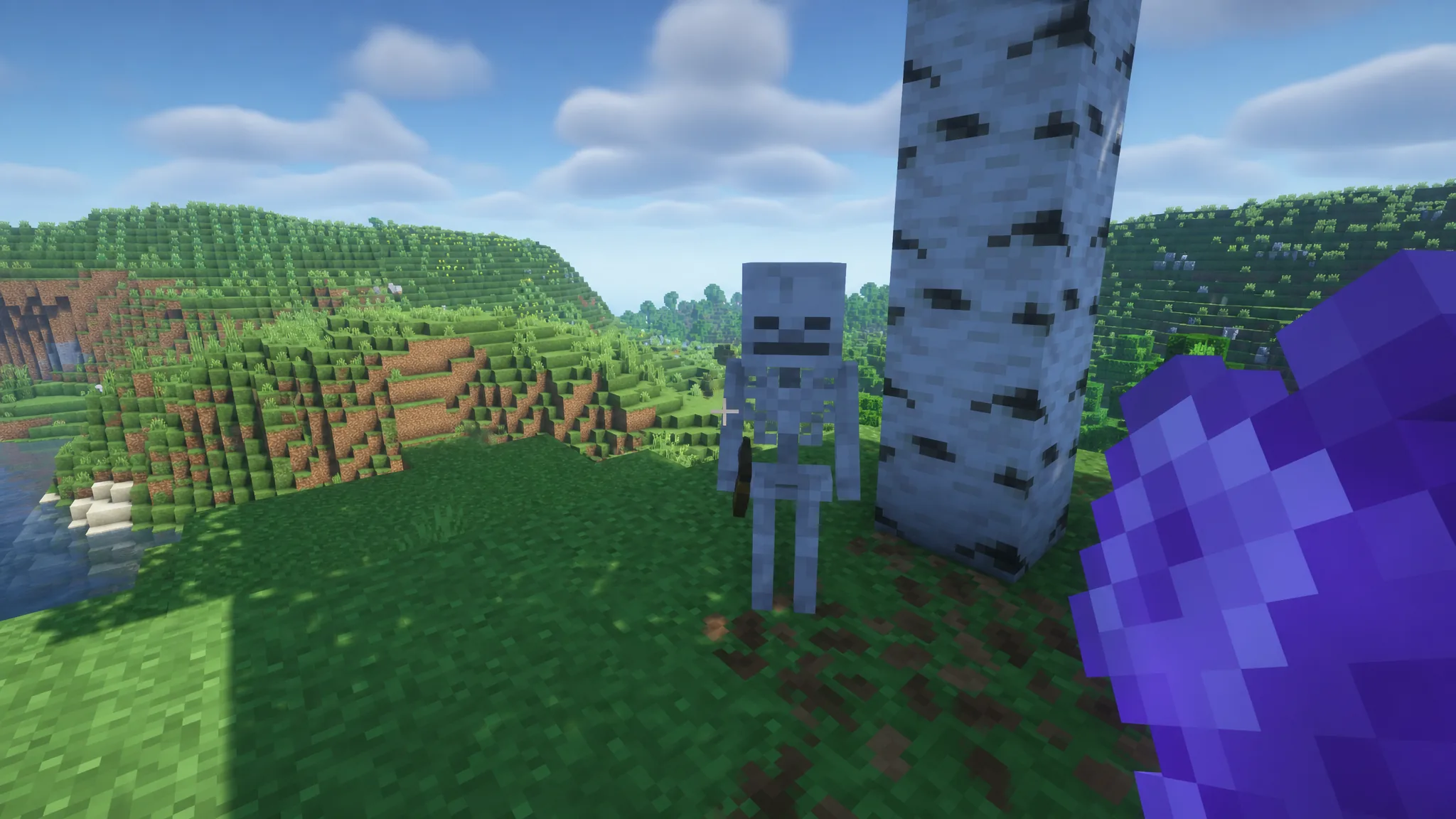
How Breach reduces armor
Breach lowers the effectiveness of a target’s armor points and armor toughness by 15 percentage points per level. The math is direct. If a mob or player normally blocks 50% of incoming damage, a Breach I hit treats that reduction as 35% instead. Each level subtracts another 15 points from the wall of armor standing between your swing and their health.
The maximum is level IV, which shaves off 60% of armor effectiveness. That is why Breach scales so hard against high-tier gear. A player in full Netherite carries roughly 80% damage reduction from armor, and Breach IV knocks that down to about 32%. In practice, a Breach IV mace makes a full Netherite set defend about as well as leather.
One important limit: Breach only weakens the armor itself. It does not reduce protection from the Protection enchantment or the Resistance status effect. Against a target with no armor points, the enchantment adds nothing at all.
| Breach level | Armor effectiveness removed |
|---|---|
| Breach I | 15% |
| Breach II | 30% |
| Breach III | 45% |
| Breach IV | 60% |
Damage against different armor tiers
Because Breach chips away at a percentage rather than a flat number, it does more work the heavier the armor gets. Diamond and Netherite see the biggest swings, while leather is already so weak that Breach caps out fast. The values below show the extra melee damage a Breach mace pushes through per hit against a full set of each armor type.
| Armor | Unenchanted | Breach I | Breach IV |
|---|---|---|---|
| Leather | 5.04 HP | 5.94 HP | 6 HP |
| Gold | 4.08 HP | 4.98 HP | 6 HP |
| Iron | 3.12 HP | 4.02 HP | 6 HP |
| Diamond | 1.56 HP | 2.46 HP | 5.16 HP |
| Netherite | 1.488 HP | 2.388 HP | 5.088 HP |
Note: these are non-critical melee figures. Critical hits and the mace’s smash attack push the numbers much higher, which is exactly why Breach pairs well with jump attacks and fall-based combos.
Where to get the Breach enchantment
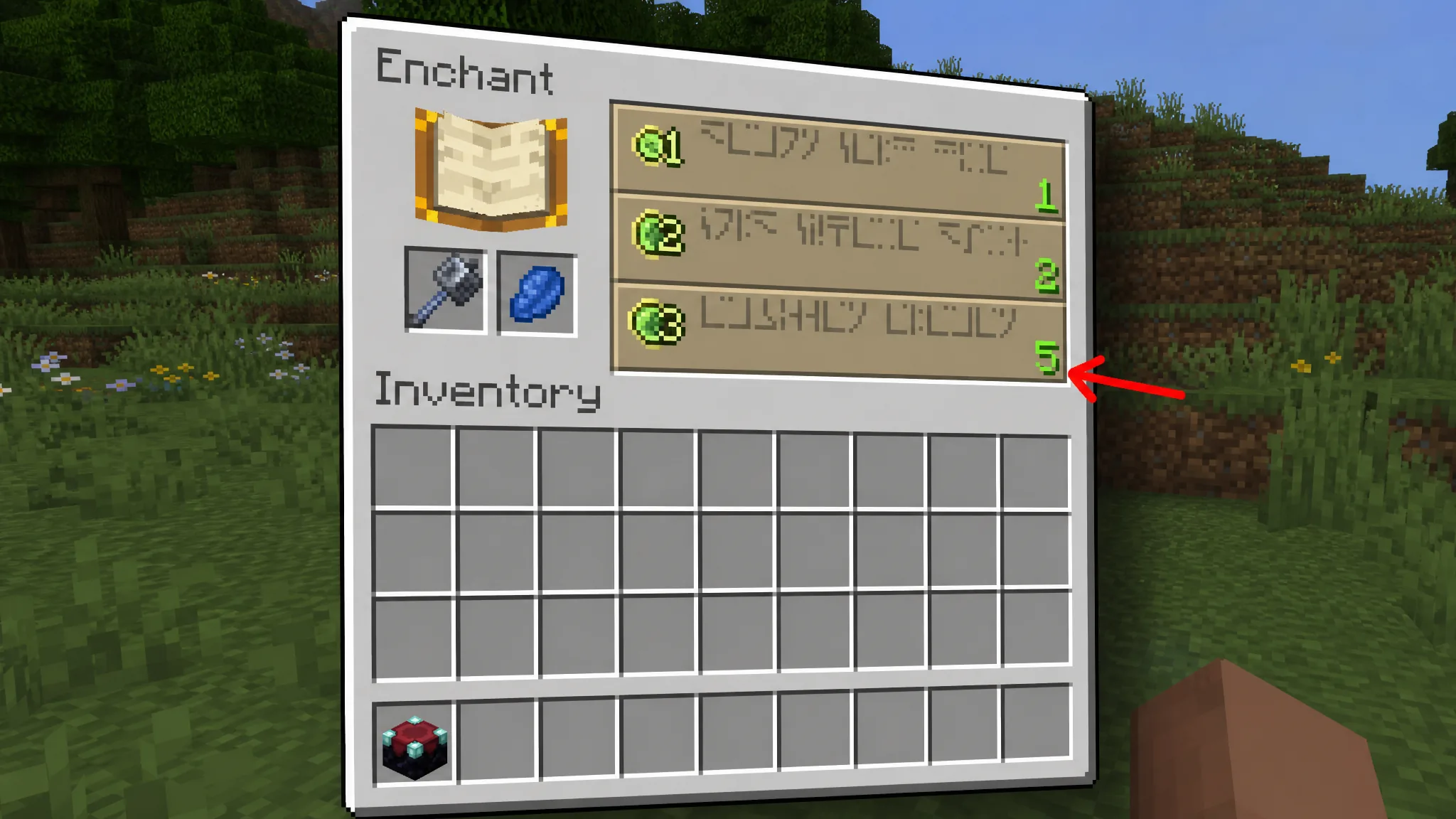
Breach has a maximum level of IV, but you cannot pull that top level straight from an enchanting table. A fully powered table with 15 bookshelves can offer up to Breach III on a mace. To reach Breach IV, you combine two lower-level books or maces on an anvil.
Enchanting table: Place the mace in the left slot with lapis lazuli and roll for Breach in one of the three offered options. You can also enchant a plain book this way. This is the most consistent method because the enchantment has a fair chance of appearing.
Enchanted books: Any structure that generates enchanted books can produce a Breach book, but the most dependable spot is the ominous vaults inside trial chambers. You can also trade for Breach books with librarian villagers, or fish one up, though the fishing odds sit below 1%.
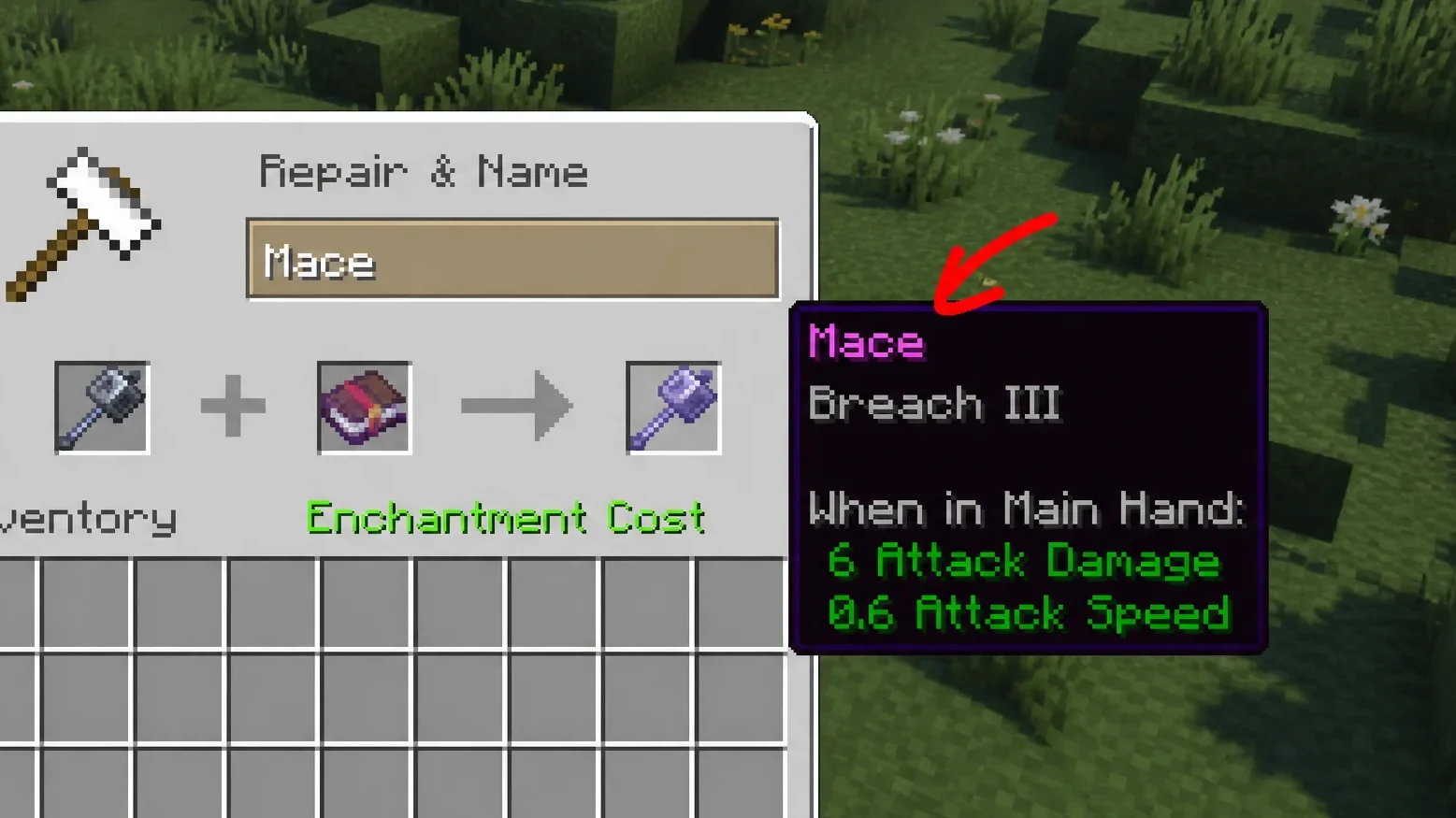
Applying a Breach book with an anvil
Enchantments Breach cannot share a mace with
Breach is mutually exclusive with several damage enchantments. You have to choose one path when building a mace, since these cannot legitimately sit together. If you force two of them onto the same item with commands, the effects do stack, but that is outside normal Survival play.
- Density
- Smite
- Bane of Arthropods
- Sharpness
- Impaling
Breach in PvP versus single-player
Breach earns its reputation in multiplayer. Against a player in full Protection IV Netherite, their defenses normally drag fights out. A Breach IV mace cuts through that wall and makes them far easier to bring down, especially when you add critical hits and a Strength potion. With Strength II, a Breach IV mace can drop a heavily armored target in around four critical hits.
Single-player is a different story. Very few mobs wear armor. Piglins only use gold, zombies and skeletons rarely spawn armored outside trial chambers, and horses or nautilus are passive targets you do not need to burst down. Shulkers are the standout case, since they stay closed and armored and their levitation attack sets up strong smash hits.
For solo survival, Density or Smite usually pull ahead. Density boosts smash-attack damage based on how far you fall before striking, which helps against every target from high ground. Smite delivers far better scaling against undead like zombies and skeletons. If you are not fighting other players, those enchantments give a more versatile mace.
Which targets Breach actually helps against
The rule is simple. Breach only matters when the target has armor points. It shines against armored players, and it has value against a short list of enemies that carry natural or worn armor.
| Target | Breach useful? |
|---|---|
| Armored players (PvP) | Yes, strongest use case |
| Shulkers | Yes, best mob target |
| Wither boss | Yes |
| Magma cubes | Yes |
| Armored zombies and skeletons | Yes, but Smite often outperforms |
| Piglins (gold armor) | Minor benefit |
| Unarmored mobs | No effect |
If your worlds lean toward competitive combat, Breach turns the mace into a dedicated armor-breaker that keeps over-geared opponents from stalling fights. If you mostly play solo, it stays on the bench while Density and Smite do the heavy lifting.