
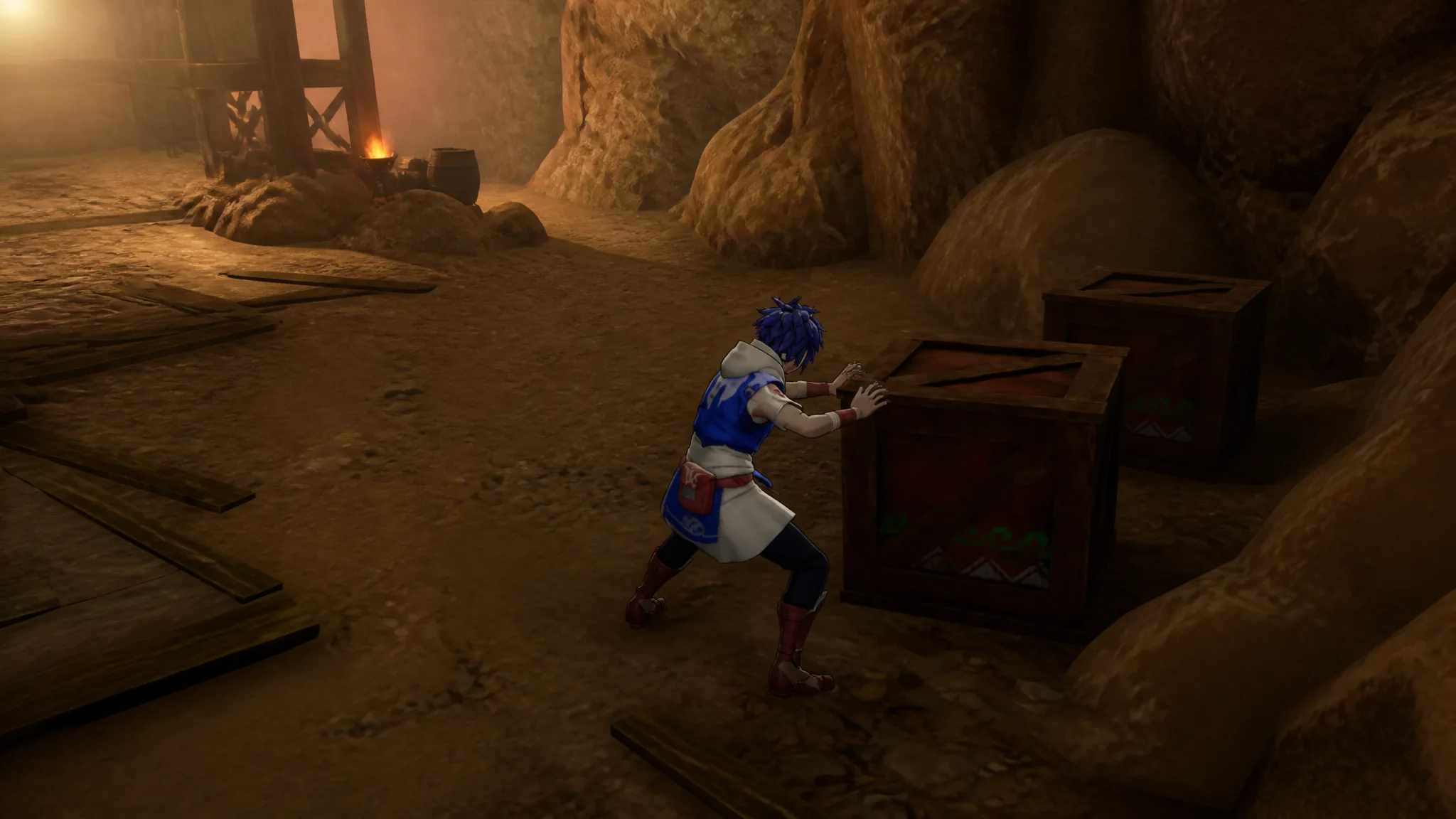
Dungeons in Fire Emblem: Fortune’s Weave are filled with barrels and crates, and breaking them scatters items you can pick up. Most of these drops fall into two useful categories, and knowing which is which tells you whether to smash everything in sight or save your time for the fights ahead.
Quick answer: Crate and barrel drops are mostly edible ingredients you combine at a dungeon rest spot to restore HP, with an occasional smithing stone used to repair weapon durability at the Blacksmith.

Edible ingredients heal your party at rest spots
The bulk of what you collect from crates and barrels is food. These ingredients are meant to be used at a rest spot inside a dungeon, where each one restores a fixed amount of HP. Add ingredients to the left-hand list at the rest spot, and the total healing goes up. The more you stack, the more HP every member of your party recovers at once.
This is what makes breaking every barrel and crate worth the detour. The steady stream of battles inside dungeons chips away at your party’s HP over time, and that happens even when you rely on Auto Battle or the Skip to Conclusion option. A well-stocked ingredient list keeps you topped up without wasting other consumables.
Stack several ingredients at once before resting so a single stop restores the largest possible amount of HP across the whole party.

Smithing stones repair weapon durability
Every so often a barrel or crate contains a smithing stone. These are an uncommon drop, so you will not see them in every dungeon run. Smithing stones are used at the Blacksmith to repair weapons, restoring durability that drops each time a character uses a Combat Art with that weapon.
Durability matters because once a weapon hits 0 durability, you can no longer use its Combat Art. Those arts are what let you break through tough enemy units when a normal attack falls short, or squeeze out extra range from an archer’s shot. Keeping durability topped up keeps those options available.
Where and when to repair
The Blacksmith sits in the Shopping Arcade, right next to the armorer you meet early in Chapter 3. However, you cannot upgrade or repair weapons until you reach Chapter 6, which is when the Blacksmith becomes available. Until then, hold on to any smithing stones you collect.
Repairs also cost gold on top of the smithing stones, and the price scales with the weapon’s rarity. Higher-quality weapons cost more to bring back to full durability, so budget accordingly when deciding which gear to prioritize.

How to tell your drops apart
| Drop type | Rarity | Used for |
|---|---|---|
| Edible ingredients | Common | Restore HP at dungeon rest spots |
| Smithing stones | Uncommon | Repair weapon durability at the Blacksmith |
You will know the ingredients worked when the rest-spot menu shows the healing total rising as you add items, and your party’s HP fills once you rest. For repairs, the weapon’s durability value returns to full at the Blacksmith after you pay the gold cost, restoring access to its Combat Art. Because both payoffs come from the same crates, it pays to clear out every barrel you pass on the way through a dungeon.