Running the repair kiosk in ReStory: Chill Electronics Repairs means a steady stream of broken Y2K-era hardware crossing your bench, from tiny virtual pets to full-size game consoles. The catalog you can service is tied to the licenses you buy, so the roster of devices grows as your shop earns money and expands.
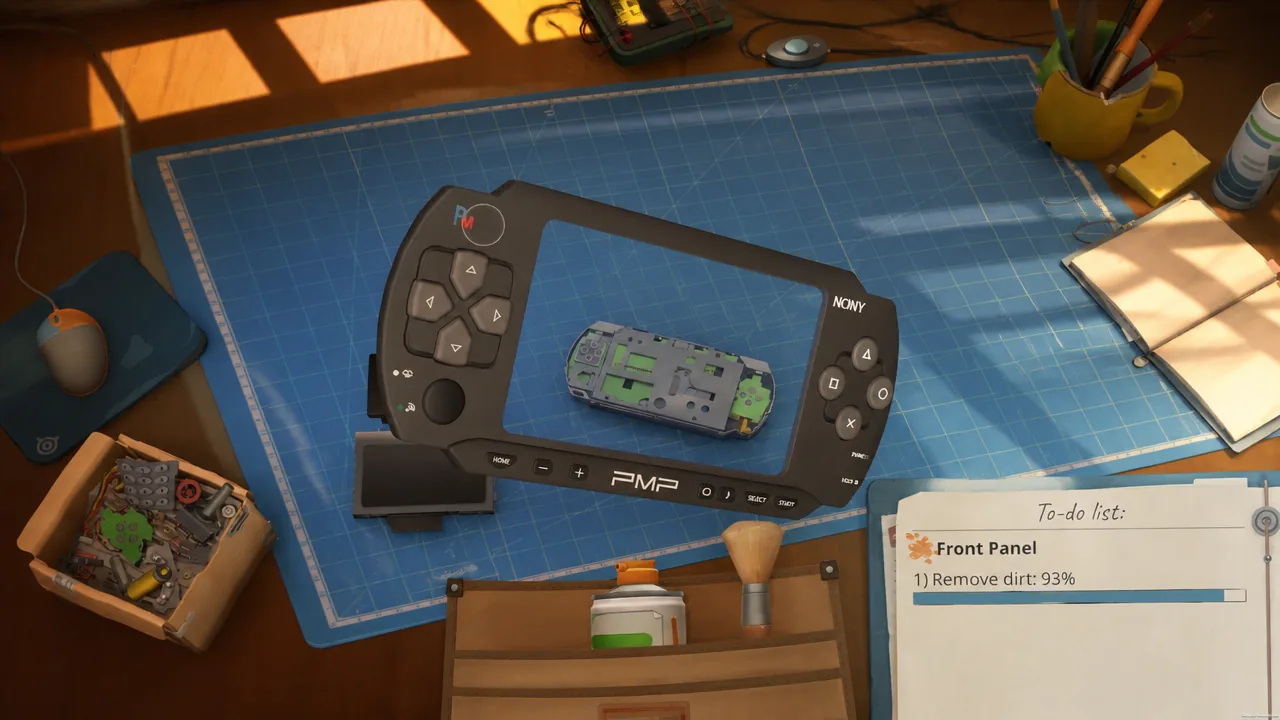
Quick answer: You can repair home and handheld consoles (Atari 2600, Atari Lynx, Nony PlayMachine, Nony PMP, Patento BS), controllers and accessories (Atari CX40), cell phones and pagers (Autorolla Razor, Pokia 3310, Pokia Njoy, Eggotchi), a portable cassette player (Nony Goman), an instant camera (Palaloid), a walkie-talkie, and gadgets like the Unicorp 99L flashlight and the Robodog.
Every repairable device in ReStory by category
The devices are period-accurate takes on early-2000s tech, complete with switchboards, power jacks, ribbon cables, and outer casing shells. Here is the full list grouped by type.
| Category | Devices |
|---|---|
| Home and handheld consoles | Atari 2600, Atari Lynx, Nony PlayMachine, Nony PMP, Patento BS |
| Controllers and accessories | Atari CX40 |
| Cell phones and pagers | Autorolla Razor, Pokia 3310, Pokia Njoy, Eggotchi |
| Portable audio | Nony Goman (cassette player) |
| Cameras | Palaloid (instant camera) |
| Communication devices | Walkie-talkie |
| Other gadgets | Unicorp 99L flashlight, Robodog |
The Atari hardware is officially licensed, so the 2600, the Lynx handheld, and the CX40 joystick are real-world names rather than parody brands. Most other devices are nostalgic stand-ins for familiar 2000s gear, such as the Nony Goman standing in for a classic cassette Walkman and the Palaloid nodding to instant film cameras.
Note: The Nony Goman is one of the more involved jobs because the cassette player packs a lot of small moving parts, while the Eggotchi virtual pet and Pokia phones lean on tiny circuit boards and keypad work.
How licenses unlock new devices
You do not start with access to every device. The catalog on your bench expands as you buy service licenses, and buying licenses is also what pushes the main story forward.
Walk-in customers will sometimes hand you an item you do not yet hold a license for. You can still accept the device, but you cannot finish it, and story beats tied to that item stay locked until you own the correct license. During that gap you can keep cleaning and fixing other jobs to build up cash without missing major storylines.
Owning a license for a device also lets you order brand-new parts for it directly, instead of buying whole units off the marketplace and stripping them for spares. That does not guarantee a lower price, but it does guarantee you get the exact part you need.
How the repair process works
Every device follows the same relaxed loop of taking it apart, diagnosing, fixing, and reassembling. Your shop notebook tracks the state of each piece so you always know what still needs attention.
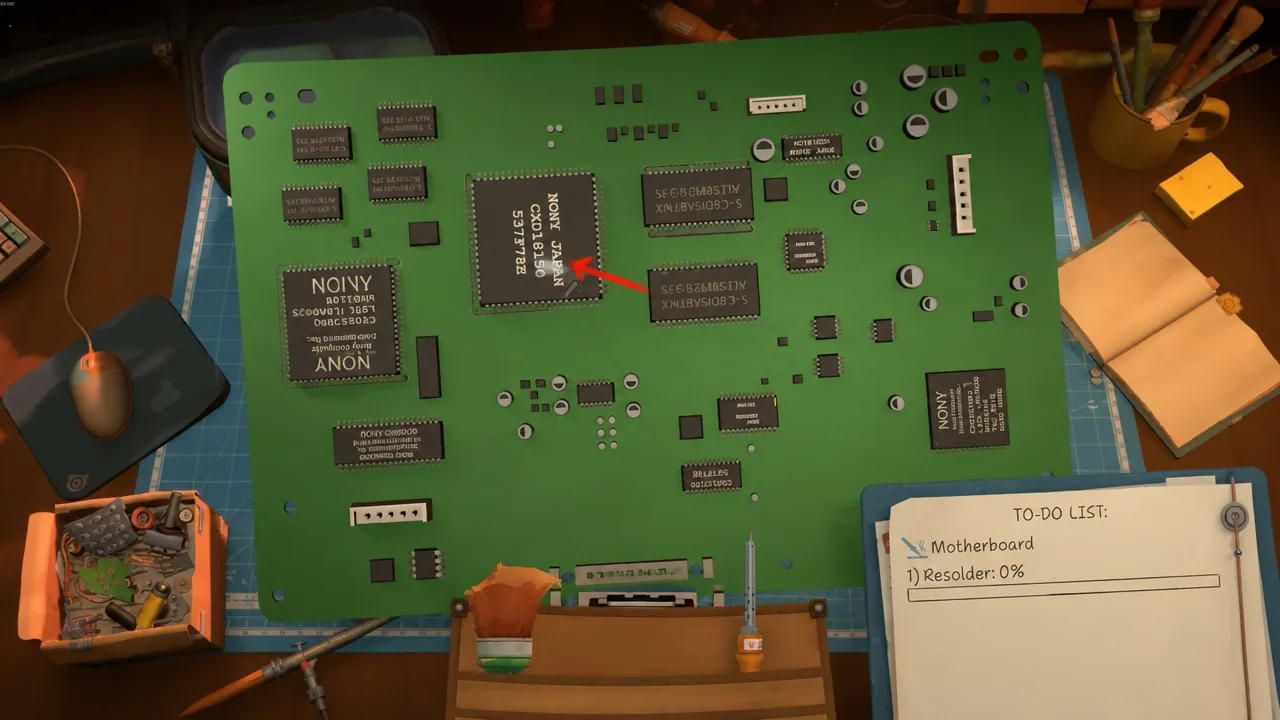
A repair counts as finished once every flagged part reads as clean and working in the notebook and the device is fully put back together. At that point you can hand it back to a walk-in customer or send it out on an online order for payment.
Tool upgrades that speed up repairs
As you earn money, you can upgrade your bench tools to work through devices faster and squeeze out more income per job.
| Upgrade | What it does |
|---|---|
| Screwdriver | Takes devices apart faster; the final upgrade removes screws instantly with one click. Only two upgrades, so it is worth prioritizing. |
| Brushes | Better brushes dislodge dust more easily and do not run out like air cans do, making them a strong early buy. |
| Shredder | Recycles ruined parts for extra cash, roughly 200–500 yen per shredded part instead of trashing them. |
| Tip jar | Adds a bonus of about 200–500 yen on every completed walk-up and online job. |
| Sonic Bath | Cleans up to three parts at once, but takes about 30 seconds per batch; more useful in mid-to-late play. |
Tip: Early on, your money is usually better spent on device licenses than on niche extras like the airbrush painting tool or the reprogramming toolkit, since painting and reprogramming do not raise a device’s value unless a job specifically calls for them.
With the full lineup of consoles, phones, cameras, and oddball gadgets available once you hold every license, the workbench in ReStory rarely runs short of retro hardware to bring back to life.