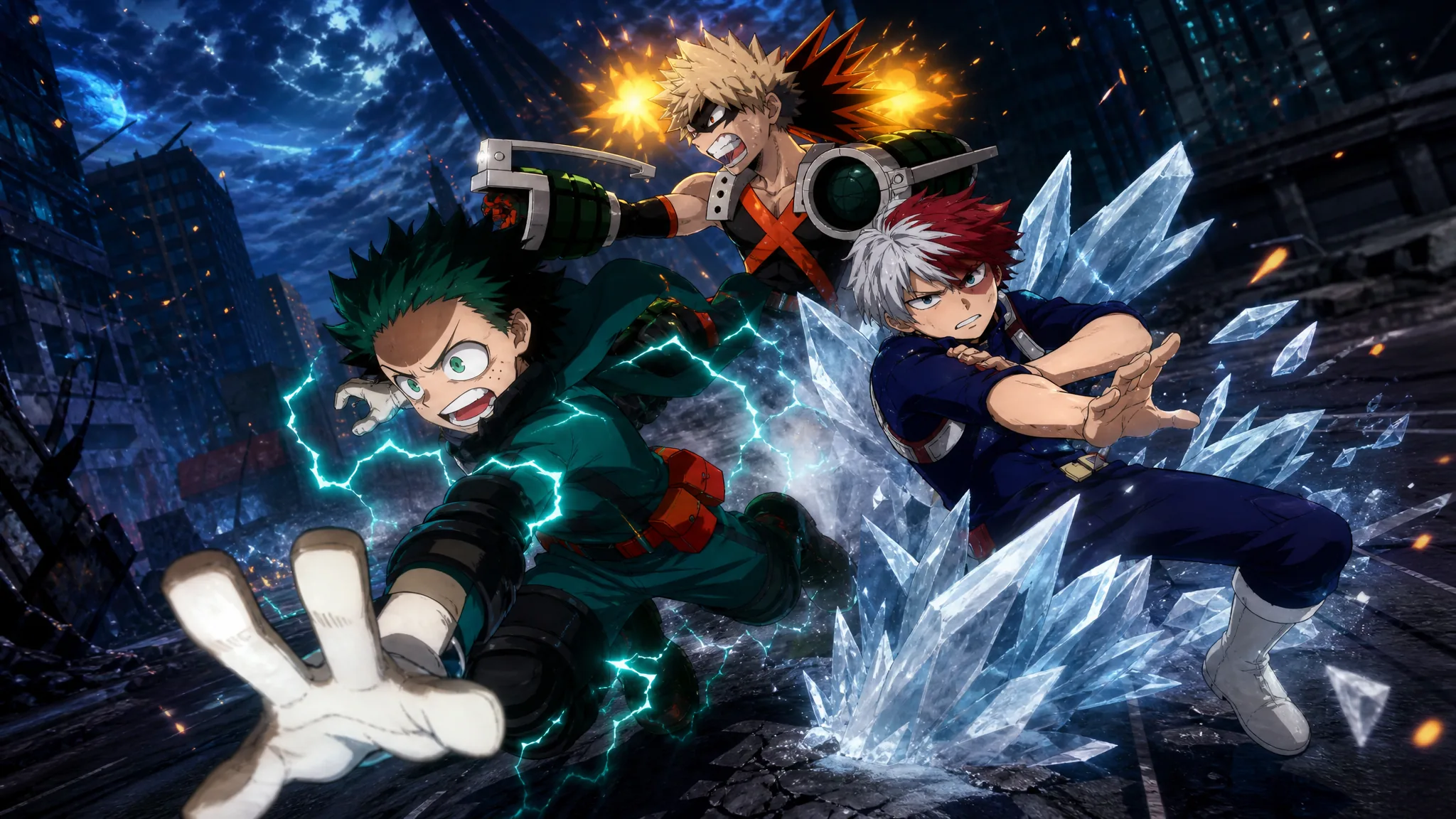
Every stage in My Hero Academia United Survival asks the same thing of your three-person squad. Clear each wave’s objective, survive the crowd, and stack the right upgrades before the boss shows up. A run lives or dies on two sets of choices: what you bring in before the first wave, and what you pick when the game levels you up. Get both right and you can beat stages the game says you shouldn’t.
Quick answer: Build a team with at least one crowd-control character, equip collections and gear that buff all three members, then during the run keep picking your characters’ own skill cards to rank and awaken them, prioritize the wave objective over kills, and grab every briefcase and Green Shard you see.
What decides a run before it starts
The run itself is only half the fight. Your roster, collections, and equipment set the ceiling for everything that happens once the timer starts. Sort these first, because no amount of good in-battle picks fixes a team that has no way to control enemies or complete an objective.
| Pre-run element | What to prioritize |
|---|---|
| Team | One character with debuffs and crowd control, plus complementary Costume effects |
| Collections | Skills that benefit all three members, matched to your roster’s group |
| Equipment | Highest grade you can reach; D-grade and up comes from gacha pulls |
| Wave Info | Read enemy weaknesses, resistances, and the objective before you enter |
Build a team around roles, not rarity
Stacking the highest-rarity characters is a trap. Each character has an attack type, either Melee, Projectile, or AoE, and they split into jobs like healing, buffing, crowd control, debuffing, or pure damage. A team that hits hard but can never slow a horde will still get overrun.
Include at least one character who can apply debuffs and crowd-control the mobs you face by the dozen. Then check each character’s Costume, since every one carries a unique effect. Some buff the whole team, others buff only themselves. Never run two characters with the same Costume effect. Pair effects that stack toward the same goal instead.
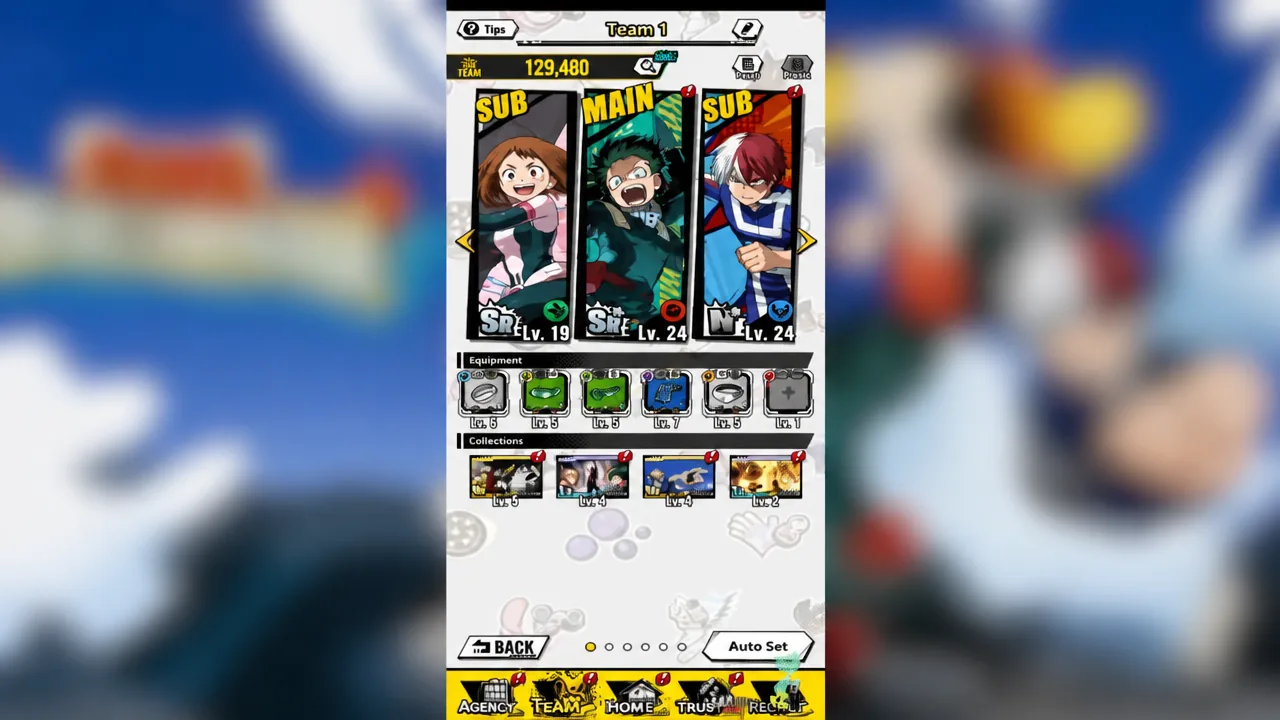
Keep more than one team ready. Every stage throws enemies that are weak or strong against a specific damage type and resistant to certain status ailments. Reading the Wave Info before you commit lets you send in the squad that already has the advantage, rather than forcing a matchup you’ll lose.
Pick collections that help the whole squad
Collections work like artifacts. Each one carries a skill and raises stats such as HP, CRIT Value, and attack, and some hand out buffs to a specific group. The How I Became the World’s Greatest Hero collection, for example, boosts characters in the Hero group.
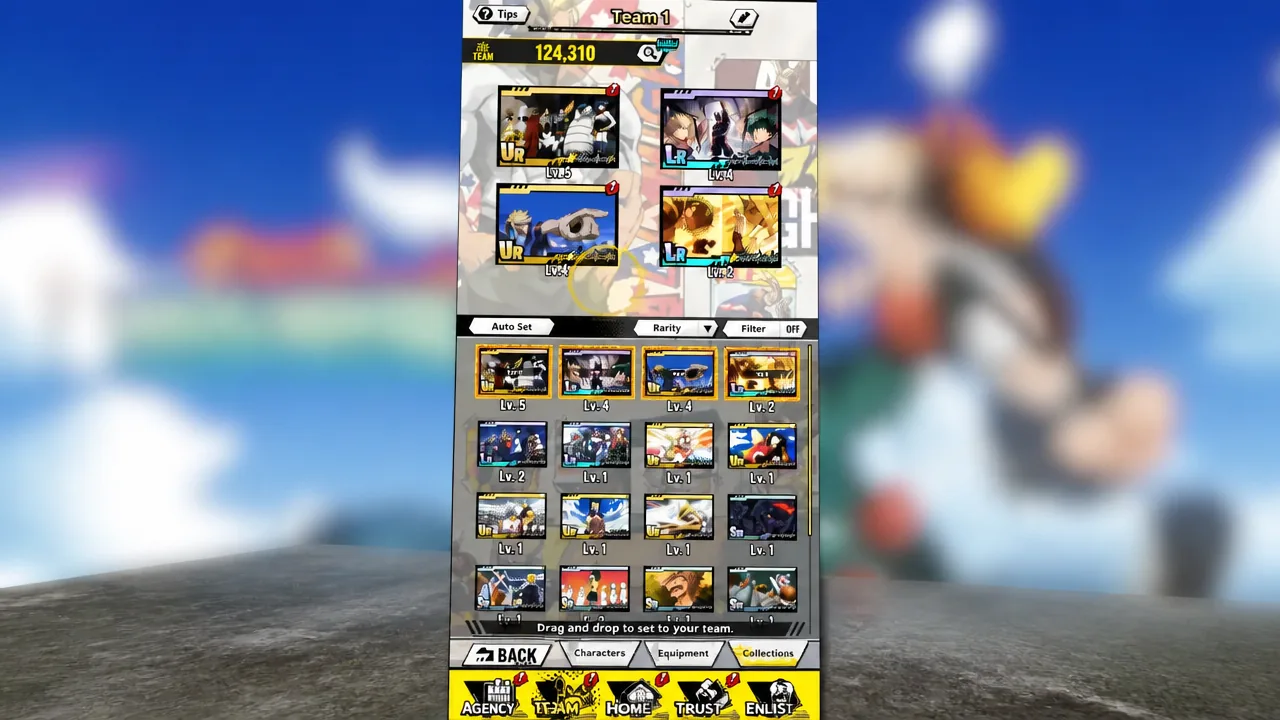
Equip collections that line up with your roster. Favor skills that reach all three characters instead of a single member. You can confirm the impact by opening Team Stat Details through the magnifying glass button near the top, just under the team’s name.
Push equipment to the highest grade you can
Equipment runs from F, E, D, C, and B up to A, the top grade. Every grade unlocks a new skill, so higher gear is not just bigger numbers, it adds abilities. You earn equipment by clearing story stages and by pulling gacha, and gacha is the only route to D-grade gear.
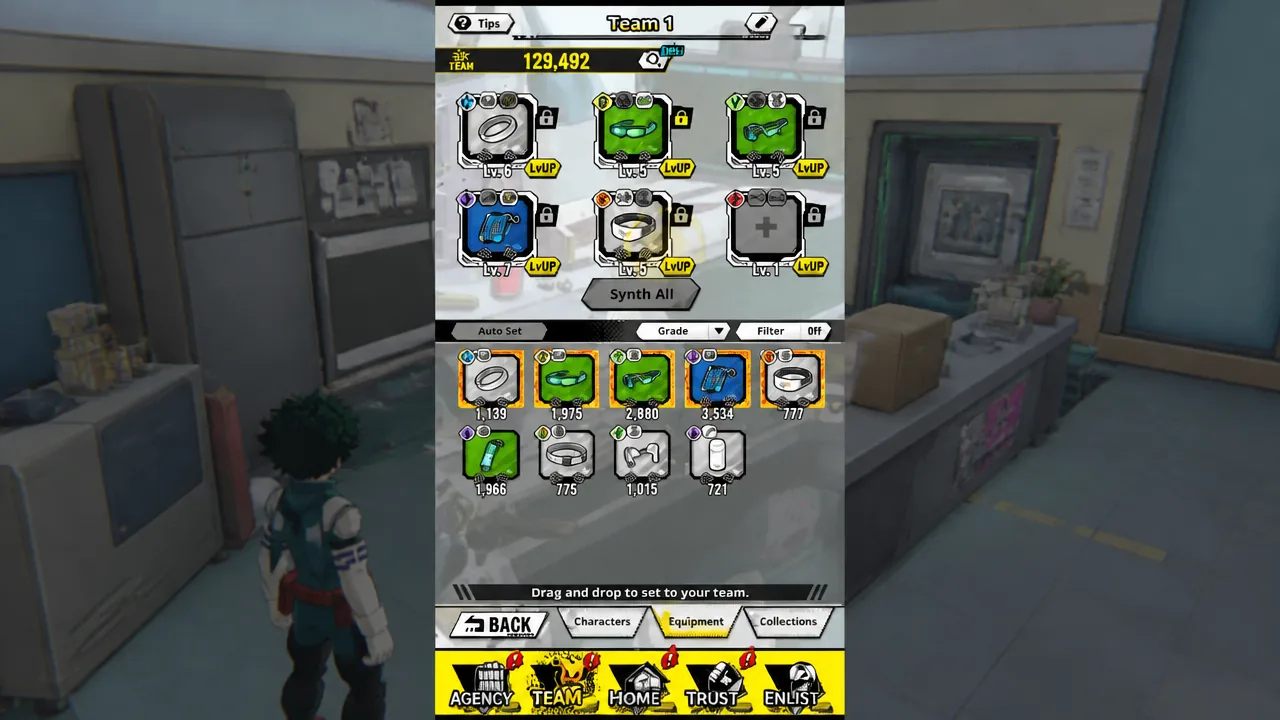
Aim to raise gear to its highest grade to unlock its full effect. Starting from F or E costs far more time and resources to climb, so pulling higher-grade equipment saves you a long grind.
Choose skill cards to rank up and awaken
Defeated enemies drop XP that levels you up, and each level-up offers three skill cards, either Attack-type or Support-type. You can learn six Support-type skills and three Attack-type skills, with the other three Attack slots reserved for your characters’ own skills.
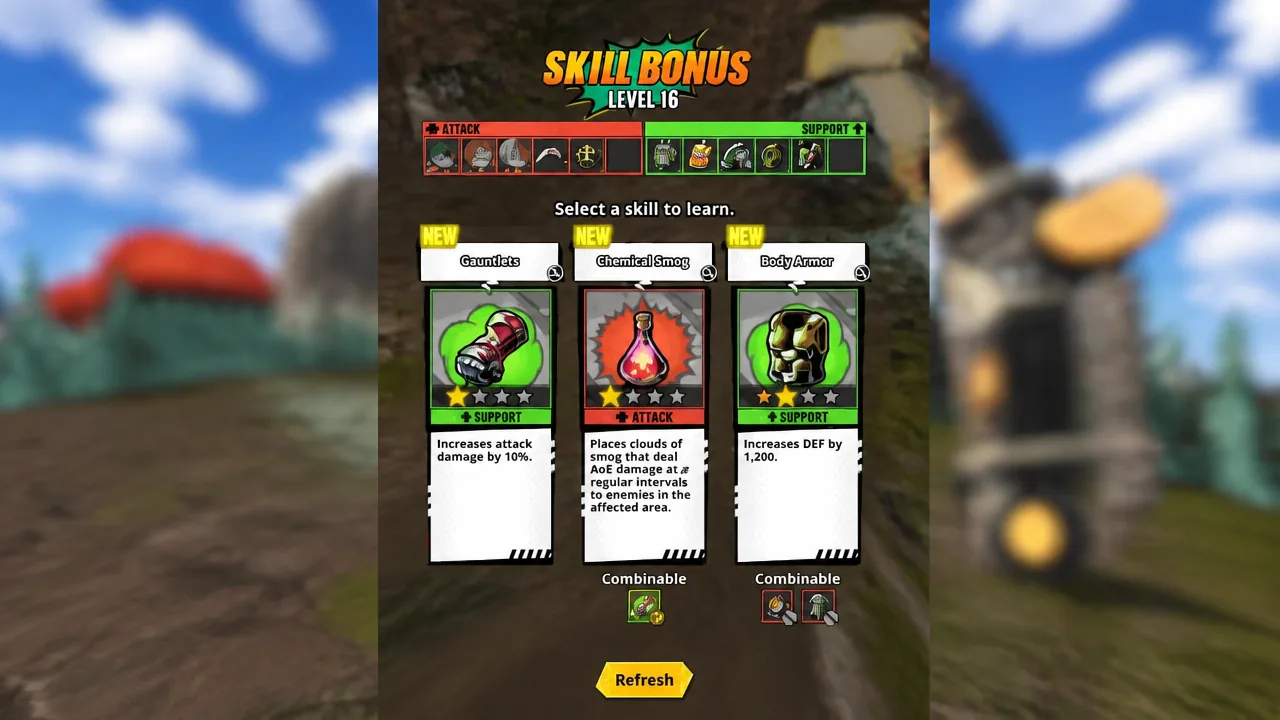
Picking the same card again raises its rank, up to four stars, and each rank adds a buff. At max rank you can combine a card with its required card to awaken it, which grants an extra effect or a new ability. Because your slots are limited and later waves hit harder, thin, half-ranked cards leave you weak. Rank and awaken a smaller set instead.
| Pick priority | Why |
|---|---|
| 1. Your characters’ skill cards | Awaken the main character’s skills first for heavy wave and boss damage |
| 2. Combinable cards | Feed the awakening you are building toward |
| 3. New cards | Only when nothing else is worth taking |
Do not sleep on Support-type cards. Some objectives, like rescuing survivors, force you to walk into unavoidable damage, and support skills keep you alive through it. Also grab cards that raise SP generation. SP fills your Ultimate Move gauge, so faster SP means more Ultimate uses in a single run, and certain characters add an SP generation buff that shines in boss fights.
Complete the wave objective, not the kill count
Clearing a stage comes down to finishing objectives. Some ask you to defeat enemies, others want you to rescue survivors, defend an escaping hostage, and more. Chasing kills when the objective is a rescue just wastes the timer.
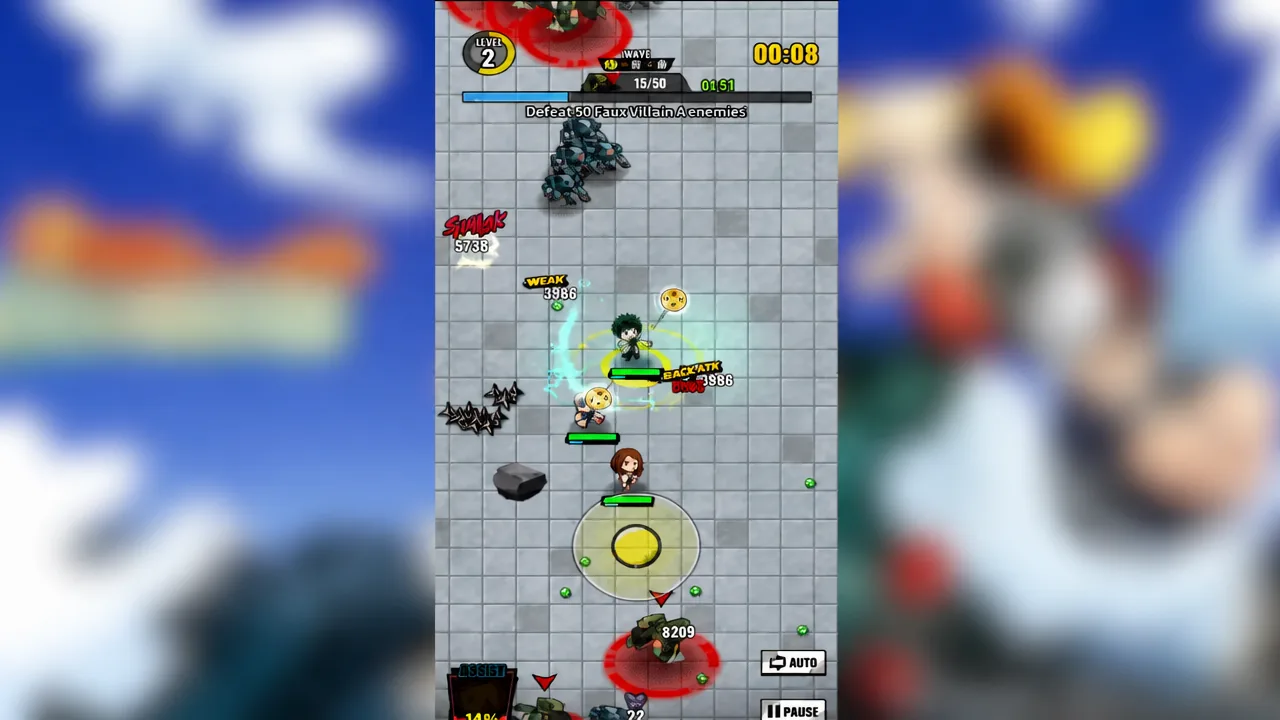
Match your card picks to the objective. If a wave wants you to rescue targets, lean into Support-type skills. Read the Wave Info before you start so you already know which card type to rank up once the level-ups begin.
Prepare for boss encounters before they appear
Bosses carry high HP and heavy damage, so lean toward cards that raise both your defense and your damage in the run that leads up to one. Try to awaken the skills you already have before the boss spawns. Hold your Ultimate Move for the boss unless you are cornered and need it to survive.
When you fire the Ultimate, trigger the Team Plus Ultra attack. It sets off every character’s Ultimate at once for a single massive burst, which is your best window to melt a boss.
Control your positioning during battle
Where you move matters as much as what you pick. Drifting in random directions scatters enemies across the screen and makes your attacks miss. Move away from clusters and never let a group surround you.
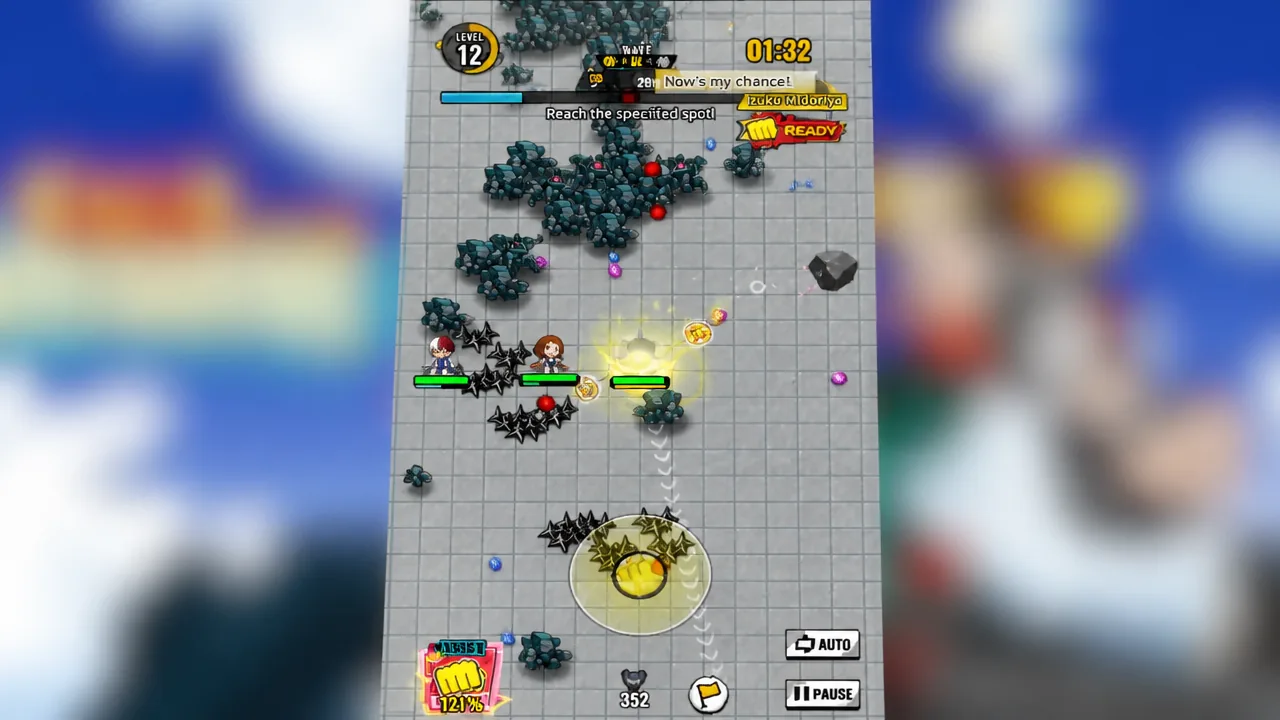
Instead, lead enemies in one direction and gather them into a tight pack. A bunched crowd is far easier to hit, and it keeps your AoE and projectile damage landing on the most targets at once.
Grab every item, especially briefcases
Runs are full of pickups. Enemies drop Green Shards, the XP items that level you up, and SP Charge that fills the Ultimate gauge. Some drop briefcases holding skill cards, and stages also spawn HP recovery items and chests that give random support-type items.
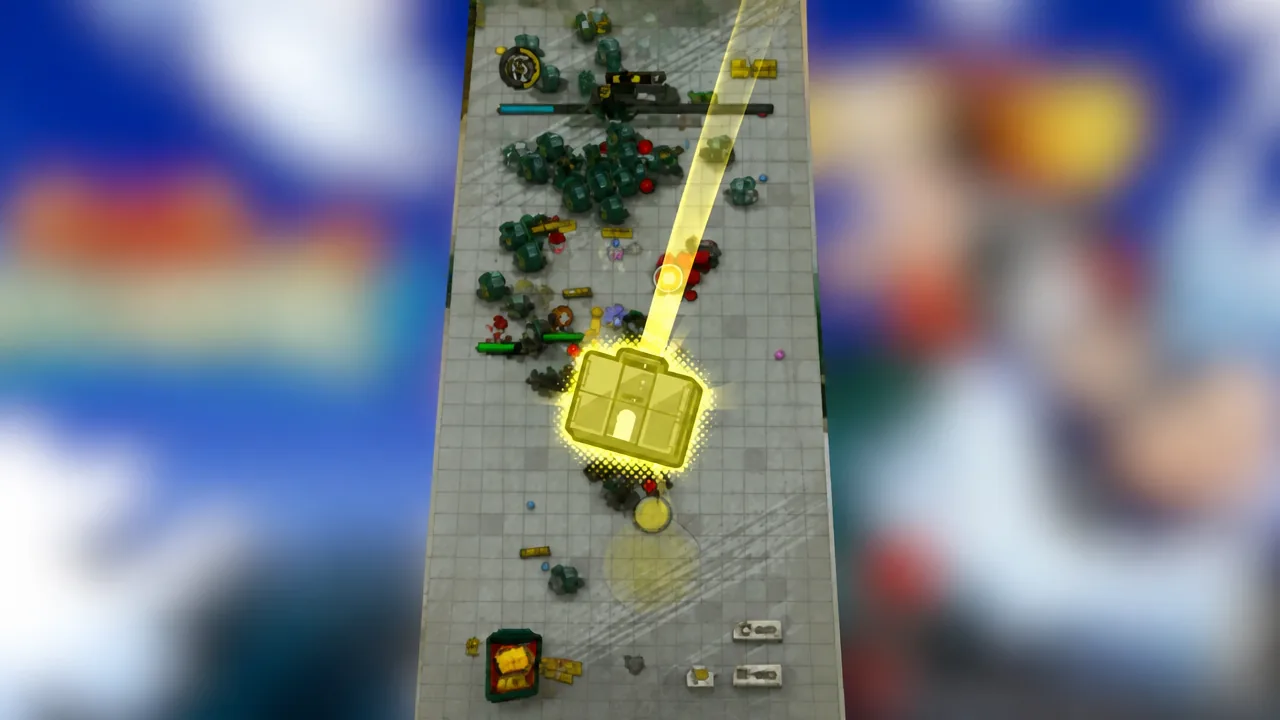
Collect everything, and chase down every briefcase, since one can hand over up to five skill cards and rank several skills in a single grab. Above all, hoover up Green Shards. The whole point of a run is to level fast and learn as many skills as you can, and shards are what make that happen. Do that consistently and even under-powered squads start clearing stages the game expected you to fail.