Hell Let Loose: Vietnam drops two teams of up to 50 players onto sprawling jungle, delta, and firebase maps, and the whole match hinges on who fills which slot. The game runs on a strict chain of command, so a squad without a leader or a mortar team without an observer simply cannot do its job. Knowing what each class carries and who it answers to is the fastest way to stop wandering the map and start contributing.
Quick answer: There are 19 roles per faction, sorted into leadership, infantry, recon, mortar, armor, and helicopter units. The US Armed Forces get helicopters, while the North Vietnamese (NVA/VC) build tunnel networks and can field an anti-air gun, so several roles behave differently depending on the side you pick.
Every role grouped by unit type
The roster breaks down cleanly once you group the classes by the unit they belong to. Use this as the map before diving into what each one does.
| Unit | Roles | Main job |
|---|---|---|
| Command | Commander | Sets strategy, calls in assets like airstrikes and supply drops |
| Infantry | Squad Leader, Rifleman, Grenadier, Engineer, Medic, Specialist, Machine Gunner | Hold ground, attack objectives, build and defend positions |
| Recon | Spotter, Sniper | Long-range kills and forward intel |
| Mortar | Observer, Support, Gunner | Indirect fire on marked targets |
| Armor | Tank Commander, Crewman | Operate tanks and clear enemy armor |
| Air (US only) | Logistics Officer, Pilot | Move troops and supplies, provide aerial support |
Leadership: Commander and Squad Leader
The Commander sits at the top of the chain and shapes the team’s whole approach. This role hands objectives to squad leaders and unlocks battlefield assets like airstrikes, supply drops, and vehicle reinforcements. Those orders cost resources and sit on cooldowns, so a Commander has to time them rather than spam them.
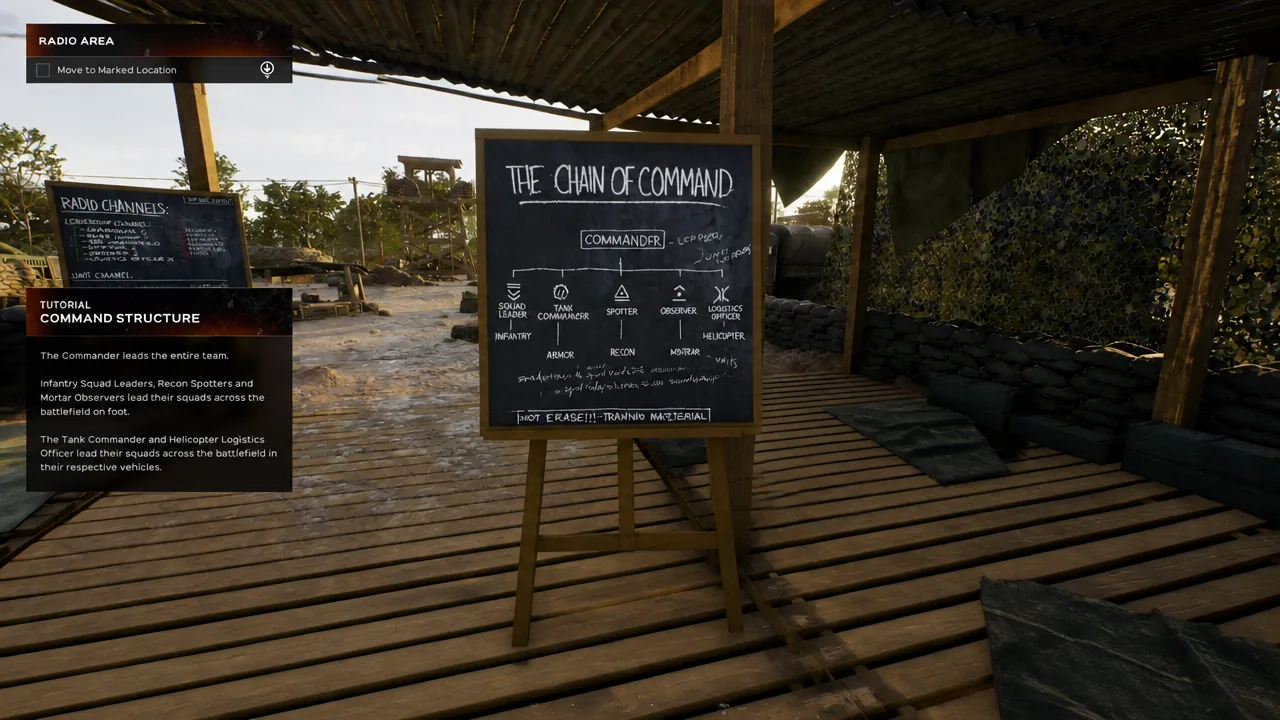
Squad Leaders are the link between the Commander and the boots on the ground. They lead their unit toward the objectives the Commander sets and can craft key deployables for their squad. On the NVA side, the Squad Leader is also the one who digs tunnels, giving ground troops fast travel to and from important spots on the map.
Infantry roles
Infantry make up the bulk of any squad, and each class fills a distinct gap. The Rifleman is the baseline frontline soldier who pushes objectives and carries ammunition boxes, so this role should keep an eye on the squad’s ammo count and resupply teammates when they run dry.
The rest of the infantry line specializes:
| Role | What it does |
|---|---|
| Grenadier | Anti-armor operator armed with AT launchers and RPGs to destroy tanks and boats; coordinate with other Grenadiers to focus down vehicles. |
| Engineer | Defensive backline that lays barbed wire, plants anti-tank and anti-personnel mines, and repairs vehicles with a blowtorch. Also builds resource-generating nodes. |
| Medic | Revives downed teammates and carries smoke to block enemy sightlines. Can draw a pistol while dragging a wounded ally to cover. |
| Specialist | Deploys resource supplies that Squad Leaders spend on structures, then joins the push once supplies are down. |
| Machine Gunner | Defensive anchor who mounts a bipod machine gun on sandbags or while crouched for suppressive fire. The NVA Machine Gunner can also set up an anti-air gun against helicopters. |
Note: The Specialist’s survival matters more than most because a dead Specialist means no resource supplies for the squad’s builds.
Recon unit: Spotter and Sniper
Recon works as a two-person pair. The Spotter marks targets for the Sniper and cleans up any hostiles that close in. This role is also the only one that can plant a spawn beacon inside locked enemy territory, and it carries a flare gun to mark enemy positions for the team.
The Sniper is the other half of the pair. The job is exactly what it sounds like, taking down targets at long range and pushing behind enemy lines to hold high vantage points and cover the team.
Mortar unit: Observer, Support, and Gunner
The mortar team turns intel into indirect fire, and all three roles depend on each other. The Observer feeds targets to the Commander and Squad Leaders, deploys offensive and defensive structures, and uses flare guns and binoculars to hand the Gunner firing solutions.
The Support keeps the mortar fed with ammo and drops the resources needed to build it in the first place. This role can also resupply Observers, but limited supplies mean it can’t do both at once. The Gunner is the operator who adjusts the mortar and lands rounds on the Observer’s marks, and alongside the Support can build the mortar and its surrounding pit.
Armor unit: Tank Commander and Crewman
Tanks run on a small crew led by the Tank Commander, who directs the driver, calls out targets for the gunner, and stays in contact with Squad Leaders and the Commander to keep the vehicle pointed the right way and screened by friendly infantry against enemy Engineers.
Crewmen are the working parts of the tank, covering the driver, gunner, and support seats. They operate the vehicle, load shells, and fire on targets while coordinating with the Tank Commander.
Helicopter unit: Logistics Officer and Pilot (US only)
Helicopters belong to the US team, and they run on a two-person crew. The Logistics Officer drops off infantry and supplies where they’re needed, talks to Squad Leaders and the Commander to route reinforcements, and can fire a flare from the air to send critical info back to command.
The Pilot flies the helicopter and backs up teammates. This role can also work the door-mounted M60 machine gun to rain down suppressive fire, and works with the Logistics Officer to dodge anti-air threats and relay enemy positions.
Why coordination decides the match
None of these roles carry a team on their own. The chain of command is the structure that ties them together, and the game rewards communication and coordination far more than a personal kill count. A Grenadier without infantry cover gets flanked, a mortar Gunner without an Observer fires blind, and a Commander’s assets go to waste without squads executing the plan.
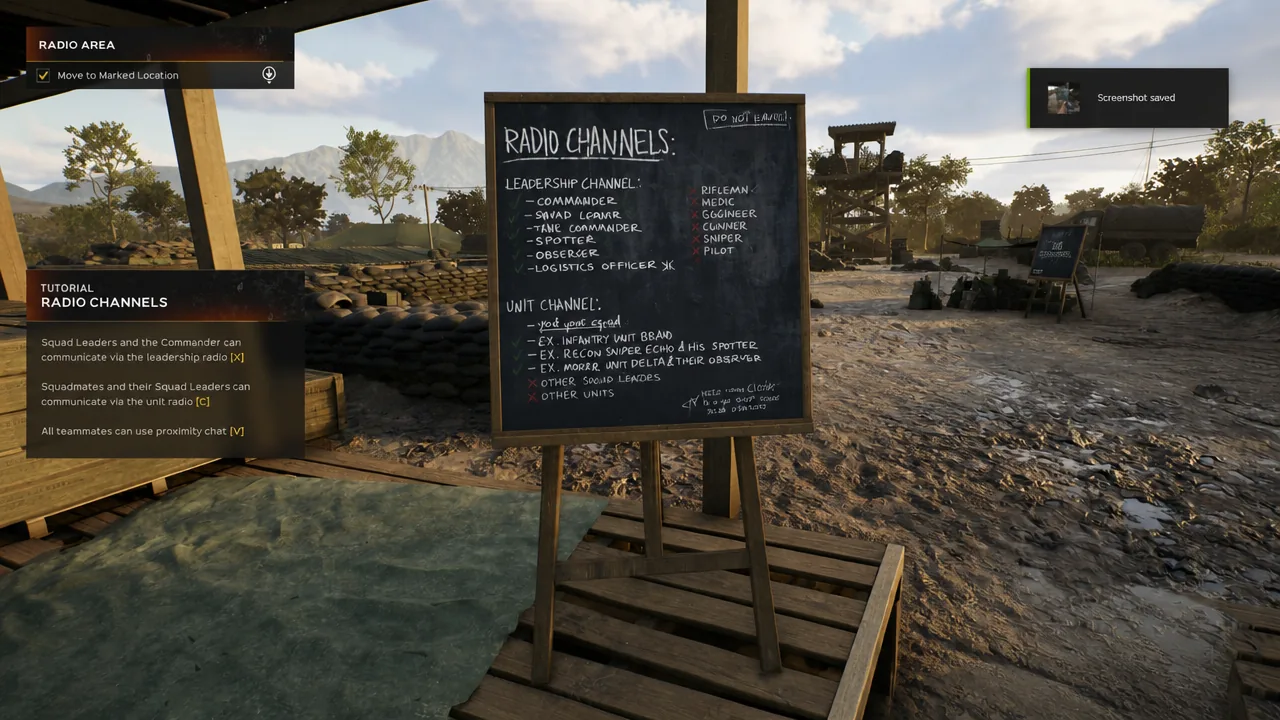
Radio channels split into leadership, unit, and proximity chat, which is how the whole chain stays connected mid-fight. Pick the role that matches how you want to help the team, keep your microphone useful, and the specialist classes start to click into place around you.