
Anime Origins is a tower defense game on Roblox where you summon anime-inspired units, place them on stages, and defend against waves of enemies and bosses. Steady progress depends less on landing a rare damage dealer and more on how you spend gems, grow your economy, and pick which units deserve your limited upgrade materials.
Quick answer: Pull on the standard banner while saving toward the 400 pity, keep a farming unit like Bulma on your team to generate cash, clear Story to unlock Legend stages and artifacts, and hold trait rerolls for units you plan to keep long term.
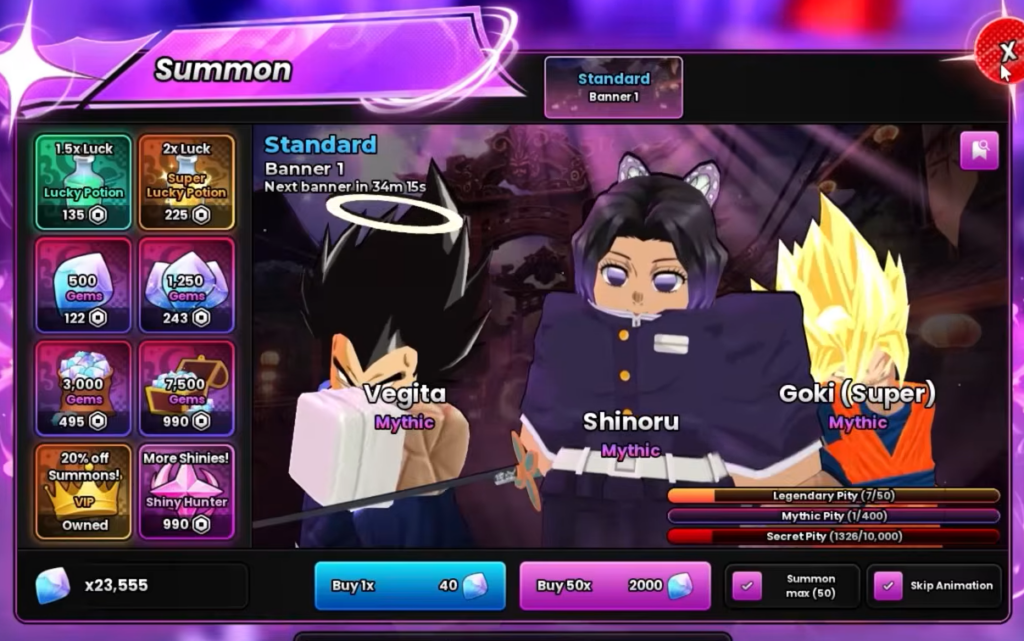
Summoning, gems, and the 400 pity system
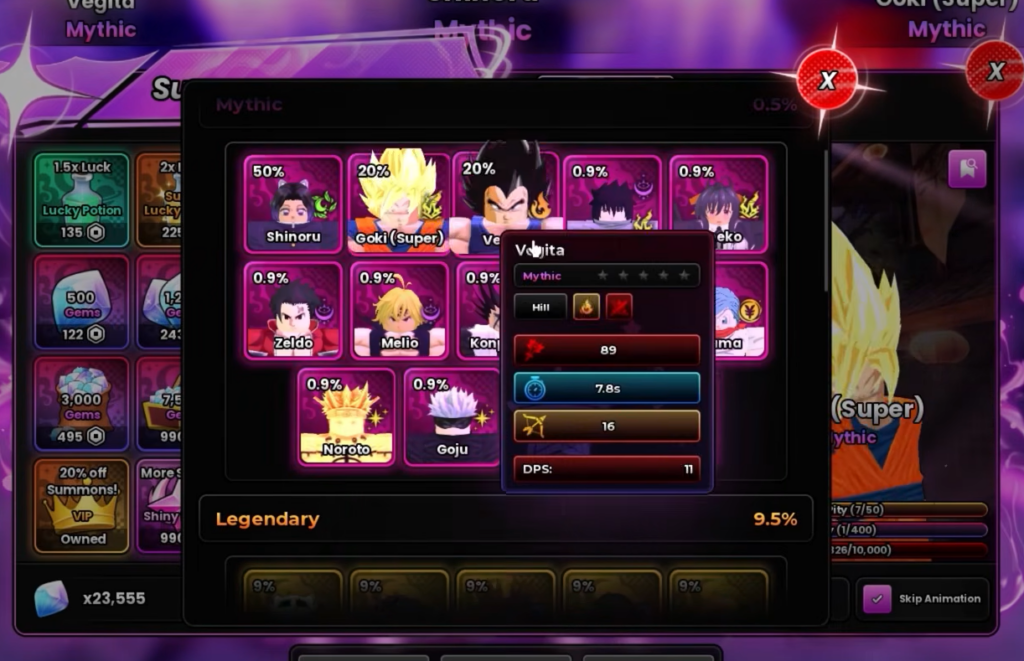
Units come from the summon area, where you spend gems on the available banners. The launch standard banner carries Mythics including Sosuke, Shinoru, and Roxi, and it runs a pity system that guarantees a top pull at 400. Track your count so you know how close you are to that guarantee before spending more.
There is also a secret unit, Alucard, sitting at roughly a 1 in 10,000 pull rate. It is game-changing but far too rare to plan around, so treat it as a bonus rather than a goal. Focus your gems on filling out a working roster first.
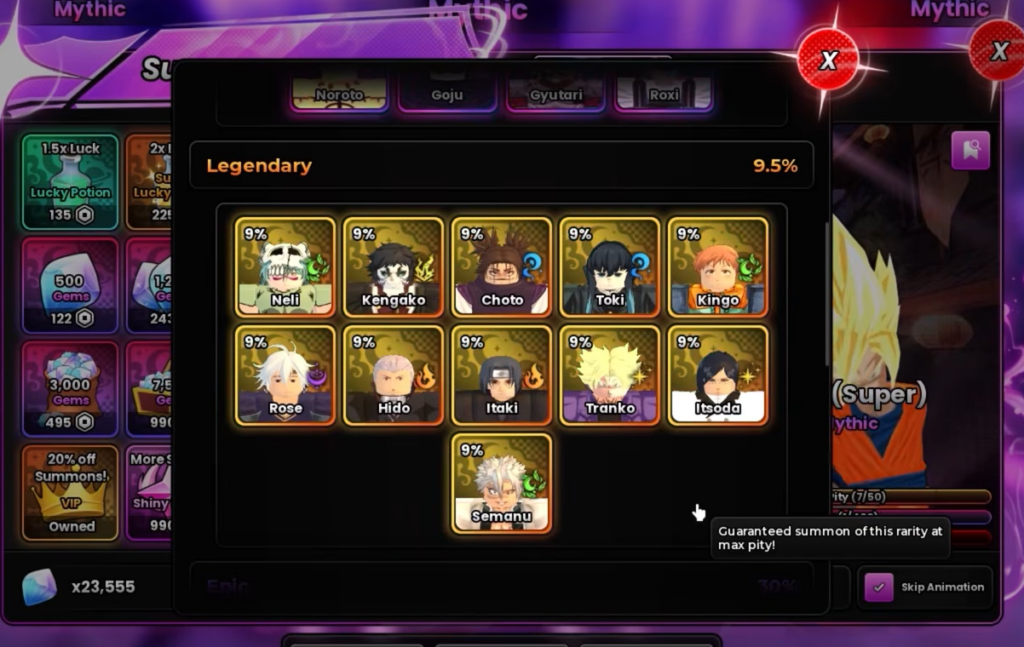
Do not sell Rares and Epics the moment you pull them. Some lower-rarity units have strong evolution paths that make them worth keeping.
Farming units keep your economy running
A farming unit generates cash during a stage instead of dealing damage. Early on, this is the single most valuable slot on your team. Units like Bulma and the Hunter series produce the income you need to afford placements and upgrades mid-match, and running out of cash is what stalls most new players.
Always bring at least one farmer alongside your damage dealers. A balanced roster with a reliable economy clears more content than a team stacked only with high-rarity attackers that you cannot afford to place.
Elements and status effects
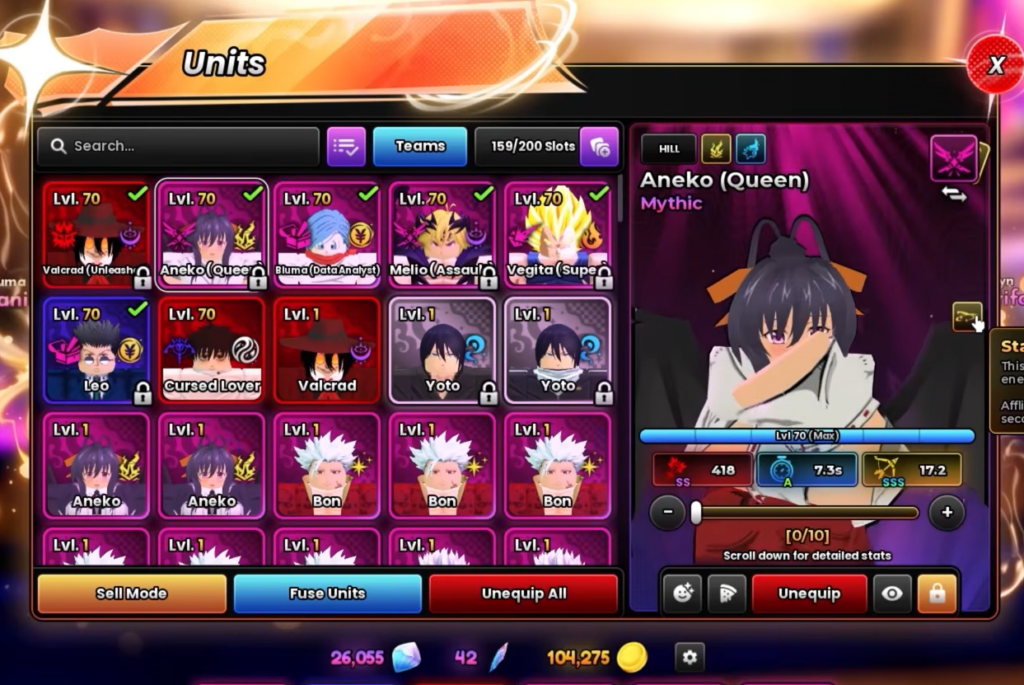
Each unit has an elemental affinity that changes how much damage it does to certain enemies. Akeno, for example, deals bonus damage to water enemies but reduced damage to earth enemies. Matching your attackers to the enemies on a stage raises your effective damage without any extra investment.
On top of elements, units can apply status effects such as stun, bleed, slow, burn, and poison. These add crowd control and damage over time, which helps when a single hard-hitting unit is not enough to hold a lane.
Ascension, evolution, and stat rerolls
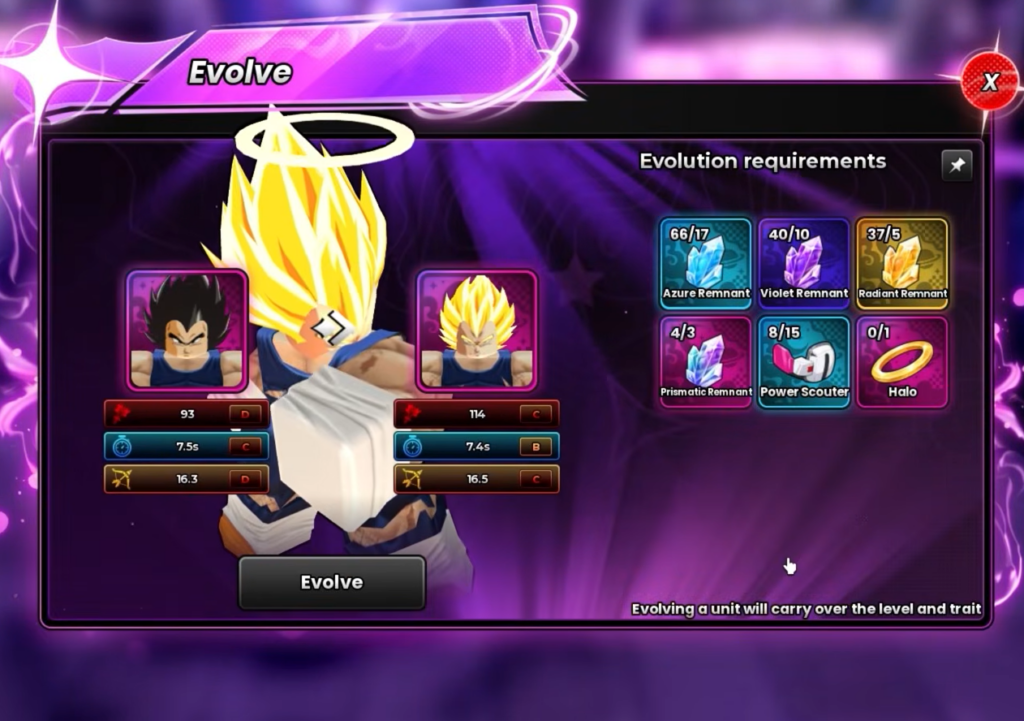
There are three separate ways to make a unit stronger, and each pulls from different resources. Ascension improves stats by fusing duplicate copies of a unit or spending fusion cores, and it moves through five tiers that each add a fixed bonus.
| Ascension tier | Bonus |
|---|---|
| Ascension 1 | +5% Crit Damage |
| Ascension 2 | +5% Range |
| Ascension 3 | +5% Crit Chance |
| Ascension 4 | +5% Cooldown Reduction |
| Ascension 5 | +5% Damage |
Evolution upgrades a unit into a stronger version using specific materials, raising its stats and granting new active and passive abilities. Stat rerolls are the third layer, letting you improve an individual unit’s stats up to the Triple S (SSS) grade. Because materials are limited, funnel evolution and rerolls into the units you intend to run for the long haul.
You can also level units by feeding them to allocate EXP, which is the baseline growth step before any of these systems come into play.
Traits and when to reroll
Traits attach to a unit and boost its stats or add effects. A strong trait like Immortal delivers large stat gains and survival benefits, which can transform how a unit performs. You roll for traits using special in-game items.
Rerolls are a scarce resource, so save them for units that will stay in your roster. Rolling traits onto early filler units wastes attempts you will want later. When a keeper unit is eventually replaced by something stronger, shift your investment forward rather than spending on units you plan to bench.
Where to farm materials and rerolls
Progression content feeds the upgrade systems above. Each mode drops a different mix of rewards, so rotate through them based on what you need.
| Mode | What it gives you |
|---|---|
| Raids (Fairy Forest, Entertainment District) | Rerolls, evolution materials, and unit drops |
| World Bosses (Zagreus, Crimson Throne Room) | Boss-specific drops from active mechanics |
| Story and Legend stages | Content unlocks, evolution materials, and artifacts |
| Rifts | Extra units, evolution items, and cosmetics |
| Crafting | Evolution materials, upgrades, or direct units |
Raids are the main source of rerolls and evolution materials, so make them a regular stop. World bosses like Zagreus require active play, such as collecting fragments to trigger a clash that lowers the boss’s shield, rather than standing back and letting units auto-attack. Legend stages open up through Story progression and are where you gather many of your evolution materials and artifacts. Rifts run on a periodic schedule and reward extra units and cosmetics when they are active.
Artifacts and Humble Splinters
Artifacts are equippable items that increase the rewards you earn from stages, so equipping them speeds up every other part of your progression. You upgrade artifacts using Humble Splinters, which makes their reward boosts larger over time. Keep at least one artifact equipped once you unlock them, and pour spare Humble Splinters into the artifact you use most.
Building a starter team
A functional beginner roster is balanced rather than top-heavy. Slot in one dependable farming unit for cash, one or two damage dealers with useful elements or status effects, and fill the rest with units that have clear evolution paths. That mix lets you afford placements, cover different enemy types, and grow into tougher content.
Movement is handled with W, A, S, D, jumping with Space, and you place or select a unit with the left mouse button. From there, the loop is simple to follow. Pull for units, keep your economy fed, clear Story to open Legend stages and artifacts, farm raids for materials and rerolls, and spend your trait rerolls only on the units you are certain to keep.