Heat in Vice City is no longer just a row of stars ticking up while you drive in circles. Grand Theft Auto VI shows the wanted level as a five-star row in the top right of the screen, with a second row of small icons beneath it that tells you exactly which police units are out looking for you. Stars start filling the moment a crime is visible, and losing them is a physical process, not a waiting game.
Quick answer: Break line of sight, swap into a clean vehicle, destroy or wipe down the car the police saw, and drive normally out of the red zone on the minimap until the stars clear.
Reading the star row and the unit icons
The wanted meter sits in the usual corner, with five stars filling left to right. The new part is the strip of icons directly underneath it. Each icon stands for a type of unit currently deployed against you, and the strip grows as the response escalates. An officer icon appears for foot patrols, a car icon for cruisers, a helicopter icon once air support joins the chase.
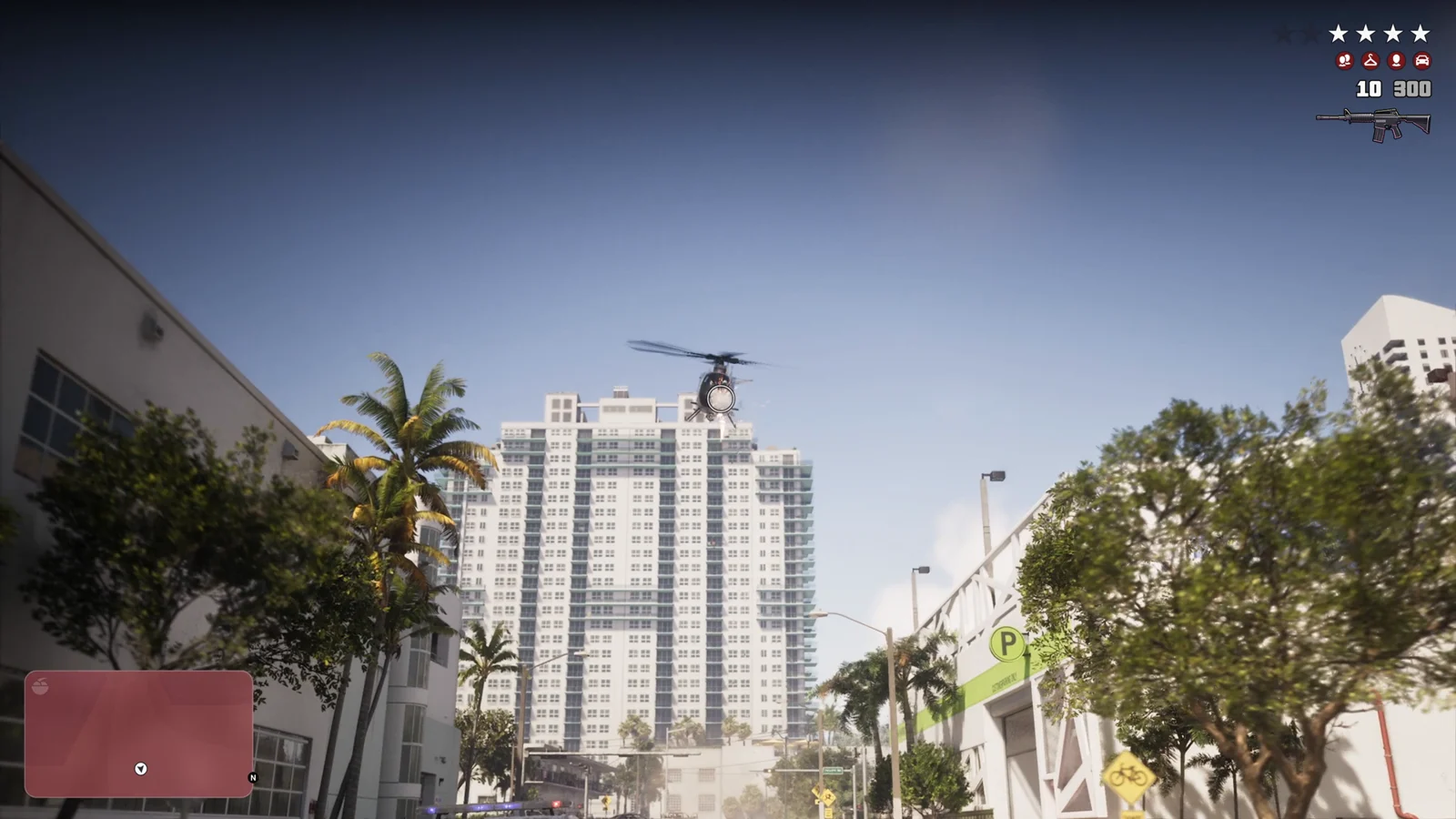
That gives you information the old star meter never did. Instead of guessing whether a chopper is overhead, you can glance at the strip and know whether you need a roof over your head or just a corner to turn.
Stars build while the crime is still happening
Heat is generated in real time rather than being applied at the end of a job. During a convenience store hold-up, the stars begin filling while the clerk is still at gunpoint, before anything has been taken and before anyone has left the building. Witnesses in the room and the alarm on the wall are enough to start the meter climbing.
The practical effect is that speed matters inside a robbery, not only after it. The longer a crime stays visible to people who can report it, the higher the level is when you reach the door.
Police response escalation, from cruisers to air support
The response stacks in layers rather than swapping one unit type for another. Cruisers stay in the mix even after heavier vehicles arrive, so a long chase ends up with several kinds of pursuit happening at once.
| Stage of the chase | What shows up |
|---|---|
| Early pursuit | Patrol cruisers responding to the scene, on-foot officers reflected in the unit icons |
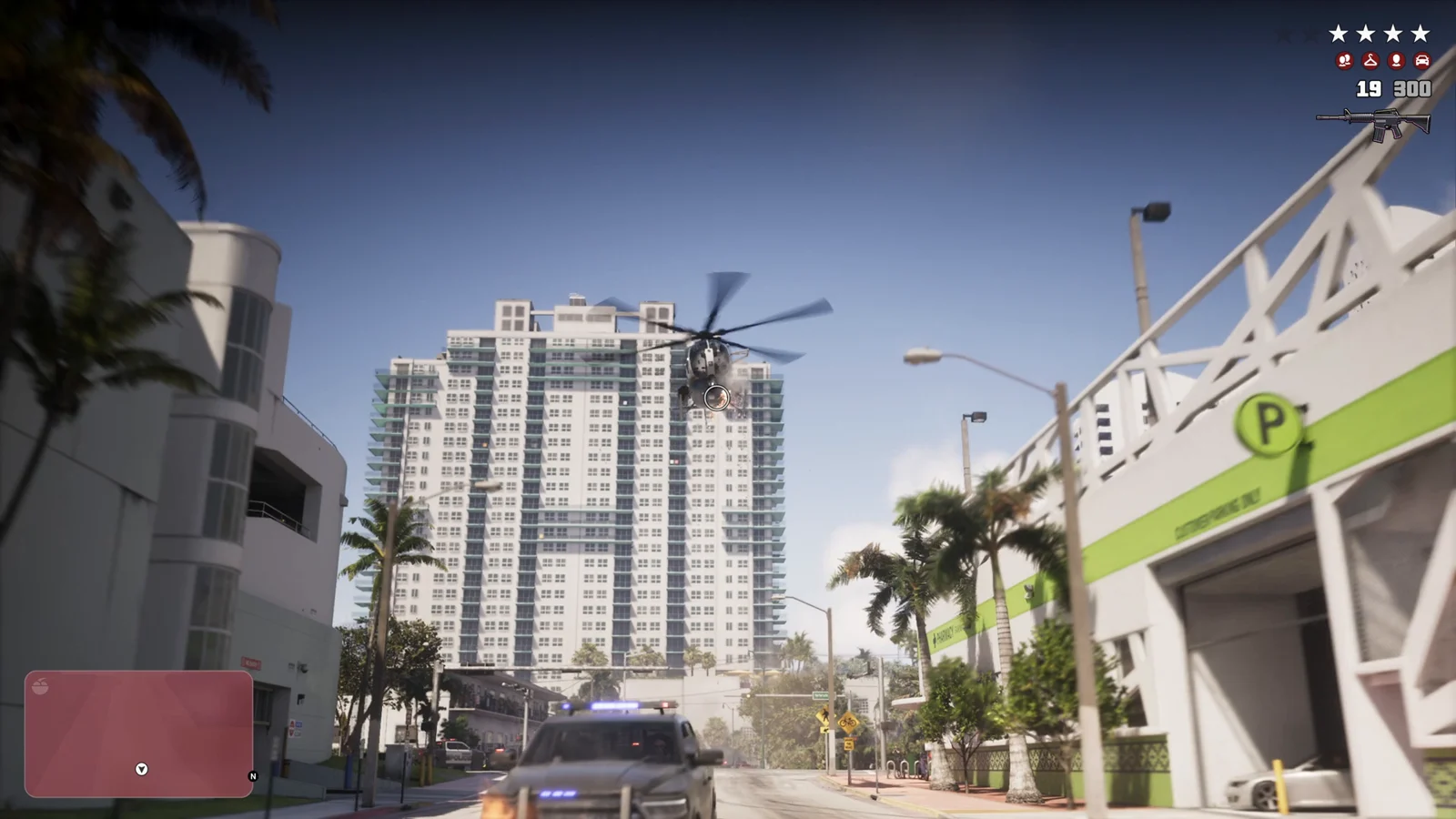
| Escalated pursuit | Tactical trucks joining the cruisers |
| Four stars | A helicopter working the chase, dropping low enough to hover between buildings |
| Open road | Roadblock-style pressure on the expressway, squeezing you off high-speed routes |
The helicopter closing in between buildings means the parking structures and covered streets that break a ground chase also matter for air pursuit. Getting under something is often faster than outrunning it.
The red search zone on the minimap
Once police lose direct contact and start searching, the minimap tints red and pink over the area they are sweeping. That shaded region is the perimeter they are working, and it is the clearest signal of where you should not be. Staying inside it while cars pass by is how a broken pursuit turns back into an active one.
Treat the tint as your objective marker in reverse. Everything you do after breaking line of sight is aimed at leaving that shaded area without drawing a second look.
How to escape the police in GTA 6
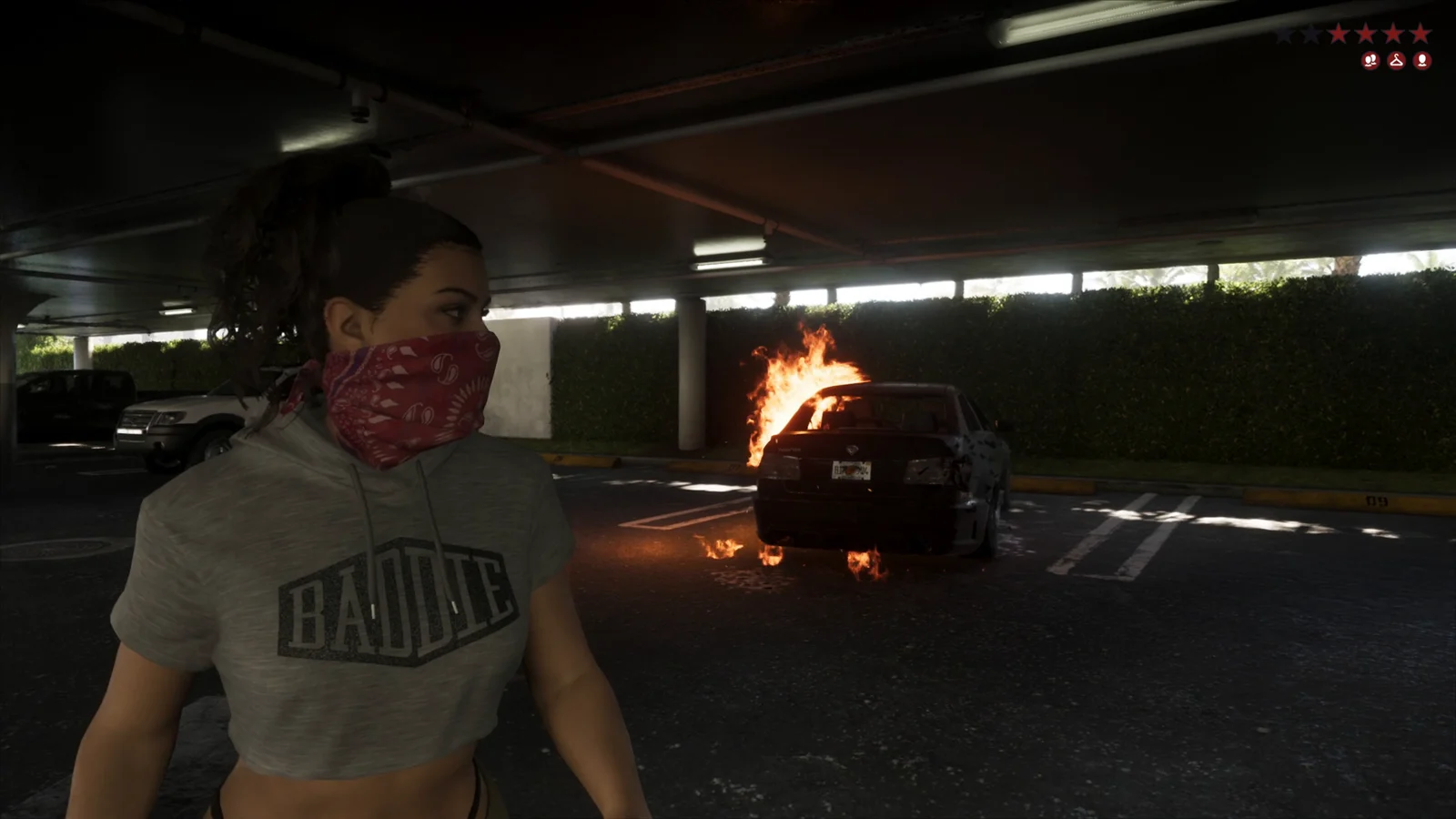
You know it worked when the star row empties and the red tint clears off the minimap, leaving the unit icon strip empty underneath.
Bystanders, live streams and social heat
Heat has a public-facing layer on top of the police response. A bystander can broadcast your getaway live from their phone, with the stream and its chat counter running at 53k viewers while the chase is still going on. You can pull that stream up yourself with a press of R3 and watch your own escape from their camera.
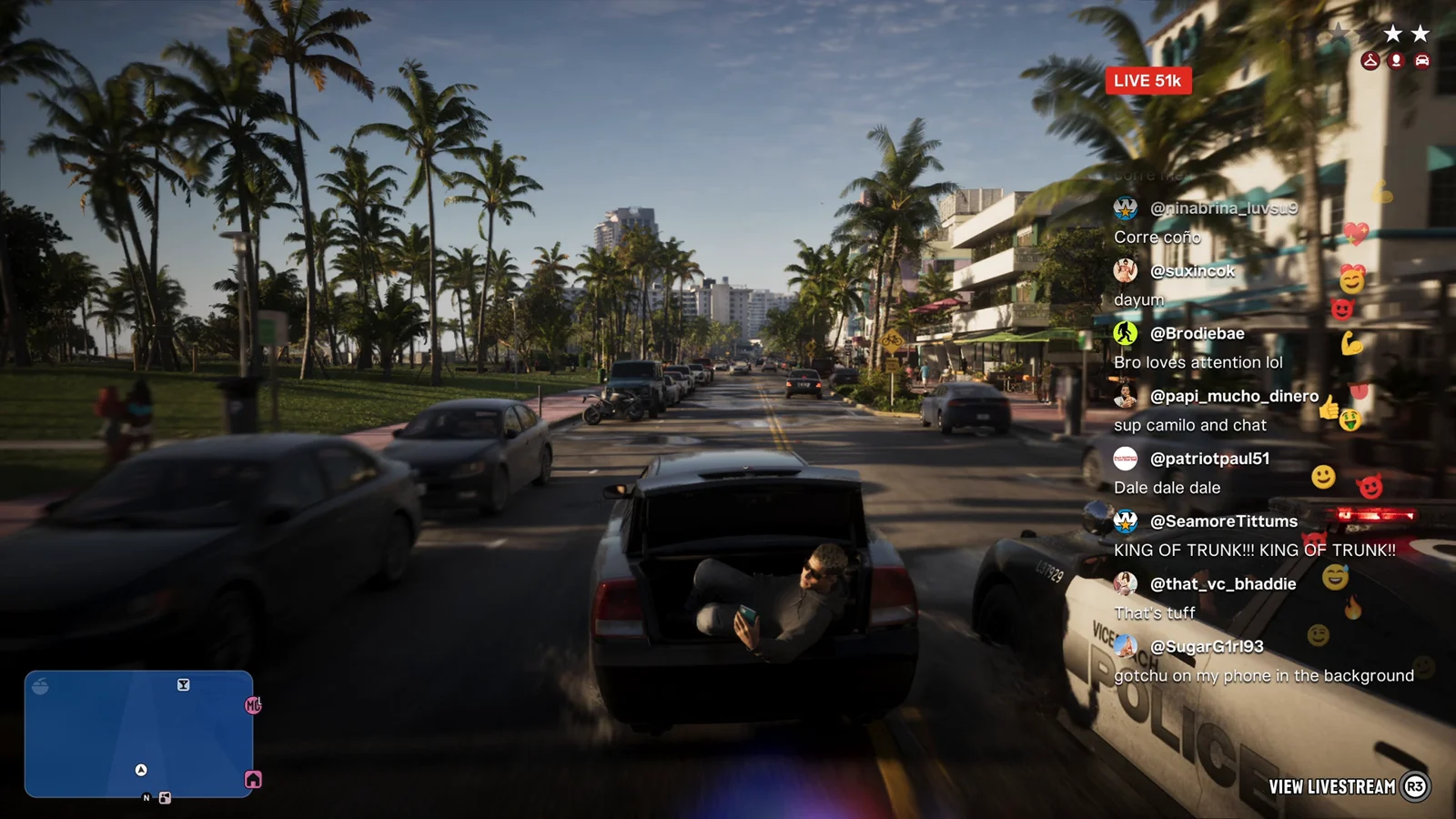
It is a reminder that the people around a crime scene are part of the system, not scenery. They start the heat during the robbery, and they keep documenting it after you drive away.
What has not been shown yet
Plenty of specifics are still open. Exact star thresholds, which unit types dispatch at which level, and how long the search perimeter stays active have not been laid out. Popular claims circulating about a sixth star, K-9 units, body cameras and a military response belong to unofficial chatter rather than anything demonstrated in play, so treat them as unsettled.
Everything described here comes from pre-release footage, and mechanics can shift before Grand Theft Auto VI arrives on November 19th, 2026. What is clear is the shape of the system: heat starts while the crime is still in progress, the HUD tells you who is hunting you, and escaping means changing the car, the face and the driving style the police were given a description of.