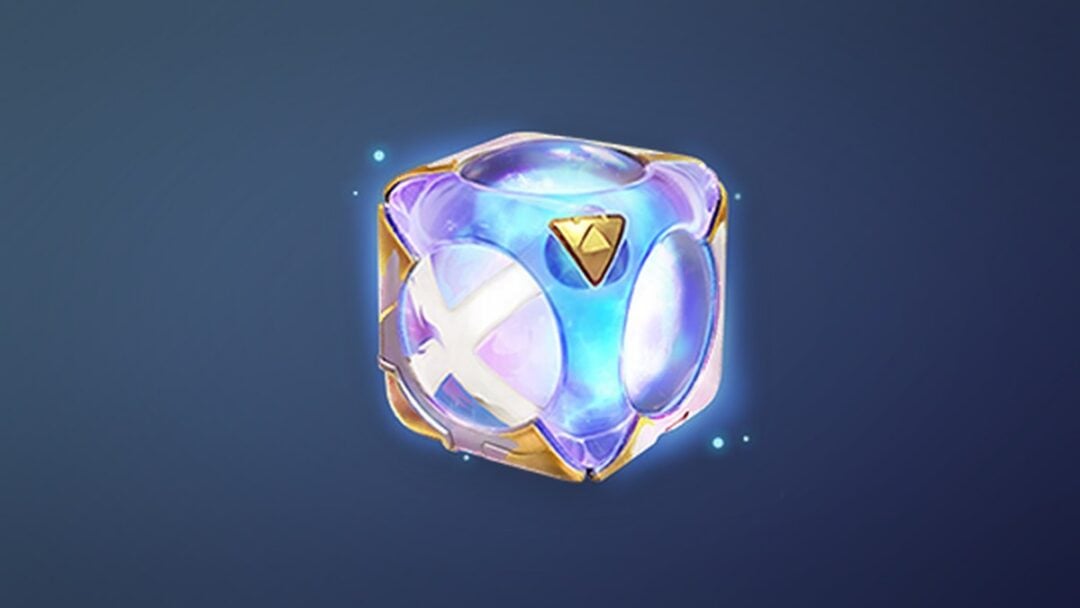
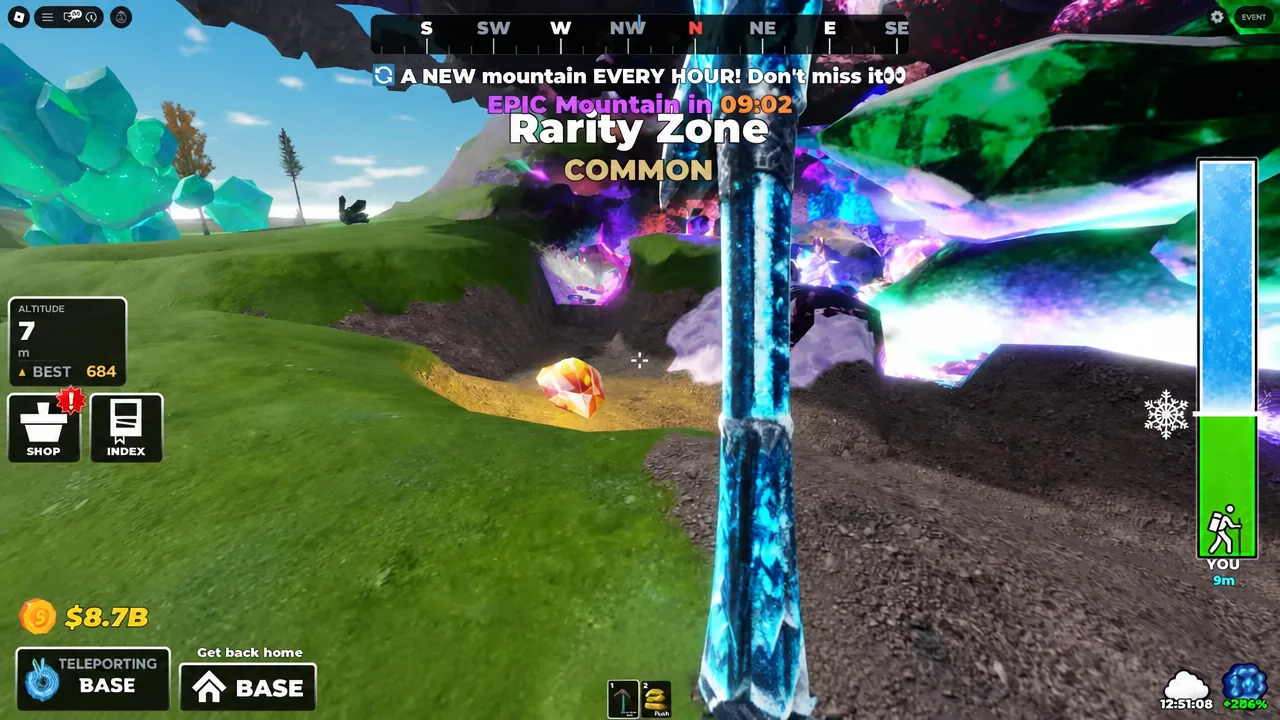
Runes are the only way to give your plot a real temporary edge in Mine a Mountain, and there is exactly one way to get them. You have to dig into the mountain, find a buried boulder, and break it open with a pickaxe strong enough to crack it. Everything else about rune farming — radar timing, server choice, which tier you target — is just a way to make that one loop happen faster.
Quick answer: Break a boulder using a pickaxe at or above its listed minimum tier, then carry the dropped rune back to your plot and place it down to start its timer.
Pickaxe requirements for every boulder type
There are five boulder types, and each one is made of tougher material than the last. The pickaxe requirement is a hard gate, not a speed penalty. Swing a weaker tool at a boulder and you make zero progress on it, no matter how long you stand there.
| Boulder | Rarity | Minimum pickaxe |
|---|---|---|
| Mossite | Common | Titanium Spike |
| Voltite | Uncommon | Celestial Apex |
| Gildrite | Rare | Eclipse Fang |
| Rimeveil | Epic | Voidreign |
| Nocturnite | Legendary | The Terminus |
Anything at or above the listed tier works, so The Terminus opens every boulder in the game. That makes it the practical end goal if you plan to farm the top-tier runes rather than whatever you happen to stumble into.
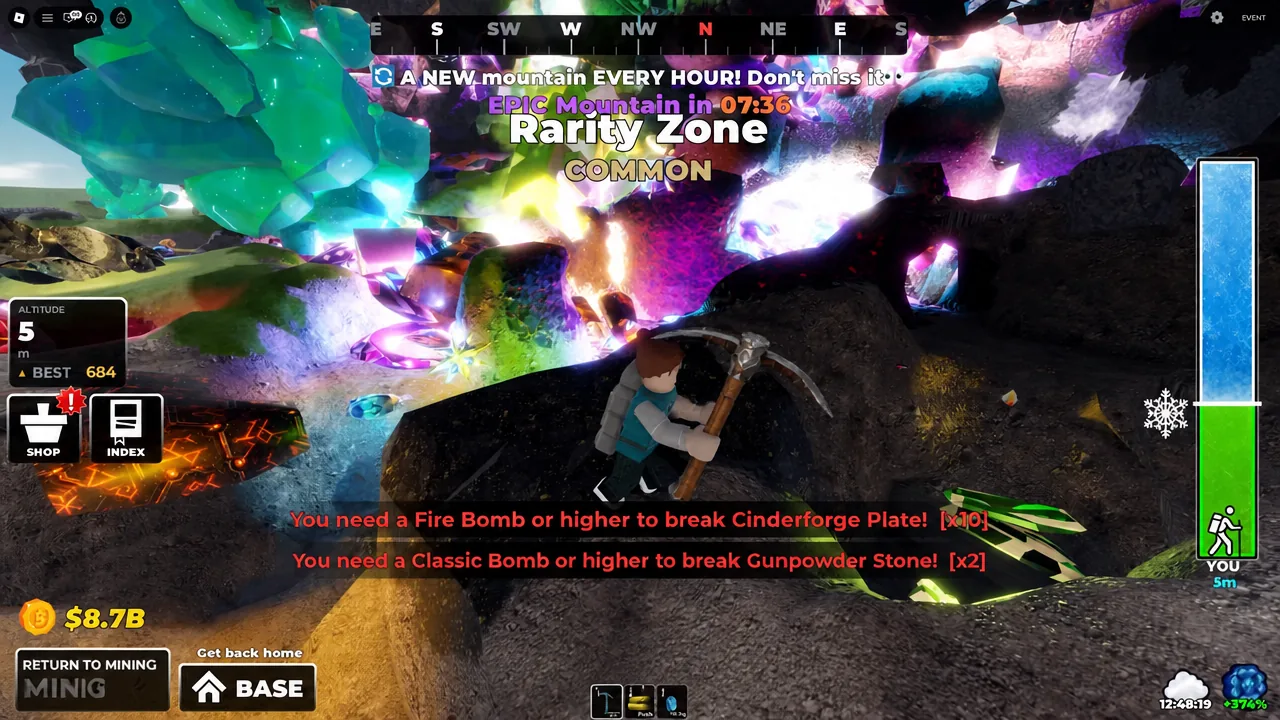
Expect a long swing session even with the correct pickaxe. Boulders take considerably more time to break than normal rock, which is why exposing one and then getting sniped by another player hurts so much.
How to find boulders with the Boulder Radar
Boulders are fully encased in solid rock. None of them sit on the surface, they rarely spawn near each other, and rarer types sit deeper in the mountain. Blind tunnelling works, but it wastes most of a session. The Boulder Radar, sold at the base shop, highlights nearby boulders for 30 seconds — and those 30 seconds are the whole game.
| Highlight color | Boulder |
|---|---|
| Green | Mossite |
| Blue | Voltite |
| Yellow | Gildrite |
| Purple | Rimeveil |
| Red | Nocturnite |
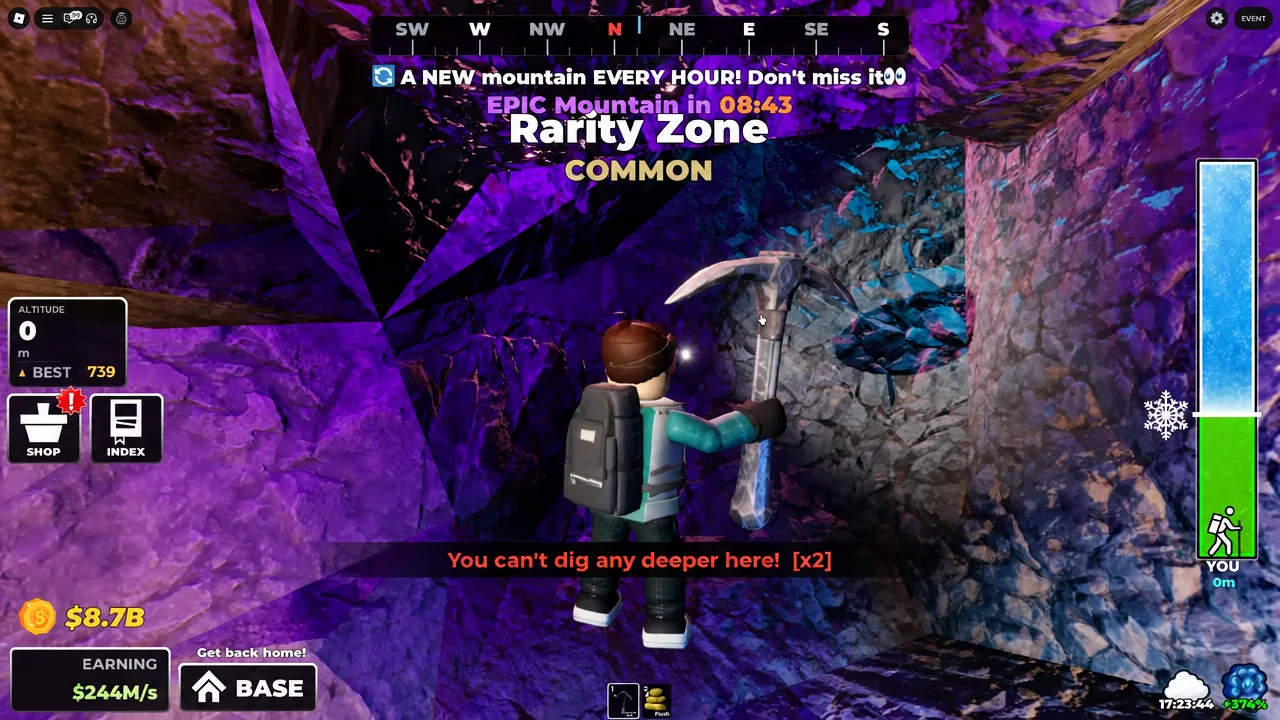
Two habits speed this up. Lava-heavy pockets are a good first check, since Nocturnite often sits near them. And because high-tier boulders are limited per server — Nocturnite shows up once, epic-tier spawns twice — hopping to a fresh server once you have cleared them beats waiting for the mountain to regenerate.
Which runes each boulder can drop
Every boulder drops rare crystals plus a chance at a rune. The rune is never guaranteed, and your Luck multiplier drives that chance, so a stacked Luck plot pays for itself over a long farming run. Each tier owns two runes exclusively, and it can also roll anything from the tiers below it.
| Boulder | Exclusive runes | Also possible |
|---|---|---|
| Mossite | Luck, Haste | — |
| Voltite | Storm, Weight | Small chance of Luck or Haste |
| Gildrite | Fortune, Detonation | Storm, Weight, Luck, Haste |
| Rimeveil | Preservation, Warmth | Any lower-tier rune |
| Nocturnite | Excavator, Colossus | Any rune below it |
Exact drop rates are not published. What is consistent is the direction of travel — deeper digging means rarer boulders, and rarer boulders mean better odds at Excavator and Colossus.
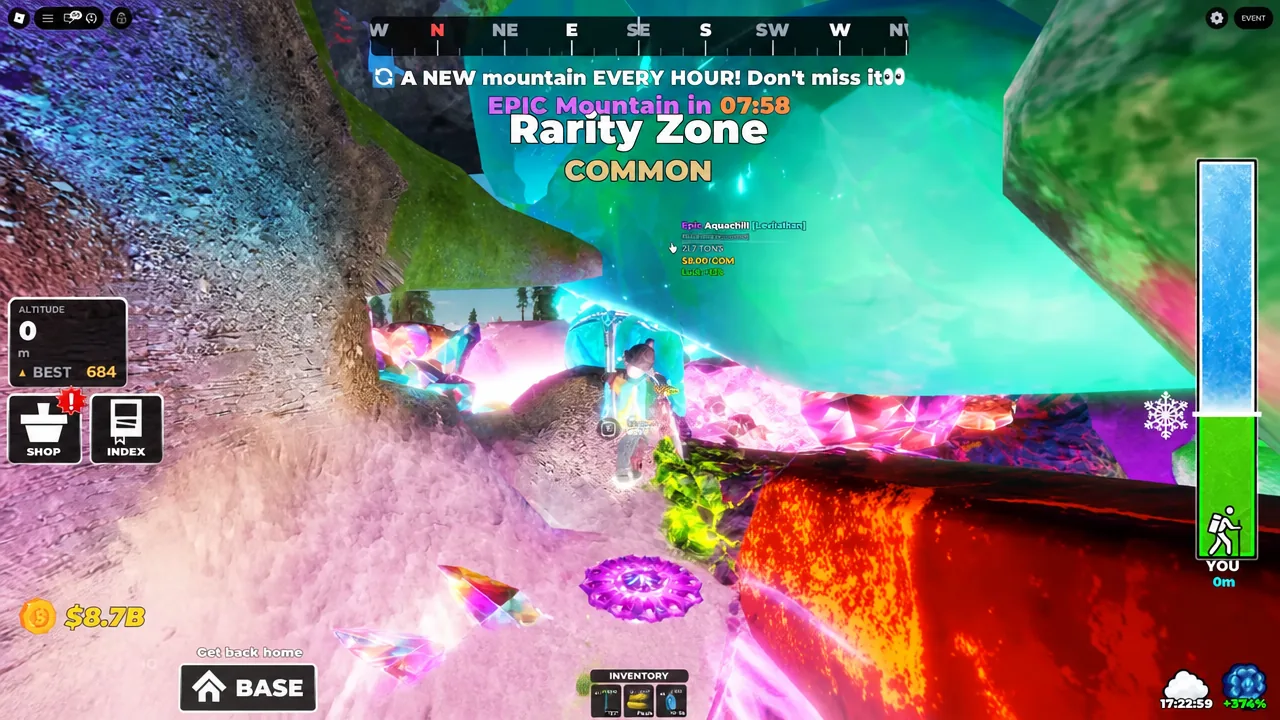
Breaking a boulder can also mutate crystals. That is a separate system from weather mutations, which only affect crystals already sitting on your plot.
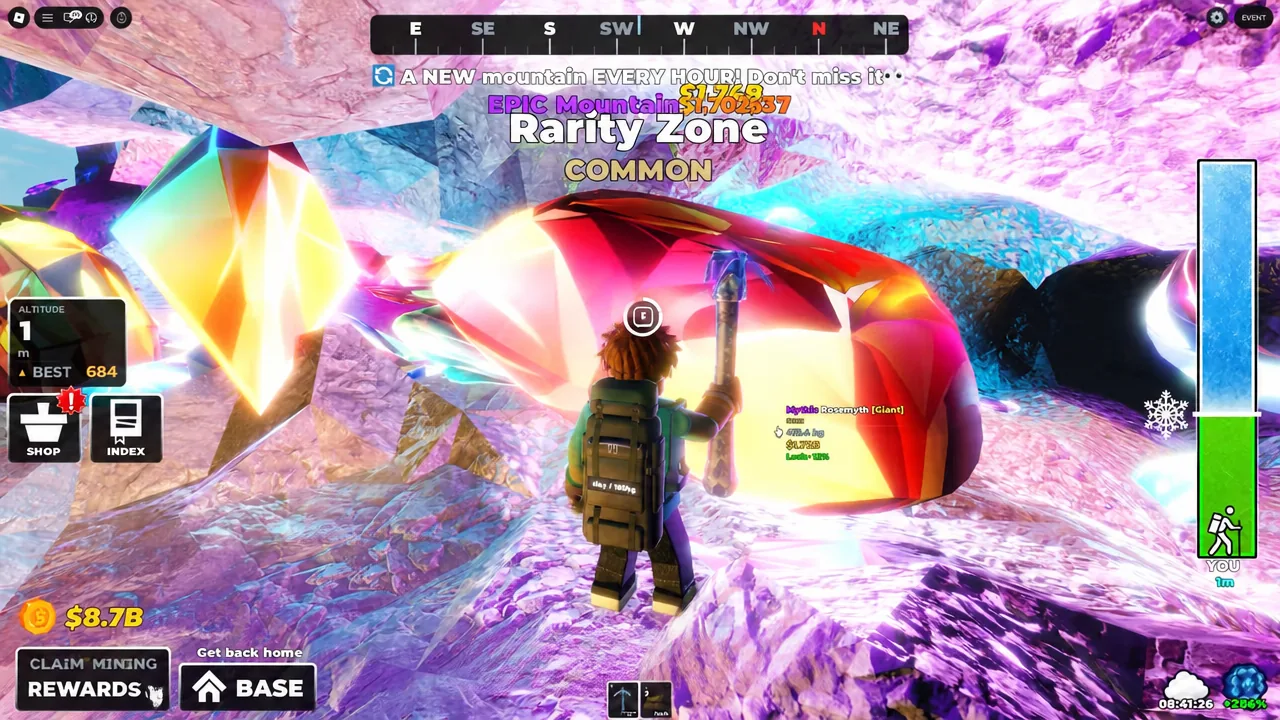
All 10 runes and what they do
There are ten runes in total. Luck and Warmth are the two that matter most early on, since one improves the rarity of what you pull out of the mountain and the other keeps you alive at altitudes your gear alone cannot survive.
| Rune | Effect |
|---|---|
| Luck | +150% plot luck |
| Haste | +35% mining speed |
| Storm | 2x weather mutation chance |
| Weight | 2x carry weight |
| Fortune | +50% sell value |
| Detonation | Bombs spawn +40% more crystals |
| Preservation | Other active runes drain 50% slower |
| Warmth | 2x warmth for higher climbs |
| Excavator | +30% bomb blast radius |
| Colossus | +68% chance to size crystals up, can cascade toward Giant |
Note: Warmth is the one with a real downside. It lets you climb past what your gear normally allows, so if the timer expires while you are still at altitude, the cold takes you fast. Watch that clock before you commit to a summit run.
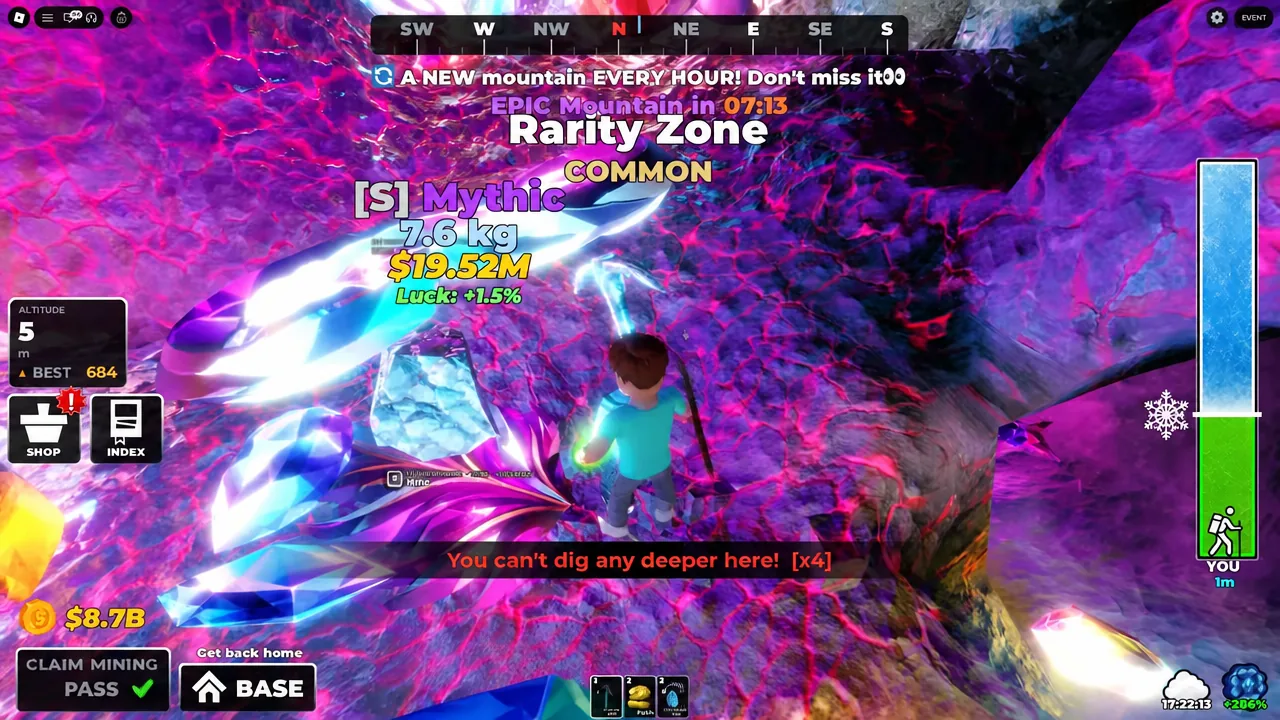
Activating runes: placing, merging, and stacking
A rune does nothing in your inventory. Take it back to your plot and place it down, and its buff goes live. You know it worked because a new icon appears on the Events Bar at the bottom of the screen — hover it to read the effect and the remaining time, or hover the rune on your plot for the same information.
Timers only run while you are in the game. Logging off freezes the countdown, and picking a placed rune back up preserves whatever time is left on it, so you can save a buff for a bomb run instead of letting it bleed out while you sell crystals.
Duplicates work in one of two ways depending on the rune.
| Behavior | Runes | Result |
|---|---|---|
| Merging | Every rune except Luck | Drop a matching rune onto a placed one and they fuse into a larger stone with more time on the clock, up to a cap |
| Stacking | Luck only | Place them side by side and every effect applies, so four Luck runes give +600% plot luck |
Once several runes are running, the Events Bar gets crowded. Click any rune badge to collapse the bar down to that single icon, then hover it to fan out a tree of everything active with individual timers. On mobile, tap the badge to open the tree and tap again to return to the full bar.
Why boulder farming fails
Most wasted runs come down to a handful of specific mistakes rather than bad luck.
- Your pickaxe is below the minimum. The boulder will not break at all, and there is no partial progress bar to tell you that. Check the tier before you commit.
- The radar ran out before you exposed anything. Scanning from open ground or leaving it active during travel eats the 30 seconds you needed for digging.
- Another player took the drops. Boulders are slow to break and the loot is visible to everyone. A private server removes the problem entirely.
- Your backpack is full. A crystal heavier than your capacity cannot be collected, which is exactly what the Weight rune is for.
- You got crystals but no rune. That is normal. Rune drops are a chance roll tied to your Luck multiplier, so stacking Luck before a farming session raises the rate.
The efficient setup ends up looking the same for most players. Bring the highest pickaxe you own, keep a few Luck runes stacked on your plot, run the radar only when you are already pressed against the rock, and farm on a private server so the boulder you spent two minutes cracking actually pays you.