
Speed is the whole game in Ride A Pet. The MPH number attached to your mount decides how much of the map you can cross before an egg’s break timer runs out, and a slow pet locks you into the same small cluster of nests near your ranch. There are only a few mechanics that actually raise that number, and all of them are repeatable.

Quick answer: Feed your pet food from the Food Shop to level its speed, expose it to weather events so it catches a mutation multiplier, and hatch rarer eggs to replace it with a faster mount.
The three ways to increase pet speed in Ride A Pet
Everything else in the game feeds one of these three levers. Feeding is the slow, guaranteed climb. Mutations are the multiplier. Hatching is how you replace the mount entirely when it stops keeping up.
| Method | Effect on speed | Where it happens |
|---|---|---|
| Feeding food | Grants XP, levels up speed | Food Shop, then your ranch |
| Mutations | Multiplies speed (2x to 100x) | Weather events, anywhere |
| Hatching | Replaces mount with a faster one | Egg nests and your pen |
The order matters early on. Feeding works from the first minute you play, mutations only land when the weather cooperates, and hatching depends on how far your current pet can already travel.
Feed your pet at the Food Shop to level up its speed
Food is pet XP, and XP is what raises a pet’s speed level. The shop runs on a restock cycle, so the stock you want is not always sitting there when you walk up.
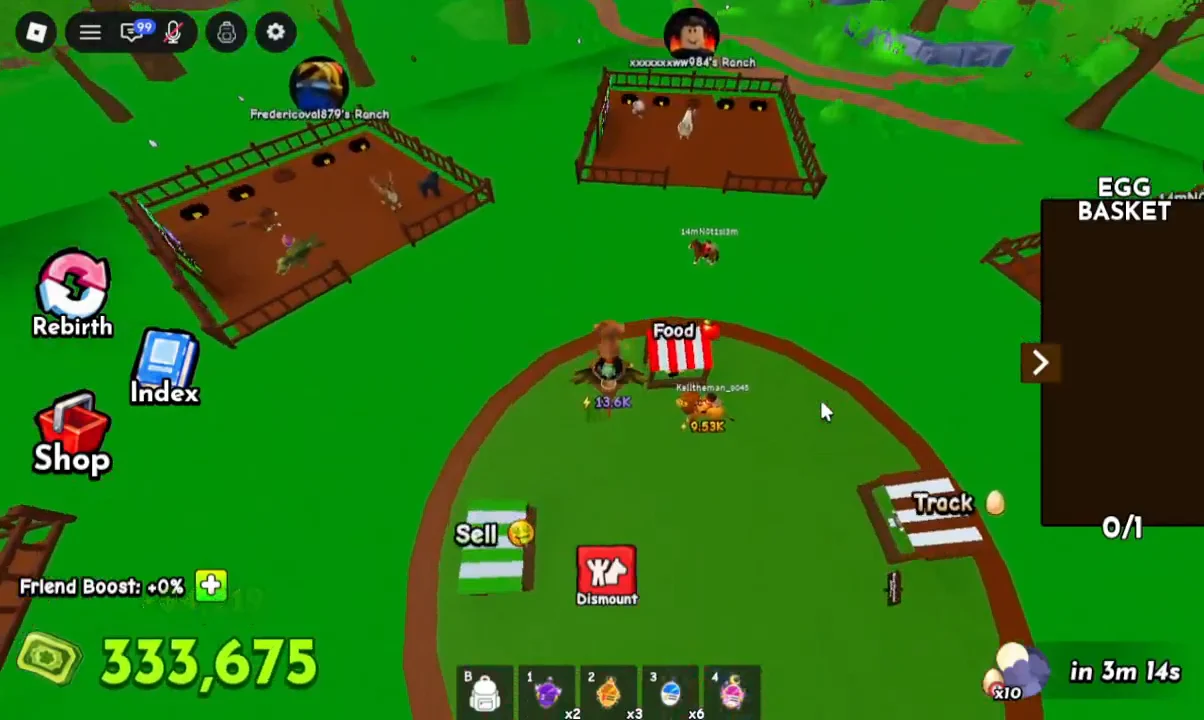

Feed the mount you ride, not a backup sitting in the pen. Food spent on a pet you are about to retire is XP you do not get back.
Mutations and their speed multipliers
Mutations are the biggest single jump available. They are tied to weather events, and each event applies its own mutation to eggs and pets. A mutation multiplies the pet’s speed, and it also multiplies money per second and sale value by the same figure.
| Weather event | Mutation | Multiplier |
|---|---|---|
| Thunder | Shocked | 2x |
| Volt | Volted | 3x |
| Rage | Rage | 4x |
| Void | Void | 10x |
| Eternal | Eternal | 100x |
Each weather event runs for 5 minutes, and every event has an equal chance of appearing when the weather changes. Eternal is the best outcome at a 100x multiplier, but you cannot choose which weather arrives — you can only make sure your pets are in the right place when it does.
Where your pets need to be during a weather event
- The pet you are riding can catch the mutation.
- Pets in your pen have a chance to catch it.
- Eggs placed in your pen can be mutated before they hatch.
- Every egg out on the map becomes mutated while the event is active.
- Pets sitting in your inventory cannot be mutated at all.
That last point is the one most players get wrong. Anything parked in the inventory is dead weight during a storm, so move the pets you care about into the pen and keep your best mount equipped.
Mutations do not stack, but they do upgrade
A pet can only hold one mutation at a time. If an already-mutated pet gets hit by a stronger weather event, the weaker mutation is replaced by the better one — a Shocked pet caught in Volt weather becomes Volted. There is no downside to leaving a mutated pet exposed, since the game does not swap a high multiplier for a lower one.
A mutated egg only has a chance to hatch a pet with that same mutation, so a Void egg is not a guaranteed Void pet. Hold high-rarity eggs in the pen and let them sit through weather before you hatch them. Scheduled in-game events, including future mutation events, are listed on the Ride A Pet experience page.
Hatch faster pets by running egg nests with the radar
Feeding and mutations make your current pet stronger, but hatching produces a fundamentally better one. That creates a useful cycle: a faster mount can reach more distant nests, which contain rarer eggs, and those eggs hatch into faster pets. At the highest end of the speed rankings are Kitsune and Dragon; Cerberus, Phoenix, and T-Rex follow, with Unicorn and Cheetah also included.
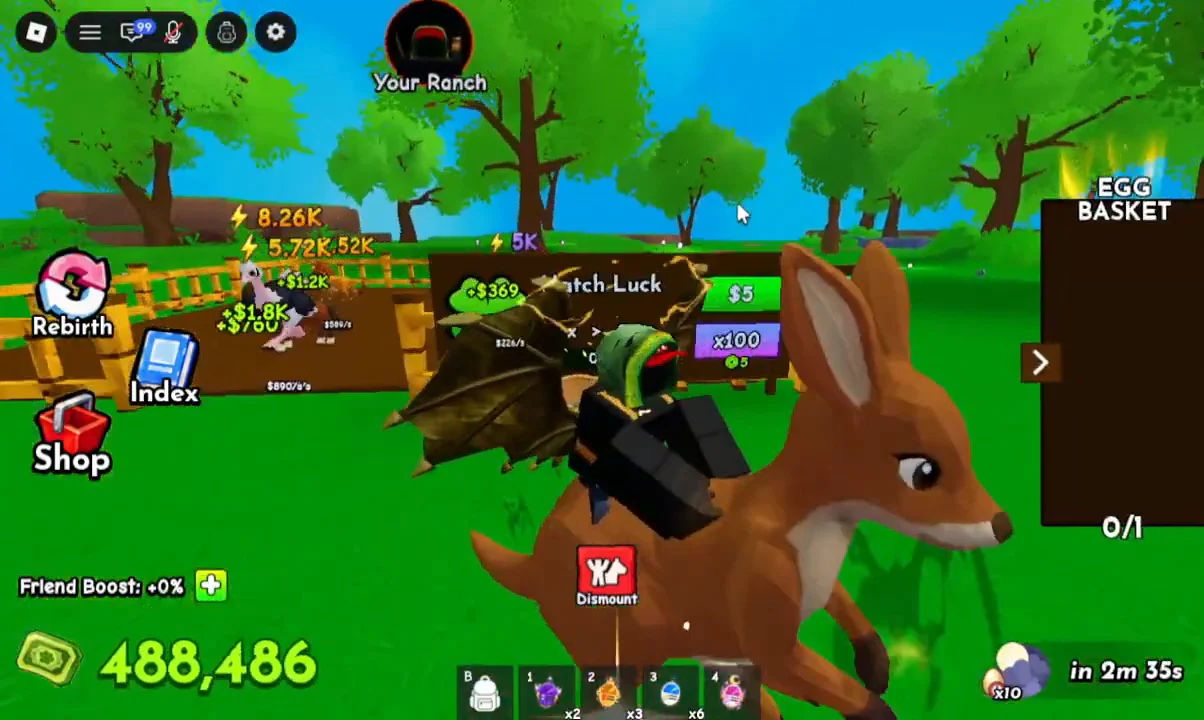


If eggs keep breaking before you get back, that is the signal to stop chasing distant nests and spend a session feeding your current mount instead. A failed run costs you the egg and the travel time.
How to confirm your pet is actually faster
Rarity labels are not the measure here — the MPH readout on your mount is. After feeding, check that the speed value has moved up. After a weather event, check the pet for the mutation name; a mutated pet carries its Shocked, Volted, Rage, Void, or Eternal tag, and its speed reflects the multiplier.
The practical test is the egg run itself. Time the same tracked egg route twice, once before an upgrade and once after. If the Egg Will Break timer now has room to spare on the return trip, the upgrade landed. If it does not, keep the old mount equipped and put the food into it rather than swapping to a rarer pet that happens to be slower.