WARDOGS hands every player $10,000 at the start of a match, charges for a fresh loadout each life, and lets cash carry over between matches. That combination turns loadout choice into an accounting problem as much as a combat one. A kit that wins more duels but costs $18,000 to rebuild can still lose you money over an evening, while a $1,000 kit that survives on spotting and scavenging rarely converts its cheap deaths into real income either.
Quick answer: No. Mid-priced kits in the $5,000–$7,000 range returned the highest average net profit at +$116,134, against +$68,142 for sub-$1,000 kits and +$40,282 for $15,000–$20,000 kits.
Cheap, medium, and expensive kits: net profit compared
Run the same player across three spending brackets and the middle one wins on every metric that matters. The cheap bracket survives financially but barely fights. The expensive bracket fights well until it dies, and then the rebuy eats the profit from the lives that went well.
| Bracket | Cost per life | Average net profit | K/A/D |
|---|---|---|---|
| Cheap | ~$1,000 | +$68,142 | 8/16/10 |
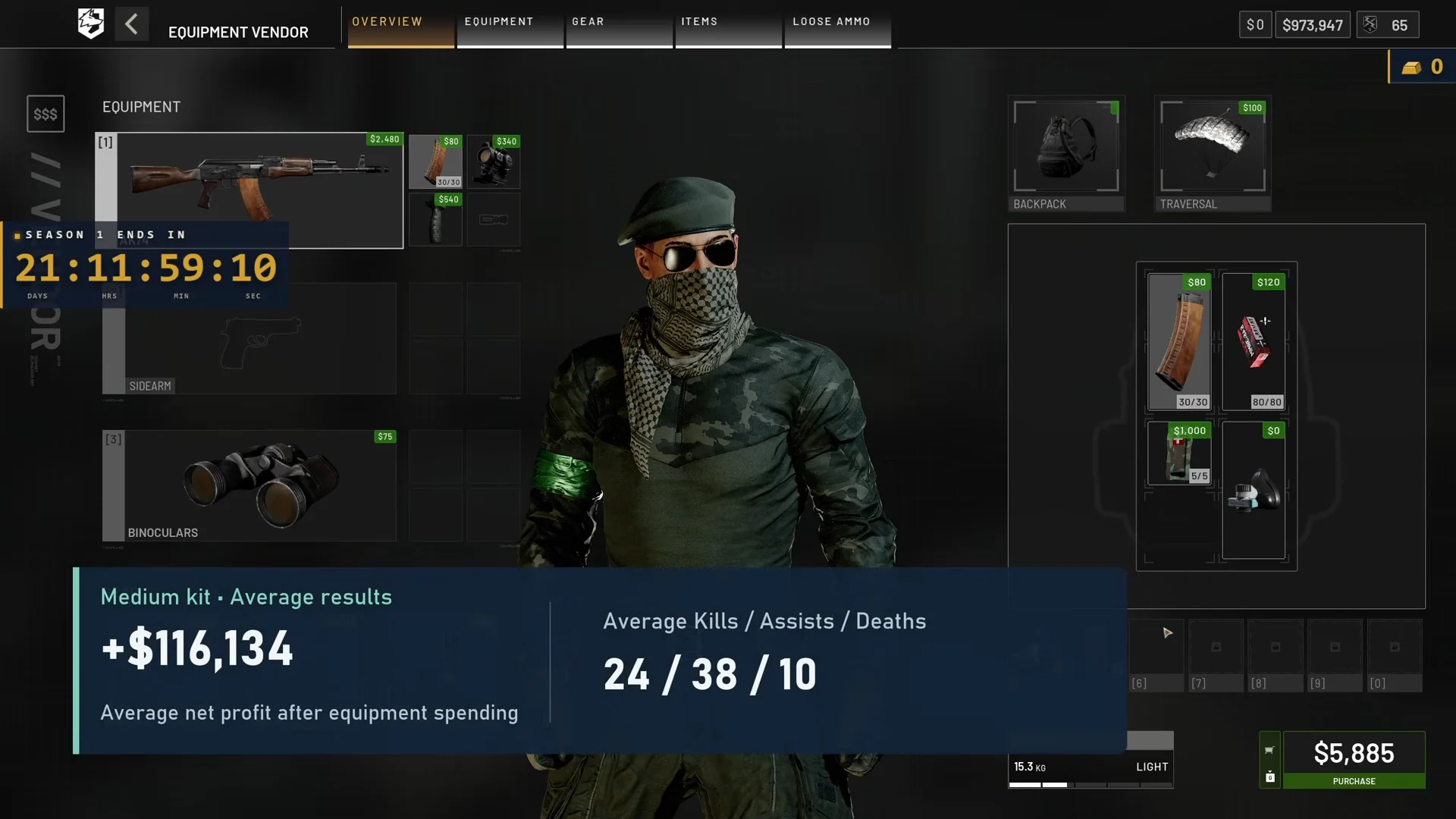
| Medium | $5,000–$7,000 | +$116,134 | 24/38/10 |
| Expensive | $15,000–$20,000 | +$40,282 | 13/18/13 |
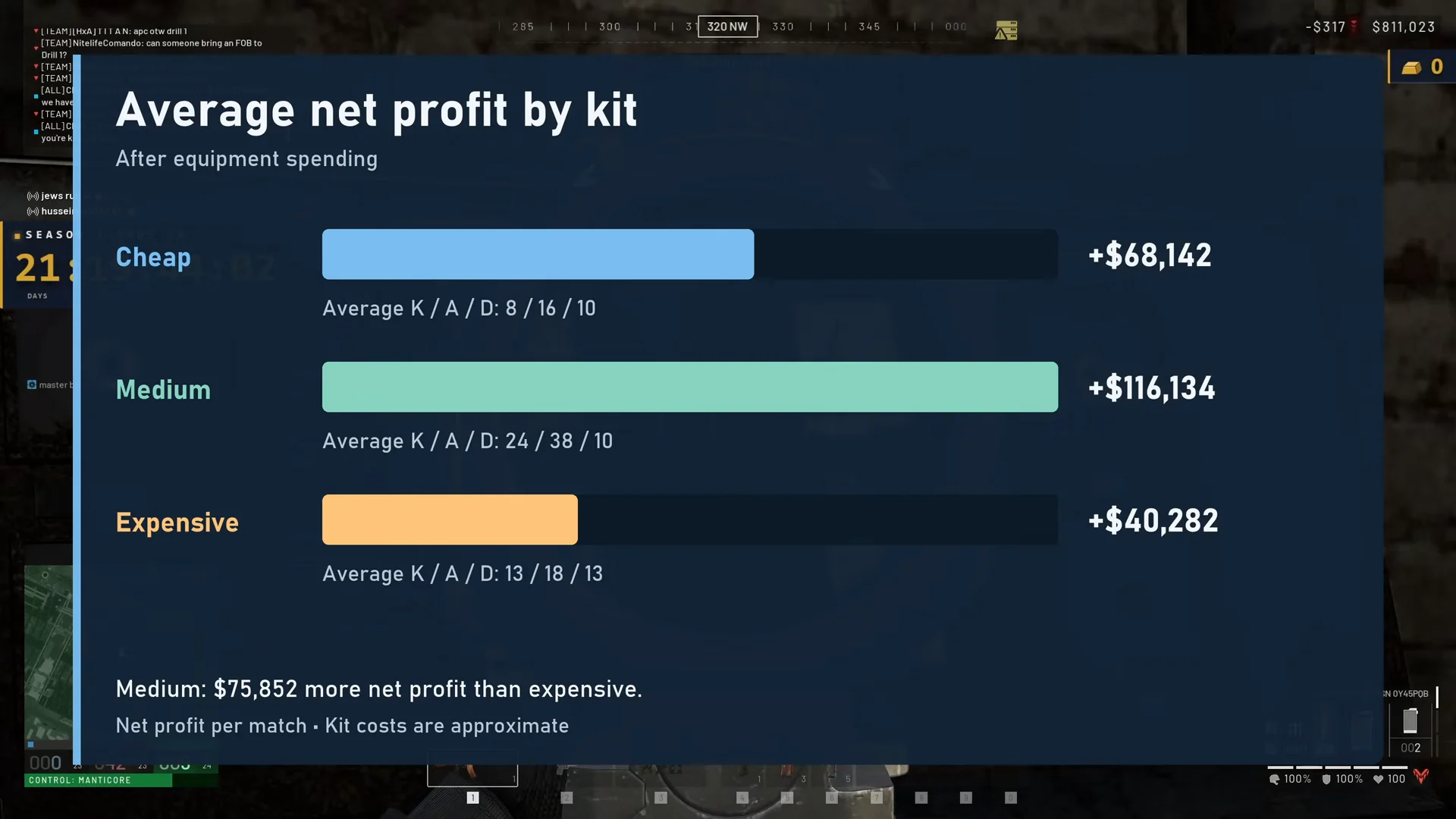
Note the death column. Cheap and medium kits died the same number of times, but the medium kit tripled the kills and more than doubled the assists while doing it. The expensive kit died more often than either, which is the opposite of what its price implies. Heavier gear slows you down, pulls you toward objectives that draw enemy attention, and puts you in fights where the enemy team is concentrated.
Why the per-life rebuy caps what an expensive kit can earn
Income in WARDOGS comes from kills, revives, spotting, transporting teammates, and objective work, and it accumulates in small amounts. Kit cost, by contrast, is one large amount charged up front and charged again every time you respawn. A $20,000 kit therefore needs a long, uninterrupted life to break even, and a single unlucky death resets the meter.
The opening $10,000 makes the ceiling obvious. It buys roughly ten cheap lives, two mid-priced lives, or a single expensive one with nothing left in reserve. Being revived is the only way to keep an expensive kit without paying for it twice, which makes the value of heavy spending almost entirely dependent on whether your squad picks you up.
Losing a vehicle also pays the other side. Destroying a Humvee awards the attacker $500, so heavy investment is a transfer of cash to whoever kills it.
What the $5,000–$7,000 kit actually contains
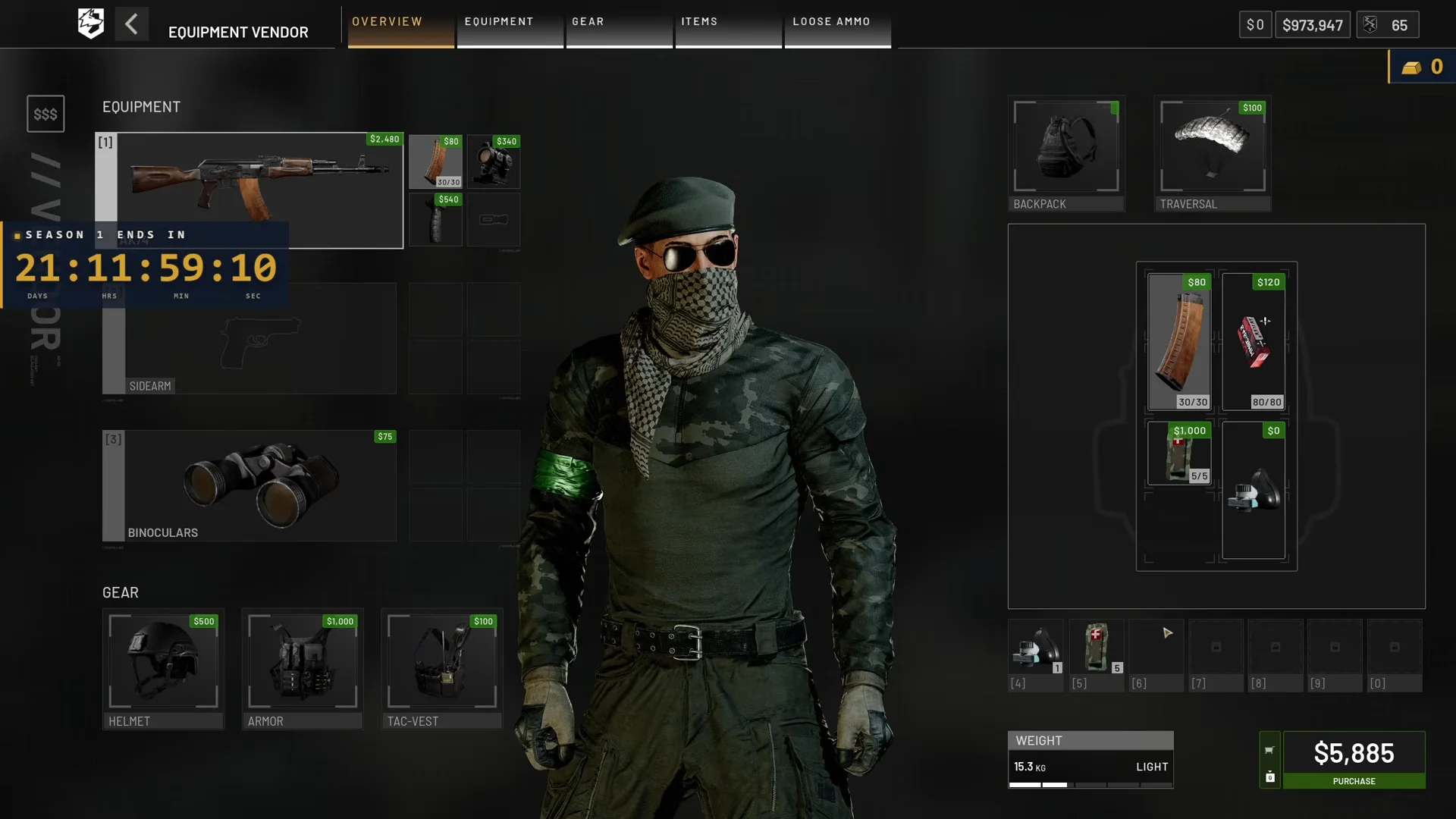
The mid bracket is not a compromise so much as the point where the important purchases are all covered. A reliable rifle, tier 2 protection on head and torso, a sidearm, medical items, and a full complement of loaded magazines land close to $5,900 at the Equipment Vendor. Nothing in that list is a luxury, and nothing in it is a replacement problem after a bad life.
Rifle choice inside this bracket matters less than people assume. The AK74 at $1,600 and the M4 at $2,800 both handle the ranges most objectives are fought at, and the T-21 at $600 remains lethal enough that a full-auto primary is never the expensive part of a kit. Armour, ammunition, and utility are where the money goes.
Armour prices and durability
| Item | Price | Durability | Unlock |
|---|---|---|---|
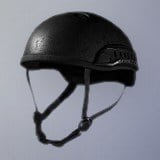 Level 1 Helmet Level 1 Helmet | $200 | 80 | Wardog level 3 |
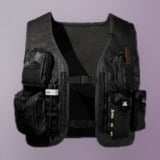 Level 1 Armor Level 1 Armor | $400 | 200 | Wardog level 3 |
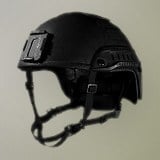 Level 2 Helmet Level 2 Helmet | $500 | 100 | Wardog level 30 |
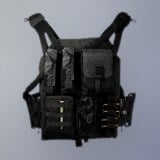 Level 2 Armor Level 2 Armor | $1,000 | 220 | Wardog level 30 |
Level 1 gear costs $600 for the pair and gives low damage reduction across the head and torso. Level 2 costs $1,500 and moves both pieces to medium reduction, with the torso plate gaining 20 points of durability. The unlock fees are separate and one-time, at $7,500 and $10,000 for the level 1 pieces and $37,500 and $50,000 for the level 2 pieces, so they never appear in your per-life cost once paid.
Sidearms are cheap enough that skipping one is never the saving it looks like. The GGX 17 costs $200 and does 22 damage a shot. The M1911 costs $300, hits for 30, and fires at 430 RPM. The GGX 18 costs $800 and runs at 1,200 RPM in full auto, which is the fastest close-range answer available in a pistol slot.
The two costs a kit price tag hides: weight and ammunition
Expensive kits get heavy before they get strong. The M249 SAW weighs 7.5 kg on its own, against roughly 3 kg for an assault rifle, and a tier 2 helmet and vest add several kilos more. Kits built to stay under the 10 kg mobility threshold move noticeably better than kits that sit above it, and mobility is what keeps you out of the fights you did not choose.
Ammunition is the other line people underprice. Loaded magazines are charged per magazine and per round, so a full bag of armour-piercing rifle ammo can cost more than the rifle carrying it. A loaded 30-round AK74 magazine on armour-piercing runs $155, and a loaded FAL magazine runs $790 against the rifle’s own $6,500. Bandages are similarly steep at $200 each.
Swapping ammunition type is the cheapest change on any receipt and moves your shots-to-kill further than upgrading the gun. Armour-piercing rounds keep a rifle’s kill time flat regardless of what the enemy is wearing.
When a $15,000–$20,000 kit earns its price
Heavy spending is not pointless, it is just conditional. It pays when the kit exists to destroy something worth more than itself, and it stops paying the moment you use it as a general-purpose infantry loadout. An RPG-7 at $2,000 that removes an enemy vehicle worth five figures is a clear profit. A $6,500 battle rifle carried through a warehouse is not.
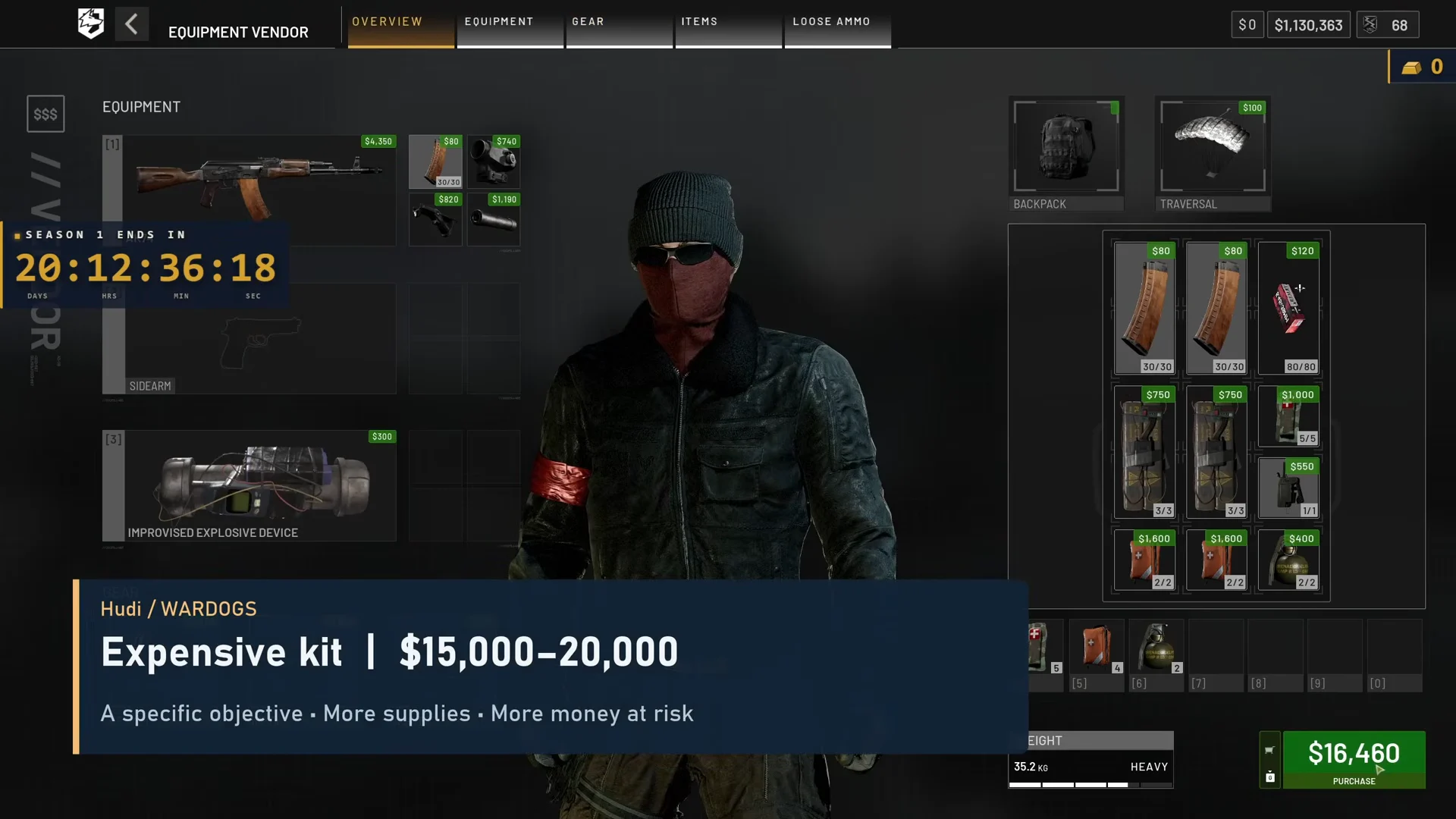
The tasks that justify the spend are narrow. Hunting enemy vehicles, breaking an enemy FOB with heavy ordnance, destroying drills and structures, and holding a lane with sustained fire all reward equipment the cheap brackets cannot carry. The M249 SAW at $3,200 is the clearest example, delivering 850 RPM and 28 damage a shot for teams that need a lane pinned rather than a duel won.
Vehicles are the other big line. The Humvee costs $3,000, seats four, and is bought from the vehicle vendor in your faction’s safe zone rather than found on the map. It turns into income if you are ferrying teammates to the fight, and into a $500 gift to the enemy if you park it somewhere exposed.
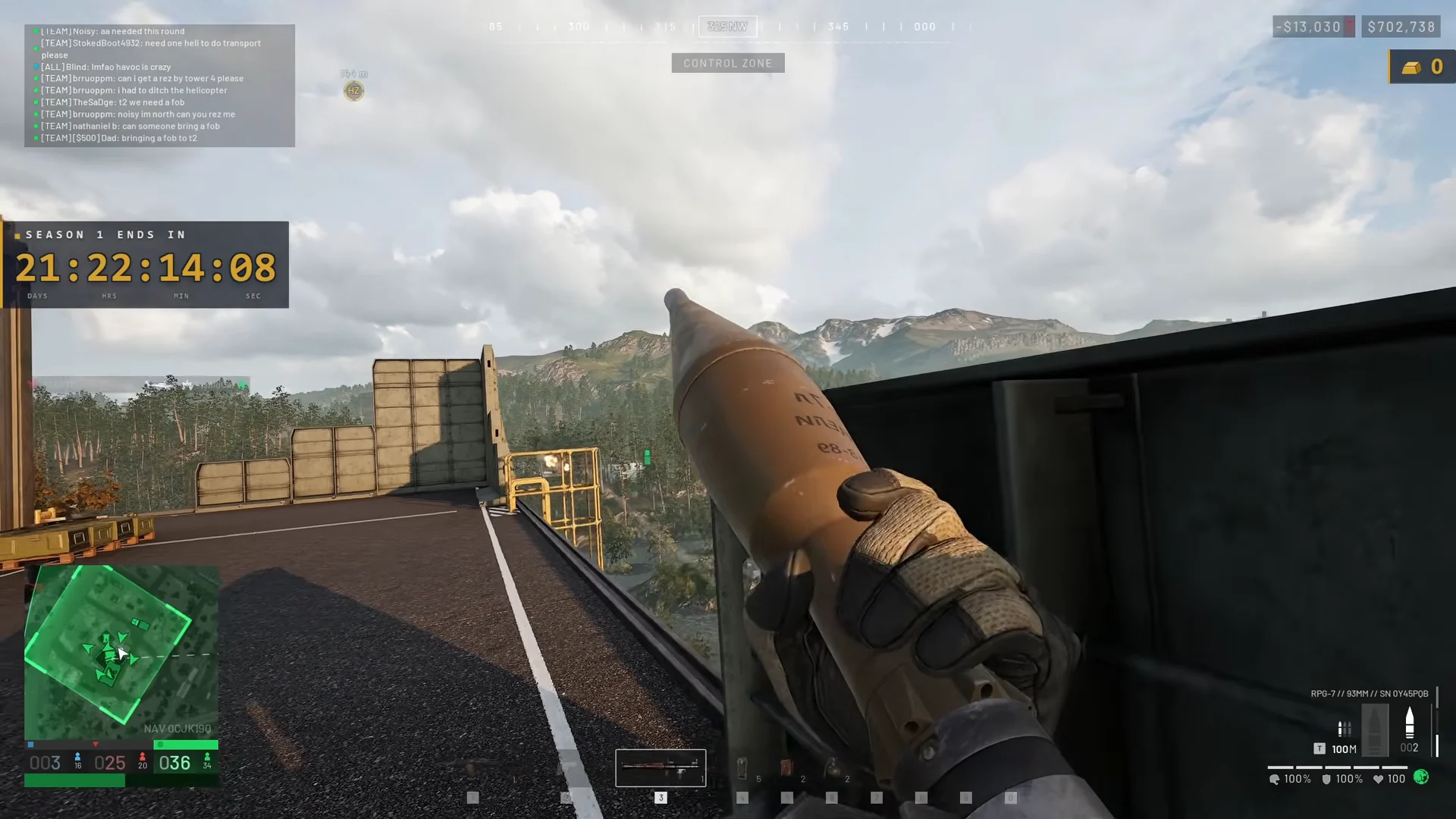
Explosive loadouts carry an obvious risk, which is that the payload is spent whether or not it connects. An RPG fired from a rooftop at a vehicle that drives out of line of sight is $2,000 of the kit gone with nothing recovered, and the launch position tends to be visible to everyone nearby.
How to check whether your spending level is working
Price the life before you spawn, then watch your persistent balance across a few matches rather than a single one. If your cash total is higher at the end of a session than at the start, the bracket is sustainable. If it is falling while your kill count looks respectable, the kit is costing more per rebuy than the match is paying you.
- Balance climbing steadily: the current bracket is correct, and you can test one upgrade.
- Balance flat with a good record: the rebuy is absorbing your income, so cut one line item.
- Balance dropping after two deaths: drop a bracket until you are back above $6,000.
- Dying with unused magazines: cut ammunition before cutting armour.
- Dying with empty magazines: add reserve rounds before adding attachments.
Change one slot at a time and re-check the total, because the vendor screen is the only place where weight and price are both visible before you commit. Below Wardog level 9 the recruit discount halves vendor prices, which makes early kits look cheaper than they will be later — compare your checkout figure against the full list price before you settle on a bracket you cannot afford at level 10.
The pattern across all three brackets is consistent. Expensive gear does not lose money because it performs badly, it loses money because it multiplies the cost of every death in a game that expects you to die repeatedly. Spend enough to win the fights in front of you, keep the rebuy low enough that two bad lives do not end your night, and save the $20,000 loadouts for the moments when there is an enemy vehicle or FOB worth more than the kit.