
Reality Fracture is a large set, and its Limited environment runs on ten two-color archetypes. Five of them are the allied color pairs tied to Hexhaven’s colleges, and the other five are enemy pairs built around returning characters. The format looks interactive, with plenty of removal, common dual lands, and cheap spells, so you rarely need to lock into a plan before you sit down to draft.
Quick answer: Reality Fracture has ten two-color archetypes — five allied Hexhaven colleges and five enemy-pair character decks. Draft your two best colors and follow the signpost uncommons.

How Reality Fracture Limited works
Every draft deck needs a minimum of 40 cards, so your mana base carries a lot of weight. Aim for 16 to 18 lands depending on how high your curve sits, or closer to 17 in a 40-card Sealed pool. You can only include special lands you actually open; every other land in the deck has to be basic.
- Wait until drafting begins to choose an archetype; otherwise, stronger cards from another lane may pass you by.
- Don’t overload on a single mechanic and skip good cards that don’t touch it directly.
- Artifacts are usually colorless and slot into almost any deck, so weigh them whenever one appears.
- You can splash a third color, but only if the payoff beats the cost to your mana.
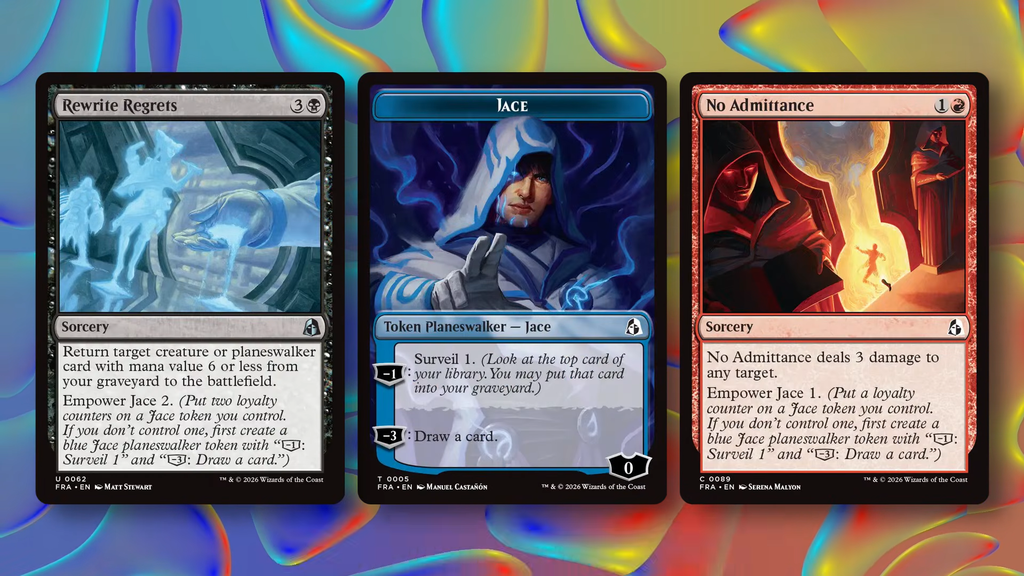
Three mechanics tie the set together. Empower Jace creates a Jace planeswalker token or adds loyalty to one you already have, and that token can draw cards or surveil when you activate it. Prepare lets certain creatures enter with an extra instant or sorcery attached, giving you card advantage without spending a full slot. Threshold, a returning keyword, switches on once you have seven or more cards in your graveyard. You’ll also see two tokens matter mechanically: 2/2 Cadet wizard soldiers, and Heartwood artifacts that tap for red or green.
Prerelease kits do not contain seeded packs, so forcing a specific Hexhaven college straight from a kit takes extra care.
All 10 archetypes and their signposts
| Colors | Archetype | Theme | Signpost |
|---|---|---|---|
| W/U | Fatehold | Scry and surveil aggro | Desperate Futurescribe |
| U/B | Theorix | Self-mill and Threshold | Recursive Recruitment |
| B/R | Stingerquill | Noncombat damage burn | Grim Repriser |
| R/G | Konstrari | Heartwood ramp and artifacts | Craftwork Crusher |
| G/W | Vigorbloom | Life gain and counters | Bloombrute |
| W/B | Liliana’s Attrition | Sacrifice and reanimation | Twisted Fates |
| U/R | Chandra’s Prowess | Spells and burn control | Clash of Elements |
| B/G | Garruk’s Bestiary | Value creatures | Primal Witchstalker |
| R/W | Ajani’s Army | +1/+1 counters and tokens | Warrior’s Blades |
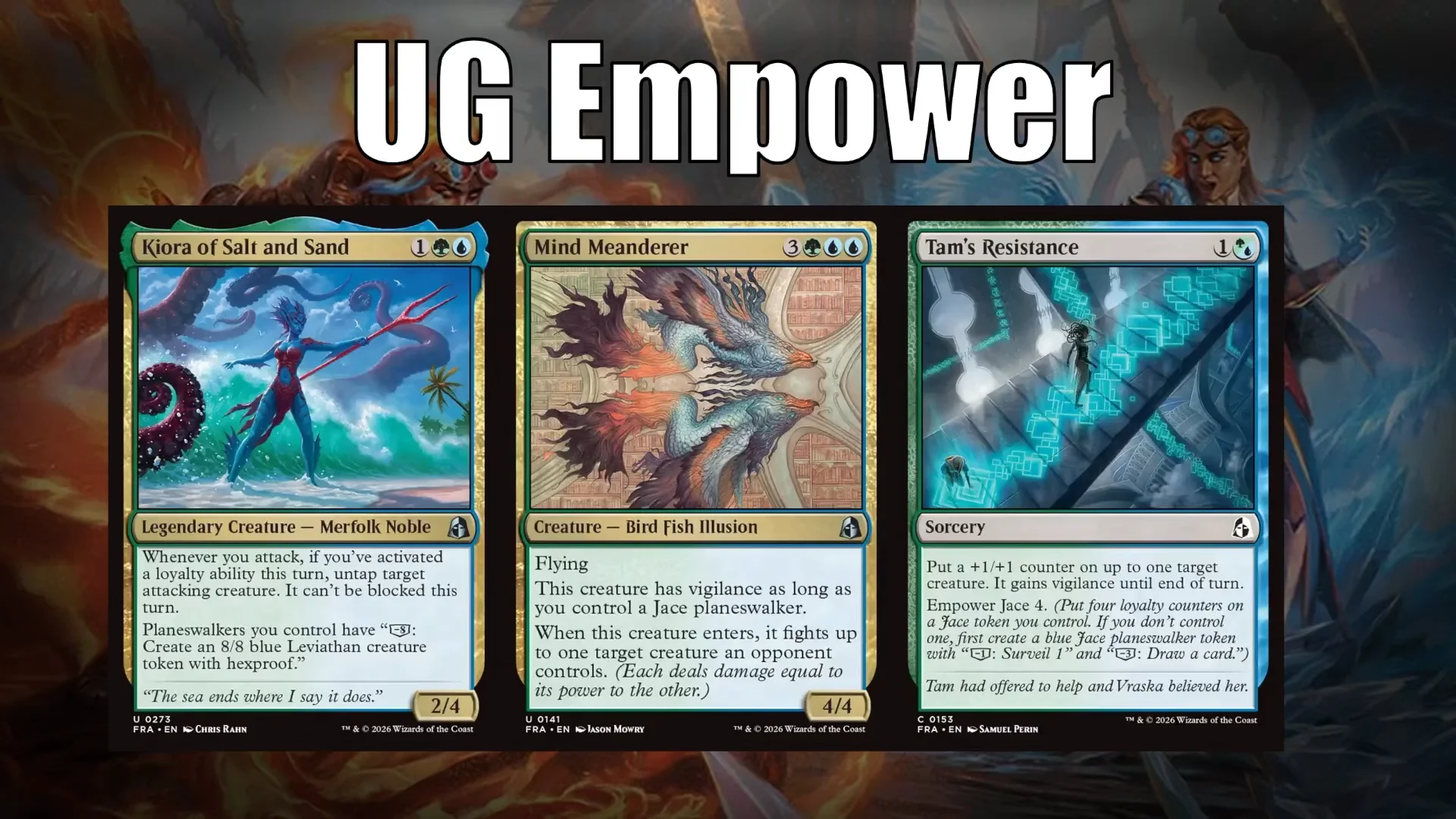
| U/G | Jace’s Mastery | Empower Jace and planeswalkers | Mind Meanderer |
The five Hexhaven colleges (allied pairs)
The allied color pairs represent Hexhaven’s colleges, and each one ships a signature prepared spell that repeats across its common and uncommon creatures. That shared prepared effect is the glue holding the college’s plan together.
Fatehold (white-blue): surveil aggro
Fatehold is not the slow Azorius control deck you might expect. It uses scry and surveil to improve draws while turning that manipulation into early pressure, leaning on Cadet and Jace tokens and the occasional +1/+1 counter. Its prepared spell surveils, and cards like Prudent Fateseer, Fatehold Chronologist, and Surveillance Phantasm reward you for looking at the top of your library. Keep efficient creatures high on your pick order, since scry effects that don’t affect the board won’t win games on their own.
Theorix (blue-black): graveyard math
Theorix is built around self-mill: its engine needs seven cards in the graveyard before Threshold activates. Low-cost enablers, including the college’s mill-three prepared spell, serve two purposes by affecting the game while filling the yard. Once that mark is reached, Proft, Sinister Mastermind, Void Extrapolator, and Theorix Metamage all improve, while blue’s bounce and denial spells keep your board safe. Avoid loading up on payoffs while neglecting enablers; a reward that stays inactive until turn nine offers little value.
Stingerquill (black-red): face burn
Stingerquill is the most straightforwardly aggressive pair, built around noncombat damage. Its removal and burn spells double as synergy pieces, so a spell that kills a blocker can also trigger a payoff like Grim Repriser, Whiplash Wordsmith, or Massacre Girl, Most Wanted. The keyword pool is wide, with Prowess, Flying, Deathtouch, and graveyard recursion all in reach. Watch the curve, though, since black has the fewest two-drops at common and this deck wants to attack early.
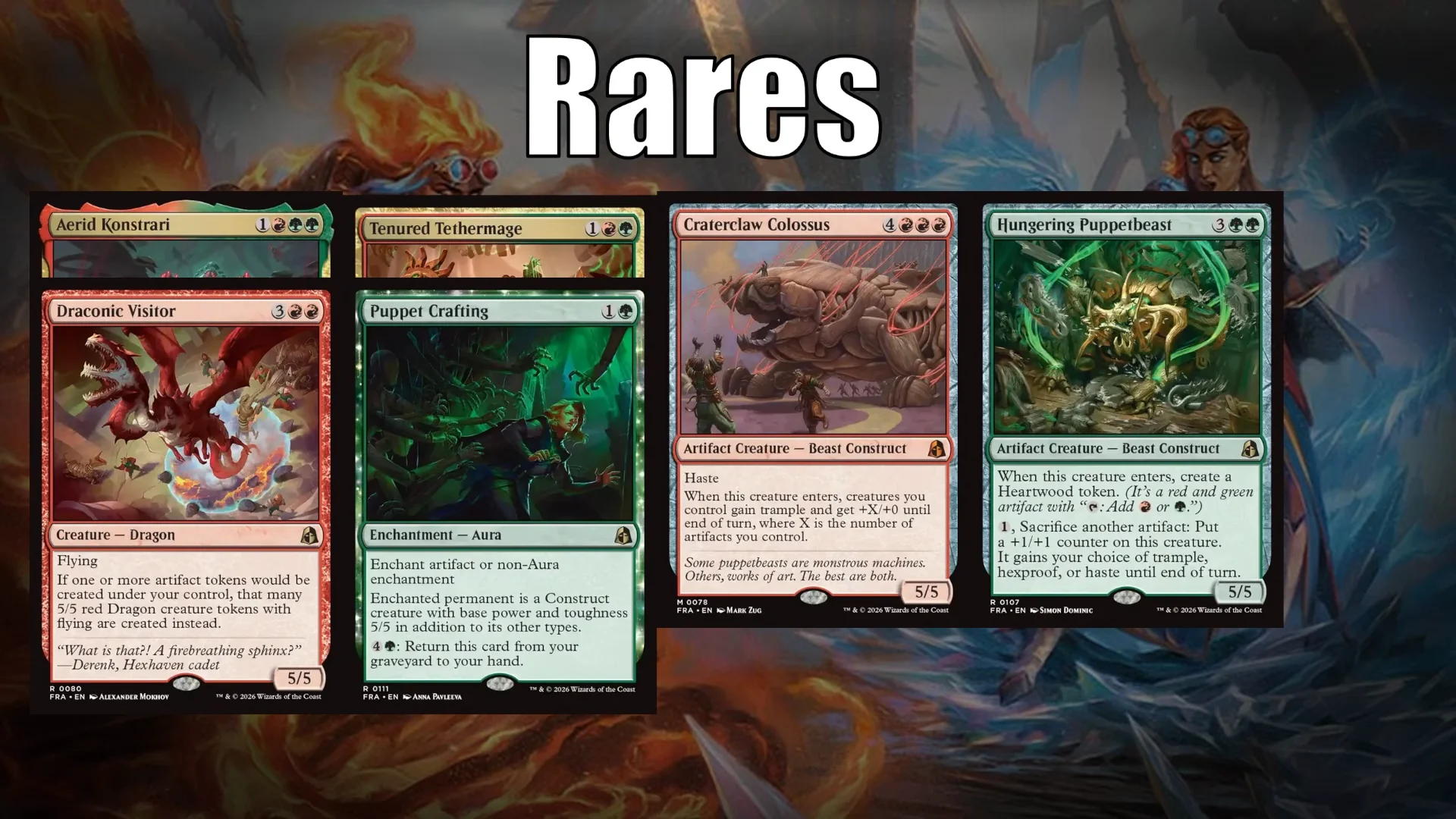
Konstrari (red-green): mana ramp
Konstrari makes Heartwood tokens, artifacts that tap for red or green, and pours that mana into expensive threats. Woodwork Prodigy and the college’s Heartwood-making prepared spell accelerate you toward game-enders like Craftwork Crusher, and +1/+1 counters plus colorless artifacts round out the shell. This is the highest curve in the set, so the built-in fixing and basic landcycling on the big commons are what let you get away with it. Ramp still has to do something, so don’t skimp on the acceleration to jam more haymakers.
Vigorbloom (green-white): life gain
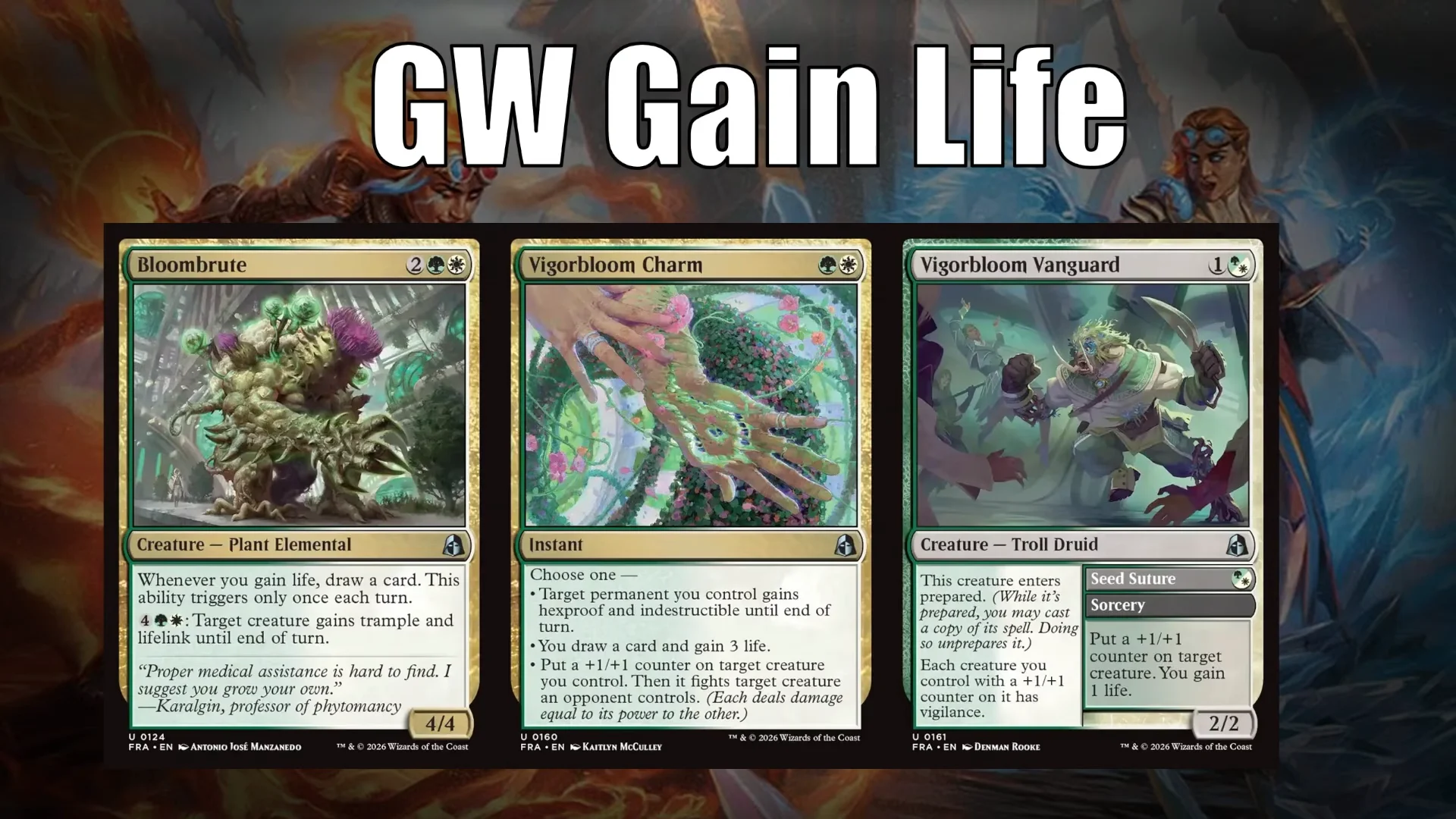
Vigorbloom makes life gain translate into lasting battlefield growth. No other pair uses counters as heavily, and its prepared spell gives a creature a +1/+1 counter while also providing one point of life. Bloombrute draws once from your first life-gain event each turn, while Vigorbloom Vanguard gives vigilance to creatures carrying counters; other cards restore counters after creatures die. Balance the life-gain enablers with their payoffs so routine plays can provide life incidentally.
The five character archetypes (enemy pairs)
The enemy color pairs are built around the set’s major characters and lean into the Echoed Pairs framing. They read as more traditional guild strategies, but the Empower Jace mechanic still shows up in every one of them.
Liliana’s Attrition (white-black)
Liliana’s Attrition is the Orzhov deck, mixing life gain and +1/+1 counters with a grindy sacrifice plan. Liliana plays both healer and necromancer, so you pad your life total while dragging opponents into a war of attrition and reanimating creatures from the graveyard. Cards like Edgar, Ancient Bloodlord push the sacrifice angle further. Draft bodies and token makers that are happy to trade first, then pick up the death triggers and sacrifice outlets once you have things worth sacrificing.
Chandra’s Prowess (blue-red)
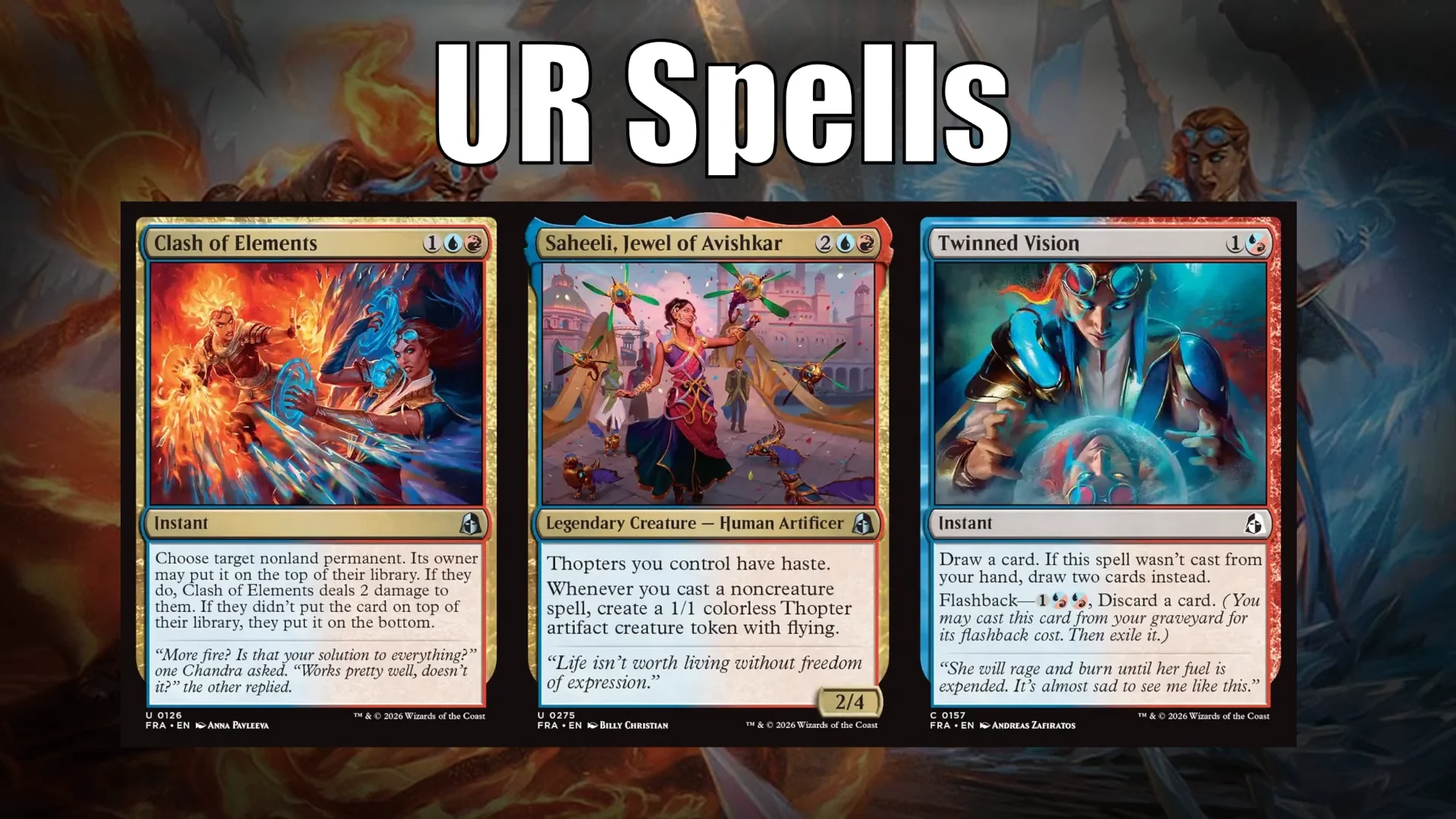
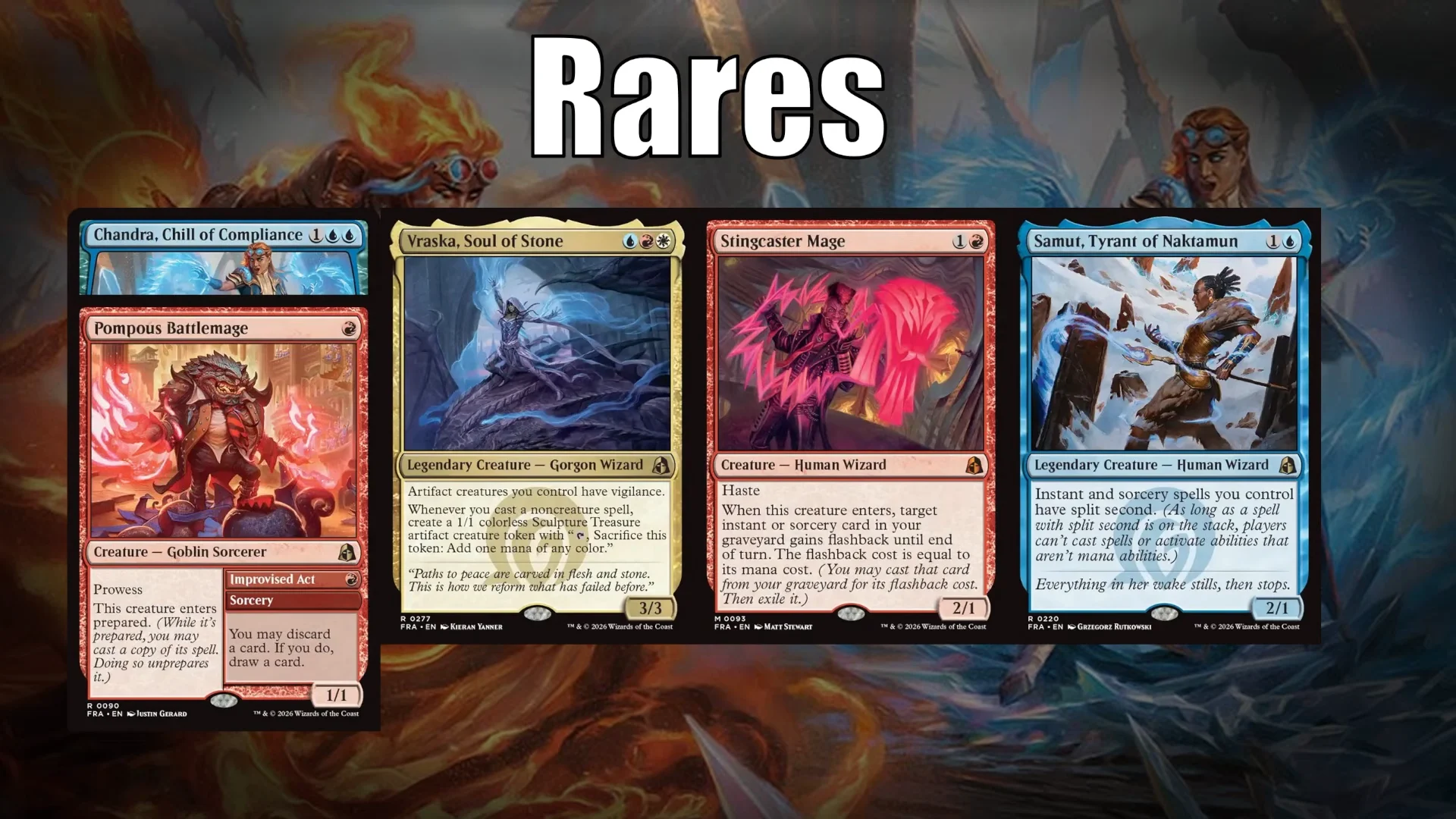
Chandra’s Prowess is the classic Izzet spells deck, pairing burn with control to overwhelm the opponent with damage and tempo. Clash of Elements is the clear signpost, and Saheeli, Jewel of Avishkar rewards a spell-heavy list. The trap is padding the deck with mediocre tricks just because spells matter; the best builds run removal and card selection you’d play anyway. Keep some answers for mid- and late-game stalls so you don’t run out of gas.
Garruk’s Bestiary (black-green)
Garruk’s Bestiary is the Golgari value deck, built on creatures that generate advantage when they enter and again when they leave. Primal Witchstalker signposts the plan, while Hapatra, the Desert Fang and graveyard recursion give your creatures extra utility. Big-creature decks like this reward a careful curve, and some players prefer to run these lists closer to 50 cards at Prerelease to fit a sturdier mana base and cheap defensive spells for the early turns.
Ajani’s Army (red-white)
Ajani’s Army is aggressive Boros built on +1/+1 counters, backed by burn and life gain. Draft cards that pump out creature tokens, mostly 2/2 Cadets, then buff them with Mabel, Valley Hero and other counter effects. Warrior’s Blades is the payoff to hunt for, an Equipment that deals damage and gains life on entry before equipping cheaply onto a countered creature. Without those counter payoffs, the deck is just a burn shell with white creatures.
Jace’s Mastery (blue-green)
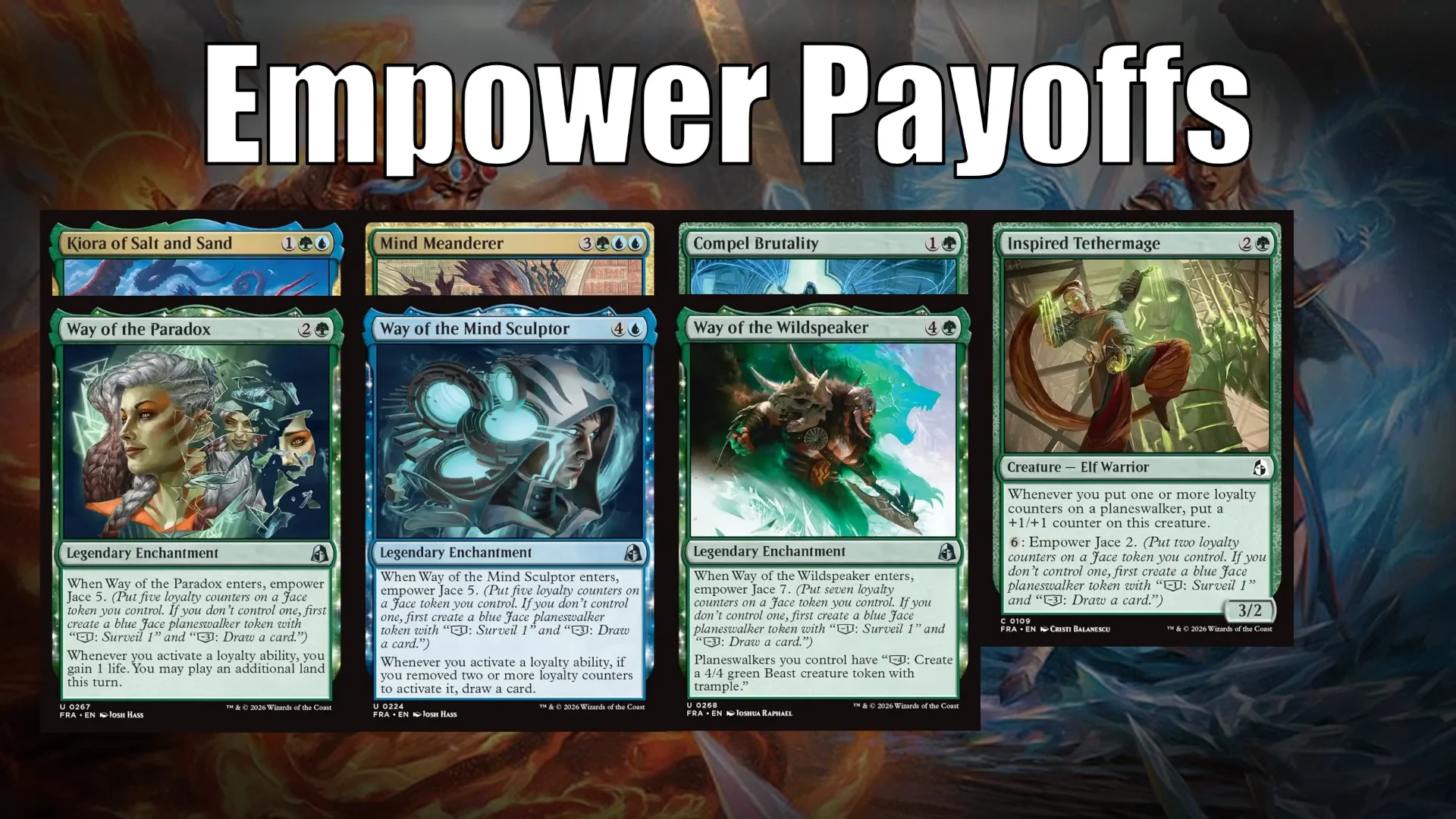
Jace’s Mastery is the Simic deck, and while nearly every color can Empower Jace, this pair offers the deepest planeswalker support. Mind Meanderer, Kiora of Salt and Sand, and Tam’s Resistance want the biggest Jace on the table and reward activating loyalty abilities. It is also the slowest lane and short on removal, so treat it as a trap unless the pieces come to you late; grab the Jace enablers for whatever deck you land in.
With Prerelease week running Sep. 25 to Oct. 1, 2026 and the paper release on October 2, you have some room to test these lanes. Start from your two strongest colors, read the signpost uncommons at the table, and stay flexible enough to move when a better deck opens up in front of you.