Vendors in Graveyard Keeper 2 sell a limited stock until their shop moves up a tier. Friendship points are not the lever here. Every shopkeeper has a specific item they want, and handing it over is what unlocks the next tier of goods.
Quick answer: Talk to the vendor, note the item their dialogue asks for, craft it, then deliver it. Herm wants Lace, and turning it in pushes Herm’s Store to Tier III.
How shop tiers work in Graveyard Keeper 2
Shop tiers are tied to quests, not to a friendship bar filling up. You can sit at a healthy friendship number with a vendor and still see the same short inventory, because the tier is gated behind a request they have already told you about in dialogue.
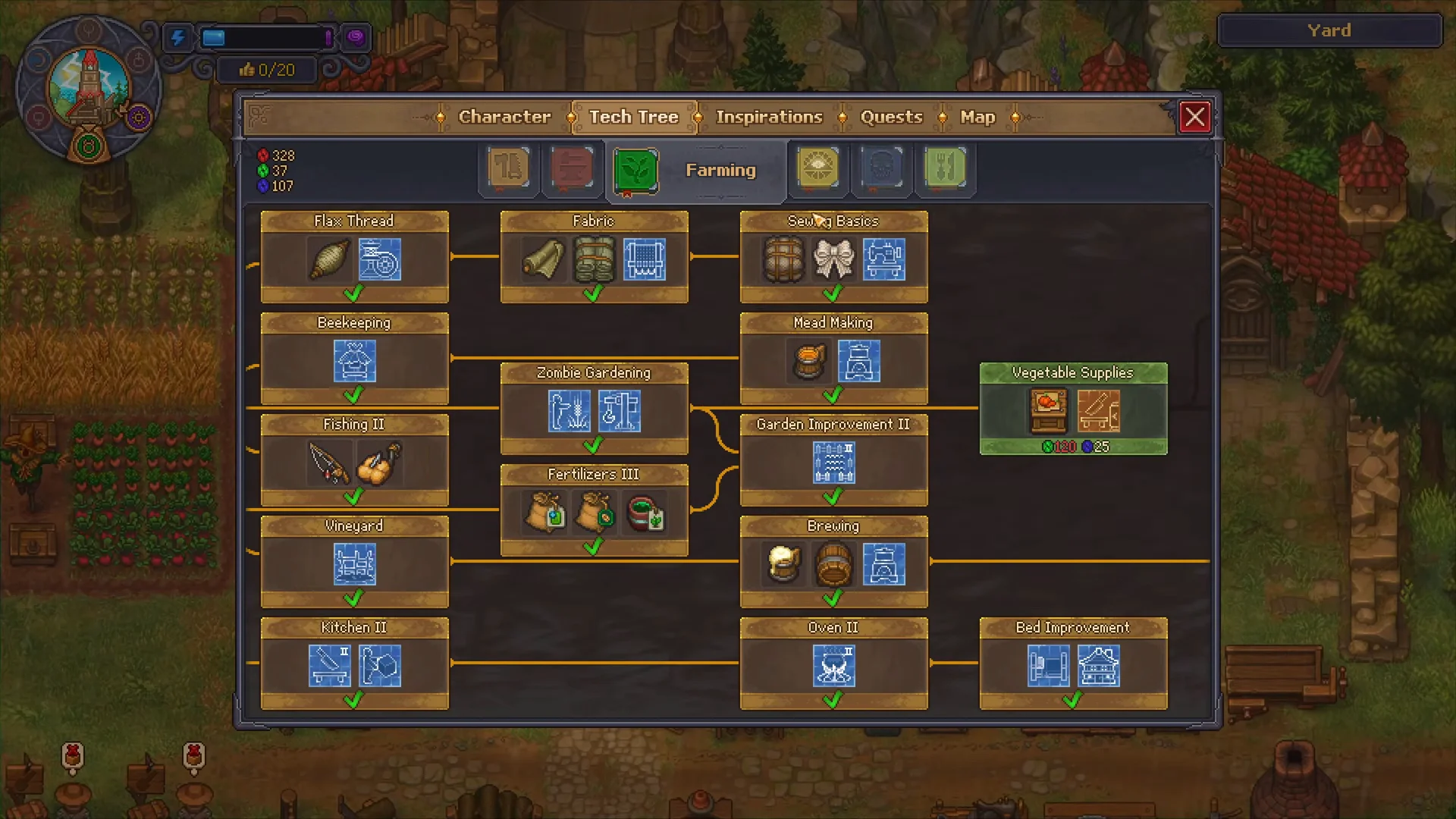
That request is almost always a crafted good rather than something you can buy elsewhere. The chain behind it usually runs through the Tech Tree, so the real work is unlocking the right node, building the right station, and processing raw materials you already grow or store.
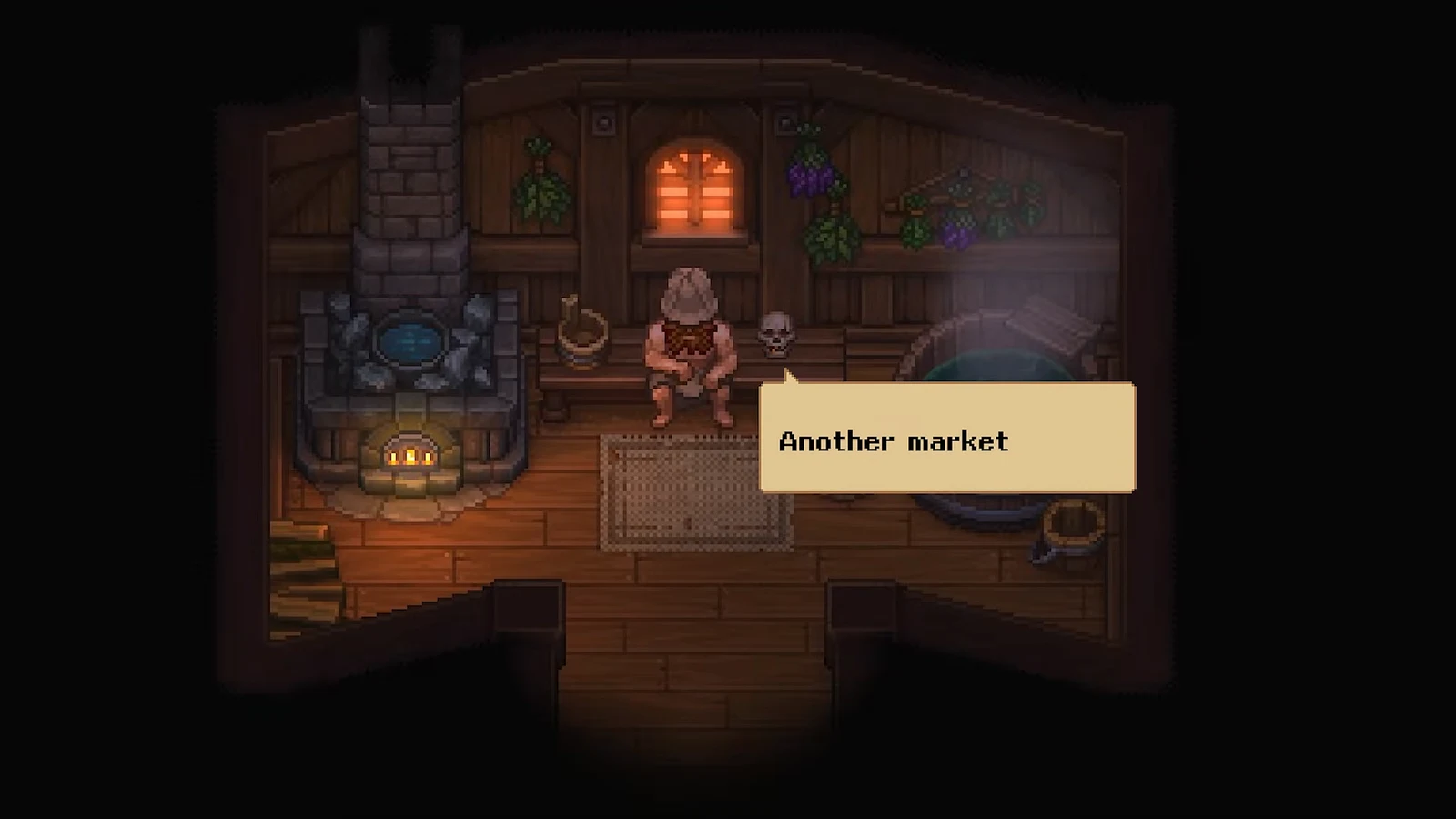
Open the vendor’s dialogue before planning anything. The item they name is the only thing that moves their tier, and it tells you which branch of the Tech Tree to spend points on next.
Upgrade Herm’s Store to Tier III with Lace
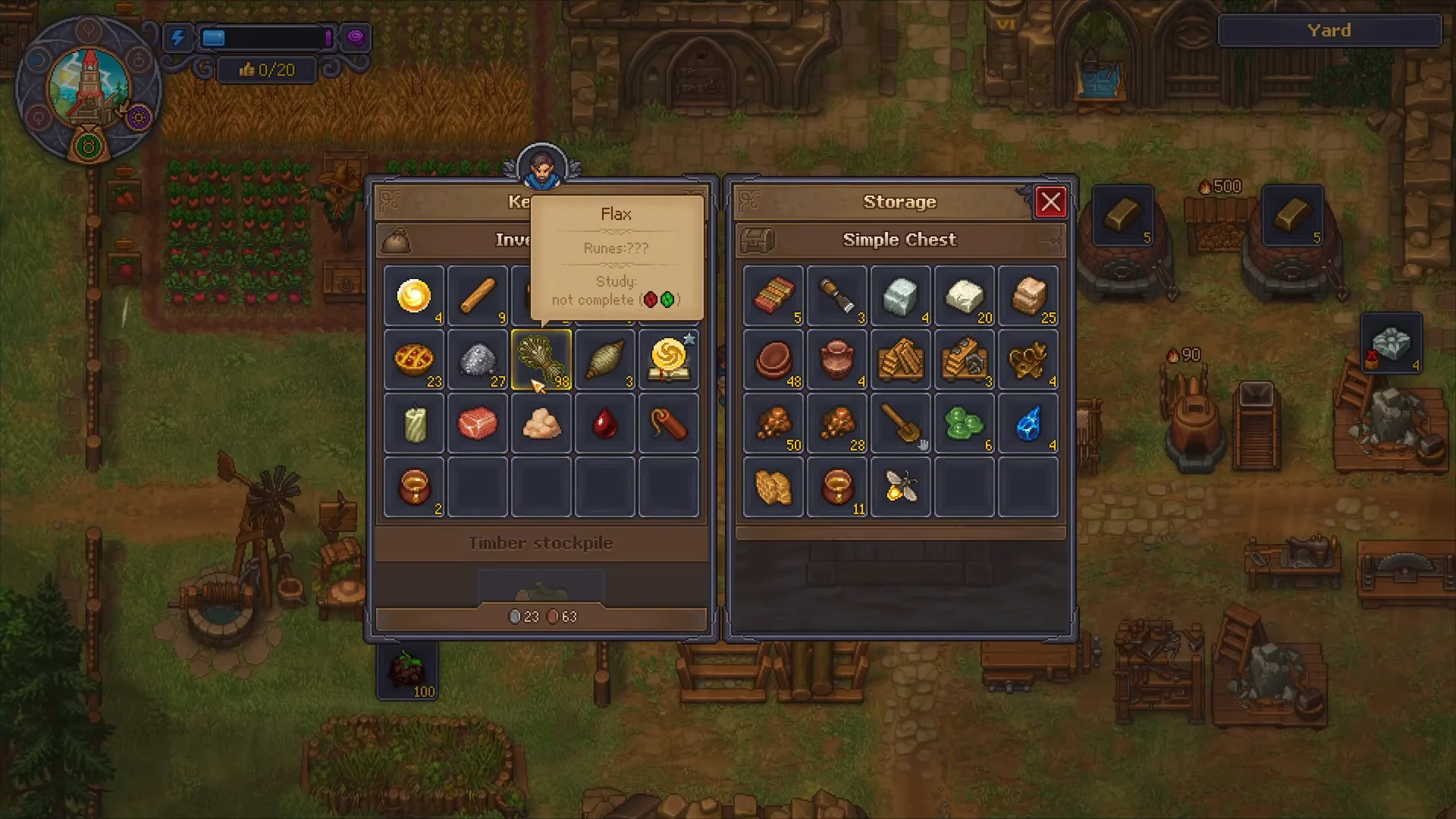
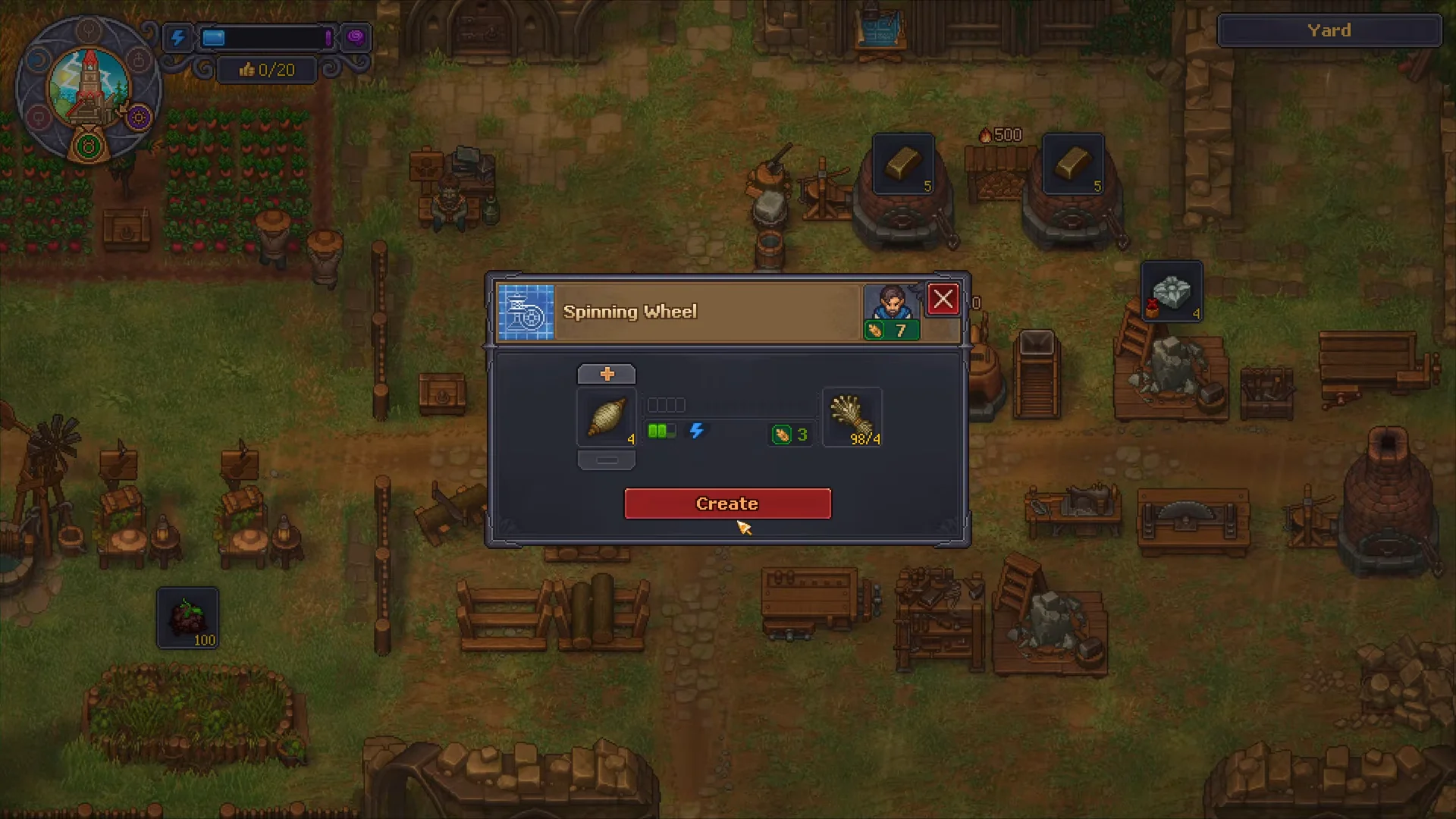
Herm runs his store in the Village and is the clearest example of the system. His dialogue asks for Lace, which means the whole upgrade runs through the sewing chain rather than anything he stocks himself.
[E] Speak. Read through his dialogue to confirm Lace is the item he is waiting on before you spend any Tech Points.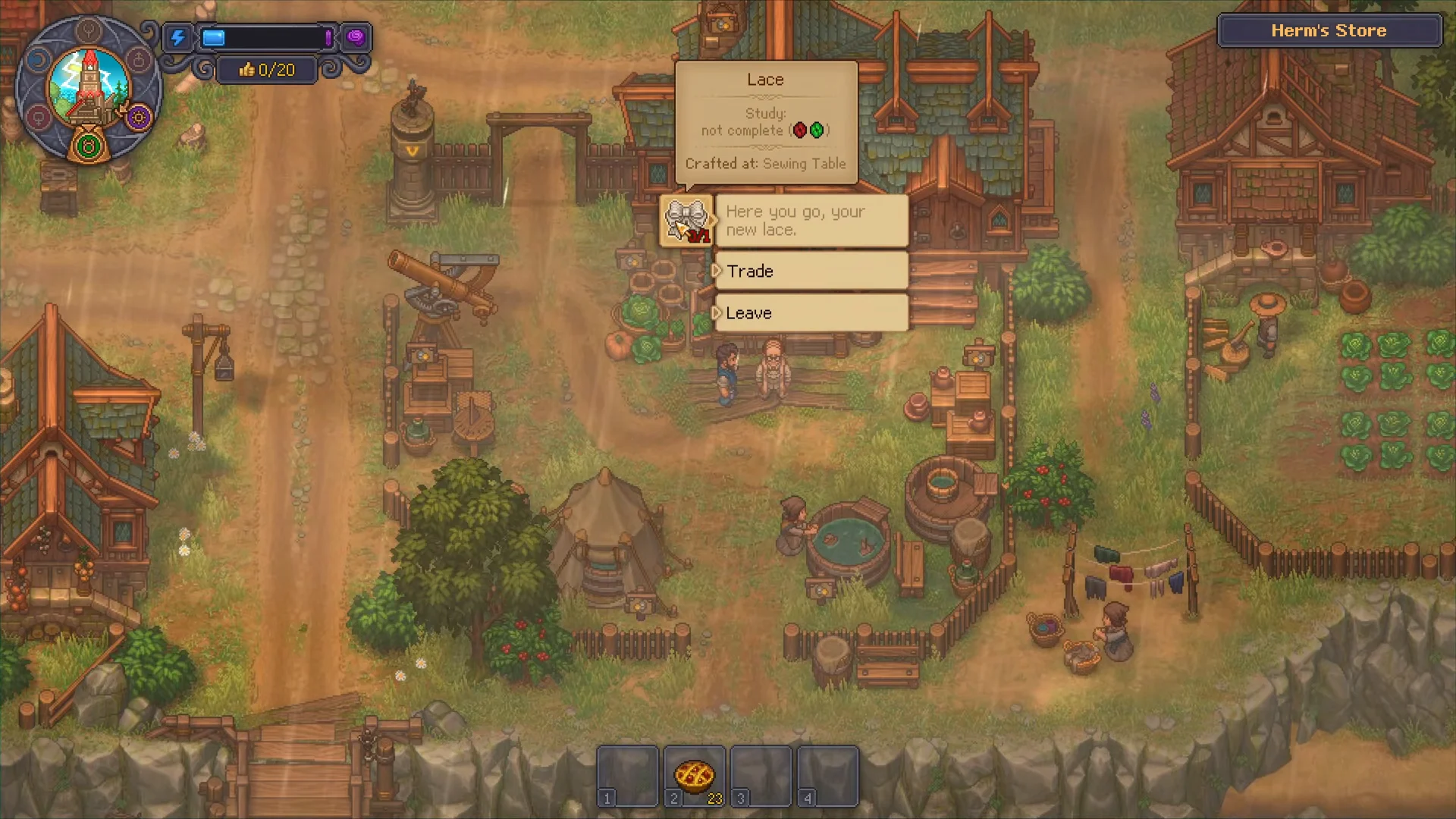
How to confirm the shop tier went up
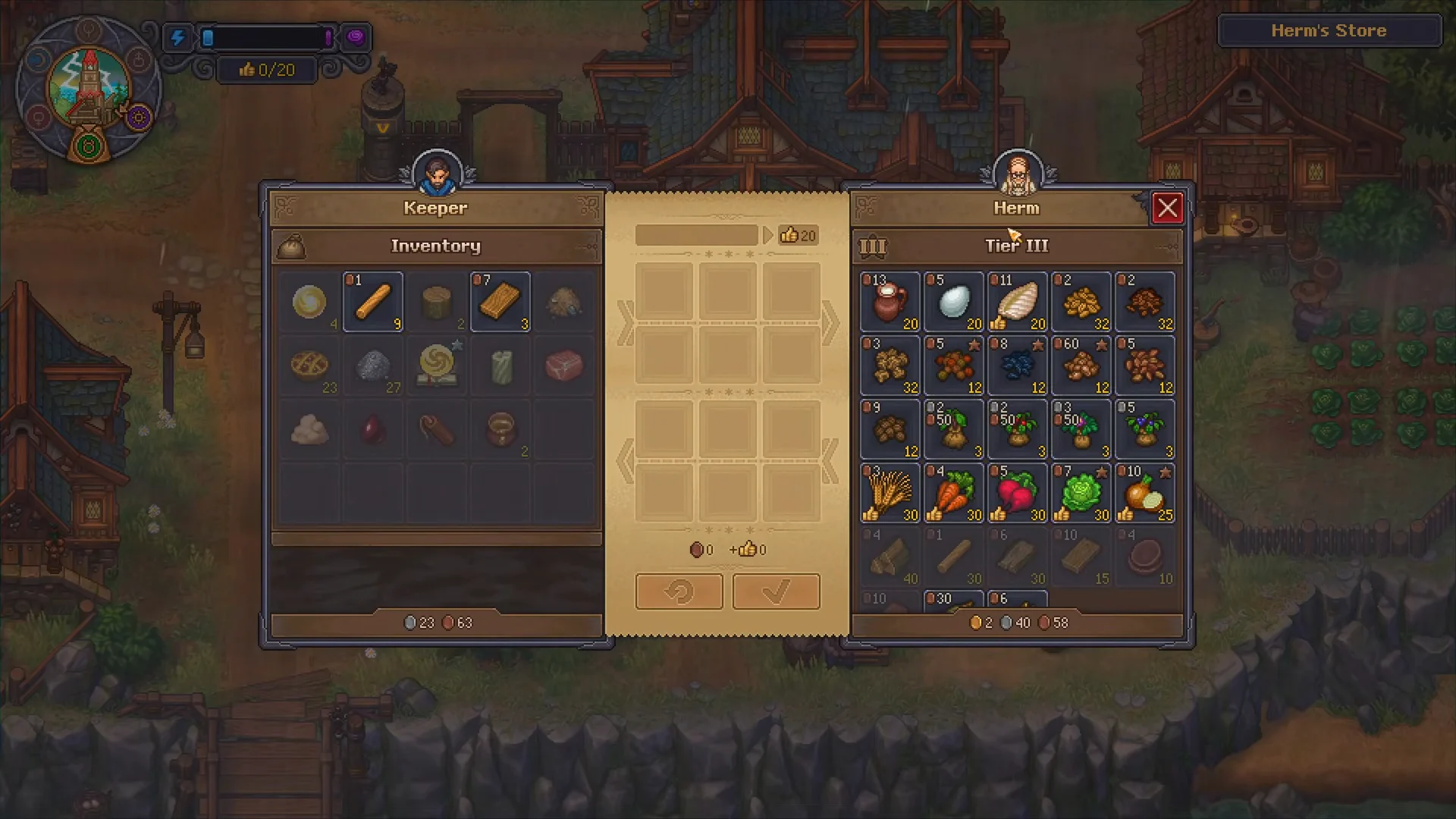
Open Trade straight after the handover. The shop menu shows its tier label at the top, so Herm’s Store reading Tier III is your confirmation that the delivery registered.
The stock list changes at the same time. A Tier III Herm carries higher-tier goods such as a Jug of Milk, eggs, Rhododendron Seedlings, and more advanced seeds, none of which appear at the earlier tier.
Town shop stages and their material costs
Shops you restore in the Town work on a separate stage system. Each shop has three building stages, and each stage is paid for on its own. The costs are not cumulative totals, so bring the materials for the stage you are actually building instead of buying first-stage kits again.
The opening stage always uses the same three kit types, scaled by how large the shop is:
- Apothecary, Tailor, Builder, Smithy: 4 Building Kit I, 3 Wooden Kit I, 1 Iron Kit I
- Furniture Maker, Baker, Fish Stand, Tavern: 6 Building Kit I, 4 Wooden Kit I, 2 Iron Kit I
- Alchemist, Jeweler: 8 Building Kit I, 6 Wooden Kit I, 3 Iron Kit I
Stages II and III are where the shops diverge, each demanding one signature material on top of the standard kits.
| Shop | Stage II cost | Stage III cost |
|---|---|---|
| Apothecary | 4 Furniture Kit I; 1 Sculpture Kit I; 2 Glass Containers | 4 Furniture Kit II; 3 Building Kit II; 1 Sculpture Kit II |
| Tailor | 4 Furniture Kit I; 1 Sculpture Kit I; 40 Flax Thread | 4 Furniture Kit II; 3 Building Kit II; 60 Fabric |
| Furniture Maker | 6 Furniture Kit I; 2 Sculpture Kit I; 4 Wooden beam | 6 Furniture Kit II; 4 Building Kit II; 12 Steel Screws |
| Baker | 6 Furniture Kit I; 2 Sculpture Kit I; 4 Flesh | 6 Furniture Kit II; 4 Building Kit II; 8 Flesh |
| Fish Stand | 6 Furniture Kit I; 2 Sculpture Kit I; 1 Advanced Rod | 6 Furniture Kit II; 4 Building Kit II; 1 Pro Rod |
| Alchemist | 10 Furniture Kit I; 4 Sculpture Kit II; 4 Blank Softcover Notebook | 10 Furniture Kit II; 4 Building Kit II; 4 Blank Hardcover Notebook |
| Jeweler | 10 Furniture Kit I; 4 Sculpture Kit II; 5 Polished Bronze | 10 Furniture Kit II; 4 Building Kit II; 10 Polished Bronze |
| Builder | 6 Furniture Kit I; 4 Marble Kit; 2 Carved Stone | 8 Furniture Kit II; 4 Building Kit II; 4 Wooden Joint |
| Smithy | 6 Furniture Kit I; 4 Marble Kit; 6 Advanced Detail | 8 Furniture Kit II; 4 Building Kit II; 12 Steel Screws |
| Tavern | 10 Furniture Kit I; 6 Marble Kit; 20 Apple Cider | 12 Furniture Kit II; 6 Building Kit II; 20 Blueberry Cider |
These figures cover 10 shop chains. The Vegetable Stand and the Brewery are left out because some of their ingredients have to meet specific quality tiers.
Across the three stages, the Apothecary requires 4 Building Kit I, plus 3 Wooden Kit I, plus 1 Iron Kit I; it also needs 4 Furniture Kit I, 1 Sculpture Kit I, and 2 Glass Containers, followed by 4 Furniture Kit II, 3 Building Kit II, and 1 Sculpture Kit II. These figures exclude the raw materials used to craft the kits, which account for most of the expense.
Treat every vendor the same way Herm works. Check their dialogue first, follow the crafting chain their request points at, and hand the finished item over in person. The tier label in the trade menu is the only proof you need that it stuck.