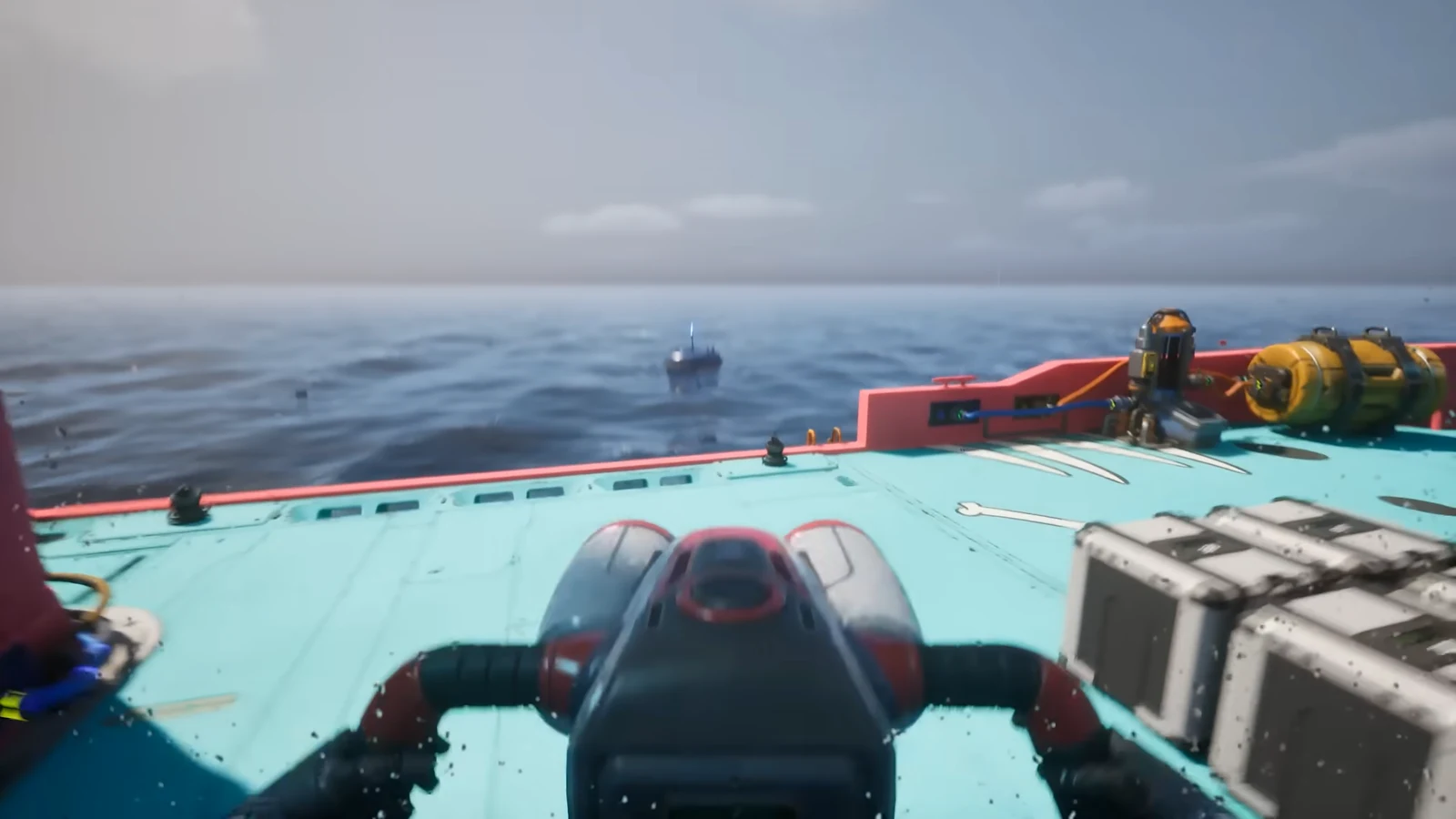
The CS-17 Courier Skimmer is the small, fast surface craft added to The Last Caretaker in the Ocean: The Final Frontier update. It carries one android, a little cargo, and nothing else. Its job is short-range scouting around tight island clusters while your main vessel sits anchored somewhere safe. Getting it into the water is only half the work, though, because an untethered skimmer drifts off and an unfueled one does not move at all.
Quick answer: Build the CS-17 Courier Skimmer in the water beside your ship, tie it down with a Mooring Cable, plug petrol into its intake port, slot the engine booster into the rear socket, then unhook and board the seat.
How to unlock the CS-17 Courier Skimmer blueprint
The skimmer comes out of the “The Isolation” questline in the new Rocky Islands biome. Open the map on your ship’s bridge and sail east, slightly north of the Lazarus Complex, toward the lone “Unknown” marker at roughly 112, -20. The quest triggers on its own once you are close enough.
From there you are sent to the Unlisted Tower, a rock spire you dock beneath and climb. Corrupted spores block parts of the route, so bring a loaded weapon. At the top, press the red button on the old console to play the radio message. That completes the stage that opens up the skimmer and hands you the follow-up objective at Quarantine Stack Amen.
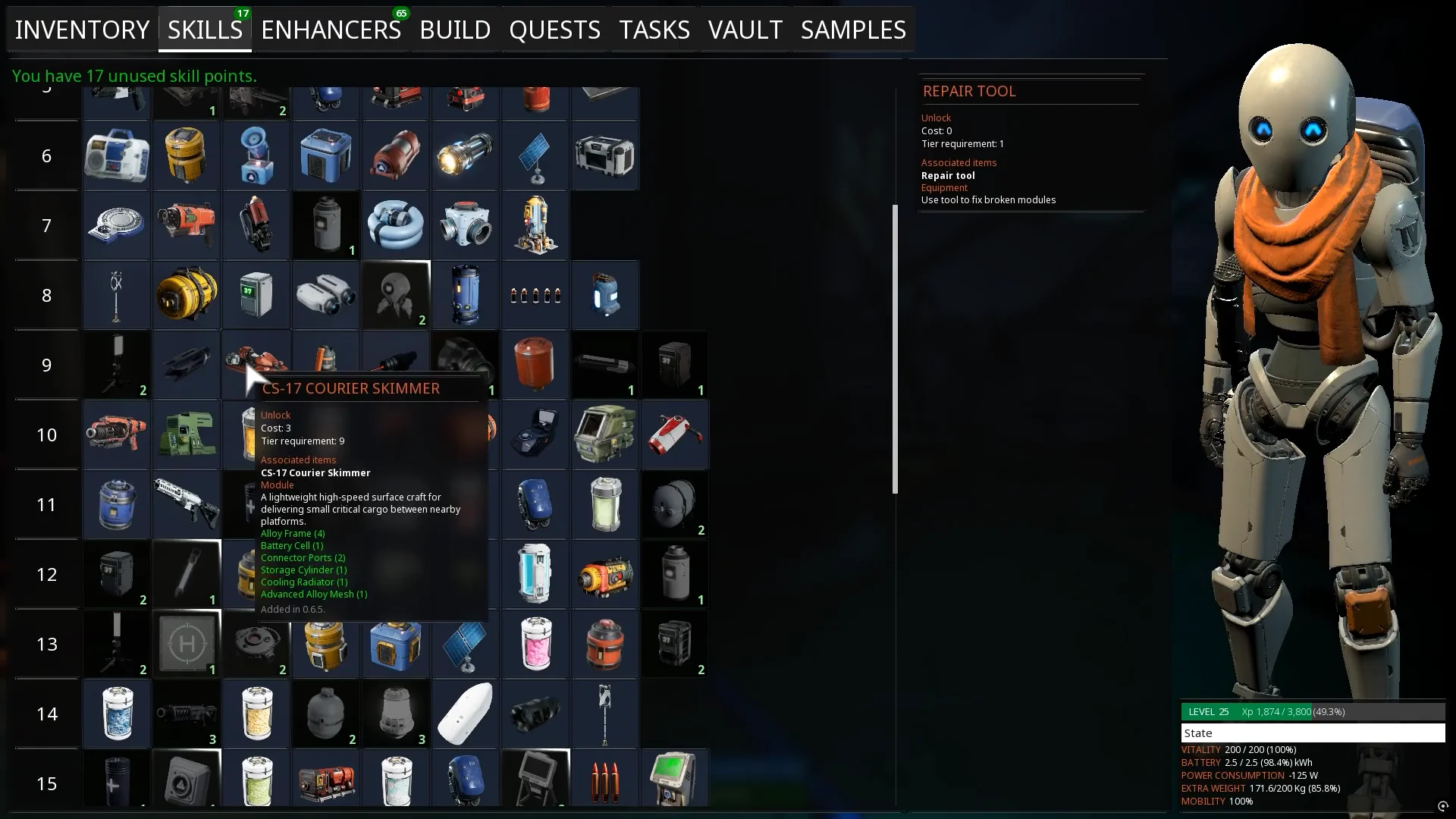
The blueprint also sits in your Skills menu, listed as CS-17 Courier Skimmer with a cost of 3 skill points and a Tier 1 requirement, reachable around level 9. Check that entry before you start gathering, since the component list is what your own build menu will hold you to.
Jet ski materials: Skimmer and engine booster
You are building two separate things. The skimmer itself is the hull, and the Petrol Engine Cylinder Super Booster is the drive unit that bolts on behind the seat.
| Component | Skimmer | Booster |
|---|---|---|
| Electricity | 2 Wh | 5 Wh |
| Alloy Frame | 2 | — |
| Battery Cell | 2 | — |
| Connector Ports | 1 | — |
| Storage Cylinder | 1 | — |
| Cooling Radiator | 1 | 1 |
| Advanced Alloy Mesh | 1 | 1 |
| Power Core | — | 1 |
Component counts have shifted between versions of the recipe, with some builds asking for a Logic Chip and different quantities of Battery Cells and Connector Ports. Treat the entry in your own menu as the authority and gather to that.
Petrol is not optional. The skimmer will sit there fully assembled and refuse to move until fuel is in the tank and the booster is mounted.
How to build the jet ski in the water
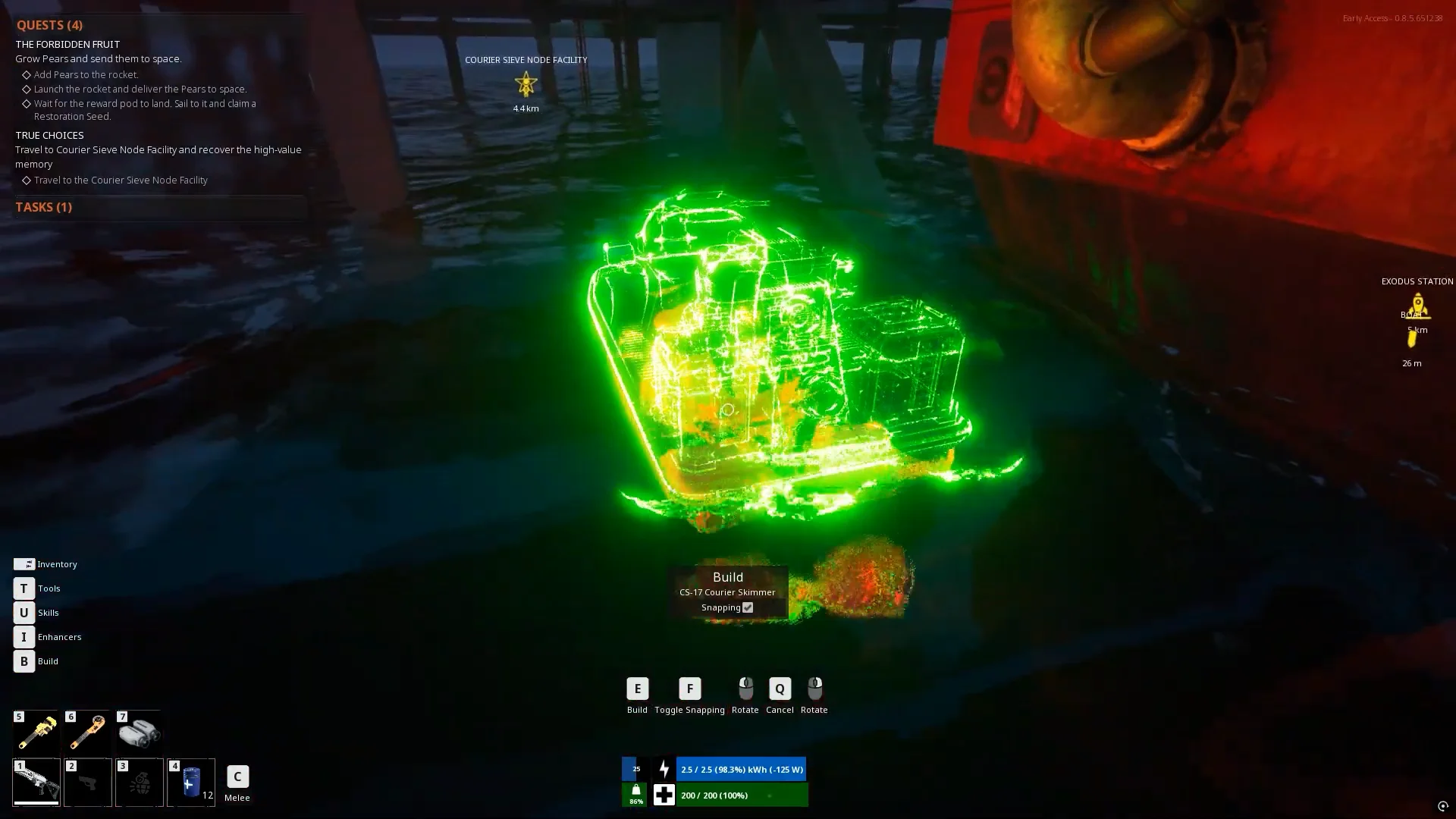
There is no crane, winch, or deck cradle for the skimmer. It lives in the water permanently, which is exactly why the next step matters more than it sounds.
How to moor the jet ski so it does not drift away
Take a Mooring Cable and attach one end to the connection socket on the front of the skimmer. Carry the other end up to your ship and snap it into a mooring port on the hull. The cable is what makes the skimmer travel with your vessel instead of being left behind the moment you get under way.
Mooring is equally useful at docks. The same cable steadies the craft while you climb a spire, and a moored hull rocks far less than a free-floating one.
Quarantine Stack Aurora has no mooring attachment. Park the skimmer somewhere sheltered before you climb, or expect to swim after it.
How to fuel the jet ski and fit the engine booster
One canister of petrol is enough to cover a full run around the Quarantine Stack spires, so you do not need to haul a fuel stockpile for a single scouting trip.
How to drive the jet ski and confirm it works
Disconnect the Mooring Cable first. Then interact with the seat to mount up and steer out into open water. If the setup is correct, the throttle responds immediately and the speed readout climbs past 50 km/h, with considerably higher numbers possible on flat, calm water.
If the craft refuses to move, the cause is almost always one of three things: the cable is still attached, the tank is empty, or the booster never seated properly in the rear socket. Check the mount behind the seat before you assume anything is broken.
Towing the skimmer behind your main vessel
Because the skimmer never leaves the water, every long journey is a tow job. The craft is light and bounces hard, and pushing your ship too fast drags the tow line around badly enough to slow you down or swing the boat off course. Keep it conservative:
- Stay below 35 kph in calm conditions.
- Drop to around 25 kph during storms.
- Avoid sharp turns at speed.
- Watch the wave pattern before you open the throttle.
Ignore that and the skimmer can flip, or land on your deck. Closing doors in Sanctuary zones and mooring at docks also cuts down the rocking that makes reattaching the cable fiddly.
Where the jet ski earns its keep: The triode run
The clearest use for the skimmer is the vault at Quarantine Stack Amen. Opening it takes four triodes, and three of them sit on separate spires scattered around the main stack. The map panel beside the vault door shows the central spire and the surrounding outcrops you need to visit.
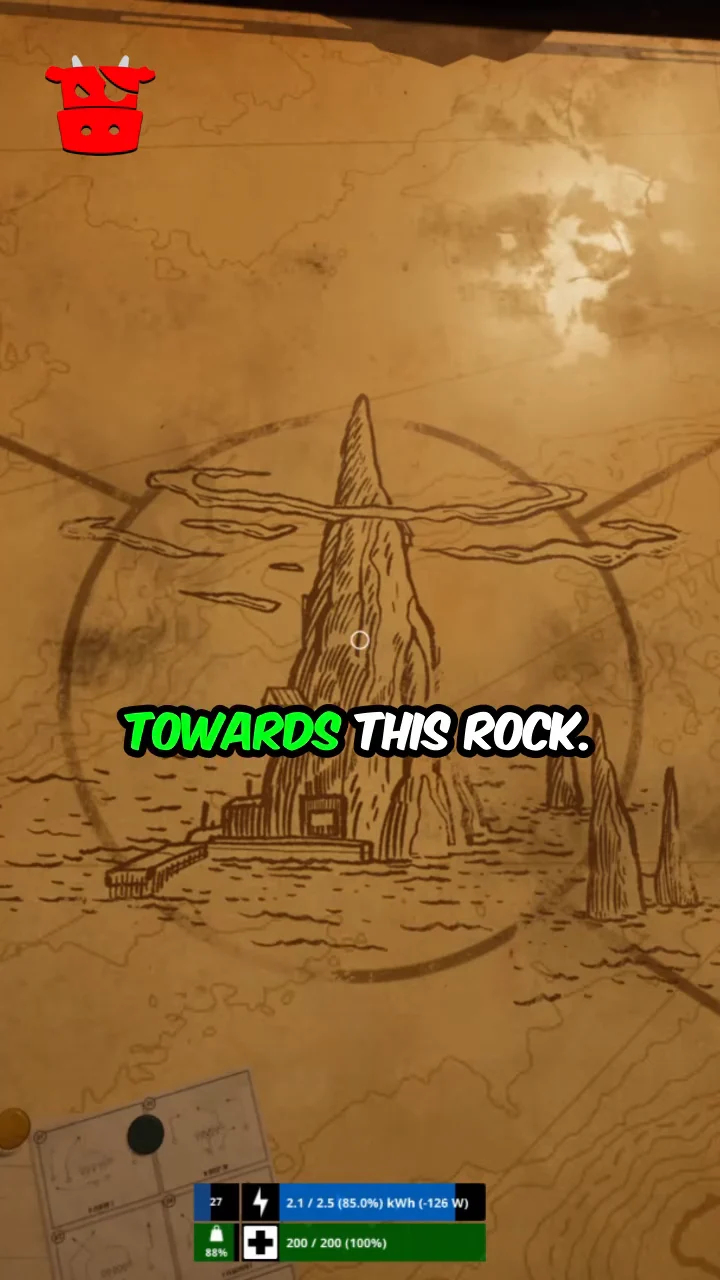
Hopping between Quarantine Stack Chorus, Dawn, and Aurora on the skimmer is far quicker than repositioning your whole vessel for each one. Scan each triode with the Replica Scanner, then craft the copies from Titanium, Gold, and Copper before slotting all four into the console and powering it with a cable run or a small battery. The vault opens onto the Scan-500 attachment for your sonar.
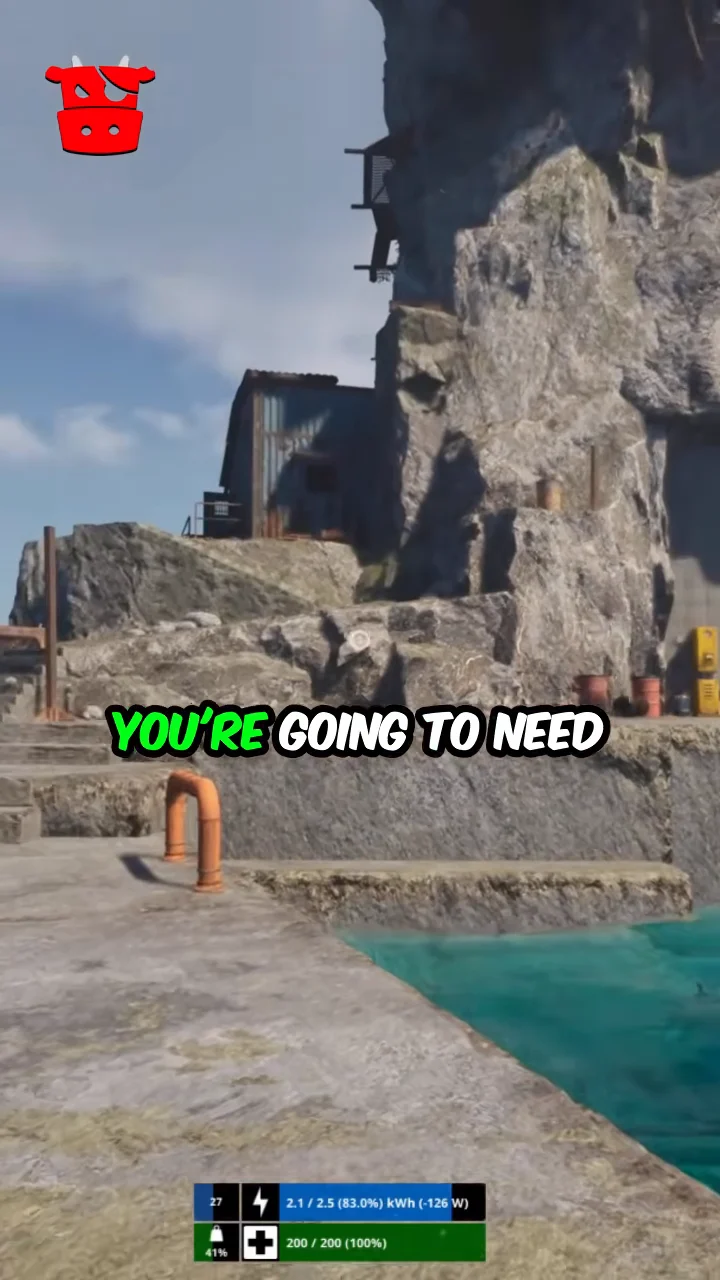
Outside the Rocky Islands, the skimmer is a supplement rather than a replacement. It cannot carry Lazarus pods, it gets thrown around in heavy weather, and hauling it everywhere costs you top speed. Used as a short-range scout from an anchored base, though, it turns a slow multi-stop detour into a handful of quick sprints.