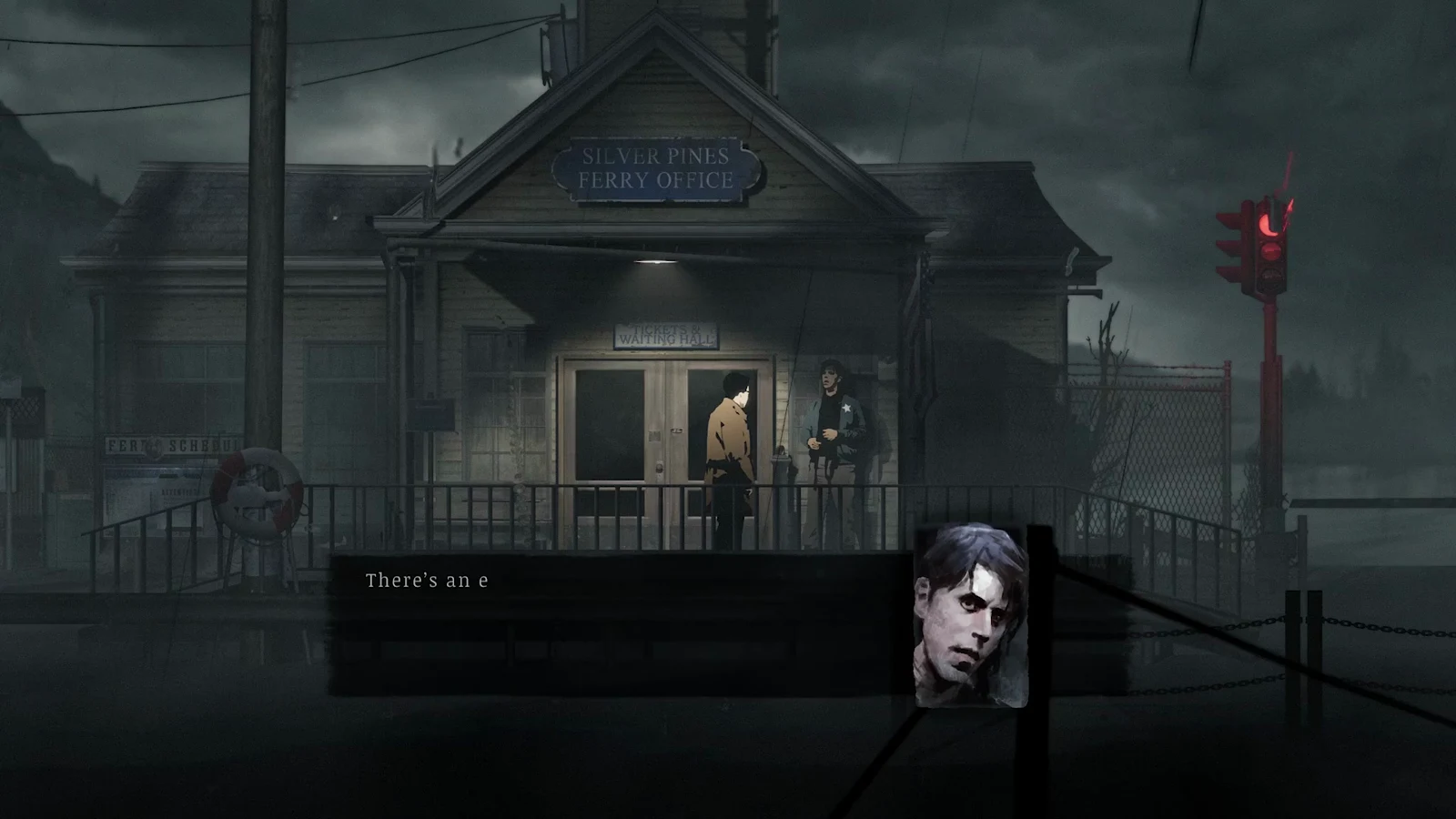
Silver Pines is a retro-styled survival-horror side-scroller set in a fog-covered, evacuated town of the same name, founded in 1858. You play as Detective Walker, a trench-coated investigator who arrives by ferry and works his way through barricaded streets looking for a missing musician named Eddie Velvet. The town is quiet in the worst way: clocks have stopped, stores are locked, and the few people left behind speak in riddles. Monsters roam the darker corners, and some areas are simply too dark to enter without a light.
Quick answer: Silver Pines is a 2D survival-horror game where Detective Walker explores an abandoned town, solves environmental puzzles, manages a small inventory, and fights monsters while hunting for a missing person named Eddie Velvet.
The town of Silver Pines and Walker’s case
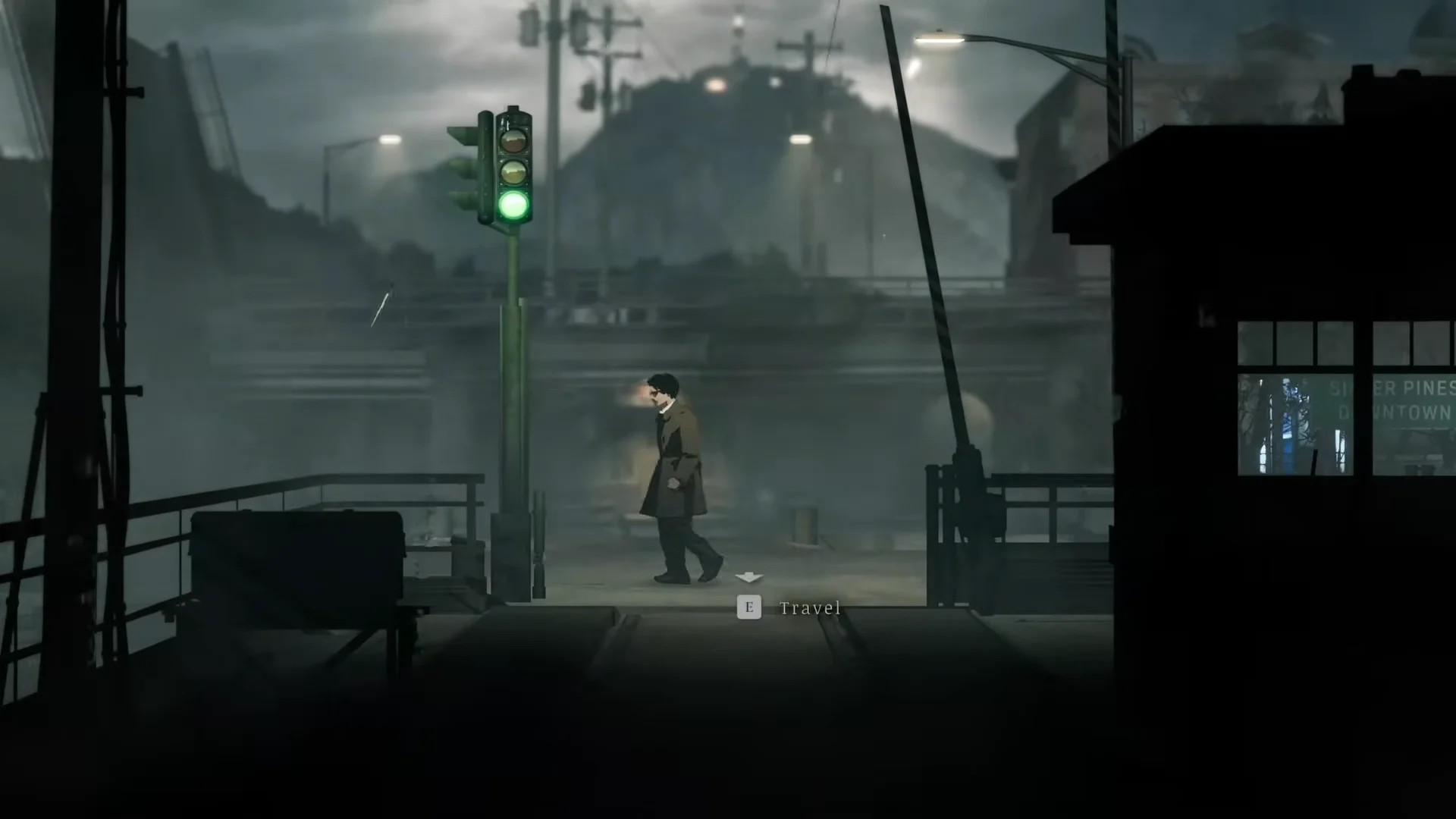
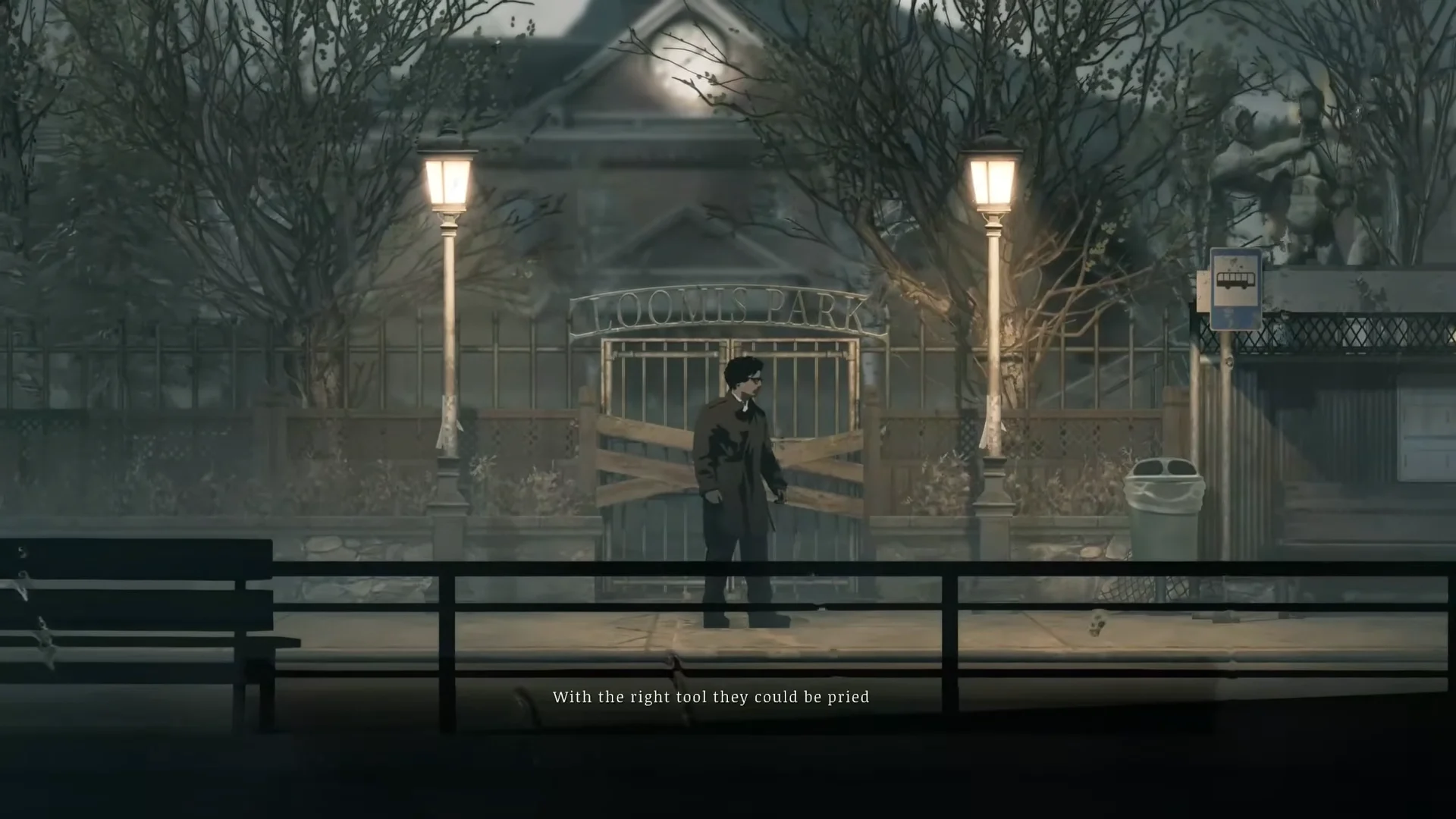
Walker enters through the Silver Pines Ferry Dock and immediately has to orient himself using a town map that divides the area into districts: Church Hill, Downtown, Mt. Siah Kopa, and Riverside. The streets are a maze of raised bridges, collapsed routes, and gates nailed shut with wooden planks, which pushes exploration into back alleys, canals, and rooftops instead of the main roads.
The missing-person thread runs deeper than one musician. A torn poster near the ticket booth asks for help finding someone named Baker, last seen heading up Mt. Siah Kopa, and a newspaper later ties a detained musician to the disappearance of a woman. Walker reports back to an employer through public payphones scattered around town, including an odd exchange about a promised “paradise beach.” The story unfolds through these clues, radio broadcasts from a presenter named Sharon Maple, and a TV crime drama called “Terminal Drive” playing in the background.
The people Walker meets are unsettling rather than helpful. An elderly man with an umbrella stands on the Loomis Street bridge, an injured girl locked in a veterinary kennel babbles about a “bad little man,” and a cable car attendant’s face glitches into a grinning stranger mid-conversation.
Survival systems: stamina, mementos, and weapons
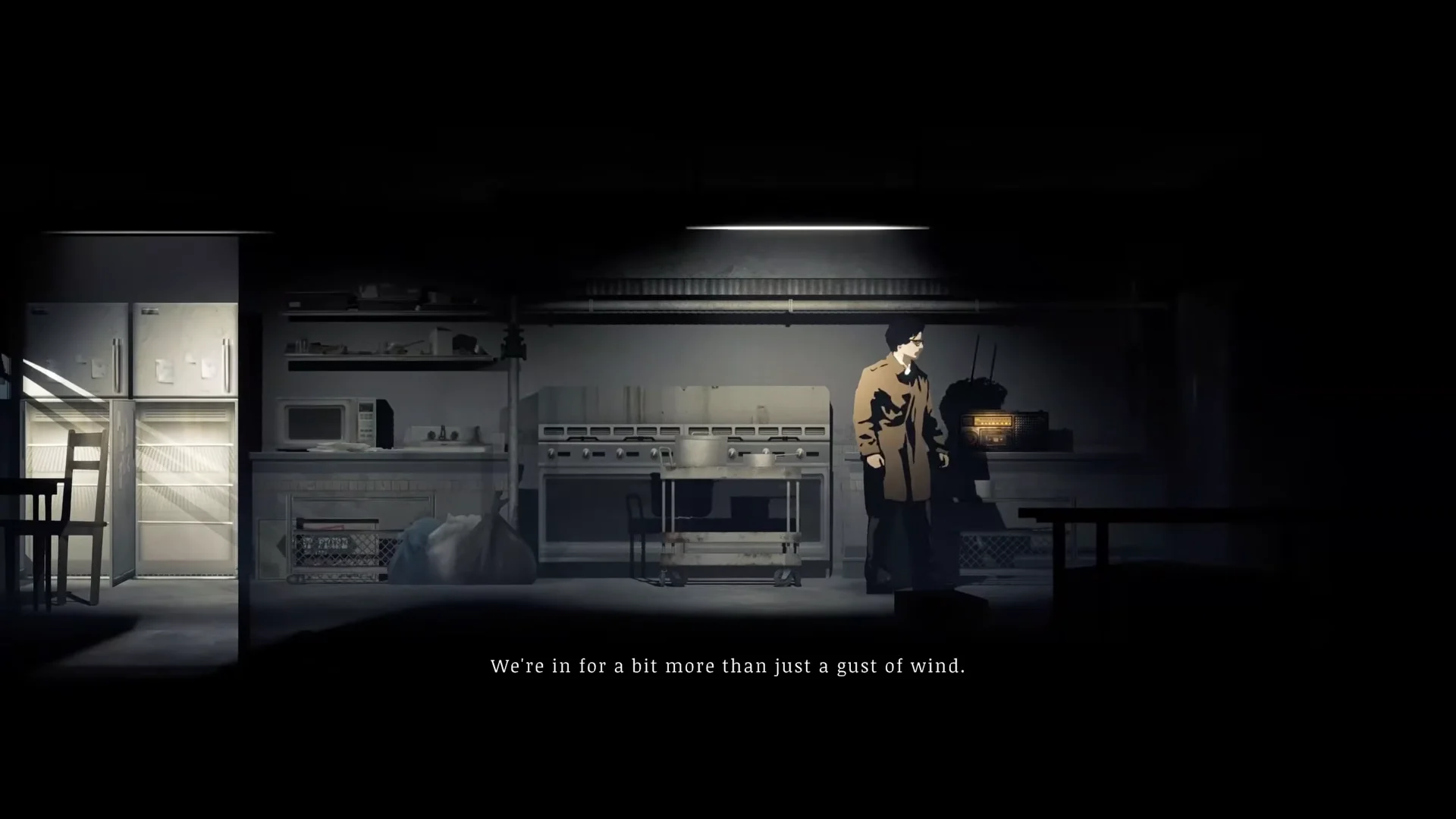
Silver Pines relies on a few clear, uncomplicated systems rather than extensive menus. Walker permanently increases his maximum stamina by brewing coffee on a kitchen burner. He can do this at The Quiet Hour Cafe and Dana’s Auto Repair shop, earning two separate upgrades in different parts of town.
A separate upgrade path comes from the Memento Vessel. Walker collects four Memento Vessel Shards hidden around town, often shot down from hanging cages and lanterns, then combines them in the inventory into a complete vessel. Consuming the finished vessel unlocks an extra memento slot, letting him equip a passive item such as the Switchblade Cufflink.
Weapons wear down and need maintenance. Walker fights with a Boxcutter up close and a revolver at range, burning through .38 ammunition that he buys from Vendora vending machines for about a dollar a round. Durability is restored with repair items crafted at workbenches.
| Item | Made from | Effect |
|---|---|---|
| Duct Tape | Vendora purchase | Small melee durability restore |
| Makeshift Repair Kit | Duct Tape + Spare Parts | Moderate melee durability restore |
| Double Action Mechanism | Diner lockbox | Higher revolver fire rate |
The bird statuettes and cable car puzzles
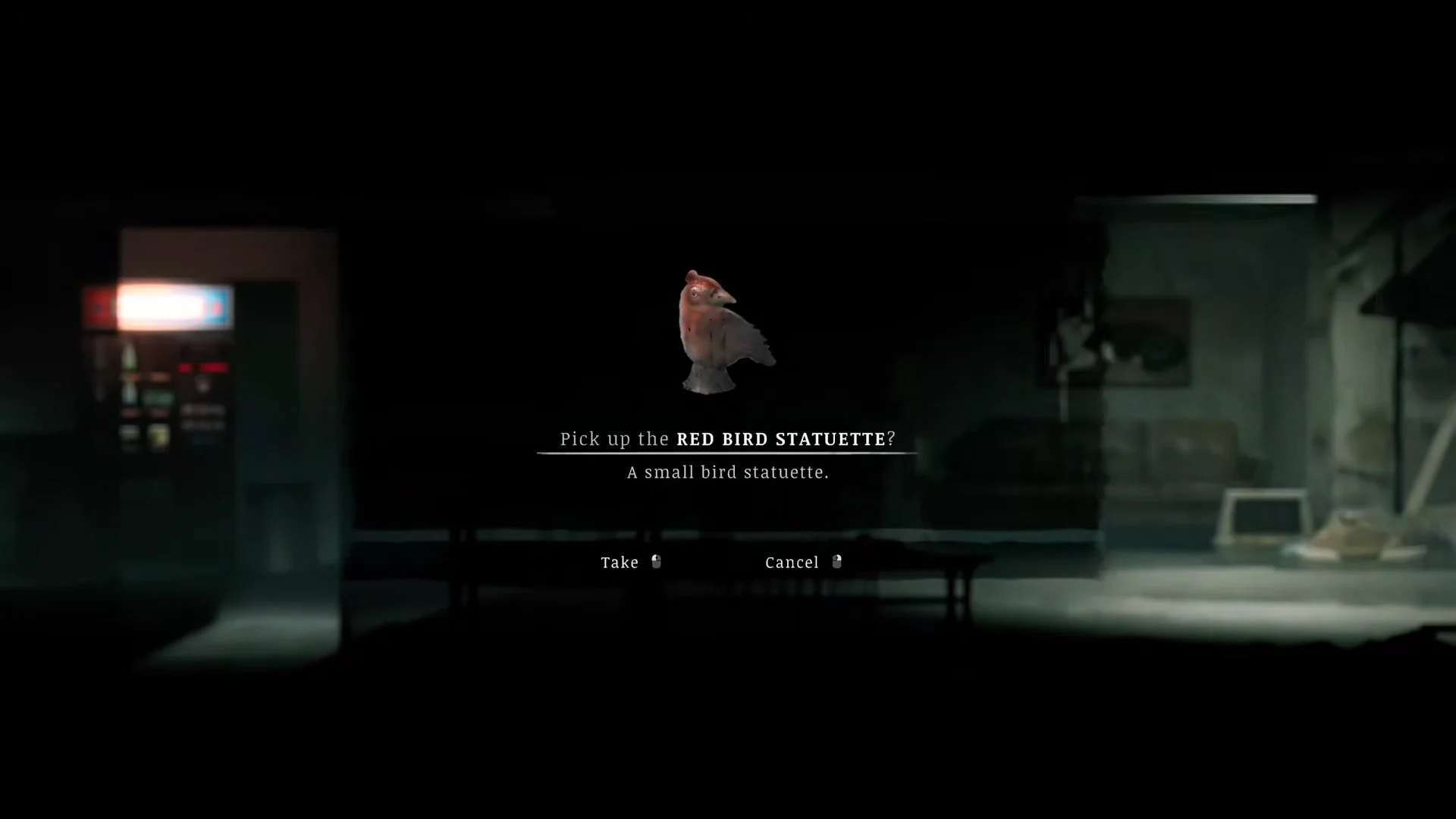
Progression is gated behind environmental puzzles that span several locations. The Red Bird Statuette sits on a coffee table in the Friendly Paws Veterinary Clinic, while the Yellow Bird Statuette waits on the counter of the movie theater lobby. Both feed into an ornate bird cage puzzle back at The Quiet Hour Cafe.
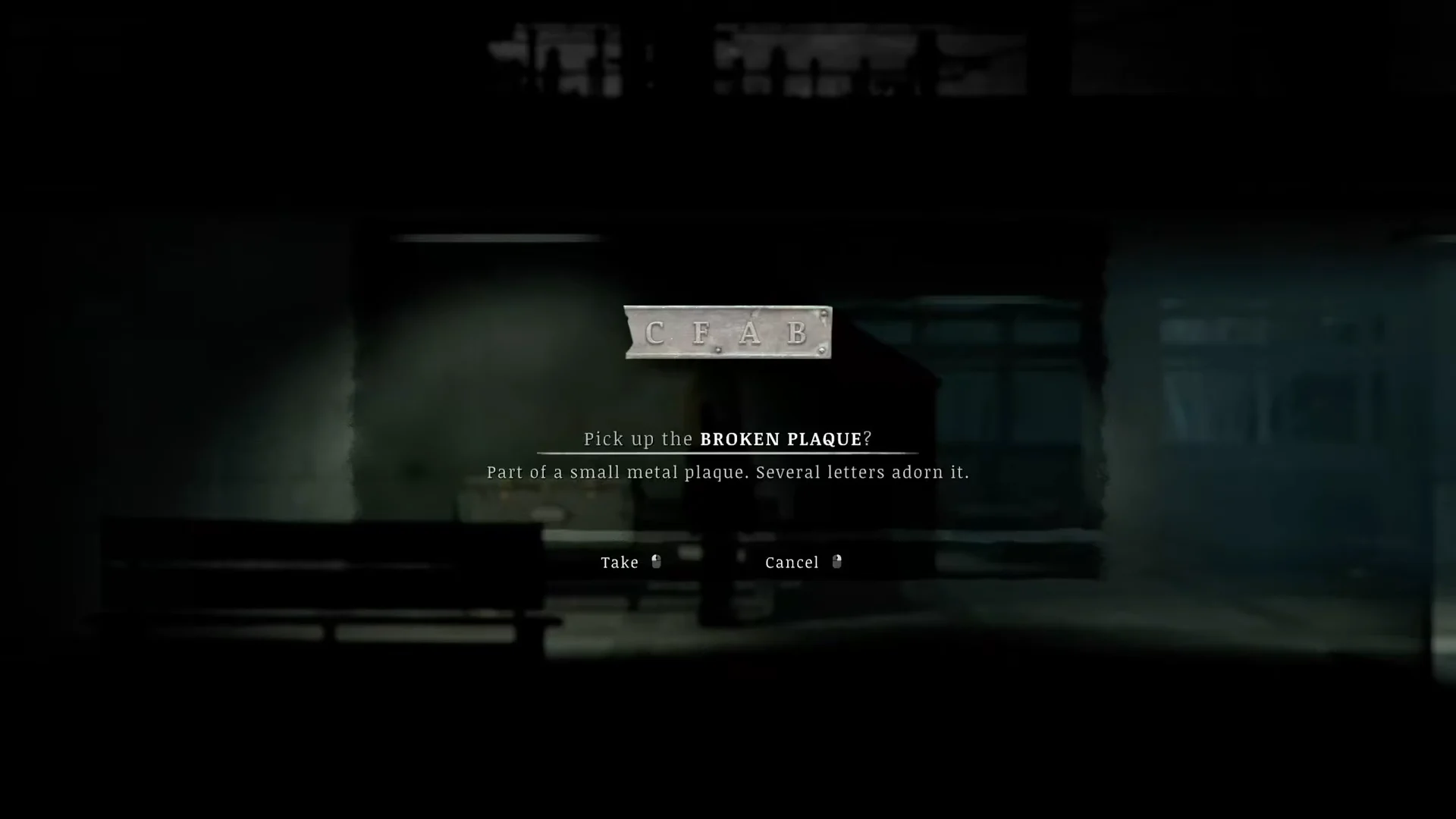
The route into Riverside hinges on the Mt. Siah Kopa cable car station. Inside the waiting room, Walker finds a broken metal plaque fragment labeled “CEAB.” That fragment slots into the bell counter beside an existing “EGD” piece.
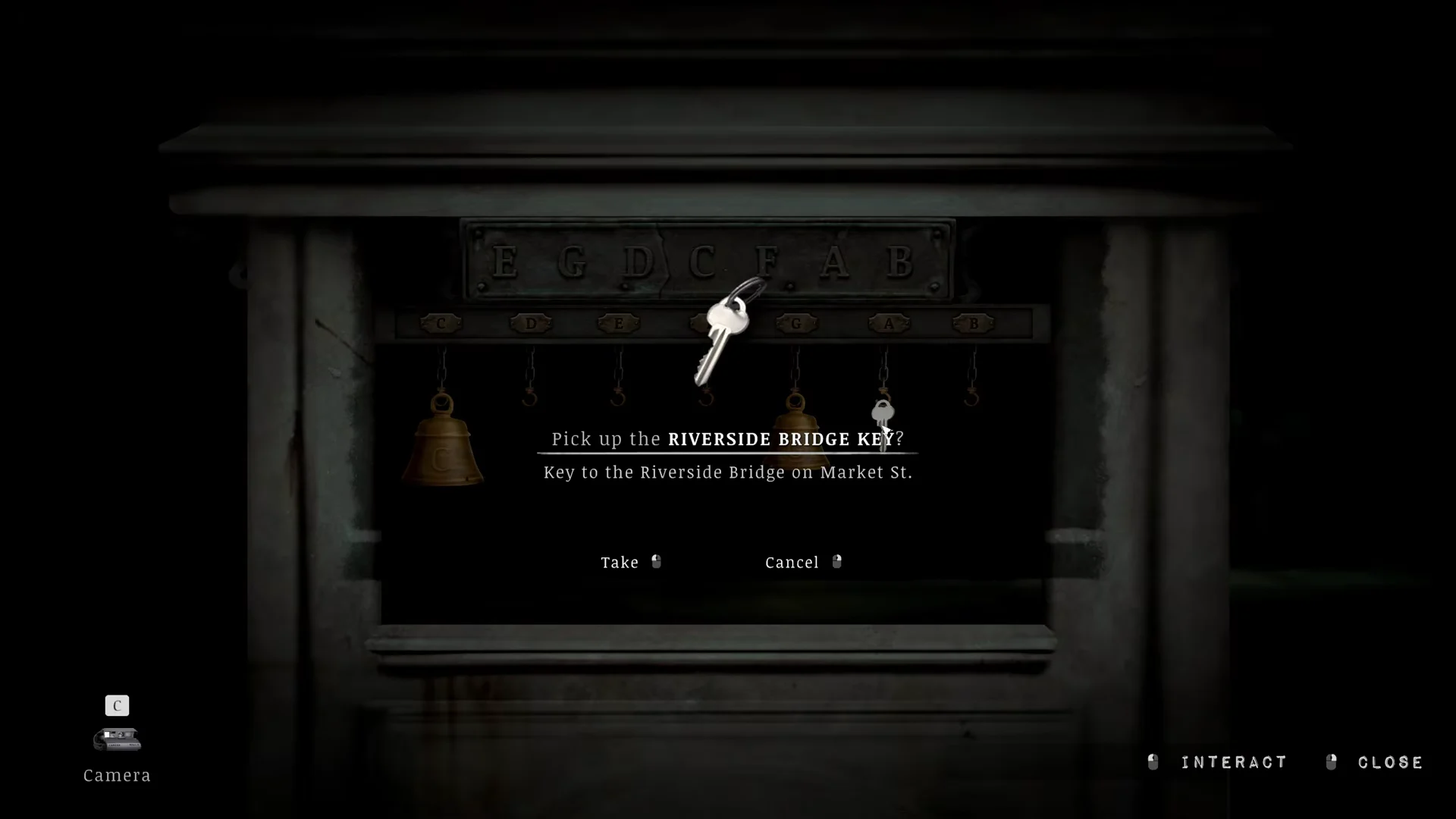
Combined, the two pieces spell out the musical sequence E G D C F A B, and solving it hands Walker the Riverside Bridge Key. That key opens the iron gate on Market Street leading across the suspension bridge, where a towering mutated figure stands silently beside a parked car.
Solving the bell order does not actually start the cable car. The attendant explains that the ride only runs once five hidden bells are recovered and rung, placed around the Sheriff’s Office, Union Apartments, Church Hill, Town Square, and the Sewers. That sets up a longer hunt beyond this stretch of the game.
Why the flashlight matters
Darkness is a hard barrier in Silver Pines, not just atmosphere. Walker reaches a pitch-black theater hallway early on and simply cannot continue because there is no light source. The Pocket Flashlight resolves this, and it illuminates surroundings while running on batteries.
Reaching it is a small chain of its own. Walker restores power at the Wing Oil gas station breaker, grabs the Bathroom Key from the store counter, and uses it to open the restroom where the Pocket Flashlight sits on the floor. The same restroom hides a Hip Bag that adds two inventory slots, a meaningful bump given how tight carrying space is.
With the flashlight and fresh ammunition equipped, the previously impassable dark areas, like that theater hallway, open up, which is where the footage leaves off.
Taken together, Silver Pines presents itself as a compact, deliberately old-fashioned horror game built around careful exploration, light resource management, and puzzles that stretch across its districts. The hook is less about jump scares and more about piecing together what happened to a town that emptied out, one clue, locked door, and darkened room at a time.