
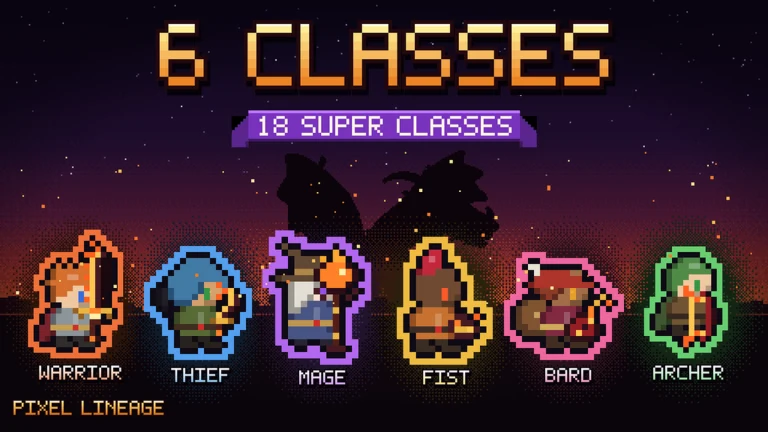
Pixel Lineage is a turn-based, pixel-art RPG on Roblox where every battle runs on timing prompts and a single hero has only three lives to spend. The choices you make at character creation and in your first few runs decide whether you reach the first boss or lose a life to a Goblin. The fastest way to build momentum is to pick a race that keeps you alive, a class whose attacks are easy to read, and to spend upgrade materials carefully.
Quick answer: Roll for Nightborne, start as a Warrior, run on Normal, hatch a combat pet at the Ranch, and save high-tier upgrade stones for gear you plan to keep.
Best beginner race in Pixel Lineage
Survival matters more than raw damage for a new hero, so the strongest races are the ones that heal you back through a long fight. Nightborne is the pick most worth keeping: it heals you for 15% of the damage you deal, capped at 7% of your max HP per move. Because Warrior attacks hit hard and often, that lifesteal keeps ticking throughout a battle.
| Race | Roll chance | Effect |
|---|---|---|
| Tideborn | 0.7% | Heal 5% max HP at the start of every turn |
| Nightborne | 0.7% | Heal 15% of attack damage, capped at 7% max HP per move |
| Stonekin | 8.0% | +20 max HP and 15% stronger Fist attacks |
| Dwarf | 8.7% | +15 max HP and 6% more Defense |
| Human | 37.7% | 10% extra battle XP and class mastery |
Both Tideborn and Nightborne are rare rolls at 0.7% each, so do not treat either as a requirement. A current roll’s benefit is guaranteed while the next spin is not. Dwarf is a clean defensive fit for any class, and Human speeds up leveling and class mastery, which makes either a sensible one to keep while you learn the game.
Race rolls and talent rolls use separate counters on the Edit Your Hero menu. Spending one does not reduce the other, so check which number changes before you re-roll.
Best starting class for new players
Choose Warrior for your first class. This sturdy frontliner deals heavy damage, stuns enemies, and protects itself well. Its attacks are also the easiest to read as you learn combat timing. The Reinforced passive grants +50% defense against a single direct hit at the beginning of each battle, helping you withstand a dangerous opening strike before you have good gear.
Thief and Mage are reasonable alternatives once you are comfortable. Thief is a nimble dagger fighter built around critical hits, and Mage banks Energy for powerful spells but is fragile early. Fist, Bard, and Archer fill out the six base classes, each with its own passive and three Super class branches to grow into later.
| Class | Role |
|---|---|
| Warrior | Durable frontliner with heavy blows and protection |
| Thief | Nimble dagger fighter focused on critical hits |
| Mage | Fragile caster who banks Energy for elemental spells |
| Fist | Multi-hit martial artist who builds momentum |
| Bard | Support caster for healing and buffs |
| Archer | Ranged marksman who ignores some defense |
Combat timing and the three lives system
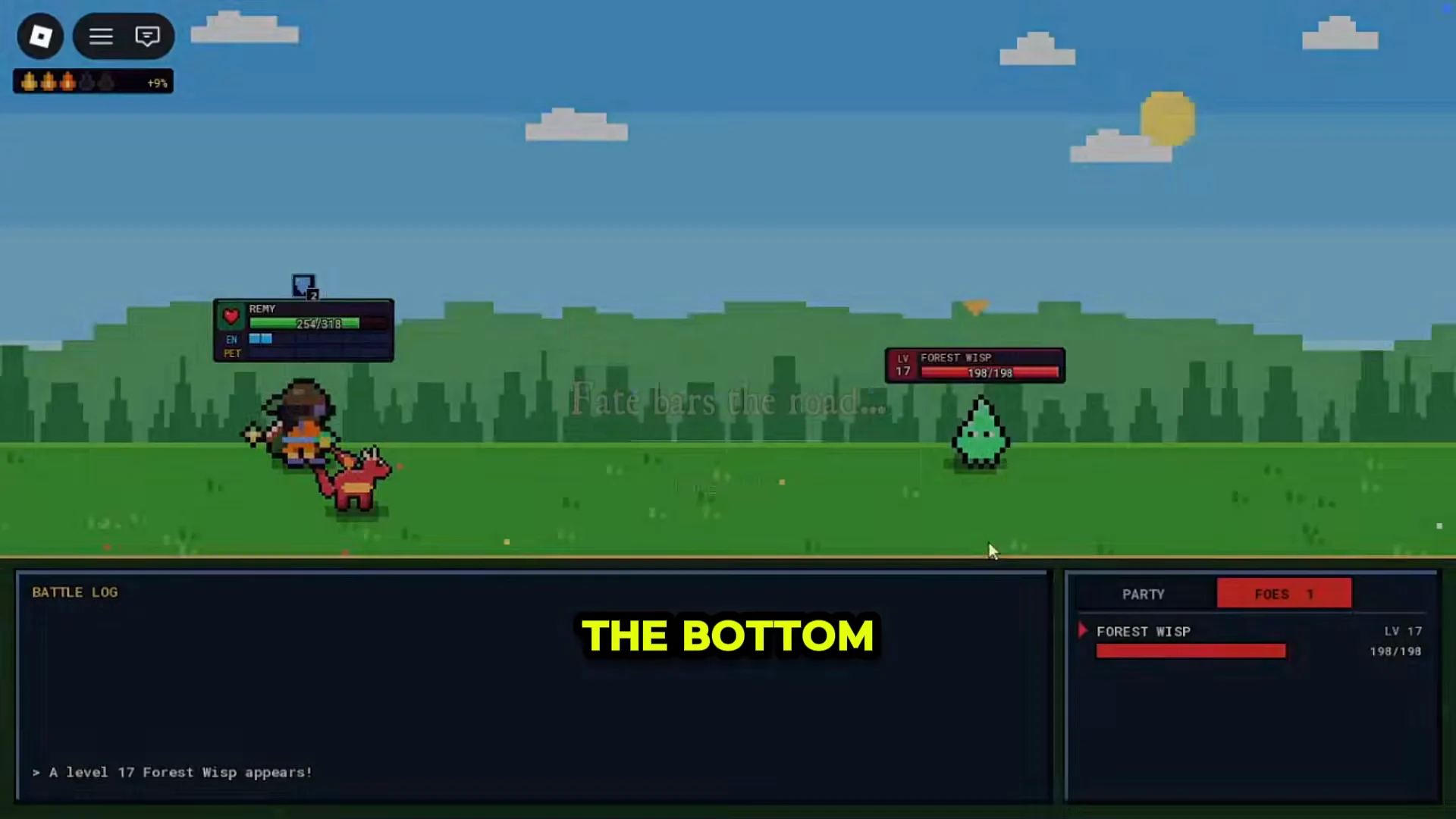
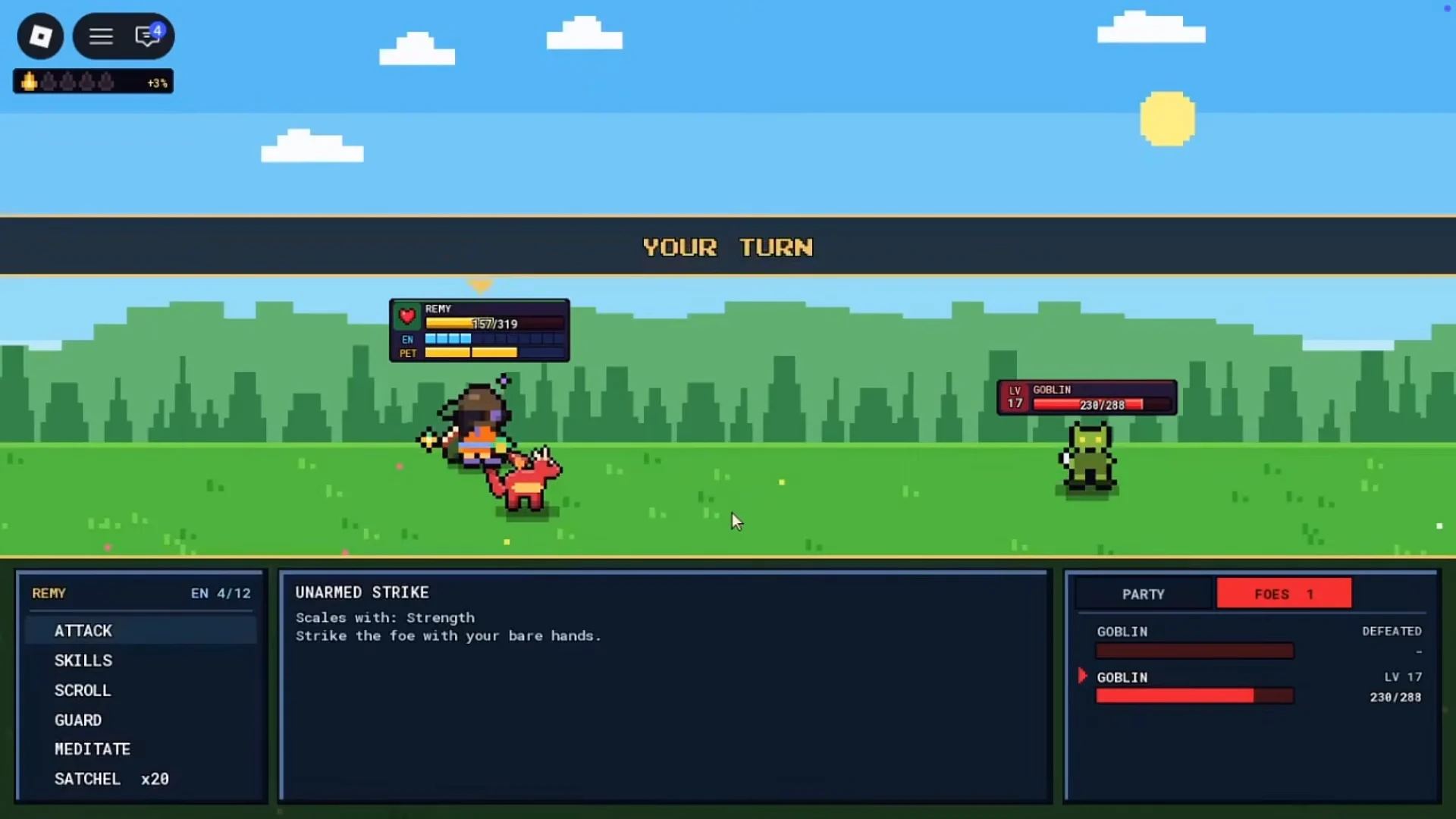
Combat is turn-based, but every action runs through a timing mini-game. Attacks ask you to hit the input as a moving bar reaches the gold band for a “PERFECT!” strike, while incoming hits prompt you to block or dodge at the right moment. Start every run on Normal difficulty so you can practice those windows without heavy punishment.
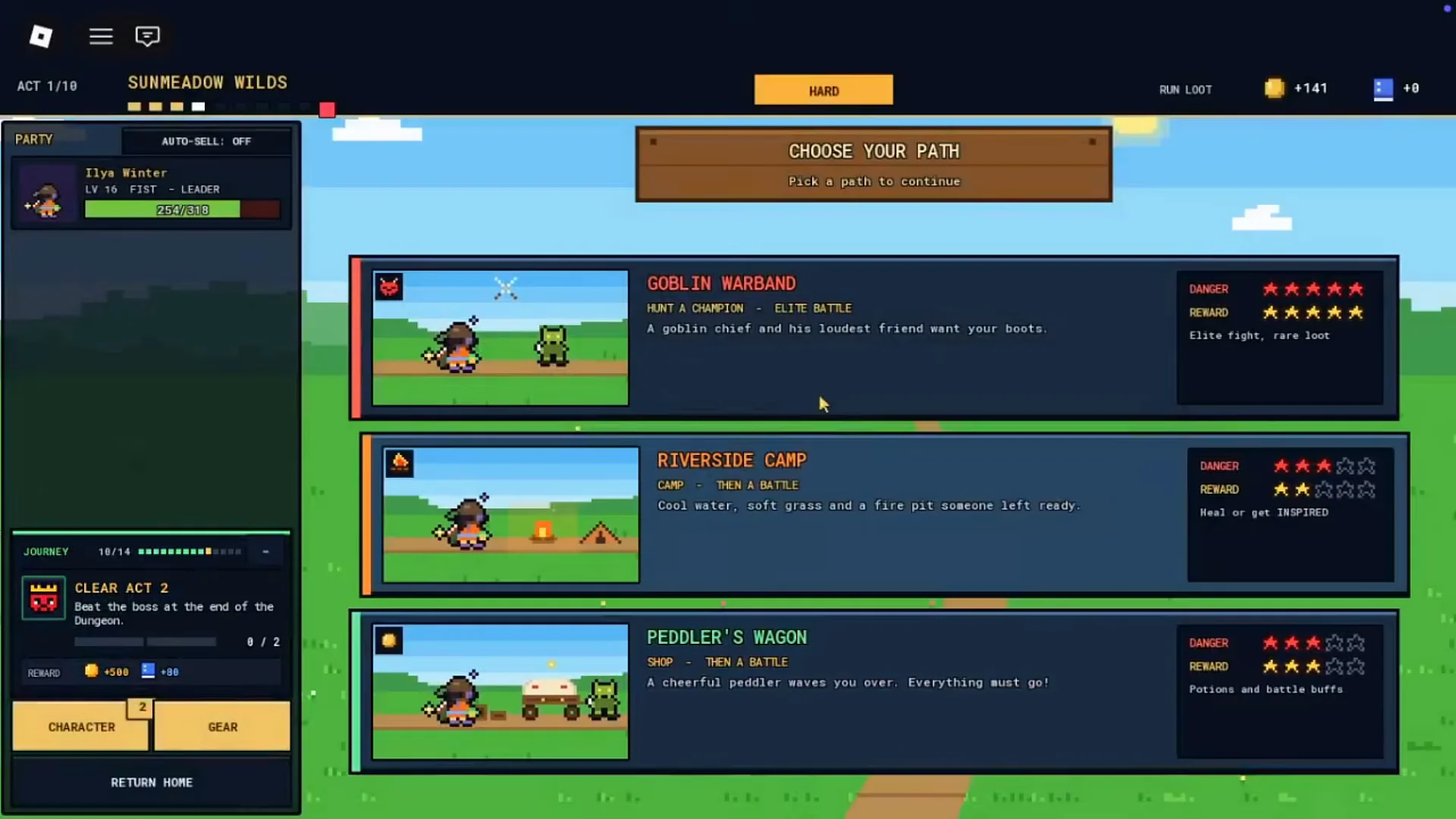
Your hero begins with three lives; once they are all gone, the loss is permanent. There is no need to continue if a dungeon becomes dangerous. On the node selection map, use “Return Home” in the bottom-left corner to retreat to town without using a life. Leaving early to return with better gear is almost always preferable to losing a run.
Gear drops and Blacksmith upgrades
Gear and blueprints drop from regular mobs and bosses, and rarer pieces appear from the optional elite fights and secret bosses that show up at random on the path map. Those harder nodes carry more risk but hand out better XP, gold, and rare loot, so weigh your current health before taking one.
Back in town, the Blacksmith upgrades your equipment using upgrade stones that come in Uncommon, Rare, Epic, and Legendary tiers. Every upgrade carries a failure chance, so do not pour Legendary stones into early throwaway gear. Spend low-tier stones on starter equipment and hold the high-tier ones for the weapons and armor you intend to keep.
Pets and the Ranch
Eggs hatch into pets, which gain levels as your hero does. You can manage and equip them at the Ranch. In combat, a pet can fill one of several roles by dealing damage, healing, providing defense, or boosting stats. Bringing one gives you support beyond what your class covers on its own.
Check the event tracker while an event is active, since its exclusive and Mythic pet variants are unavailable afterward. For a first hero, though, any combat pet is a worthwhile improvement over fighting alone.
Town facilities to use first
The town hub holds the services that turn run rewards into lasting progress. Four of them matter from your first visit.
- Inn — stores your gold, materials, and spare gear.
- Ranch — lets you manage and equip the pets you have unlocked.
- Guild Hall — provides guild features and access to the Raid Gate, where multiplayer boss fights reward special tokens.
- Auction House — lets you trade gear, pets, and consumables with other players.
Some buildings start damaged and need gold to repair and quick-build before you can use them. Prioritize the Blacksmith and the Ranch early, since both directly feed your next run.
Redeem codes for free spins and lives
Redeem codes by visiting Grizzle’s Golden Goods goblin merchant, who brings up a box where you can type them. The rewards—gold, talent spins, potions, race spins, knowledge, and extra lives saved for later—are much more useful to a new hero than an established one. Use codes early.
Codes seen working recently include LEGENDS, TORMENT, OCTOBER, SALOOF, and TUTORIAL. Codes expire over time, so redeem them while they still return a valid reward. You can launch and play the game from its official Roblox page.
Super classes, Ultra classes, and the Ancient Portal
The progression path runs Class to Super class to Ultra class. You unlock a Super class by finding its shrine in the dungeon, from Act 2 onward, and meeting the class-specific prerequisites. Each base class branches into three Super classes, which specialize your abilities and expand your moveset.
Ultra classes are a later goal: unlocking them takes Sigils, which begin dropping in Act 5 and subsequent acts, as well as materials dropped by specific monsters. For now, prioritize clearing Normal runs and building your gear rather than pursuing them.
Once you unlock the Ancient Portal, you can jump straight back to any cleared act to farm a specific material or boss drop instead of grinding from the start. Pair it with the in-game bestiary to confirm which enemy drops the Sigil or component you still need, and target only that fight.
Get the first Normal run finished with a Nightborne Warrior and a combat pet, keep your gear upgraded in sensible increments, and the rest of the systems open up naturally from there.