
Recruiting is still the heart of Dynasty mode in College Football 27, and the small colored diamonds that show up next to a prospect tell you whether a player’s star rating is lying to you. A green diamond marks a hidden gem, a red diamond marks a bust, and both only appear once you have done the work of scouting. Getting these right is the difference between landing a future star and wasting weeks of recruiting effort on someone who never pans out.
Quick answer: A green diamond means the prospect is one star better than his listed rating (a three-star gem plays like a four-star). A red diamond means he is one star worse (a four-star bust plays like a three-star). Fully scout a prospect to reveal which one, if any, he carries.
How to reveal the diamonds by scouting
Diamonds are not shown on the recruitment board by default. You have to unlock them by scouting, and that costs recruiting resources, so pick your targets carefully before you spend on anyone.
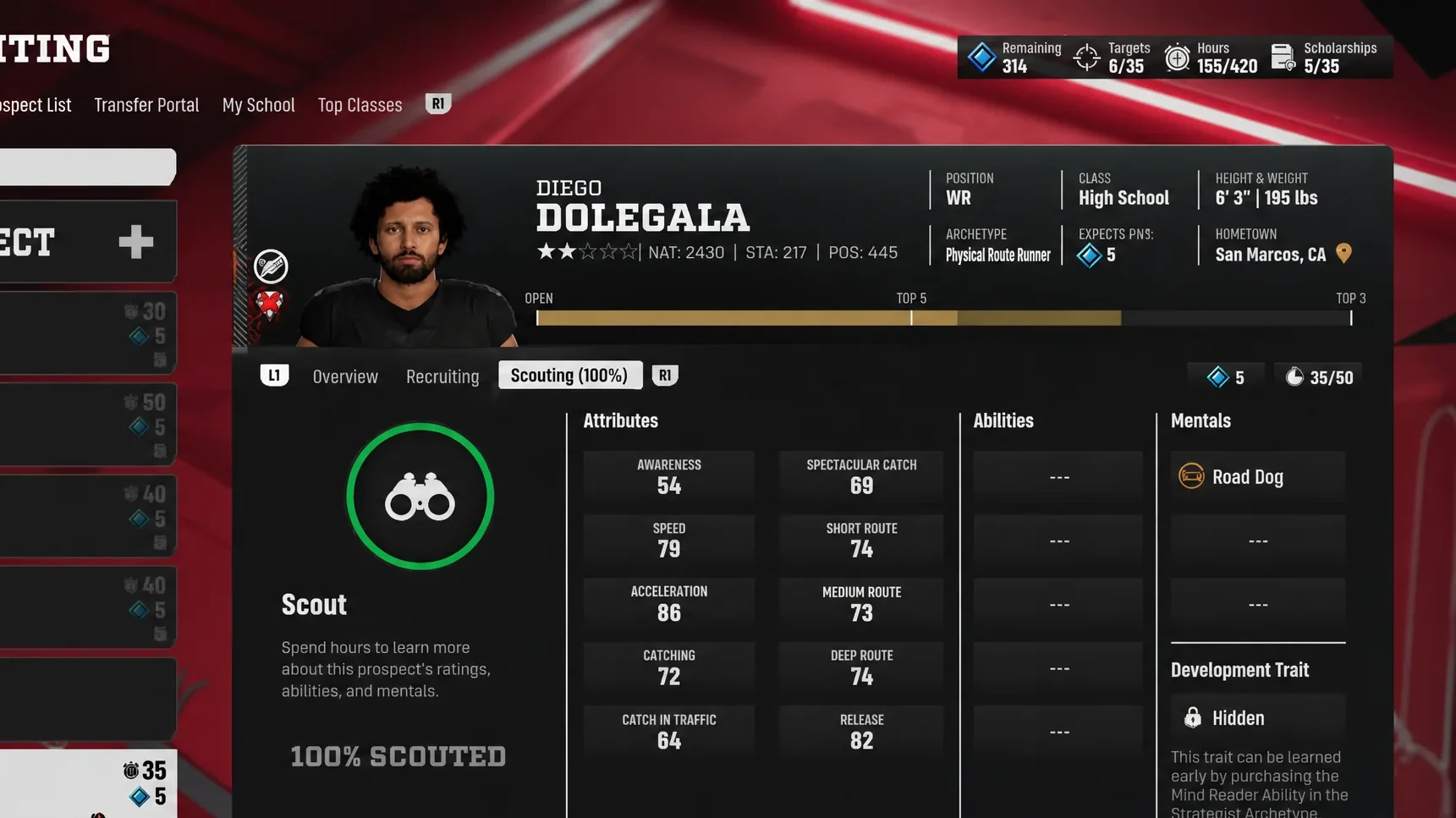
Note: Not every recruit has a diamond. If a fully scouted player shows neither color, his listed star rating is accurate and there is no hidden bump up or down.
What a green diamond means
A green diamond is a gem. The player is better than his star rating suggests, coming in one full star above his listed value. A three-star with a green diamond has the attributes of a four-star, and a four-star gem plays at a five-star level.
Gems also carry a higher chance of a strong development trait, so their ratings and skills climb faster once they are on your roster. That combination makes them the most valuable targets on the board, and they matter most for smaller, less prestigious programs that can rarely land top-listed recruits outright. Signing an under-rated gem is how those schools pull in real talent that bigger programs overlooked.
The catch is that some gems have tougher requirements before they will commit. When you find one, make your offer early while other schools are still ignoring him, since fewer competing offers improves your odds of landing him.
What a red diamond means
A red diamond is a bust. The player’s true quality is one star lower than the number attached to him, so a four-star bust actually competes as a three-star and a five-star bust drops to four-star talent. The listed rating is the diamond in name only.
Busts also come with a higher chance of one or more negative traits, and even a player’s hidden trait can turn out negative if you are not careful. On top of that, they are less likely to land a good development trait, which means their rating improves slowly compared with other recruits.
Red diamonds are most worth watching on the highest-rated prospects. Pouring your limited recruiting time into a heavily courted five-star who turns out to be a bust often makes less sense than chasing a three-star gem who will develop into something better.
Green vs red diamond comparison
| Marker | Meaning | Real star rating | Development trait |
|---|---|---|---|
| Green diamond | Gem | One star above listed (3★ plays like 4★) | Higher chance of a strong trait |
| Red diamond | Bust | One star below listed (4★ plays like 3★) | Lower chance, plus risk of negative traits |
| No diamond | Accurate rating | Matches the listed stars | Standard range |
Should you still sign a bust?
A red diamond does not automatically make a player useless. It only knocks his real value down a single star, and a five-star bust is still four-star talent, which is more than good enough to start for almost any program. A four-star bust can contribute meaningful snaps too.
Before you pass on a bust, check the rest of his scouted profile, including his top attributes and abilities. If those line up with what your roster needs, he can still earn a spot. Sound recruiting practices will help you land the ones worth keeping while steering resources away from the ones that are not.
The system rewards patience. Scout deliberately, target green diamonds early, treat red diamonds on elite prospects as a warning rather than a dealbreaker, and let development traits do the rest once players are in your program.