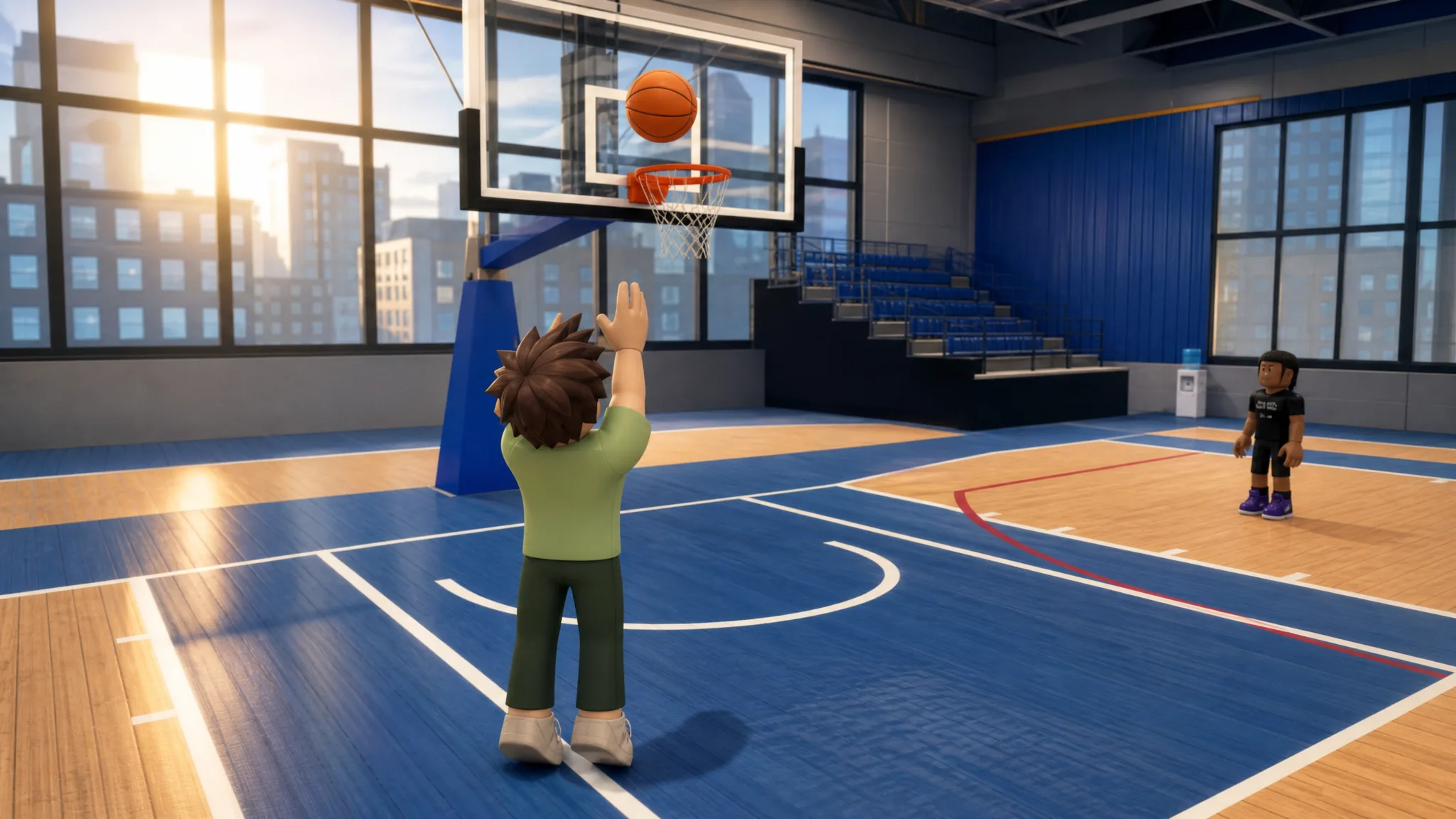
Lobbing lets you send the ball on a high arc over a defender, either to a cutting teammate or to yourself for a finish at the rim. In Practical Basketball, these are two separate mechanics with their own inputs. A standard lob is a passing tool, while a self lob throws the ball off the backboard so you can catch it on the move and score. Both reward timing and open space more than raw speed.
Quick answer: On keyboard, hold T and press R to throw a lob to a teammate. To self lob, sprint toward the rim and press Shift + F, then finish with E for a layup or Space for a dunk.
Lob and self lob inputs
Both moves live on the keyboard, and the self lob has its own set of finish buttons once you catch the ball. Keep the lob input separate from the finish input in your head, because pressing them out of order is a common way to lose the play.
| Action | Input | What it does |
|---|---|---|
| Lob (to teammate) | Hold T + press R | High pass that travels over defenders to a teammate |
| Self lob | Shift + F | Throws the ball off the backboard to yourself while driving |
| Self lob layup | E | Safer finish when a defender is close or a dunk is not reliable |
| Self lob dunk | Space | Best with an open lane and momentum into the rim |
How to throw a lob to a teammate
A lob is a high pass aimed over a defender instead of straight at your teammate. Because the ball follows a tall arc, it is harder to intercept than a normal pass, which makes it useful when someone is guarding the passing lane or when a teammate is cutting toward the basket. Hold T and press R to send it.
Timing matters more than distance. The lob connects best when your teammate is already moving toward the rim, so the pass leads them into space rather than dropping onto a stationary target. Throwing to a teammate who is standing still, boxed in by defenders, or already parked under the basket usually ends in a turnover.
How to self lob and finish
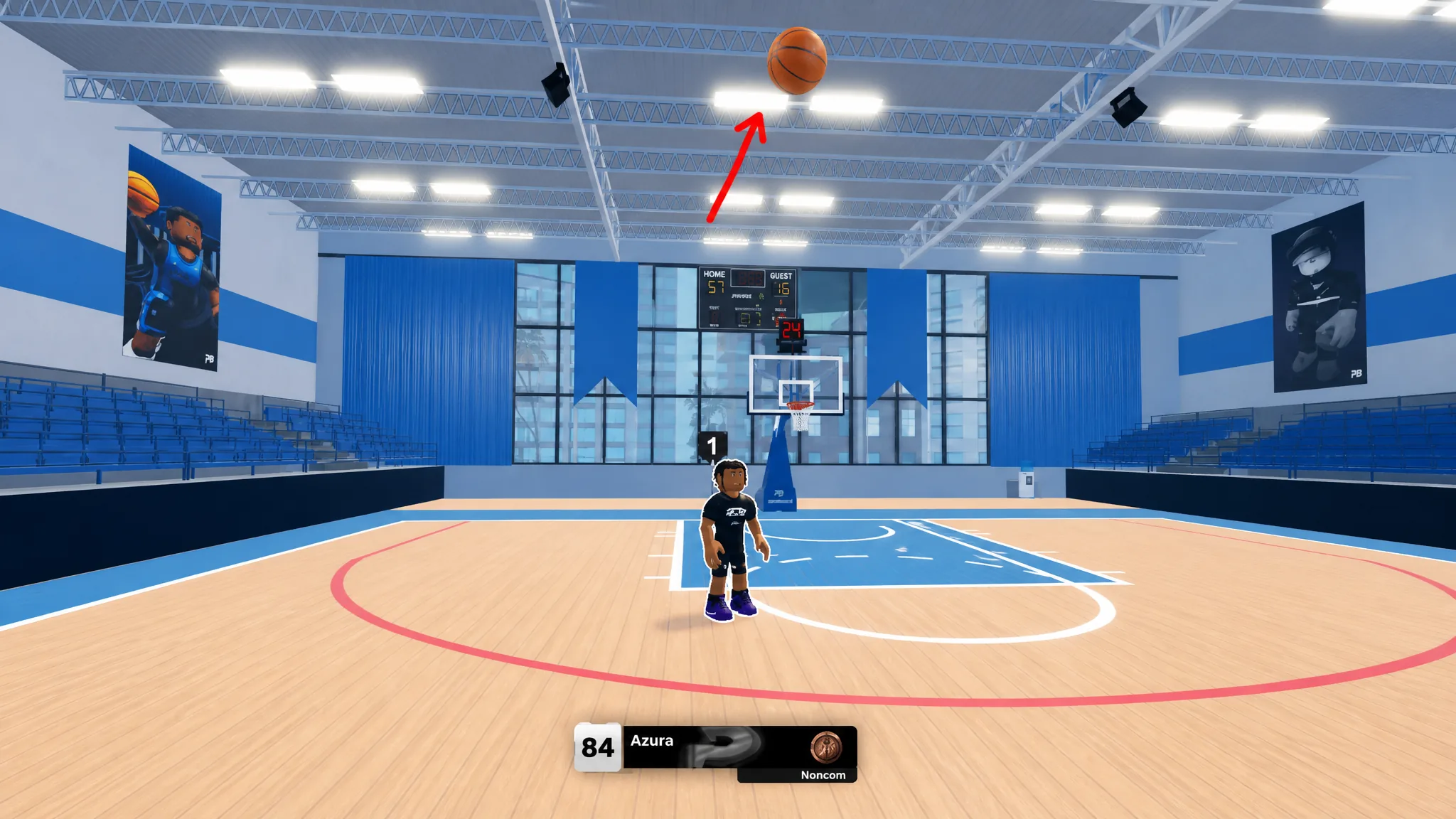
A self lob throws the ball off the backboard so you can catch it yourself and score. It is one of the flashiest ways to finish in Practical Basketball, but it needs momentum and a clear path to work. Run the sequence in order and you get a clean layup or dunk out of it.
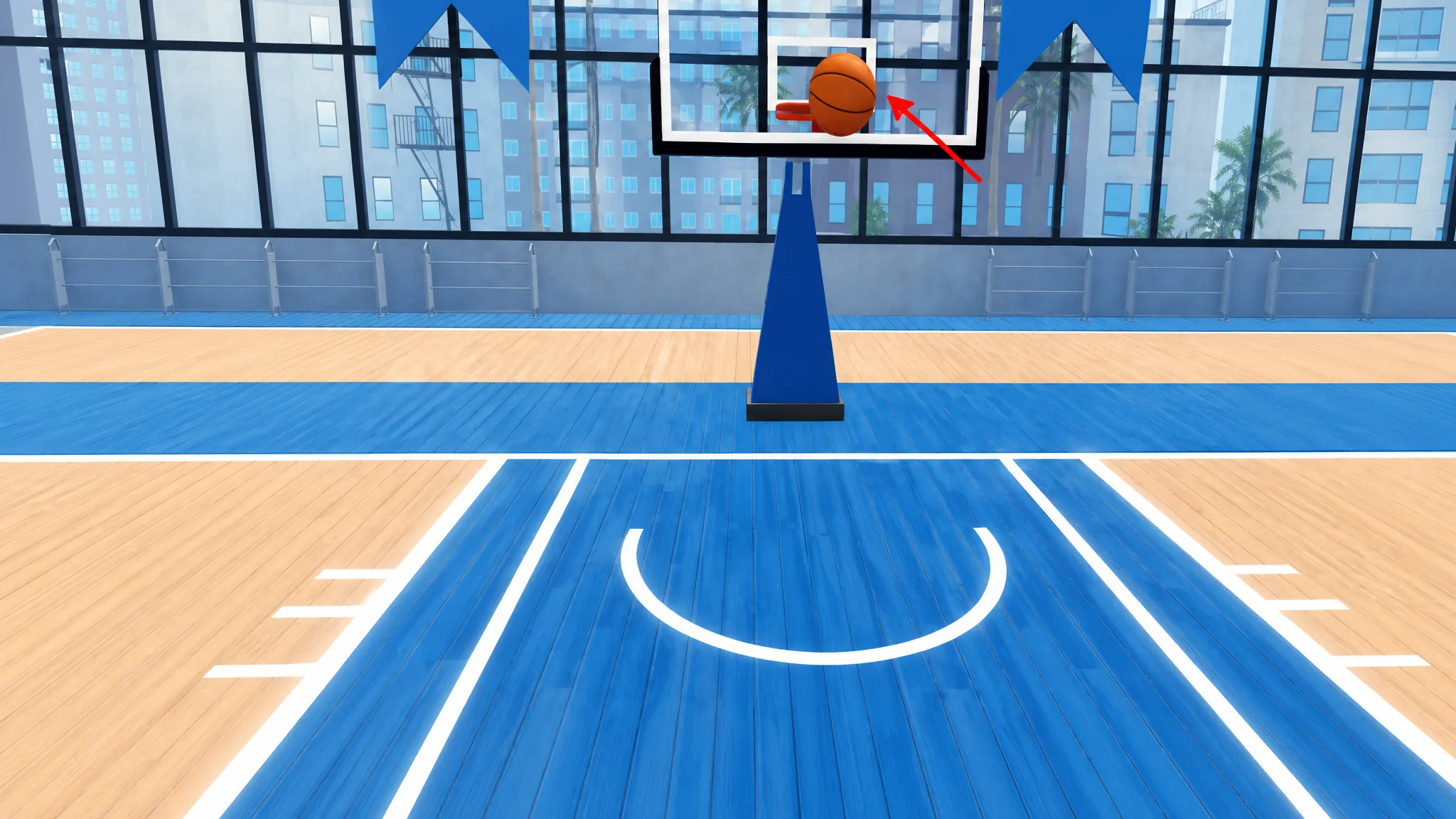
E for a layup when a defender is nearby or a dunk is not a safe bet, or press Space for a dunk when the lane is open and you have momentum. You know it worked when you catch the ball out of the air and the finish animation converts the play into a bucket.When to use each move, and why they fail
The self lob is a high-risk, high-reward move, so only try it when you have room. Fast breaks with no defender between you and the basket are ideal, as are wide open lanes where you can keep sprinting after the throw. Attempting it in traffic or without momentum usually leads to a missed catch or a steal before you complete the play. Empty practice courts are the fastest way to learn the timing before you take it into real matches.
| Move | Use it when | Avoid it when |
|---|---|---|
| Lob | A defender blocks the passing lane, or a teammate is cutting to the rim | Your teammate is standing still or surrounded by defenders |
| Self lob | Open lane on a fast break with room to keep running | Crowded paint, waiting rim protectors, or no forward momentum |
A standard lob helps teammates score through traffic, while a well-timed self lob turns an open lane into an easy highlight. Drill both on an empty court until the release and catch feel automatic, then bring them into competitive games where the spacing actually appears.