Kina runs AION 2. Gear enhancement, crafting, consumables, inventory expansion and Market purchases all draw from it, and the game hands it out in two forms that behave very differently. Knowing which activities pay which type is the single thing that decides whether your time converts into real spending power or just a number you can barely use.
Quick answer: Clear your capped daily and weekly sources first — Duty missions, Expeditions and sealed dungeons for Bound Kina — then run Conquest Expeditions and sell your drops on the Market for tradeable Kina. The Market requires the paid Membership.
Bound Kina vs regular Kina
AION 2 has two forms of one currency. Standard Kina circulates across Atreia and is the only form you can trade on the Market, transfer through storage, or purchase via the Kina–Quna Exchange. Kina (Bound) has the same value, but some content restricts it. Quests, Duties, dungeons, and achievements award it; you can use it for personal progression, including enhancement, crafting, and NPC shops, but it cannot be traded, and items purchased with it cannot be listed.
When a purchase accepts either type, the game spends your Bound Kina first, so you never waste the tradeable version on routine costs. One quirk worth knowing: earning regular Kina also adds to your Bound Kina total. That makes the tradeable version strictly more useful. If you can make three million Kina, you want it unbound rather than bound.
Check the currency reward before sinking time into an activity: is it Bound Kina or regular Kina? Bound Kina handles the costs of playing, while regular Kina builds wealth through the player economy.
The Membership gate for tradeable Kina
The Market and the Kina–Quna Exchange both sit behind the optional $15 per month Membership. NC confirmed this in its Business Model notice: Membership unlocks the Market and the Exchange, plus other member benefits. Direct player-to-player trades are disabled as an anti-bot measure, so the Market is the only trading hub — there is no trade-window workaround.
Without paying, your Kina comes only in small amounts through leveling, quests, and dungeons, and nearly all of it is Bound. You can still enjoy a full gameplay cycle this way. To stockpile Kina for gear bought from other players, though, you effectively need Membership. Work out which kind of player you are before choosing a farm.
Expeditions and Conquest dungeons: the core Kina farm
An Expedition run awards Kina as well as gear and upgrade materials: the currency helps fund your character, and drops may later be sold through the Market. How much you earn is tied to Odyle Energy, the limit on reward cubes you can unlock. Subscribers regain 15 Energy every 3 hours (120 daily, or 840 weekly); free players recover 10 in the same 3-hour period. Players without Membership top out at 560 Energy; subscribers can bank up to 840. Leaving either maximum untouched for too long costs you income.
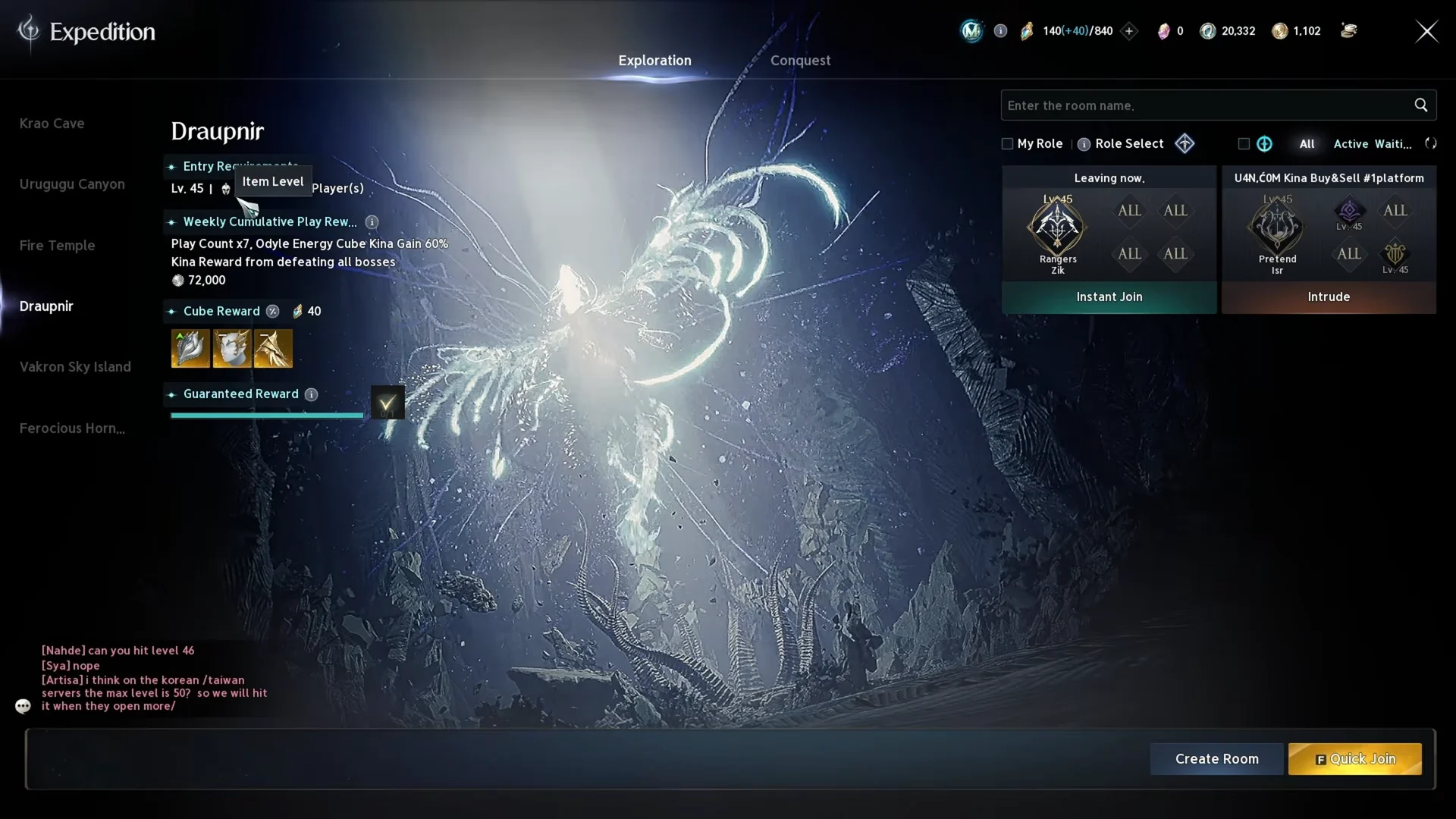
Once a run is over, use Odyle Energy on its reward cube. Subscribers may spend extra Energy to receive twice the cube rewards. Draupnir is one example: its standard cost grants 72,000 Bound Kina, while raising the cube cost from 40 to 80 Odyle Energy boosts one clear’s payout to 250,000 Bound Kina in about eight minutes. Kill every boss; doing so expands the reward pool and improves your odds of getting valuable drops.
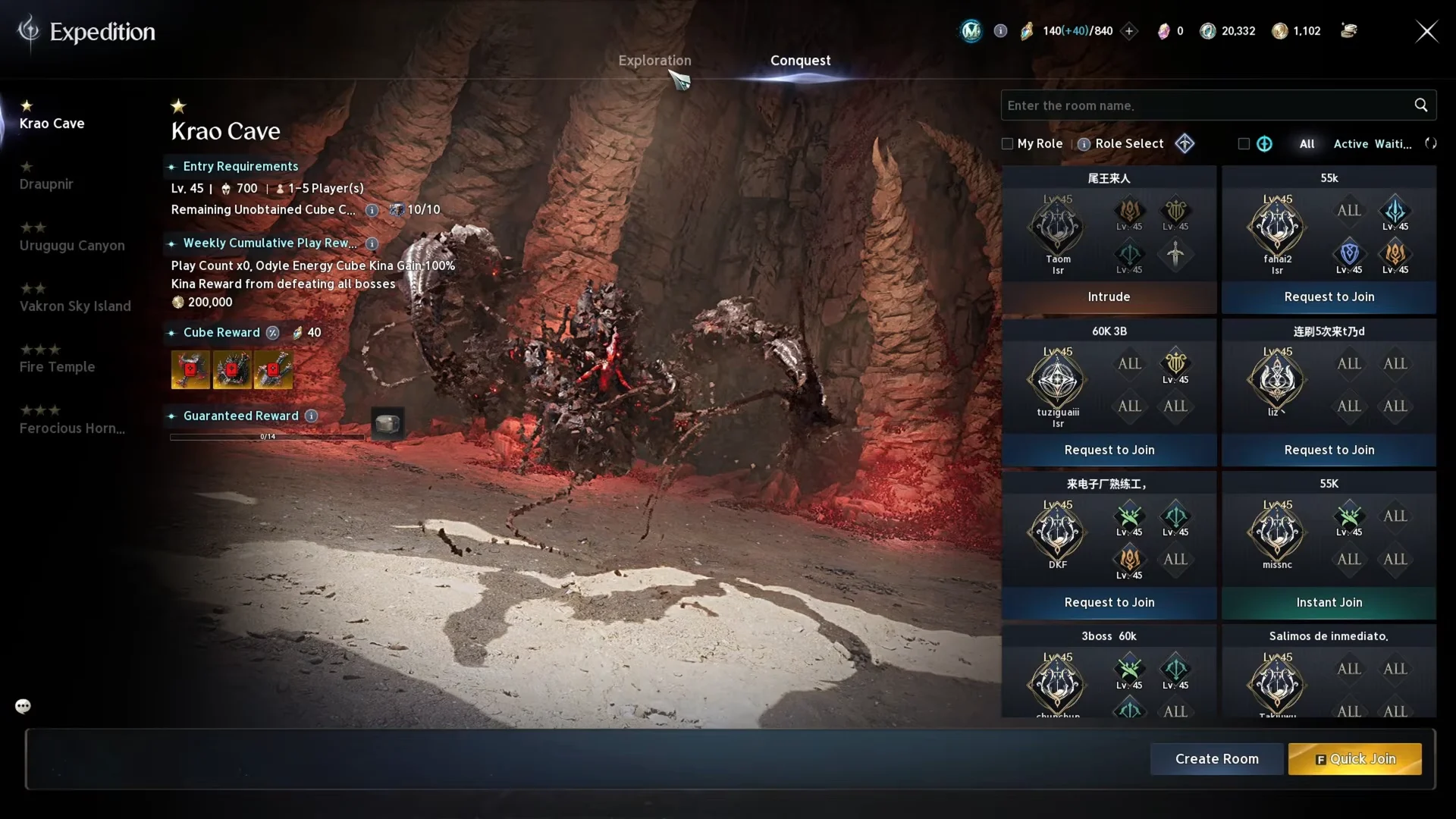
Conquest Expeditions pay regular Kina. Running a private room keeps 100% of the rewards for you. Krao Cave pays around 200,000 Kina per run, and Ferocious Horn Den pays around 400,000 Kina. Which dungeons you can farm depends on Gear Score.
| Dungeon | Tier | Gear Score | Good for |
|---|---|---|---|
| Urugugu Canyon | T2 | 1,400 | Weapons, accessories |
| Vakron Sky Island | T2 | 1,400 | Armor |
| Fire Temple | T3 | 2,100 | Higher-tier gear |
| Ferocious Horn Den | T3 | 2,100 | Higher-tier armor, materials |
Urugugu Canyon and Vakron Sky Island both run with 2–5 players on a 60-minute limit; Ferocious Horn Den takes 1–5 players, also on a 60-minute limit. Gains from reward cubes start to diminish after roughly 84 claims per week across your whole account, so there is a ceiling on how much a single account can pull from dungeons in a week.
Duty missions and regional quests for Bound Kina
Duty missions are the steadiest Bound Kina payout once you reach the mid-40s. Open the Journal to find them, and clear them every day you log in. Each mission pays between 50,000 and 150,000 Bound Kina, and many also hand out 1,000 Abyss Points — the level 45 Verteron Duties such as Diligent Groundskeeper II and Clearing Contaminants II pay 50,000 Bound Kina alongside their Abyss Points. A server completion cap of five Duty missions per day applies, so you cannot stack more than 5/5 on one character.
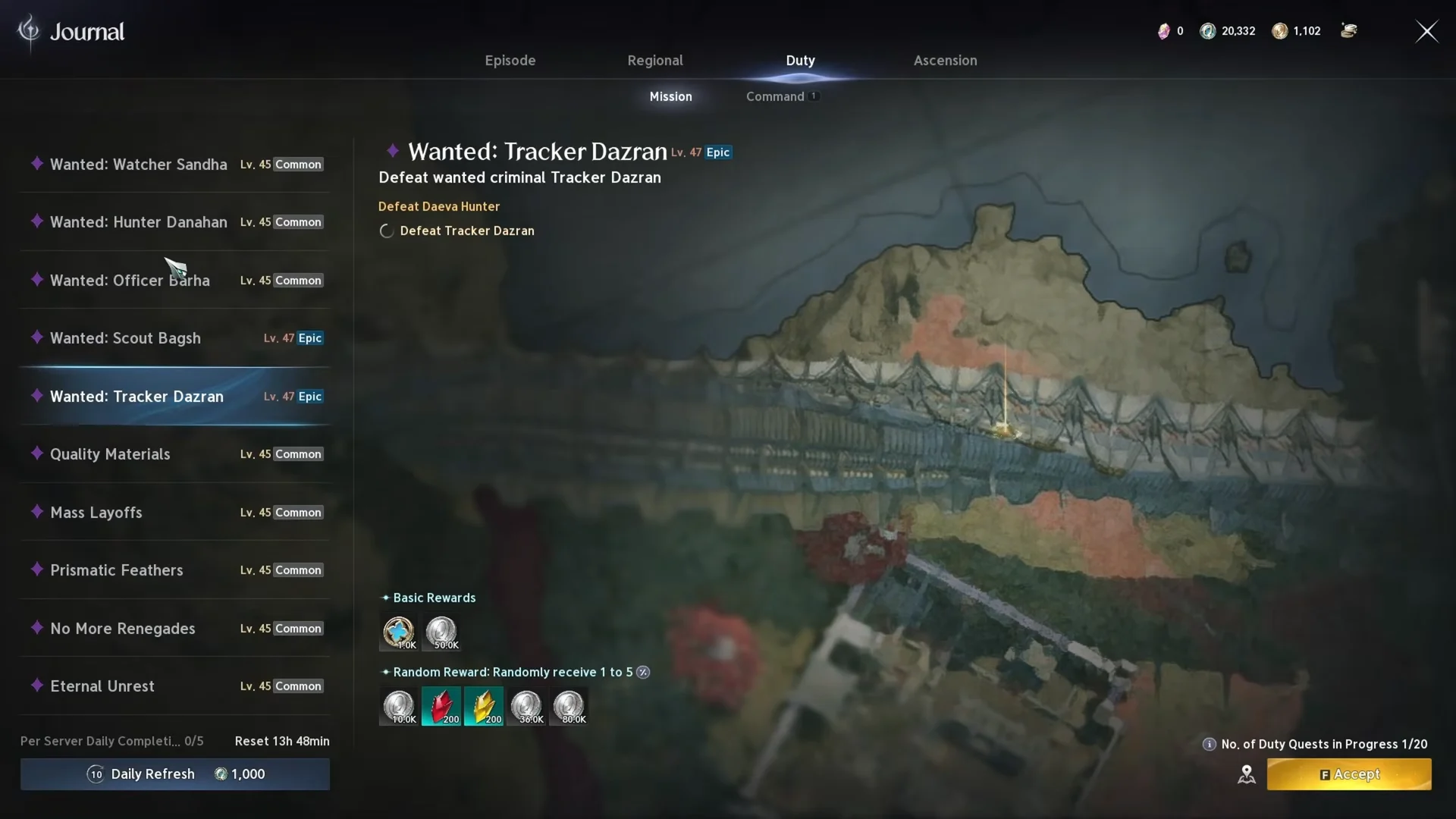
Opening the Duty tab on the Map before level 45 can delay your Duties from unlocking until the next day. Leave it closed until you hit 45.
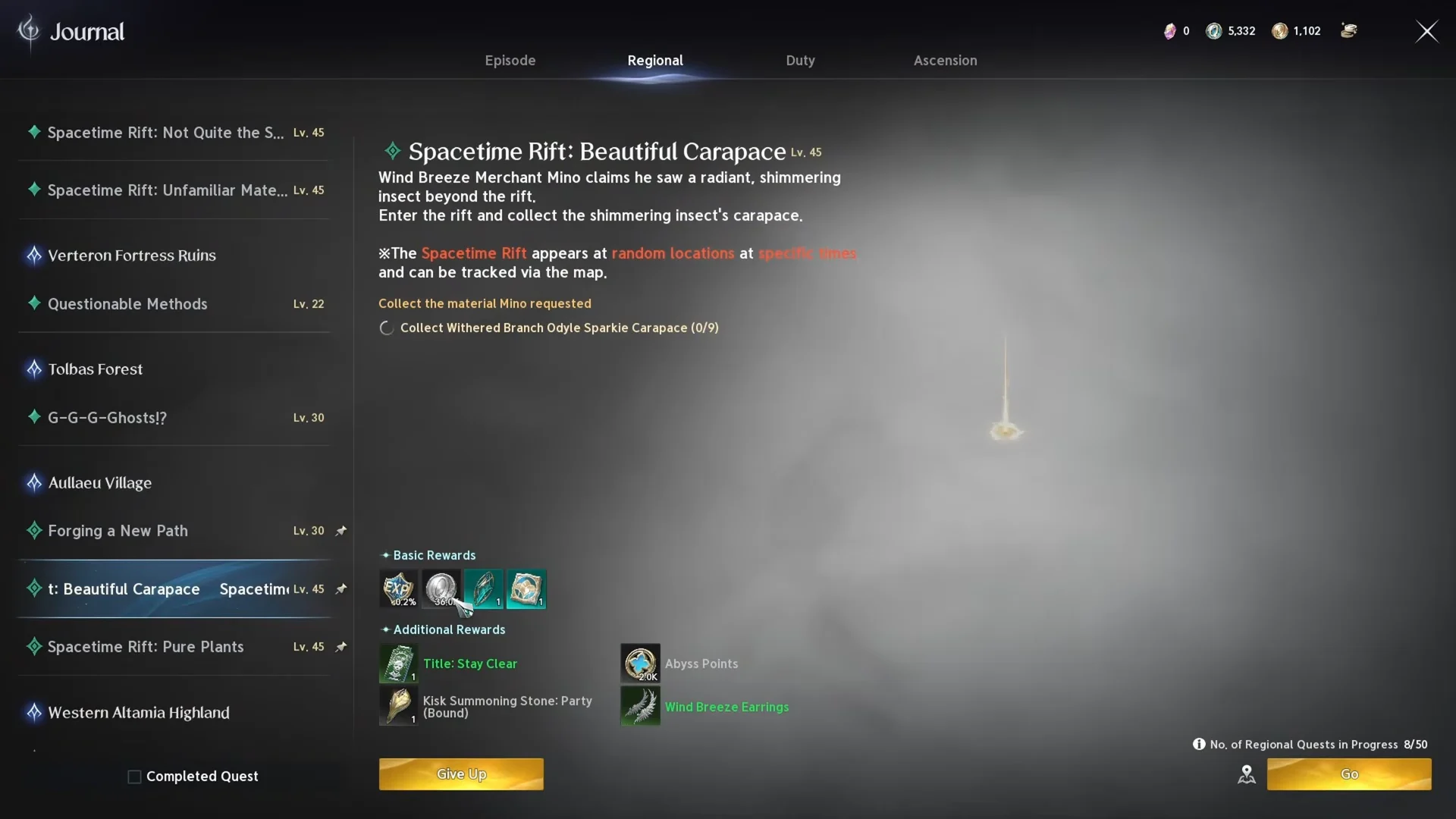
Regional quests add another reliable layer. The Creion Experiment quest pays 21,000 Kina, and higher-level Spacetime Rift quests pay between 36,000 and 57,000 Kina each. These show up in the Regional section of your Journal.
Map exploration, achievements and passive rewards
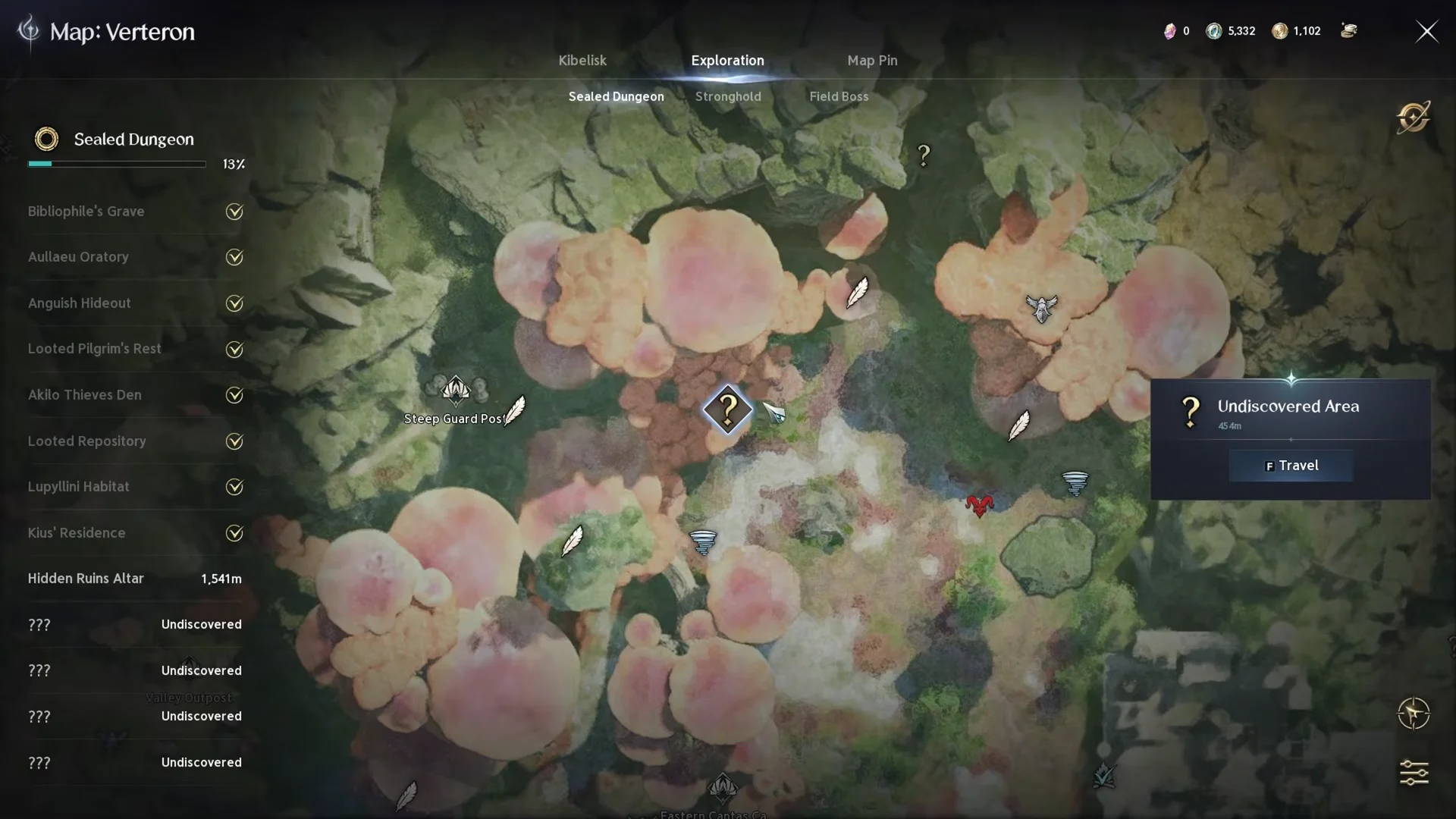
Every region hides question-mark icons on the world map that pay Kina the first time you discover and clear them. Clearing these spots, including Sealed Dungeons and Strongholds across zones like Verteron, awards roughly 15,000 Kina each. They are one-time rewards, so sweeping a region clean while you quest there is free income you would otherwise leave behind.
Achievements across Quest, Combat Challenge and Resource milestones pay lump sums of Bound Kina as you hit them. Several of these tie to killing a set number of monsters of each species, so leveling through a zone at the right range tends to clear them naturally. Passive systems add on top: the Daeva Pass track pays Kina at its milestones, and daily attendance boards can be large — Day 7 of the Launch Celebration Shugo Check-In alone pays 1,000,000 Kina.
Selling drops on the Market for tradeable Kina
For Members, the Market is the route to substantial wealth. Put needed crafting and gathering supplies, along with dropped equipment, up for sale to other players. Items collected during your Bound Kina routine turn into tradeable Kina once a buyer takes them. Remember that each sale is taxed at 10% when setting your price.
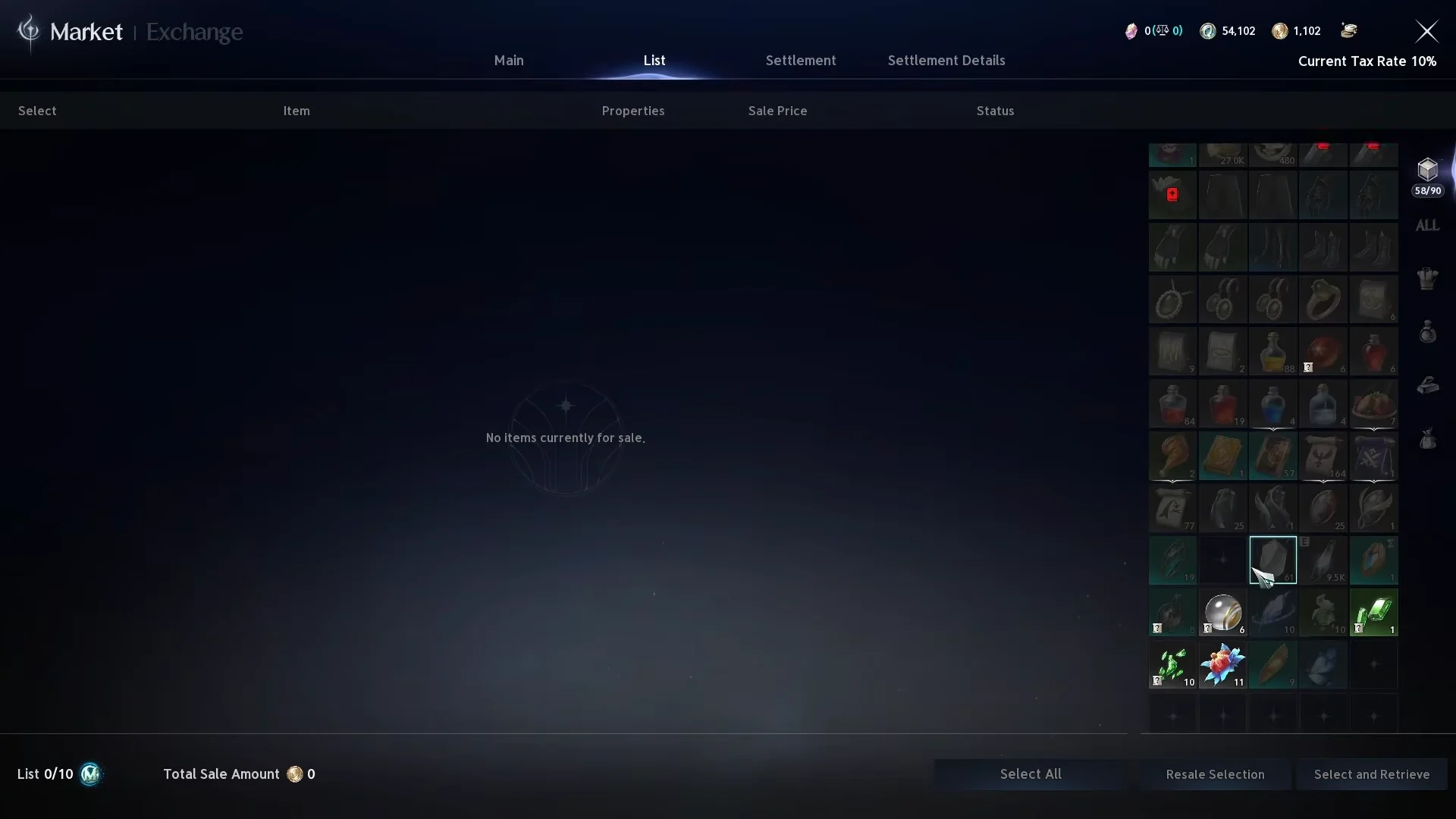
Wealthy players know not to sell an item to an NPC when other players are looking for it. Beginners often offload everything for a small amount of Bound Kina without checking. Look up the Market’s going rate before selling; a bundle of materials can bring in much more from another player. Early in a season, demand remains strong for stamina beverages, accuracy food, and flight potions. Crafted gear usually beats dungeon loot in sales because it can be traded. Rare items with trade status from Expeditions may fetch enormous sums, although their drop rates are very low.
Gathering is gated to level 45 after anti-bot measures were strengthened, and bot-heavy open-world spots are unreliable. NC runs a zero-tolerance line on botting and real-money trading, so buying Kina from third-party sellers risks your account — the Kina–Quna Exchange exists to convert real money into Kina safely inside the game.
Using alts to multiply capped income
Because Duties, Expeditions and dungeon cube claims are capped per character, extra characters multiply your guaranteed sources. Each alt carries its own Odyle Energy pool, so five characters regenerate 4,200 Energy per week between them before any crafted or purchased Energy. The returns taper after about 84 cube claims per account each week, which is why roughly four alts alongside your main is usually enough capacity.
Gear your main into T3 content (Fire Temple or Ferocious Horn Den at 2,100 Gear Score) and bring alts to the 1,400–1,500 Gear Score needed for Urugugu and Vakron. Equipment moves through storage, so your main’s gear can temporarily carry an alt past a requirement and then come back. Avoid over-upgrading alt gear, though — Enhancement Stones and early resources are worth far more on your main. None of this is mandatory. One well-developed character farms Kina perfectly well; only invest in a roster once your main can comfortably run the content you enjoy.
Put together, the fastest route is the same every day you log in: clear your five Duties and your Expedition reward cubes first since they expire, sweep any unexplored map icons as you pass them, then spend remaining Energy on Conquest runs and list everything tradeable on the Market. The capped sources fund your character; the Market turns the leftovers into the Kina that actually buys power.