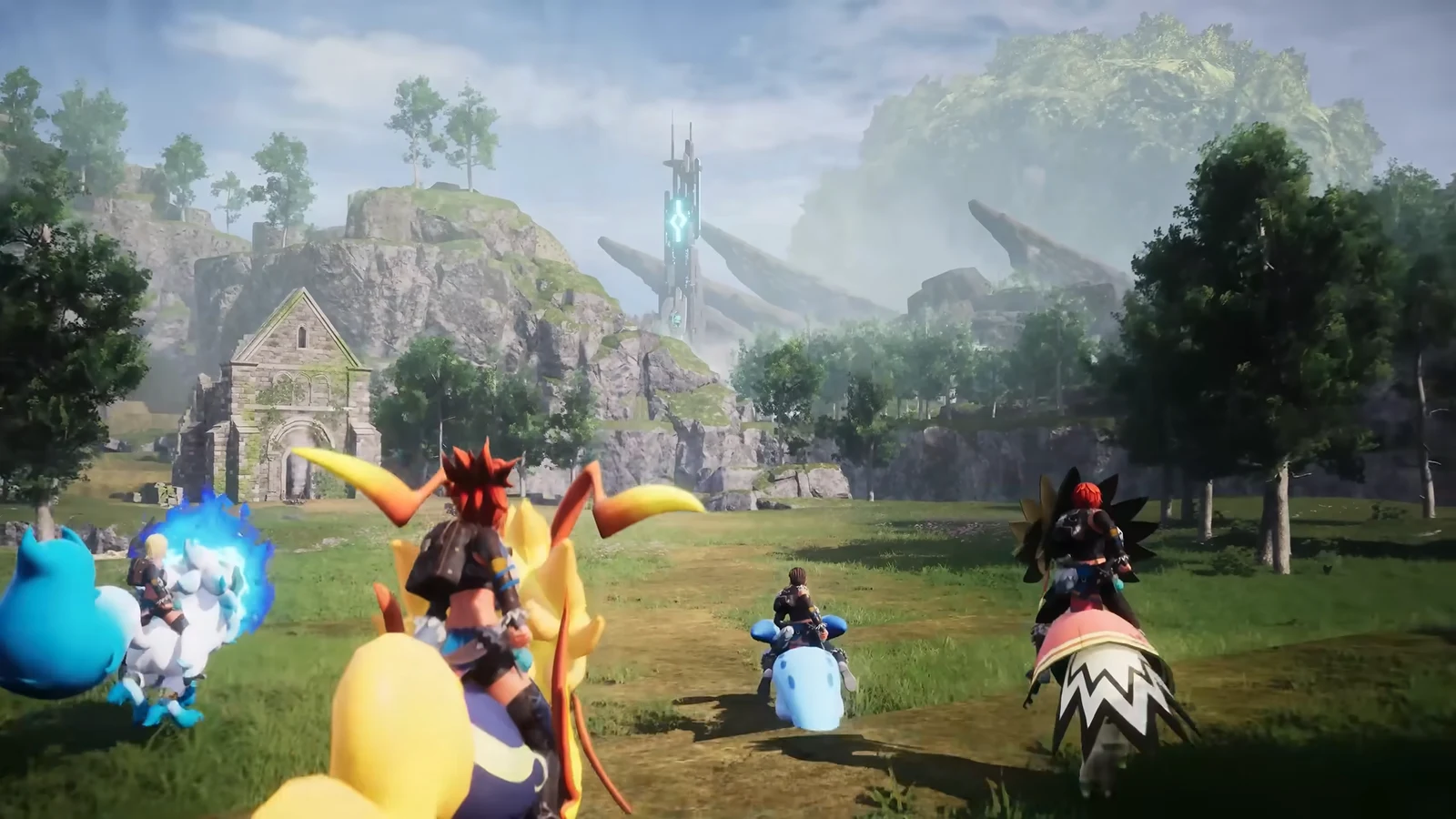
Each game gives you a sphere-like device for catching creatures, but the similarities largely stop there. You can play Aniimo for free; it is an open-world action RPG centered on taking your creatures’ forms. Palworld costs money and combines survival and crafting with arming yourself and putting creatures to work. Collecting creatures is common to both, while nearly everything else takes a different path.
Quick answer: Aniimo is the pick for a free, cross-platform action-collecting game featuring evolution, direct control of creatures, and relaxed base building. Go with Palworld for survival crafting, guns, factory automation, and offline single-player.
Price, platforms, and what you need to play
Cost and online requirements are the quickest way to decide. Aniimo has optional purchases but costs nothing to start, and supports a much wider range of hardware. However, it requires a persistent internet connection; broadband is listed in the minimum specs, and offline play is unavailable. Palworld is bought once and supports solo play without an internet connection. Aniimo’s worldwide launch is September 16, 2026, on PS5, Xbox Series X|S, and PC; its mobile version arrives September 23. Palworld has been in early access since January 2024.
| Feature | Aniimo | Palworld |
|---|---|---|
| Price | Free-to-play, in-app purchases | Paid, one-time |
| Platforms | Steam, Epic, Microsoft Store, PS5, Xbox Series X|S, iOS, Android | PC, Xbox, PS5 |
| Online | Required, no offline mode | Optional, offline single-player |
| Creatures | 90+ in beta, 200+ announced for launch | 100+ Pals |
Aniimo is not a gacha. Executive producer Jovi Zhang has said creatures are caught rather than pulled, and no Aniimo is locked behind a paywall. There is still a premium currency, a monthly pass, and an energy system that gates some rewards, while the spending sits on cosmetics and convenience. Palworld charges once, with its Steam listing and console stores the official entry points, and no premium currency or pass.
Combat: Twining and Break vs guns and dodges
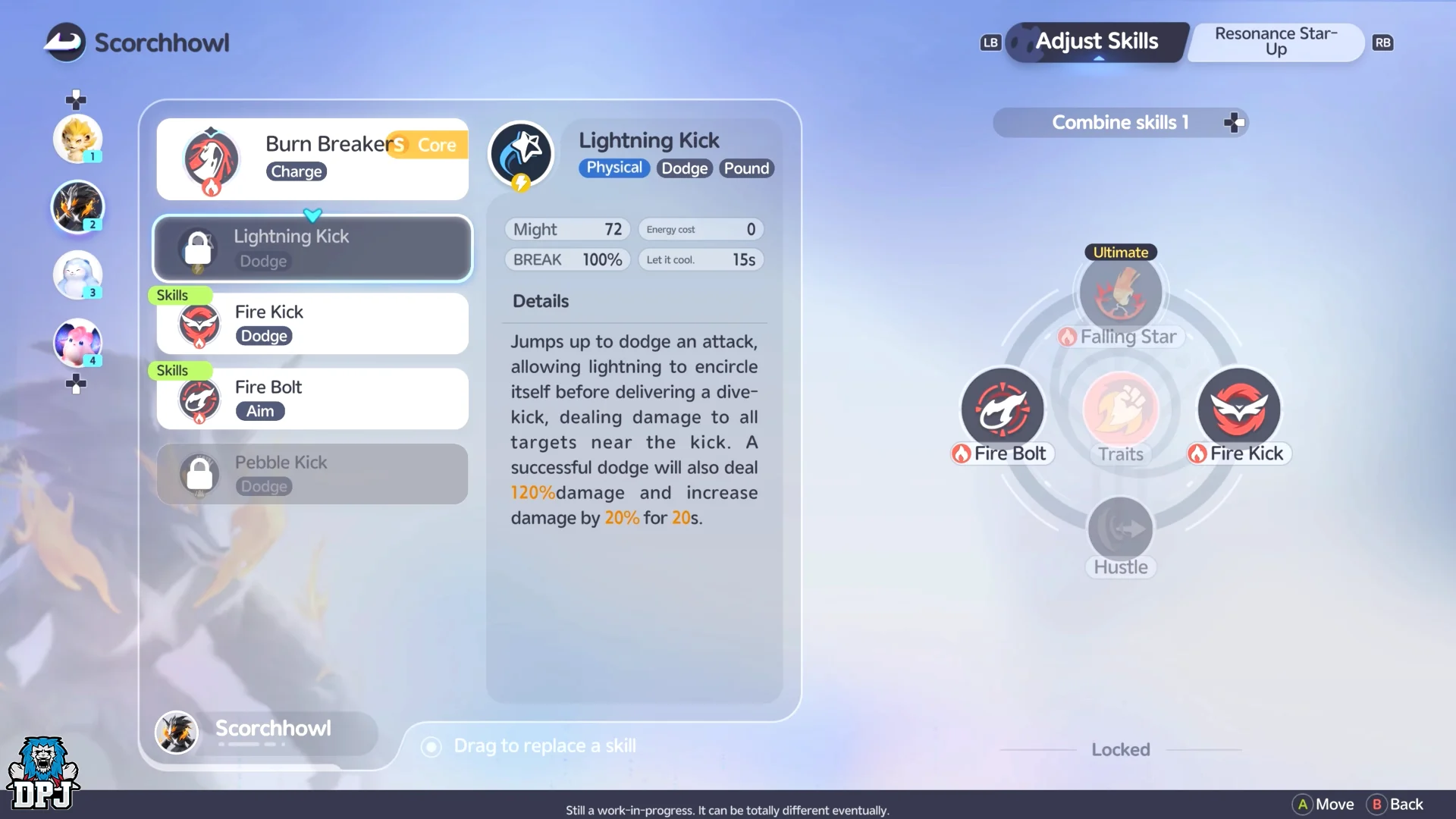
This core distinction affects the experience more than the creature lineups. Aniimo features two real-time combat styles. Command Mode keeps you beside your creature, combining melee weapons such as mallets with elemental magic. Twine Mode puts an Aniimo under your control, so you can use its body, movement, and full range of skills, including ultimates.
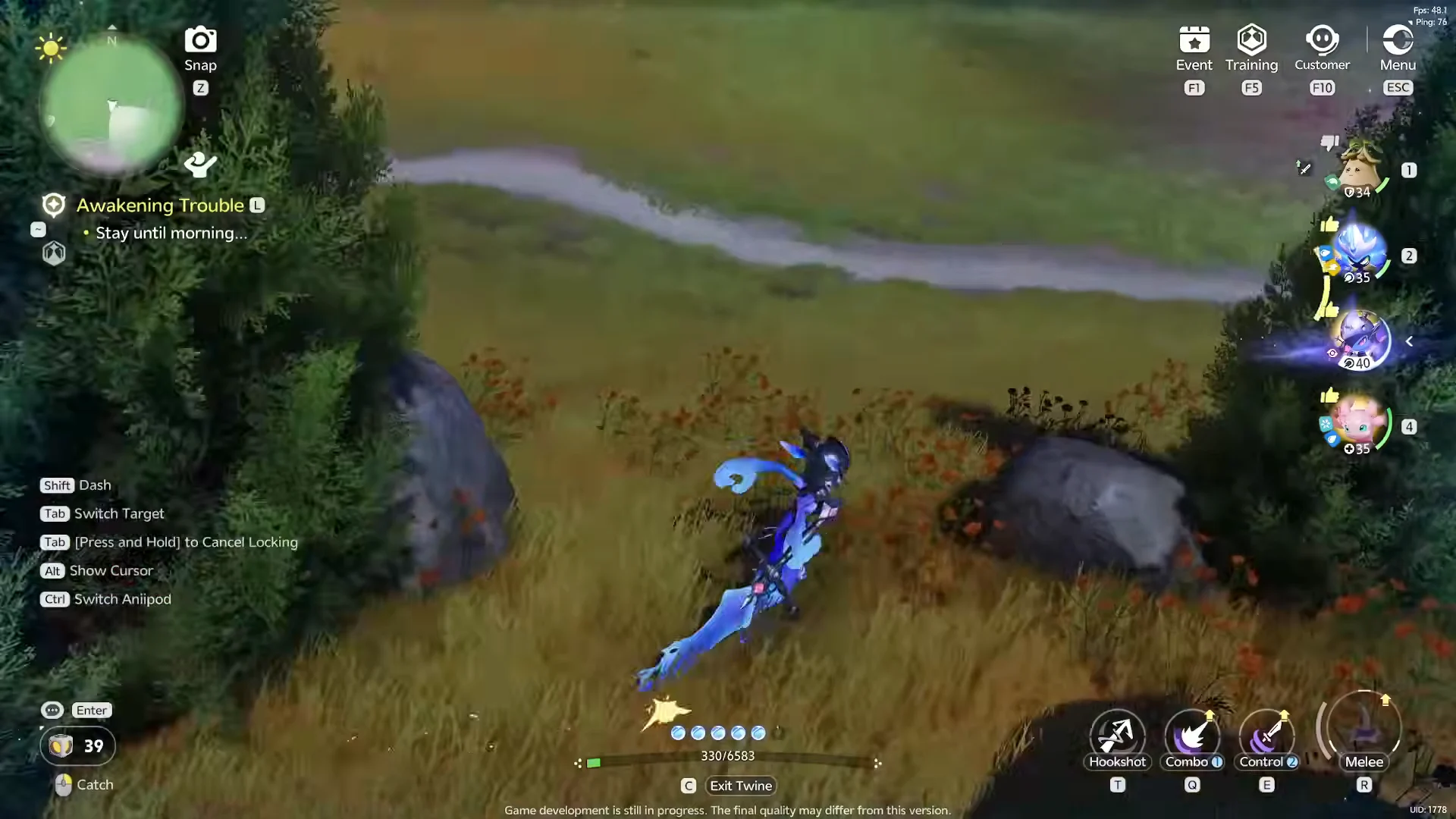
Your performance depends on more than attack power: EP and Break are key systems. Active skills consume EP (Energy Points), so understanding how each creature restores it helps maintain your damage output. One active skill may use 40 EP, making energy management important to your rotation. Break wears down an enemy’s poise; breaking it creates an opening and raises your capture chances. Teams also need to cover the DPS, BREAK, Support, ENERGY, and Heal roles, as five damage-focused creatures can leave a team stuck.
In Palworld, you fight alongside your Pal using character weapons such as bows, assault rifles, and rocket launchers. Mounts and Partner Skills let you use some Pal abilities, but control of the creature itself is never yours. If a battle turns against you, check your equipment and supplies before changing your lineup. The Pal and the character fighting next to it develop along separate upgrade paths.
Charging straight into a fight without considering position is a poor plan in Aniimo. The ground marks incoming attacks, and avoiding them is up to you rather than the AI.
Catching creatures: Aniipods vs Pal Spheres
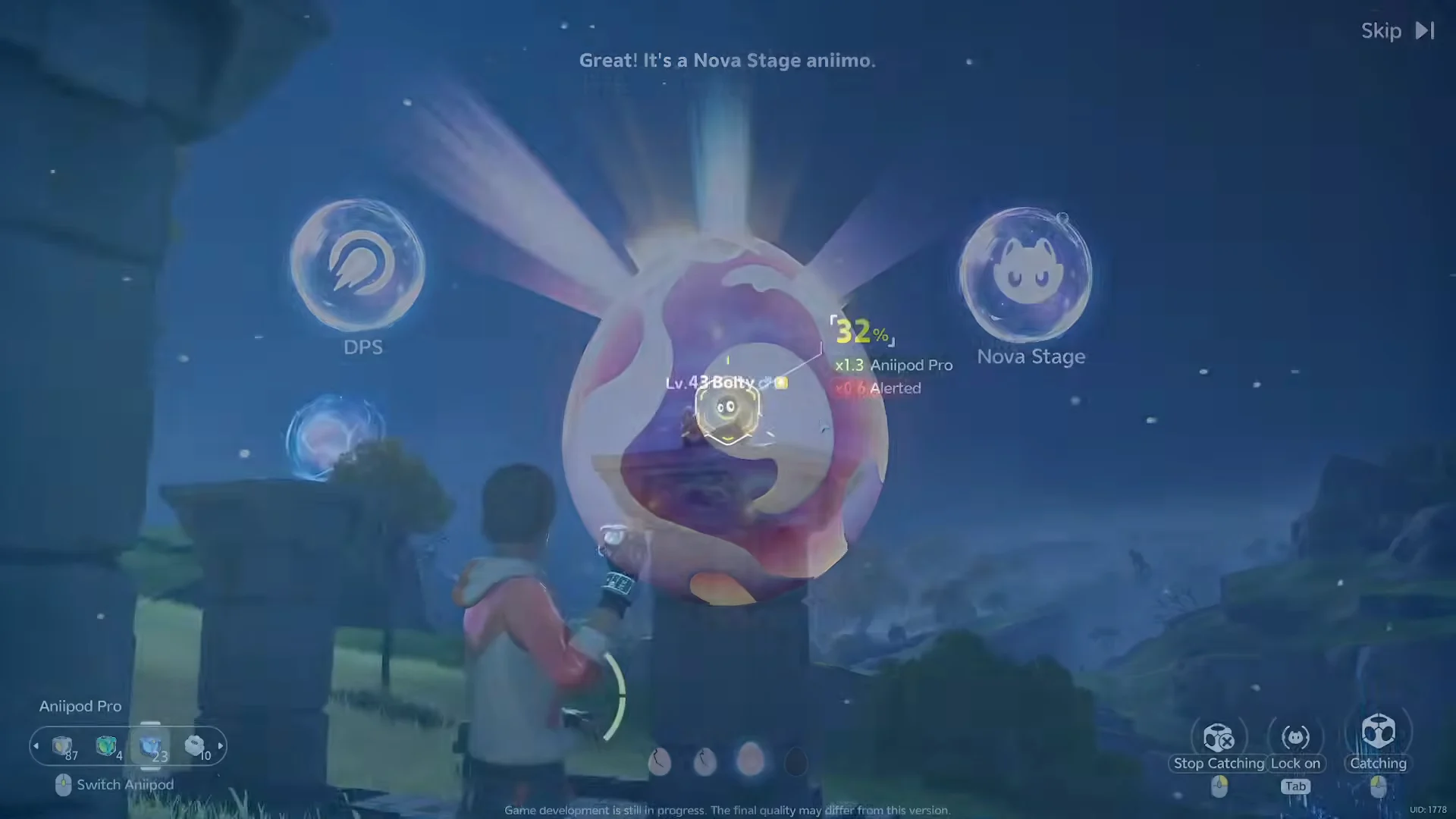
Aniipods and Pal Spheres both capture creatures, but the lead-up to a throw works differently, so familiar tactics may let you down. In Aniimo, study your target and move in quietly before building your odds. Sleep, Break damage, backstab bonuses, traps, and choosing the appropriate pod tier all contribute to the capture percentage shown on screen. The time of day and weather also affect which creatures appear in the field.
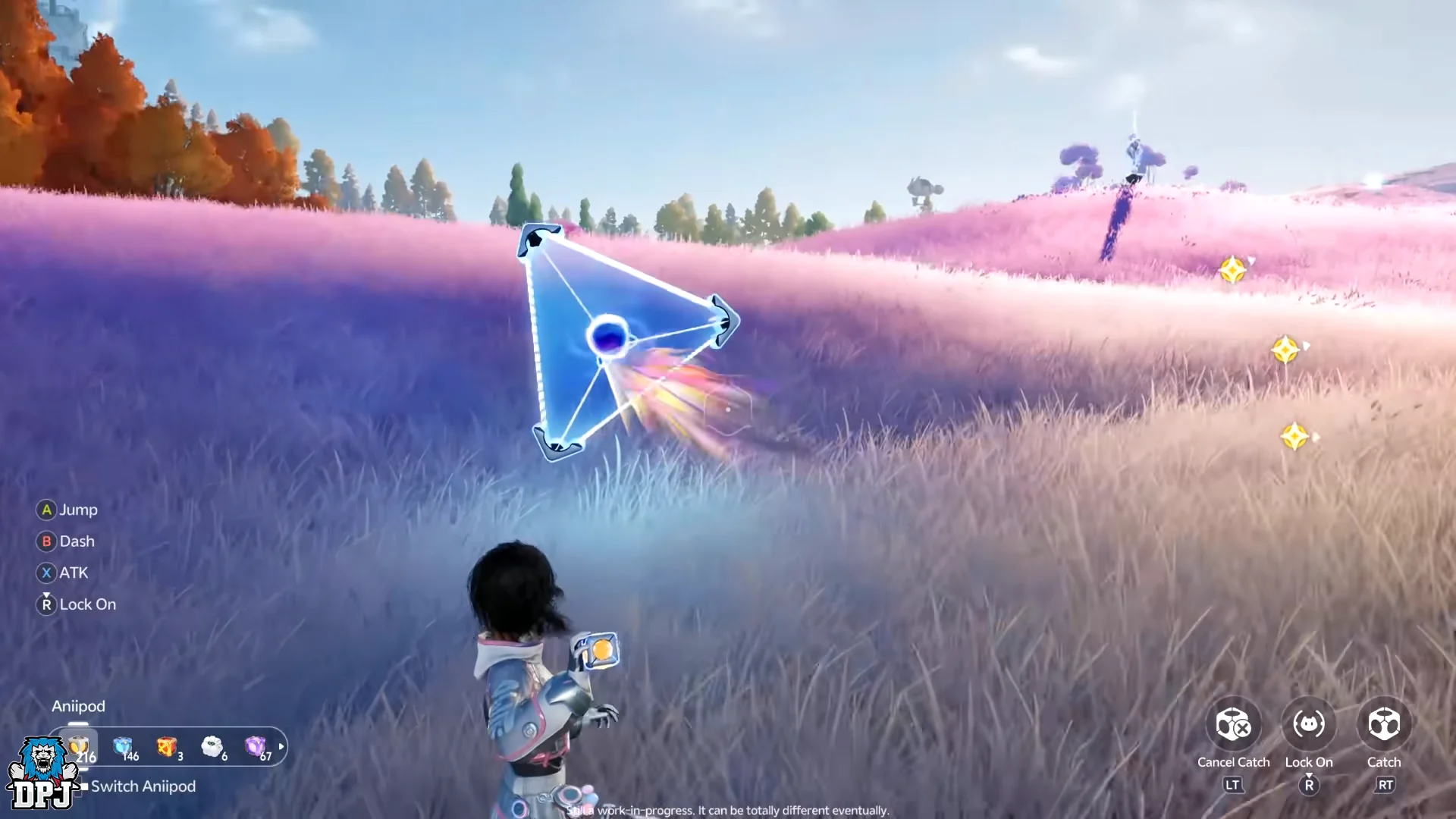
Before you throw, Aniimo displays the current capture percentage; Break and stealth can raise it. If the Aniipod misses, it goes back into your inventory, letting you make another attempt against a quick, unpredictable target.
In Palworld, catching takes place during combat: you choose the throw’s aim as the battle carries on, while the Sphere tier and the target’s remaining health determine the result. The cost of failure is the key distinction. A thrown Pal Sphere is consumed even if it misses, making each uncertain attempt a crafting expense and giving you reason to prepare carefully.
Evolution, variants, and eggs
For collectors who want to see creatures develop into new forms, Aniimo is the only option here. Its creatures progress through the Lumin, Gamma, and Nova stages along branching paths, with each species having its own requirements. Look up the creature in the Aniilog to learn what it needs before spending rare materials.
Palworld has no evolution paths: each Pal remains in its original form. You can improve one by breeding for passives, condensing it, and working on its stats. A newly bred Pal is not an earlier form of either parent, and matching outlines or elemental variants do not establish a shared evolution line.
| System | Aniimo | Palworld |
|---|---|---|
| Evolution | Three stages, branching lines | None |
| Rare variants | Sparkling versions with distinct visuals | Lucky Pals, larger with sparkle effects |
| Egg hatching | Shared city incubator, up to 7 eggs | Craftable incubators at your base |
| Elements | 9, with dual-element entries | Element types, including dual-element Pals |
In Aniimo, you choose Helion or Lunara as your starter. Idyll is one connected open world, divided into 15 named regions rather than separate maps.
Base building: Homeland vs survival automation
Creatures can do useful work in both games, but the demands on you differ sharply. Palworld lets you build automated bases at multiple locations in the open world, where raids can reach them. Without ongoing oversight, assigned Pals may become hungry, suffer broken bones, or develop morale problems. Production stops until you address staffing, inputs, or storage. The raid system now sends attacker waves that scale to the workers you have deployed.
In Aniimo, your Homeland is a private, separately loaded area centered on an RV at a campsite. Progress opens set facility locations such as Farmland, Woodland, and the Carousel Mill; assign stored Aniimo to these plots to grow crops and produce goods. Workers follow their own pace, needing no food and suffering no injuries or status ailments, while your base remains safe when you are away. Assigning the right creature to a task improves efficiency and produces more materials for catching. This setup supports your travels rather than taking them over.
Exploration and traversal through Twining
Twining also helps you get around. Many Aniimo have ways to navigate obstacles, including Fly, Swim, Climb, or burrow, and you can make full use of those abilities by taking their form. A creature you catch may open a route to a new area even if it never fights on your team, making your collection useful for traversal.
In Palworld, mounts, saddles, gliders, and your character’s equipment help you travel. You stay separate from the creature while riding it, and your gear often determines which areas you can explore safely.
Progression, titles, and training badges
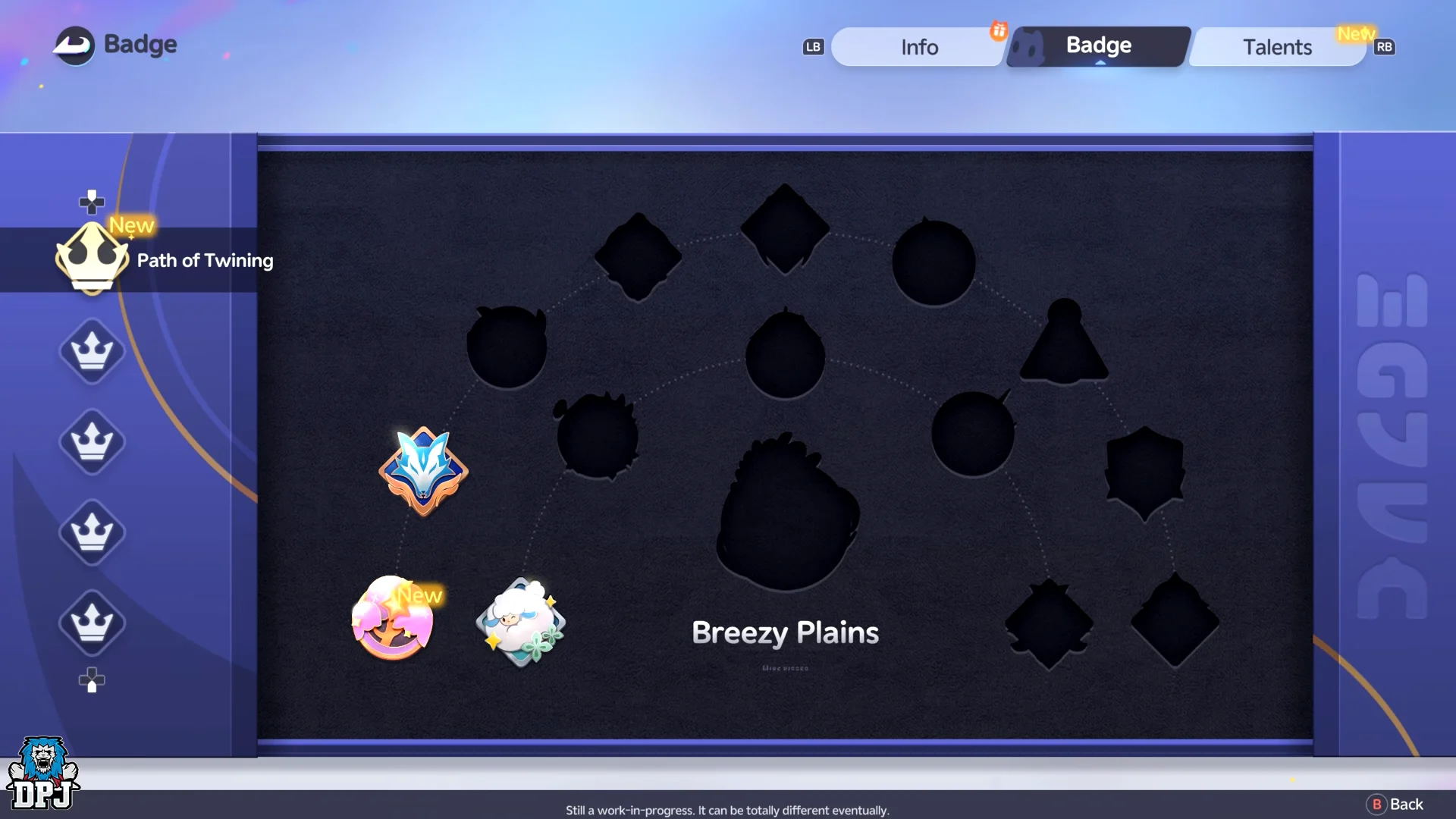
Aniimo ties progress to exploration and rank rather than survival tech trees. You reach checkpoints, clear Sanctum dungeons for rewards, and pass assessments to earn higher titles, while regional training boards track badges you collect across zones like Breezy Plains, Azure Echoes, and Stargazer. Alpha Aniimo are field bosses, and daily activities keep the loop moving, which makes the overall rhythm feel closer to Genshin Impact than to survival crafting.
Palworld’s progression runs through a technology tree, crafting unlocks, and combat power. You gather materials, build and automate bases, and take on Syndicate tower bosses, upgrading your weapons and infrastructure as you go.
Multiplayer and PvP
Palworld has the more mature multiplayer setup, with dedicated servers supporting up to 32 participants, seamless co-op base building, and configurable PvP through server settings. Aniimo’s social layer is built around hubs and instanced co-op instead. You share the city of Astra with other players, team up for Alpha and Omega open-world bosses, and drop into Operation: Egg Heist, a three-player PvPvE extraction mode with a Diamond variant supporting up to six teams. Co-op runs up to four players, and trading and other social features are still expanding.
Which one fits you
Play Aniimo if you want to directly control creatures in combat and traversal rather than command them, chase multi-stage evolution and high-quality rare variants, run a base that never needs defending, and play on a phone, console, or PC without buying the game twice. Its action combat rewards timing, stagger management, and team roles.
Play Palworld if you want survival systems, tech trees, and multi-base factory automation, gunplay and weapon crafting, offline single-player with no connection requirement, dedicated servers with shared co-op bases, and a one-time purchase with no premium currency or pass.
The games vie for the same audience, but they ask for different kinds of play. In Palworld, monsters provide labor and firepower within a survival game; Aniimo makes its creatures the means of control in an action RPG. Aniimo is free to try and works on hardware you probably already have, so there is little need to choose only one. Its main restriction is the need for an internet connection every time you play.