Bathysphere is an analog horror and puzzle exploration game that drops you inside a deep-sea submersible in the year 1960, where you track mysterious entities through the black water using a grid-based sonar board. It leans on retro hardware, CRT monitors, mechanical dials, and reel-to-reel tape to build its atmosphere, and it swaps typical horror action for slow, deliberate navigation and tactical detection.
Quick answer: Bathysphere is a first-person analog horror puzzle game set in 1960, built around a coordinate-grid sonar system for hunting deep-sea enemies. A playable demo is available now.
What Bathysphere is
The game is presented almost entirely in first person, from inside a submersible station rather than through a visible player character. You spend your time reading instruments and reacting to what the ocean sends back. The look is deliberately dated, mixing black-and-white footage, green-tinted terminal screens, and scratched 16mm film that all point to a mid-century research expedition.
Underneath the vintage styling sits a puzzle and exploration structure. You plot descents, listen to recordings, read logs, and detect threats that are hidden below the surface. The horror comes from what the sonar reveals and from the sudden alarms and blinding light that break the quiet, not from open combat.
How the sonar grid combat works
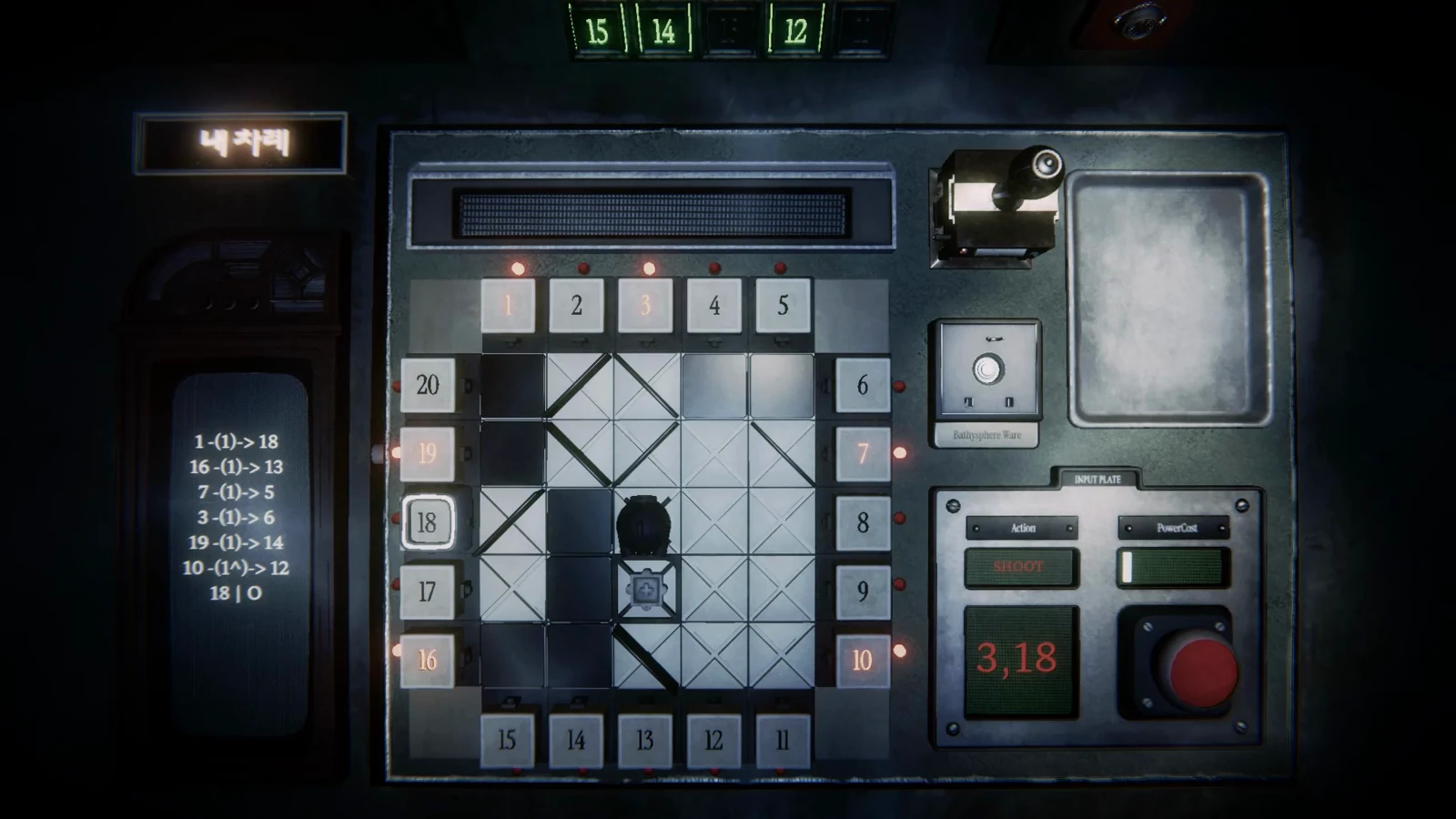
The core loop is a tactical, turn-based hunt played on a numbered grid. A tactile control unit lays out tiles marked from 1 through 20, along with dark spheres and a dedicated DETECT button. You descend to specific coordinates on a given layer, plot routes, and read signals to figure out where an enemy sits before it reaches you.
Play alternates between your actions and the threat’s. The board flips between a “My Turn” state, where you fire on a target tile, and an “Enemy’s Turn” state, where a route line traces across the grid as the entity moves. On-screen prompts spell out the back-and-forth in plain terms, with lines such as “Descended to (5,18) on Layer 3,” “Enemy entity sunk,” and “Three frequencies observed.”
A “Sonar Checker” tool sits alongside the board. It reveals whether the sonar has passed through a particular tile and can be reused, which turns each ping into information you weigh against the coordinates you have already logged. The interface even labels the mode “Bathysphere Wars,” framing the detection puzzle as a duel between you and whatever is circling in the dark.
Everything ties together through a small set of connected systems shown as a flowchart of nodes:
- Passive Sonar — the listening layer that feeds detection.
- Bathysphere — the submersible you control and descend in.
- Survey Area — the grid space you search across layers.
- Radio — the communication line for signals and transmissions.
The 1960s salvage-mission setup
The framing is a research and recovery operation set in 1960. It opens in a dim briefing room with an open red case on the table, then moves to a foggy dock, a naval vessel’s misty deck at night, and a hangar bay lined with spherical diving pods waiting to be sent down. A recovered transmission points to a missing vessel, with the subtitle “A signal from the missing Austin has been detected.”
Investigation is a real part of the experience. You play reel-to-reel audio recordings on vintage radio gear, read scientific descent logs, and study binder pages filled with hand-drawn coordinate grids and logged records. Those materials build the story around the entities you track and the “Rift of the Sea” the mission is trying to reach.
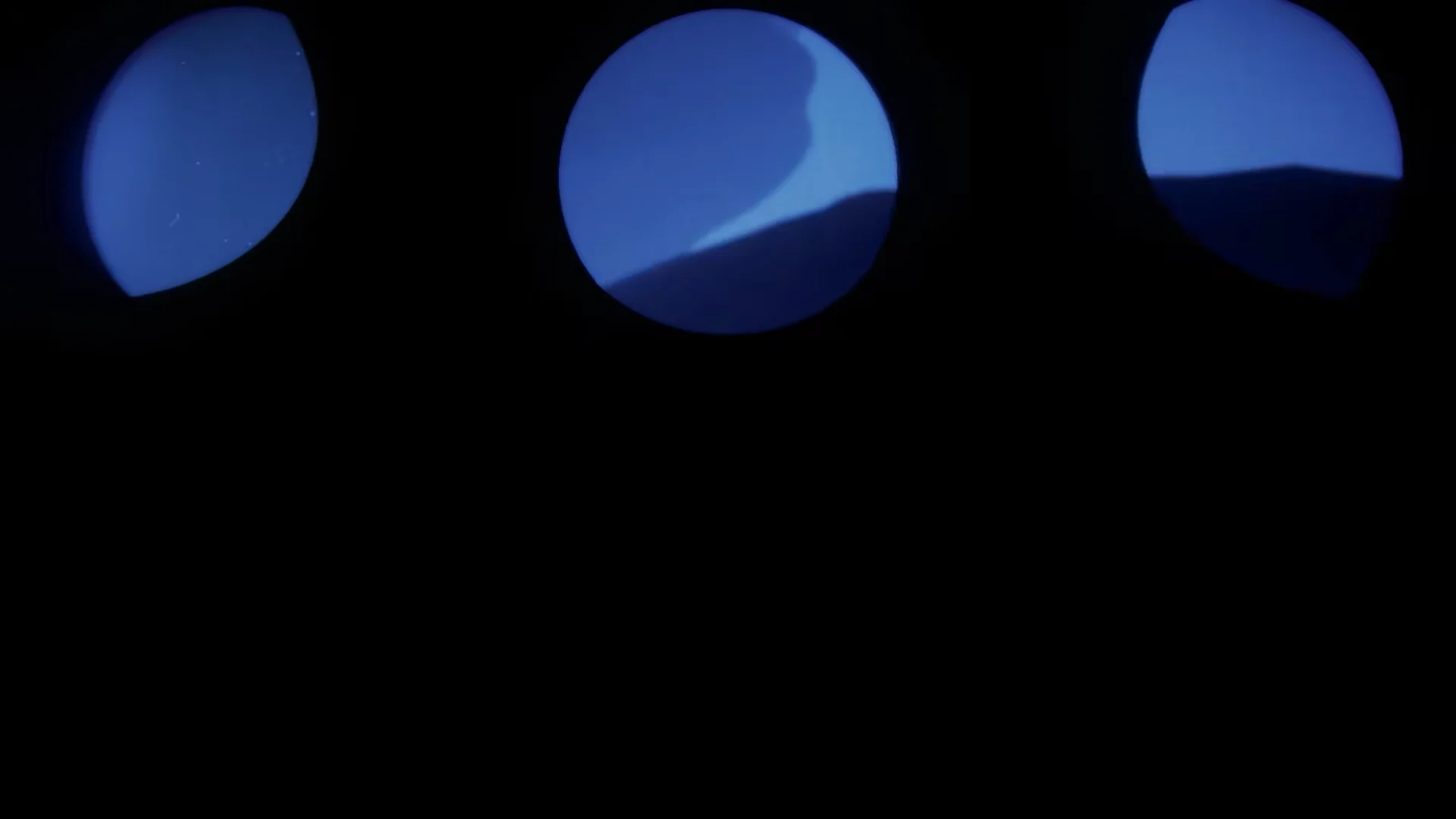
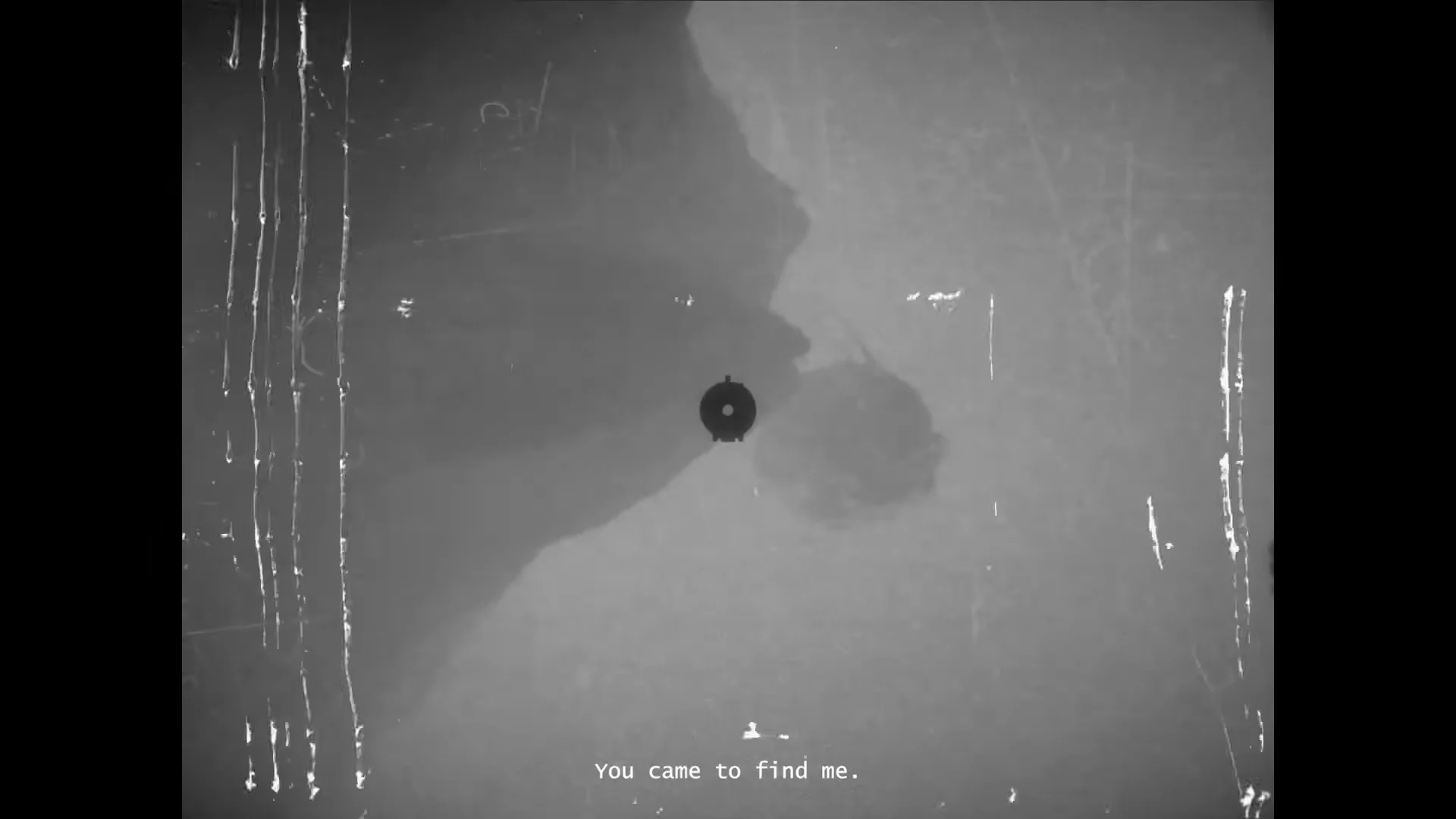
The deep-sea presentation is a constant. You watch the ocean through circular portholes as the water darkens, pass glowing bioluminescent formations drifting in the black, and cut between mechanical consoles and the trench outside. Flashing red alarms and sudden white light punctuate the descents, and the recurring line “You came to find me” hangs over the whole expedition.
The demo and developer 110re
The trailer closes on the stylized “BATHYSPHERE” title card curving across a sinking pod, followed by a clear “DEMO AVAILABLE NOW” call to action. A public, playable demo is out, so you can try the sonar grid and descent systems for yourself rather than waiting on the full release. The game is credited to the developer 110re, whose minimalist white logo appears at the end of the video.
The showcase places Bathysphere among the projects highlighted at the Game Devs of Color Expo 2026. Between its 1960s salvage story, its coordinate-grid hunt, and its analog-tech horror styling, it offers a distinct take on deep-sea dread that you can sample now through the demo.