Combat in Path of Idle: Old Gods Rising runs on auto-battle, so the squad you assemble does the work while you watch. A team holds up to three members, and for much of the early game you are locked to a single team that grows as you clear more chapters. The composition that carries you through the widest range of fights pairs sustained healing with one strong melee body and one ranged damage dealer.
Quick answer: Run Cleric, Warrior, and Mage together. The Cleric heals and buffs, the Warrior tanks and summons extra minions, and the Mage clears grouped enemies with AoE spells.
The core three roles
Each seat in this team answers a specific problem. One member keeps everyone alive, one soaks damage on the front line, and one deletes clusters of enemies from range. Because the fights play out on their own, a balanced spread matters more than stacking pure damage.
| Class | Role | What it brings |
|---|---|---|
| Cleric | Support and healing | Sustained heals, ally buffs, some crowd control and damage |
| Warrior | Melee front line | High survivability, summons extra minions, hybrid tank/damage |
| Mage | Ranged damage | AoE spells and elemental specializations for grouped enemies |
Why the Cleric anchors the team
A healer is non-negotiable in any squad here, and the Cleric fills that seat cleanly. Beyond healing, the class adds a fair amount of crowd control and its own damage, and it carries enough health that it never plays like a glass cannon. It slots in beside every other class without friction.
Building it is simple as well. Focus your talents and gear on strengthening the heals, and the Cleric keeps the rest of the team standing through higher-difficulty content. Solo, the class has little use, so its value comes entirely from the buffs and sustain it feeds to the others.
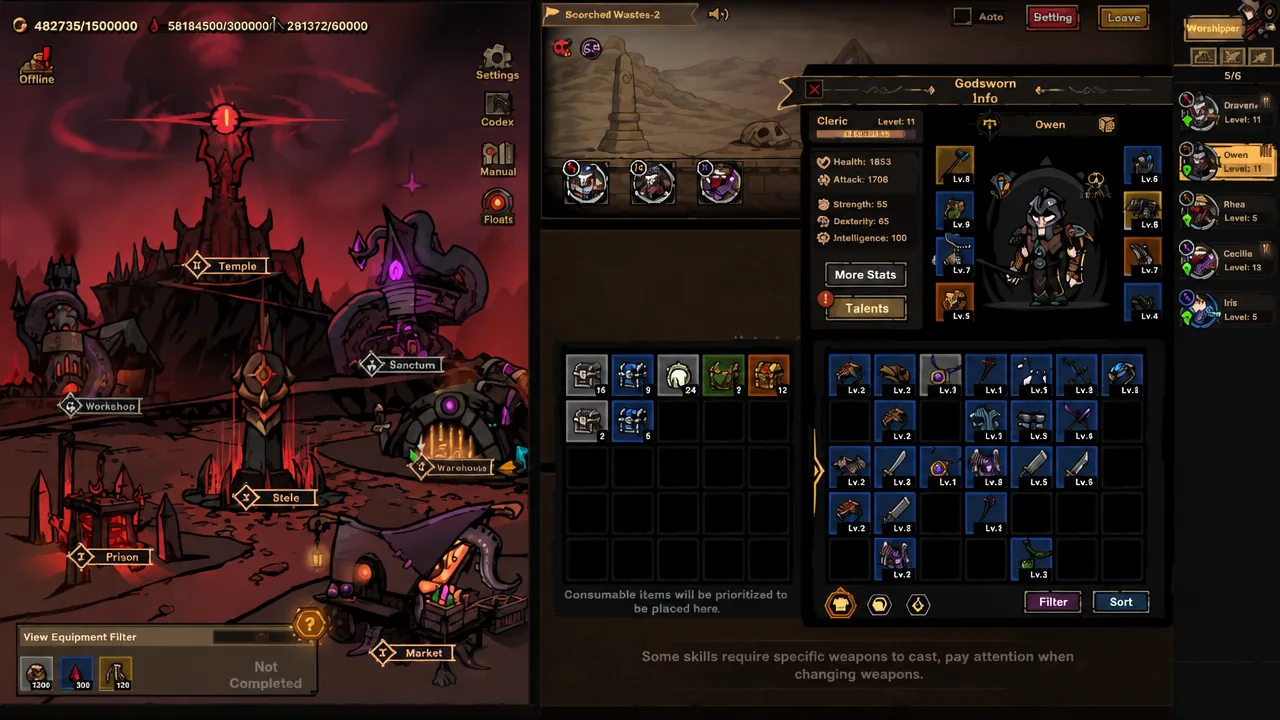
Why the Warrior takes the front line
The current meta rewards a melee damage dealer, and the Warrior is the most reliable pick for that slot. It is beginner-friendly and absorbs heavy punishment without dropping, which keeps pressure off your healer. Its build options are open enough to lean into a hybrid tank-and-damage role.
The standout trait is its ability to summon extra minions. Those summons deal respectable damage and take several hits before dying, effectively adding bodies beyond the three-member cap. The Mercenary hits harder if you want a pure damage build, but the Warrior’s all-round kit makes it the safer anchor.
Why the Mage handles ranged damage
The third seat wants a ranged attacker, and the choice comes down to the Mage or the Hunter. The Mage wins out because of its AoE. Outside of boss fights, enemies almost always spawn in clusters, and area spells clear those groups far faster than single-target archery.
The Mage also opens up elemental specializations if you want to build around a specific damage type. Ranged classes run a little fragile at launch, so keep the Mage behind the Warrior and let the Cleric top up its health.
Swaps worth considering
The Cleric-plus-melee-plus-ranged shape is the part to protect. The individual classes can flex depending on what you are trying to do.
- Swap the Warrior for the Mercenary if you want a more damage-focused front line and can give up the minion summons.
- Swap the Mage for the Hunter if you prefer a straightforward archer, though its builds are more one-dimensional.
- Keep the Cleric fixed. Its healing is what lets the team push into harder difficulty.
You can eventually field up to three separate teams, each with three members, as more chapters open up. Until then, the Cleric, Warrior, and Mage trio gives you a stable, self-sustaining squad that handles both packs of enemies and the occasional boss without needing constant retooling.