Broken Bones IV is the ragdoll physics game where the goal is the opposite of most Roblox experiences: you are trying to hurt your character as badly as possible. You start on a cliff, throw yourself off, and get paid for every bone that snaps, every ligament that tears, and every joint that pops out on the way down. Built in 2018 by Zaquille as the fourth entry in a series that started in 2009, it has passed 1.5 billion visits and still runs 30-player servers.
Quick answer: Spawn at the top of Mount Zaquilla, run off the edge, and steer your body into rocks and ice rather than snow or water. When you stop moving, the Round Summary screen pays you for the damage, and you spend that cash in the Upgrades menu before jumping again.
The core loop: fall, break, earn, upgrade
Every session runs on the same four beats. You drop, you take damage, the game totals it up, and you convert the payout into upgrades that let you fall harder next time. Nothing else in the game matters until that loop clicks.
Speed is the variable that controls everything. Payouts scale with how fast you are moving when you hit something, so a slow tumble down a snowy slope earns almost nothing while a high-speed slam into rock breaks several bones at once. Surface hardness is the second lever. Rocks, ice, and cliff faces carry your momentum into the collision; snow and water absorb it and end your run early.
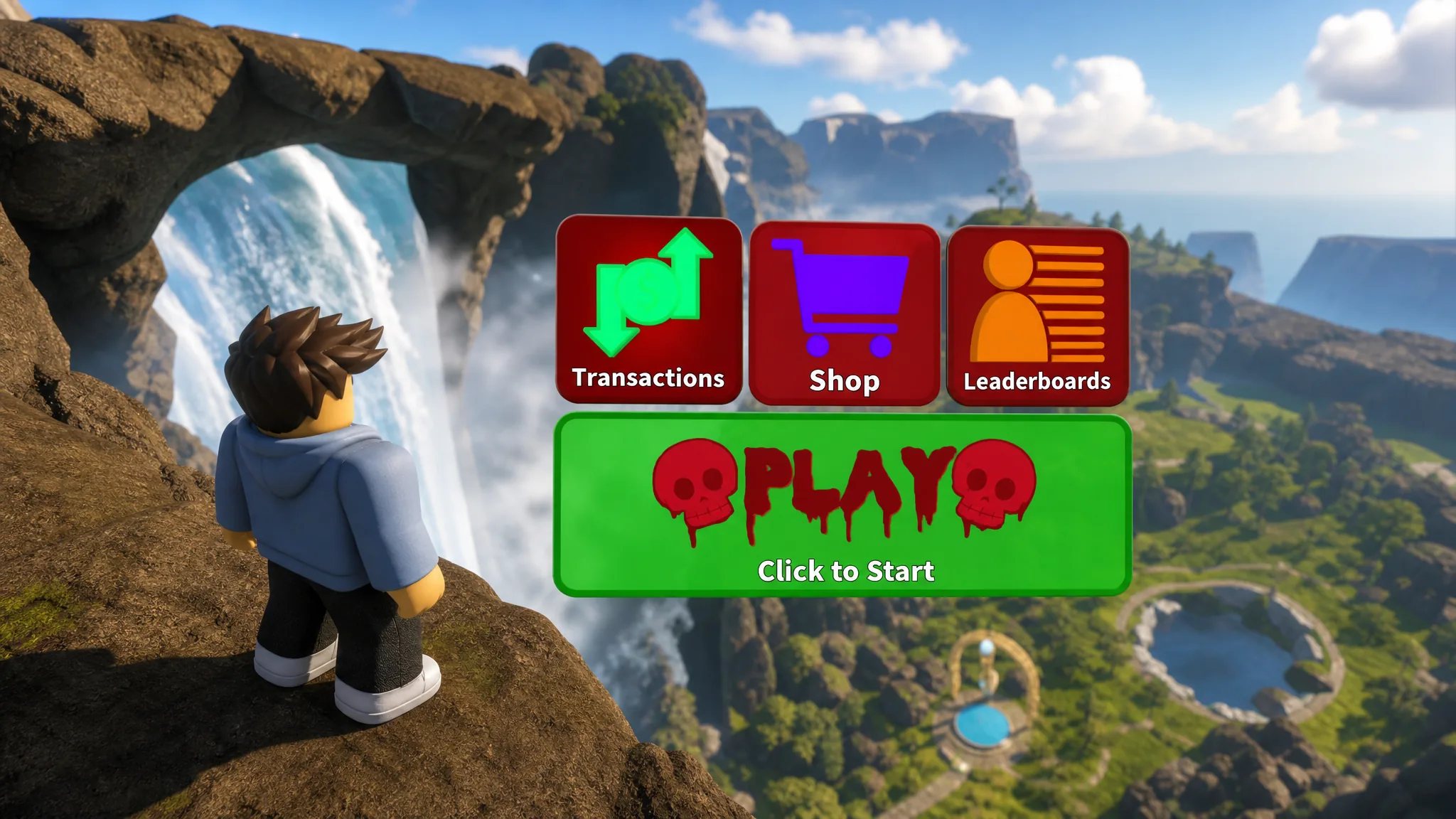
You can launch straight from the experience page on Roblox, then press PLAY on the main menu and click to start a round.
Your first fall, from spawn to payout
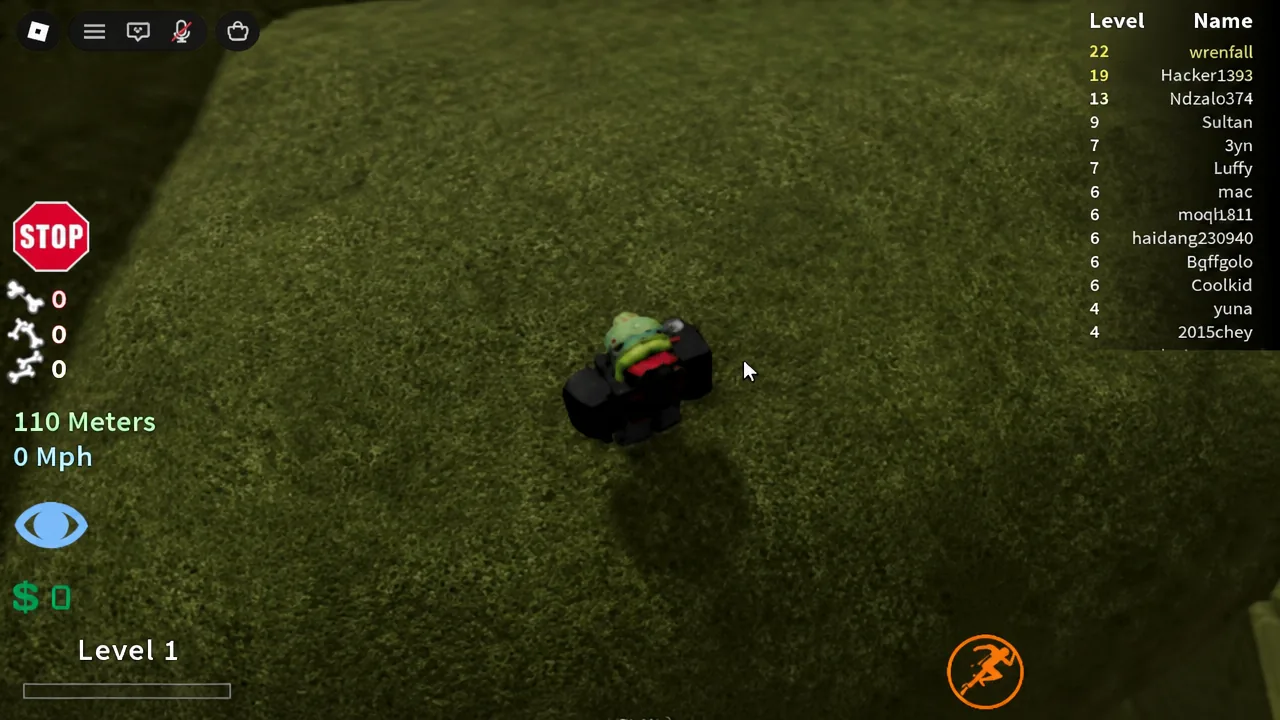
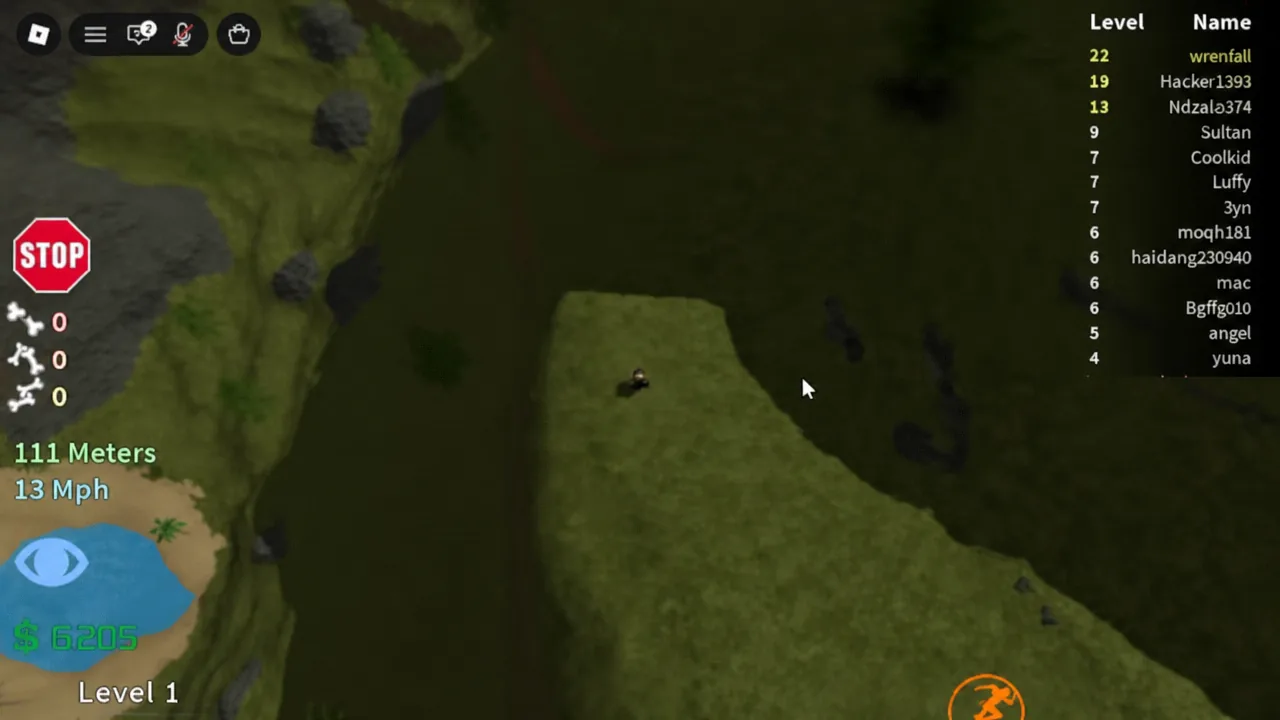
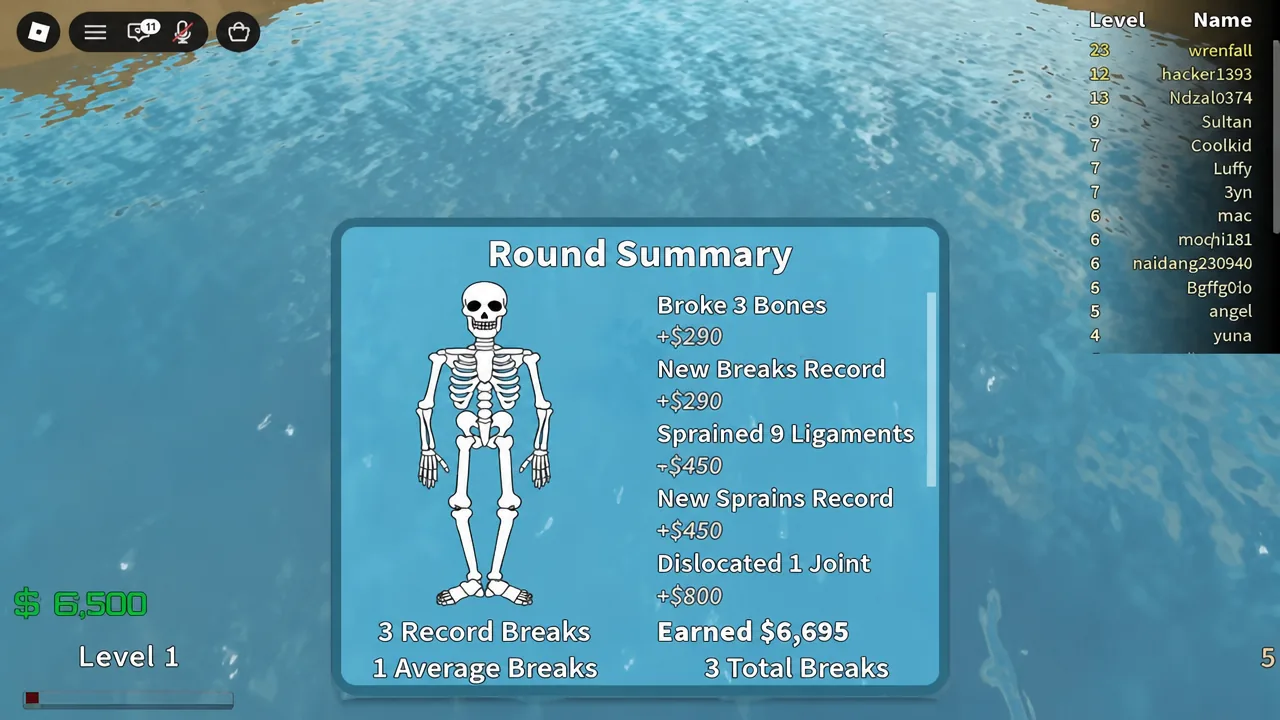
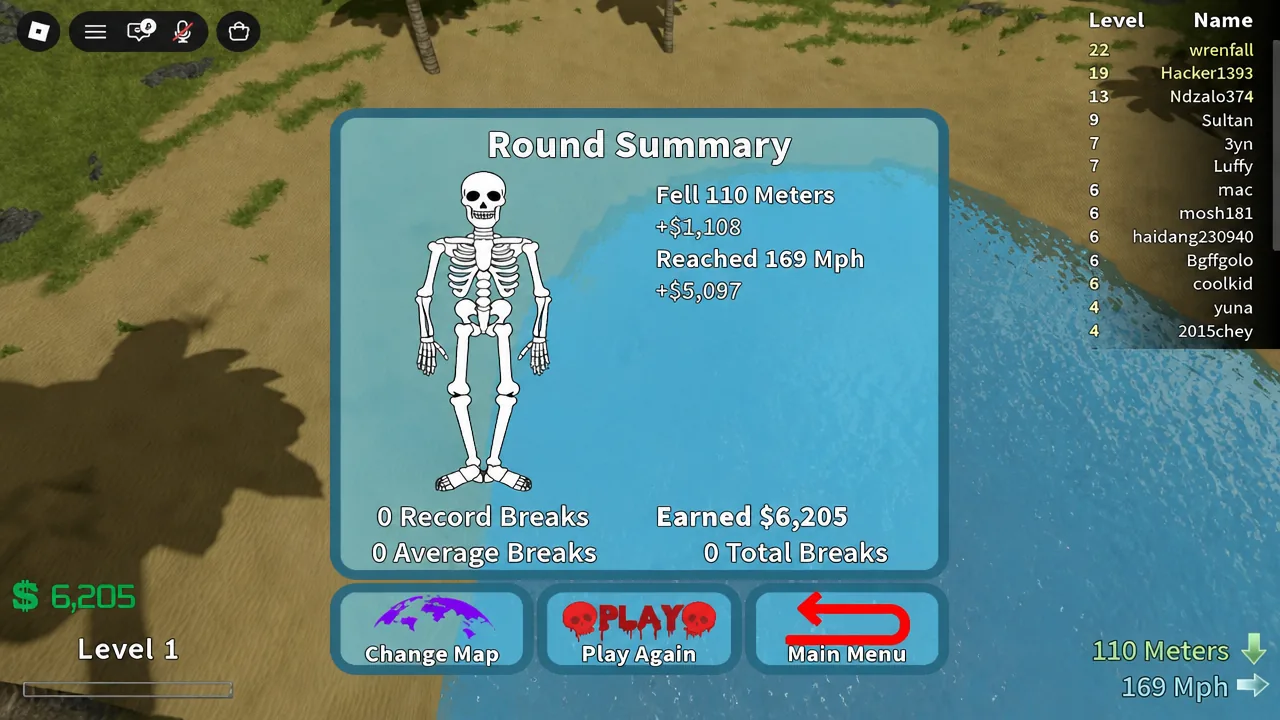
You know a run has registered properly when the summary lists non-zero break, sprain, and dislocation counts and your cash balance on the HUD goes up. A summary reading zero breaks means you landed on something soft or never got moving fast enough.
How the game decides what to pay you
Bones, ligaments, and joints are the baseline. A modest fall might return a few thousand dollars for a handful of breaks, and a messier one that snaps three bones, sprains nine ligaments, and dislocates a joint pays a little more again. Those numbers are steady income, but they are not where the game’s real money sits.
Head impacts are. Slamming your skull into hard terrain at speed starts an injury chain that escalates through several stages, each worth dramatically more than the last. The chain needs repeated contact, so one glancing bounce will not do it; you want your head connecting with rock over and over as you tumble.
| Injury stage | Head speed on impact | Payout |
|---|---|---|
| Concussion | ~100+ mph | ~$2,000 |
| Haemorrhage | ~200+ mph | ~$20,000 |
| Brain Damage | ~150–250+ mph | ~$50,000 |
| Ligmatize | ~300–400+ mph | ~$500,000 |
| Sugmatize | Level 1,000+ secret perk | No cash reward |
A single Ligmatize is worth more than dozens of ordinary falls, which is why experienced players treat bone breaks as filler and head impacts as the actual objective.
Upgrades menu: what to buy with your first cash
From the main menu, the Upgrades tab sits alongside Utilities and Maps. Everything starts at Level 0 and each purchase costs a flat amount of in-game cash.
| Upgrade | Cost to level up |
|---|---|
| Breaks | $1,000 |
| Sprains | $750 |
| Dislocations | $500 |
| Flight Control | $2,500 |
| Run Speed | $500 |
Flight Control is the expensive one and the one that changes how you play, because steering mid-air is what lets you pick your landing surface instead of hoping for a good one. Pair it with the helium balloon utility and you can line up impact points deliberately. Breaks, Sprains, and Dislocations raise the ceiling on how much damage a single fall can register, and Run Speed simply gets you off the platform faster.
Abilities and the levels that unlock them
Levelling up hands you launch tools, and the first two arrive quickly. Firework at level 2 fires you upward and in a chosen direction for extra height, and Dart at level 5 locks in your momentum so you do not bleed speed before impact. Used together, they cover most of what you need to reach the higher injury stages.
| Ability | Level | What it does |
|---|---|---|
| Firework | 2 | Launches you up, then fires you in a direction |
| Dart | 5 | Holds your momentum for a few seconds |
| Sprung | 16 | Reattaches your limbs with springs for extra bounces |
| Smackdown | 25 | Lifts you, then slams you down at high speed |
| Gravitate | 45 | Removes gravity and lifts you to set up a dive |
| Timeflip | 66 | Sends you back to an earlier position mid-fall |
| Revert | 90 | Returns you to your starting location |
| Mitosis | 100 | Duplicates your body into clones |
| Obliterate | 200 | Detaches every body part and scatters them |
The standard high-earning run is short: Firework off the platform to gain height, aim your head at rock, then Dart on the way down to hold your speed into the collision. Mount Zaquilla level 9 is the most consistent place to repeat it, hitting the ice first and finishing head-first into the rocks at the end of the map. Trees on that map trigger the head-injury chain surprisingly often too.
Mistakes that keep your payouts low
- Landing on snow or water. Soft surfaces barely break anything and end the run early.
- Falling slowly. If you simply step off the edge, you arrive too slow for anything above a basic break.
- Protecting your head. Body impacts pay small; head-first contact is what unlocks the big tiers.
- Mashing every ability at once. Use one per fall until you can predict how each changes your trajectory.
- Staying on low map levels. Higher levels mean more height and harder terrain, so climb them as soon as you can.
- Quitting after a bad run. Even a failed fall pays something, and volume is how you learn the timing.
Robux purchases worth considering
None of this requires spending. The game hands out enough cash that upgrades come steadily, and the Shop is optional. If you do plan to play long term, the 2x Money pass is the sensible first buy, since doubling every payout permanently compounds across the whole progression. Passes that raise maximum perk levels from 3 to 5 or halve ability cooldowns are the next most useful.
An Unlimited Breaks pass also appears in the Shop, listed at R$699 with a 30% discount from its usual R$999. Be careful with anything that maxes your money outright, though. Setting your balance to infinite removes the reason to keep falling and flattens the game within a few minutes.
The game carries a Mild maturity label for repeated mild violence, and voice chat is not supported on its servers.
Once the Firework and Dart combination becomes muscle memory, the pace of the game changes completely. Early runs are about learning where the rock is on each map; later ones are about arriving at that rock as fast as physics will allow, with your head leading the way. Level 50 and Level 100 badges mark the points where that shift has usually happened.