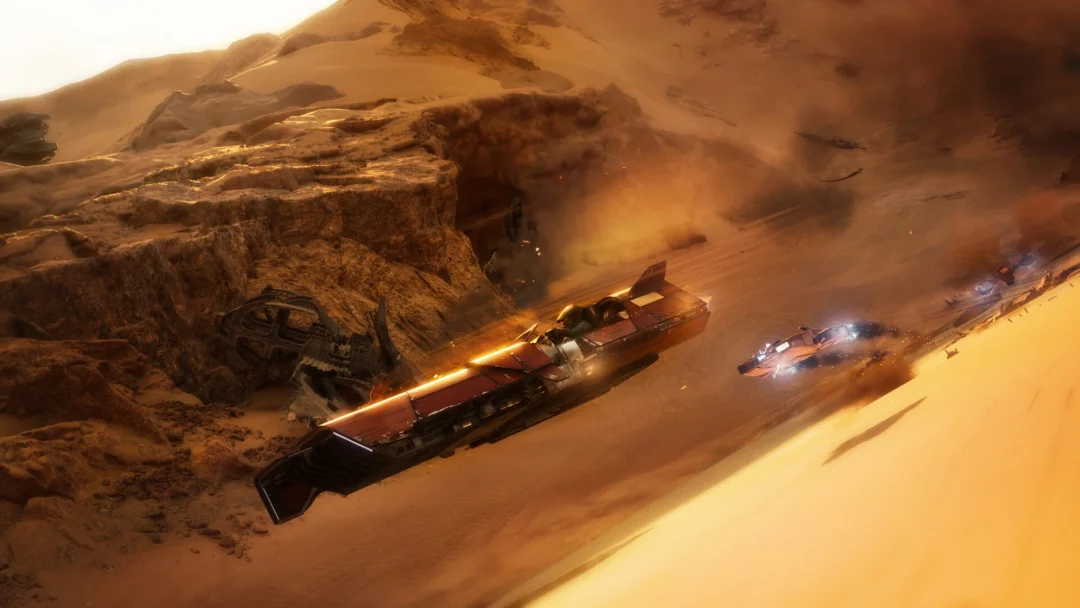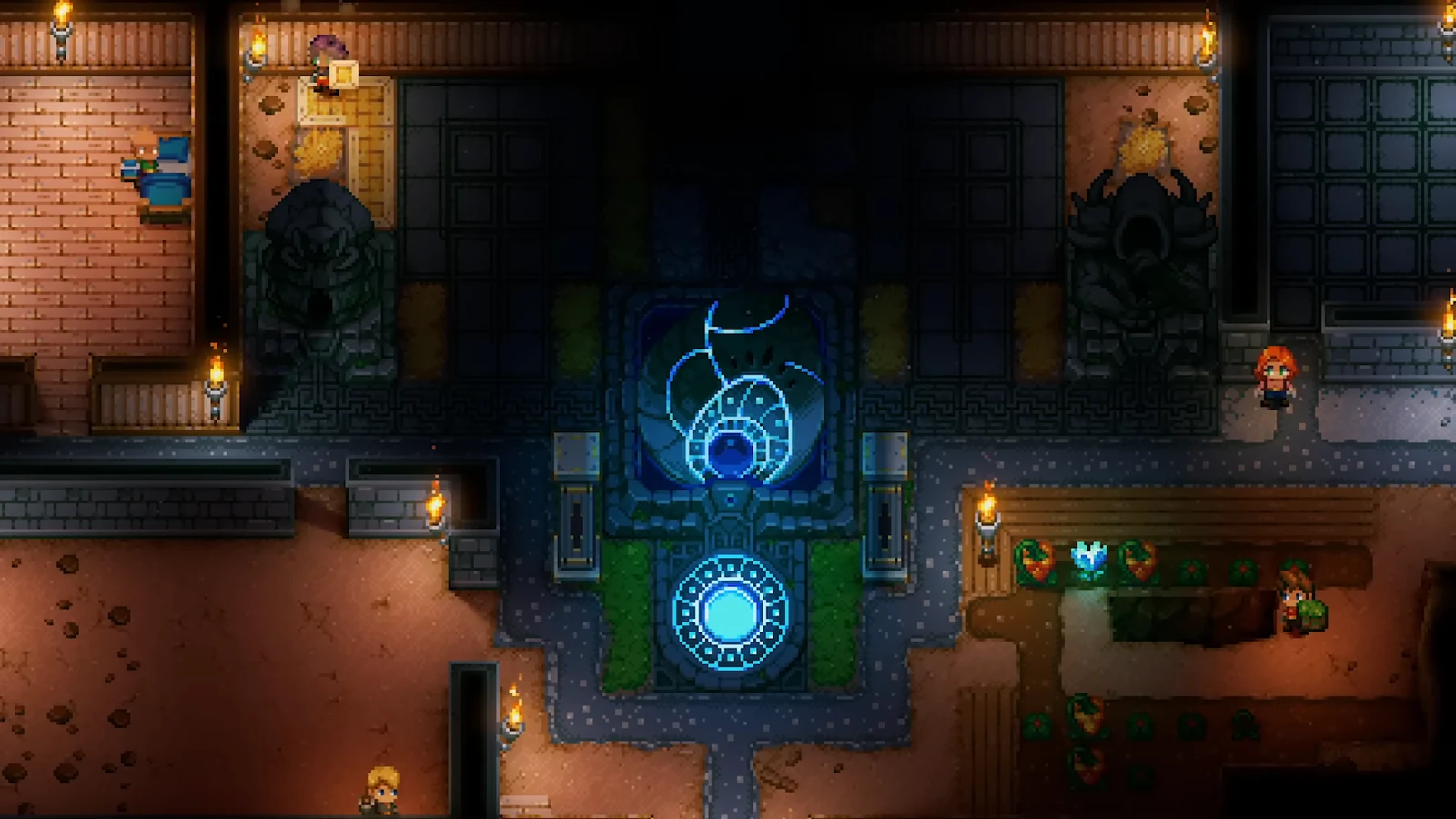
Core Keeper’s 1.3 update, Riders of the Underground, is out and it mostly changes how you move. Cattle you already keep in a pen can be ridden, a new off-hand item yanks you across pits, and the two weakest build paths in the game — Mage and Summoner — have been rebuilt from the talent tree down. It is the first of three major releases Pugstorm has lined up under the Road to the Maw banner.
Quick answer: Riders of the Underground costs nothing and is available on PC and consoles now. Use the livestock workbench to make a Saddle, then equip it on any cattle to mount the animal.
Core Keeper 1.3 release date, platforms, and version check
Riders of the Underground arrived as a free content update on September 21, 2026. It does not require a paid expansion, meaning the base game is all you need. The September 22 hotfix moved the build to 1.3.0.2.
- PC (Steam)
- Nintendo Switch and Nintendo Switch 2
- PlayStation 4 and PlayStation 5
- Xbox One and Xbox Series X|S
On PC the patch arrives through the Core Keeper store page like any other Steam download. To confirm it applied, open the pause menu and look at the version number in the corner, or check whether the Saddle recipe has appeared at the livestock workbench. Both are instant tells.

How to ride cattle with the Saddle in Core Keeper 1.3
Rather than building a single dedicated mount, Pugstorm made every cattle type in the game rideable through one item. Giant isopods, the new Orex, and anything else you have tamed all work the same way.
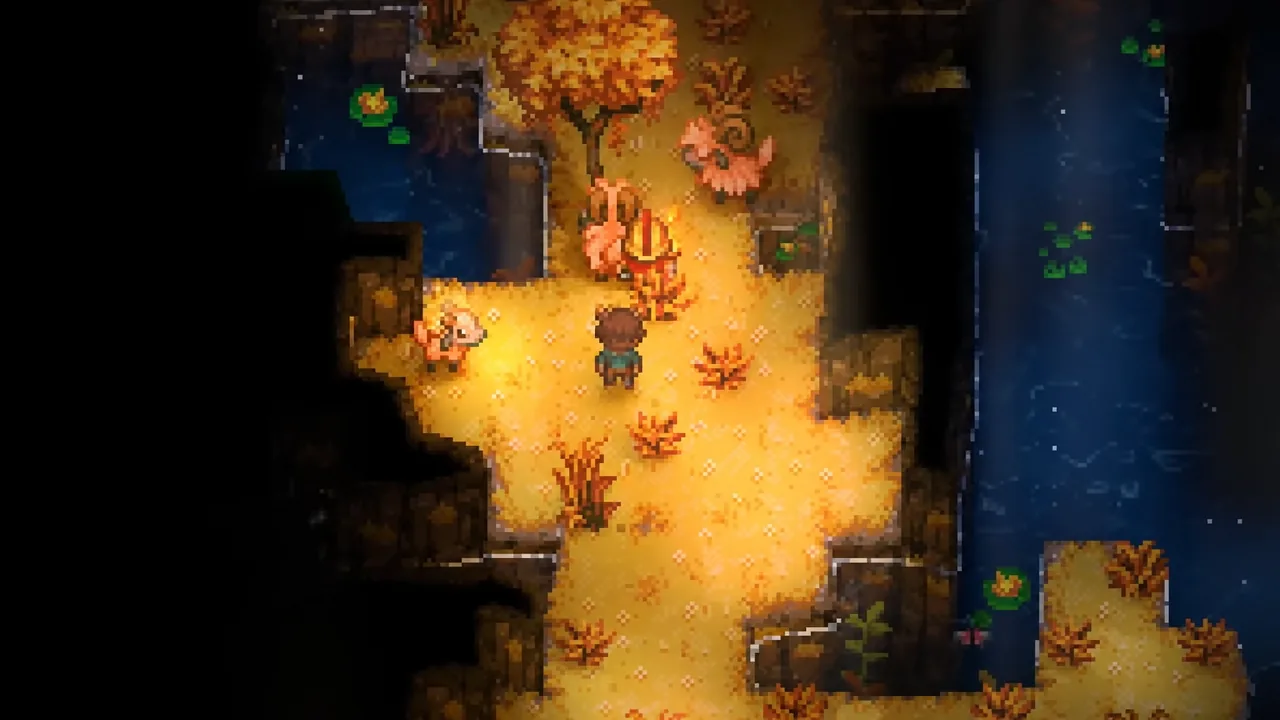
A mount can still die. Bosses may kill or swallow the creature beneath you, so keep your favourite isopod away when you set out to find Ghorm the Devourer.
Hookshot: crossing pits and water without building bridges
The new Hookshot occupies an off-hand slot and connects to solid areas, including walls, to draw you across pits and water. You can choose between the regular Hookshot and the Gilded Hookshot.
It does not retire bridges. There has to be something valid to hook onto on the far side, and it will not swing you freely across a whole cavern. What it removes is the stop-and-build routine every time a small chasm cuts your tunnel in half.
Moss sub-biome and the Orex in the Forgotten Ruins
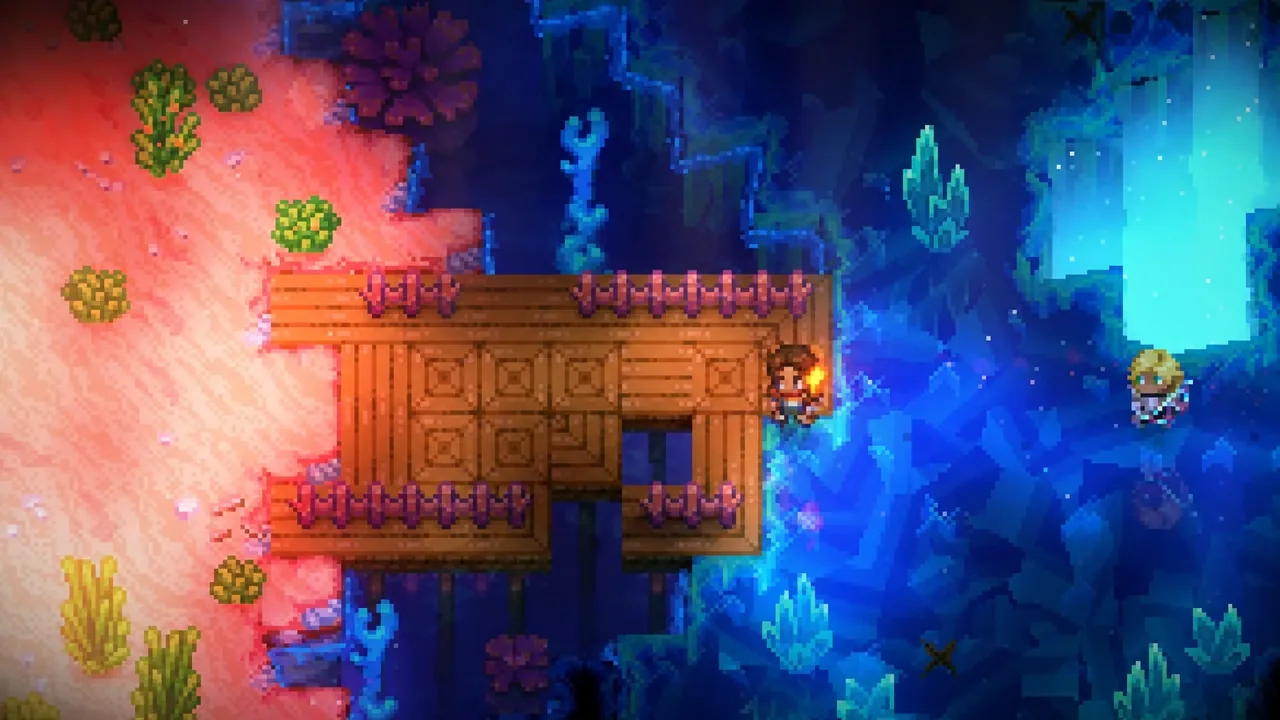
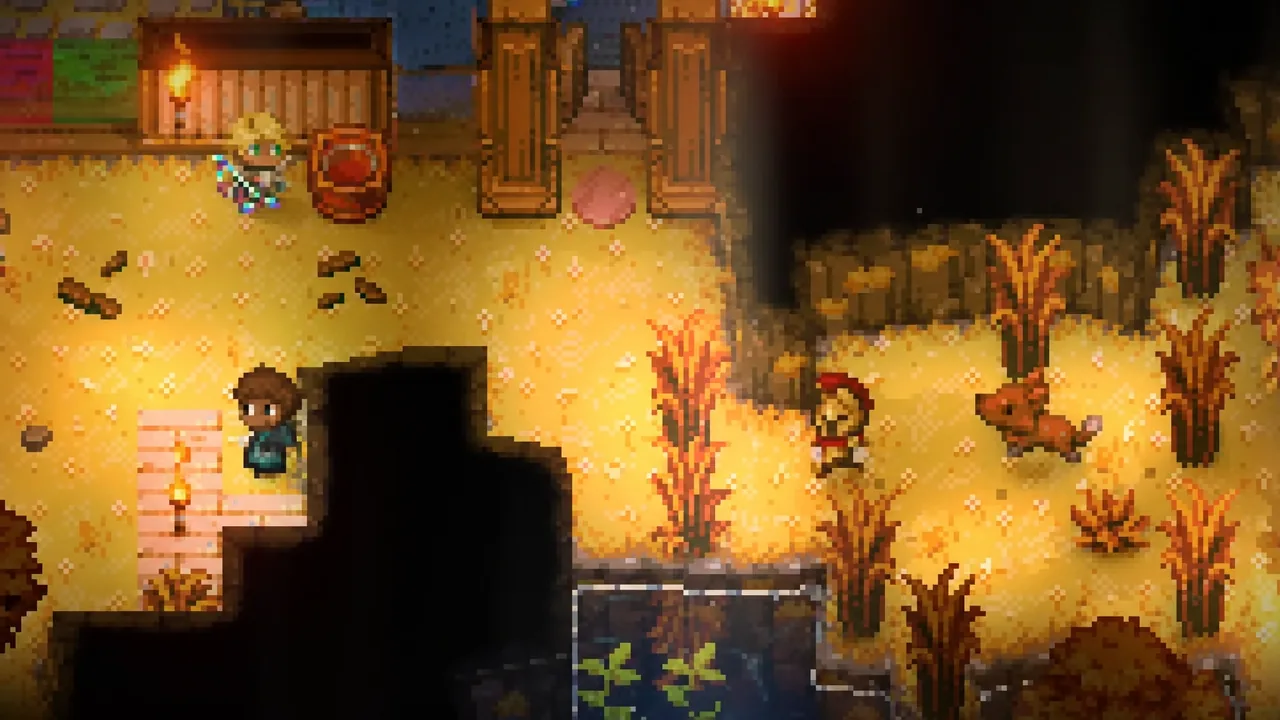
In the darker, damper parts of the Forgotten Ruins, a Moss sub-biome now appears, covering the familiar shattered stone with moist green growth. No natural predators live there, making it an especially quiet area despite the region’s Caveling activity, although a stray Caveling may still pass through.
The Moss biome is home to a new cattle breed, the Orex. Front-facing eyes, sharp teeth and heavy jaws make it look like a predator, but its diet is insects and Moorshrooms and it is generally placid. Since every cattle type is rideable in 1.3, a Saddle turns one into a mount like any other.
Summoner and Mage changes in version 1.3
Summons have received the update’s biggest mechanical overhaul. Minions no longer vanish after a timer runs out: weapons like the Tome of the Dark set aside part of your mana pool, allowing the minion to remain until that mana is no longer reserved. You no longer need to keep calling them back repeatedly.
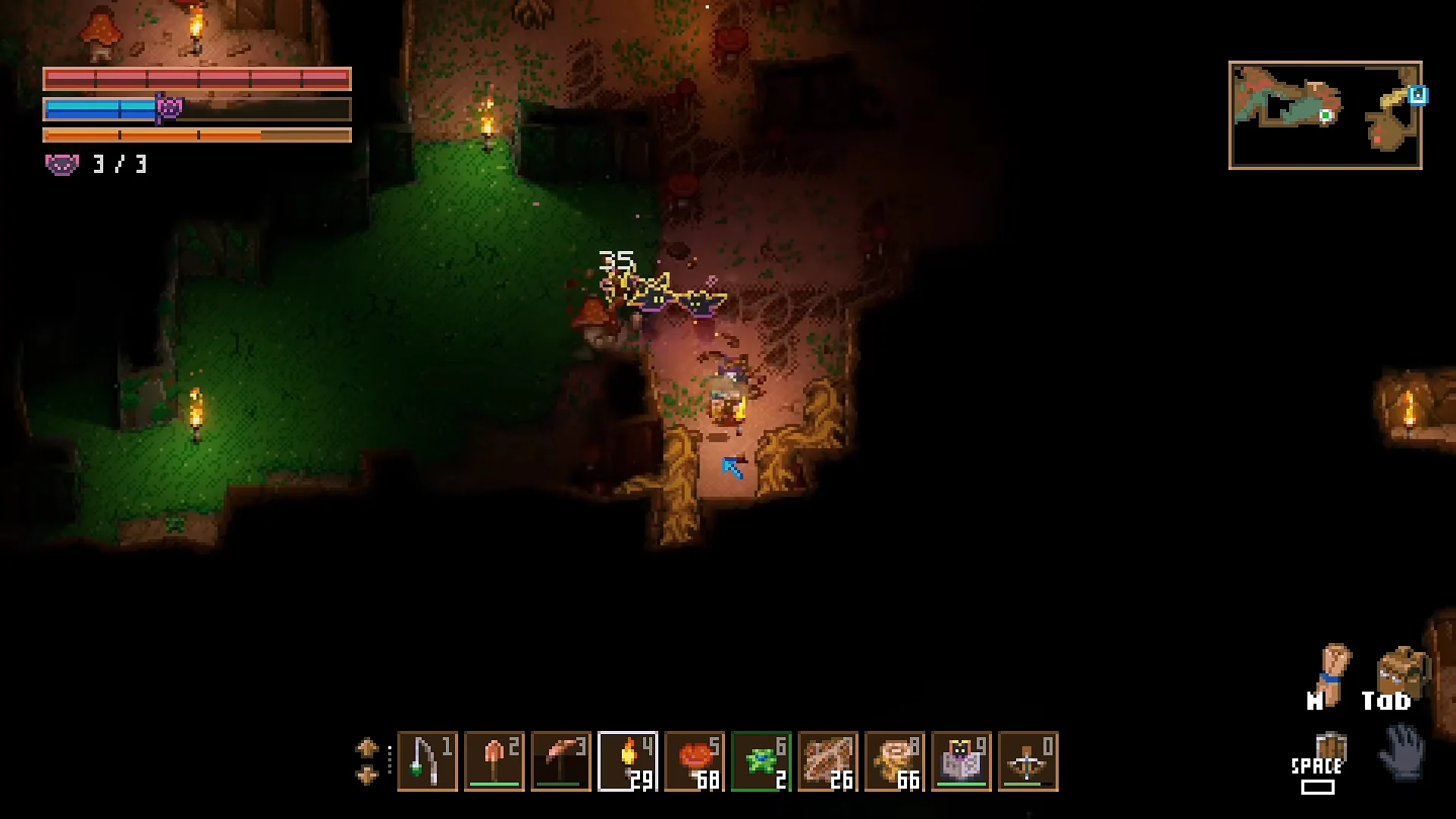
Summoning talents have also been reorganized and rebalanced, with two additions to the tree and a craftable Training Dummy for damage testing. Support weapons matter more now: using the Runestone Scepter curses an enemy, causing minions to deal 40 percent more damage to it. Against a lone boss, that means alternating between applying the curse and kiting while your minions wear down its health.
Mage receives a comparable overhaul through reorganized, rebalanced Magic talents and newly added staff weapons. Community responses to the magic system influenced both revisions, so check an existing optimized character before returning underground.
New weapons, gear, enemies, and pets in Riders of the Underground
Most of the new equipment feeds build-crafting rather than raw power progression. Thirty accessories alone open a lot of stat combinations, which is exactly why gear comparison shipped alongside them.
| Addition | Amount |
|---|---|
| Armor pieces | 10 |
| Rings | 15 |
| Necklaces | 15 |
| Scepters (Warlock weapon type) | 7, including a Legendary |
| Achievements | 4 |
New weapons include the Corrosion Staff, the Blizzard Staff and a Sniper Rifle, and the Scepter is an entirely new weapon type built for the Warlock playstyle. Moss Armour and the Nature Scepter tie into the new sub-biome. New pouches are in as well. On the enemy side, the Wingling and the Searpent join the roster, and the Titan bosses — Azeos the Sky Titan, Omoroth the Sea Titan and Ra-Akar the Sand Titan — now drop new loot chests.
Hoppet
Hoppet is a sea-born, frog-like pet that uses projectiles to keep foes away and may inflict the slippery effect. Its role favors controlling groups over dealing straightforward damage.
Azeos Jr
Azeos Jr flies alongside you firing projectile shards that can stun what they hit, which is useful against packs. Both pets hatch from Pet Eggs found while exploring and come in several colour variations.
The third pet
A third pet shipped with the update, and Pugstorm has deliberately not revealed what it is. It can be found in The Desert of Beginnings; its abilities are left for players to uncover.
Quality-of-life changes in Core Keeper 1.3
Two changes stand out here. Equipment can now be checked against your currently worn gear, making upgrades easier to identify, while a new key bind lets you rotate through loadouts rather than reconstructing each one item by item.
- Customisable cursor and crosshair indicators in the Options menu
- Adjustable paint brush area, up to 5×5
- Boats, minecarts and go-karts return to your inventory on death instead of your grave
- Go-kart handbrake button, plus improved turning and inertia
- General balance adjustments across the game
Starting a fresh world on 1.3: the early-game loop
Restarting for 1.3 leaves the opening hour familiar, though the process is smoother. After spawning at the Core, break the enormous roots surrounding it to collect Wood. Before doing anything else, hand-make a Torch, Wood Pickaxe, Basic Workbench, and Chest. That initial bench can then produce Wooden armour and tools.
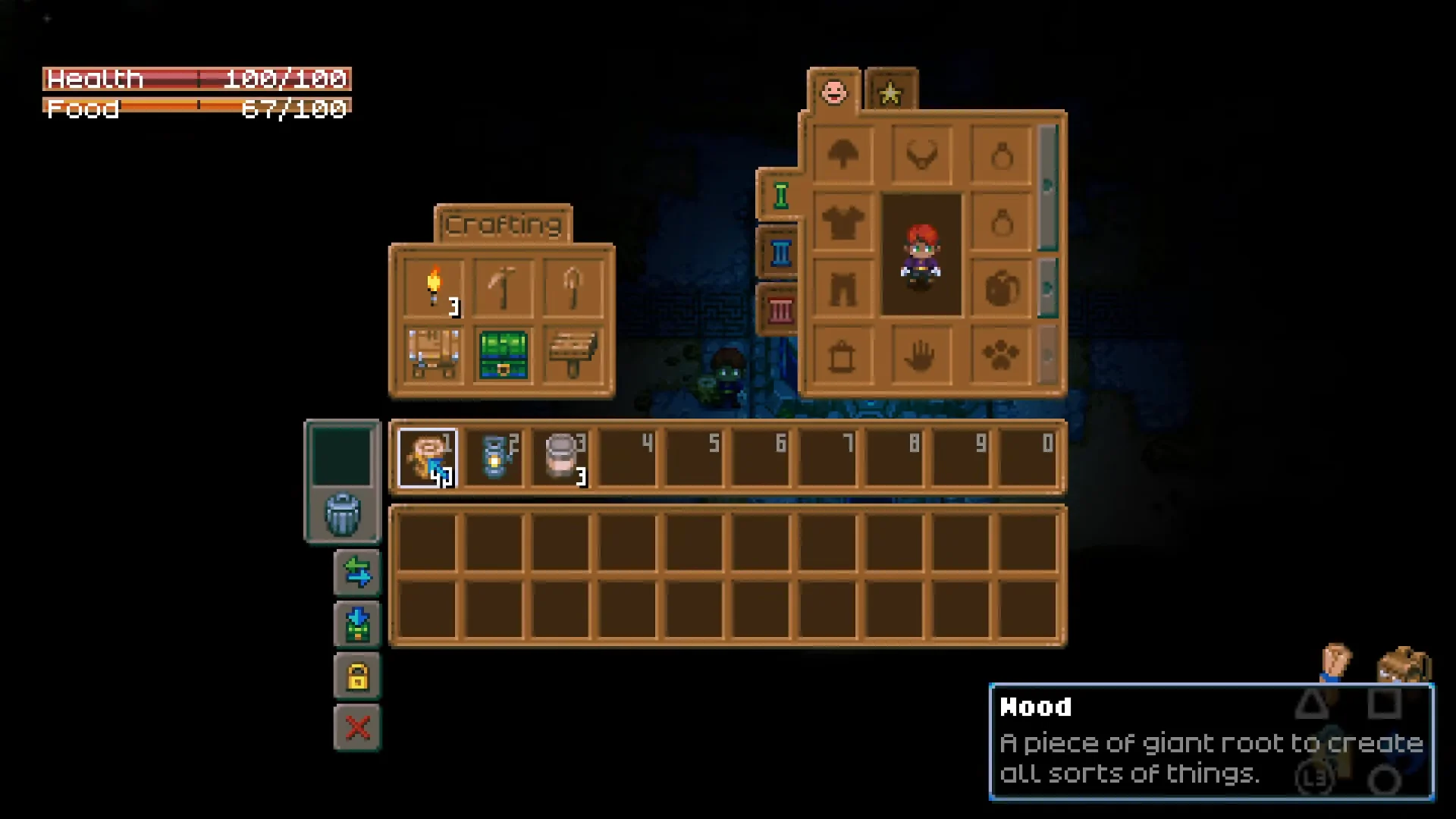
| Item | Materials | Key stat |
|---|---|---|
| Wood Pickaxe | 4 Wood | +15 mining damage |
| Furnace | 20 Dirt Block | Smelts ore, no fuel |
| Salvage and Repair Station | 5 Wood, 5 Copper Bar | Scraps and refurbishes gear |
| Cooking Pot | 2 Wood, 4 Copper Bar | Combines two ingredients |
| Watering Can | 4 Copper Bar | Holds 100 water |
| Copper Pickaxe | 4 Wood, 4 Copper Bar | +42 mining damage |
Crafting and repairing straight from nearby chests
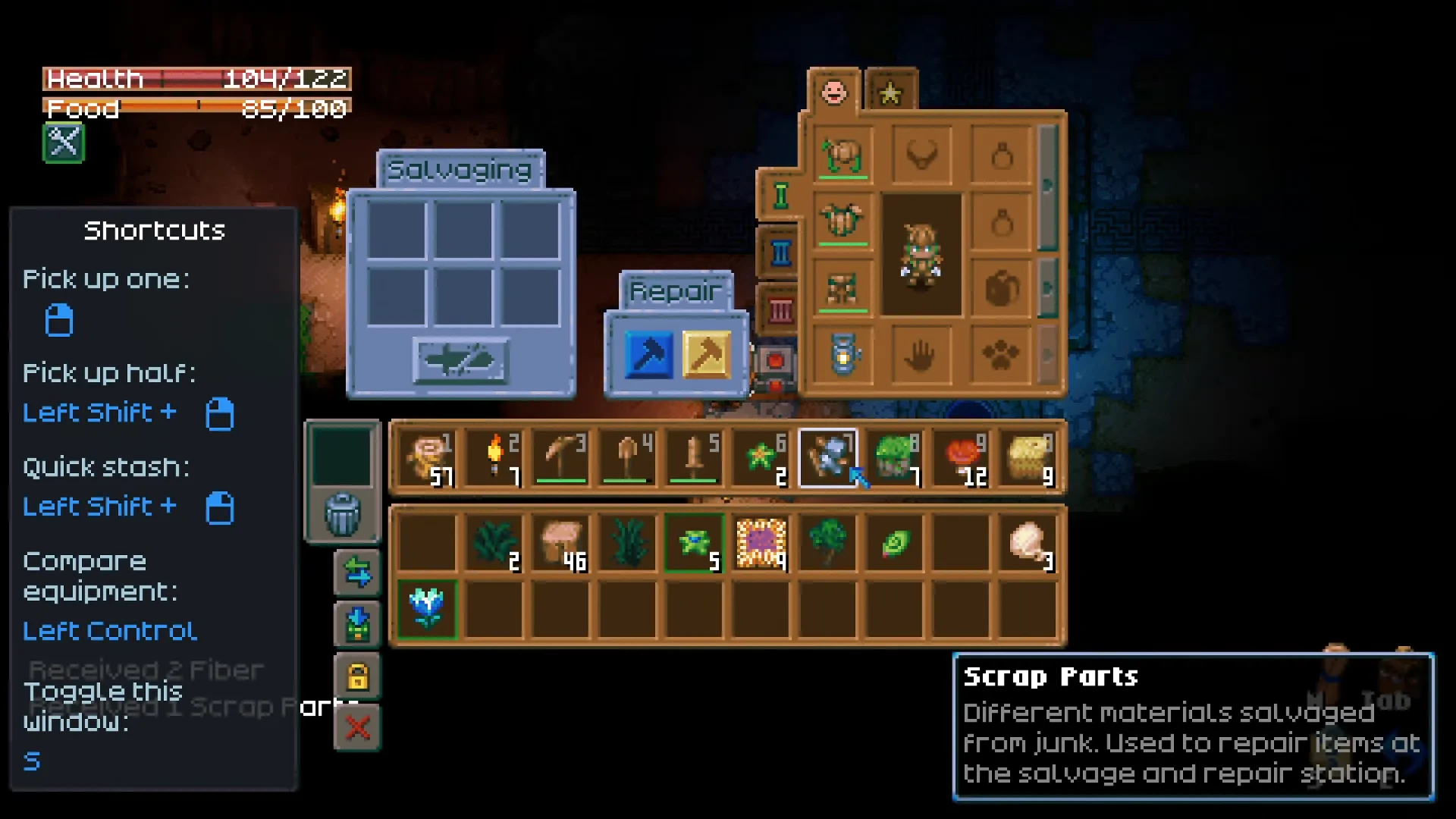
Anything sitting in a Chest placed next to a workbench counts as if it were in your pockets. That applies to the Salvage and Repair Station too, so repairing a tool automatically pulls Scrap Parts out of storage without a single drag-and-drop.
Inside a container, Q quick-stacks matching items into nearby chests, R sorts the contents, and F locks an item so sorting leaves it alone.
Smelting, salvaging, and workbench upgrades
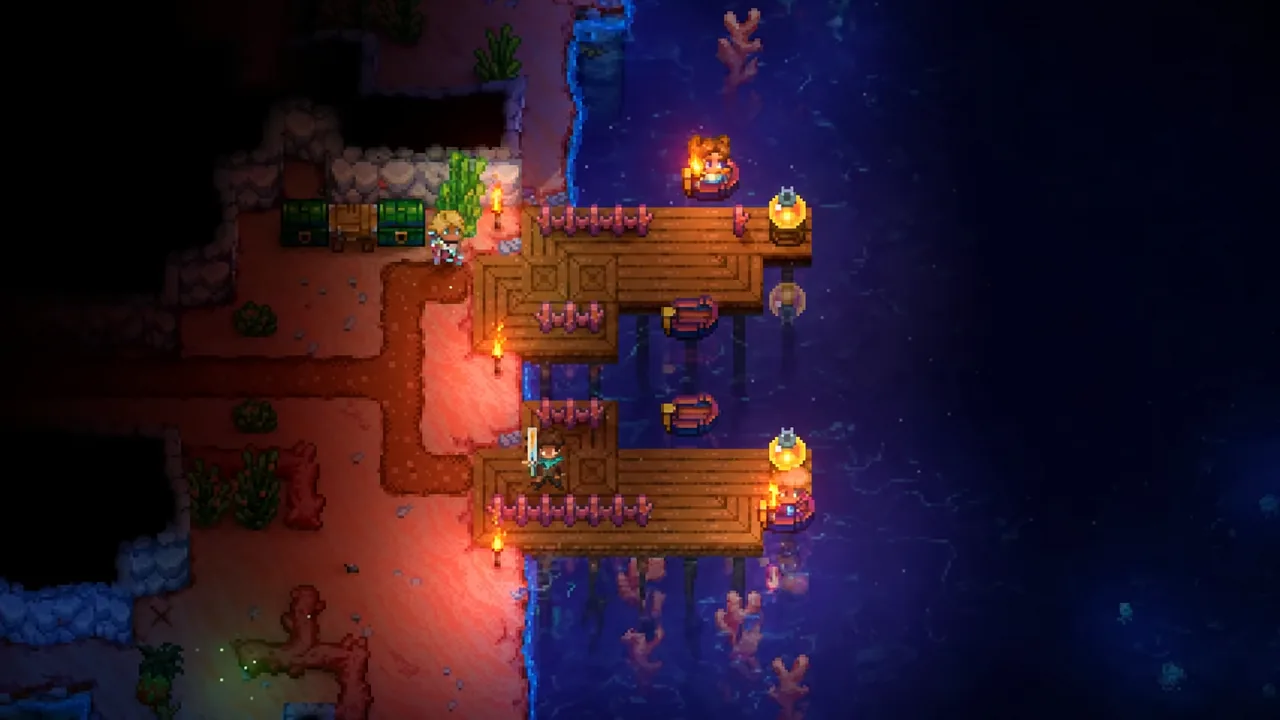
Furnaces need no coal or wood. Drop Copper Ore, Tin Ore or Iron Ore in and they smelt on their own, so the only bottleneck is how much ore you can carry back.
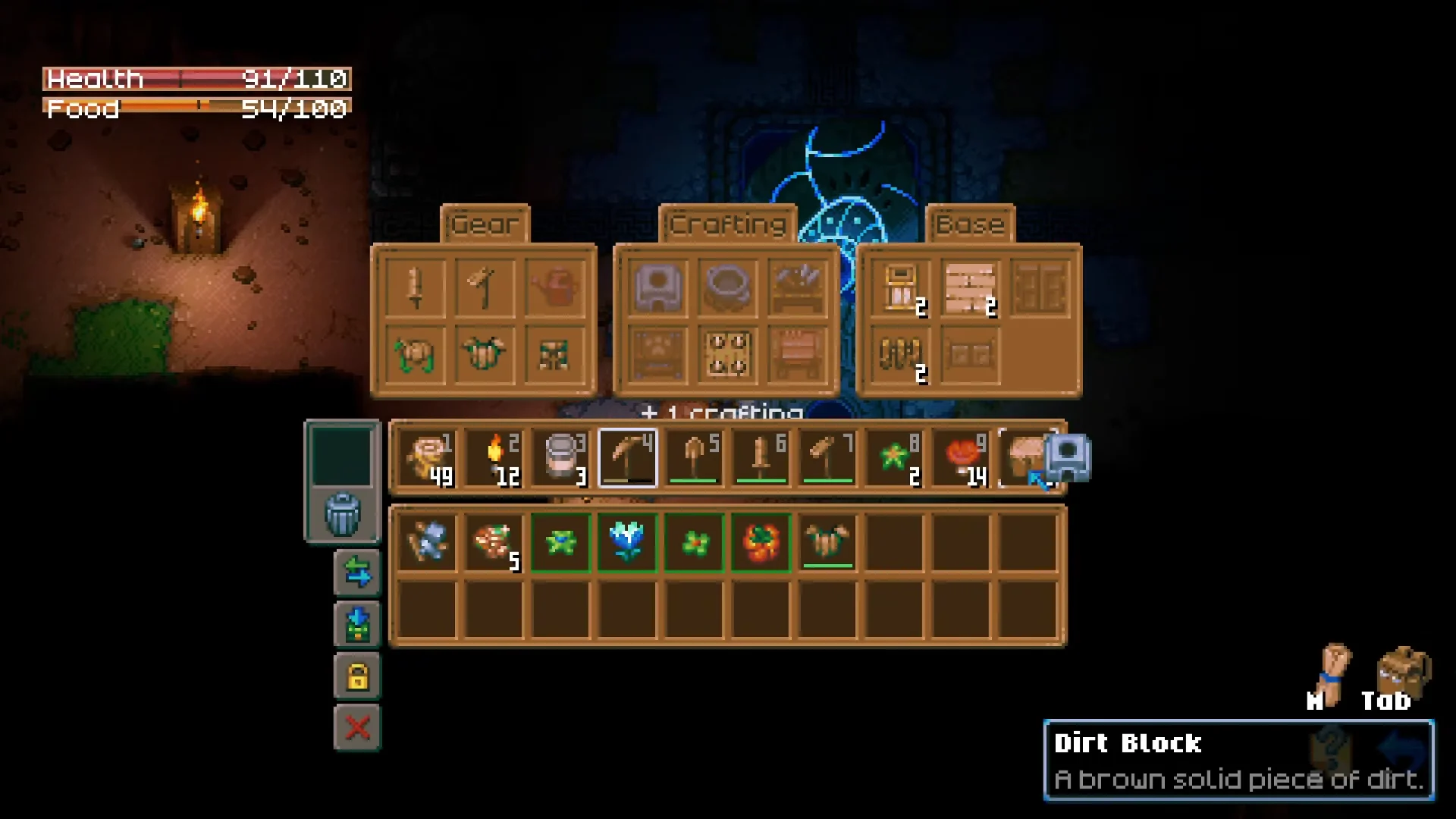
The Salvage and Repair Station turns junk drops into materials — a spare Peasant Hat breaks down into Scrap Parts and Fiber — and refurbishes broken tools rather than making you craft new ones every few hundred blocks.
Higher-tier benches inherit every recipe from the tier below. Once the Copper Workbench is down, the Basic Workbench can be torn up and its recipes stay available, which keeps a base from turning into a museum of obsolete tables.
Farming crops and cooking for buffs
Cooking stacks two ingredients into one dish with merged effects. A Glow Tulip plus a Bomb Pepper becomes Spicy Tulip Salad, which grants light, +21% movement speed, food, and mana regeneration — the last of which is what makes an early Simple Staff usable at all. Eating anything also keeps the Well Fed buff running for +5% damage and max health.
Skills, talent points, pouches, and loadouts
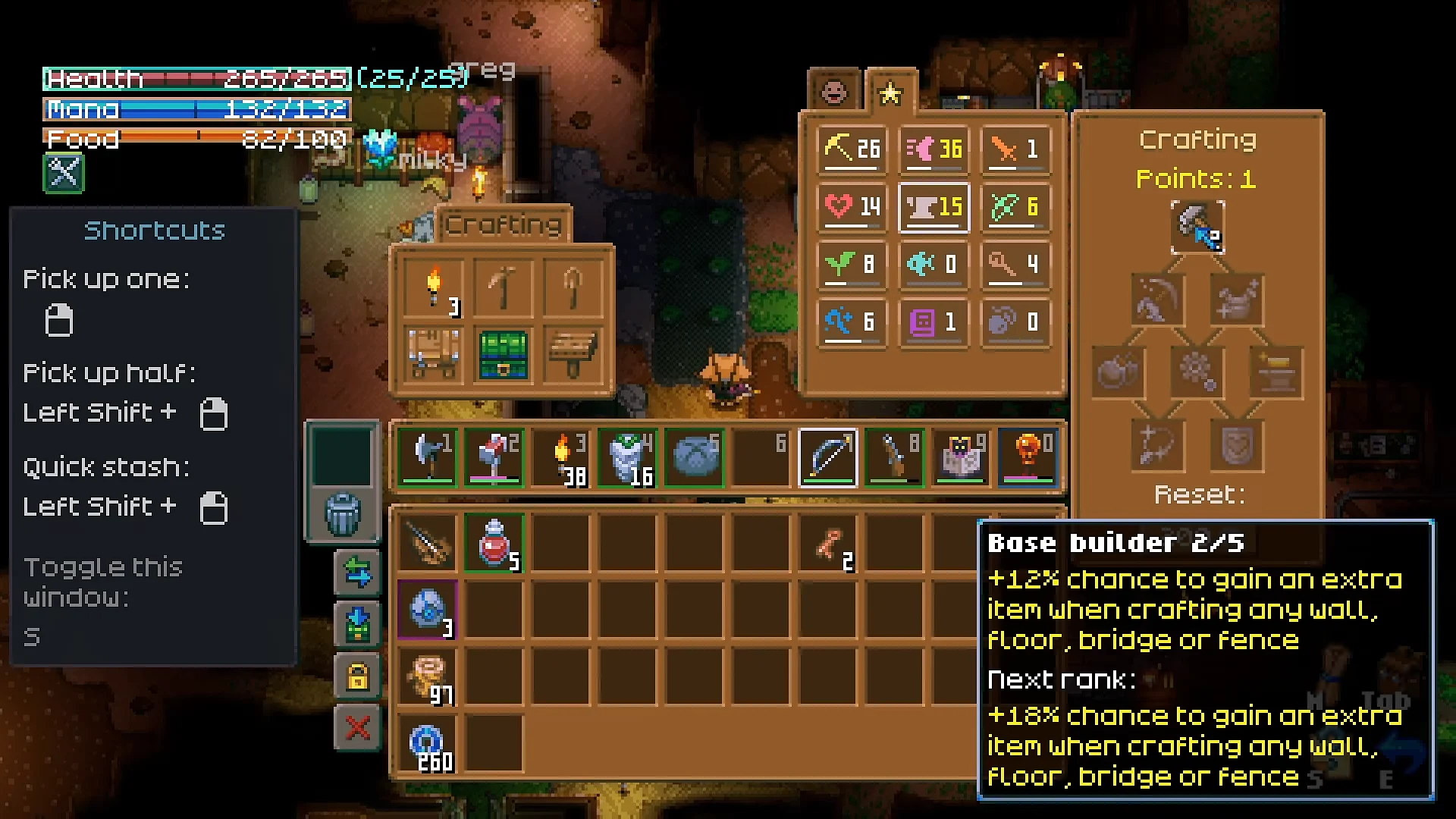
Skills level from doing, not from a menu. Mining walls, running, melee swings, crafting, magic attacks and gardening each feed their own skill line across seven disciplines, and every 5 levels in a skill grants 1 talent point to spend inside that skill’s tree.
The inventory also carries dedicated pouch slots. A Small Seed and Crop Pouch adds five slots that auto-sort seeds and crops as you pick them up, keeping farming clutter out of your main bag. Three equipment loadout tabs sit alongside it, and 1.3’s new key bind cycles between them without opening the menu.
Some progression gates are hard stops rather than suggestions. A stone dungeon gate answers with “I need higher mining damage” until your pickaxe is strong enough, and a giant copper boulder will not break at all until you have a stationary drill.
Road to the Maw: what comes after 1.3
Road to the Maw is three connected major updates building toward whatever sits beyond Breaker’s Reach. Pugstorm originally planned it as one enormous release and split it into three so players would not wait years for anything at all.
| Version | Name | Status |
|---|---|---|
| 1.3 | Riders of the Underground | Released September 21, 2026 |
| 1.4 | Trials of the Depths | No date confirmed |
| 1.5 | Beyond the Breach | No date confirmed |
A smaller 1.3.1 content patch is planned to follow, with no date announced. The full patch notes carry the exact weapon lists, accessory stats, enemy entries and talent numbers that the feature reveal skipped over, and the Explorer’s Guide has been updated to cover 1.3 as well.
For a group, 1.3 is a fair reason to spin up a new world. Mounts and the Hookshot trim the dead time between base and dig site for up to eight players, and the reworked Summoner and Mage trees give an established party an actual reason to redistribute roles. It follows the same free-update pattern as 1.1 Bags & Blasts and 1.2 Void & Voltage, so the only cost is the download.