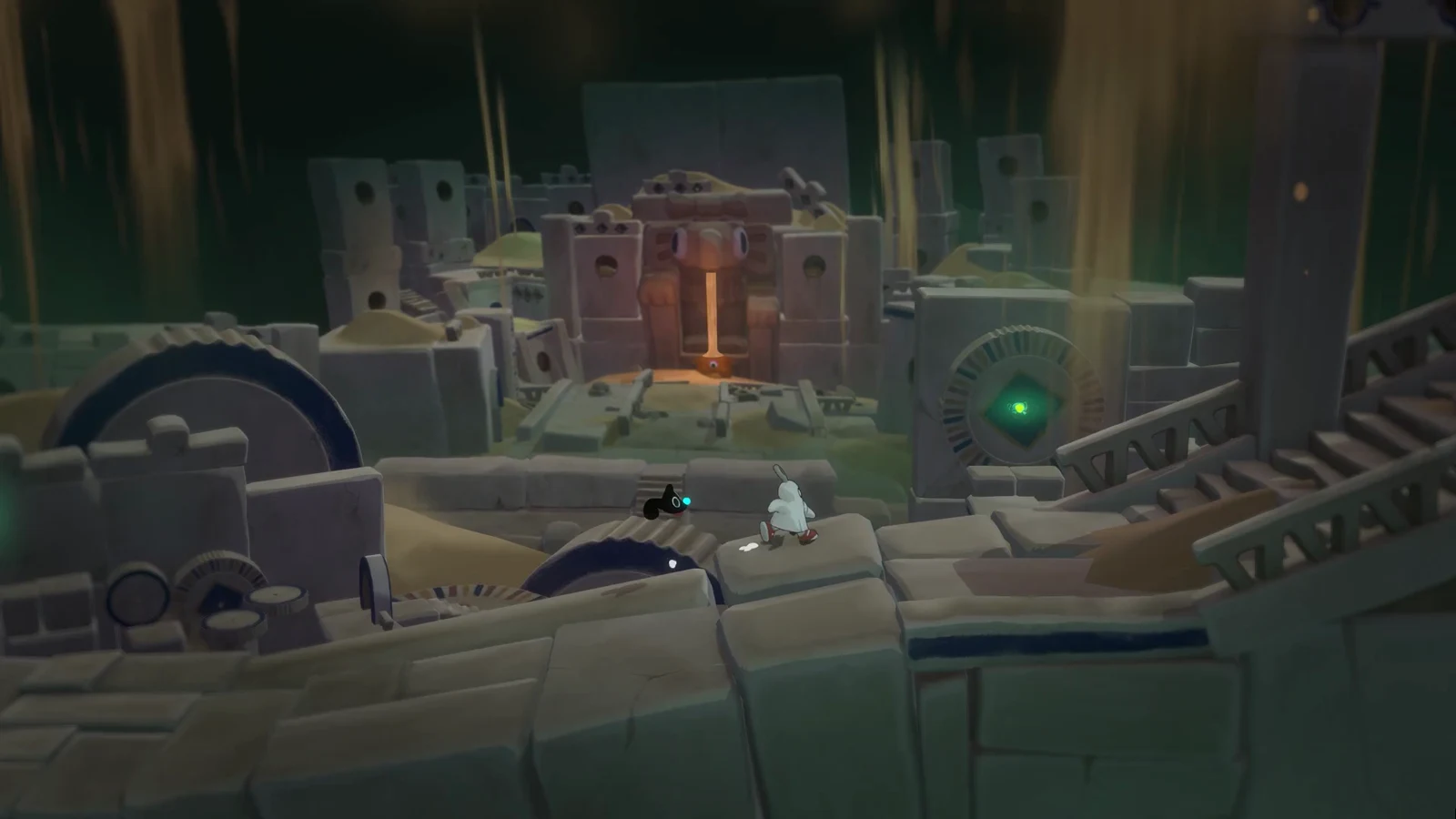
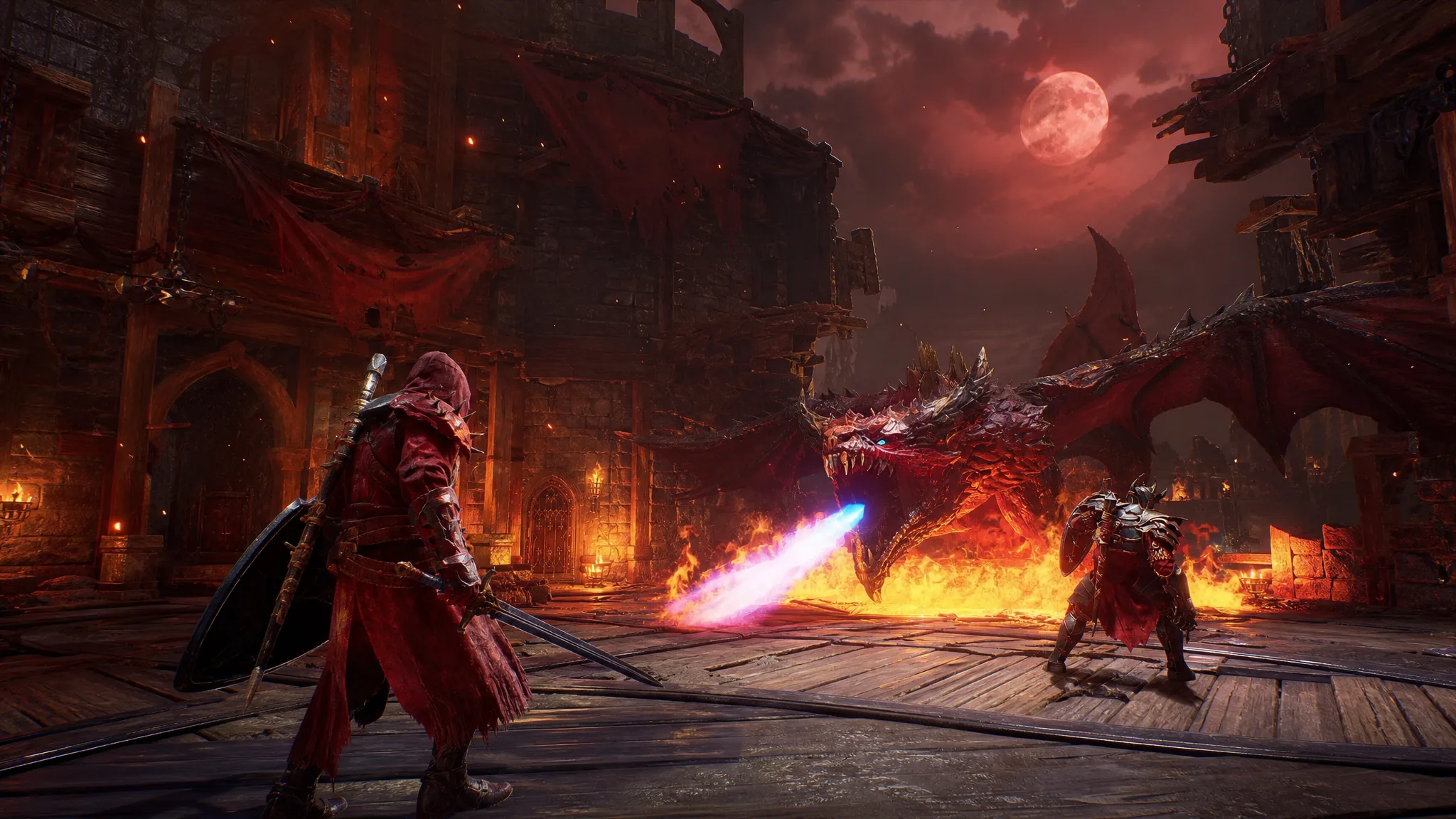
Crimson Moon lets you take on its gothic action-RPG runs alone or bring one friend along, and the co-op layer changes how each hunt plays out rather than just adding a second body to the map. The game is built by ProbablyMonsters as a Soulslike with roguelike runs, so a partner can help you split enemy pressure and push through the tougher boss fights.
Quick answer: Crimson Moon supports online co-op for a maximum of two players. Clear the tutorial (which ends with the Demon Brute boss), reach the Sanctus Clypeus hub, open the menu, and either Host Game or use Quick Match / Join Via Code. Crossplay works across PC, PS5, and Xbox Series X|S.
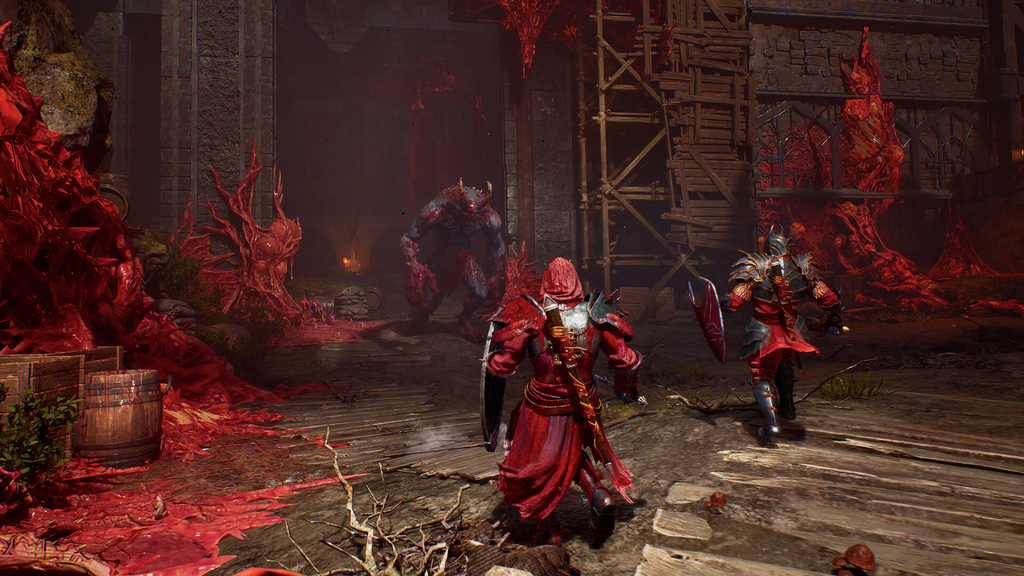
Party limit and platform support
Co-op is capped at two players, and it runs online only. There is no three- or four-player mode, no split-screen, and no local couch co-op. All multiplayer is cooperative PvE, so there is no way to fight other players. Solo play is fully supported and never requires a partner.
| Feature | Status |
|---|---|
| Solo play | Supported |
| Two-player online co-op | Supported (max party size) |
| Three or four players | Not available |
| Local / split-screen | Not available |
| PvP | Not available |
| Crossplay | PC, PS5, Xbox Series X|S |
The game launched September 1, 2026 across PC (Steam and the Epic Games Store), PS5, and Xbox Series X|S, priced at $19.99 for the Standard Edition. On consoles, online co-op requires a subscription: PlayStation Plus on PS5, and Xbox Game Pass Core/Essential (or higher) on Xbox Series X|S. PC players on Steam or Epic do not need any subscription to play online or use crossplay.
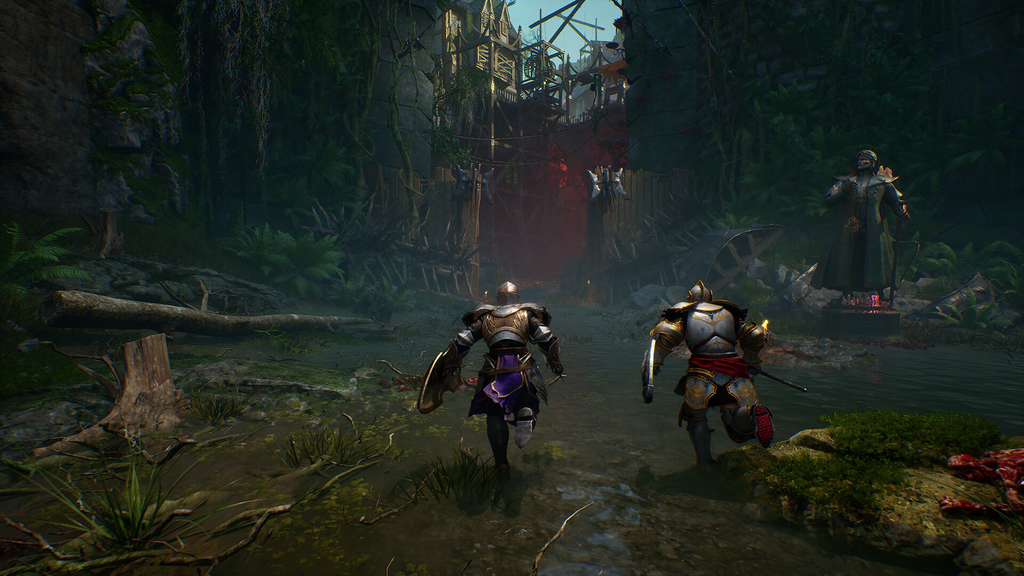
How to unlock and start a co-op session
Co-op is not available immediately. You need to finish the opening tutorial first, and only then can you invite or join another player from the central hub.
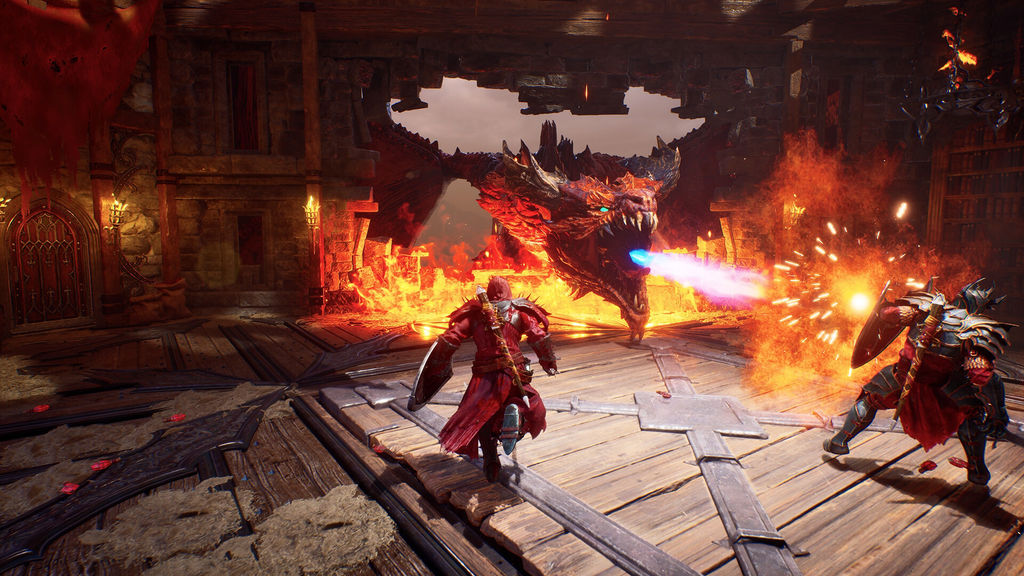
Once both players appear in the same session, you can head to the War Table, pick a mission, and enter the fallen city of Gildenarch together. You will know the connection worked when your partner’s Nephilim is present in the hub before you launch a run.
Crossplay across PC, PS5, and Xbox
Crossplay works across every launch platform. A PS5 player can invite someone on Xbox Series X|S or PC, and any combination in between is possible. Because the party is limited to two and the player base is spread across three platforms and four storefronts, cross-platform play makes it much easier to find a partner regardless of hardware.
Crossplay lets different systems share the same session, but it does not confirm cross-progression or cross-save. Treat those as separate features and do not assume a character or run can move between platforms. You can check the official Crimson Moon page for future updates on account features.
How difficulty scaling works
Crimson Moon has no difficulty menu. Instead, the challenge adjusts on its own depending on whether you are playing solo or in co-op. Adding a second player does not simply hand you double the firepower against the same enemies. Enemy health, behavior, and group composition all shift upward to keep a two-player run demanding.
The reverse is true for solo play. When you play alone, the game scales down so a single player is never facing content tuned for a pair. On top of that automatic scaling, how hard the game feels also depends on your gear (its rarity and stats) and how well you learn enemy attack patterns.
Co-op mechanics that change every run
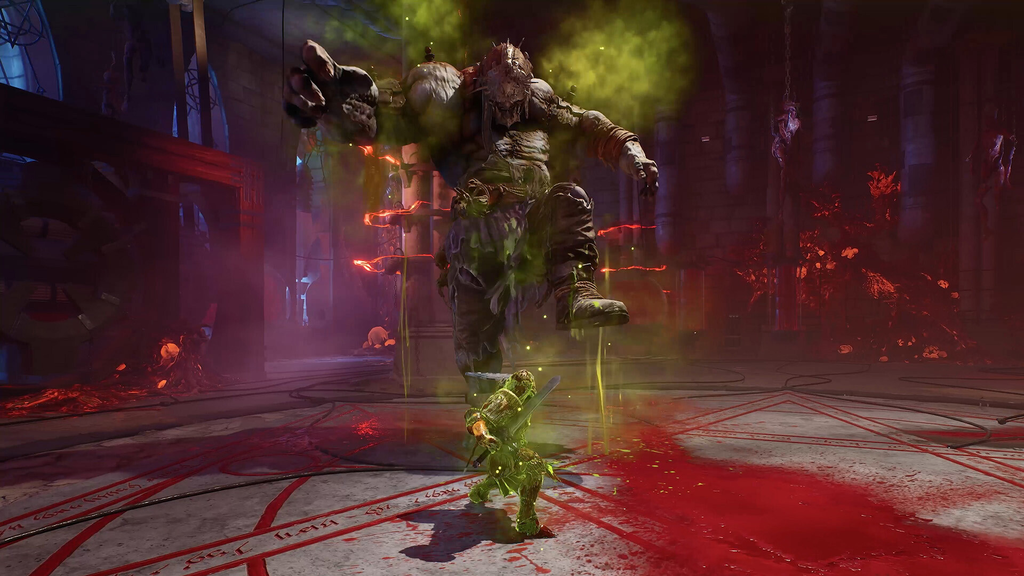
Playing with a friend introduces systems that solo runs never touch. The most important one is the shared life pool. Both players draw from the same pool of lives across a hunt, so whenever either of you is knocked down, it costs from that shared total. If the pool empties, the run ends for both players.
A downed partner can be revived mid-fight, but only if the survivor can physically reach the body and perform the revival while enemies are still active nearby. Each revive still draws from the shared pool, so death is never free. Co-op also opens up ability synergies that are unavailable alone, such as chaining Weapon Arts, combining Angel forms, and setting up flanks where one player holds enemy attention.
Loot is shared too. When one player picks up new equipment that replaces a currently equipped item, the old piece drops to the ground for the partner to grab and equip. That gives both players access to a wider pool of gear within a single run.
| System | Solo | Two-player co-op |
|---|---|---|
| Enemy difficulty | Scaled for one player | Scaled up for two |
| Lives | Individual | Shared communal pool |
| Revival | Not available | Partner can revive downed player |
| Ability synergies | Not available | Unique co-op synergies |
| Gear sharing | Not applicable | Replaced gear drops for partner |
| Console subscription | None needed | PS Plus (PS5) / Game Pass (Xbox) |
Because the shared life pool ties both runs together, the safest approach is to bring complementary builds rather than two identical loadouts, agree on who handles crowd control and who pressures elites, and hold major Nephilim powers for boss phases. Treat every death as a team cost, and clear the space around a downed partner before attempting a revive so a single boss attack does not end the run for both of you.