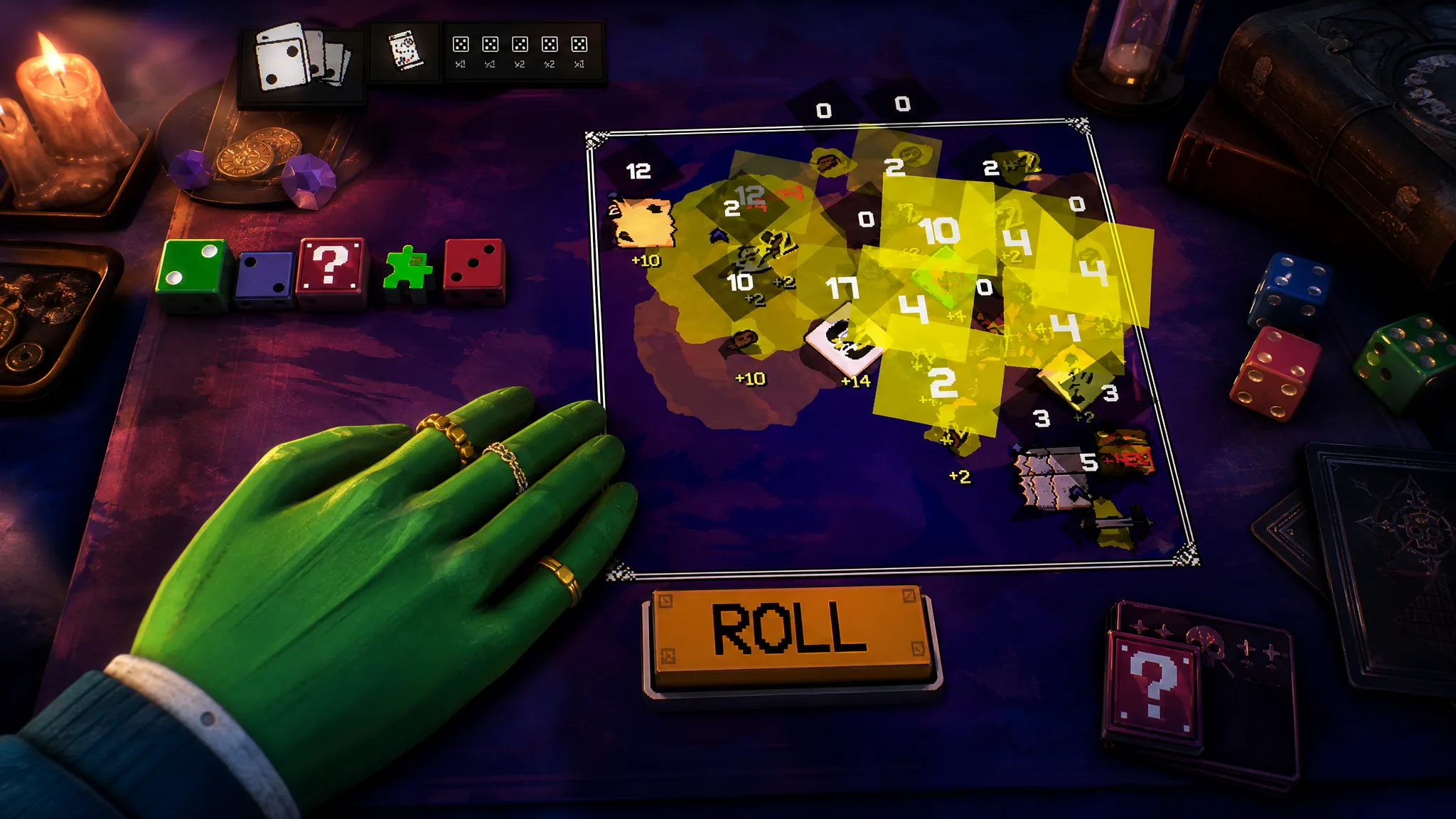
Dice A Million is a roguelike deckbuilder built entirely around rolling dice. Instead of poker hands, you throw a fistful of dice each round and chase a running score, with the ultimate target of reaching one million points. It comes from developer countlessnights and publisher 2 Left Thumbs, and it wears its Balatro influence openly while swapping cards for dice.
Quick answer: Dice A Million is available now on Android, Xbox One, Xbox Series X|S, PS5, and PC for a one-time purchase. An iOS version has been announced but is not yet listed on the App Store, so it cannot be downloaded there yet.
Where to play Dice A Million and how much it costs
The game first launched on PC this February, where it has already sold more than 70,000 copies. The mobile and console rollout arrived alongside the v1.1 content update, expanding the game to phones and living-room hardware in one push.
| Platform | Status |
|---|---|
| PC (Steam) | Out now |
| Android | Out now on Google Play |
| iOS | Announced, not yet listed on the App Store |
| Xbox One | Out now |
| Xbox Series X|S | Out now |
| PS5 | Out now |
| PC Game Pass | Playable via Ultimate and PC Game Pass (Game Preview) |
Dice A Million is a premium title on every platform, so there is a single up-front cost rather than a free download with purchases. On mobile you can grab the Android version through the Google Play Store. The PC build is on Steam and runs well through Proton on Linux.
Game Pass subscribers should note one limit. The game is available through the service only as an Xbox PC title on the Ultimate and PC Game Pass tiers, and it sits in early access as a Game Preview release. A native Xbox console version on Game Pass has not been confirmed with a date.
How a run works
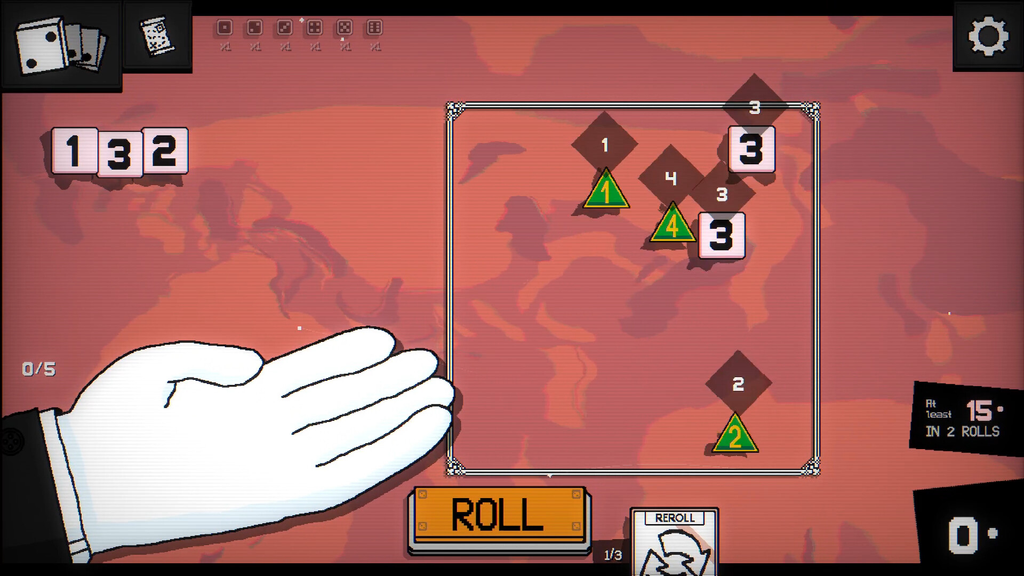
You are trapped inside a mysterious dice-rolling factory, and the way out is to keep rolling. Each round asks you to pay a fee, measured in pips, within a set number of dice rolls. You pick the dice you want and roll them, and the pips they produce go toward that fee.
The fee rises every time you pay it, so a hand that clears an early round will not survive a later one. Leftover pips carry over from round to round, which gives you a head start, except before and after a boss fight. Bosses arrive with unique conditions designed to punish narrow builds, so you need dice that can adapt.
Not everything you throw is a standard die. The lineup ranges from D6s and D100s to Rubik’s Cubes, magic 8 balls, bottles, bottle caps, coins, bombs, pencils, and mahjong tiles. The rule is simple. If it has a face, it can be rolled and it can score.
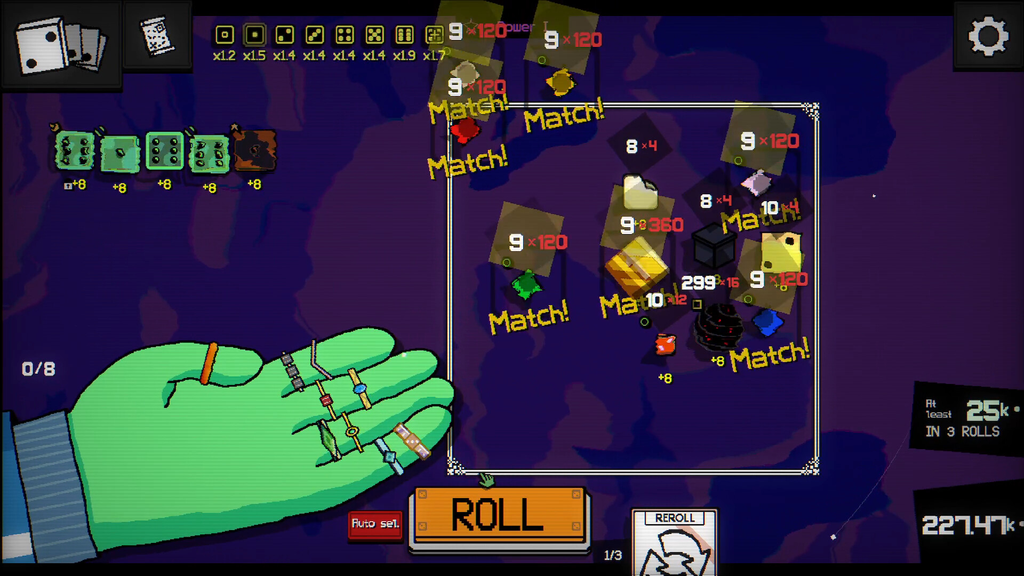
Position also matters. Some dice multiply the score of other dice that land near them, while others only score when they land apart from the pack. There are dice that boost every die showing an even number, magnet dice that pull other dice closer, and charge-up dice that do nothing at first but pay off later. That physical layer of virtual gravity is what makes each hand feel more like a gamble than a fixed poker draw.
The Balatro parallels, translated
If you have played Balatro, the structure will feel familiar even though the pieces are renamed. The table below lines up each Dice A Million system with its closest Balatro counterpart.
| Dice A Million | Role | Balatro equivalent |
|---|---|---|
| Dice | What you roll to score each round | Poker hands |
| Rings | Passive items that are always active | Jokers |
| Cards | One-time use effects for tricky spots | Tarot cards |
| Stamps | Unconditional score multipliers | Planets |
| Gloves | Starting builds you choose | Decks / Chips |
Rings are the core of any build. You can equip as many as you have fingers for, stacking modifiers such as multipliers for certain faces or extra dice thrown. Cards are single-use lifelines that can grant an extra roll, enhance a die, or double a value. Stamps add a flat multiplier that always applies.
Because rolls are physical, luck plays a bigger part than in Balatro. The trade-off is that you can plan around it. With enough rings and the right dice, outcomes become something you can steer or even subvert, and each round tends to resolve faster than agonizing over the perfect card sequence.
The shop and building your deck
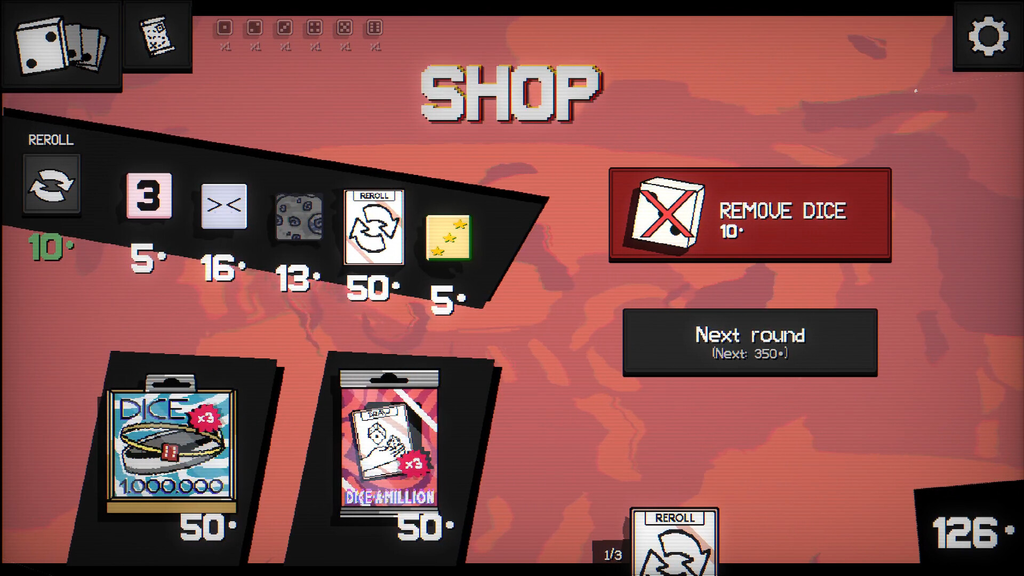
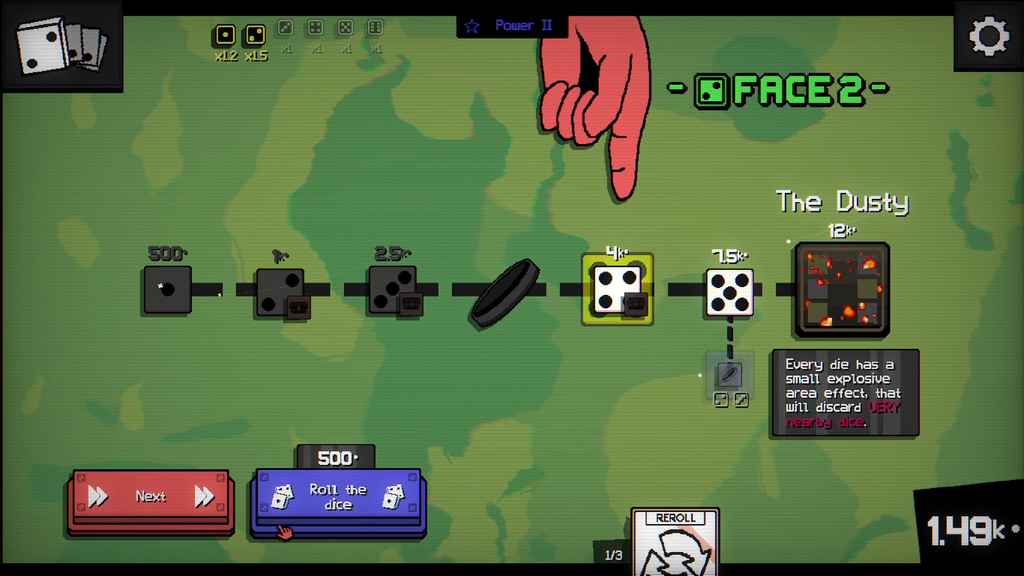
After you clear a round, you spend leftover pips at the shop. You can buy new dice, cards, and stamps, and you can also remove dice you no longer want from your collection. Thinning a deck matters as much as adding to it.
Prices climb as the run continues, matching the rising fees. That constant escalation forces you to keep upgrading rather than settling on an early combo. The endgame reward is watching a build snowball, for example rings that generate extra dice for every ten you already hold, paired with multipliers that fill the screen with scoring objects.
The game also tracks an unusually large set of goals. There are 164 achievements to work through, with pop-ups arriving often during a session. On PC Game Pass, note that these currently award 0 Gamerscore, so the appeal there is the checklist itself rather than points.
What the v1.1 update adds
The mobile and console launch shipped with the v1.1 content update, which broadens the pool of options and adjusts balance across the board.
- A new Cyan Hand to start runs with a different build.
- 17 new dice.
- 12 new rings.
- A new card.
- The Face Weights dice modifier.
- Boss rerolls, rebalancing across dice, and quality-of-life improvements.
With that update in place, the full library now spans more than 120 dice and over 80 rings to combine into synergies. That is a lot of surface area for a game whose only real ask is that you keep rolling until the counter hits seven figures, and it is the reason a run can swing from tidy math to a screen-filling avalanche of dice in a matter of rounds.