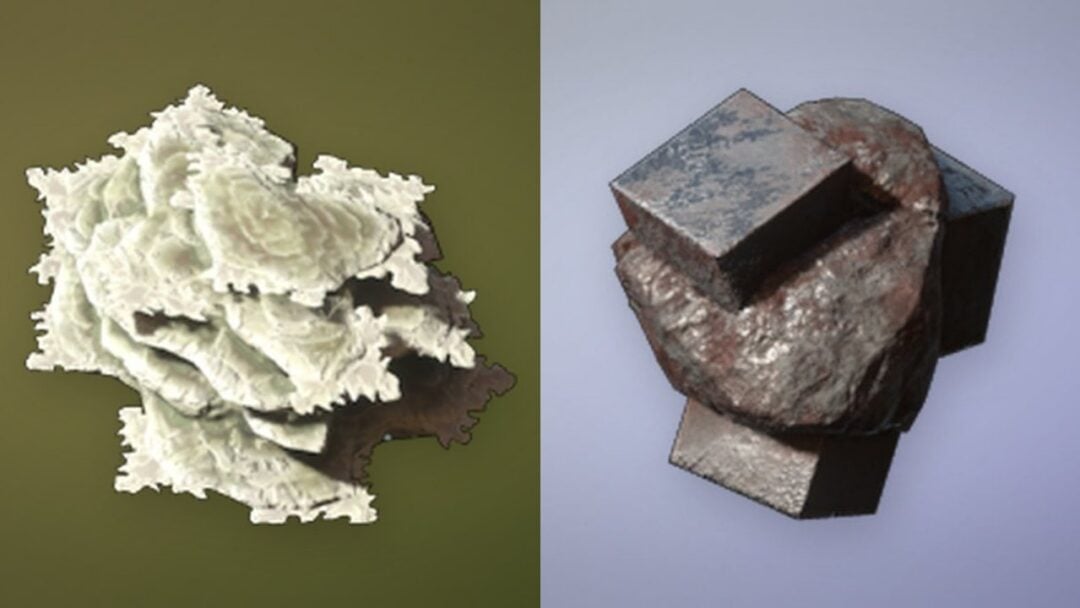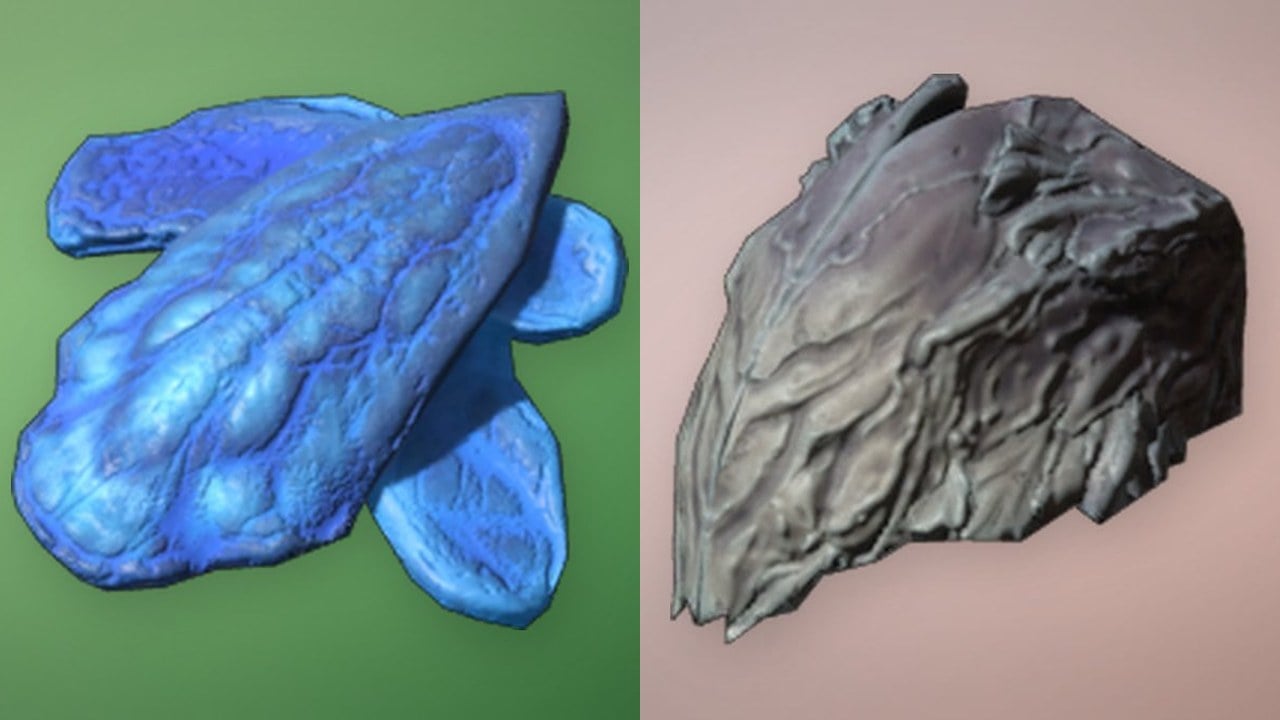
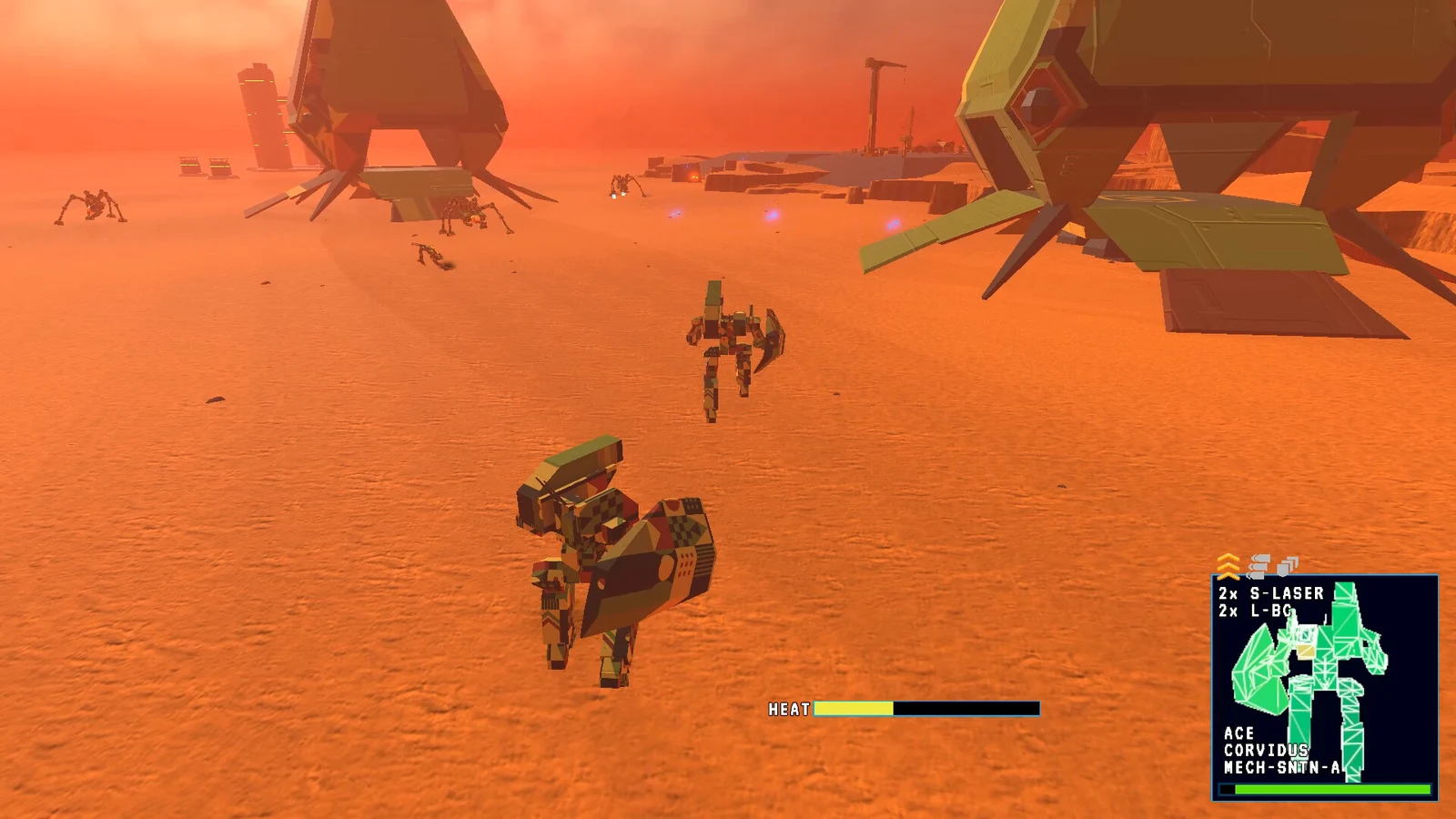
Drop Command is an indie strategy game that runs on two clocks at once. On the ground it is a real-time combined-arms shooter, where you pilot mechs, tanks, and infantry from first- and third-person views. On the overworld it is a turn-based 4X campaign, where you move fleets between star systems, build facilities, and grind rival factions down until you can seize their worlds. Developed by PillBugGames, it fuses a 1990s-style mech look with a galactic empire map.
Quick answer: Drop Command combines real-time first-person mech and vehicle combat with a turn-based 4X campaign across the Hyades Star Cluster. It launches September 28, 2026.
Two games in one: real-time battles under a 4X campaign
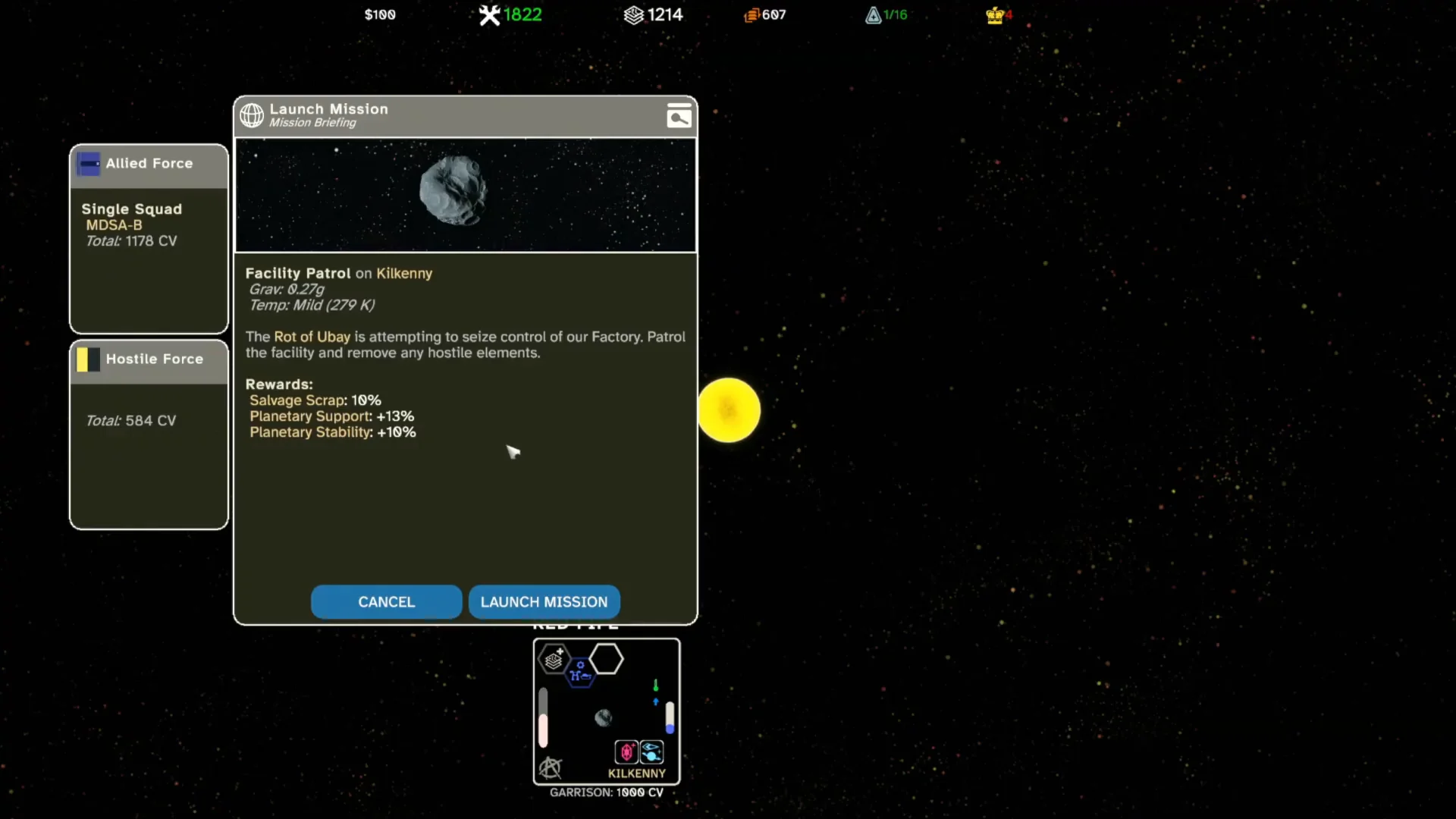
The campaign map sits on top of everything. The galaxy runs in weekly turns, and moving between star systems means crossing established Stellar Gates and paying tolls each time you relocate a fleet. You inspect solar systems, launch missions on specific asteroids and worlds, and manage your holdings between fights.
When a mission starts, the game drops into live combat. You take direct control of a mech or vehicle, issue orders to squadmates, and can call in drop-ship reinforcements. The two layers feed each other: the strategy map decides where and why you fight, and the outcome of each fight changes what you can do on the map.
The empire economy: four resources and weekly upkeep
Running an empire means tracking four economic values. Each week your holdings generate income, your units cost upkeep, and battlefield salvage rolls back into your production.
| Value | Role |
|---|---|
| Currency ($) | General spending money |
| Resources | Used to build, hire, and expand |
| Scrap | Salvaged from battles, converts to Resources weekly |
| Maintenance Capacity | Supports the size of your standing force |
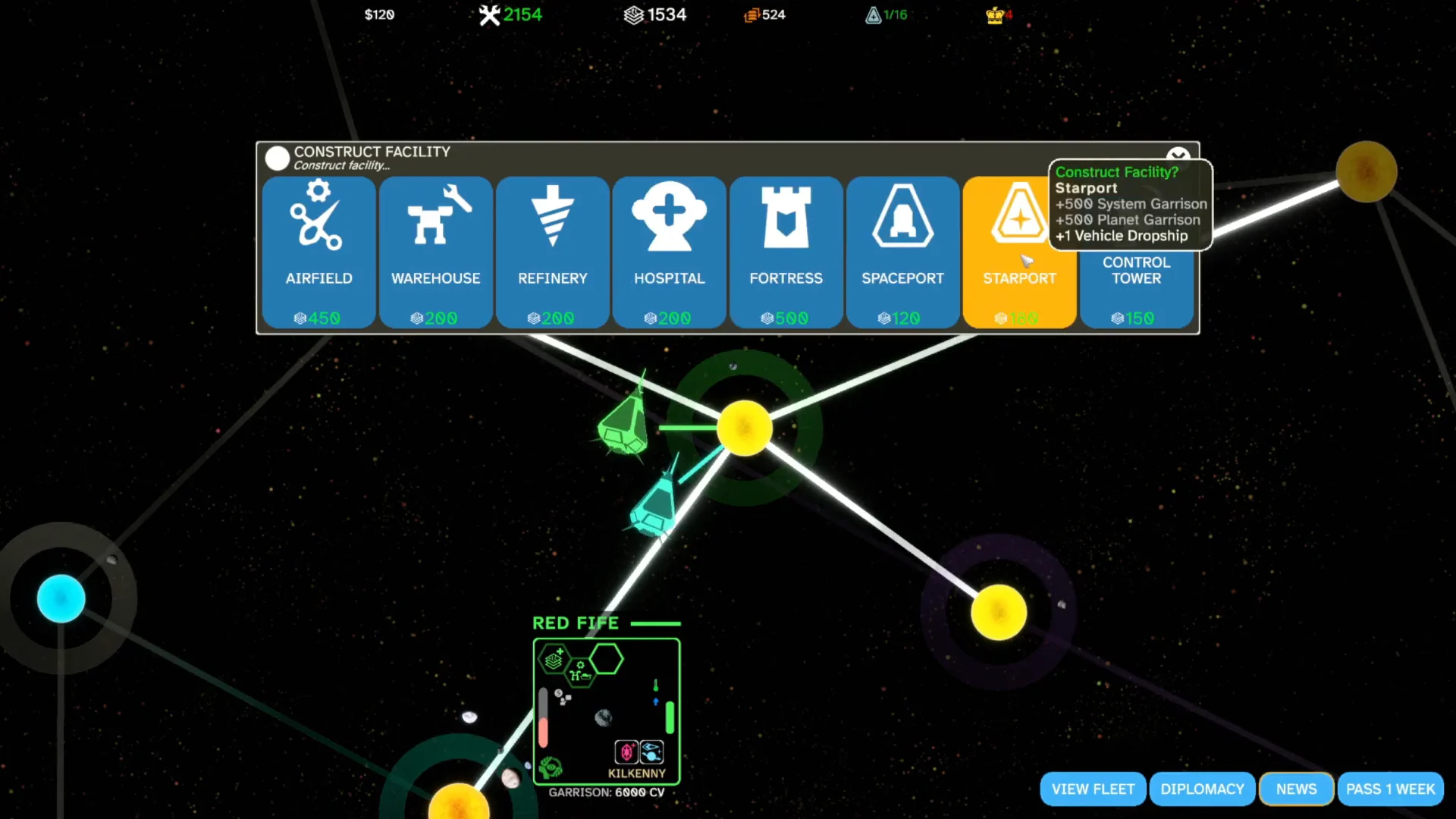
Scrap you pull off the battlefield turns into usable Resources automatically each week, scaled by your total Manufacturing Capacity. Facilities drive the rest of the economy. On the worlds you hold, you can raise a Factory, Warehouse, Refinery, Hospital, Fortress, Spaceport, Starport, Control Tower, or Airfield, with certain buildings unlocking new unit types.
Tactical combat: piloting mechs, tanks, and infantry
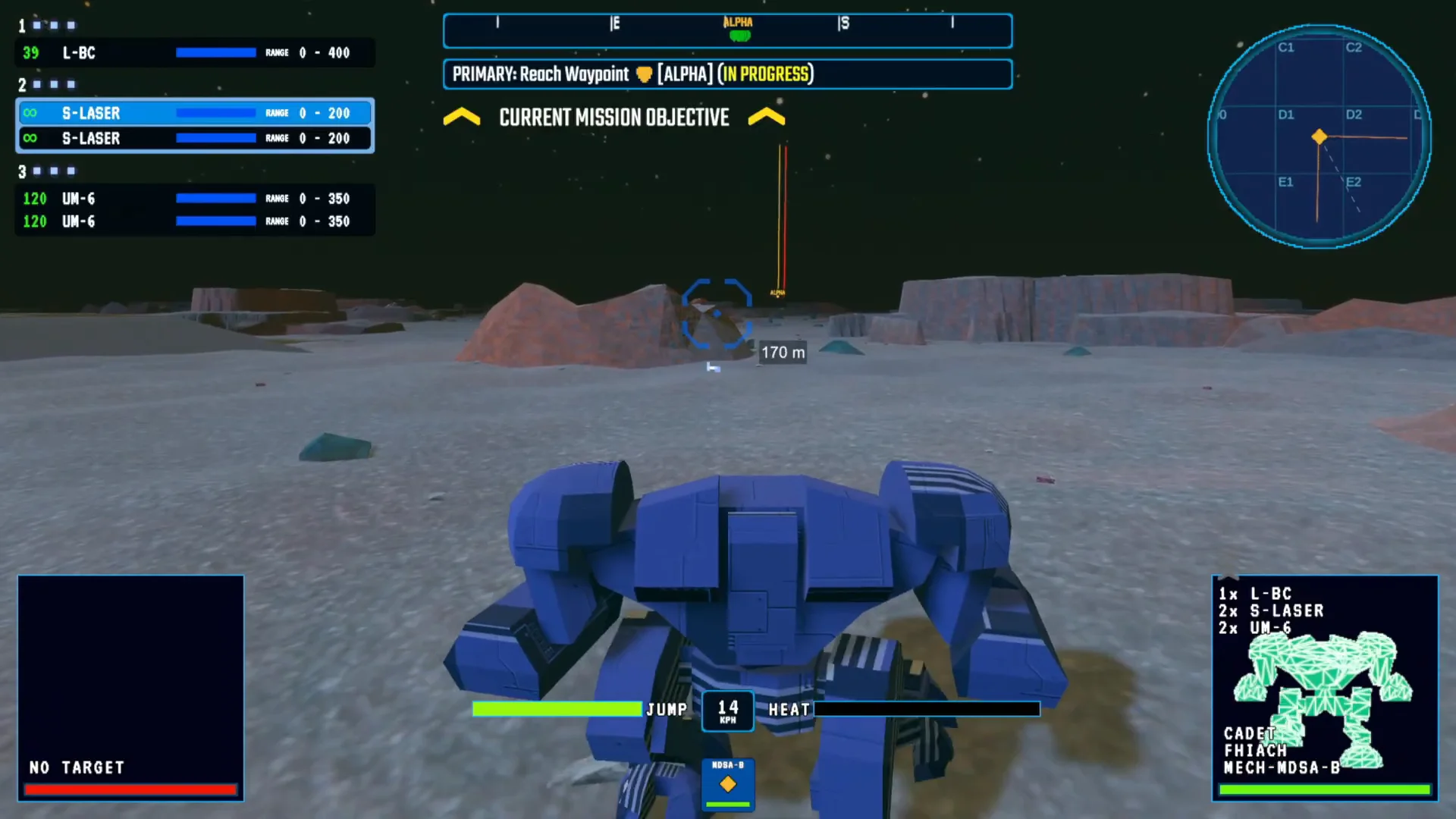
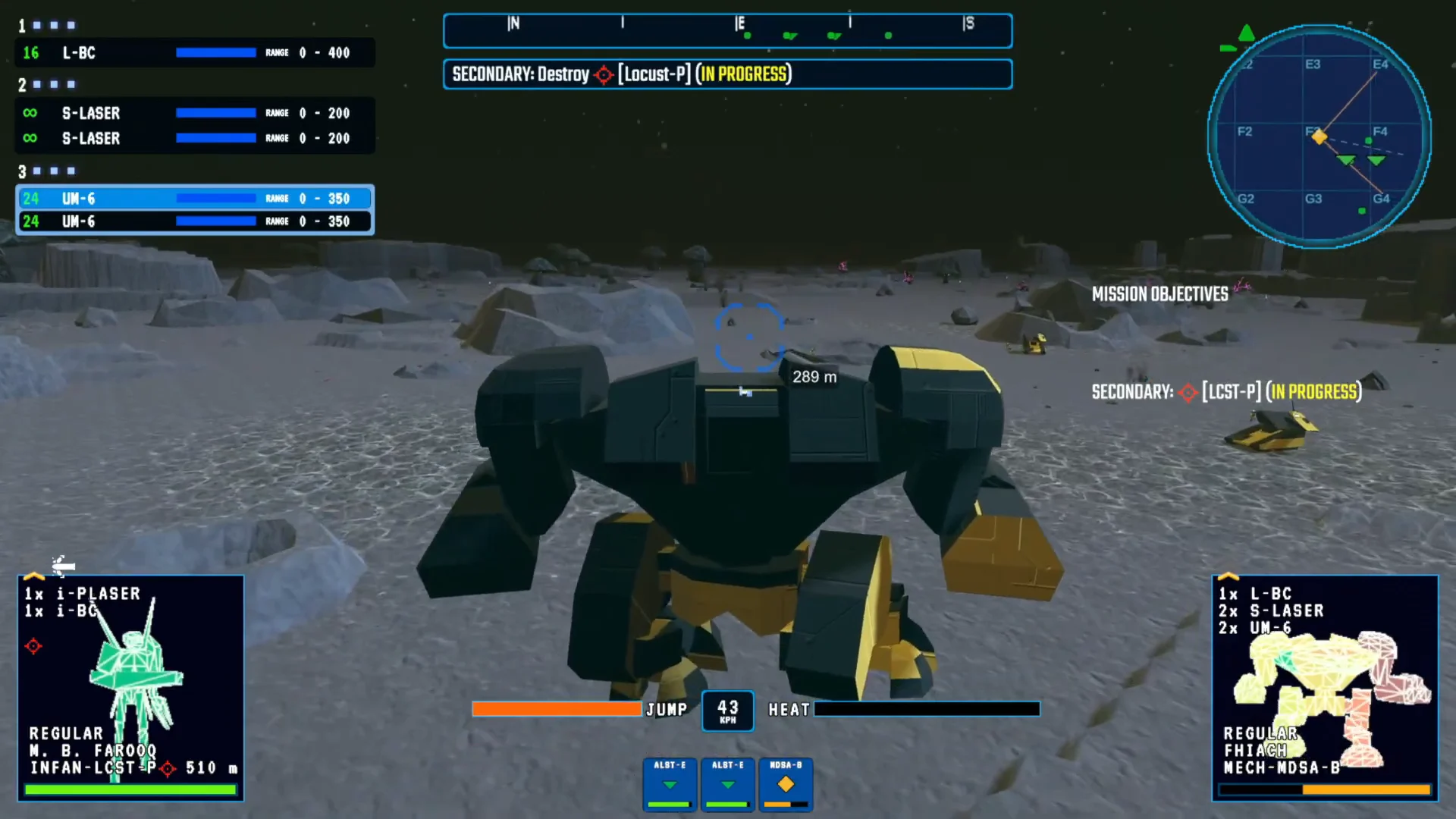
Missions play out as live skirmishes with waypoint objectives marked as Alpha, Beta, and Gamma. You steer your machine to each point, engage rogue drones, turrets, guard towers, and hostile mechs, and lean on ballistic, energy, and missile weapons. A starter run puts you in the Medusa-B, a medium bipedal mech, before you add vehicles like the Allard-E light tank and the Armicust-M heavy tank.
Before deployment you can fully refit a mech in the dropship bay. That means swapping weapon hardpoints and passive components, and mixing loadouts like guided missiles, twin ballistic pulse cannons, and small plasma cannons. Heat sinks, capacitors, and armor plating are all part of the build.
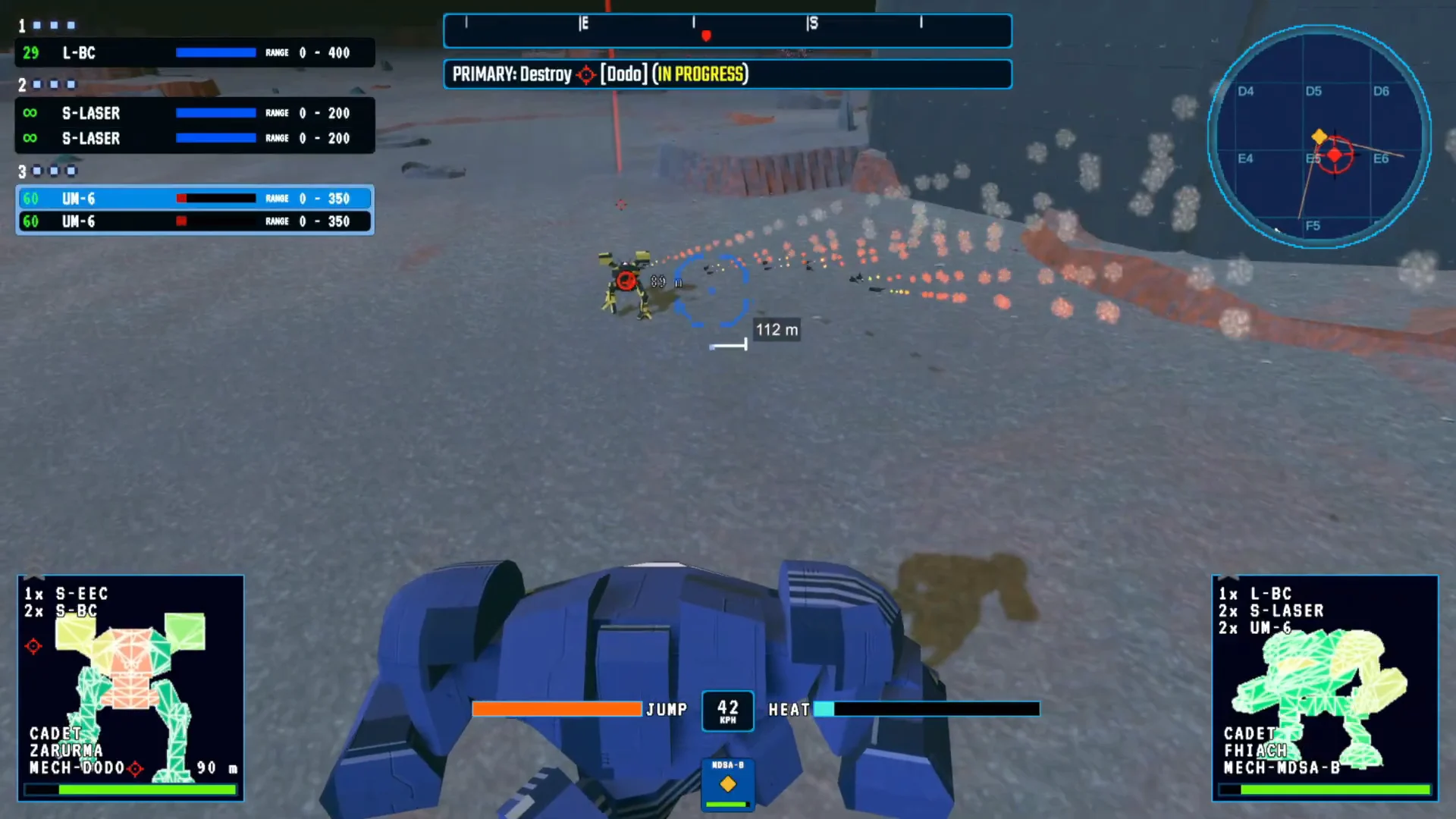
Damage is recorded separately for every component, meaning your mech can lose weapons or limbs during a battle. If that happens, take command of any allied tank or vehicle still on the field and carry on in a different machine. This allows a battered squad to continue the mission even after its lead unit goes down.
Mercenaries and diplomacy on the cluster map
Mercenary companies roam the star cluster, and paying a retainer buys temporary exclusive rights to hire one. A retainer covers a set window, such as a 12-week contract, and the hired company can be sent into combat or ordered to annex territory on your behalf. Outfits on offer include the Hammer Valkyries, Angels Bombardiers, Commandos of Dragons, Warriors Knights, Boar Band, and Slotha Company.
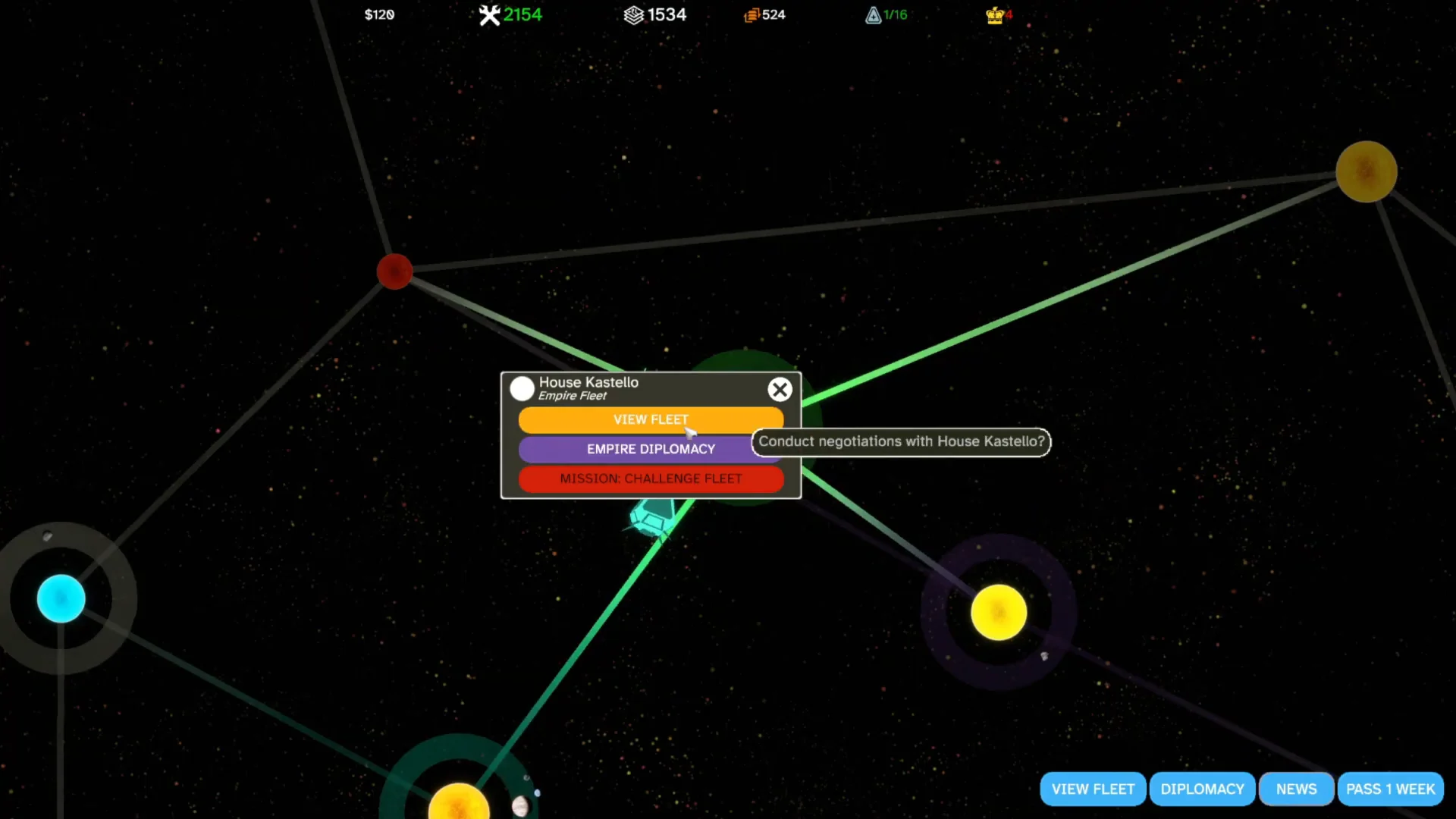
Diplomacy runs alongside the fighting. A dedicated screen tracks how rival factions view you, and you can accept or reject demands, including tribute requests from powers like House Kastello. Refusing has consequences: a hostile empire can respond by declaring outright war.
Annexing worlds and founding your empire
Conquering a world takes more than one battle. Start by weakening local defenses and opposition with raids, assassinations, and takeovers of planetary facilities; keep building support until it is high enough to capture the capital. After that, send a full company made up of mechs, tanks, and infantry to claim the world. Securing it can also increase your maintenance capacity, allowing you to field a larger force.
Founding a faction lets you name your empire and pick its camo, color, and pilot uniform. You can also declare one of your worlds an imperial capital, a costly move that adds a large garrison defense value to protect your seat of power.
Setting and starting choices
The campaign opens with character creation. You customize a pilot portrait, then choose an upbringing and profession, a unit proficiency, and a starter chassis. An inheritance choice hands you family wealth on a home asteroid and a starting facility, setting up your first economy.
The story is set in the year 2647, 144 years after the Battle of New Bastion and the destruction of the Sol-Centauri Gateway. Play unfolds across the Hyades Star Cluster, populated by starter powers including the Rot of Ubay, House Kastello, Riksbaron, Wind Horse Interstellar, Hades Cluster Guard, Fresh Senate, Monarchy of Smoke, Guild of Pages, Metal Coalition, and Council of Fervour.
Release, build state, and where to play
Drop Command carries a planned release date of September 28, 2026. Recent hands-on play ran on build v. 0.9.03, an early version that still hit occasional crashes and freezes during missions, with restarts required to continue. That is a normal state for a pre-release indie build and worth keeping in mind at launch.
PillBugGames previously offered a playable demo at Steam Next Fest, describing the game as a 4X empire builder featuring real-time, first-person mech combat. The game is available on its official itch.io page.
Taken together, Drop Command aims at players who want the moment-to-moment feel of stomping around in a mech and the longer game of building an empire that spans a star cluster. The unusual part is how tightly it welds the two: every raid, assassination, and refit is in service of the map, and every world you take reshapes what you can afford to fight for next.