
The Town in Graveyard Keeper 2 starts as a mostly abandoned ruin, and putting it back together is the core of your mid-game economy. Residential buildings are the part that pays out Green Scrolls, the item you spend to grow the population and raise how many Likes the Town can hold. Every repair is straightforward once you know where to look and which kits to bring.
Quick answer: Walk up to a ruined building’s blue signpost, press [E] Build, supply the Building, Wooden, and Iron Kits the Housing menu lists, then confirm. The rebuilt house drops Green Scrolls straight into your inventory.
Repair a ruined house in the Town
Every repairable house wears a blue wooden signpost out front. Construction itself costs no time, no energy, and there is no skill check, so the only thing standing between you and the reward is having the right kits on hand. Materials can come from your backpack or from shared chests in the same area.
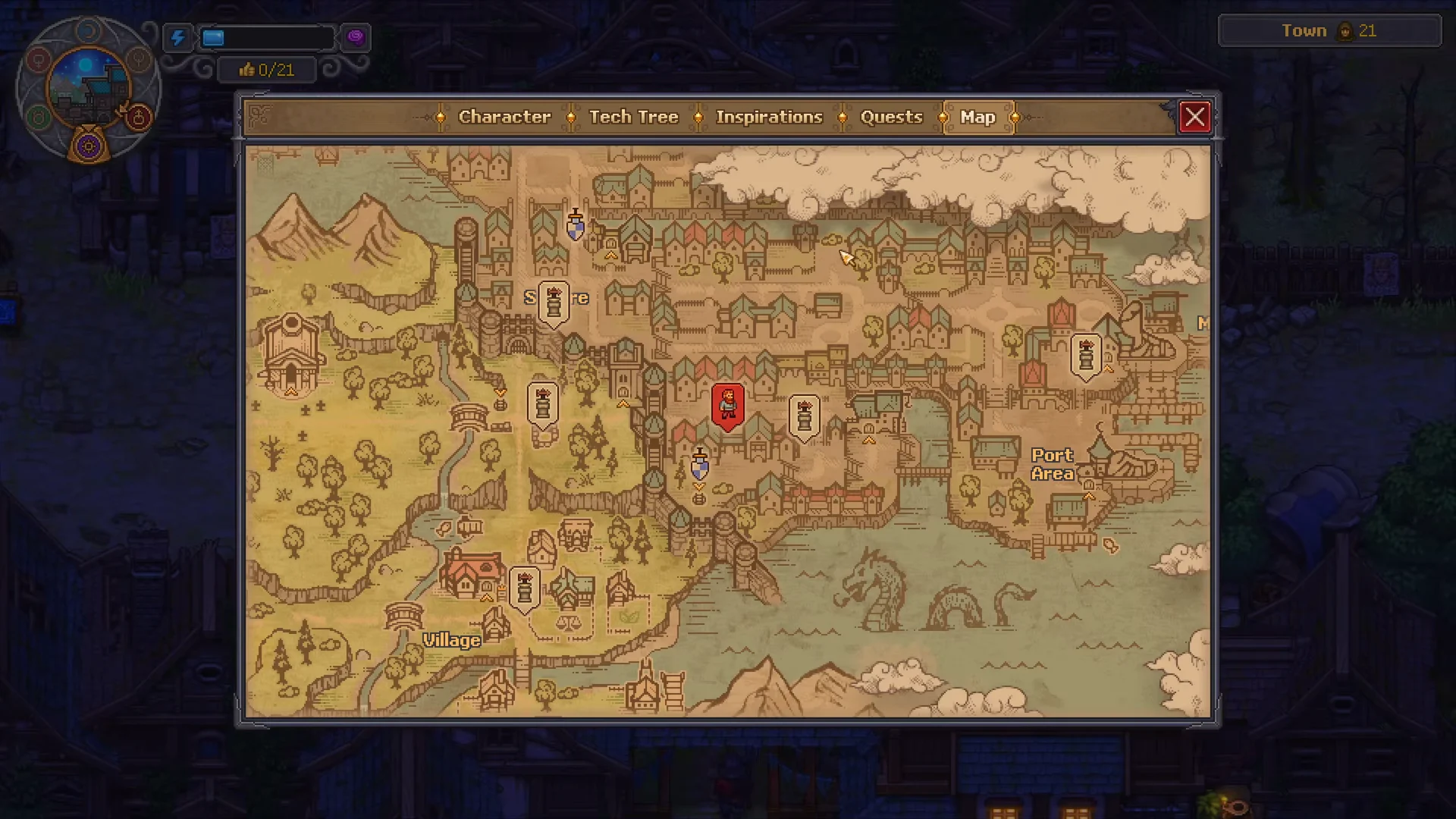
[E] Build. This opens the Housing menu, which lists exactly which kits that building needs before construction can start.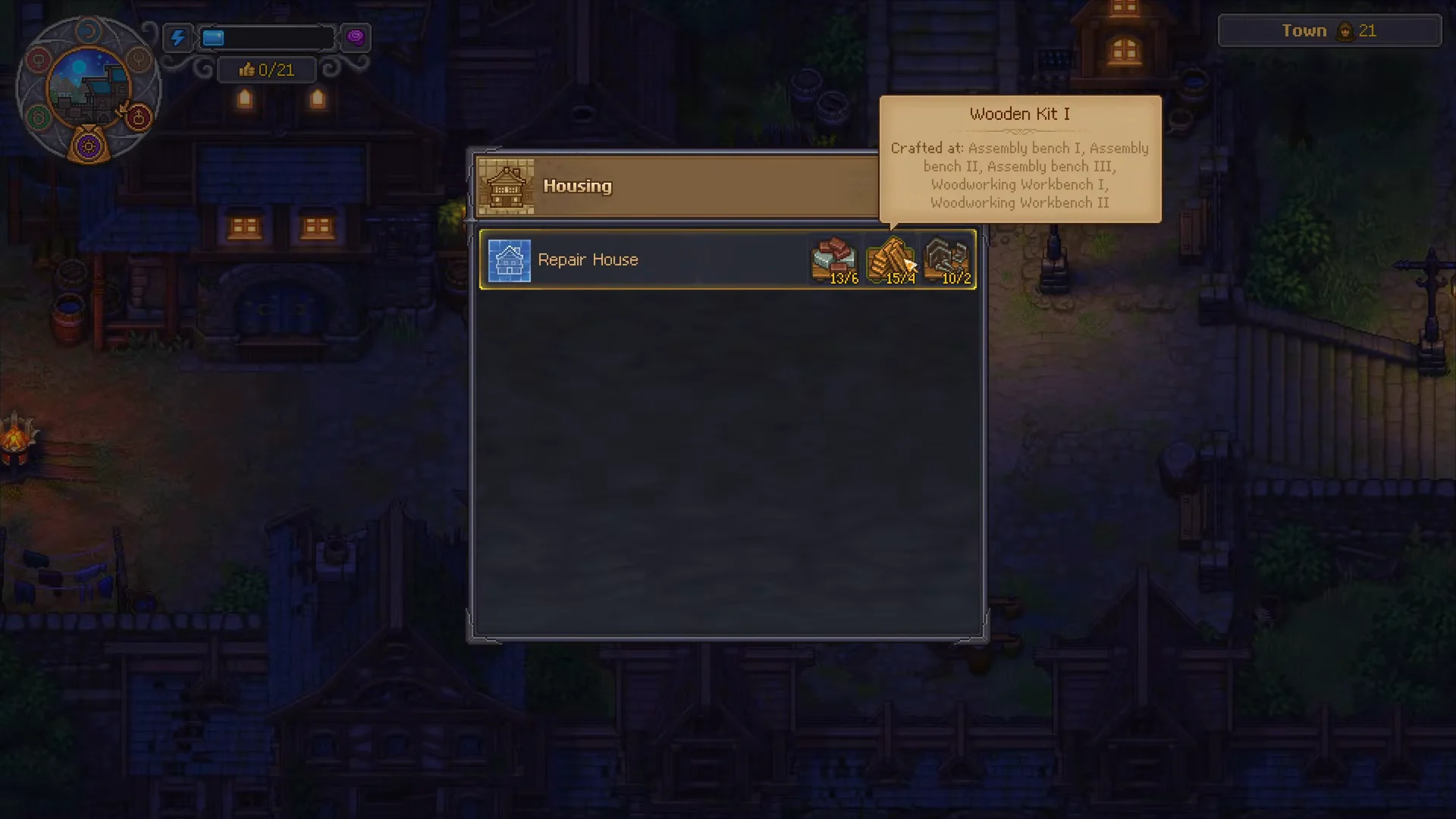
With the Builder perk, each finished repair has a 30% chance, kit by kit, to refund one up to half of that kit’s cost, which quietly stretches your materials across more houses.
House repair costs and Green Scroll rewards
Residential projects come in four sizes, and every plot of a given type pays the same fixed number of scrolls. Finishing all of the Town’s houses hands you 180 Green Scrolls in total, and repairing 15 houses clears the Urban Planner achievement along the way.
| House project | Green Scrolls each | Plots |
|---|---|---|
| Repair Small House | 1 | 1 |
| Repair House | 3 | 3 |
| Repair Large House | 10 | 7 |
| Repair Block | 25 | 4 |
Repairing a house does not raise Town quality or reputation on its own. The building only hands you scrolls, and the actual quality increase happens later when you deliver those scrolls to Linda. If population and a higher Likes cap are your goal, pour materials into houses before spreading them across commercial plots.
Craft Building Kits, Wooden Kits, and Iron Kits
The kits, rather than the structures, are the main constraint. You can make Building Kit I and Wooden Kit I at Assembly benches I, II, or III, or at Woodworking Workbenches I or II. For Iron Kit I, use Smelting II or III, an Iron Anvil, or a Steel Anvil. To unlock the Building Kit I recipe, research Houses Repairing for 45 red and 10 green points; Stone Polishing and Brick Making are prerequisites.
To keep kits flowing in bulk, set up the tier II production chain:
- Unlock House Repairing, Stone Carving, Iron Works, and Iron Instruments II in the tech tree, or the kit recipes never appear.
- Build Furnace II with a Bellows extension to turn iron ore into ingots at a usable rate.
- Place an Iron Anvil and hammer ingots into iron nails, which feed both the kits and most repairs.
- Place Woodworking Workbench II beside a tool rack; it turns boards and nails into Wooden Kits and Building Kits.
- Produce Polished Bronze from fat, boards, and bronze ingots, plus Polished Stone at the Stonemason’s Workbench, for repairs that require them.
Rebuild the Town’s shops and stalls
Shops progress independently of houses: they provide no Green Scrolls, but each brings in a trader with unique goods and unlocks Town orders. Restore them on vacant Merchant Stalls plots or Workshop Courtyards, using the same three kits required for house repairs. Restoring 11 shops earns the Patron of merchants achievement.
| Shops | Unlocked by | Building / Wooden / Iron Kit I |
|---|---|---|
| Apothecary, Vegetable Stand, Tailor | Market Stalls I | 4 / 3 / 1 |
| Builder, Smithy | Artisans I | 4 / 3 / 1 |
| Tavern, Brewery | Artisans II | 6 / 4 / 2 |
| Furniture Maker, Baker, Fish Stand | Market Stalls II | 6 / 4 / 2 |
| Alchemist, Jeweler | Market Stalls III | 8 / 6 / 3 |
Choose a stall based on the goods you need: restore one whose trader will buy your surplus or offer the seeds and materials you lack. As soon as construction finishes, check the vendor menu for its new stock; that confirms the kits were accepted. A shop can later be raised to Tier II or III using materials alone, without further technology. Higher tiers increase the trader’s daily income, weekly Likes payout, and Town order size.
Unlock the forest quarry for stone and timber
Bulk kit production quickly consumes stone and wood. To access the quarry west of the village, you need to clear paperwork, not defeat an enemy.
Keep corpses arriving while you rebuild
Town restoration can run short on corpses, especially early in the game. At the Crossroads, Sister Agatha is stopping the delivery donkey because she objects to his hygiene on holy ground.
Put zombies on kit production
Making every kit by hand will bog down a Town rebuild. Zombies can handle the repetitive station work, provided you equip each one with a tool suited to its station.
| Tool | Stations |
|---|---|
| Axe | Woodworking benches and logging spots |
| Hammer | Anvils, masonry and stone benches |
| Shovel | Farming beds |
| Bow | Barracks guard duty |
For stations to send completed goods to storage or retrieve stockpile inputs, assign a porter to a Zombie Porter station. Without that assignment, an otherwise automated yard will often appear to have stopped working.
Think of Town restoration as a connected cycle, not a series of separate tasks. Linda uses repaired houses to grow the population, restored shops enable trade and orders, and reliable kit production supports both. If progress stops, look first at the smelting and woodworking chain feeding the work, rather than at Town itself.