The PC version of Marvel Tokon: Fighting Souls launched on August 6 in rough shape, and Arc System Works has now pushed a dedicated performance and stability update to address the biggest complaints. The game went offline for maintenance earlier on August 10 so the team could deploy fixes aimed squarely at frame drops, lag, and general instability on Windows.
Quick answer: The August 10 update targets PC performance and stability, including reduced lag and fixes for frame drops. Maintenance ran from 10 PM JST (1 PM UTC) to 12 AM JST (3 PM UTC). After it ends, update the client and relaunch, then check that frame pacing holds steady in the training or online modes.
Maintenance window for the August 10 PC update
The servers were taken down temporarily so the update could be applied. Players were advised to finish any active matches before the window began to avoid disconnects. The times below cover the full downtime.
| Region | Maintenance start | Maintenance end |
|---|---|---|
| JST | 10 PM | 12 AM |
| PT | 6 AM | 8 AM |
| UTC | 1 PM | 3 PM |
The official announcement confirming the downtime and the focus of the patch was posted by the development team.
What the update changes on PC
The patch concentrates on the technical problems that dominated launch feedback rather than gameplay balance. The developers described it as a set of PC performance and stability improvements, with reduced lag and fixes for frame drops called out specifically.
These fixes follow a broader set of PC changes the studio committed to for day one after the open beta exposed the same issues. Those planned improvements included the following areas.
- Reduced overall CPU usage to improve performance
- Fixes for frame rate drops and lag
- A fix for unnecessary shader compilation during startup
- Better compatibility when streaming with OBS and Discord
- Improvements to rollback netcode and cross-play functionality
The performance issues were not confined to PC alone. Because the game supports cross-platform play between PS5 and PC, players on PlayStation reported lag and desync when matched against someone running the Windows version, which is one reason the netcode and cross-play work matters beyond the PC audience.
Why PC players hit stuttering and frame drops
The complaints centered on unstable frame rates, stuttering, sudden FPS drops, and gameplay slowdown that graphics settings did little to fix. These problems appeared even on hardware well above the minimum, with owners of RTX 30 and RTX 40 series cards reporting the same symptoms.
Some users observed low GPU utilization alongside high CPU usage, which points to a processor bottleneck in the PC build. Others ran into black screens, crashes to desktop, Unreal Engine errors, and Easy Anti-Cheat problems. Shader compilation on first launch was another common trigger for micro-stuttering. Much of this feedback came directly from the community.
For reference, the PC build asks for a minimum of an RTX 2060 GPU and an i5-8400 CPU, with an RTX 3070 and an i7-8700 recommended.
Steps to reduce stuttering while the fixes roll out
How to confirm the update improved performance
You know the patch is applied when the client shows the new build after maintenance and the game launches without forcing a fresh, lengthy shader compile every time. In practice, look for steadier frame pacing in training mode first, then in an online match where the previous version tended to lag and desync.
If stuttering continues despite the update, the most common causes are outdated GPU drivers, shader compilation still finishing on first boot, and heavy background apps such as capture or overlay software. Working through those usually clears the remaining hitches.
Region availability and the PSN requirement
Performance is not the only friction point on PC. Like several recent PlayStation Studios releases on Windows, Marvel Tōkon: Fighting Souls requires a PlayStation Network account. Because PSN is officially unavailable in more than 100 countries, the PC version cannot currently be purchased in those regions, which limits who can access it on Steam.
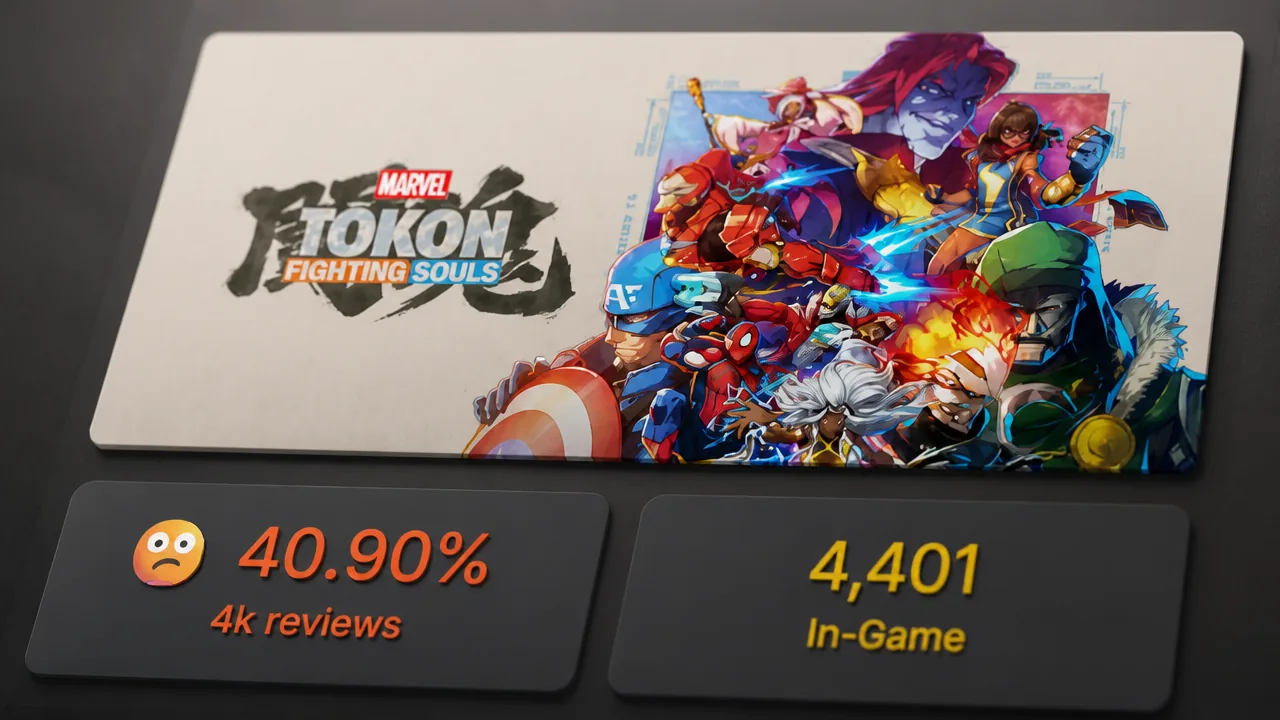
The August 10 maintenance is the first substantial post-launch move to steady the PC build after a Mostly Negative reception on Steam and falling player counts. With the update deployed, the priority for Arc System Works and Sony is turning a fast, well-liked fighting system into a version that runs cleanly across the full range of PC hardware, and the studio has said further fixes based on player feedback are still coming.