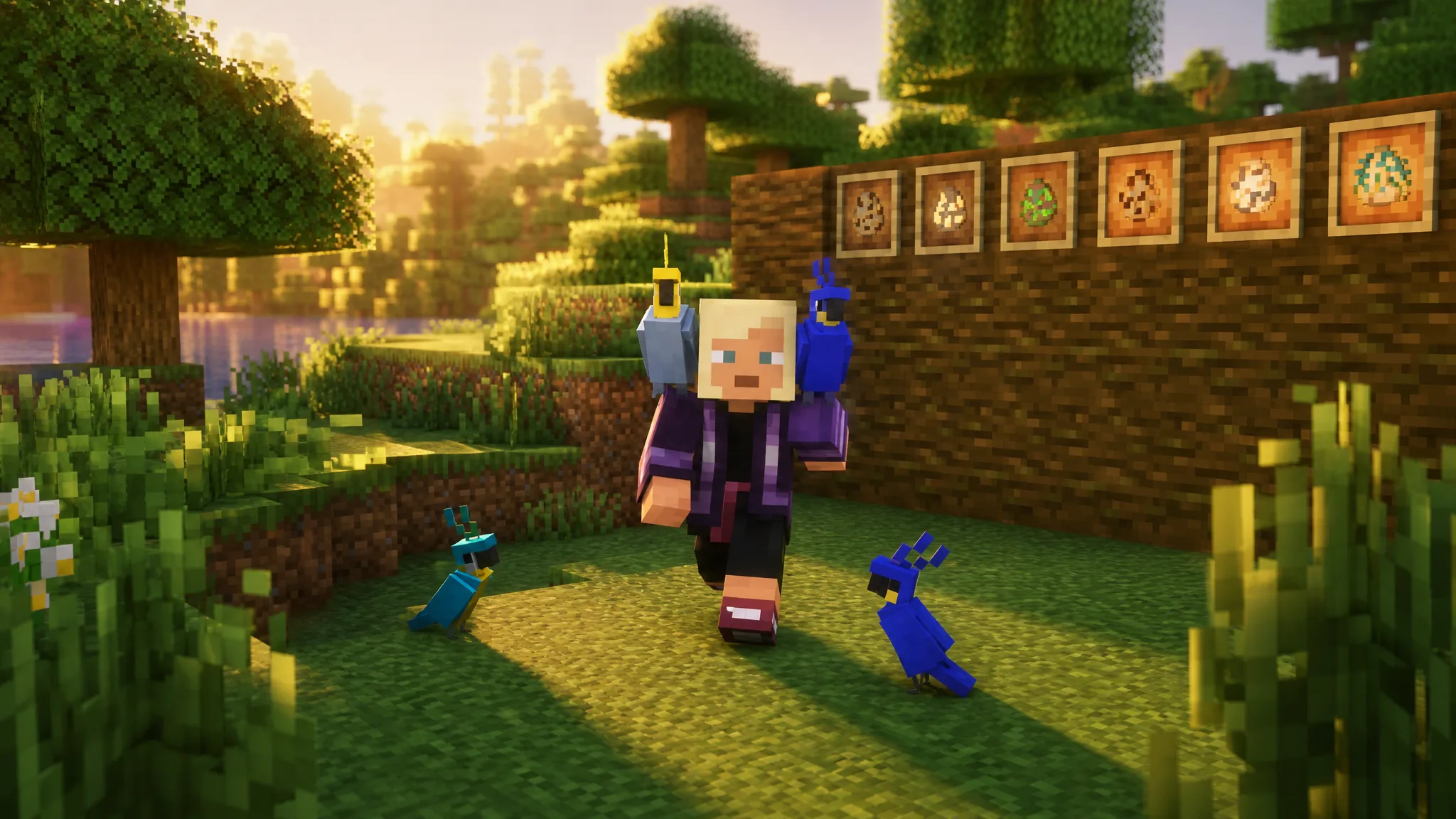
Parrots are the only mob in Minecraft that will ride on your shoulder, and taming one comes down to feeding it seeds until it trusts you. They live in jungles, they mimic the sounds of hostile mobs nearby, and they dance to music. They also die instantly if you hand them the wrong snack, so the process rewards a little preparation.
Quick answer: Hold seeds in your hand and interact with a parrot in a jungle biome. Each feed has a 10% (1-in-10) chance to tame it. Keep feeding until red hearts appear over its head. Never feed a parrot a cookie, it will kill the bird.
What you need to tame a parrot
Parrots only spawn in jungle-type biomes: regular jungle, bamboo jungle, and, in Bedrock Edition, sparse jungle. They tend to perch high in the canopy on leaves and logs rather than on the ground, so scan the treetops. They come in five colors — red, blue, green, cyan, and gray — and all of them spawn with equal probability. Color is purely cosmetic and changes nothing about behavior.
Any of the following seeds work for taming, and after taming they are also the only things a parrot will eat:
- Wheat seeds
- Melon seeds
- Pumpkin seeds
- Beetroot seeds
- Torchflower seeds
- Pitcher pods
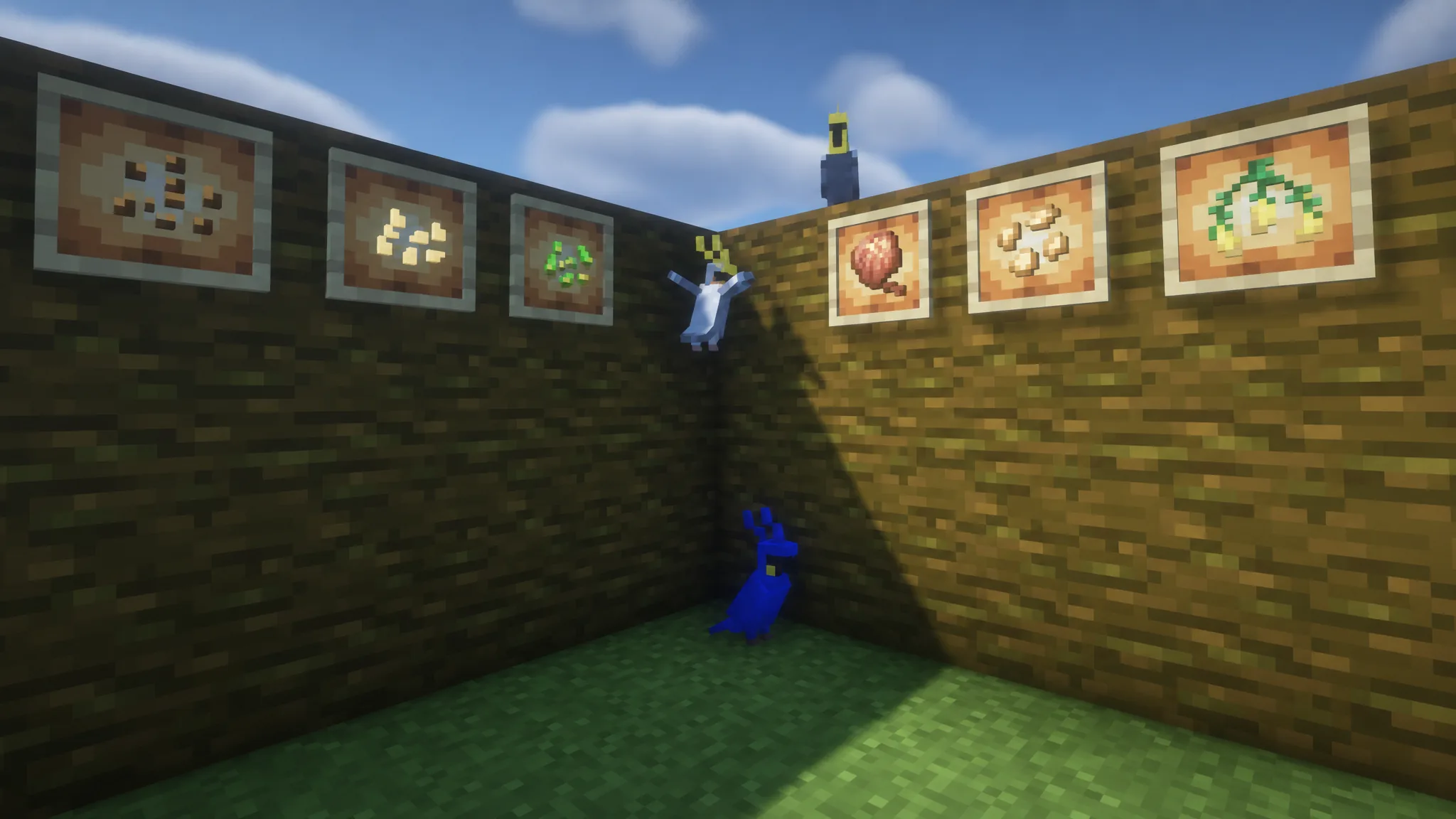
Wheat seeds are the easiest to gather, since you get them by breaking grass tufts on the way to the jungle. Because taming is chance-based, bring far more than you think you need. A full stack of at least 20 to 30 seeds lets you finish a tame in one visit even on an unlucky run.
How the taming works
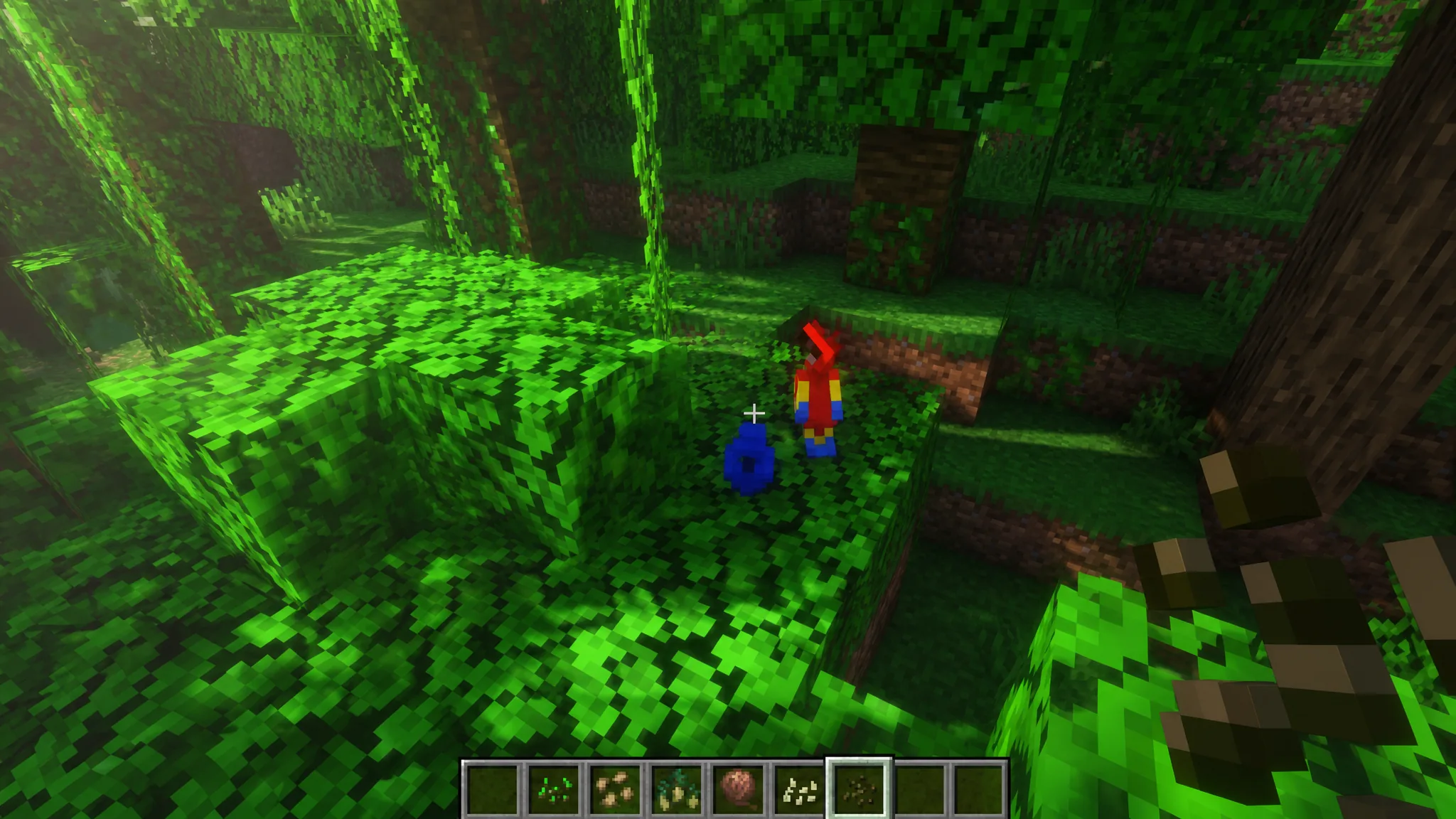
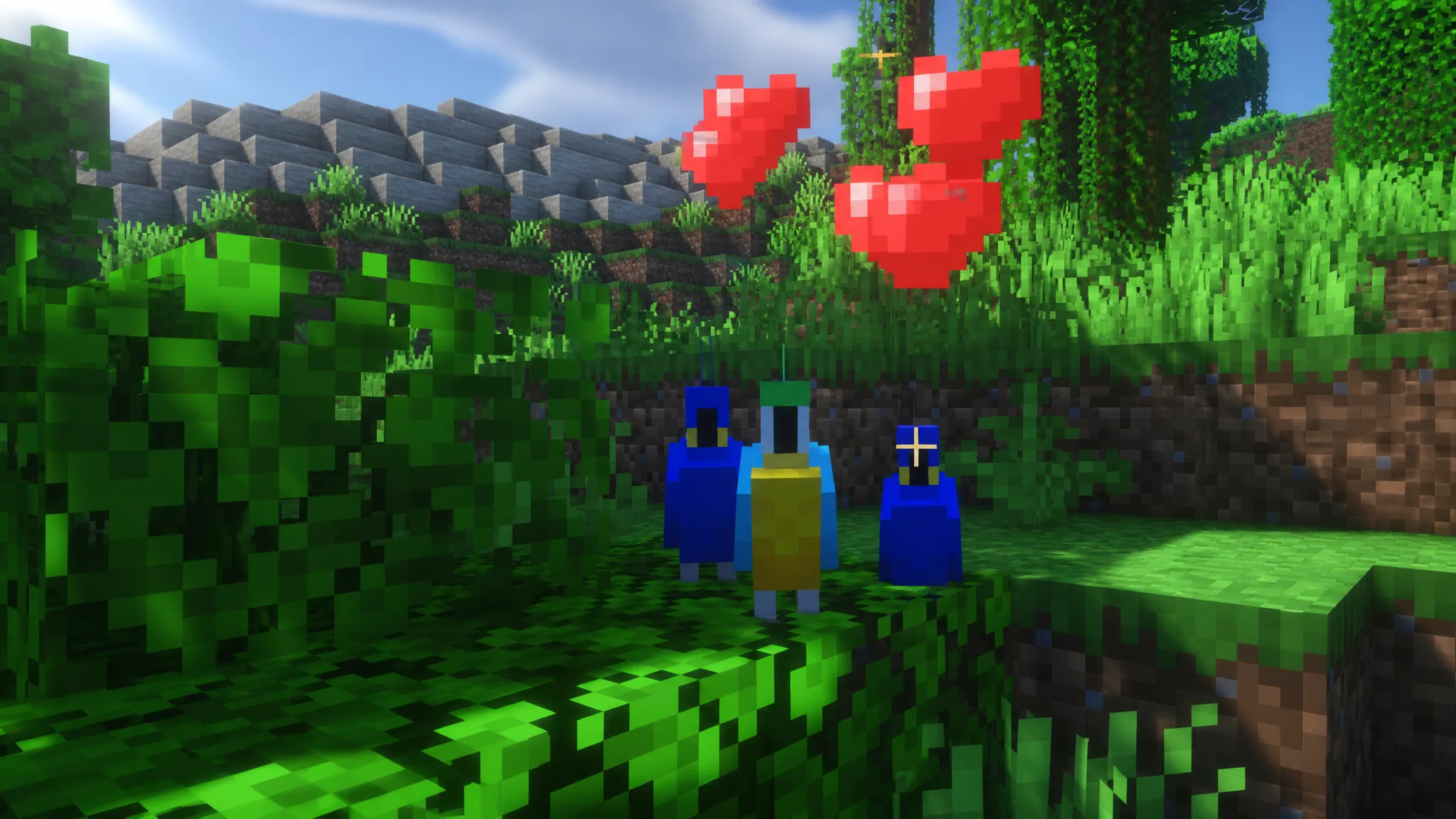
After taming, interact with the parrot while it is on the ground to toggle between sitting and following. A sitting parrot stays exactly where you left it. A following parrot trails behind you and teleports to you if it falls more than roughly 12 blocks behind.
Never feed a parrot a cookie
Cookies are lethal to parrots. In Java Edition, a cookie kills the bird instantly and shows poison particles as it dies. In Bedrock Edition, it applies fatal poison. This happens even to a tamed parrot, and there is no way to reverse it in vanilla Minecraft.
The behavior is deliberate. Cookies are made with cocoa, and chocolate is toxic to real birds, so the developers built the same danger into the game as a warning. Keep cookies out of your hotbar when you’re handling parrots and stick to seeds only.
Getting a parrot onto your shoulder
Make sure the parrot is standing, not sitting, then walk directly into it. It hops onto your shoulder on its own, no special command required. You can carry two at once, one on each shoulder, and the bird looks wherever you look as you travel.
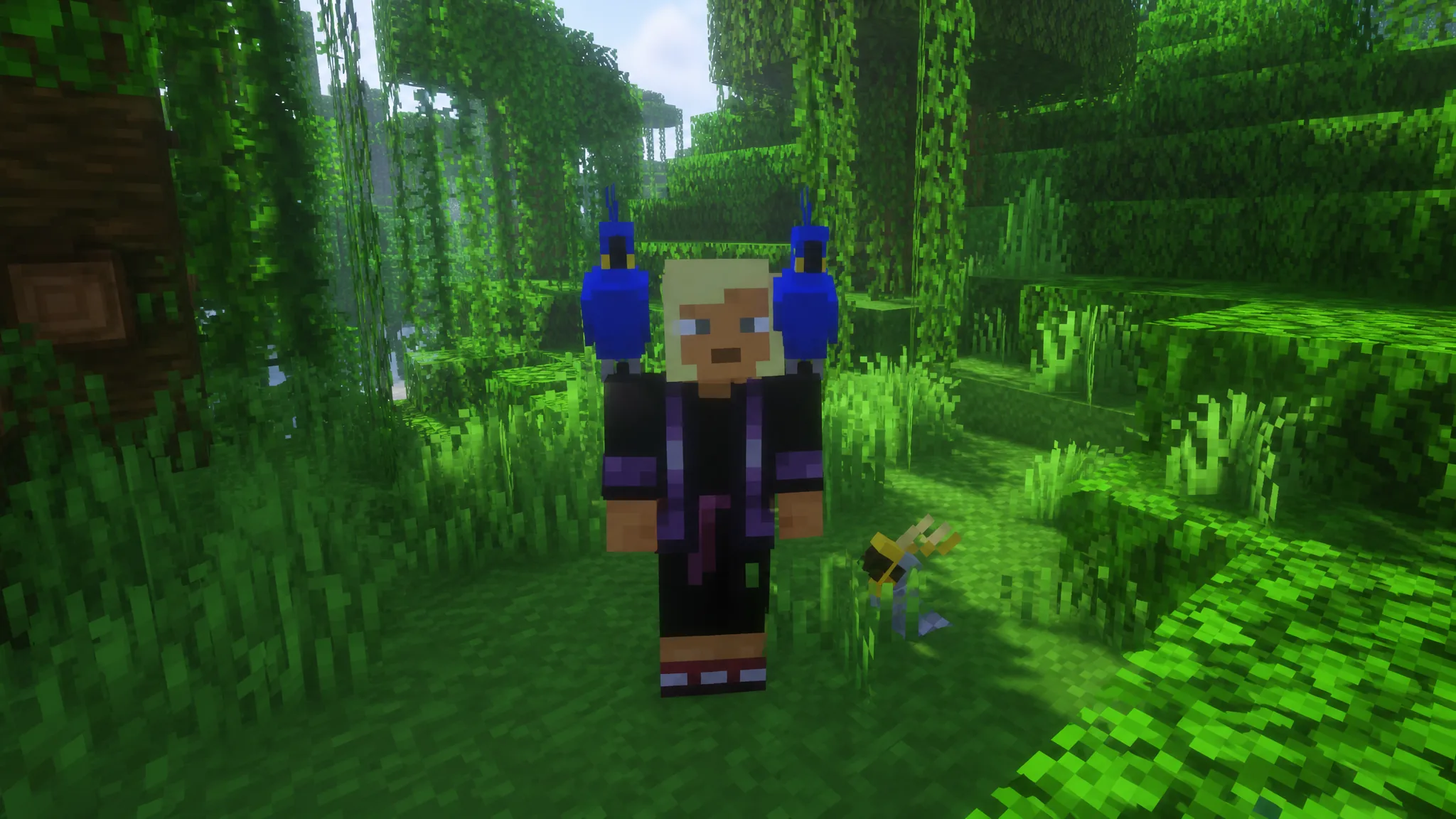
A perched parrot takes no damage while it’s on your shoulder, but several actions will knock it off. Knowing the triggers helps you avoid losing a bird you just tamed.
- Taking any damage
- Entering water
- Touching powder snow
- Sleeping in a bed
- Flying with an Elytra
- Falling from a high ledge or landing on a noticeably higher block
- Entering Creative Mode flight
Note: You can start an Elytra flight with a parrot perched, but expect frequent dismounts once you actually take damage or skim water. For risky travel, set the parrot to sit somewhere safe instead of trusting the shoulder ride.
What a tamed parrot actually does
Parrots are passive companions, not fighters. They have only 3 hearts of health, they don’t attack, and they won’t defend you. Their real value is as an early-warning system while you explore.
| Behavior | How it works |
|---|---|
| Mob detection | Imitates the idle sounds of hostile mobs within about 20 blocks, at a slightly higher pitch. A creeper hiss or zombie groan from your shoulder means one is close. |
| Dancing | Play any music disc in a nearby jukebox and the parrot bobs and moves to the beat until the music stops, even while perched. |
| Following | A standing parrot follows you and teleports to keep up if you get too far ahead. |
Why you can’t breed parrots
There is no breeding mechanic for parrots in vanilla Minecraft. Feeding two tamed adults seeds will not start love mode and will not produce a baby parrot. The only ways to add more birds are to tame additional wild ones in the jungle or, in Creative Mode, to use parrot spawn eggs.
Because each tamed parrot is a one-time catch, protect the ones you have. Wild parrots have only 6 HP and die from a fall of about 10 blocks or more, so be careful when knocking them off their perches. If you want to keep a parrot safe, set it to sit inside a sheltered, enclosed space rather than leaving it loose. That habit matters most on Bedrock Edition, where tamed parrots have been known to vanish after a logout or long-distance travel.